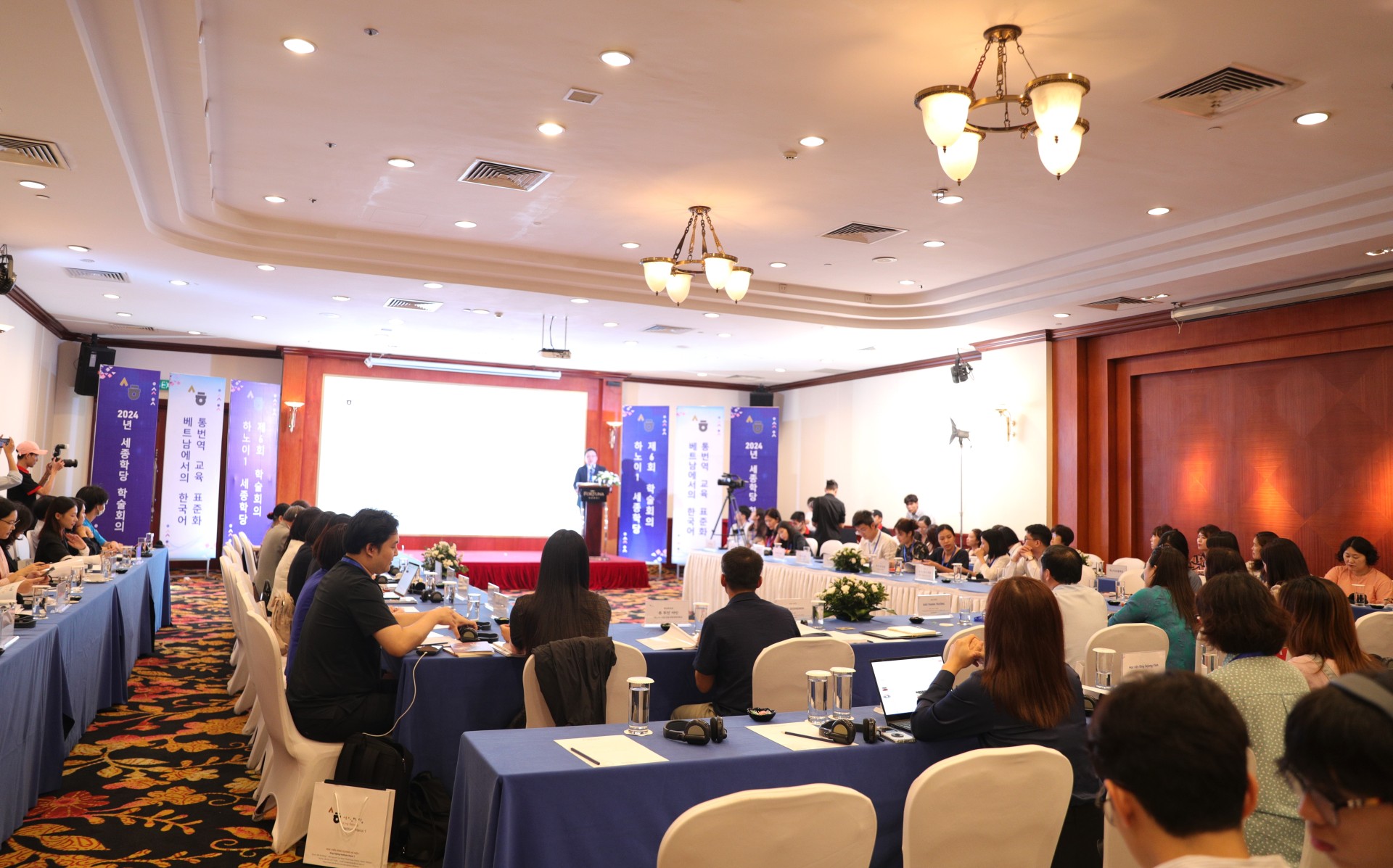
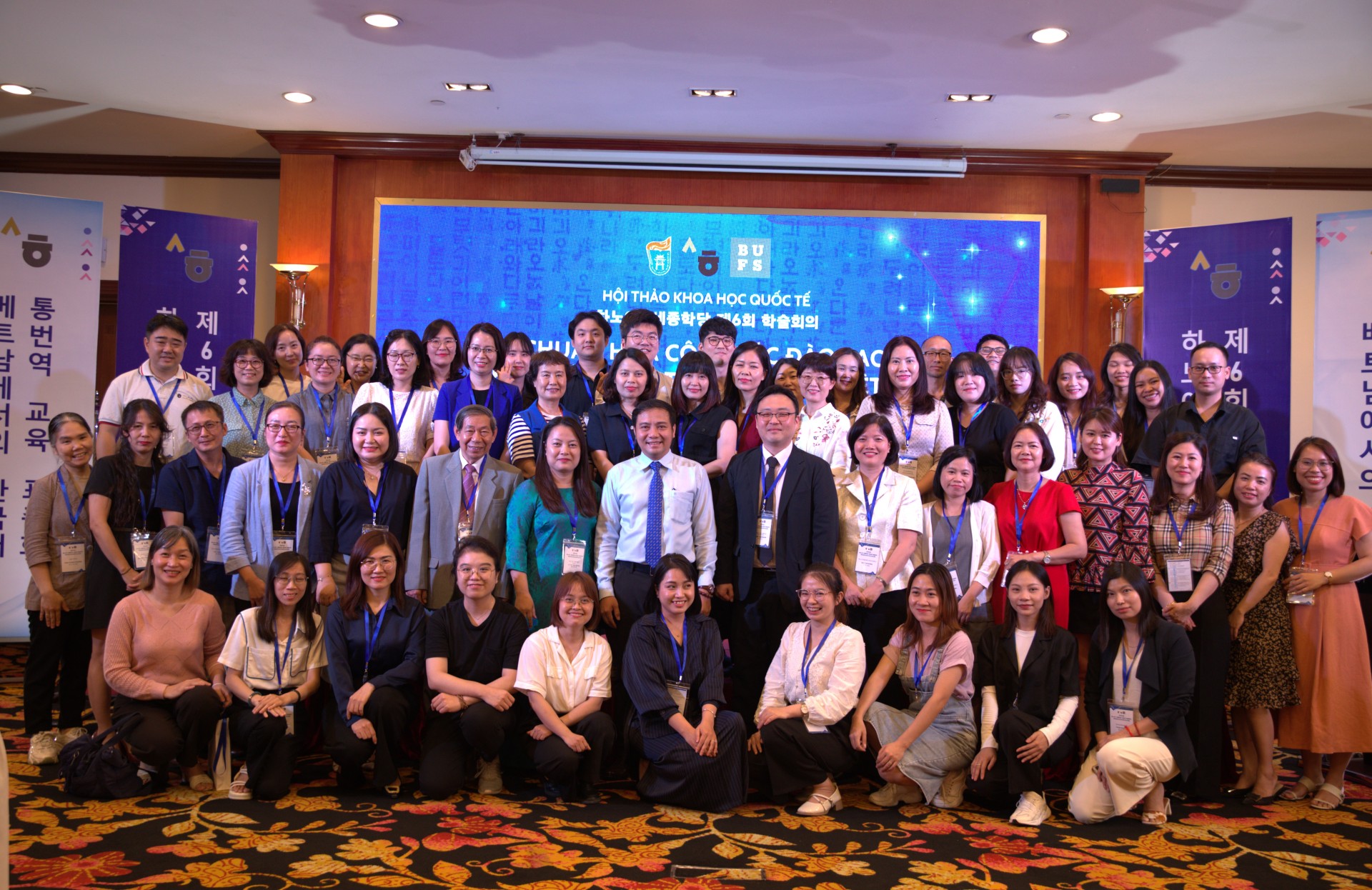
Representing the University of Social Sciences and Humanities, VNU Hanoi were Assoc. Prof. Dr. Dao Thanh Truong - Vice Rector of the University of Social Sciences and Humanities, Dr. Le Thi Thu Giang - Director of King Sejong Academy Hanoi 1, Head of the Department of Oriental Studies, along with faculty and students from the Department of Oriental Studies;
On the co-organizing side, the event was attended by Mr. Park Seong Min - Director of King Sejong Institute's headquarters in Vietnam; representatives from King Sejong Institute branches in Vietnam; and lecturers and scientists from universities in Vietnam with Korean language/Korean studies programs.
The growing demand for studying and researching Korean studies in Vietnam.In the context of increasing interest in the field of Korean language interpreting and translation training in Vietnam, and in order to promote cooperation and exchange of experiences among educational institutions in Vietnam that offer Korean language training,
The workshop aims to explore the current state of Korean translation and interpretation training in Vietnam; to facilitate interaction and exchange of experiences between King Sejong Institute units in Vietnam and Vietnamese universities teaching Korean translation and interpretation; and to seek solutions to realize and promote the implementation of Korean translation and interpretation training at King Sejong Institute units in Vietnam.
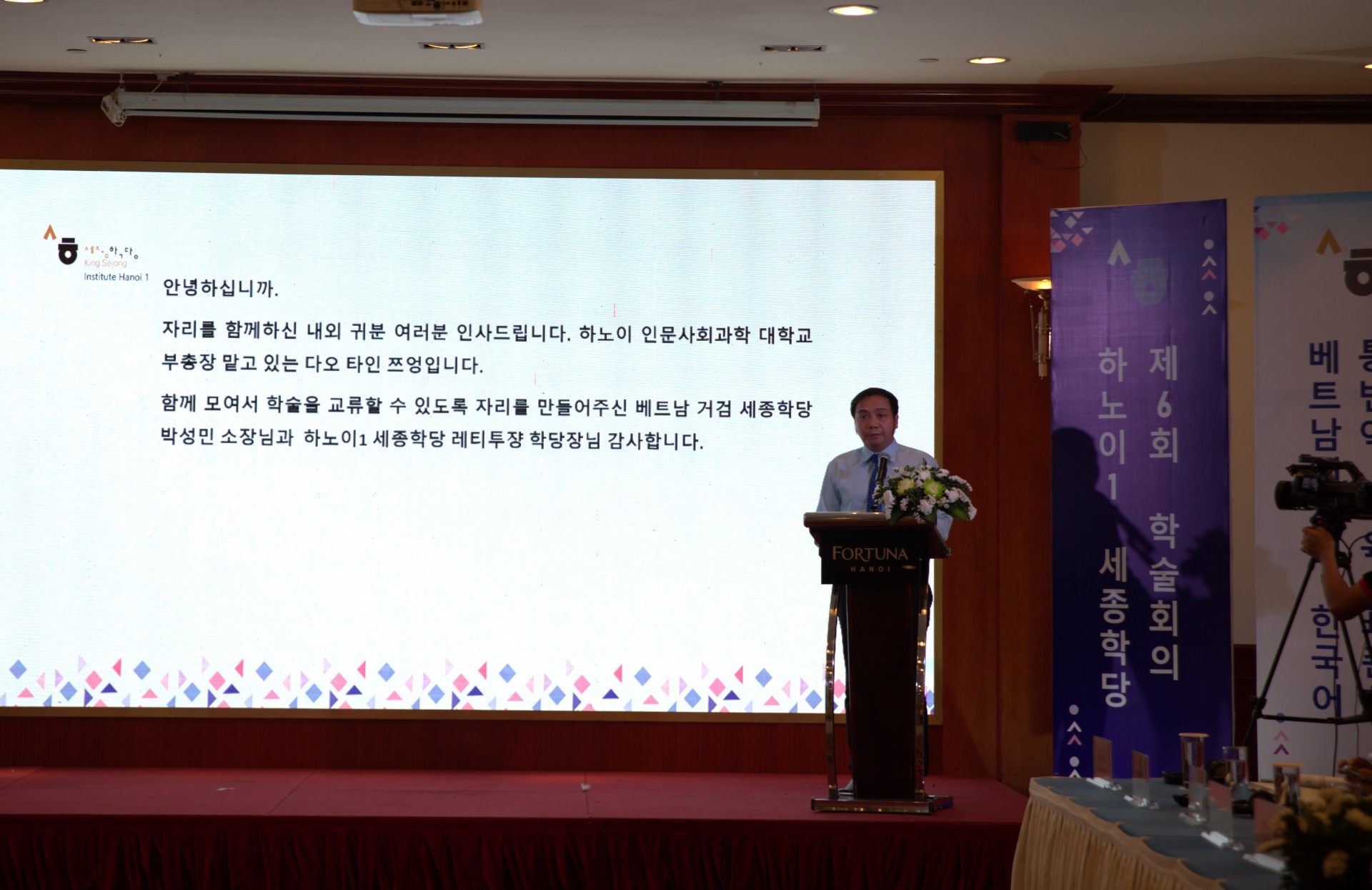
Assoc. Prof. Dr. Dao Thanh Truong - Vice Rector of the University of Social Sciences and Humanities, delivered the opening remarks at the conference.
Opening the workshop, Vice Rector of the University of Social Sciences and Humanities, Vietnam National University, Hanoi, Dao Thanh Truong, expressed gratitude to the Sejong Foundation of Korea for co-organizing this meaningful workshop. Vice Rector Dao Thanh Truong emphasized that, as a leading research and training center in Vietnam in the field of social sciences and humanities, the University of Social Sciences and Humanities, Vietnam National University, Hanoi, has made significant contributions to Korean studies education in Vietnam, helping to promote friendly cooperative relations between the two countries. The university has signed numerous cooperation agreements with partners in Korea and consistently supports the development of Korean language and culture education in Vietnam.
Over the years, King Sejong Institute, specifically King Sejong Institute Hanoi 1 located at the University of Social Sciences and Humanities, has made practical contributions to fostering a love and passion for learning and researching the Korean language and culture among young Vietnamese people. The international scientific conference on standardizing Korean translation and interpretation training in Vietnam, organized by King Sejong Institute, has met the current requirements of Korean studies training institutions in Vietnam.
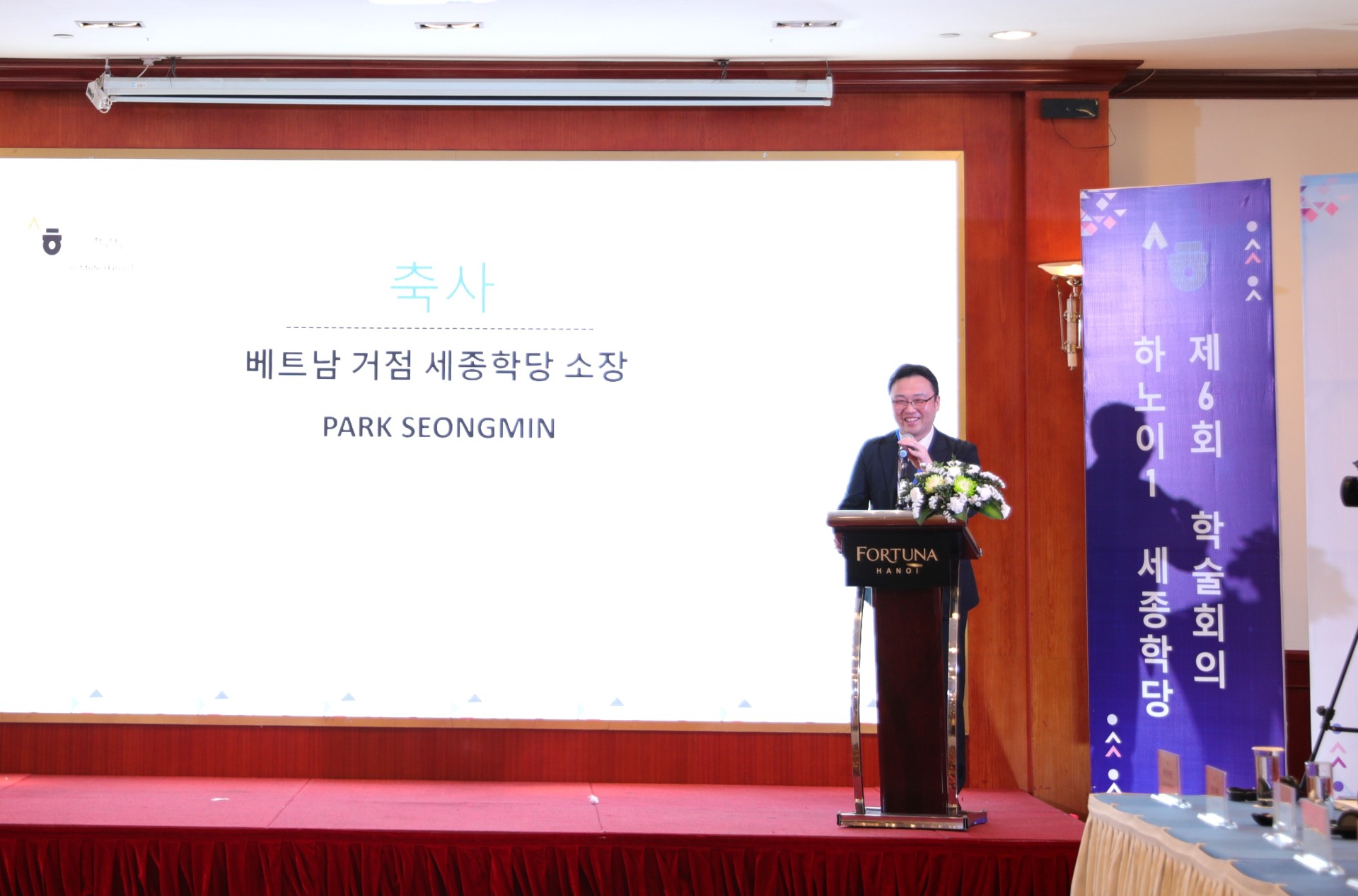
Mr. Park Seong Min - Director of King Sejong Academy's headquarters in Vietnam
According to Mr. Park Seong Min, Director of the King Sejong Institute's headquarters in Vietnam, Vietnam currently has the largest number of King Sejong Institutes in the world, with a total of 23 institutes. Despite having the largest number of King Sejong Institutes, these institutes still possess unique characteristics specific to Vietnam, drawing considerable attention. Unlike other institutes with clearly defined learning objectives based on region, such as interests or studying abroad, King Sejong Institutes in Vietnam attract students for a wide range of purposes. This is especially true for translation and interpretation training, which is the focus of this academic conference. Recently, more than ever, interest in Korean translation and interpretation education in Vietnam has been increasing.
The Director of the Academy believes that this workshop will contribute to strengthening the ties between Vietnamese and Korean cultures. This is also a very significant event for the King Sejong Institute Foundation in particular and Korea in general. The project, which involves researching a curriculum for translation and interpretation and creating teaching materials in 12 languages worldwide, including Vietnamese, was established and developed in 2021 and has now established its brand in many countries in the field of Korean translation and interpretation.
The urgent need for standardization of Korean language interpreter and translator training.Dr. Le Thi Thu Giang, Head of the Department of Oriental Studies, Faculty of Social Sciences and Humanities, Vietnam National University, Hanoi, and Director of King Sejong Institute Hanoi 1, emphasized the importance of Korean translation and interpretation in Vietnam. She stated that if foreign languages are the gateway to accessing a culture, then translation and interpretation is the key to unlocking that gateway.
For the Korean translation and interpretation industry, in recent times, along with the trend of international integration and the rapid development of Vietnam-Korea relations in various fields, the demand for both the quantity and quality of Korean translators and interpreters is increasing. In addition, the development of science and technology, especially the Fourth Industrial Revolution, is also posing many new challenges to translation work as well as to the training of Korean translators and interpreters in particular and the translation and interpretation industry in general. This presents challenges for the Korean translation and interpretation training sector, requiring adjustments to suit the new context.
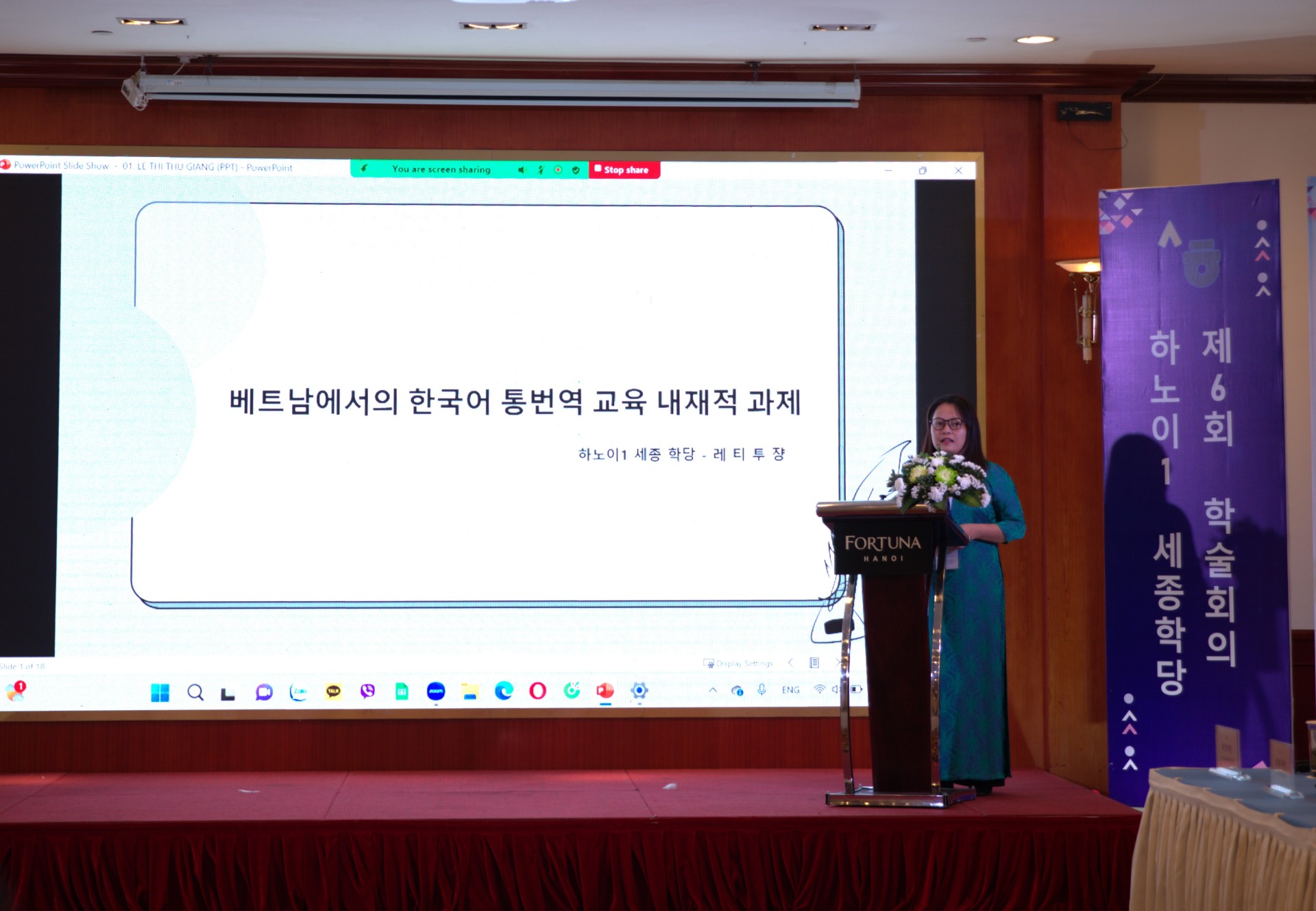
Dr. Le Thi Thu Giang - Director of King Sejong Academy Hanoi 1, Head of the Department of Oriental Studies, along with faculty and students of the Department of Oriental Studies.
In fact, translation is an activity that is integral from the very beginning and throughout the process of learning a foreign language, as learners translate from one language to another in order to understand the learned language and be able to use it. Therefore, it can be affirmed that translation and interpretation training, although it may or may not be included in the curriculum, is always an indispensable activity in foreign language learning in general.
Dr. Le Thi Thu Giang pointed out shortcomings regarding the lack of professional lecturers, the unstandardized teaching methods, and the limited facilities for teaching translation and interpretation in Vietnam. Therefore, to improve the quality of translation and interpretation training in Vietnam, Dr. Le Thu Giang proposed several solutions to approach Korean translation and interpretation training from the training objectives, curriculum, teaching methods, and teaching staff. These solutions highlight the current situation and inherent challenges of the field in the face of new demands, thereby affirming the urgent need for innovation and standardization of Korean translation and interpretation training in Vietnam.
In Vietnam, translation and interpretation training in general, and Korean translation and interpretation training in particular, usually aims at two main goals: (1) Equipping with knowledge related to the foreign language to be learned and (2) Developing translation and interpretation skills as a professional occupation.
At the conference, many domestic and international experts presented papers revolving around the following topics: inherent challenges in training Korean language translators and interpreters in Vietnam; language translation - basic theory and practice (with a focus on Korean literature translation); proposed criteria for evaluating translation quality applicable to Korean language training departments oriented towards translation and interpretation; developing a university-level Korean language translation and interpretation curriculum suitable for practical application in Vietnam; developing a course on cultural content translation for Korean language majors (focusing on film and webtoon translation); difficulties in teaching Vietnamese-Korean translation and interpretation at the intermediate and advanced levels - a perspective from teaching practice at the University of Social Sciences and Humanities; the role and effectiveness of integrating translation skills in teaching practical Korean language; teaching methods for the oral translation practice course for students in 8 Korean language majors at the University of Foreign Languages, Da Nang University. This study surveys translation errors in Korean among students of the 9th course of translation and interpretation at King Sejong Institute Hanoi 2; analyzes machine translation errors between Vietnamese and Korean and offers some suggestions for applying machine translation in teaching Korean translation; and analyzes digital translation errors in Vietnamese-Korean interpretation.
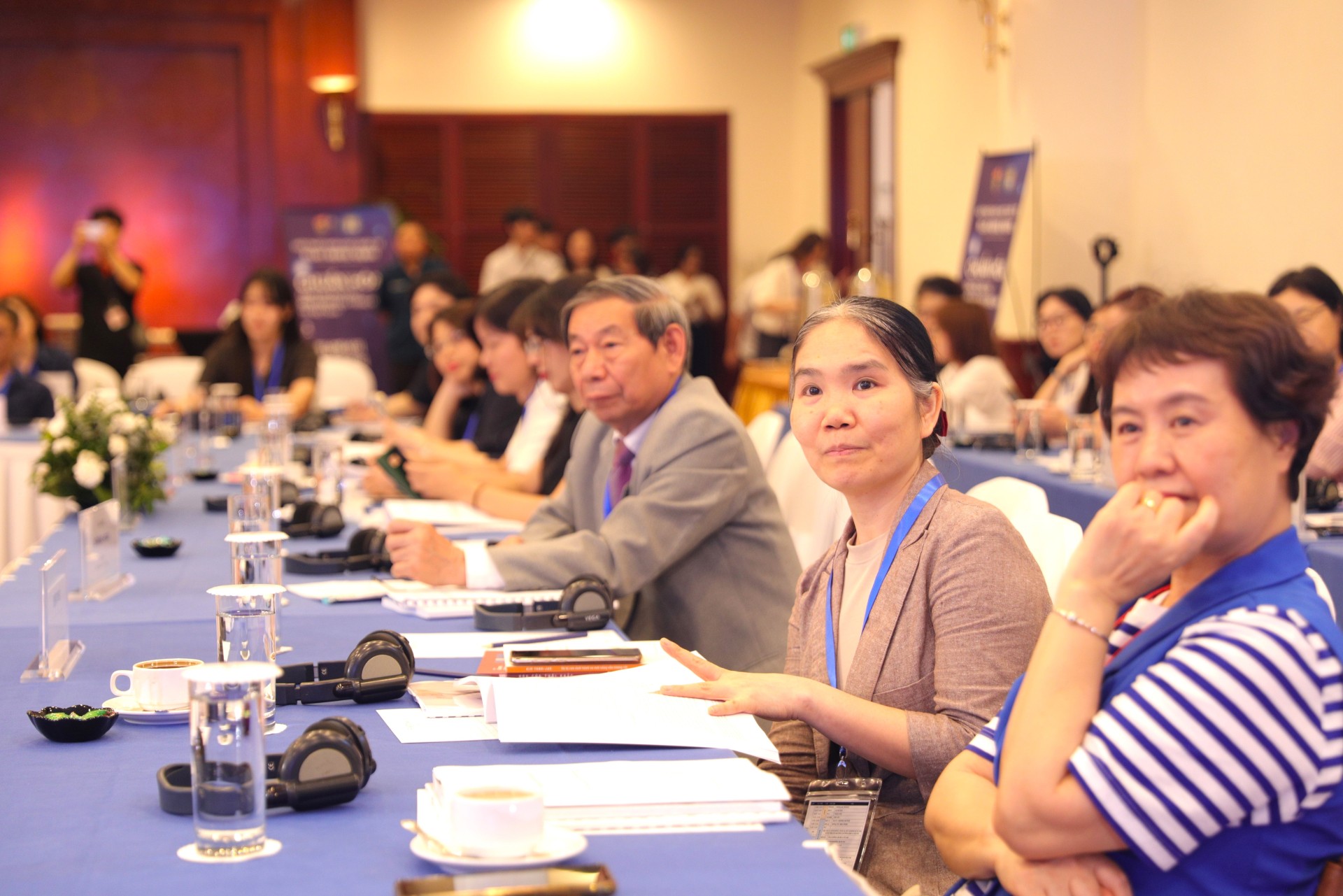
Many delegates also exchanged and discussed various ideas surrounding human resources and effective teaching methods for Korean language translation and interpretation in Vietnam.
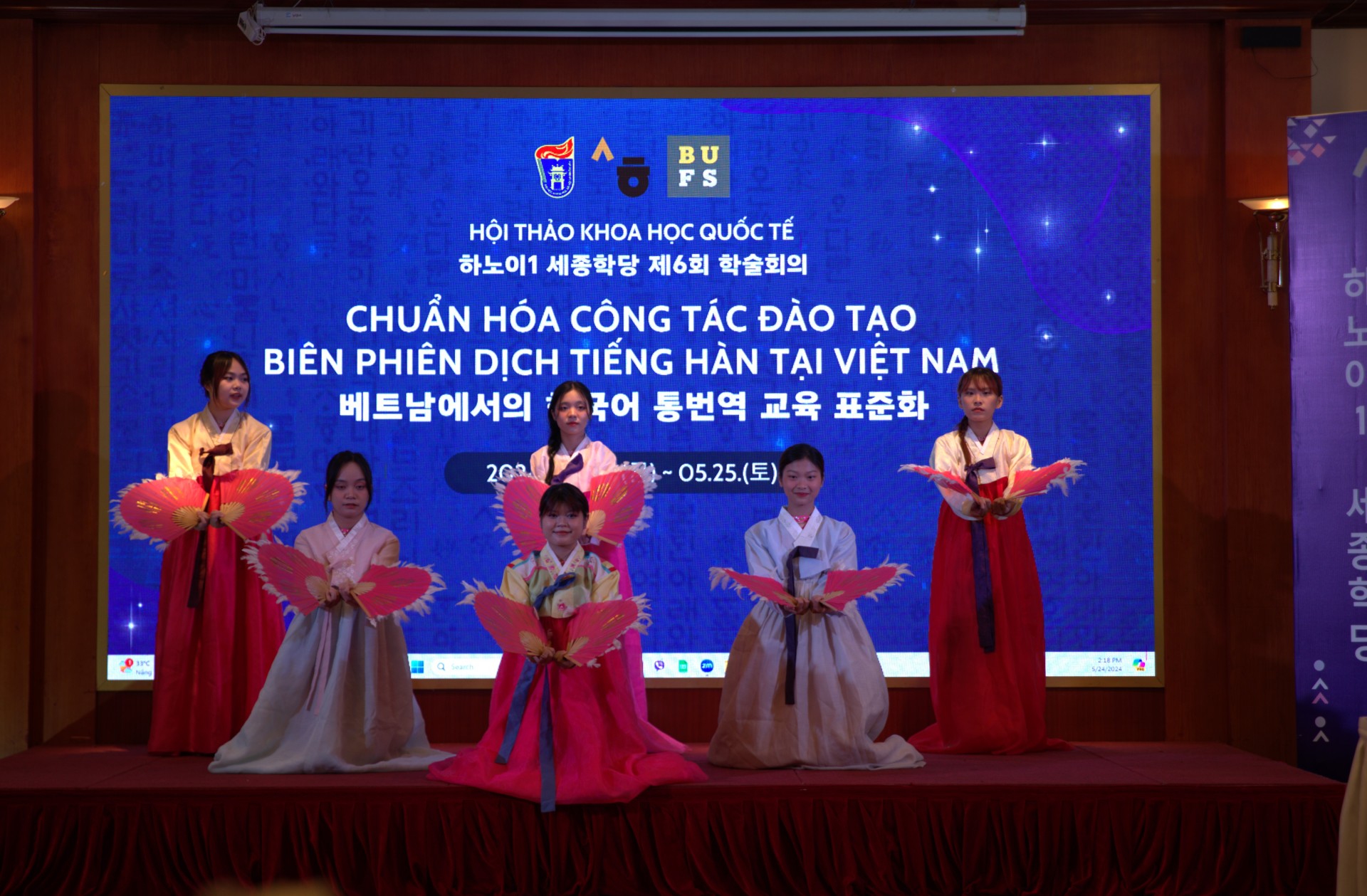
The outstanding performance by students of Korean Studies, Faculty of Oriental Studies, University of Social Sciences and Humanities, Vietnam National University, Hanoi, brought a taste of Korean culture to the conference.
Korean StudiesFaculty of Oriental Studies, University of Social Sciences and Humanities, Vietnam National University, Hanoi: major code 7310614.
The university trains bachelor's degree holders who possess a solid foundation in social sciences and humanities, along with a systematic understanding of Korean studies. It equips students with practical skills in using the Korean language, as well as essential skills for daily life and professional activities, enabling them to proactively handle tasks related to Korea.
Graduates with a Bachelor's degree in Korean Studies build a solid foundation for lifelong learning, personal development, and the ability to pursue higher education.
Sejong Korean Language Center HanoiEstablished in 2011 by the University of Social Sciences and Humanities, Vietnam National University, Hanoi, the Center for Korean Language and Korean Studies was formed through the development of the Center for Korean Language and Studies and a cooperation agreement between the University of Social Sciences and Humanities and Busan University of Foreign Studies (South Korea). The Center's mission is to organize short-term training courses, conduct exams and issue international Korean language proficiency certificates (KPL), and offer other courses related to Korean language and culture for Vietnamese people.
With the combined strength of the University of Social Sciences and Humanities - a long-standing and leading institution in Vietnam in creating and disseminating knowledge in the social sciences and humanities - and Busan University of Foreign Studies - one of the most prestigious universities in Korea in the field of Korean language teaching, the Sejong Korean Language Center in Hanoi is aiming for international standards in Korean language and culture training.
The diverse and modern training programs, the high professional qualifications of the Korean teaching staff, and the professional organization and management with a streamlined organizational structure – these are the advantages that the Sejong Korean Language Center in Hanoi uses to conduct training courses, exams, and issue certificates in Korean language and culture that meet the national quality standards of Korea. At the same time, the Sejong Korean Language Center in Hanoi also provides support programs for studying abroad and employment in Korea and Vietnam.