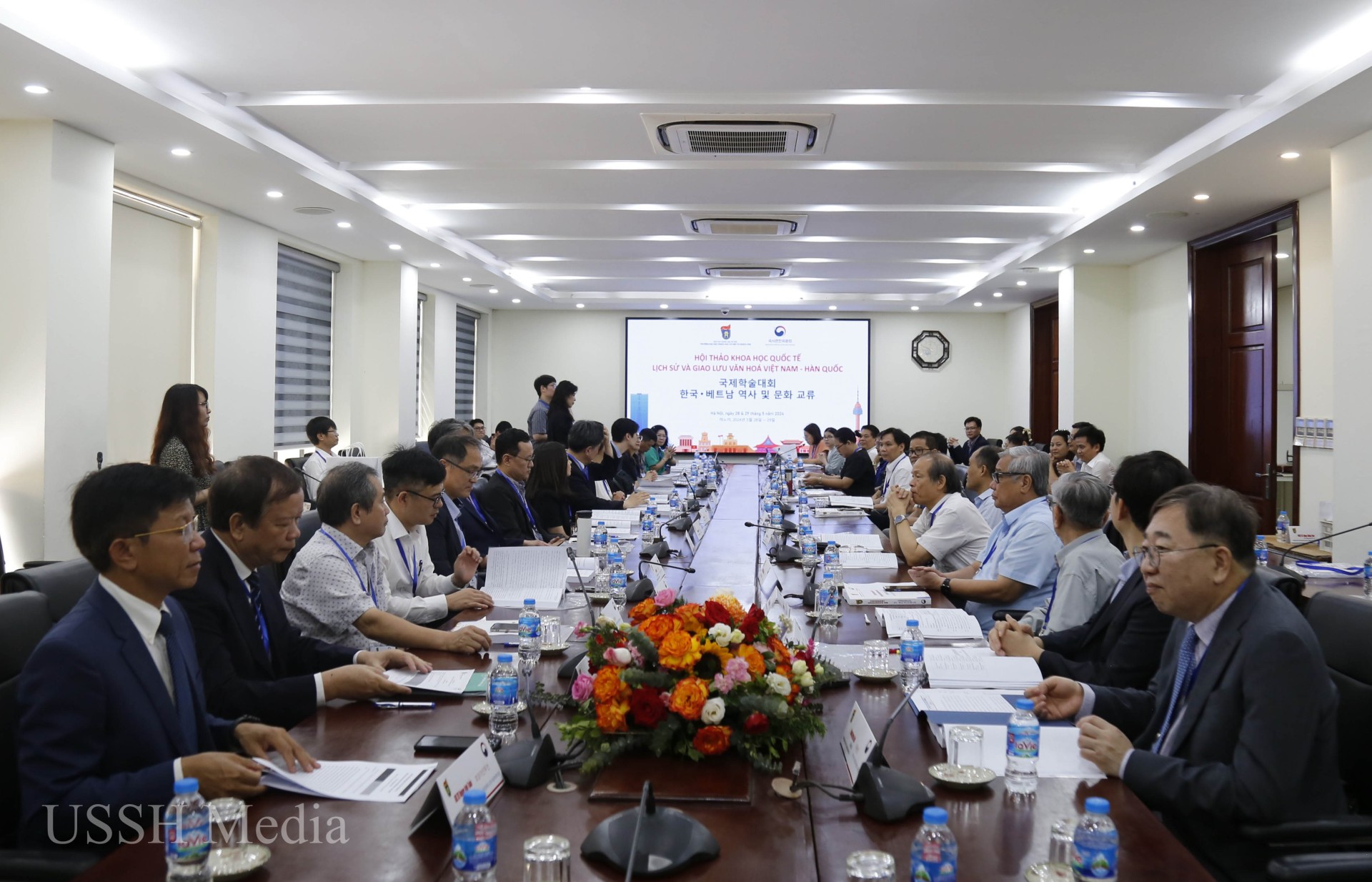
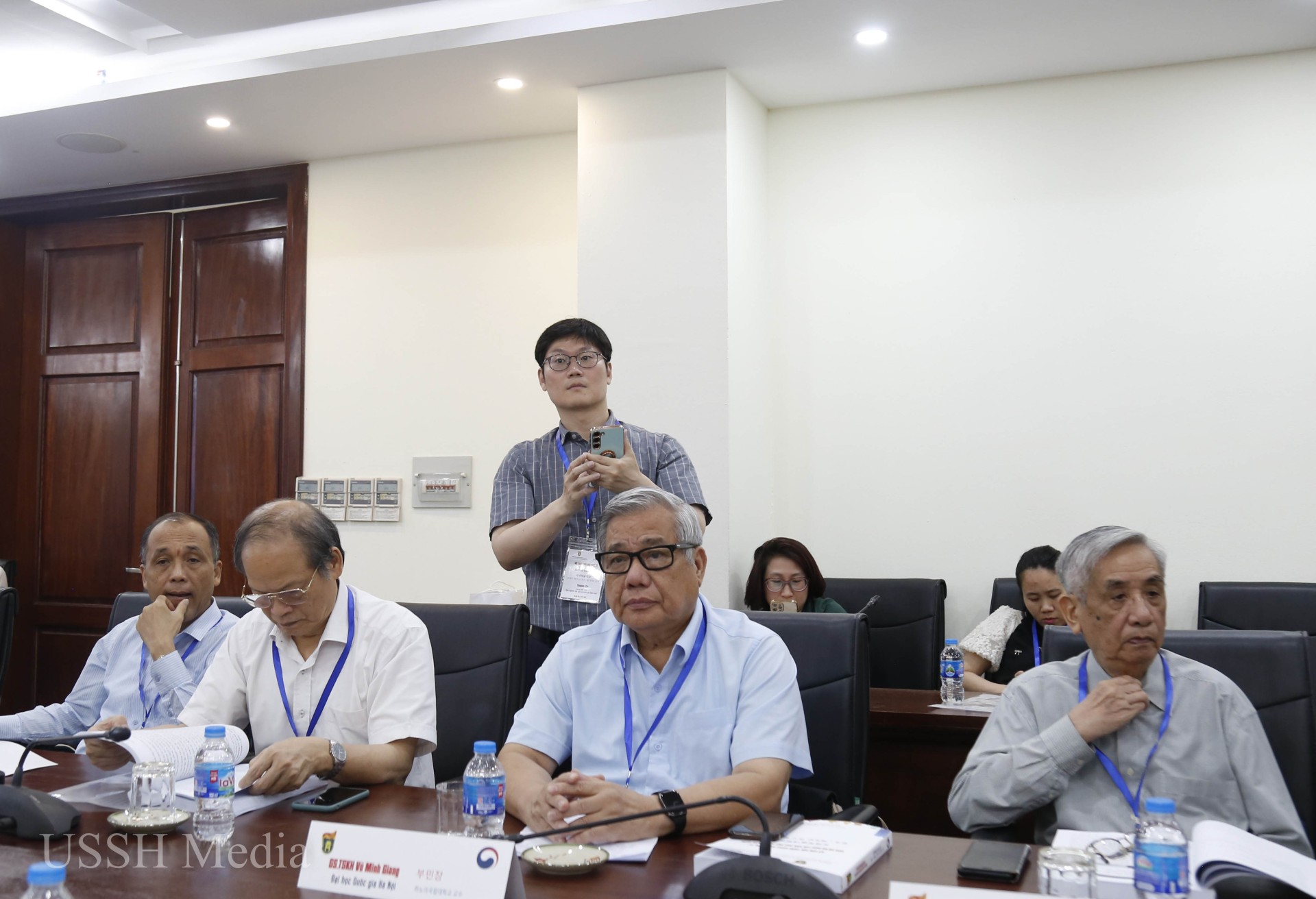
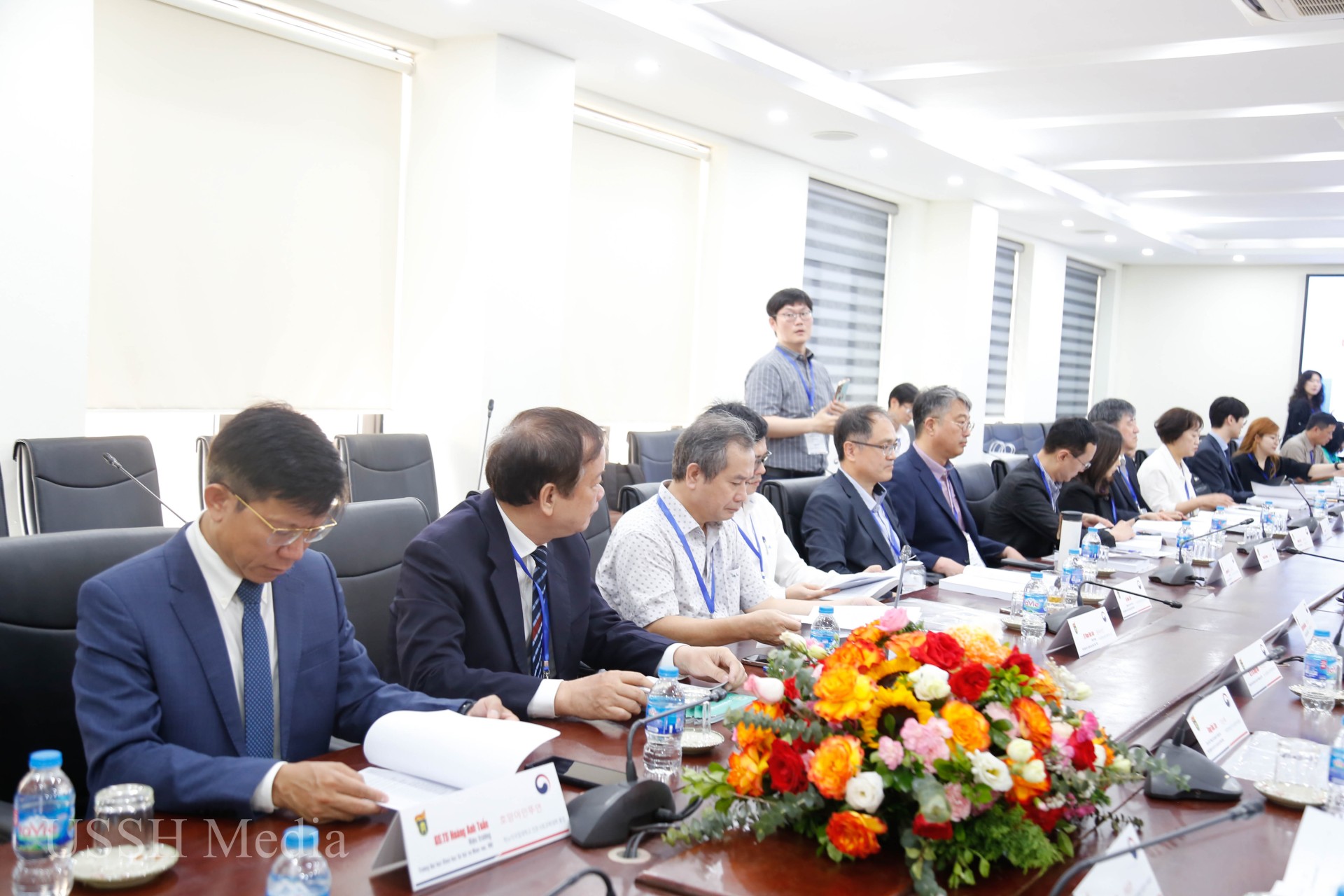
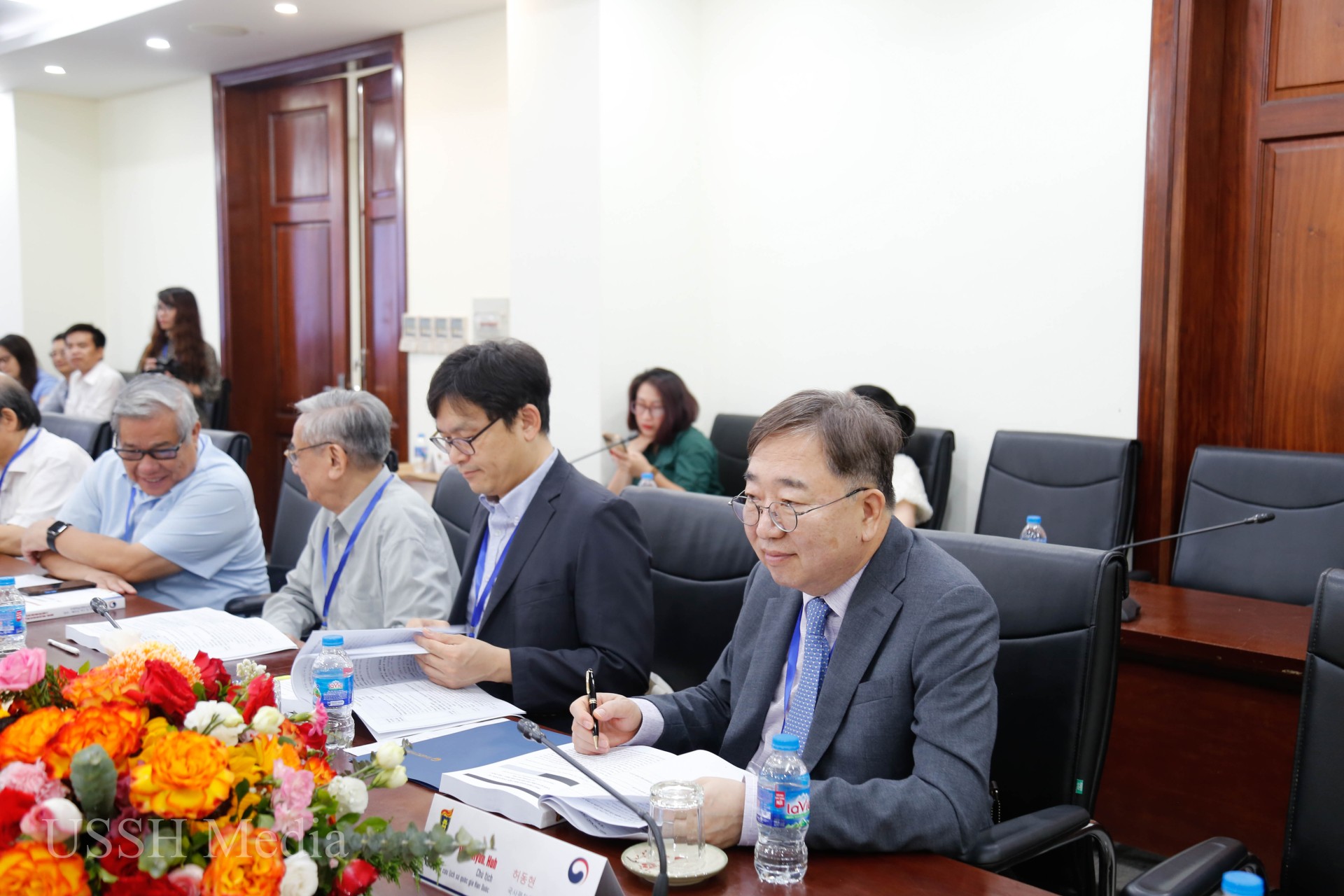
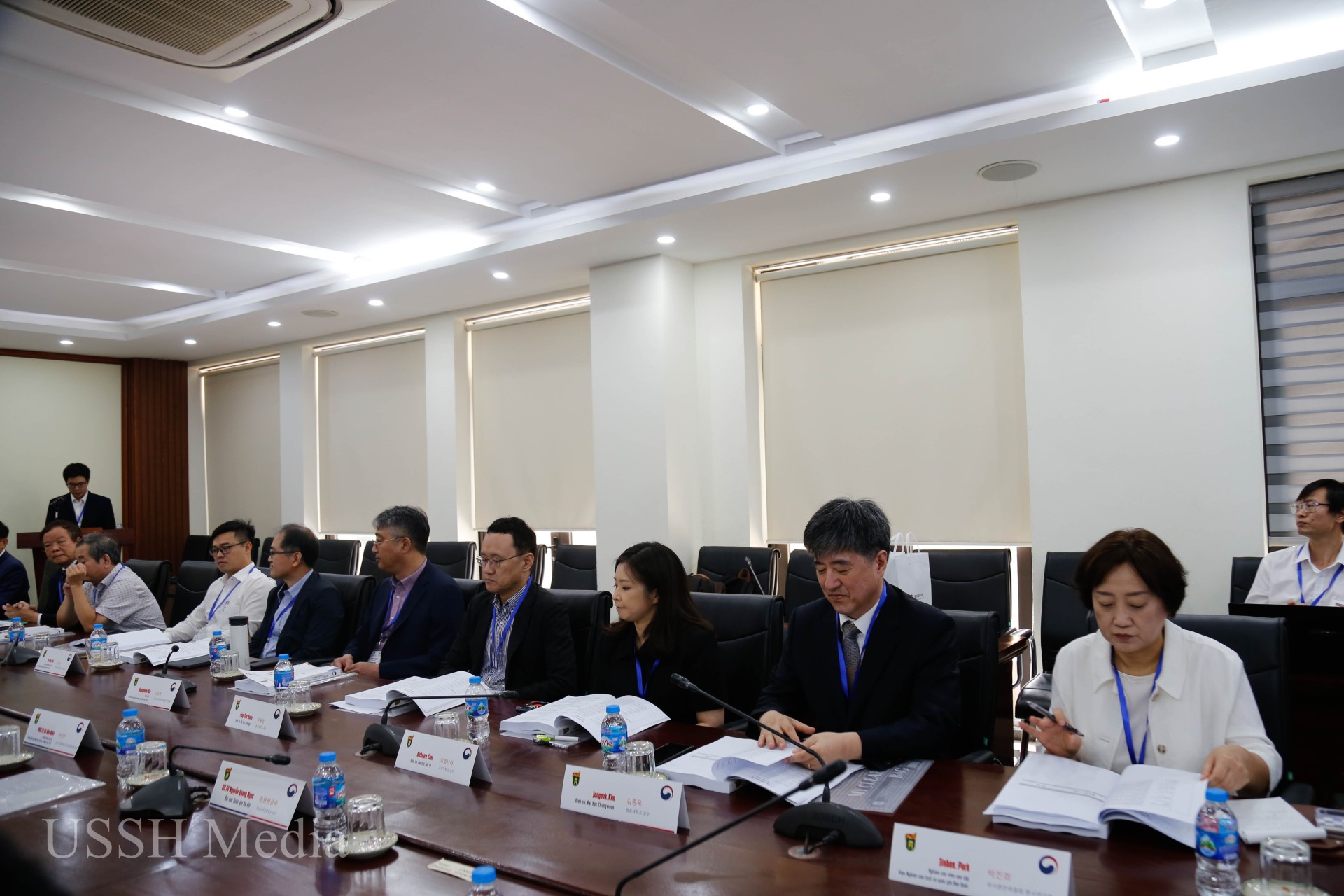
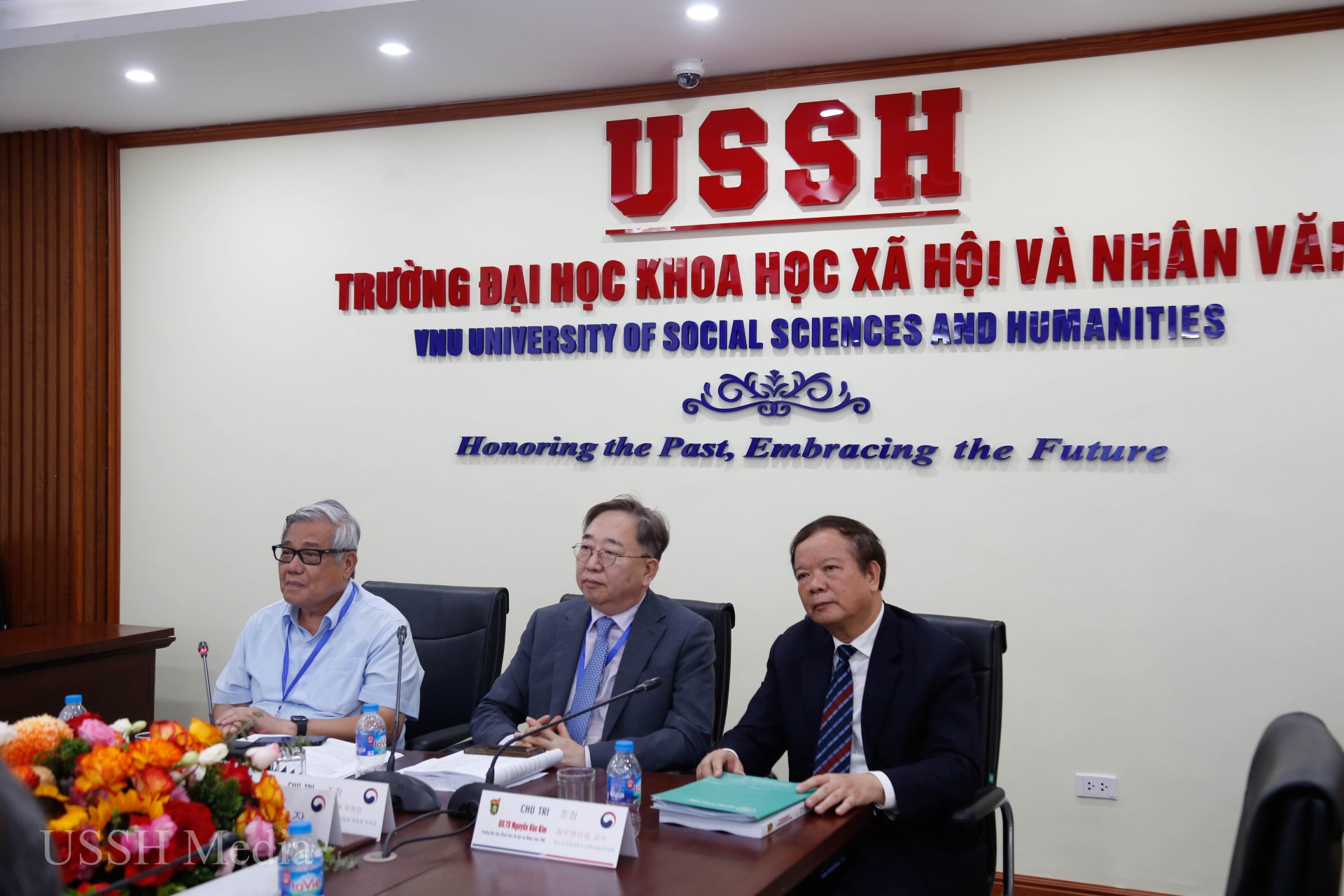
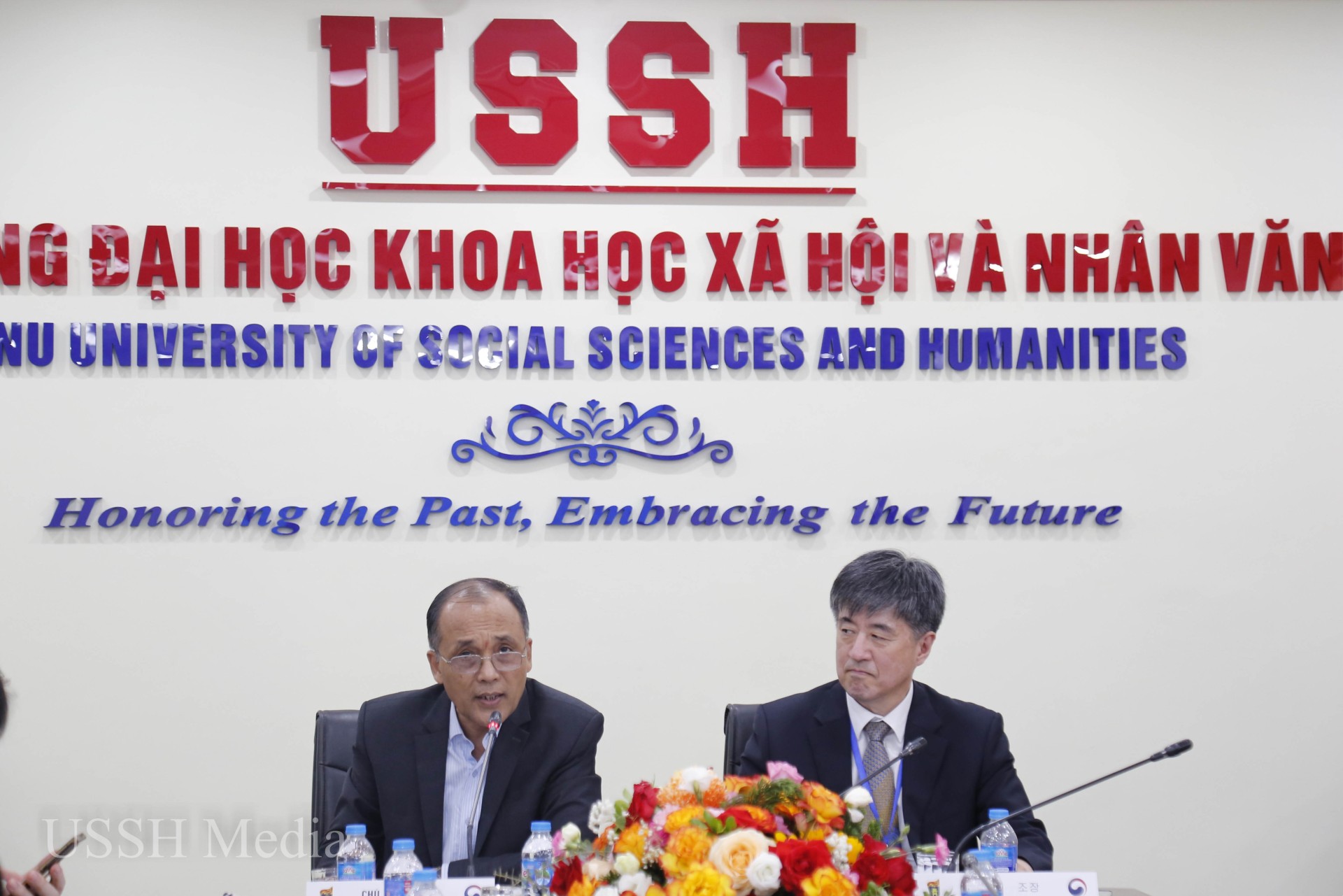
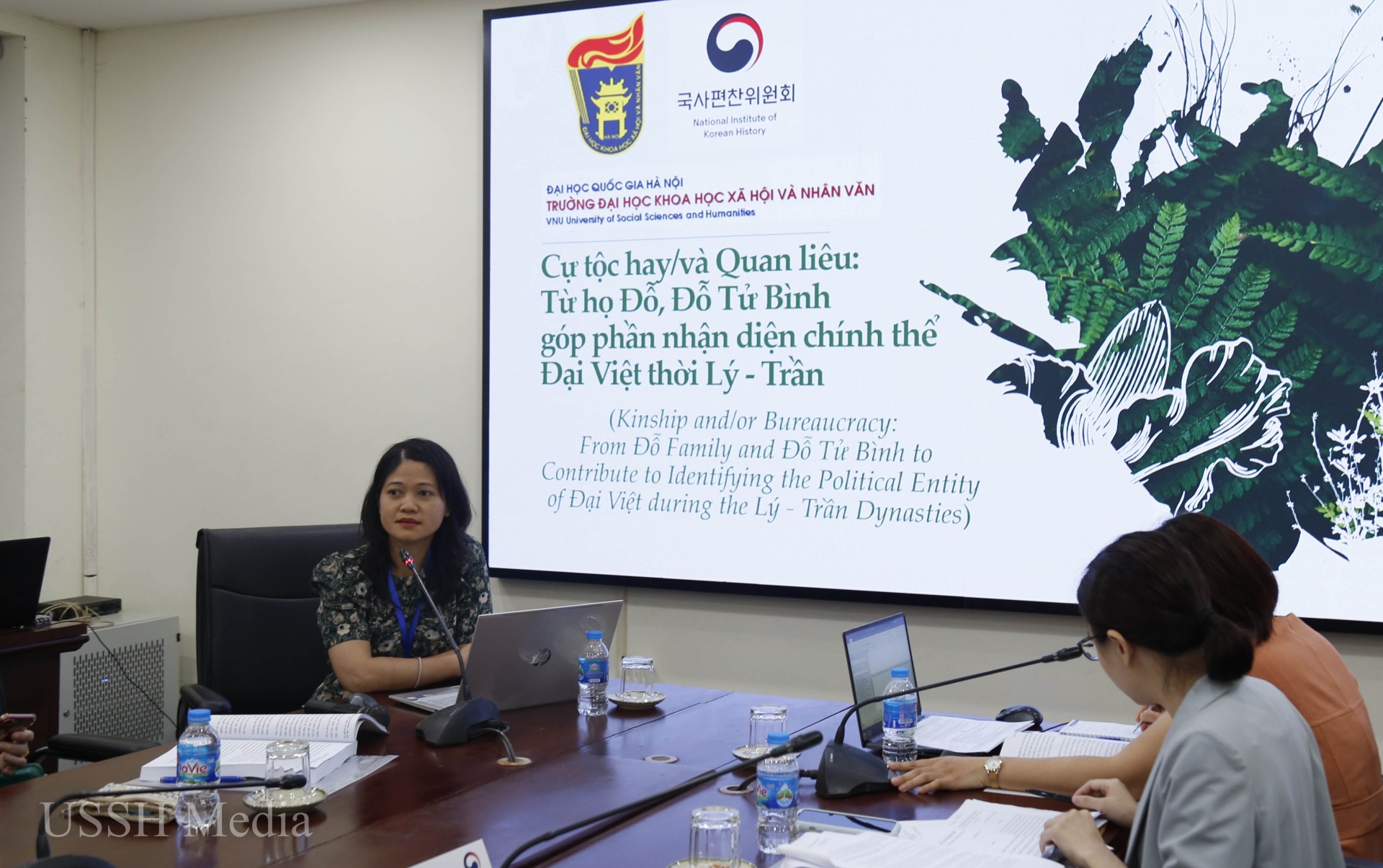
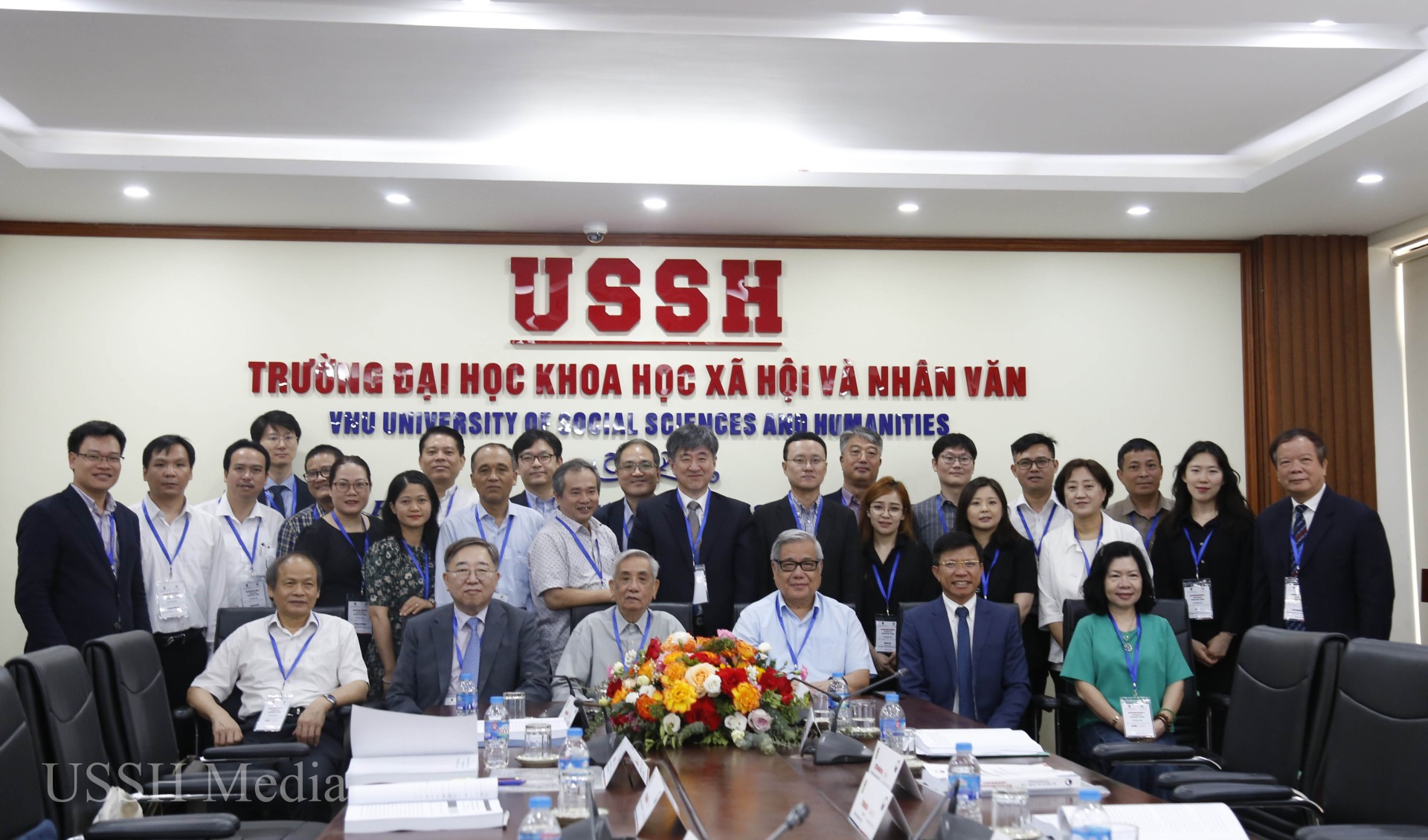
Attending the workshop, on behalf of VNU Hanoi and the University of Social Sciences and Humanities were Prof. Dr. Vu Minh Giang (Chairman of the Science and Training Council of VNU Hanoi), Prof. Dr. Hoang Anh Tuan (Secretary of the Party Committee, Rector of the University), along with numerous scientists, lecturers, doctoral candidates and students from faculties/institutes/departments within the university.
On the Korean side, there was Dr. Huh Dong Hyun (President of the National Institute for Historical Research of Korea) along with many scholars and doctoral candidates from research institutes and universities in Korea: the National Institute for Historical Research of Korea, the Institute of Maritime Civilization under the Asian Humanities Foundation, Kyonggi University, Chungwoon University, and Goryeo University.
In addition, the conference also received attention from many scientists from the Vietnam Institute of Studies and Development Sciences, the Institute of History, Hanoi Pedagogical University, the Institute of Cultural Research, etc.
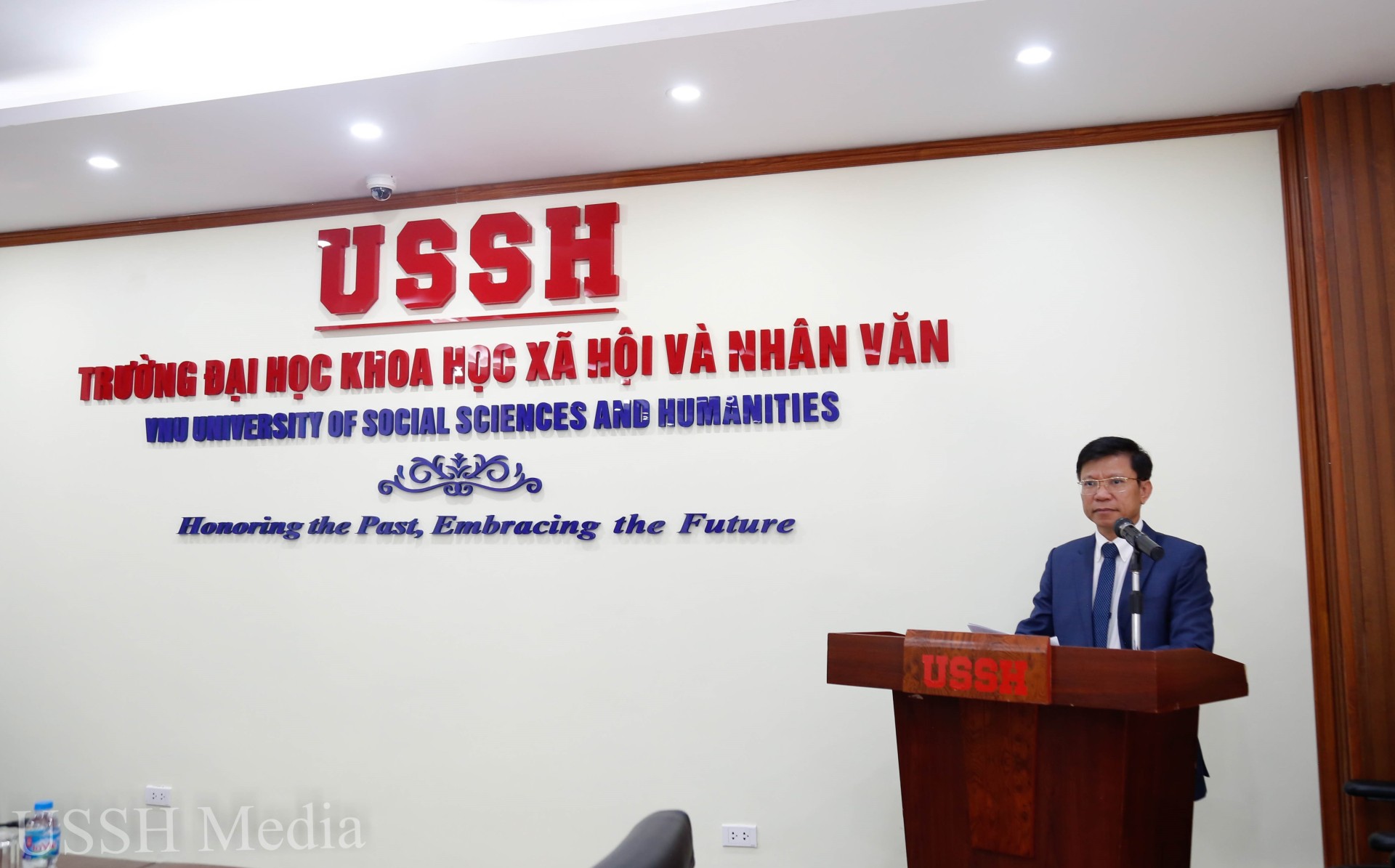
In his opening remarks at the conference, on behalf of the co-organizing unit, Rector Hoang Anh Tuan congratulated and thanked the National Institute of Korean History for its sincere and effective cooperation in preparing for the conference, ensuring its smooth and successful execution. Rector Hoang Anh Tuan emphasized: “Vietnam and Korea are two countries located in East Asia, sharing many similarities in history and culture. Throughout their historical development, the Vietnamese and Korean peoples have had close ties, with frequent and rich interactions. In 1992, diplomatic relations between Vietnam and Korea were officially established, marking a major turning point in the post-Cold War relationship. Currently, Korea is one of the countries with the largest foreign investment in Vietnam.”
However, to date, in-depth, academic research on the history and cultural exchange between Vietnam and Korea by scholars of both countries remains very limited, completely disproportionate to the research potential. Therefore, the first Vietnam-Korea International Scientific Conference has profound scientific significance, aiming to promote understanding of the history and cultural exchange between Korea and Vietnam, and to build a network of researchers on the history and culture of both nations.
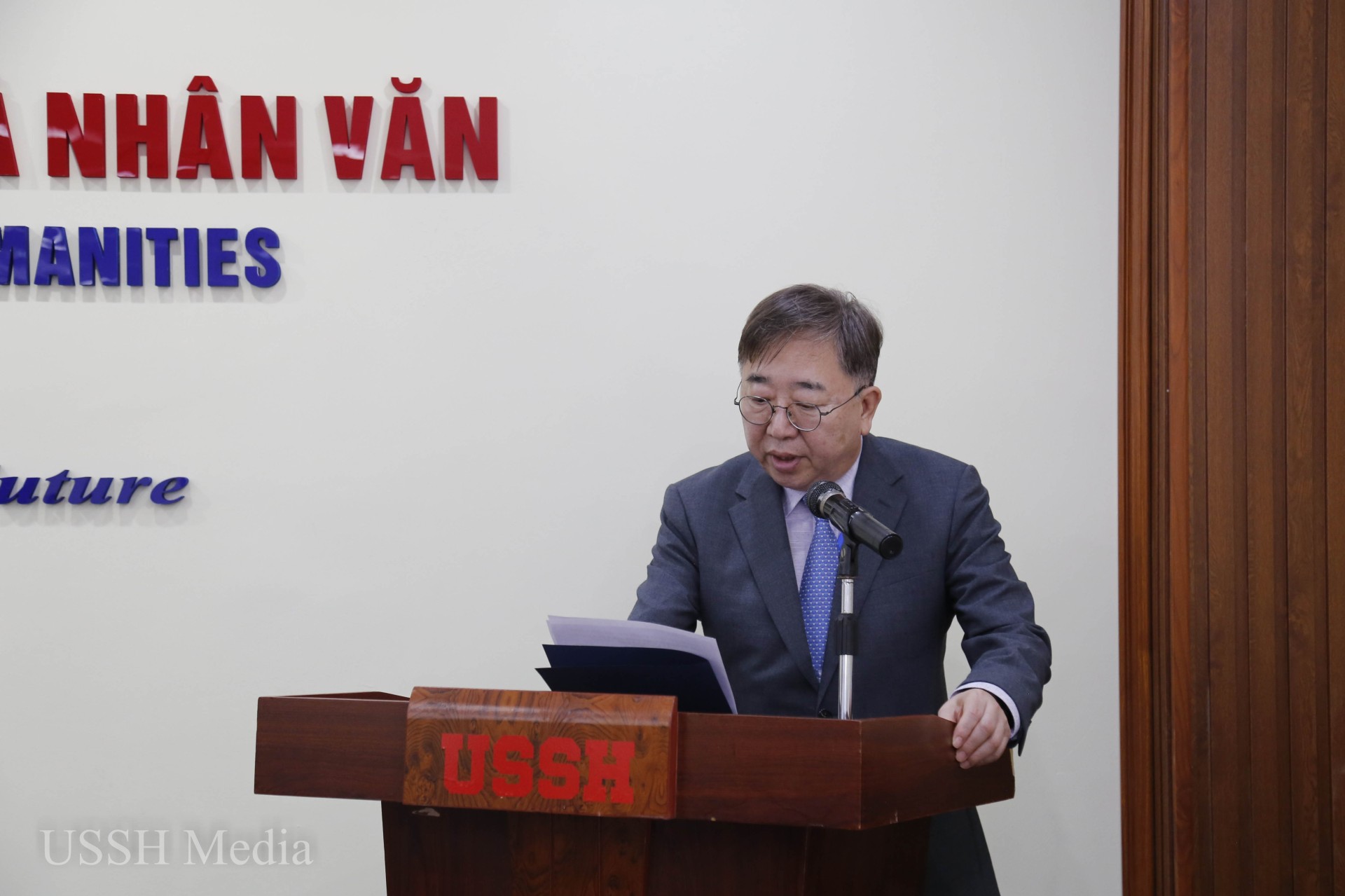
Sharing the same viewpoint as Professor Hoang Anh Tuan, Dr. Huh Dong Hyun (President of the National Institute for Historical Research of Korea) further emphasized: “Looking at the close cultural and social exchange between the two countries, I feel that organizing an international scientific conference now seems a bit late. But this also shows the great effort and determination of both institutions to organize this conference right here in your thousand-year-old capital, Hanoi. The University of Social Sciences and Humanities, Vietnam National University, Hanoi, is known as a place that brings together the most prestigious scholars in the field of social sciences and humanities. Therefore, I have high expectations that the conference will open a new chapter in academic exchange between scholars in the two countries, and at the same time deepen the cooperative relationship in training and research on history and cultural exchange between Vietnam and Korea.”
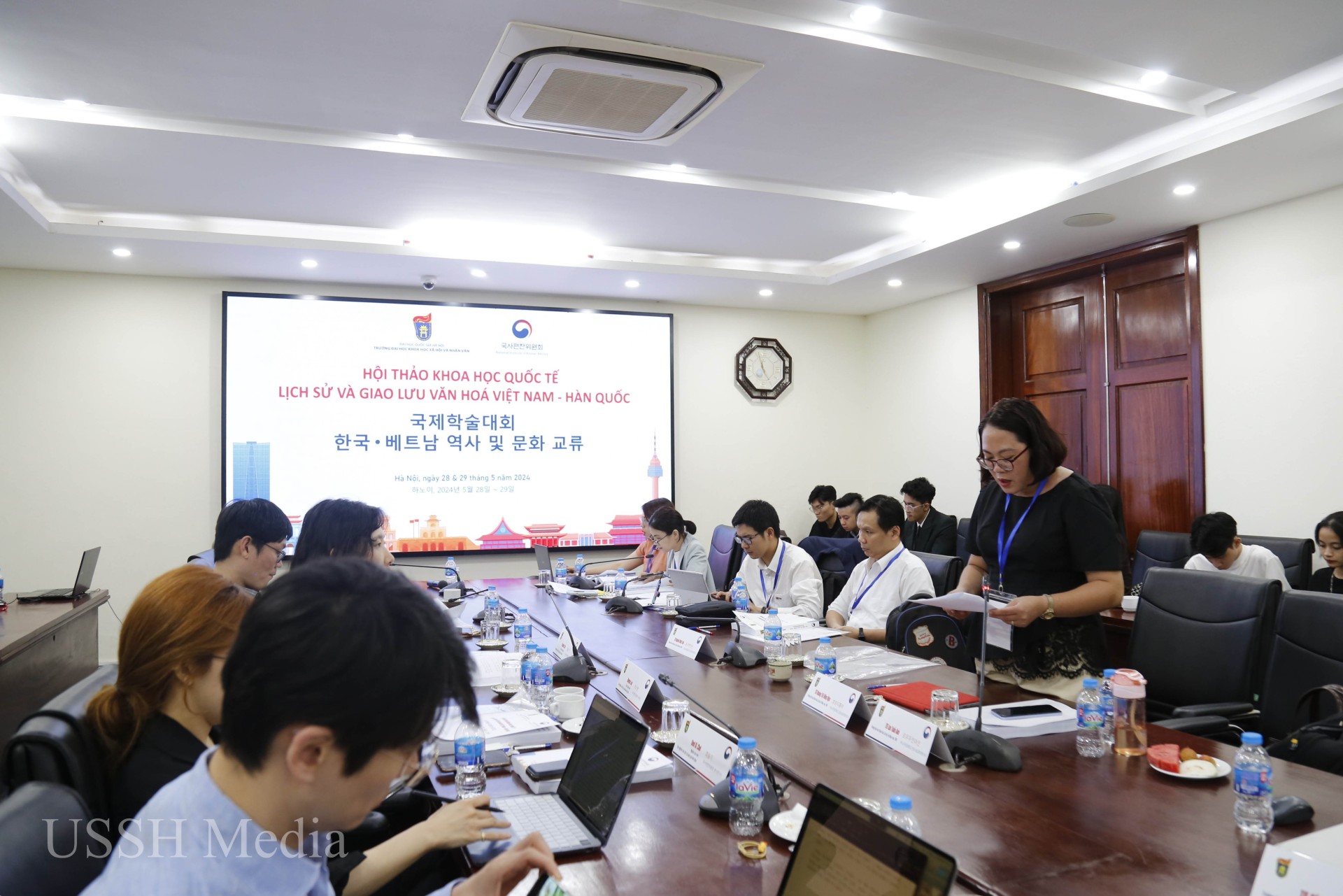
Taking place over two days, with nine in-depth and elaborate scientific reports and insightful and high-quality commentary from Korean and Vietnamese scholars, the conference focused on clarifying several issues surrounding the history and cultural exchange between Vietnam and Korea.
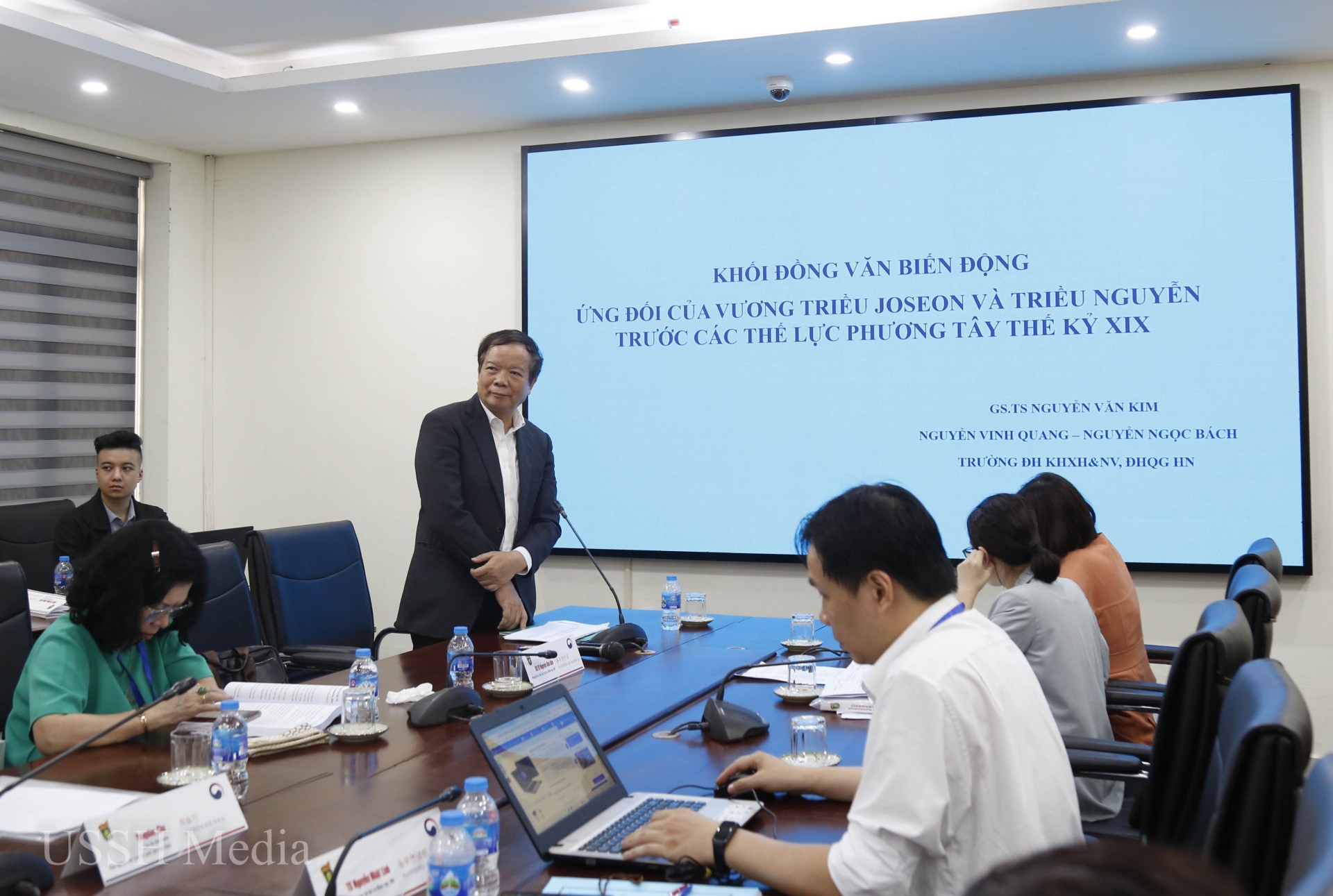
Reports by Prof. Dr. Nguyen Van Kim:
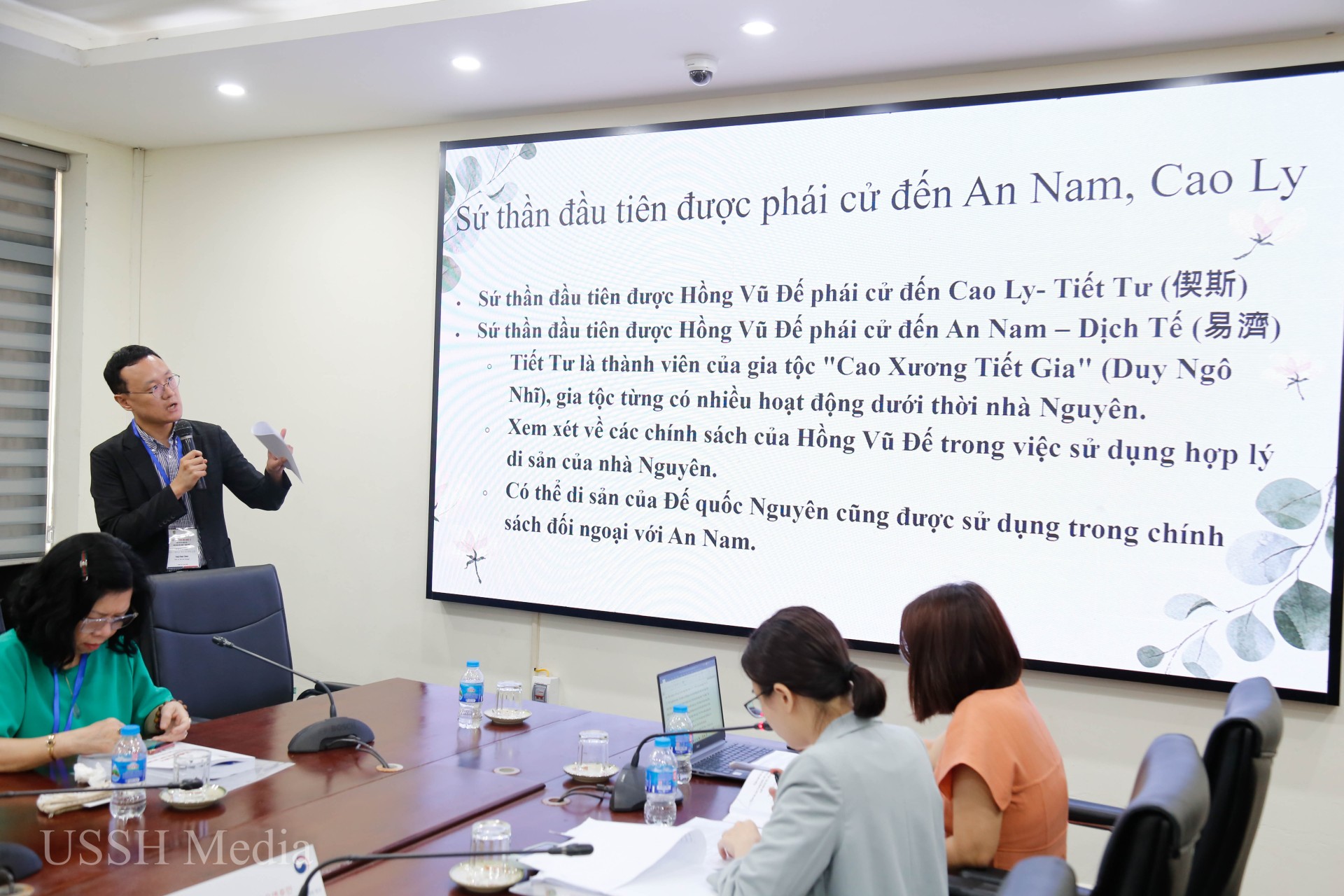
Cultural Bloc in Turmoil: The Responses of the Joseon and Nguyen Dynasties to Western Powers in the Late 19th CenturyAssoc. Prof. Dr. Pham Van Thuy:
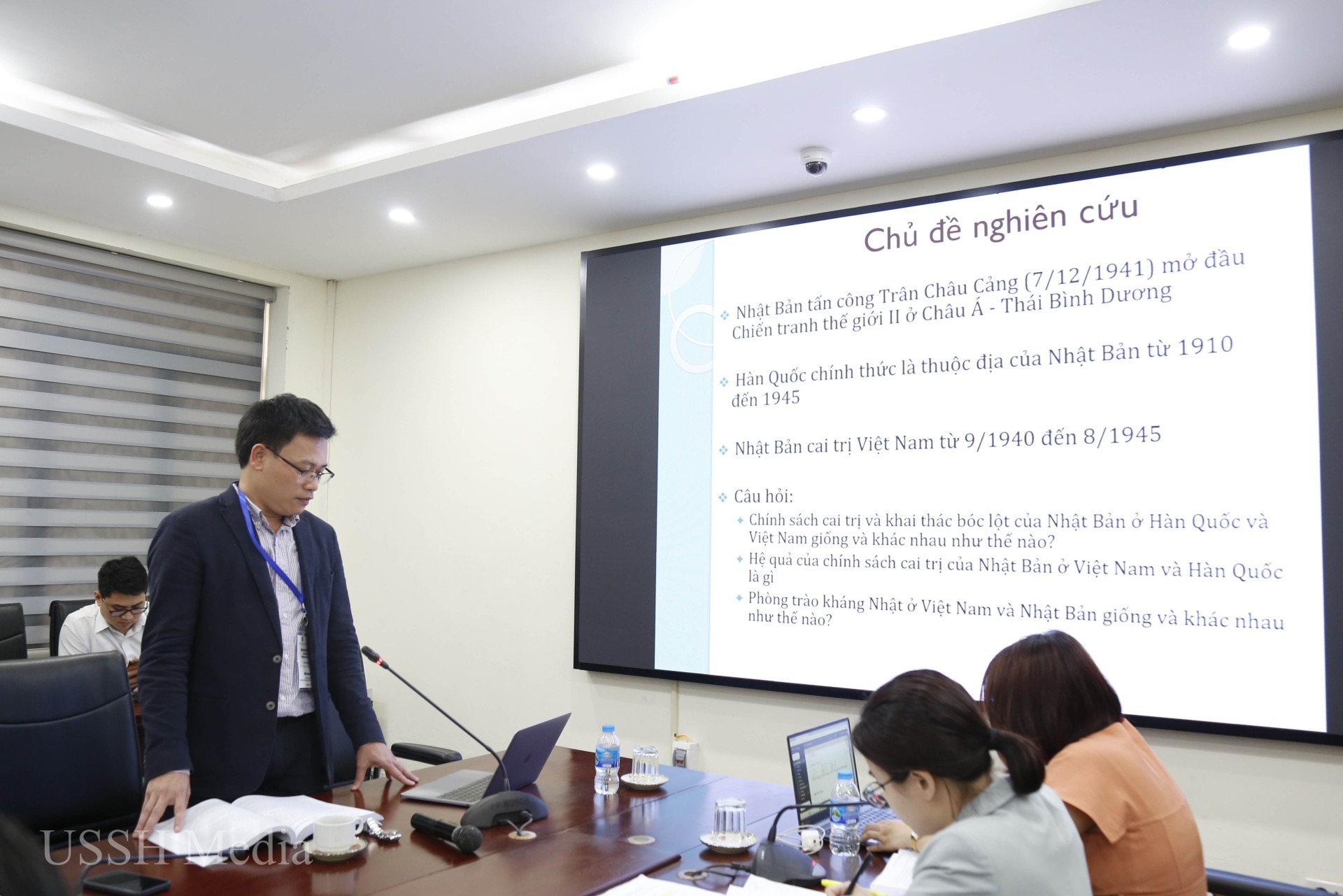
Vietnam and Korea during World War II, Dr. Nguyen Nhat Linh:
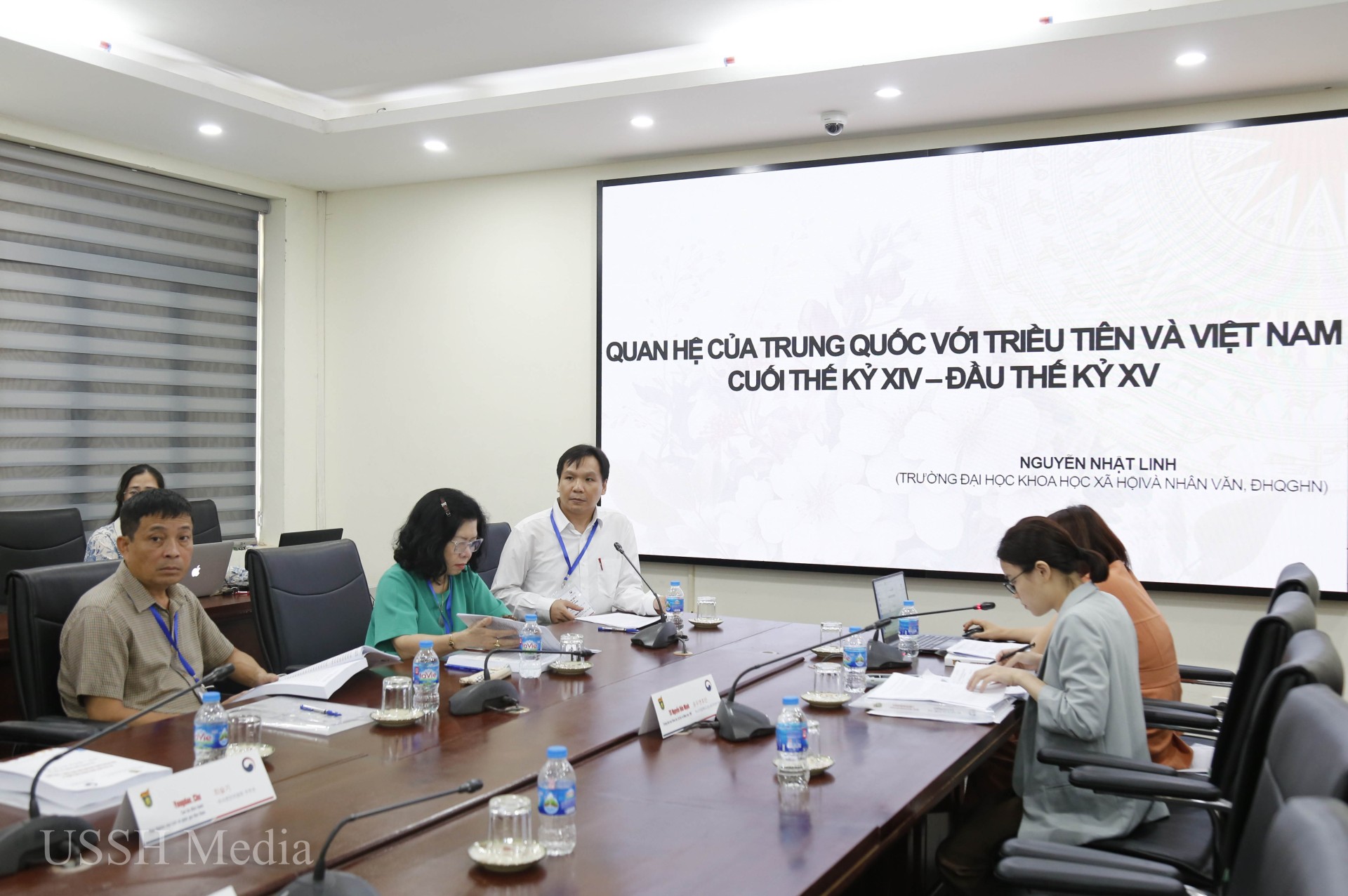
Relations between China and Korea and Vietnam in the late 14th and early 15th centuries....has highlighted historical similarities between the two countries in both the ancient and medieval periods (directly and profoundly influenced by Chinese civilization) and the modern era (both experiencing colonial and fascist oppression and exploitation). The people of both countries suffered from war and national division during the Cold War. However, the different responses of the dynasties in Korea and Vietnam have also left both nations with profound lessons.
"
Joseon's understanding and awareness of the Ming-Dai Ngu relationship in the early 15th century left a significant mark on its "Great Power" policy and national defense, successfully protecting Joseon's independence."— Dr. Nguyen Nhat Linh shared.
In addition, numerous reports based on reliable documentary sources have clarified the close interaction between the two countries, particularly in the cultural and revolutionary spheres, notably the report...
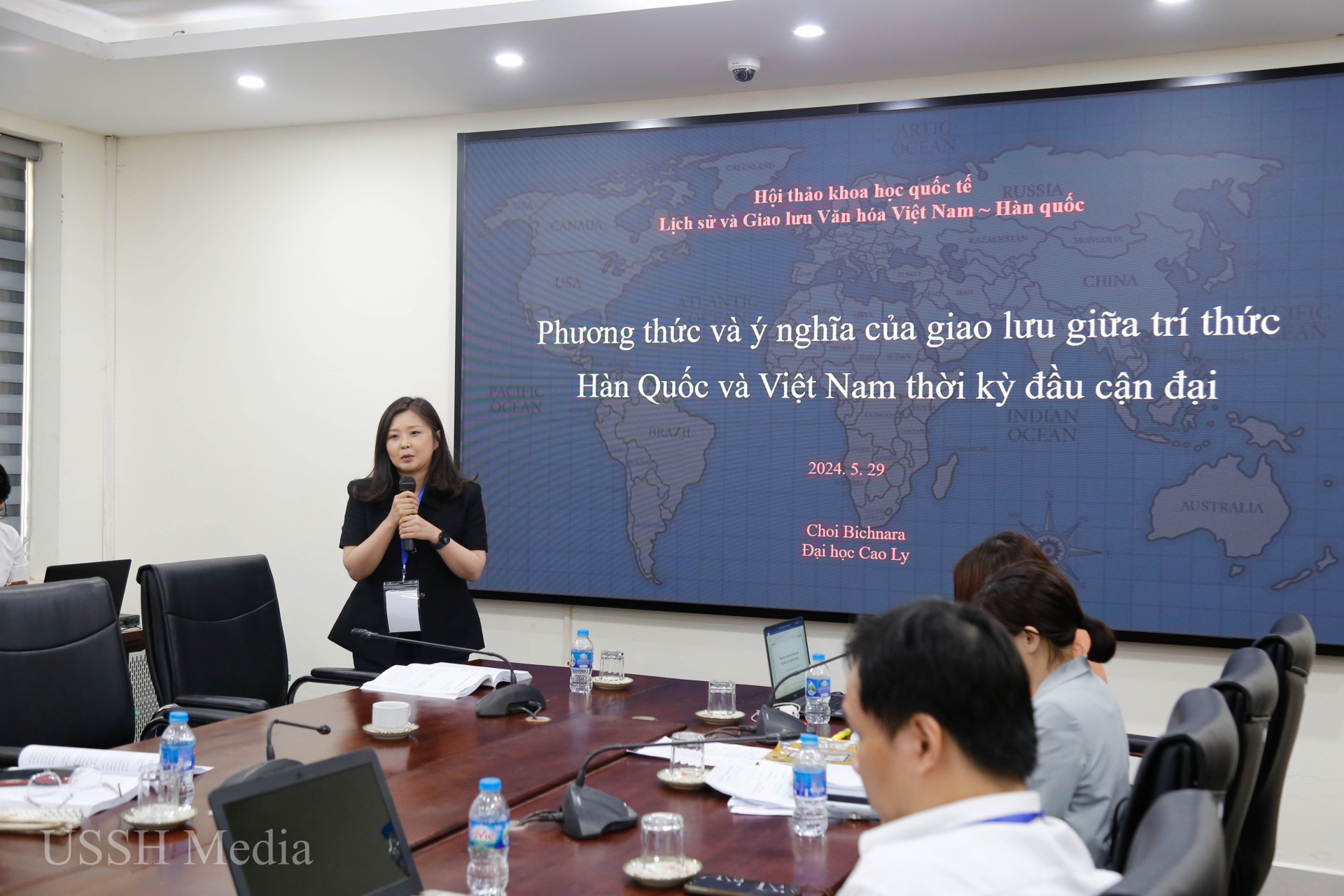
Methods and significance of intellectual exchange between Korea and Vietnam in the modern era.(Prof. Dr. Bichnara);
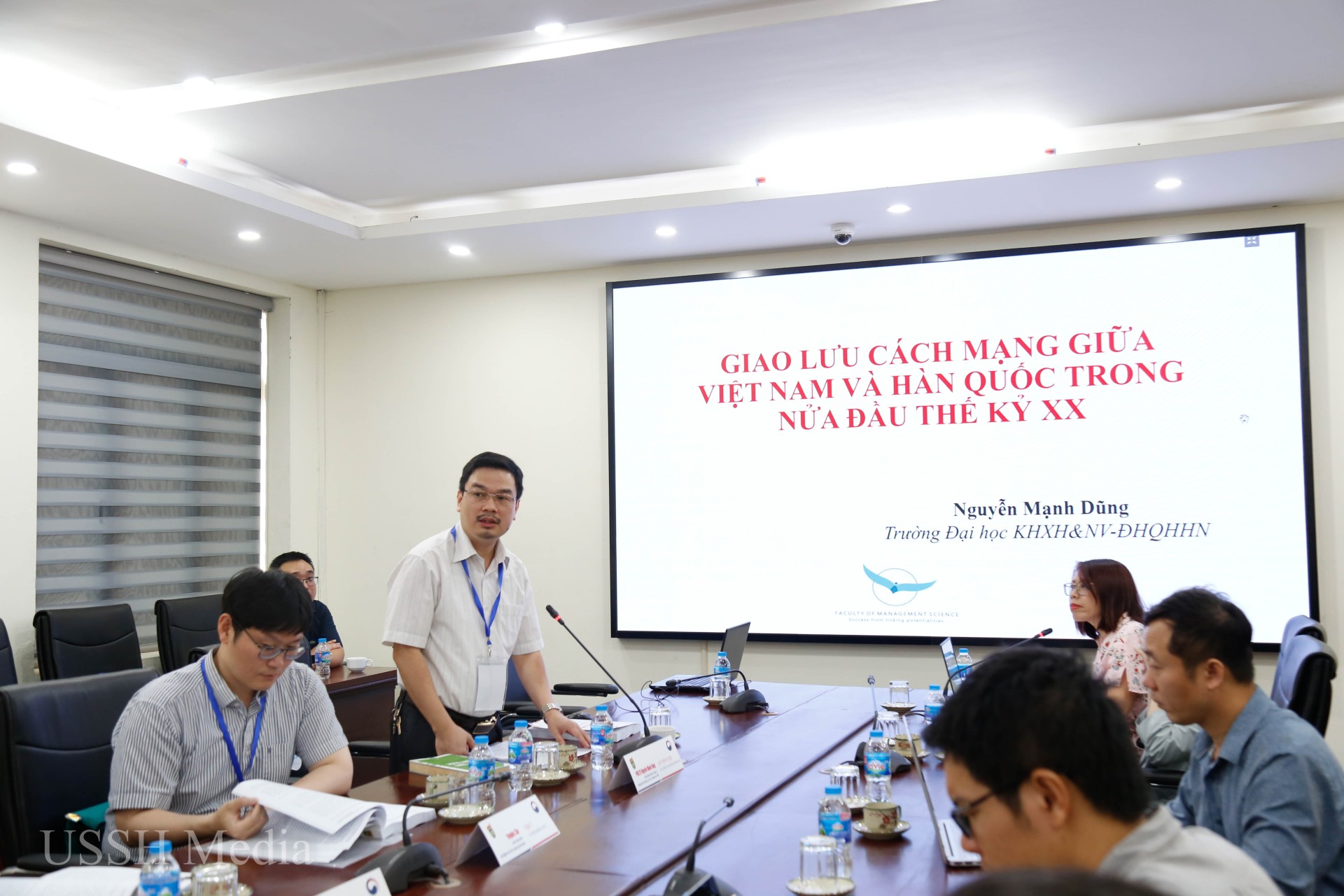
Revolutionary exchanges between Vietnam and Korea in the first half of the 20th century(Assoc. Prof. Dr. Nguyen Manh Dung).
"
Documents stored at the French National Archives that I had access to show that Ho Chi Minh had close ties with Kim Gyu-sik, Hwang Ki-hwan, and Jo Soang, members of the Paris Committee of the Korean Provisional Government in France." - Professor Bichnara asserted in his article.
Dr. Seong-beom Kim and Professor Kim Jong Ouk further demonstrated the interest of Korean scholars in in-depth issues of Vietnamese history with their report:
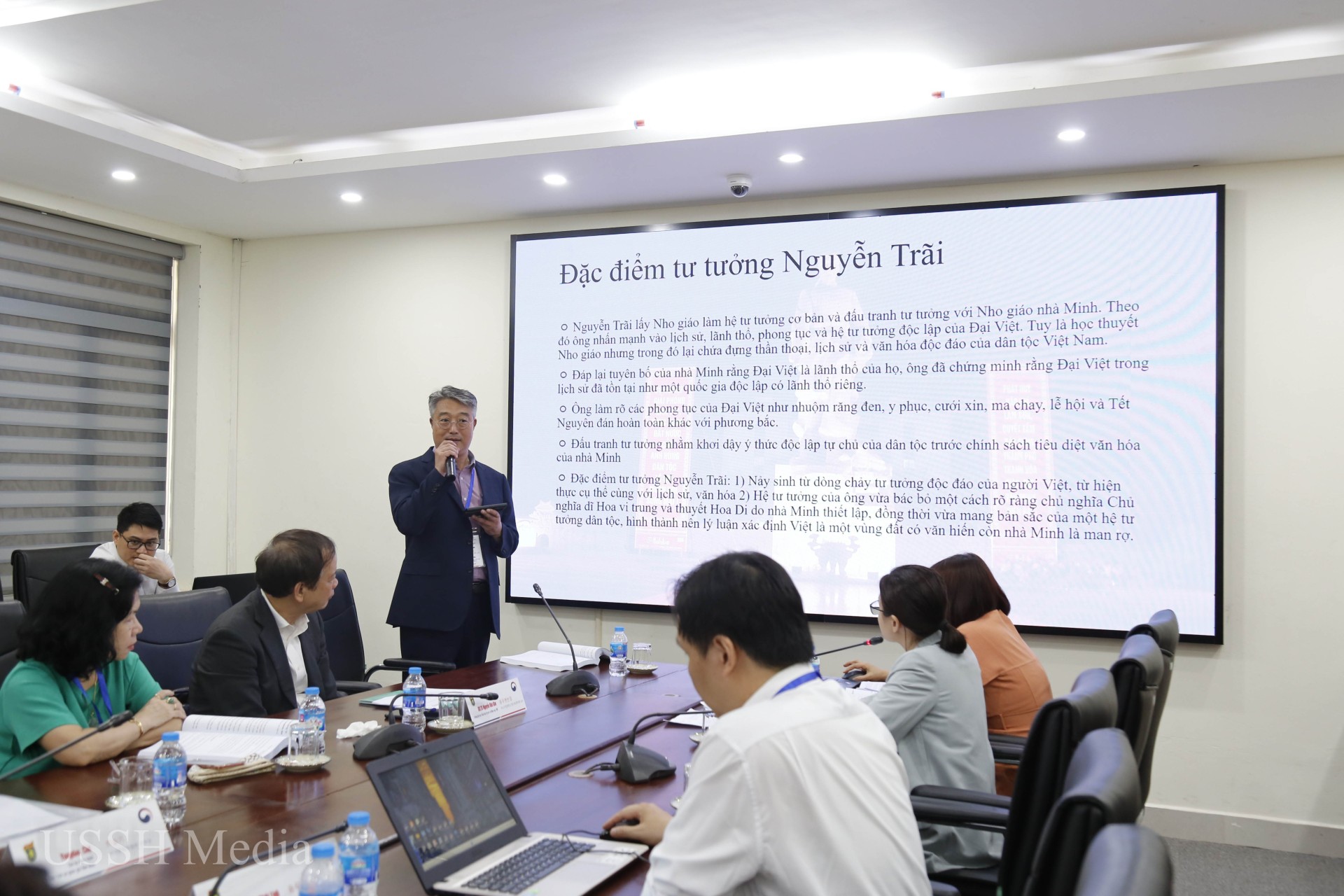
"A Study of Nguyen Trai's Thought during the Dai Viet Era in the 15th Century"and
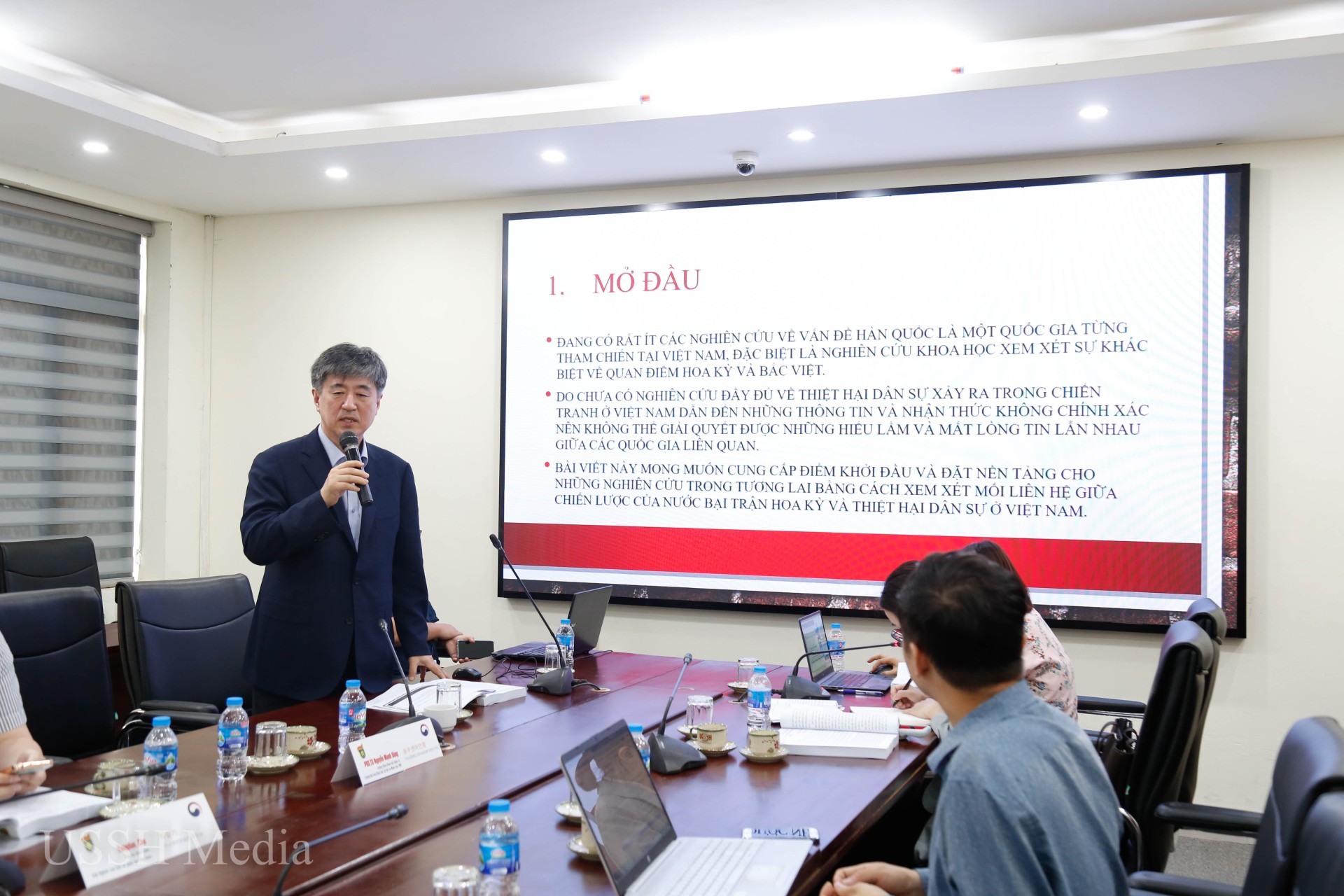
"A Study of the Phong Nhat Phong Nhi Civilian Massacre: Focusing on the US Military's Pacification Campaign".
Following the presentations of research findings by nine scholars, the workshop devoted most of its time to lively discussions and exchanges among delegates on issues of mutual interest to the scientific communities of both countries.
Concluding the discussion session, on behalf of the Organizing Committee of the Conference, Professor Dr. Nguyen Van Kim summarized and highlighted some of the achievements:
- The international scientific conference "History and Cultural Exchange between Vietnam and Korea" is a useful and meaningful scientific event, serving as an academic forum for scholars from both countries to share new research findings on history and cultural exchange.
- The seminar took place in an open, sincere, and high-quality academic atmosphere. The authors shared their perspectives on many in-depth issues of Vietnamese and Korean history and culture: the wars in Vietnam, historical figures, the historical responses of the two countries to the invasion and domination of external forces, the foundations and basic stages of development in history, and the prospects for the future development of friendly relations between Vietnam and Korea. Even seemingly sensitive issues that are not widely researched today (such as the massacres of civilians during wars) were openly studied and discussed by Korean scholars.
- The workshop attracted a large number of scientists, including not only leading professors and experts from both countries, but also many young researchers, graduate students, and even undergraduates. The continuity of generations in research is a valuable tradition and legacy of the National Institute of Historical Research of Korea and the University of Social Sciences and Humanities, which needs to be further promoted.
- At the conference, many new sources of information were updated, and many new scientific issues were raised, which will be invaluable suggestions and foundations for the University of Social Sciences and Humanities and the National Institute of History of Korea to continue effective academic cooperation in the future.
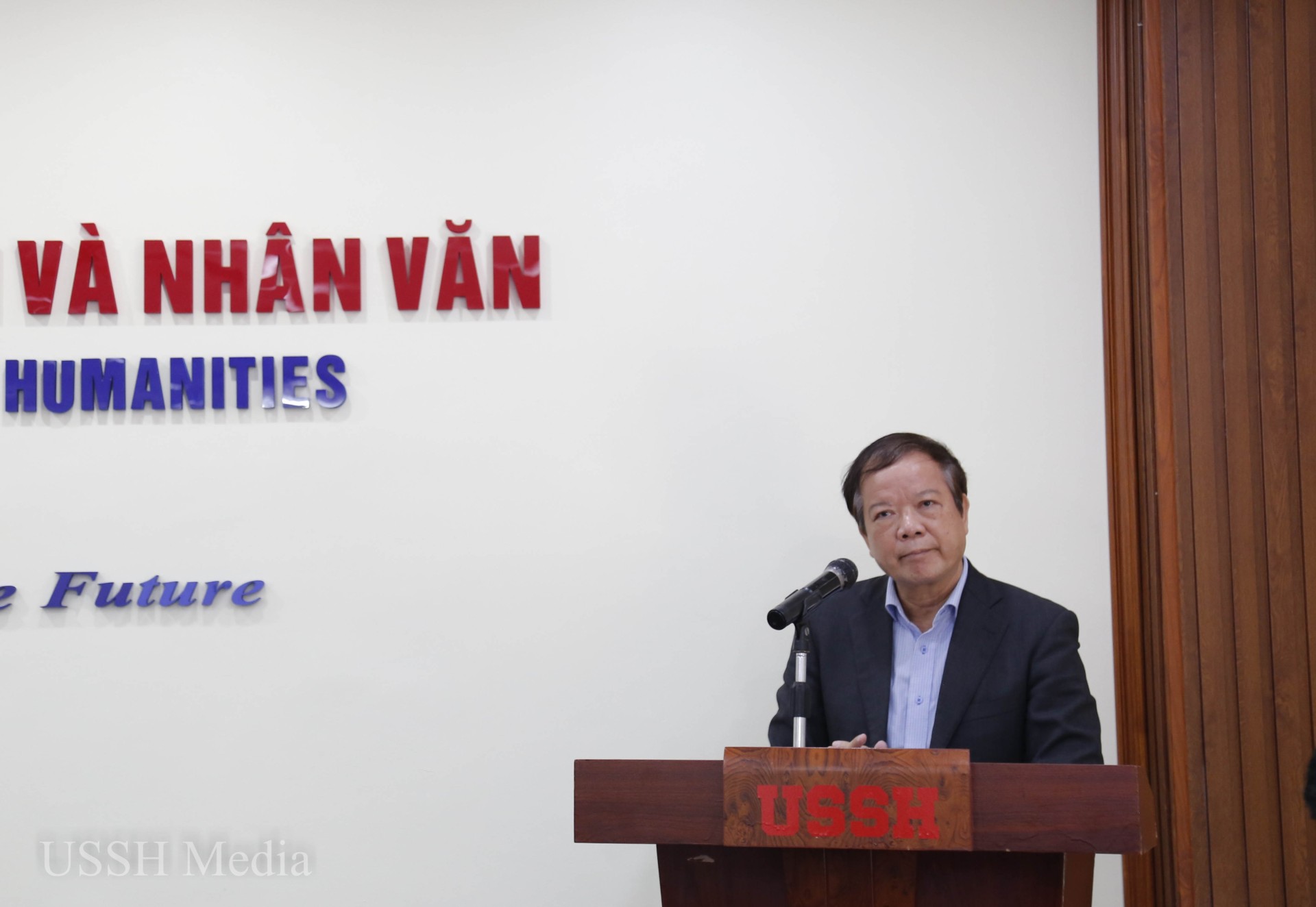
Agreeing with the conclusions of Professor Nguyen Van Kim, Dr. Huh Dong Hyun further shared: “Personally, I found the conference extremely successful. The conference also revealed that there are still certain differences in the way Vietnamese and Korean scientists and people perceive and evaluate many historical events. Therefore, further in-depth research and scientific forums to share new research results are needed to achieve a more objective and accurate perspective. When visiting the University of Social Sciences and Humanities, especially after two days of working with the scientists, I was truly impressed and appreciated the university's slogan, "Respect the Past, Embrace the Future." I feel that this is also the guiding principle of Vietnam in general: you cherish the glorious past of the nation, not forgetting the pain in history. But you are also ready to close the past to move together towards a better, peaceful, and friendly future. I hope that with this spirit…” With that humanistic spirit, we will have extensive and effective cooperation in the future.”
The full text of the scientific reports and papers presented at the Conference will be published in the Proceedings in both Vietnamese and Korean. We invite interested readers to check them out.
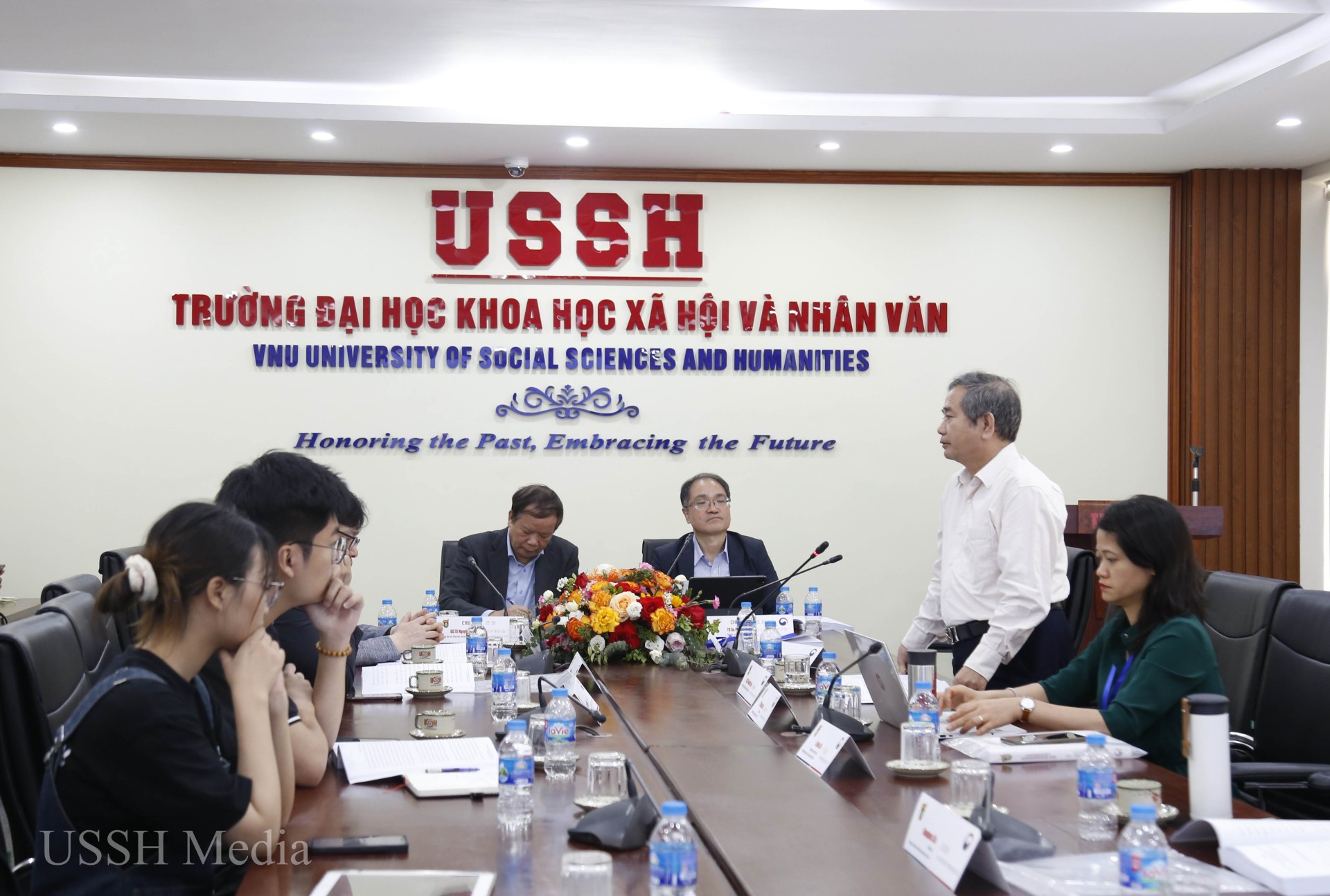
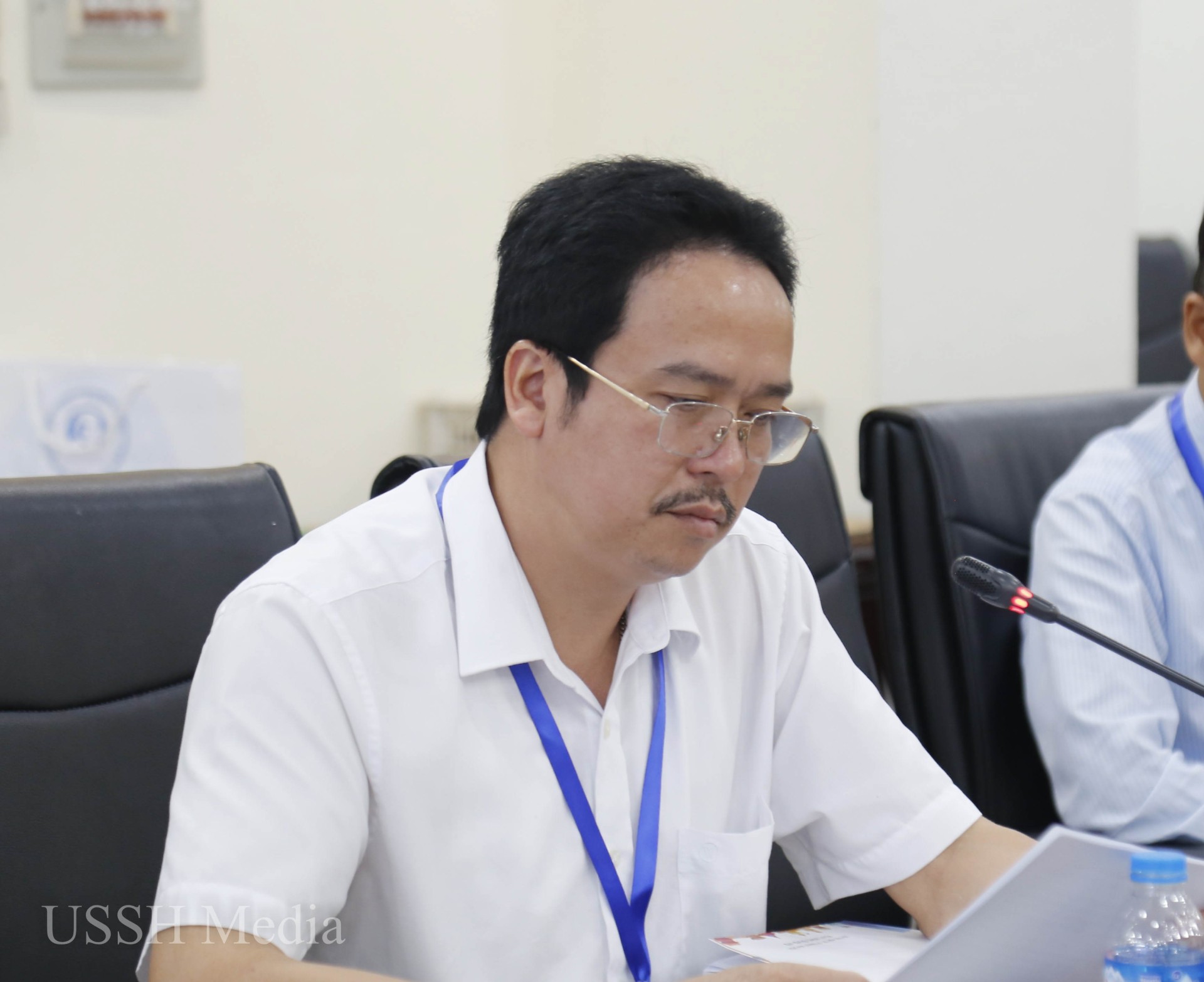
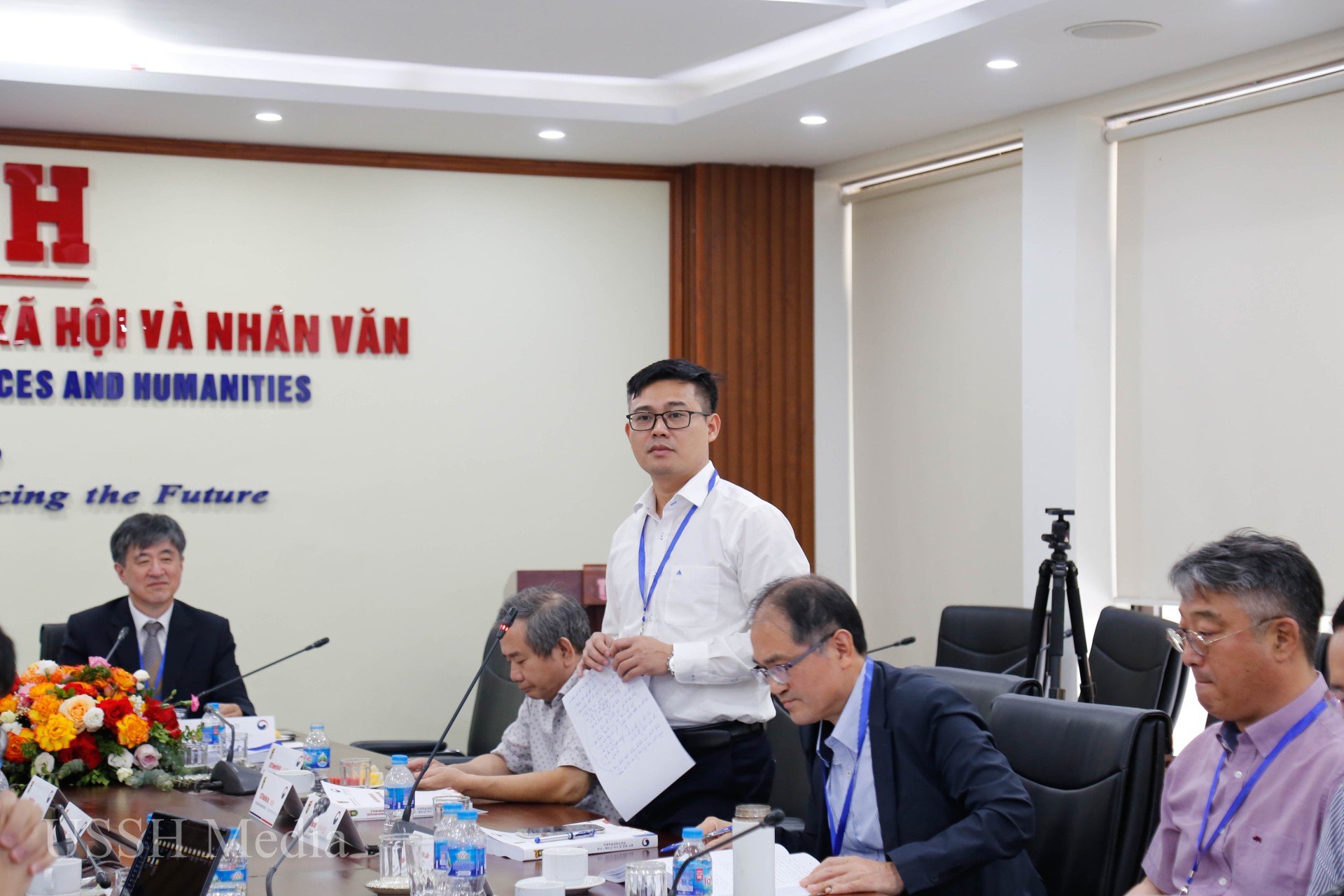
Some photos from the International Scientific Conference: “History and Cultural Exchange between Vietnam and Korea” held on May 28-29, 2024 at VNU-USSH.