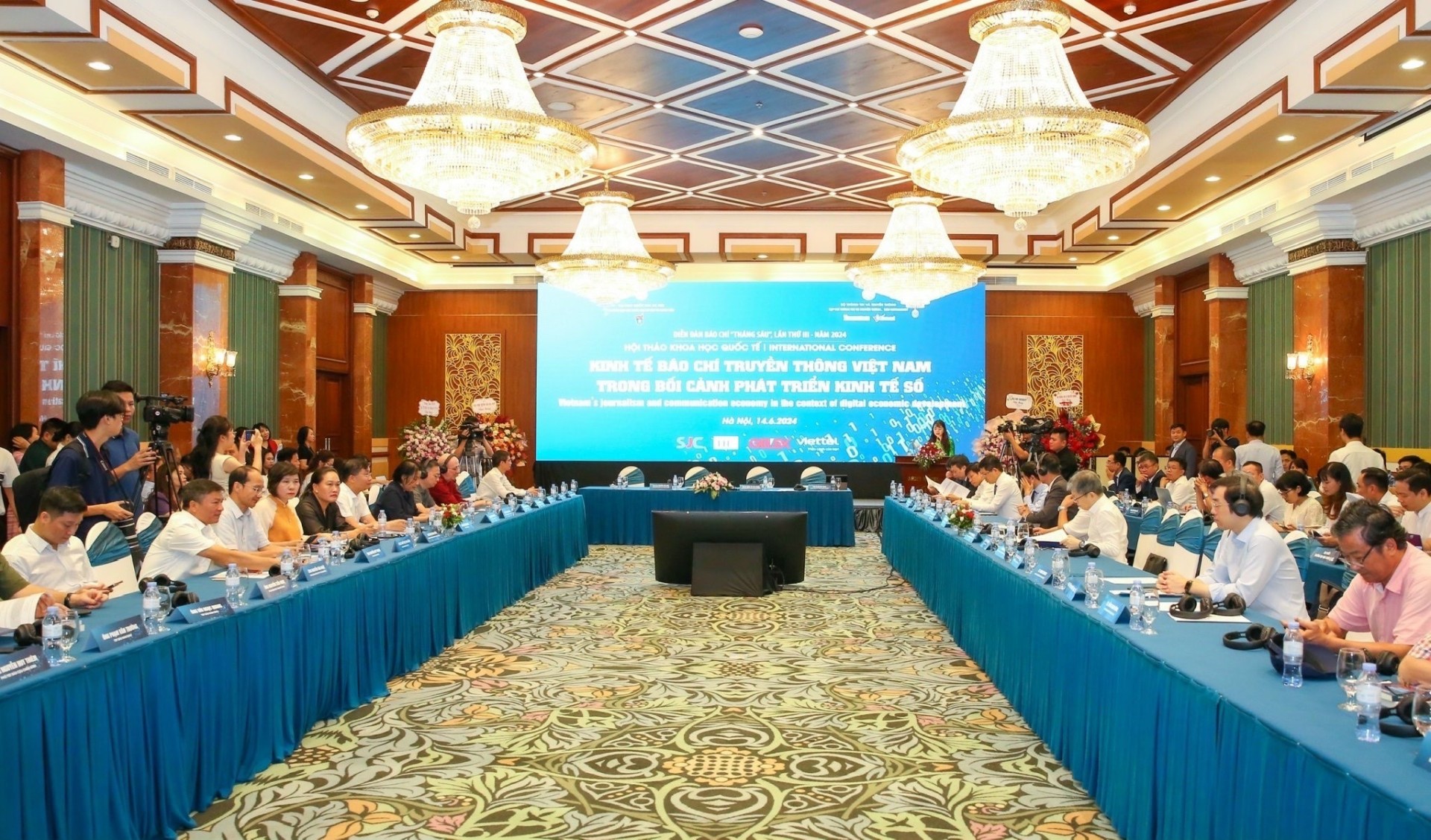
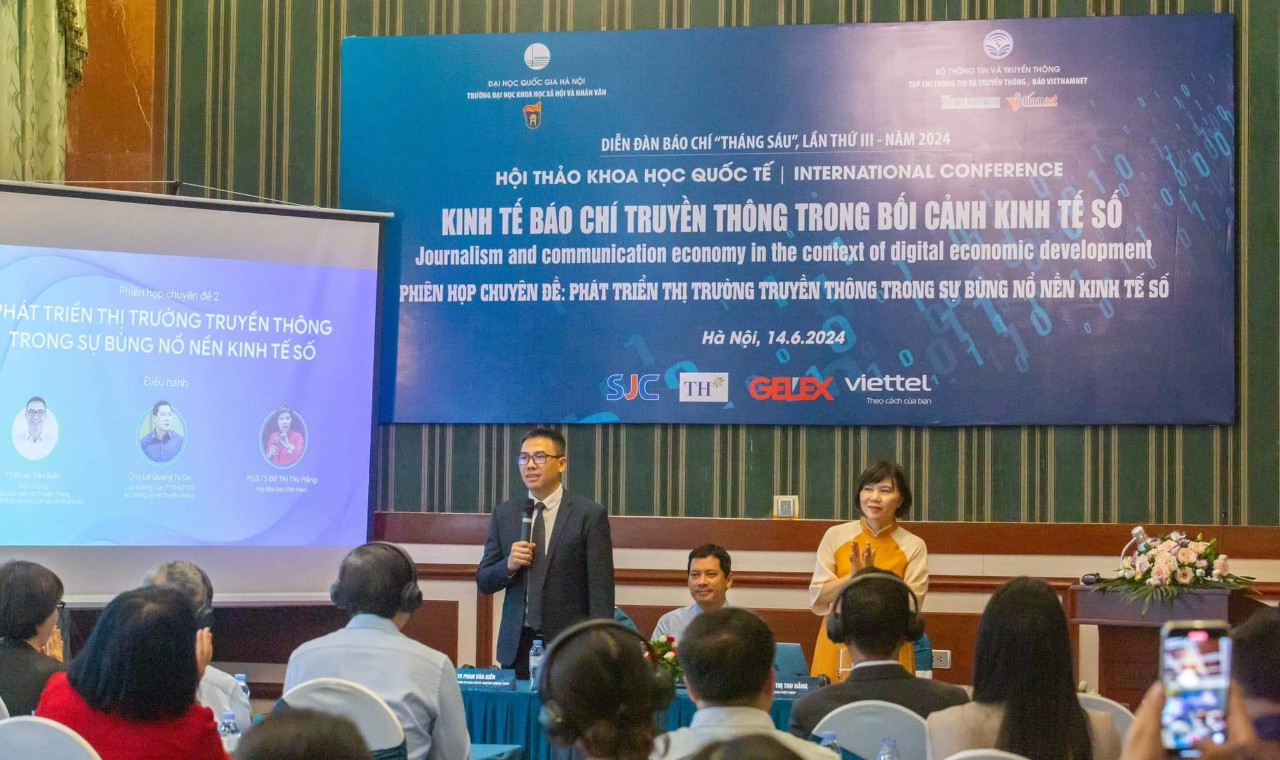
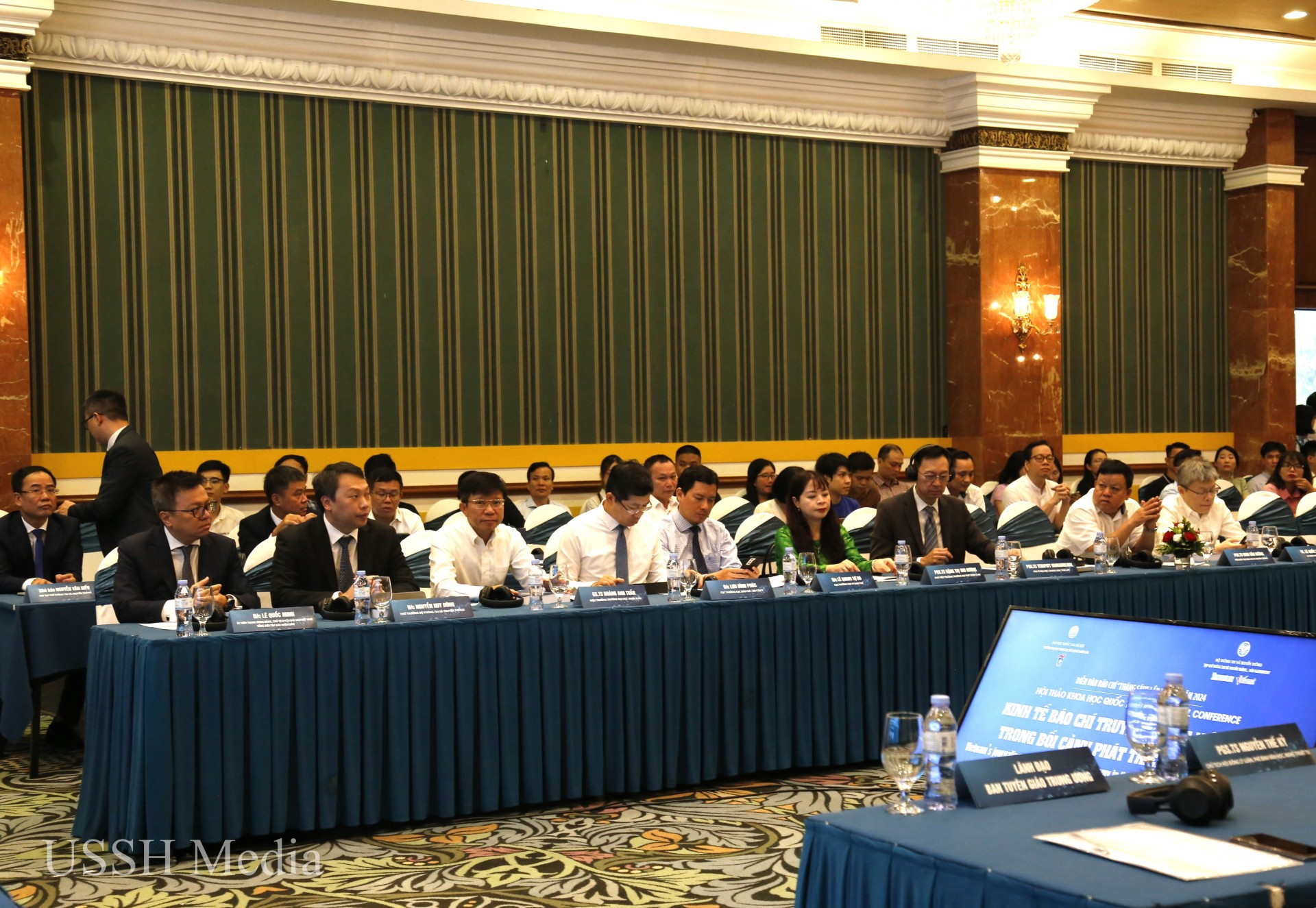
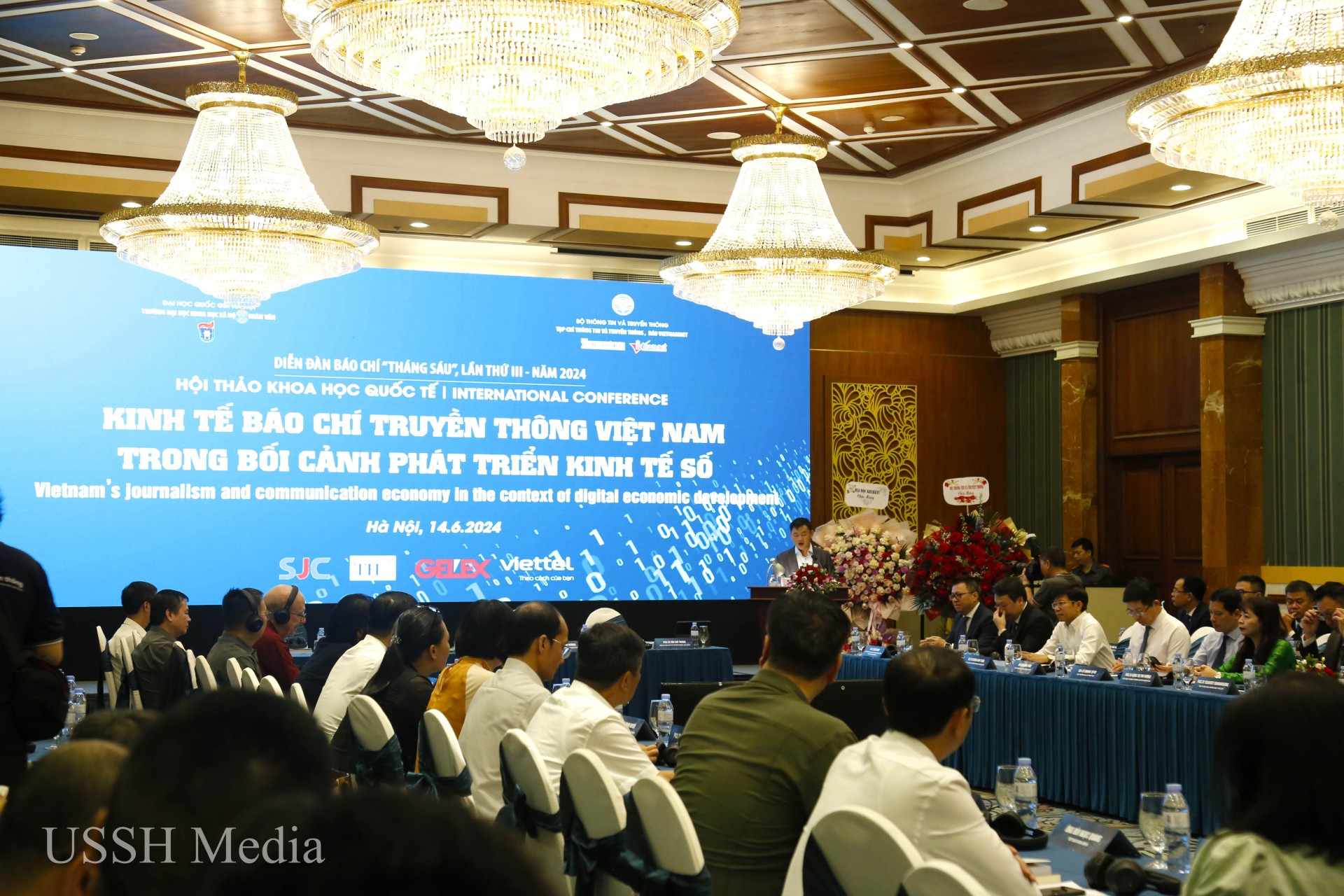
The workshop is part of the annual event of the Vietnamese press community called the Third June Press Forum (2024), co-organized by the Information and Communication Magazine, Vietnamnet online newspaper (Ministry of Information and Communications) and the Institute of Journalism and Communication Training (University of Social Sciences and Humanities).
Identifying the economic landscape of Vietnamese journalism and mediaCurrently, the country has 6 major multimedia press agencies, 127 newspapers, 670 magazines; and 72 radio and television stations. Although they differ in type, most press agencies are experiencing a decline in revenue, especially television stations and press agencies that are completely financially independent.
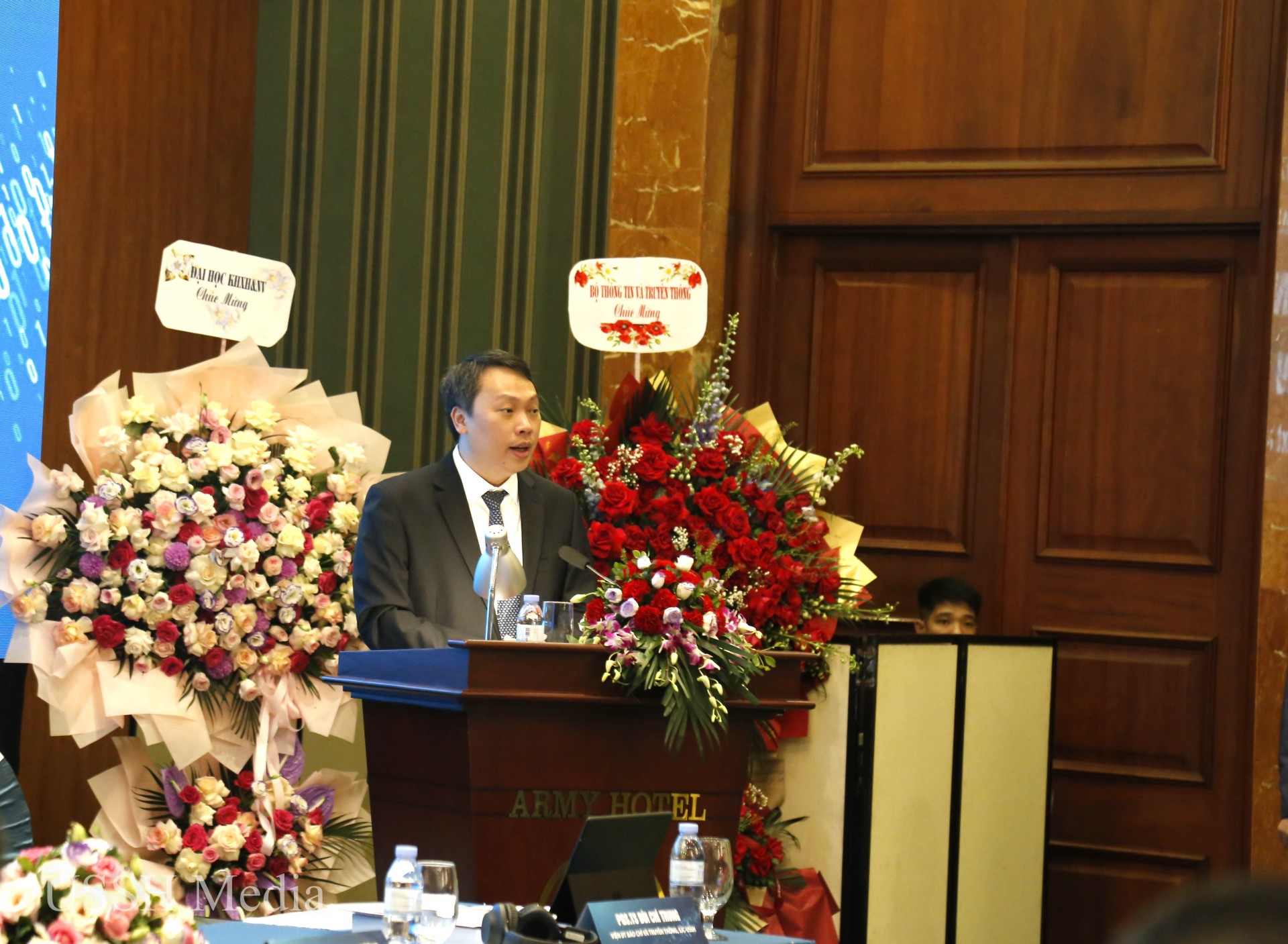
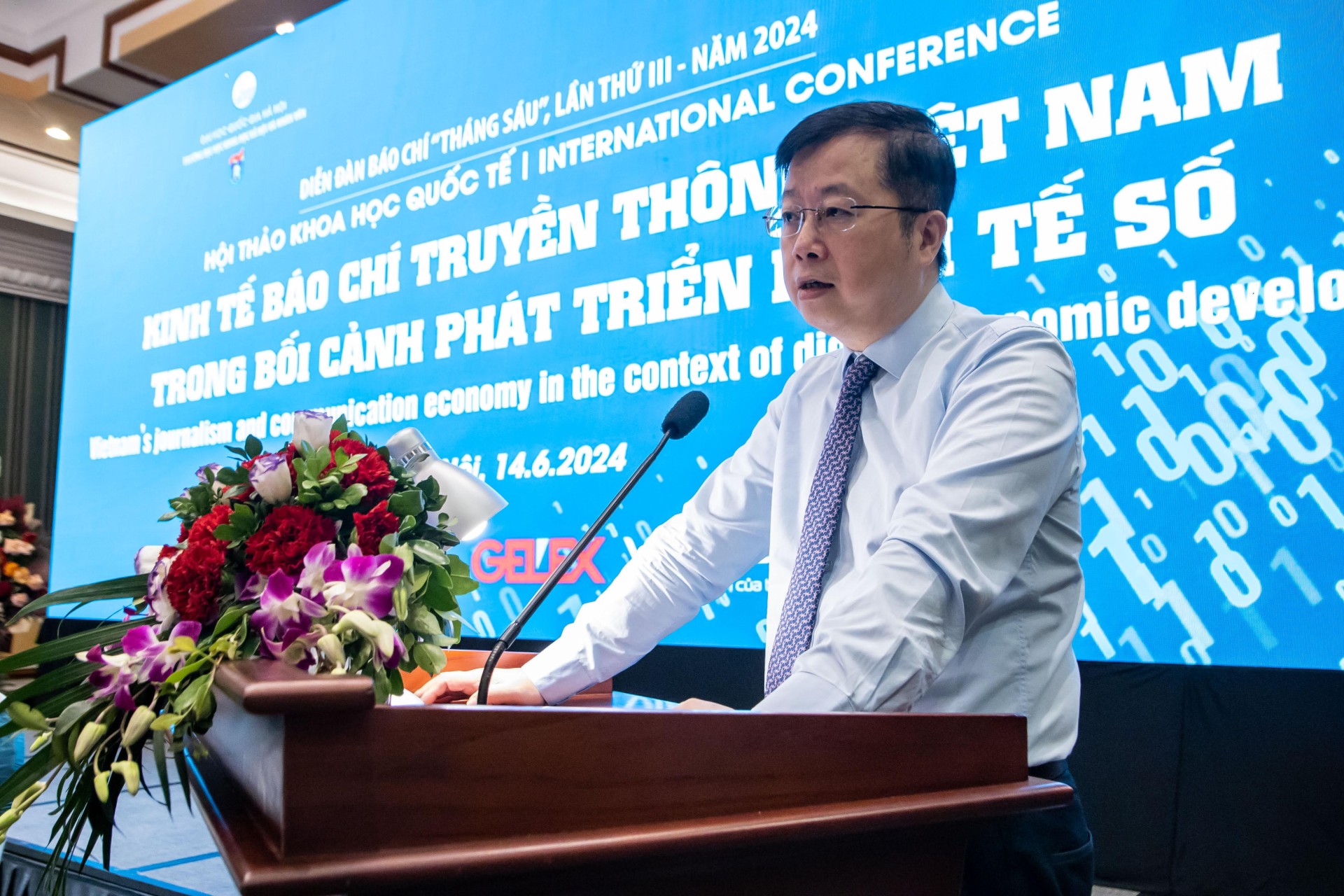
Deputy Minister of Information and Communications Nguyen Huy Dung delivered a speech at the conference.
In his opening remarks at the workshop, Deputy Minister of Information and Communications Nguyen Huy Dung stated that the revenue of newspapers and magazines in the first nine months of 2023 decreased by 9.4% compared to the same period in 2022; while the total revenue of radio and television stations in 2023 decreased by 23% compared to 2022. In addition, media outlets are facing the risk of a sharp decline in revenue, as social media platforms like Facebook and Google have taken away approximately 70% of advertising revenue from mainstream media… Meanwhile, the current annual recurrent expenditure on the press is less than 0.5% of the total recurrent expenditure of the State budget; investment in the press is also low, accounting for only about 0.25% of the total investment expenditure of the State budget.
The Deputy Minister of Information and Communications hopes that agencies, speakers, scientists, and leaders of media organizations will contribute objective and comprehensive opinions on various aspects related to the current economics of media and journalism. Through this, they should propose and recommend solutions to the media steering committee, state management agencies for the media, governing bodies, media organizations, and competent authorities to address the "bottlenecks" related to the economics of media and journalism.
Deputy Minister of Information and Communications Nguyen Thanh Lam delivered a speech at the conference.
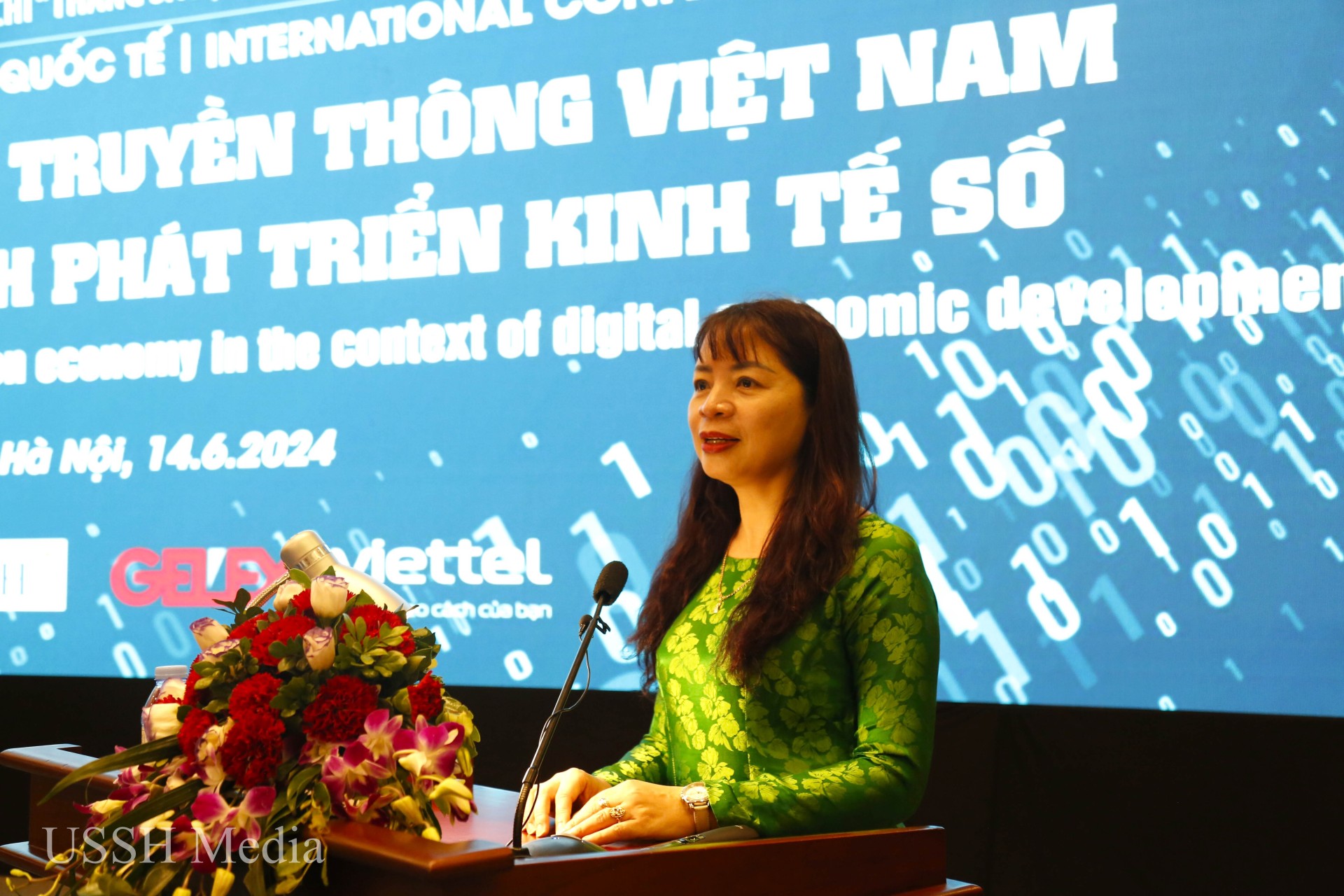
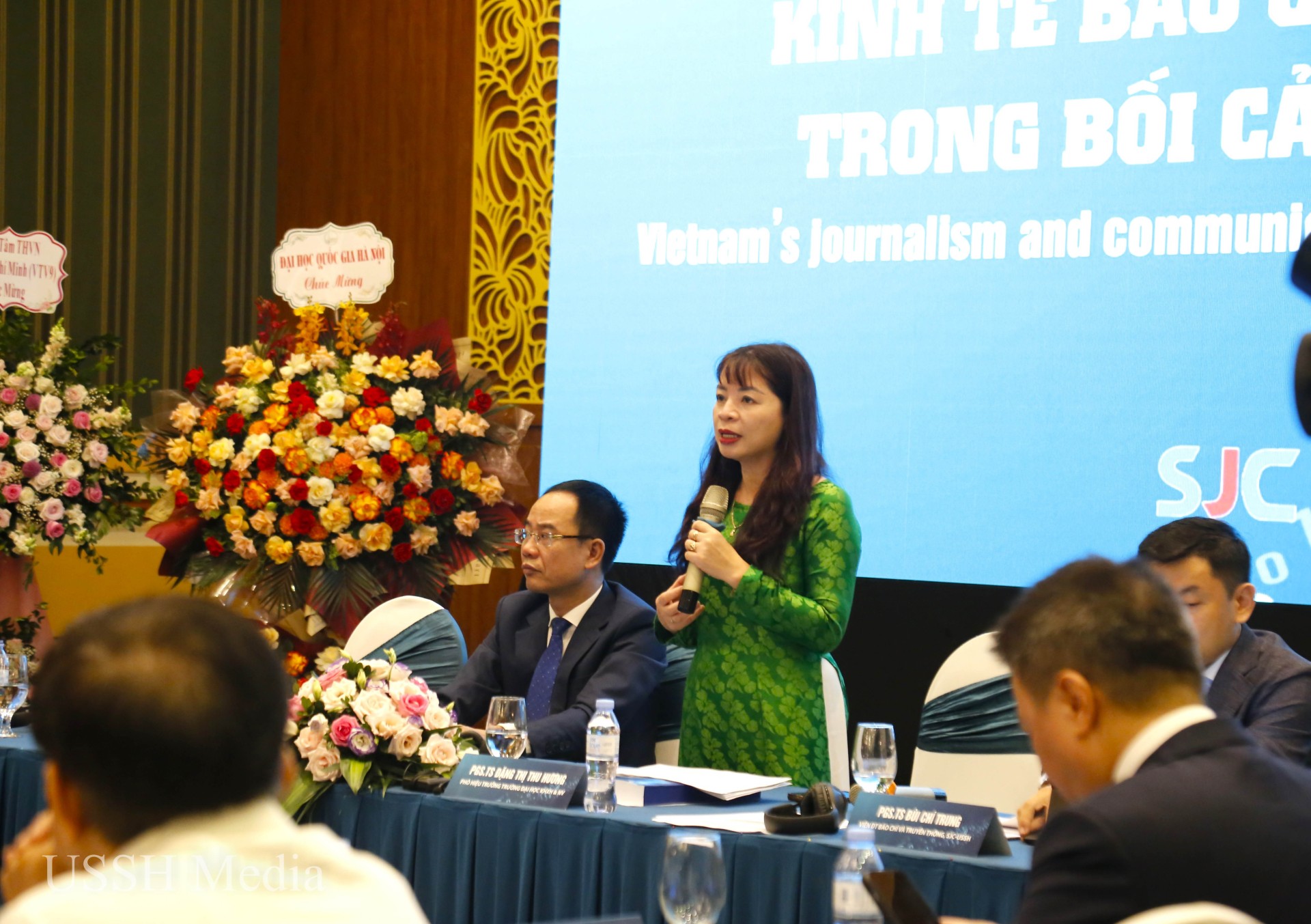
Assoc. Prof. Dr. Dang Thi Thu Huong - Vice Rector of the University of Social Sciences and Humanities, Vietnam National University, Hanoi, delivered the opening remarks at the conference.
Associate Professor Dr. Dang Thi Thu Huong - Vice Rector of the University of Social Sciences and Humanities, Vietnam National University, Hanoi, noted that in the context of globalization and digital transformation, competition among media organizations to attract the public and advertisers is becoming increasingly fierce. The emergence and widespread dissemination of digital platforms (such as Facebook, Google, and Apple) along with the incredible breakthroughs of information technology are challenging traditional business models that have brought success to media organizations for decades.
Against this backdrop, the state budget allocated to media outlets is low and decreasing, the number of partners and programs produced through collaborative productions by radio and television stations has significantly shrunk, and advertising revenue has declined.
In early 2023, the Prime Minister signed Decision No. 348/QD-TTg approving the Strategy "Digital Transformation of Journalism until 2025, with a vision to 2030," with specific goals: by 2030, 100% of media outlets will upload content to digital platforms (prioritizing domestic platforms), and media outlets will optimize revenue sources, with 50% of media outlets increasing revenue by at least 20%.
Associate Professor Dr. Dang Thi Thu Huong emphasized: "The economics of journalism and media in the context of digital economic development presents many opportunities and challenges for the strong development of Vietnamese journalism, while maintaining the goal of building media organizations in a professional, humane, and modern direction; fulfilling the mission of information and propaganda to serve the revolutionary cause of the Party and the country's reform."
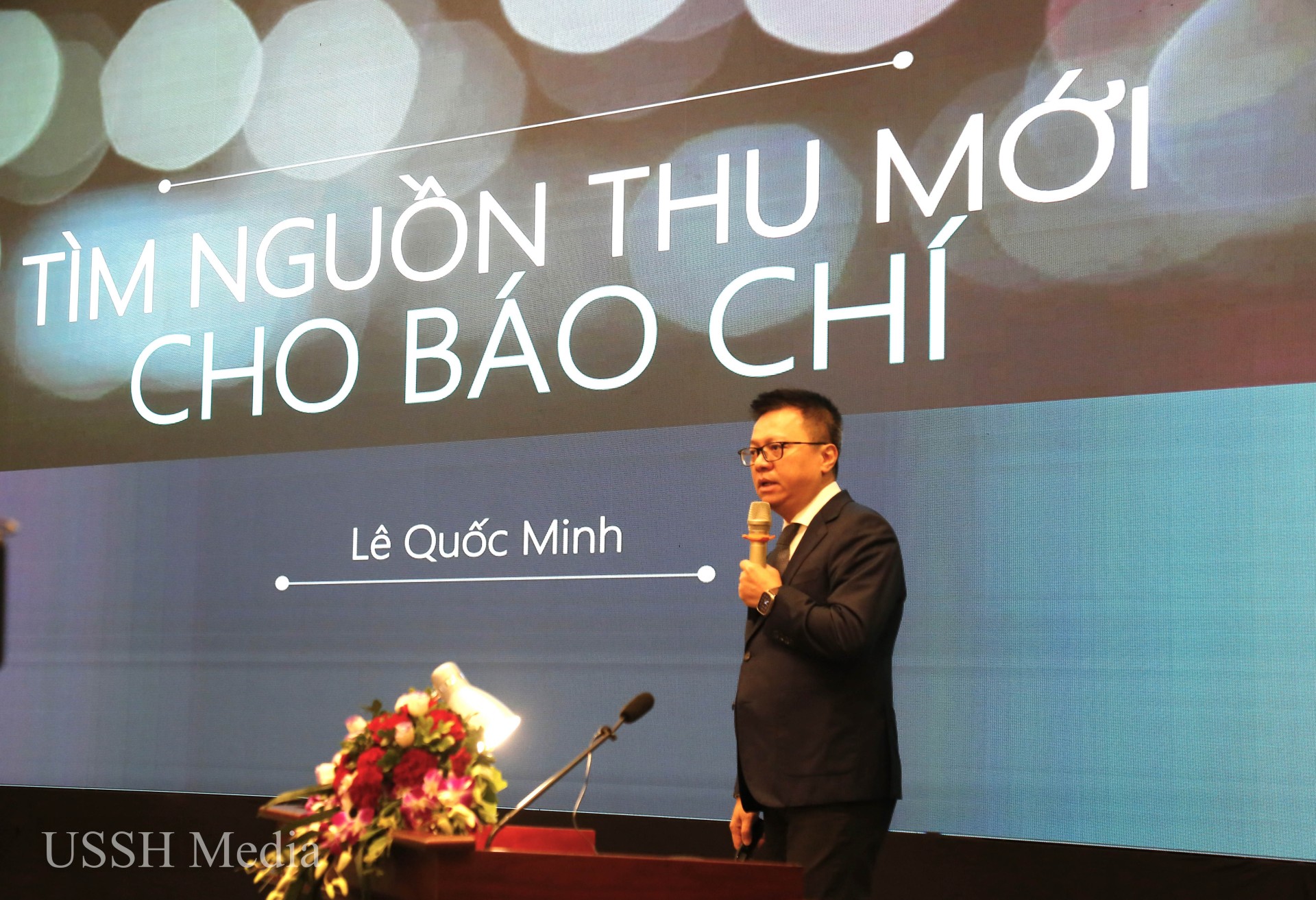
Journalist Le Quoc Minh - Member of the Central Committee of the Communist Party of Vietnam, President of the Vietnam Journalists Association, and Editor-in-Chief of Nhan Dan Newspaper - shared an overall picture of the revenue of media organizations.
Providing an overview of the revenue of media outlets, Mr. Le Quoc Minh - Member of the Central Committee of the Communist Party of Vietnam, Chairman of the Vietnam Journalists Association, and Editor-in-Chief of Nhan Dan Newspaper - shared that the revenue structure of media outlets has changed. So, besides traditional advertising and readership, what are the most important revenue sources in 2022 compared to 2023?
There are many different forms of revenue structure for media organizations today. Among them, event organizing is a business model being implemented by media organizations, with revenue from event organization potentially accounting for 20% of total revenue in some media outlets. Advertising is a significant source of revenue, however, it has decreased from approximately 90% to 40-50% of media outlets' revenue due to the dominance of other electronic media services. In addition, there are new revenue streams such as e-commerce, brand licensing (a new business model in the global media industry); providing information technology services; reproducing published content; or becoming a retailer of specialized publications and products...
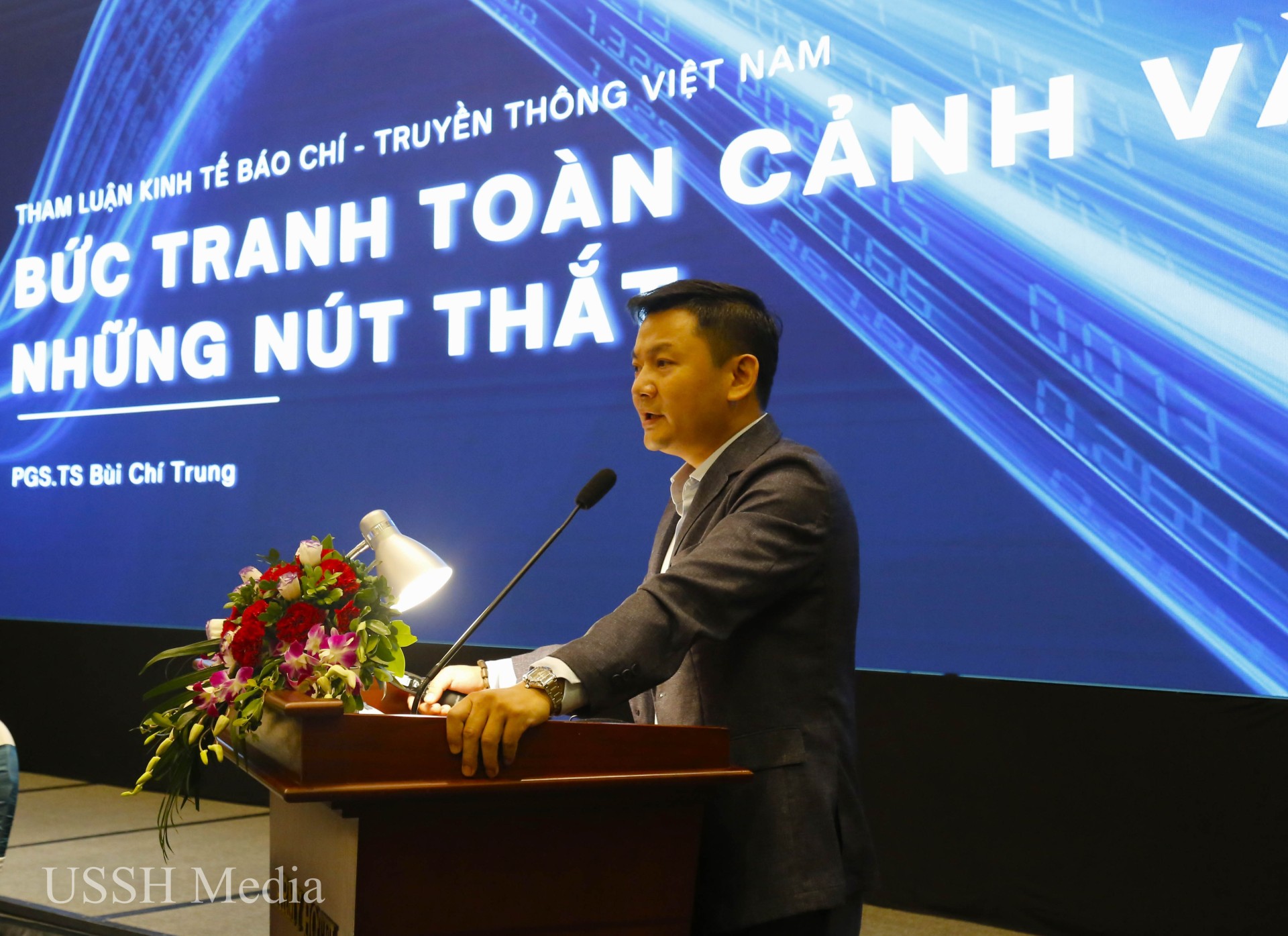
The economics of media and journalism, and the bottlenecks.What are the current bottlenecks in the economics of journalism? In answering this question, Associate Professor Bui Chi Trung shared the key obstacles in the development of the journalism and media economy, including: bottlenecks in awareness and development goals; bottlenecks between the explosion of technology and the supply-demand dynamics; and bottlenecks related to motivation and vested interests in building the overall system structure of the journalism and media economy and its management institutions.
Associate Professor Bui Chi Trung suggested: How can the press maintain its principles and objectives while still generating revenue for reinvestment and production? Is it absolutely necessary to maintain a horizontal system organized by administrative locality and by industry or sector?
Assoc. Prof. Dr. Bui Chi Trung - Deputy Director of the Institute of Journalism and Communication Training, Faculty of Social Sciences and Humanities, Vietnam National University, Hanoi
The speaker emphasized that solving the economic problems of journalism and media must be linked to restructuring the national media system. The development of the media economy should not be viewed solely from the perspective of a few specific cases, or from a single field or type of media, but rather from a holistic, strategic, and comprehensive perspective of the national media system, in the context of the current strong development of the digital economy. This will lead to breakthroughs in fulfilling the role and function of revolutionary journalism, and of a professional and humane Vietnamese media system.
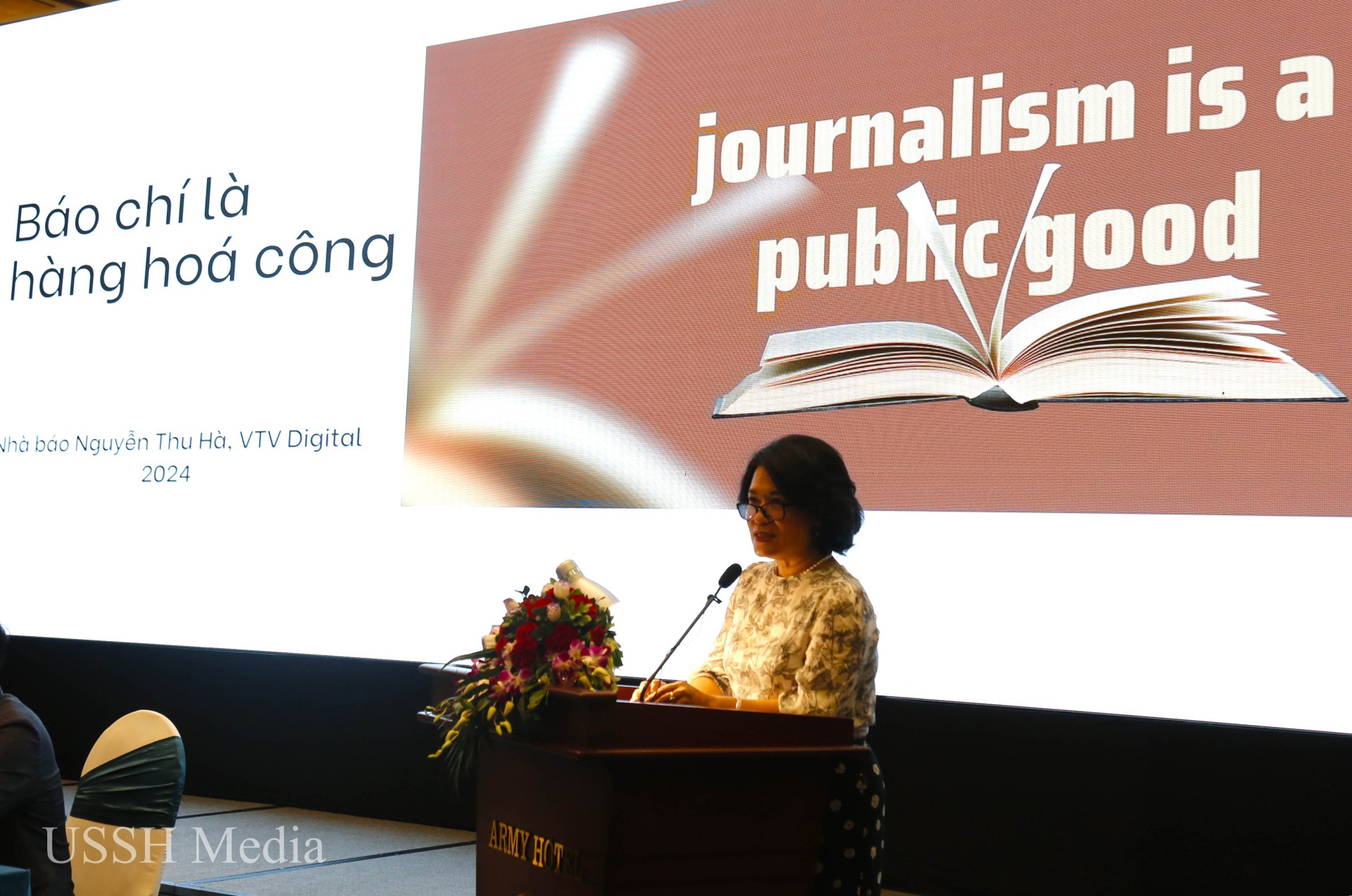
Journalist Nguyen Thu Ha - Deputy Director of the Center for Digital Content Production and Development (VTV Digital), Vietnam Television, presented a paper at the conference.
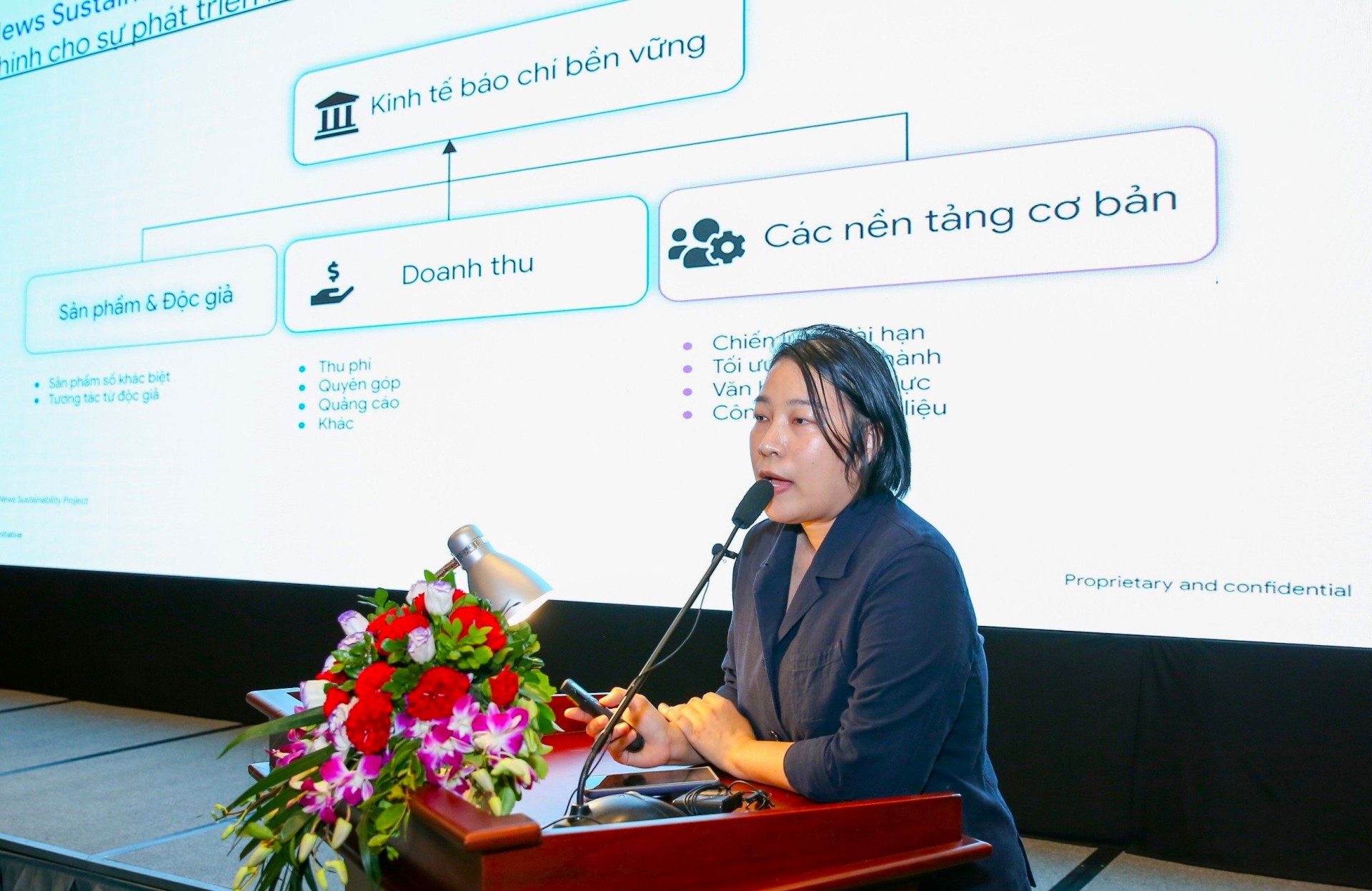
What are the solutions for developing Vietnam's unique media and journalism economy?Presenting her paper at the conference, Ms. Nguyen Thuy Duong from Google emphasized the most important factors in developing a readership and business opportunities in the digital environment. These include building differentiated products and optimizing reader interaction; developing a long-term strategy and setting clear goals; producing high-quality journalistic products; and maintaining discipline to foster innovation.
Ms. Nguyen Thuy Duong from Google discussed audience development and business opportunities in the digital environment.
Speaker Nguyen Thuy Duong offered three suggestions from Google for media organizations in developing the digital economy: media outlets need to become essential to their readers; build direct relationships with readers to diversify revenue streams; and adapt to changing reader needs.
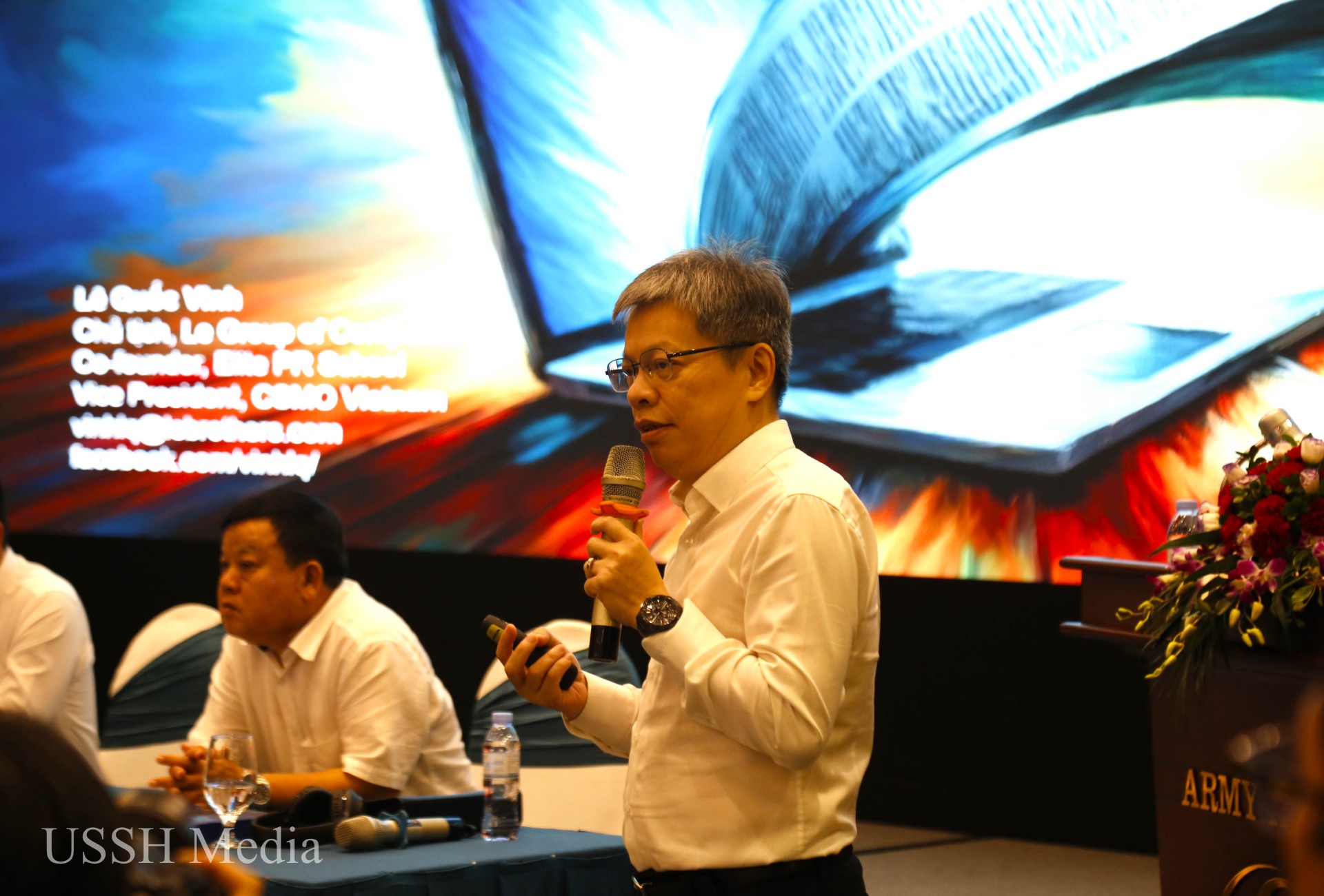
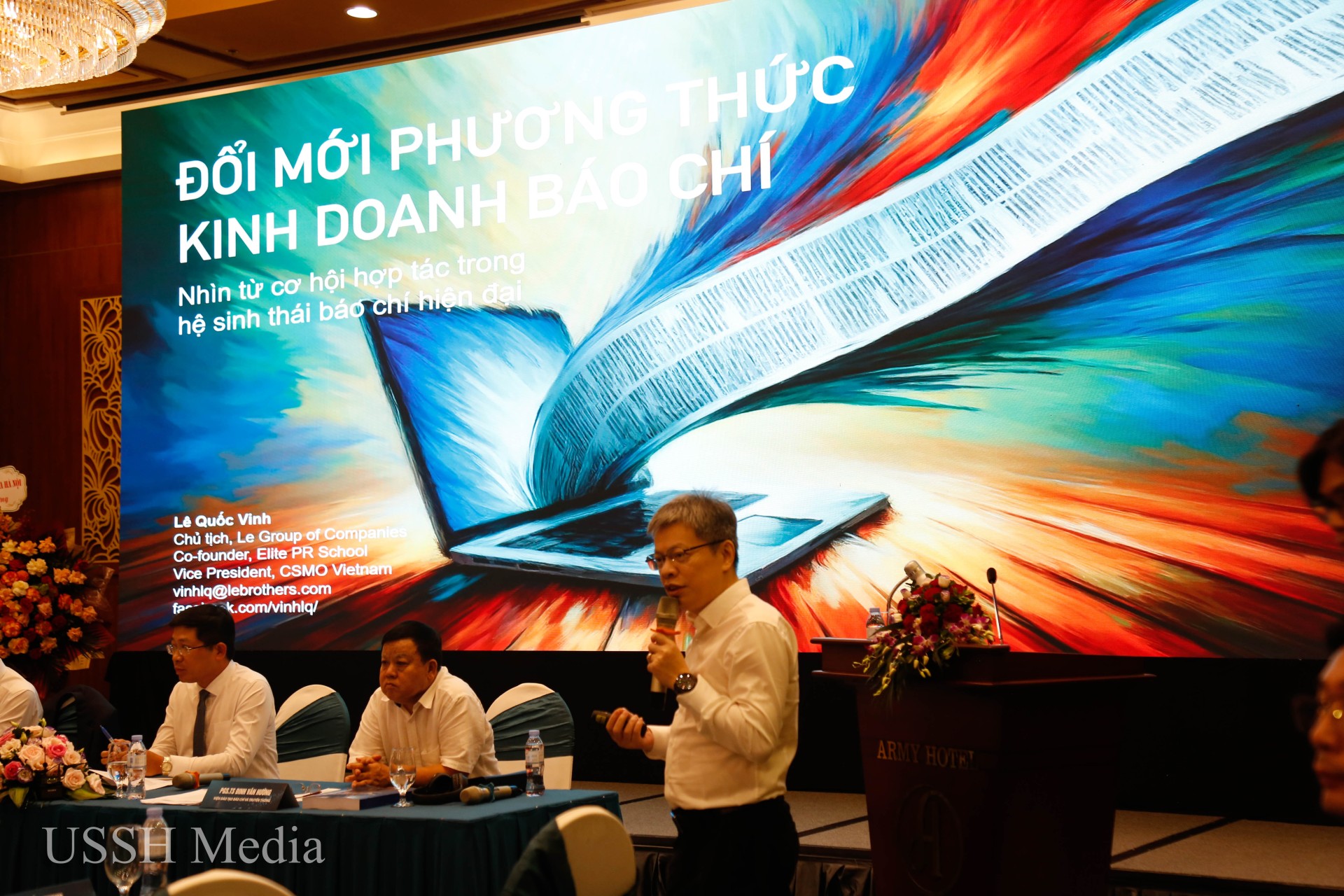
Dr. Le Quoc Vinh - Chairman of Le Media Group - suggests current economic models for journalism.
Sharing his insights on the modern media ecosystem, Mr. Le Quoc Vinh – Chairman of Le Media Group – stated that there are eight fundamental elements: Influencing factors, Technology and data, Community and social networks, Customers, Newsrooms, Content creators, Consumers and content feedback, and Content platforms. Accordingly, these elements are interrelated…
Today's content consumers are deeply fragmented, belonging to many different groups (organizations, businesses, individual readers, etc.). Each group has different "media touchpoints," different experiential needs, different reading/viewing styles, and different interests in digital content. Therefore, media organizations need strategies to understand content consumers in the development of the media economy.
The speaker outlined current economic models for journalism, including: revenue from readers, revenue from businesses, revenue from self-generated income; and revenue from social projects.
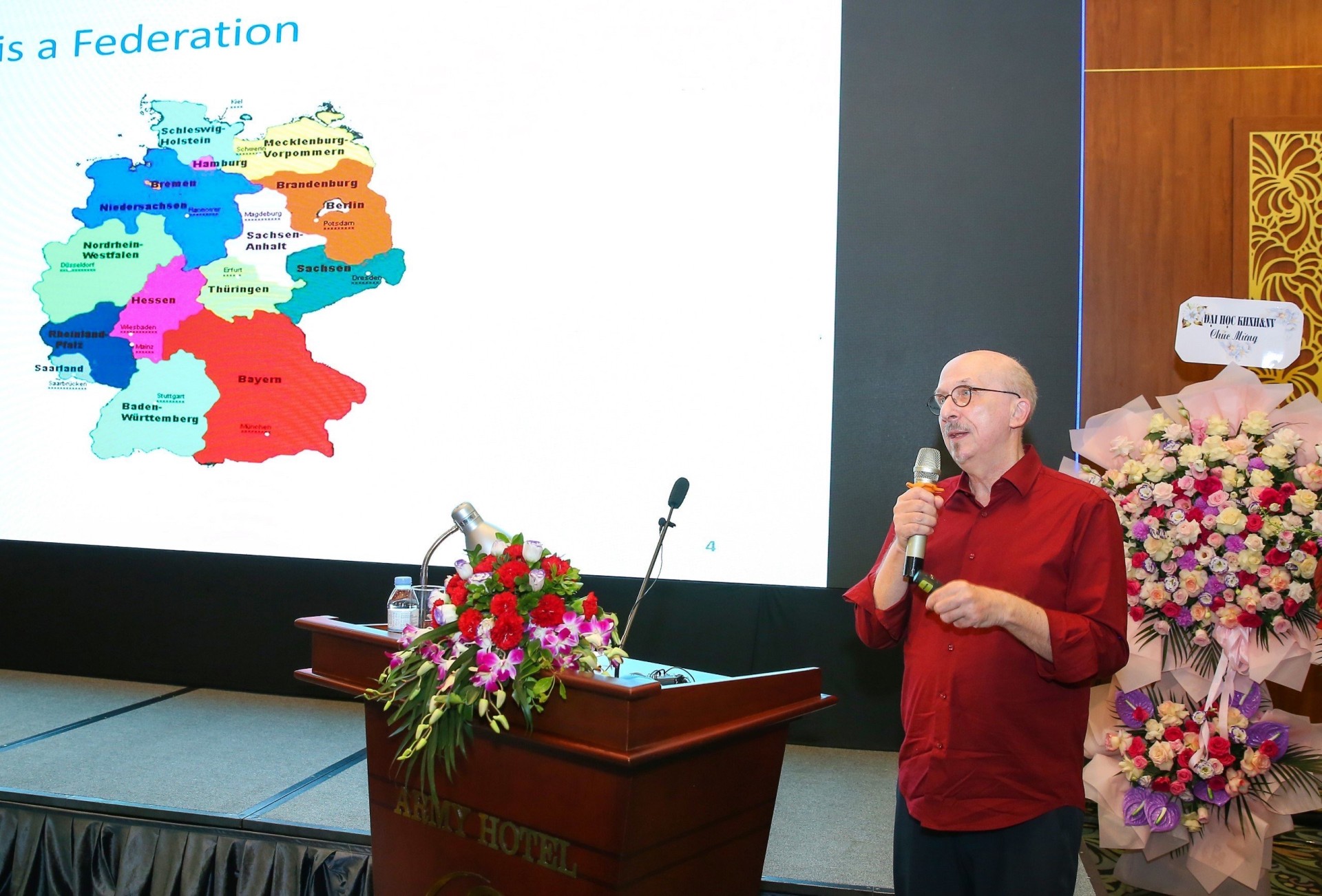
Professor Dellef Werner Briesen from the University of Giessen, Germany, presented a paper on the topic of Print Media in Germany and Digital Transformation.
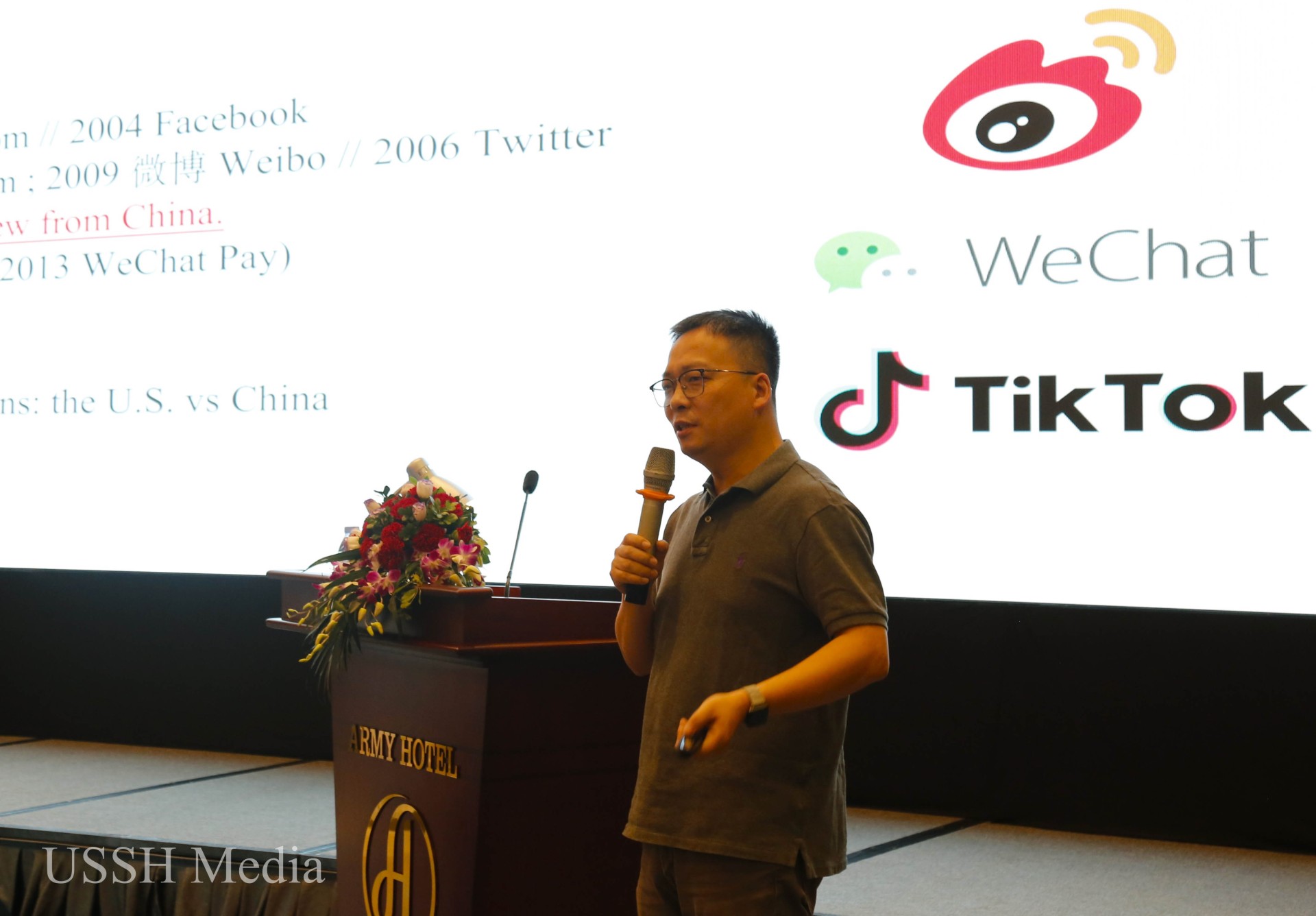
Professor Dianlin Huang from the Communication University of China shared insights on developing a journalistic economic model on social media platforms – lessons learned from China.
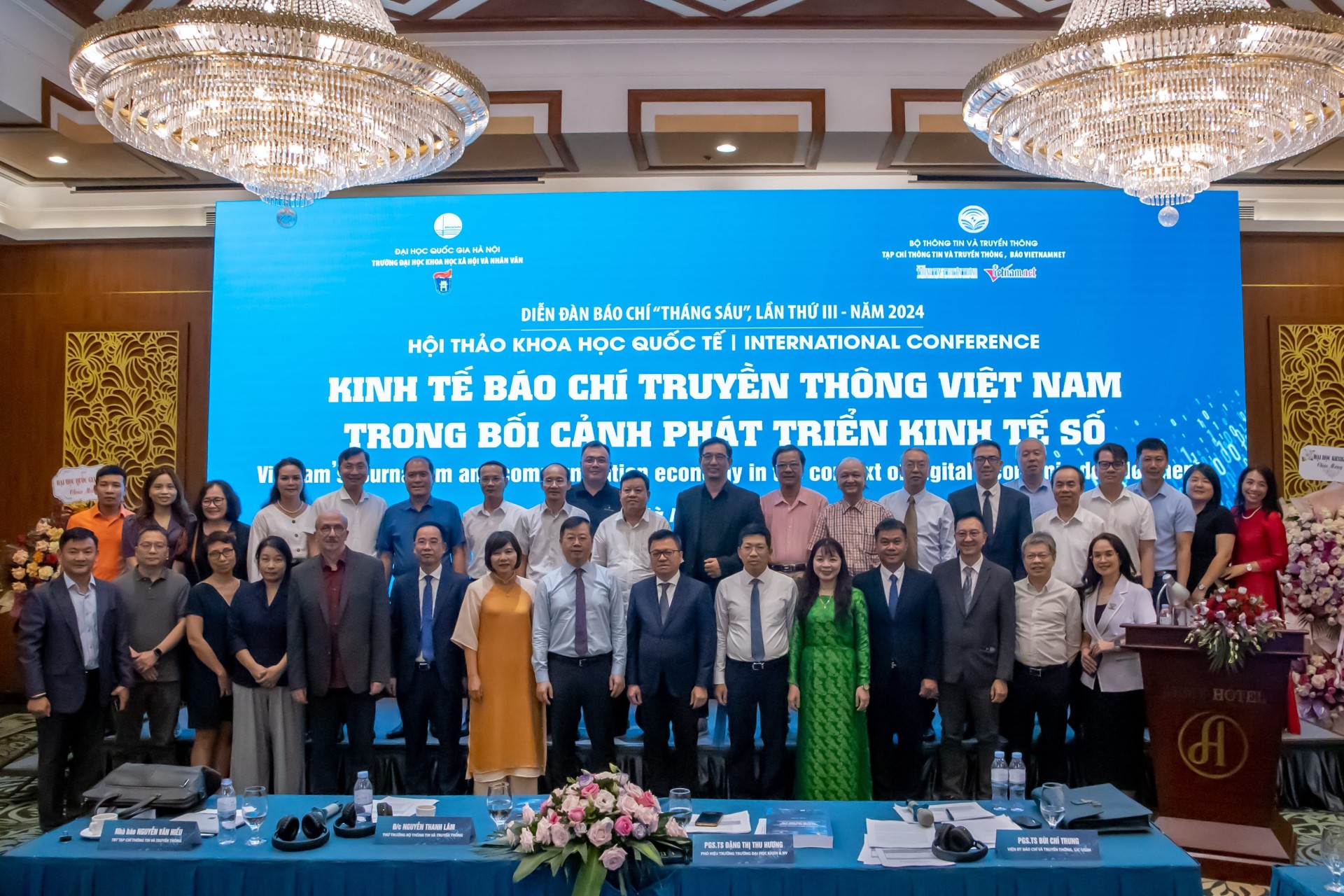
Some images from the International Scientific Conference on the theme "Vietnam's Media Economy in the Context of Digital Economic Development," held on the morning of June 14, 2024.
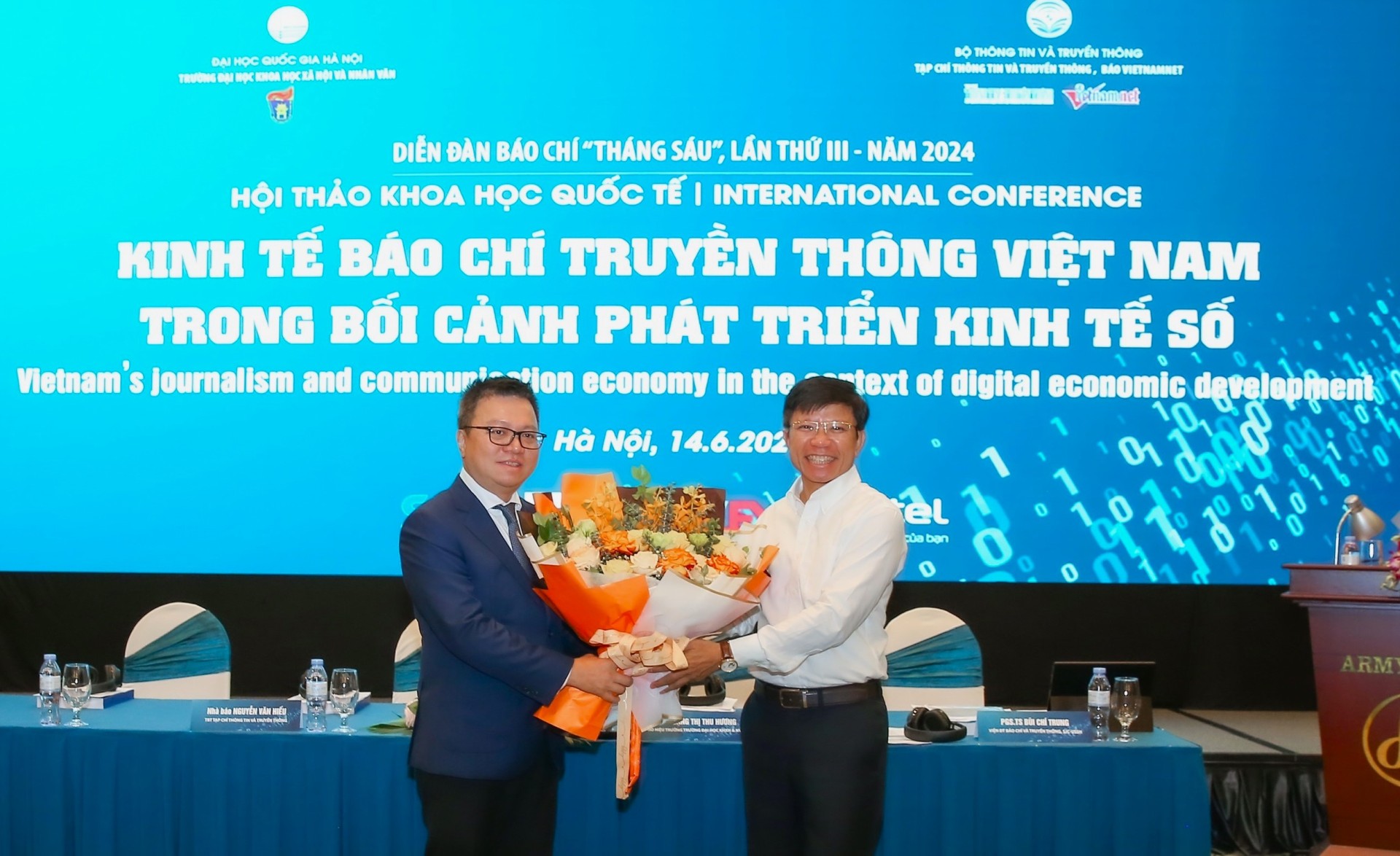
Professor Hoang Anh Tuan, Rector of the University of Social Sciences and Humanities, Vietnam National University, Hanoi, presents flowers to congratulate Comrade Le Quoc Minh on the occasion of Vietnam Revolutionary Press Day, June 21st.
Associate Professor Dr. Dang Thi Thu Huong co-chaired the opening plenary session of the conference.
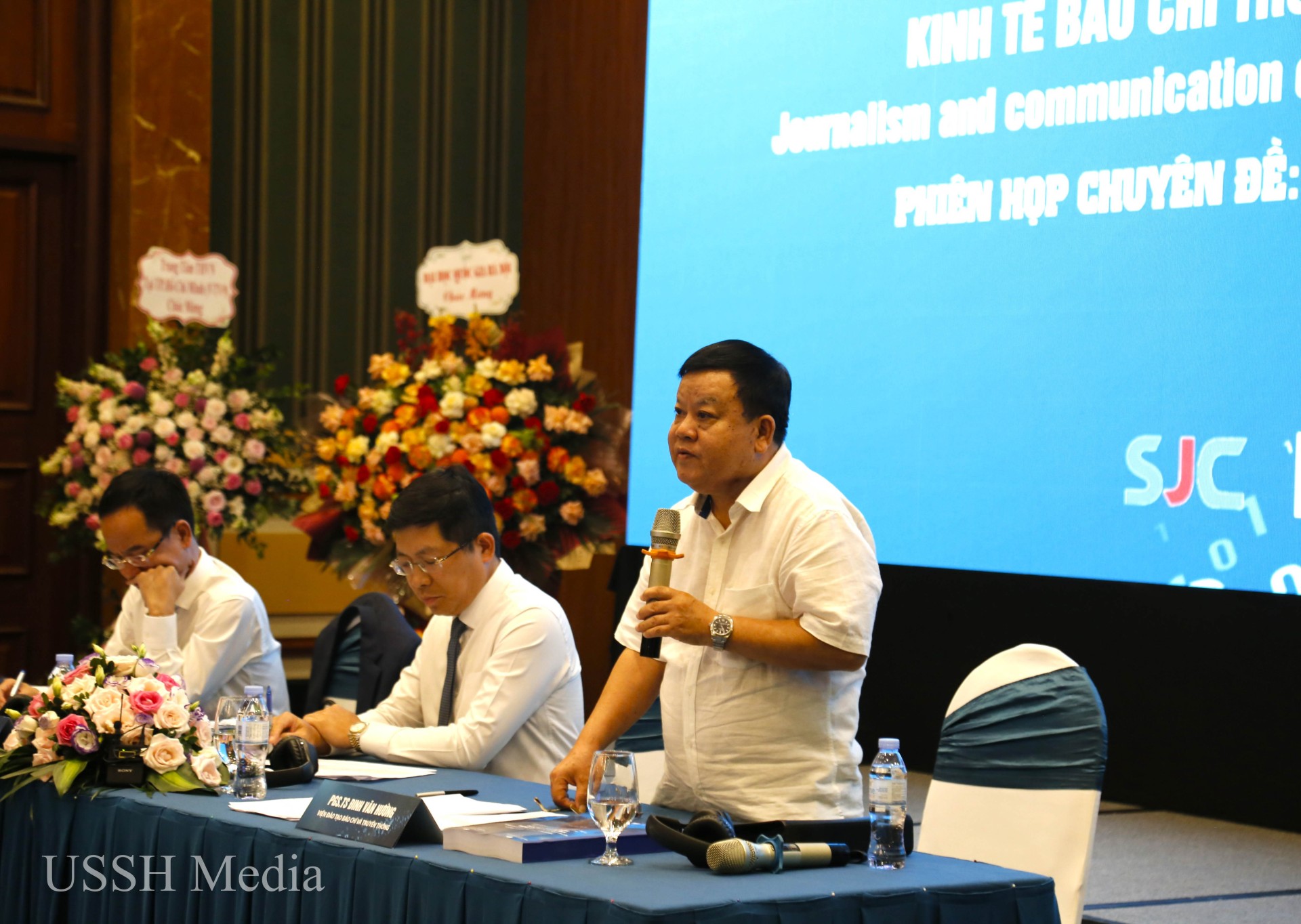
Associate Professor Dr. Dinh Van Huong - University of Social Sciences and Humanities, Vietnam National University, co-chaired the first thematic session with Mr. Luu Dinh Phuc - Director of the Press Department, and journalist Nguyen Van Hieu - Information and Communication Magazine.
Dr. Phan Van Kien - Director of the Institute of Journalism and Communication Training, Faculty of Social Sciences and Humanities, Vietnam National University, Hanoi, co-chaired the thematic discussion session on "Developing the Media Market in the Boom of the Digital Economy".