

In the context of artificial intelligence, big data, and digital platforms dramatically changing teaching, research, administration, and assessment methods in higher education institutions, digital competence is no longer a supplementary skill but is increasingly becoming a fundamental competency for learners, lecturers, and educational administrators. Beyond simply using technology, digital competence encompasses digital thinking, data mining skills, the ability to learn in a digital environment, ethical awareness, academic responsibility, and the ability to adapt to the rapid changes of modern academic life.
Stemming from this need, the workshop "Digital Competence in Higher Education: Assessment, Measurement, and Policy Implications" was organized to create a space for interdisciplinary exchange between policy, law, education, technology, information governance, and competency measurement. This is also one of the academic activities that contributes to highlighting the spirit of SSHWeek 2026: disseminating knowledge, promoting innovation, connecting research with practice, and affirming the role of social sciences and humanities in the context of digital transformation.
Among the invited guests attending the workshop were Dr. Dang Van Huan, Deputy Director of the Department of Higher Education, Ministry of Education and Training; Assoc. Prof. Dr. Tran Thanh Nam, Vice Rector of the University of Education, Vietnam National University, Hanoi; Assoc. Prof. Dr., Meritorious Teacher Nguyen Thi Que Anh, former Rector of the University of Law, Vietnam National University, Hanoi; along with representatives from libraries, information centers, businesses, scientists, and experts interested in the topic of digital competence in higher education.
Representing the University of Social Sciences and Humanities were Assoc. Prof. Dr. Bui Thanh Nam, Secretary of the University's Party Committee; Assoc. Prof. Dr. Dang Thi Thu Huong, Vice Rector of the University; Assoc. Prof. Dr. Do Van Hung, Head of the Faculty of Information Management; representatives from various departments and functional units; and all staff and lecturers of the Faculty of Information Management; as well as postgraduate students, trainees, and undergraduate students of the Faculty.
In his opening remarks at the conference, Associate Professor Bui Thanh Nam, Secretary of the Party Committee, emphasized the core mission of the university: education and research. To fulfill this mission in the new context, scientific research needs to be prioritized as a key driver of university development. The university's significant increase in resources for scientific research demonstrates a consistent orientation towards investing in knowledge, innovation, and improving academic quality.
According to Associate Professor Bui Thanh Nam, digital transformation and the rapid development of AI are fundamentally changing the way education is conducted. This creates an urgent need to build a digital competency framework for lecturers, administrators, and learners. Digital competency, in the current approach, is not only about the ability to use technology, but also about digital thinking, innovation capabilities, data-driven decision-making, and ethics in the digital environment. In this spirit, the workshop is organized not only as an academic activity of the Faculty of Information Management, but also as part of the university's overall policy of promoting research, digital transformation, and innovation within the framework of SSHWeek 2026.
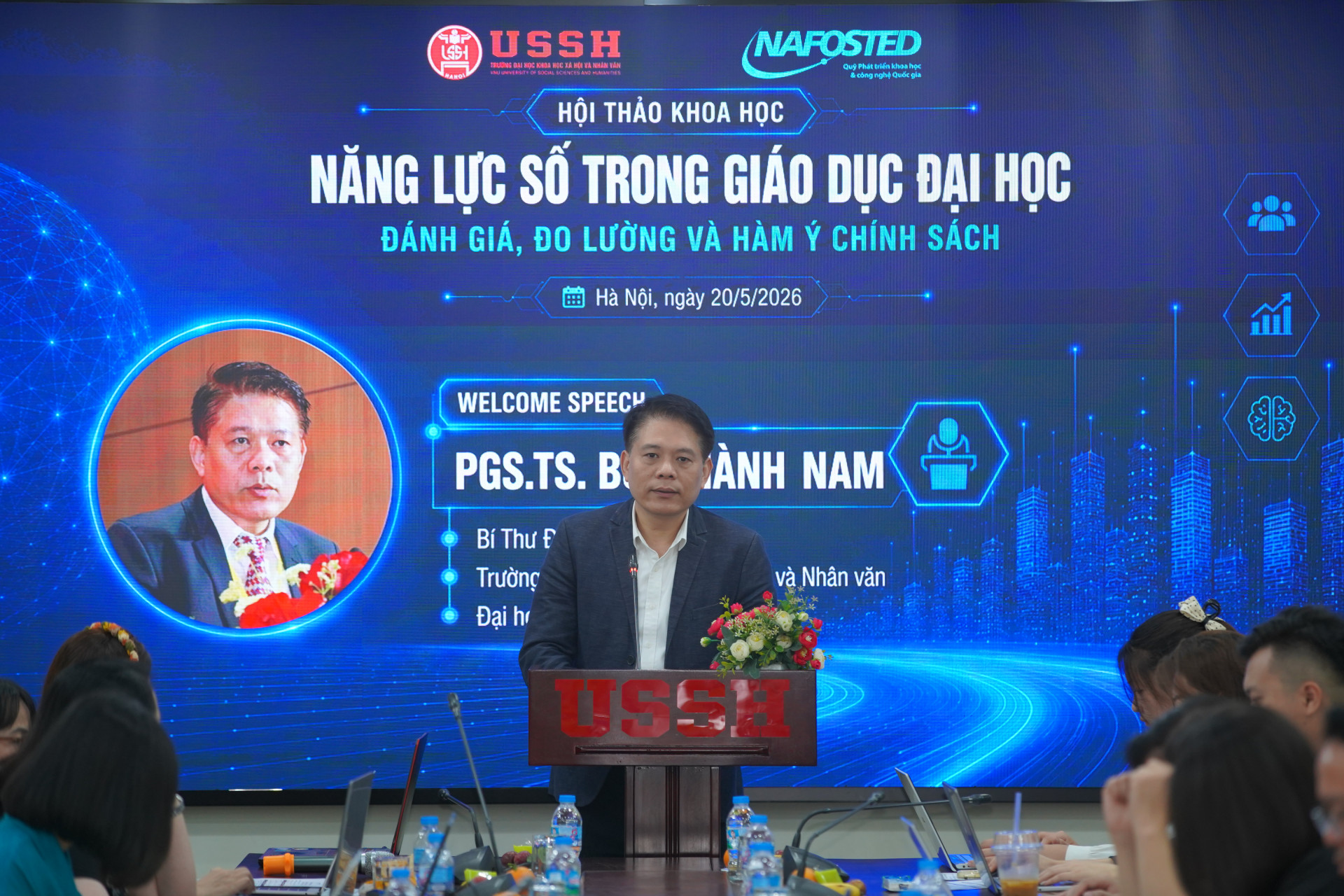
Assoc. Prof. Dr. Bui Thanh Nam, Secretary of the Party Committee of the University of Social Sciences and Humanities, delivered the opening remarks at the conference.
During the presentation session, the conference approached the topic of digital competence from various perspectives, creating a comprehensive picture of digital transformation in higher education.
Opening the discussion session, Dr. Dang Van Huan, Deputy Director of the Department of Higher Education, Ministry of Education and Training, presented on digital transformation and AI in higher education. His presentation showed that digital transformation in higher education is no longer a matter of applying information technology in isolation, but rather a process of innovating operational models based on data, digital technology, and an open learning ecosystem. In recent years, many higher education institutions have made significant strides in awareness and vision, gradually investing in digital infrastructure, deploying management platforms, LMS systems, digital learning materials, digital simulations, and blended learning methods. However, this process still faces challenges such as infrastructure disparities, uneven digital capabilities, limited data culture, and insufficient attention to data security and digital ethics.
From a state management perspective, the presentation also emphasized future directions: perfecting the institutional framework for digital higher education, developing shared infrastructure and platforms, innovating teaching and assessment in a digital environment, developing a digital faculty and management staff, building a digital culture, strengthening data security, and promoting the digital higher education ecosystem.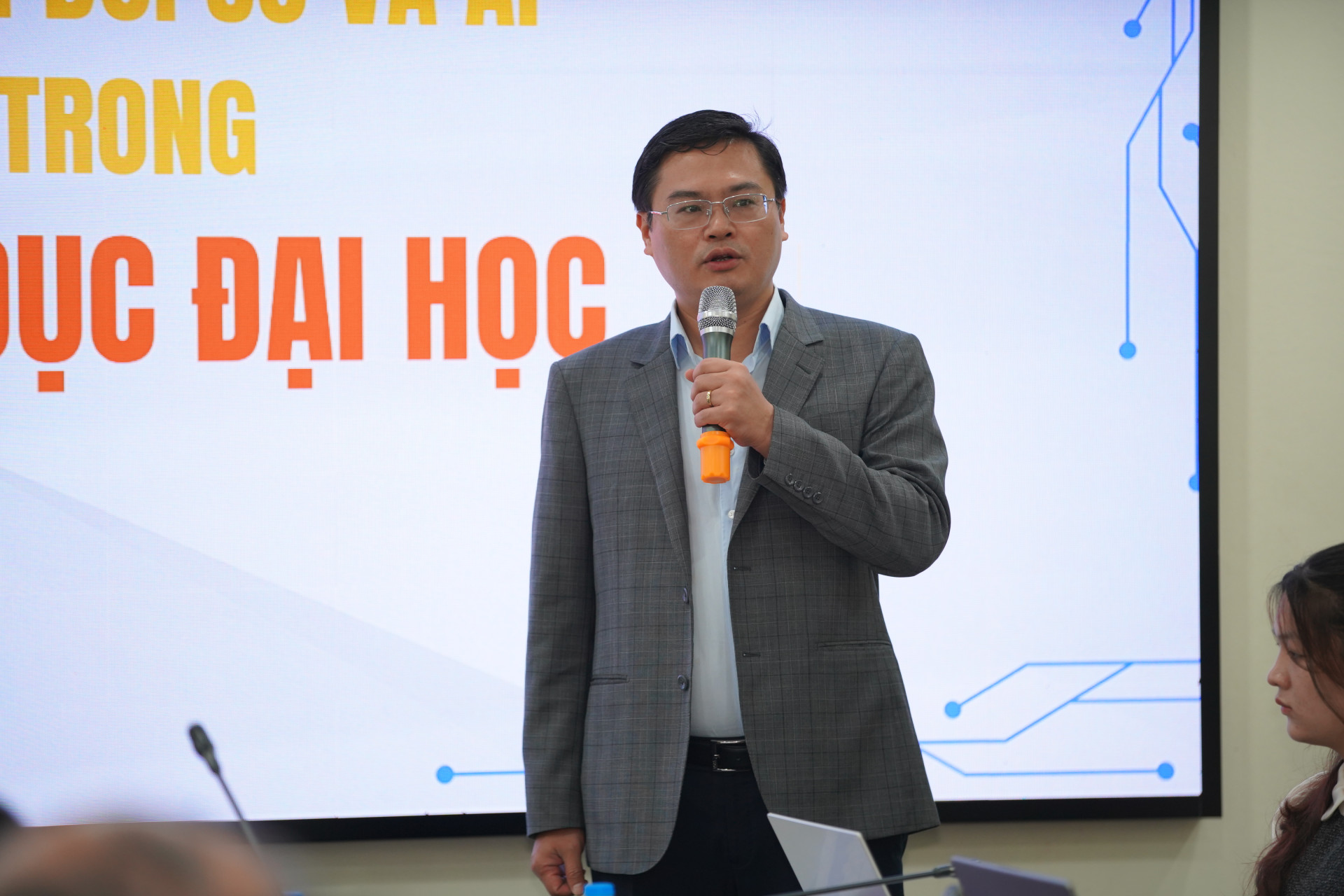
Dr. Dang Van Huan – Deputy Director of the Department of Higher Education, Ministry of Education and Training, presented a paper entitled “Digital Transformation in Higher Education: Digital Competence and the Digital Ecosystem”.
From a legal perspective, Associate Professor, Doctor, and Meritorious Teacher Nguyen Thi Que Anh presented a paper on artificial intelligence and its impact on Vietnamese higher education. The paper raised the issue of AI in education not only as a tool to support teaching, but also as directly related to university governance, data protection, algorithmic transparency, academic integrity, copyright, and accountability. Global AI governance models show that each country has a different approach, ranging from risk-based governance to flexible, adaptable frameworks. Regardless of the model, the common point remains the requirement to ensure that humans remain at the center, and that AI must serve humans, not replace human authority and responsibility.
For higher education, issues such as automated grading, learning data analysis, personalized learning paths, AI plagiarism detection, establishing copyright for AI-assisted products, and protecting student data are posing many new demands. The discussion highlighted the need to build AI governance mechanisms within universities, including AI ethics committees, data control processes, algorithm accountability mechanisms, and the "human-in-the-loop" principle – human involvement in monitoring, approving, and being accountable for AI-assisted decisions.
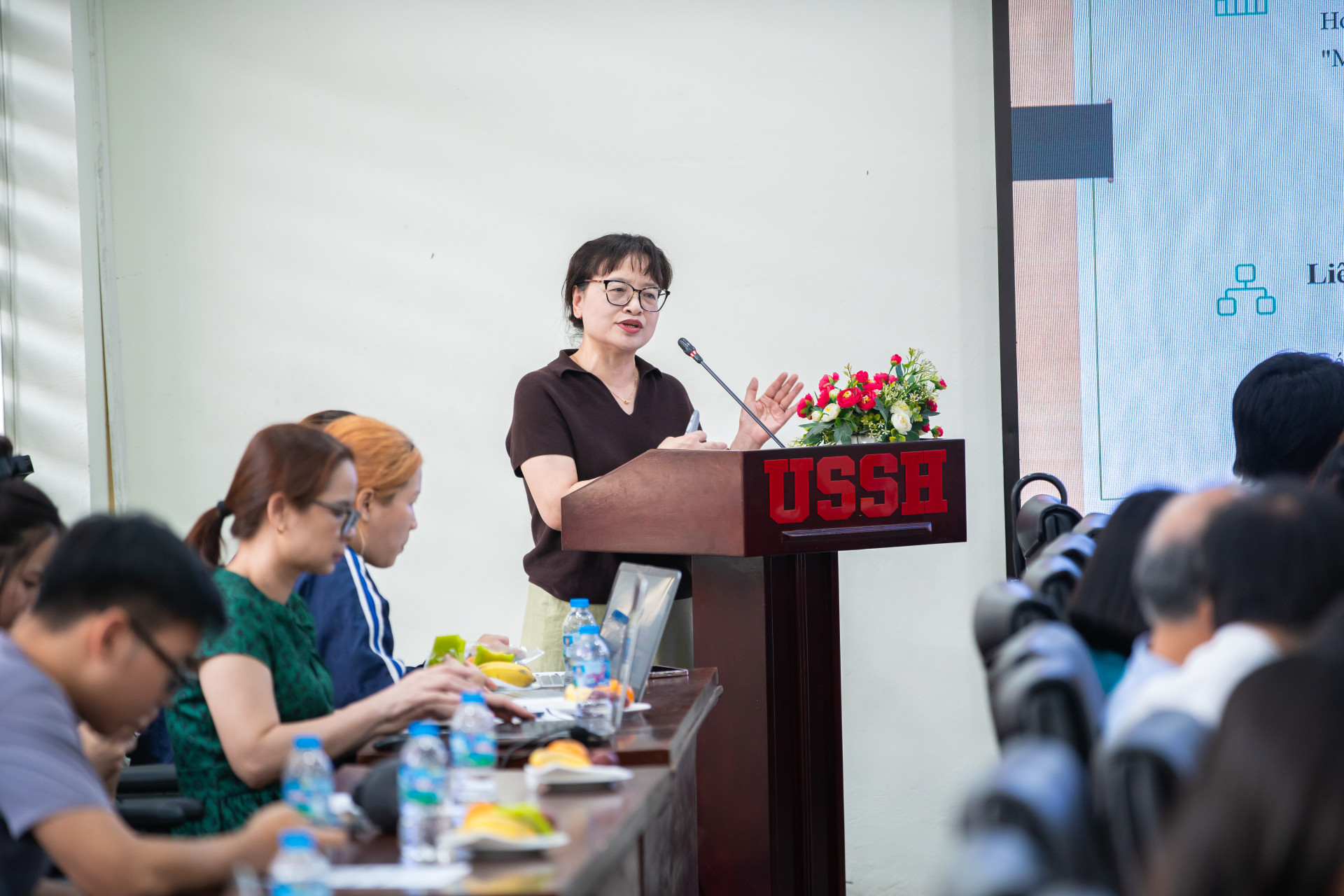
Associate Professor, Doctor of Science, Meritorious Teacher Nguyen Thi Que Anh, former Rector of the Faculty of Law, Vietnam National University, Hanoi, presented a paper entitled "Artificial Intelligence Law and its Impacts on Vietnamese Higher Education".
Continuing the discussion on human capabilities in the digital environment, Associate Professor Dr. Tran Thanh Nam's presentation focused on developing digital and AI capabilities for lecturers and educational administrators in the era of artificial intelligence. One of the highlights of the presentation was the changing role of lecturers: from knowledge transmitters to designers of learning experiences. In the digital education environment, lecturers not only need to know how to use technology, but also how to organize learning activities, design feedback, exploit learning data, support students in developing critical thinking, and use AI responsibly.
The discussion also emphasized the role of digital leadership and data-driven governance. Digital transformation in higher education cannot succeed if it focuses solely on technological infrastructure without implementation capacity and a middle management team capable of translating strategies into concrete actions. Deans, heads of departments, functional departments, and faculty members are all crucial links in the digital university ecosystem. Therefore, developing digital capabilities needs to be implemented as a long-term process, with a competency framework, training programs, evaluation mechanisms, and a continuous improvement roadmap.
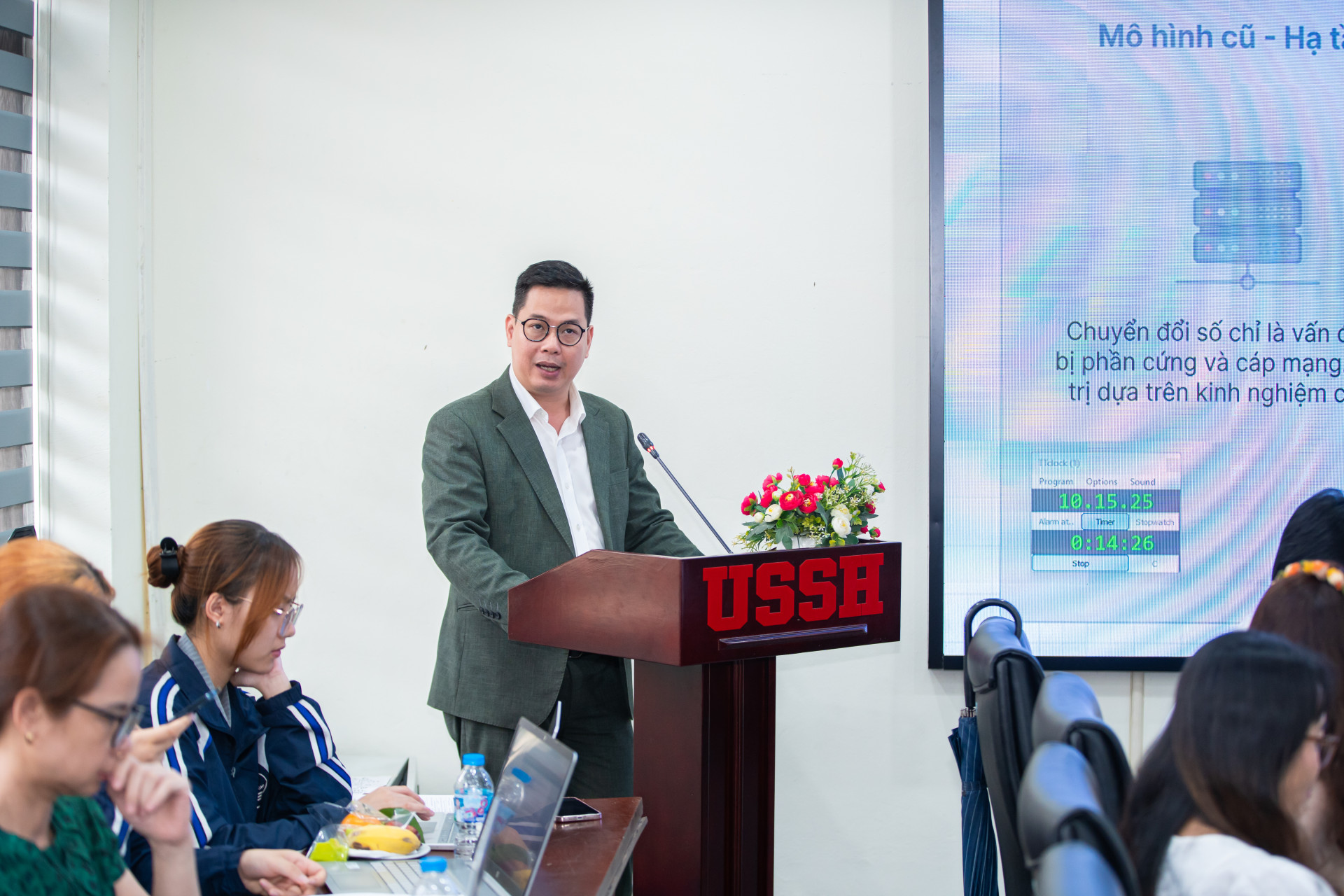
Assoc. Prof. Dr. Tran Thanh Nam – Vice Rector of the University of Education, VNU Hanoi, with a presentation titled “Developing Digital and AI Capabilities for Lecturers and Educational Administrators in the Artificial Intelligence Era”
From a measurement perspective, Dr. Bui Thanh Thuy presented a paper titled "Developing a Digital Competency Scale for Vietnamese Students in the Context of AI and Digital Education." The paper pointed out that students today primarily study in a digital environment, while AI is changing the way they access knowledge, learn, and participate in academic life. However, current digital competency measurement tools are inconsistent; many scales are developed focusing on basic technological skills and do not fully reflect new requirements such as digital well-being, digital learning, AI utilization, and career preparation in the digital environment.
Therefore, the study proposes a digital competency scale consisting of seven components: equipment and software operation; information and data; digital communication and collaboration; digital safety and well-being; digital content creation; digital learning and skill development; and the application of digital competencies to professions. With 31 observed variables, the scale is constructed to be linked to students' real-world experiences, reflecting specific behaviors and using easily understandable language. Initial validation results show that the scale has reliability and structural validity, thus becoming a tool to support universities in assessing the current state of students' digital competencies, identifying gaps in development, and integrating digital competencies into training programs.
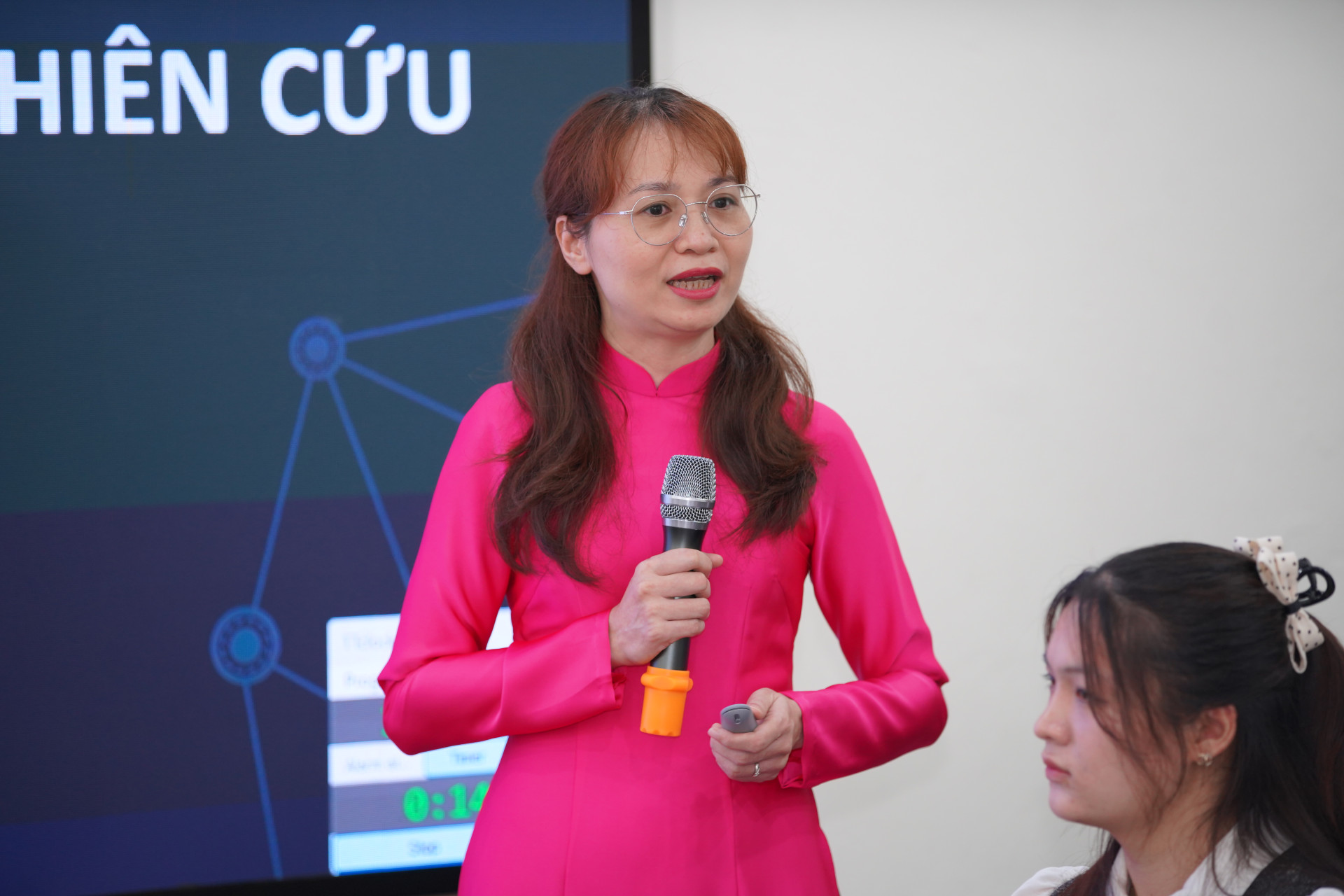
Dr. Bui Thanh Thuy – Faculty of Information Management, University of Social Sciences and Humanities, Vietnam National University, Hanoi, with a presentation titled “Developing a Digital Competency Scale for Students in the Context of AI and Digital Education”
Continuing from the issue of scale development, Dr. Nguyen Thi Kim Dung presented a proposal for applying a digital competency assessment scale to the practice of higher education in Vietnam. The presentation emphasized that the scale not only serves for surveys but can also become a strategic management tool for higher education institutions. When implemented systematically, the results of digital competency assessments can support the development of learning outcomes, personalize learning pathways, design digital skills training programs, serve quality accreditation, and provide data for digital education policy planning.
One notable proposal is a cyclical assessment of digital competencies: input for first-year students, periodic assessments throughout the academic year, and output assessments before graduation. This approach allows the university to track students' digital competency development, identify gaps by discipline, and integrate data from the LMS system for learning analytics and real-time learner support. At the university level, the discussion proposes establishing a dedicated department and digital competency dashboard to monitor indicators such as average scores by department/major, student achievement rate, progress trends by course, and disparities between different learner groups.
Dr. Nguyen Thi Kim Dung, Deputy Head of the Department of Information Management, University of Social Sciences and Humanities, presented a paper entitled "Proposal for the application of a digital competency assessment scale to the practice of higher education in Vietnam".
Following the presentation session, the conference proceeded to a discussion session on the topic "Developing AI Competencies for Learners: Content, Curriculum, and Assessment," chaired by Assoc. Prof. Dr. Bui Thanh Nam and Assoc. Prof. Dr. Do Van Hung. This was an open exchange space, connecting the thematic presentations with practical issues of concern to higher education institutions: what AI competencies learners need to be equipped with, how those competencies should be integrated into the training program, what assessment tools should be used, and what policies can support effective implementation.
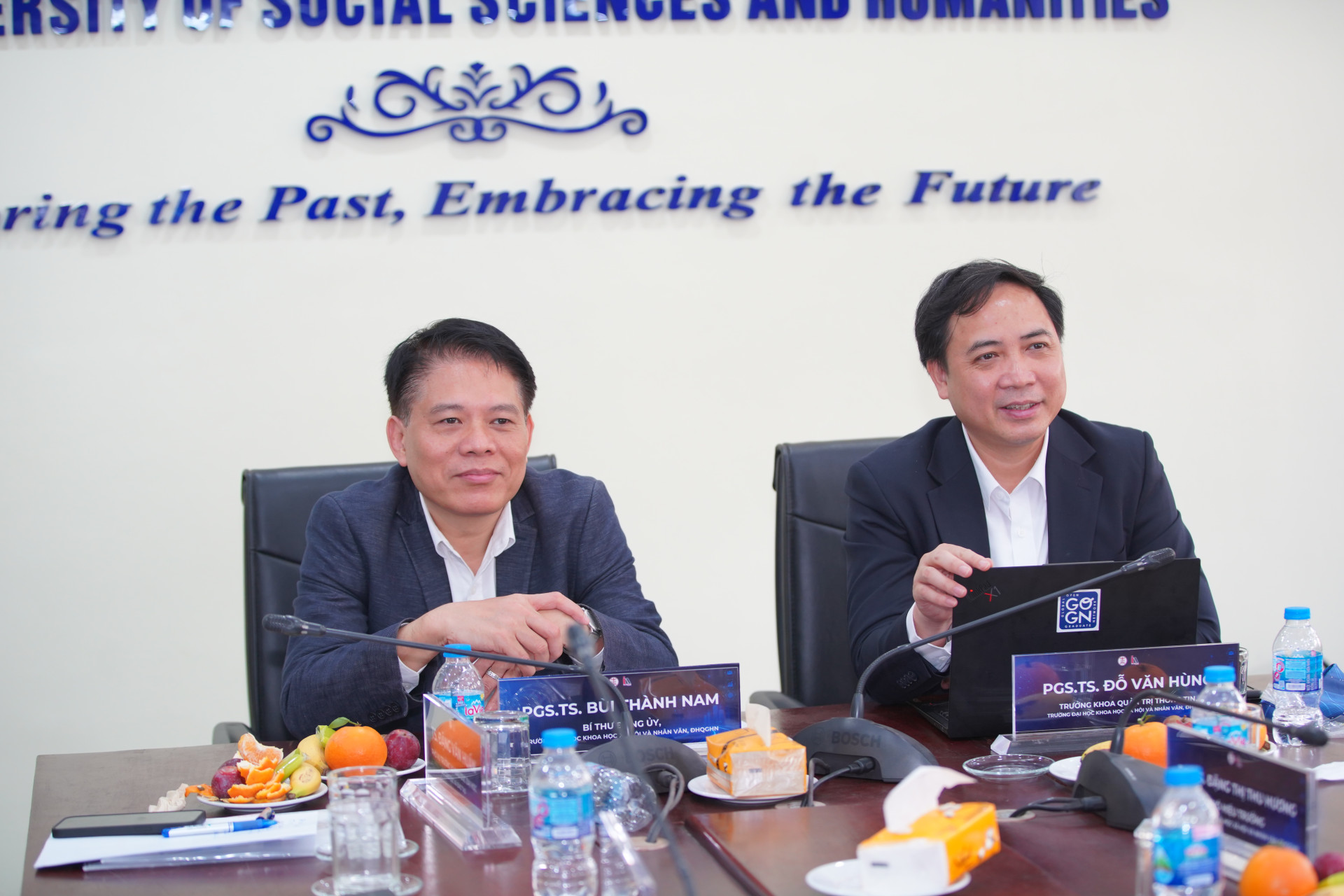
Associate Professor Bui Thanh Nam and Associate Professor Do Van Hung chaired the discussion session.
During the discussion session, Mr. Tran Van Tung, Chairman of the Vietnam Association for Scientific and Technological Information and former Deputy Minister of Science and Technology, emphasized the connection between innovation, digital transformation, and the need to put knowledge into practice. According to him, the key difference of innovation lies in its ability to create value in life, serving creators, users, and the community. Digital transformation should also be viewed as a process of returning to serve practice, improving operational efficiency, and creating social value. The issues discussed at the conference, from digital capabilities to AI capabilities, are part of the national task of developing science, technology, and innovation.
He also mentioned the need to improve the legal framework for artificial intelligence, including the development of AI legislation, in order to create a foundation for the safe, responsible, and socially beneficial development of the technology. From a policy perspective, he suggested that academic forums like today's conference should continue to be organized to contribute to policy-making and enhance the digital capacity of higher education institutions.

Mr. Tran Van Tung, Chairman of the Vietnam Association for Scientific and Technological Information and former Deputy Minister of Science and Technology, delivered a speech at the conference.
Associate Professor Tran Van Hai, a visiting lecturer at the Faculty of Information Management, University of Social Sciences and Humanities, discussed AI in the teaching environment, highlighting both its advantages and limitations that need careful consideration. Besides its ability to support learning, content design, feedback, and personalization, AI also poses challenges regarding academic integrity, copyright, and responsible use. He suggested that evaluating student learning outcomes should take into account the ability to recognize and respect copyright protection in the AI era. This is a practical issue, especially as students increasingly use AI tools in their studies, research, and content creation.
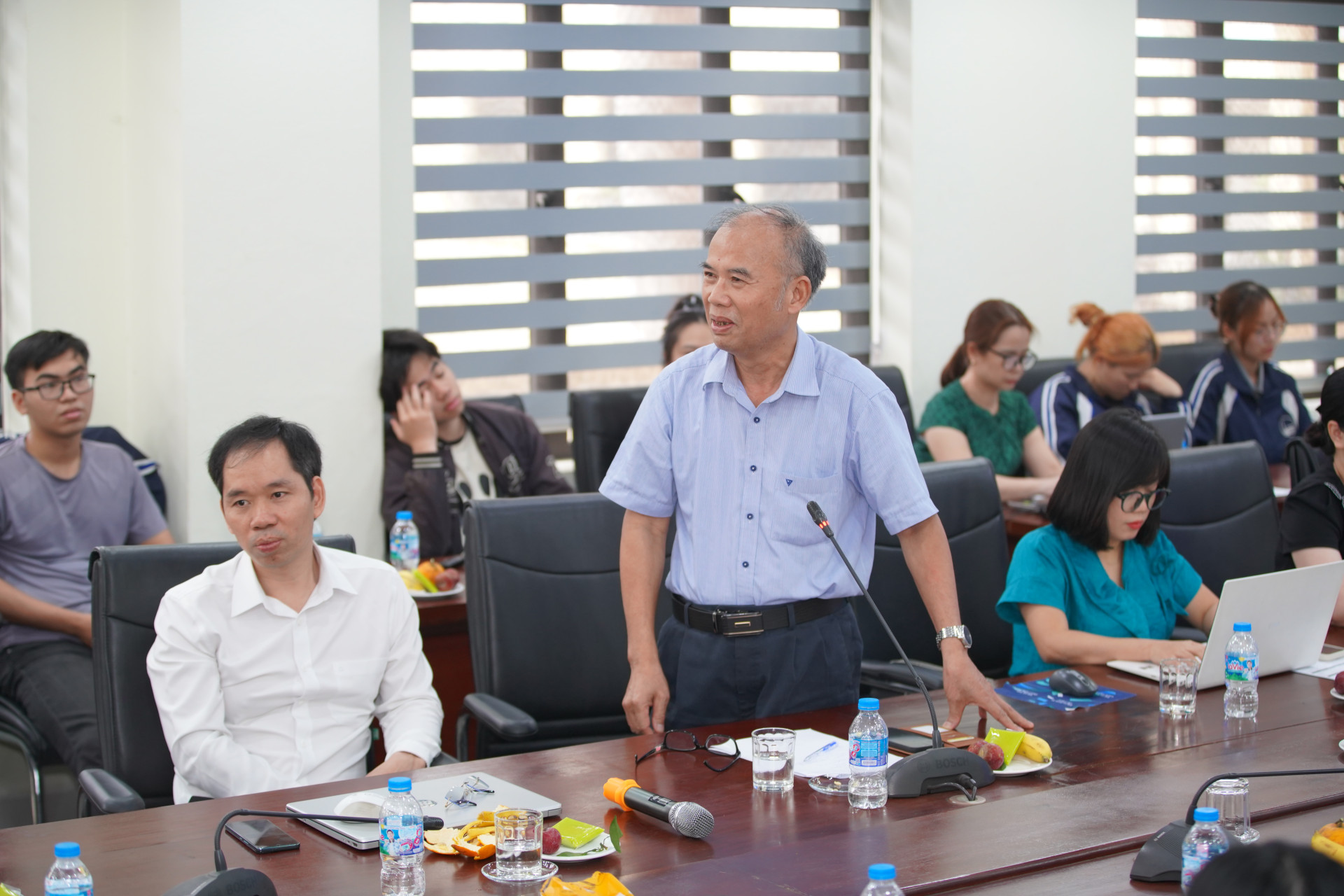
Associate Professor Dr. Tran Van Hai, visiting lecturer at the Faculty of Information Management, University of Social Sciences and Humanities, discusses AI in the teaching environment.
A student's question about the tools the university offers to personalize learning pathways also garnered significant attention during the discussion. This question demonstrates that learners are not only interested in technology as a support tool, but also expect it to help them receive advice, guidance, and development tailored to their individual abilities, needs, and goals. This is also a key spirit of modern higher education: placing students at the center of the training process while using data and technology to support learners effectively, humanely, and responsibly.

Student Vu Thi Tra My is interested in what tools are available to personalize her learning path.
In particular, speaking at the discussion session, Assoc. Prof. Dr. Dang Thi Thu Huong, Vice Rector of the University of Social Sciences and Humanities, emphasized the significance of SSHWeek 2026 as a university-wide academic space, connecting numerous workshops, seminars, and research activities related to technology, innovation, and practical applications. The workshop, organized by the Faculty of Information Management, attracted many stakeholders, from policy-making experts, managers, scientists, to lecturers, trainees, and students. This shows that the topic of digital competence is not just a matter for one academic discipline, but a common requirement of higher education in the new context.
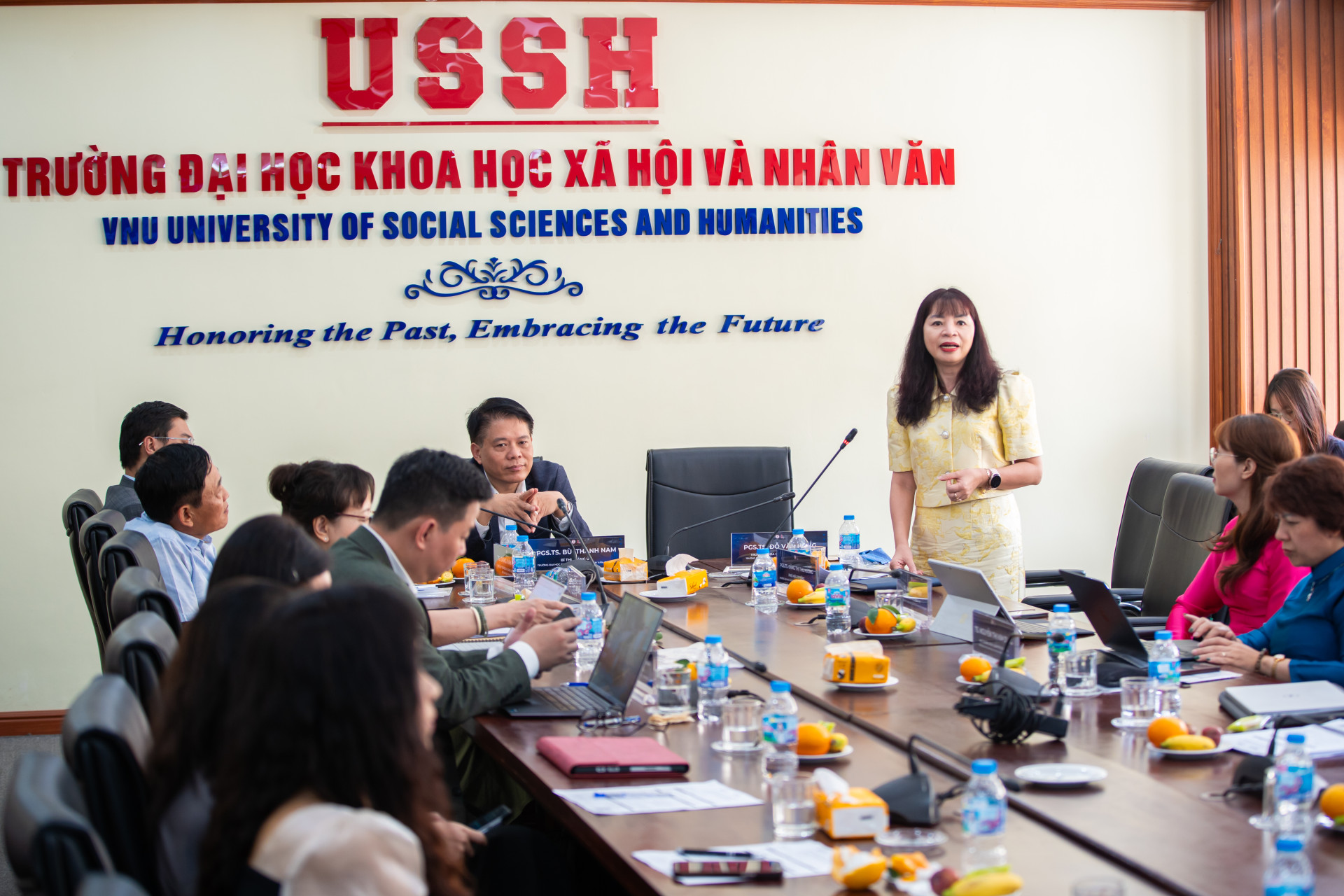
Associate Professor Dr. Dang Thi Thu Huong, Vice Rector of the University of Social Sciences and Humanities, delivered a speech at the conference.
In his concluding remarks at the conference, Assoc. Prof. Dr. Do Van Hung, Head of the Department of Information Management, affirmed that after a morning of serious and responsible work and many in-depth academic exchanges, the conference had completed all the planned agenda items. The presentations and discussions demonstrated that digital competence is no longer a supplementary skill, but is becoming a fundamental competency of higher education in the era of digital transformation and artificial intelligence.
According to Associate Professor Dr. Do Van Hung, the workshop reached several important points of consensus. Firstly, developing digital and AI competencies for learners should be considered a long-term strategy for higher education institutions, linked to the innovation of training models, teaching methods, and university governance. Secondly, assessing and measuring digital competencies should be based on standardized competency frameworks that are suitable for the Vietnamese context but still approach international standards. Thirdly, in the context of rapidly developing AI, the requirements extend beyond simply knowing how to use technology; they also include critical thinking, digital ethics, academic responsibility, adaptability, and lifelong learning.
The workshop also noted many valuable suggestions related to integrating AI capabilities into training programs, building a digital competency assessment system for students, developing digital learning materials and a digital learning environment, enhancing the digital capabilities of faculty, and building a learner-centered digital higher education ecosystem. These exchanges will be an important source of academic and practical information to further refine research, policy recommendations, and promote cooperation in the future.
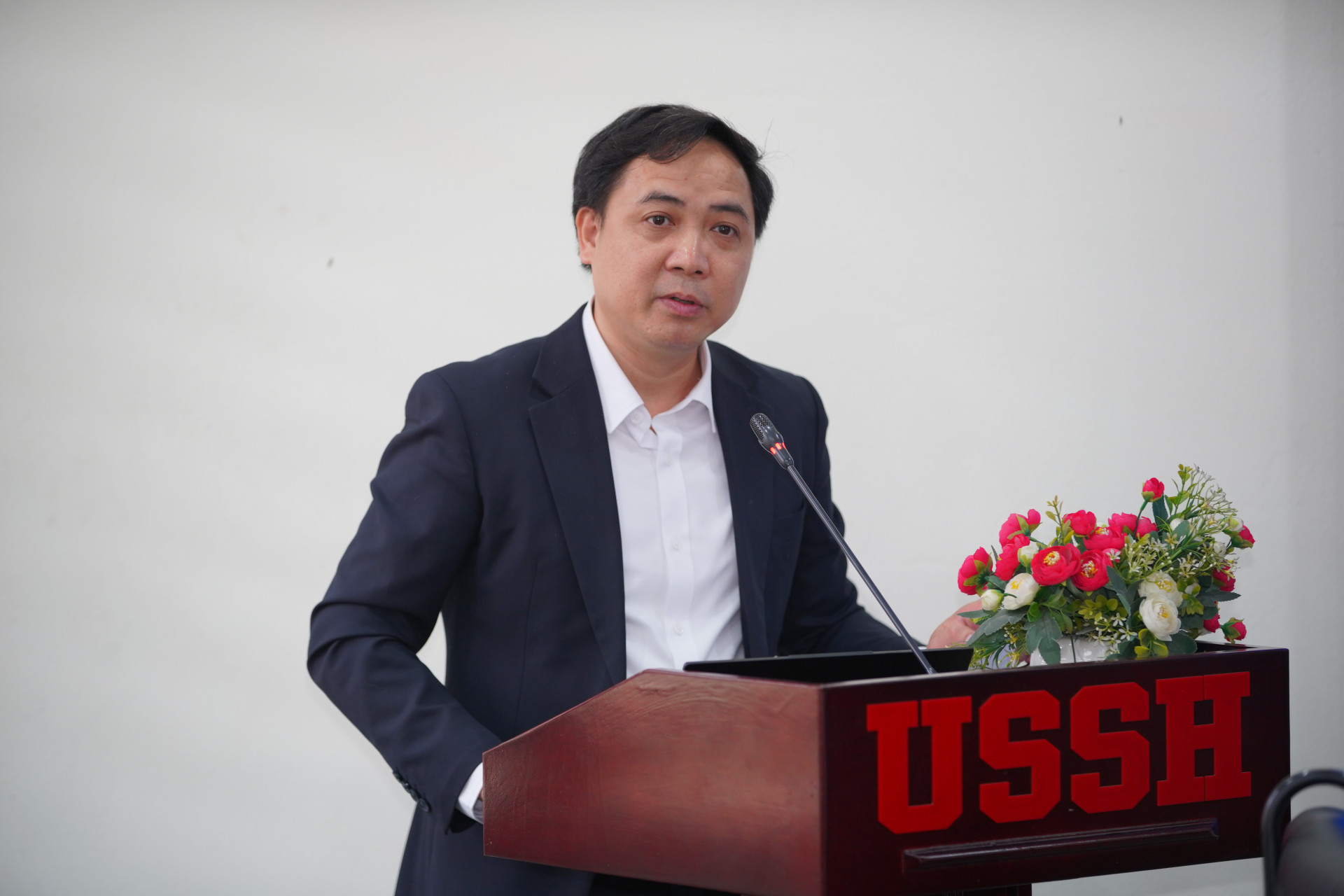
Assoc. Prof. Dr. Do Van Hung, Head of the Department of Information Management, delivered the concluding remarks and closed the workshop.
It can be affirmed that the conference "Digital Competence in Higher Education: Assessment, Measurement, and Policy Implications" was not only an academic event within the framework of SSHWeek 2026, but also a forum connecting research, management, policy, and practice in higher education. From the presentations and discussions at the conference, one message was emphasized throughout: digital transformation in higher education, ultimately, is a transformation of human capabilities, academic culture, and governance methods. Technology is a tool, but people remain at the center of all innovation processes.

Related articles:
Digital competencies in higher education: Assessment, measurement, and policy implications.
From ecocriticism to ecocinema in Vietnam: Interdisciplinary approaches
Heritage Economy: Identifying Cultural Capital and Guiding Policies for Sustainable Development
Author:Department of Information Management
Newer news
Older news

