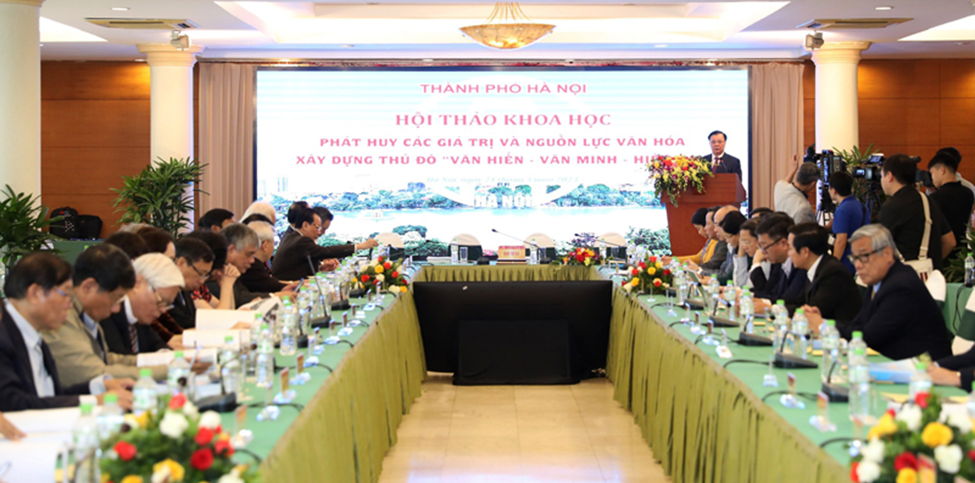
The workshop was attended by over 300 delegates representing central ministries, departments, and agencies; People's Committees of provinces in the Red River Delta and the Capital Region; political and social organizations, businesses, and many domestic and international cultural experts and researchers. Representing one of Vietnam's leading training and research institutions in the field of social sciences and humanities, with a team of leading scientists and experts researching history, culture, society, Vietnamese studies, Hanoi studies, etc., Professor Hoang Anh Tuan provided insightful analyses of the position of Thang Long – Hanoi and proposed fundamental solutions for building a cultured, civilized, and modern capital city.
Hanoi Party Secretary Dinh Tien Dung delivered the opening remarks at the scientific conference: "Promoting cultural values and resources to build a 'Culturally Rich, Civilized, and Modern' Capital City."
A bridge connecting culture and economy in regional development.
According to Professor Hoang Anh Tuan, first and foremost, it is necessary to further concretize economic policies within culture, cultural policies within the economy, and social policies... so that policies become a bridge connecting culture with the economy in regional development. Because in the process of economic and cultural interaction and exchange, Thang Long - Hanoi has always been able to selectively accept and not reject, thus constantly supplementing, strengthening, and accumulating elements of civilization, technology, and culture from the "Four Regions," "Four Fortresses," and even from the entire country and internationally.
In other words, economic and cultural contact and exchange have shaped the economic and cultural landscape of Thang Long at all times. Without economic and cultural contact and exchange, there would be no Thang Long - Hanoi as it has been and is today. In the present era, culture increasingly demonstrates its role in fostering unity and creativity among the people.
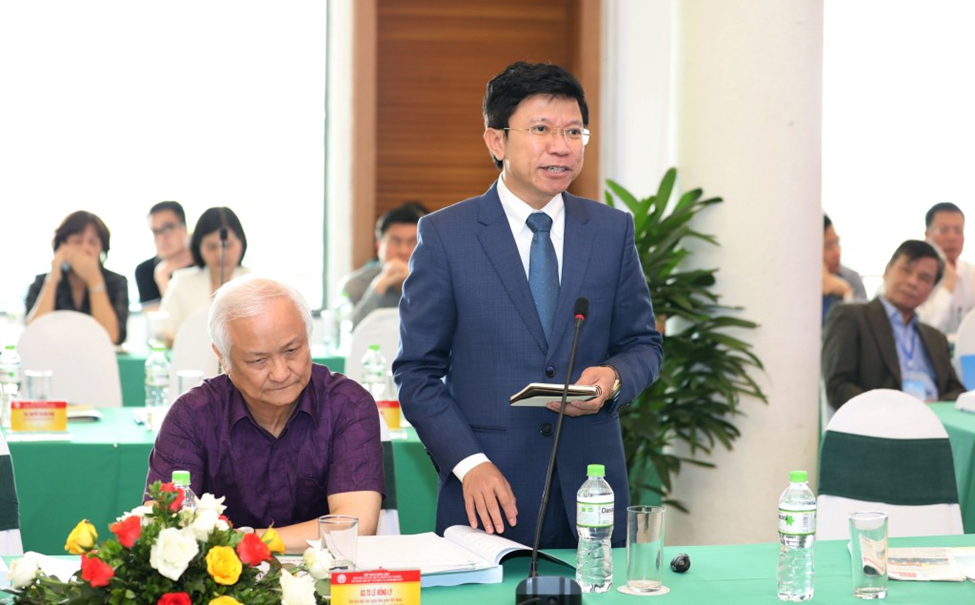
Professor Hoang Anh Tuan delivered a speech at the conference.
The entire political system of Hanoi needs to constantly encourage and awaken the national spirit, patriotism, and the Thang Long character among all strata of the people to harmoniously combine with the spirit of the times to serve the cause of reform; propagate, educate, and apply Ho Chi Minh's moral thought to guide the way of life and lifestyle for everyone.
On that foundation, the culture of the capital city will clearly demonstrate its progressive nature and rich national identity, both embracing diverse values to create unity in diversity, and resolutely preventing the influence of any manifestations of uncivilized and anti-cultural lifestyles in the process of development and integration. Therefore, leveraging the unique strengths of cultural values and potential, embodying the national culture in all aspects of social life in Hanoi, must be done in a way that maximizes the capital city's strengths and position.
As a hub for the convergence, crystallization, and dissemination of cultural heritage values from across the country, Hanoi possesses immense potential to promote the development of creative spaces – spaces currently lacking within the city. By developing these creative spaces, we can be certain that more and more citizens, especially the younger generation, will recognize the value of industrial heritage and appreciate the role of cultural and creative centers in the city in their lives.
In 2019, Hanoi became a member of UNESCO's Creative Cities Network, with a focus on placing creativity at the heart of sustainable development. In the digital age and the Fourth Industrial Revolution, the city is constantly moving and changing due to numerous factors.
Creative zones will be created within cities, new urban areas, and especially in public open spaces. Therefore, promoting the creation and effective operation of creative spaces will foster the development of creative cities. And we all hope that Hanoi will become the creative center of a creative nation in the not-too-distant future.
Connecting with localities that develop tourism.
Hanoi, known as the "Heritage Capital," needs to establish a council and organize specialized workshops to select representative cultural heritage sites for preservation, restoration, and promotion. This will not only generate economic benefits but also promote the image and brand of the capital city. The Hanoi People's Committee and the Hanoi Department of Tourism should also develop a plan and strategy for the development of eco-tourism and cultural tourism.
Furthermore, given its central location within the region and its status as the capital, Hanoi leverages its connectivity with other localities to develop tourism, exploiting the strengths of each locality; strengthening linkages, especially inter-regional linkages, to develop into a central and important tourism region of the North with diverse and unique tourism products that create a brand for the Capital Region. With the titles "City for Peace," "Heritage Capital," and today "Creative City," Hanoi serves as a bridge connecting Vietnam with the world.
Organizing international conferences combined with short-day tours aims to promote the unique culture and economic activities of various regions and localities in the capital city, as well as the capital city's activities in provinces and cities nationwide, fostering the spirit of "Hanoi for the whole country".
Creating a distinctive cultural mark of Hanoi people.
As President Ho Chi Minh taught nearly 70 years ago, "The whole country looks to our capital. The world looks to our capital. All of us must strive to maintain order and security, making our capital peaceful, beautiful, and healthy both physically and mentally."
Hanoi needs to develop specific and practical mechanisms and policies linked to reforming the methods of mobilizing and promoting the creative role of the people, the central position of the business community, and the importance of intellectuals, artists, entrepreneurs, and organizations in organizing and managing creative activities and developing unique cultural and artistic products with high dissemination potential.
Standardize organizational structure, management models, infrastructure investment, and innovate operating methods to improve the efficiency of exploiting and utilizing the cultural institutions system in the city. Focus resources on managing, preserving, and promoting the value of cultural heritage; ensure a harmonious relationship between preservation and development; provide preferential policies for folk artisans, artists, etc.; and encourage the transmission and creation of new cultural values.
The city is developing specific mechanisms and policies to attract, exploit, and effectively utilize social resources for the development of the capital's cultural sector; focusing on investing in the development of literature and art in the capital, creating high-value works that leave a mark in terms of thought and art; continuing to nurture the development of mass cultural and artistic movements; and improving the quality of activities of literary and artistic associations.
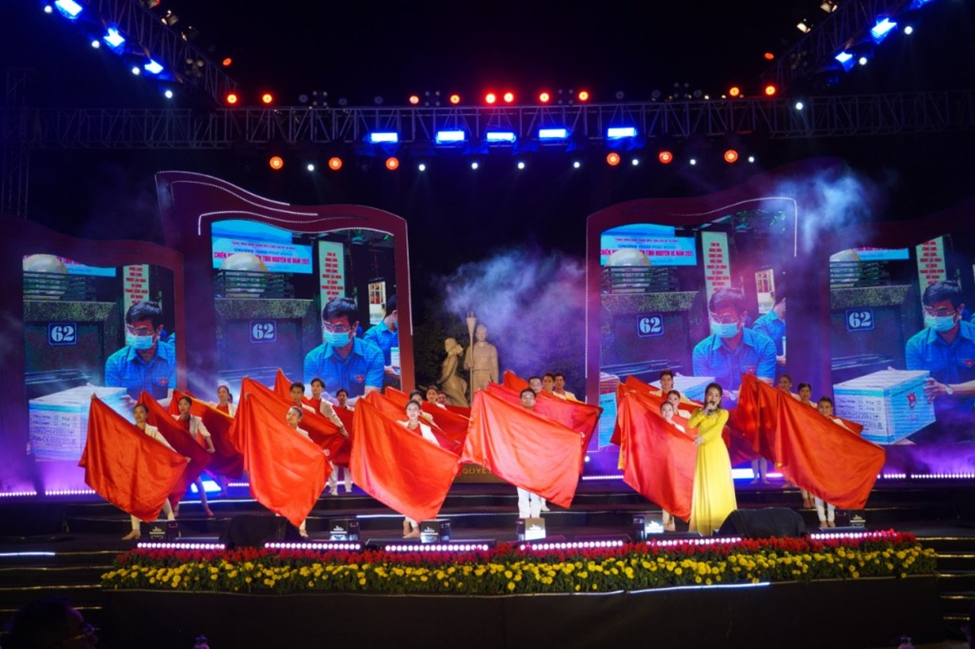
Performing arts activities in Hanoi
Furthermore, Hanoi leverages the intellect, dedication, and creativity of its intellectuals and artists. It proactively and creatively integrates internationally in culture, builds a brand for the capital's culture, and makes Hanoi an attractive destination for cultural exchange, cooperation, and the organization of domestic and international cultural and sports events. It creates favorable conditions for overseas Vietnamese and international organizations to participate in cultural development, promoting the image of Vietnam, its people, and Hanoi. It adheres to international commitments and criteria when participating in UNESCO's "Creative Cities" network...
The city is strengthening the organization of events and developing cultural products of international caliber. Planning and implementation of plans are linked to creative design, management, and effective exploitation of public cultural spaces, landscapes, and historical sites; encouraging the development of creative cultural spaces within the community; linking the development of the cultural industry with the tourism economy, creating sustainable cultural tourism products with high economic value; continuing to persistently and vigorously pursue the goal of building elegant, civilized, and comprehensively developed Hanoi citizens, forming a new cultural value system in line with the trends of the times, while promoting the profound humanistic values of Thang Long - Hanoi, a thousand-year-old city of culture, heroism, and peace, truly becoming an endogenous resource and an important driving force for the development of the Capital.
Patriotism, national pride, love for Hanoi, the tradition of unity, dynamism, creativity, exemplary morality and lifestyle, the aspiration for innovation, and the will to strive for excellence of each citizen of the capital city need to be nurtured every day; creating a cultural imprint of Hanoians that is representative of the nation's culture.
Furthermore, the city is promoting propaganda and education through mass media and newspapers about the elegant and civilized traditions; the ability to absorb the finest aspects of human culture to create new cultural values for the people of Hanoi; promptly commending and rewarding good people and good deeds to create a ripple effect in society; effectively handling and preventing phenomena and behaviors that degrade morality and lifestyle; combating negativity and social evils; persistently educating and raising awareness and respect for the law among the people of Hanoi, especially the younger generation; and protecting and promoting the fine values of the national cultural traditions and of Thang Long - Hanoi.
Huong Thu (tuoitrethudo)