
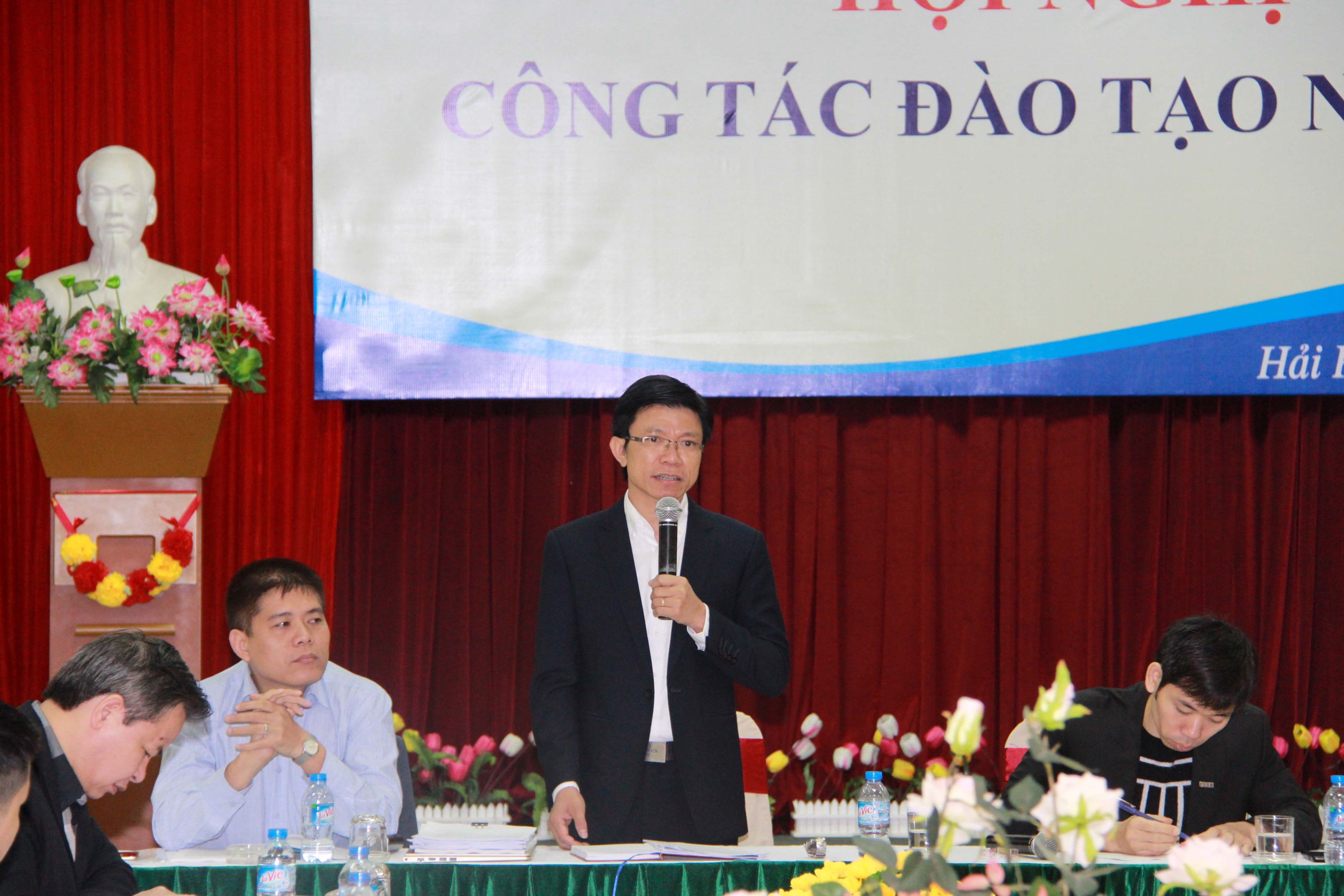
Assoc. Prof. Dr. Hoang Anh Tuan (Vice Rector of the University of Social Sciences and Humanities) at the Conference summarizing training work in 2017/Photo: Dinh Hau
- Sir, what changes have been made to the school's admissions process recently, especially given the annual changes in the entrance examination methods?
It is well known that the success of a university's admissions process partly reflects its professional standing and social prestige. A stable and abundant pool of applicants allows universities to select high-quality students for training. Therefore, if a university has good quality (in teaching, research, and student support) but fails to attract applicants or gain community interest, it may be because the university has not interacted effectively with its potential students.
Therefore, continuous innovation to ensure the success of the admissions process is a crucial task for each training institution, especially in the context of significant changes in the mindset of candidates in particular, and the community in general, regarding higher education. For the University of Social Sciences and Humanities, over the past year, there have been fundamental changes in thinking and approach to admissions. The university places particular importance on admissions because it is the first stage of the entire training process: if we can recruit candidates who are knowledgeable and passionate about their chosen field of study… then the training process over the next four years promises many positive results.
Many years ago, due to universities organizing their own entrance exams, the university handled all aspects of the admissions process, from promotion to exam question setting and grading. Two years ago, when Hanoi National University organized its own aptitude test, the university participated in the admissions process using that method and achieved encouraging results. This year, with Hanoi National University discontinuing the aptitude test and using the high school graduation exam results for admissions, the university has urgently developed an admissions plan to adapt to these new adjustments.

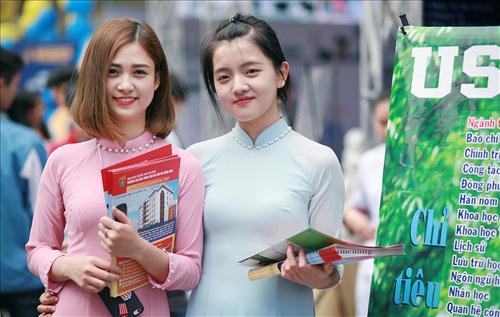
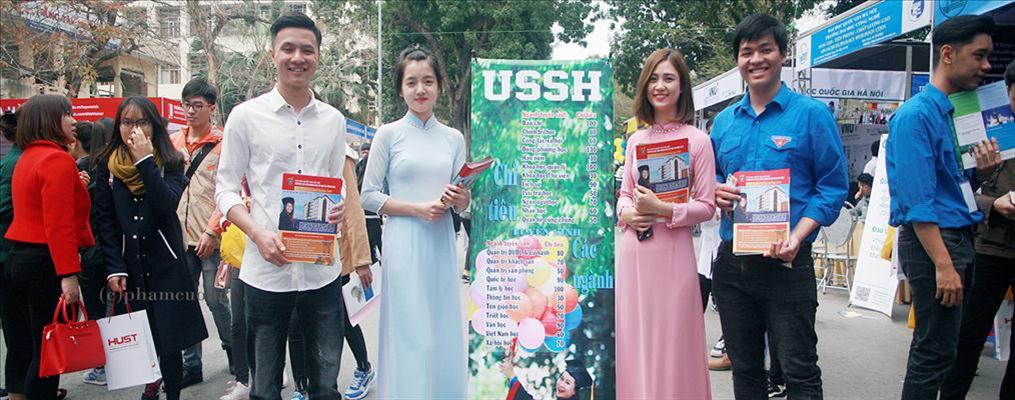
The booth of the University of Social Sciences and Humanities at the 2017 Admissions Fair.
- What changes have these innovative thinking brought about in the school's admissions activities in recent years, Professor?
Previously, student recruitment took place once a year in the summer, leading to a "seasonal" mindset. Since last year, the University has changed its perspective and approach to admissions: promoting year-round admissions and recruiting for various training programs, from undergraduate to postgraduate, from full-time to dual degree programs, and from domestic to international admissions. To effectively carry out this work, the University has established a dedicated admissions department, operating year-round, providing 24/7 online counseling to interested applicants through various channels: phone, hotline, email, fanpage, etc. During peak admissions seasons, admissions officers organize numerous online counseling sessions; in some sessions, we answer hundreds of questions from students interested in the University's programs, from application techniques to priority status, scholarship policies, career prospects, and study abroad opportunities. It can be said that over the past two years, this change has yielded positive results, creating timely and accurate interaction between the University and potential applicants.
Regarding staff, in addition to the dedicated admissions department, each teacher is responsible for promoting and advising on admissions for the school. In terms of methods, while previously admissions promotion was relatively passive (only advising those who directly sought it out), now the school proactively engages with high schools to introduce its training programs along with updated information on employment conditions. The counseling area is also expanded annually to many different provinces to allow more high school students to access up-to-date information about the school. In particular, the school has effectively utilized "student ambassadors" in promoting admissions to high schools nationwide.
- Besides changes in the admissions process, is the school also focusing on innovating its training organization activities, sir?
Besides student recruitment, the school's top priority is to innovate its training organization to improve quality, shorten the training process so that students can accelerate their studies and graduate early. To achieve this goal, the school has focused on supporting lecturers and students in innovating teaching and learning activities, diversifying assessment methods, and strengthening quality assurance in accordance with national and international standards.
In 2016, the University focused on innovating its training processes: developing standardized training schedules for all majors, professionalizing the organization and management of standardized classes according to the credit-based training method, enhancing the service spirit of the training department, and moving towards establishing a service culture in training and student support... following the motto of professionalism, efficiency, and courtesy. In particular, the training schedule ensures compliance with regulations while demonstrating flexibility, avoiding "dead time" in the implementation of courses, and clearly defining the tasks and responsibilities of each department in the implementation process. In addition, the team of homeroom teachers and academic advisors are responsible for providing timely advice to students so they can adjust their study plans accordingly. The training regulations allow students to graduate up to four years earlier (or later), and the University is responsible for organizing a smooth process to ensure students' rights in terms of training progress. In reality, many students have graduated after about 38 to 40 months of study, saving their families money while increasing their own career opportunities.
In 2017, the University continued to promote innovation in training, focusing on reviewing and adjusting training programs to be up-to-date, modern, and highly interconnected between different disciplines. Strengthening interconnection primarily ensures students' right to education, while also opening up opportunities for students to pursue accelerated learning and double majors within the University and other training units under the Vietnam National University, Hanoi. Promoting interconnection between disciplines also opens up opportunities for exchange with international partners, attracting international students to study and participate in exchanges… thereby accelerating the internationalization of the University's training activities.
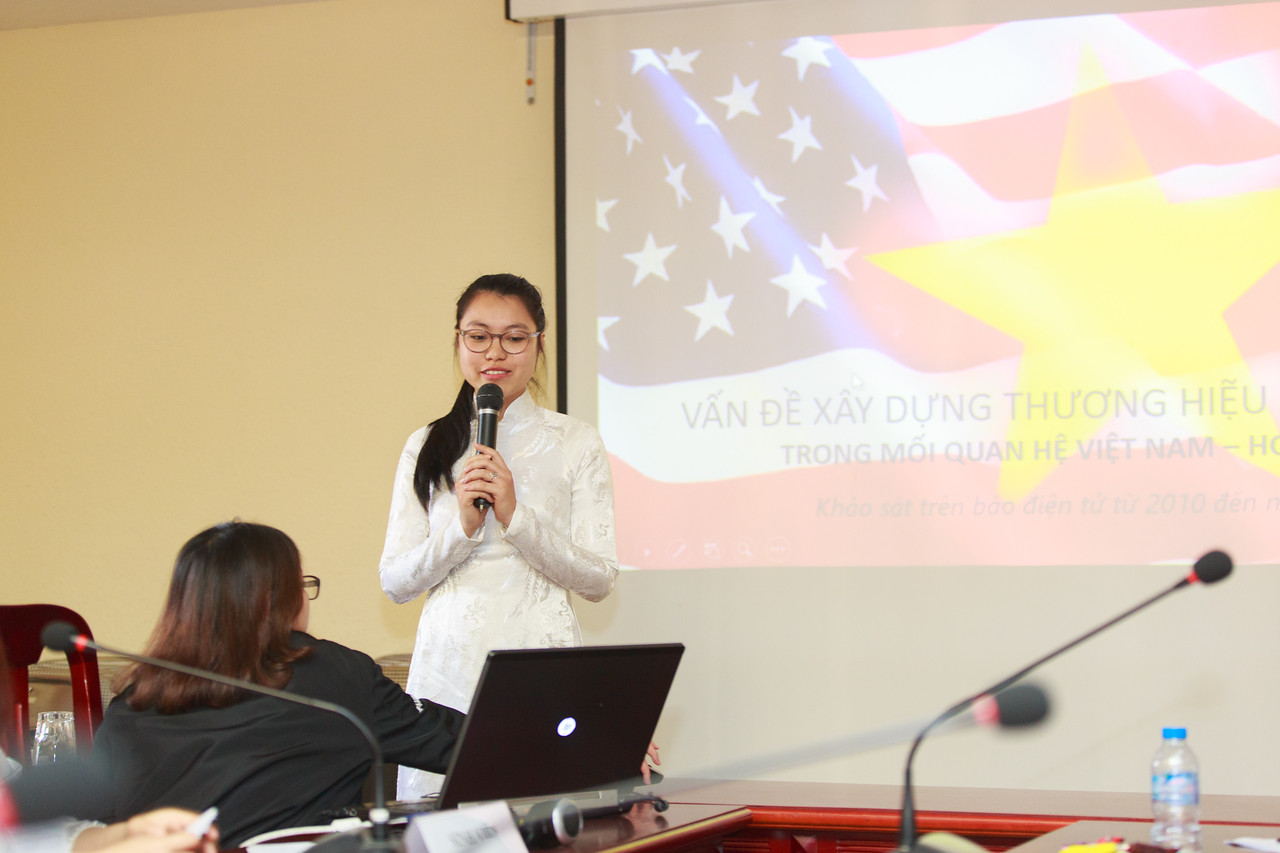
Students from the Faculty of Journalism and Communication at their graduation defense ceremony. This is also an opportunity for the Faculty and the University to "showcase" their training products to recruiting organizations.
- Having gone through more than 70 years of construction and development, the University of Social Sciences and Humanities has established a solid brand in the community. With strong innovations in admissions and training in recent years, what message would you like to send to prospective students who are interested in the University?
During a working session with a partner in the Southwest region, a colleague openly shared: "We view the University of Social Sciences and Humanities as a university..."luxurious"Because we're in Vietnam, we sometimes feel hesitant to propose collaborations in training and research!" After hearing that, I jokingly said that the school would continue to maintain its reputation.luxurious" but absolutely not to give the impression that the school..."arrogant"!
Saying "luxuriousThis is due to the University's current leading position in the field of training and research in social sciences and humanities in Vietnam. With over 70 years of tradition and more than 60 years of training and research, the former University of General Sciences and the current University of Social Sciences and Humanities is a cradle for training talents for the country, with many prominent figures in the fields of science, politics, and management; it is a trusted partner of more than 250 international universities and research institutes that wish to cooperate in education and science with Vietnam. Currently, the University offers 29 undergraduate programs, more than 30 master's programs, and more than 30 doctoral programs; it can be said that all fields of social sciences and humanities are present in the University's total of 98 training programs, from basic sciences such as Philosophy, Literature, History, Linguistics… to modern and applied sciences such as Management Science, Journalism and Communication. Information, Public Relations, International Studies, Oriental Studies (Korean Studies, Japanese Studies, Chinese Studies, Southeast Asian Studies, Iranian Studies, Indian Studies…), Sociology, Social Work, Psychology, Religious Studies…
To avoid being labeled as "arrogant“Over the past year, the University has drastically reformed its working, teaching, and learning styles. With the motto of placing the “teaching” activities of lecturers and the “learning” activities of students at the center, and with the spirit of providing the best service for training and research, an atmosphere of innovation and openness, a spirit of service has truly spread throughout the University's staff and students. Along with that, administrative procedures have also been drastically adjusted by the University to be as convenient as possible for learners and teachers… Therefore, the University always aims to build and enhance the USSH brand.”luxurious" without "arrogant"In the eyes of the academic community both domestically and internationally!"
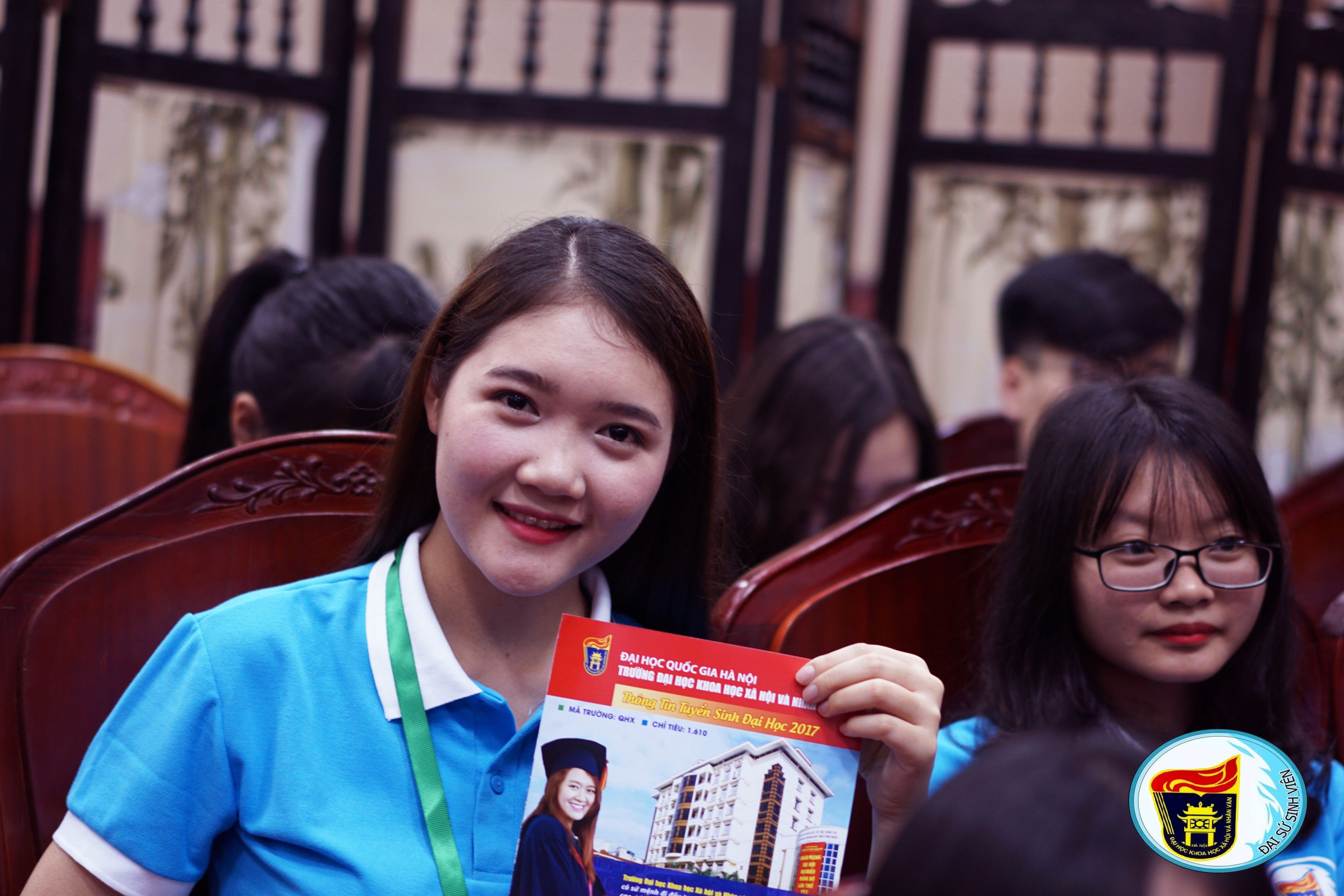
Student ambassadors from the University of Social Sciences and Humanities at the Launch Ceremony of the 2017 Student Ambassador Program. The ambassadors will bring information and images of the University to 140 high schools in Hanoi and act as a bridge between the University and high school students during this year's university admissions season.
- One of the top concerns for students when deciding on a university and major is job opportunities after graduation, especially opportunities to work in related/related fields... Do you have any advice for the students on this matter?
For many years, the University has regularly conducted surveys on the employment situation of its graduates, considering this a crucial task to adjust its training orientation as well as its responsibility to society and the community. According to the latest survey data from March 2017, the percentage of graduates currently employed or pursuing further education was 93.1%, with 84.2% of graduates entering the labor market. Of particular interest is the dynamism of the University's graduates in various fields of work: the private sector (67.9%), the joint venture sector with foreign companies (15.1%), the public sector (14.0%), and self-employed graduates (3.0%). Within this group, the level of satisfaction with jobs directly related to or closely related to their field of study was approximately 80%.
In reality, the concept of "correct/closely related to one's field of study" also needs to be understood flexibly and relatively, as it is difficult to define precisely because it depends on each individual's perspective. For example, a sociology graduate who chooses a job in the media field but related to social work rather than pursuing research in sociology; a social work graduate who establishes a counseling and employment support center for people with disabilities; a tourism management graduate who opens their own travel company; a history graduate who opens a consulting office on cultural heritage… all can be considered correct or closely related to their field of study. The concept of "correct/closely related to one's field of study" now depends not on parents' feelings about their children getting jobs in government agencies… but is more closely tied to the level of satisfaction of the graduate with their chosen job – even if that job is entirely in the private sector.
In the current context of globalization and integration, the labor market is undergoing significant changes. This reality is not unique to Vietnam; workers in the region and around the world face this reality. Competition naturally creates major challenges for everyone, but it also presents opportunities. For students in social sciences and humanities, the chances of success are considerable, given the surplus of manpower in many economic, financial, and engineering sectors. Furthermore, many interdisciplinary fields within social sciences and humanities are establishing their position in modern society, such as Psychology, Social Work, Communication, Management, and Cultural Resources. However, to succeed in such a highly competitive labor market, each student must prove themselves through their actual abilities (excellent expertise, fluent foreign languages, strong skills, positive work attitude, etc.) and not solely rely on a degree, regardless of its level.
Thank you, Teacher, for sharing your insights!
Author:Thanh Ha
Newer news
Older news

