
Tin tức

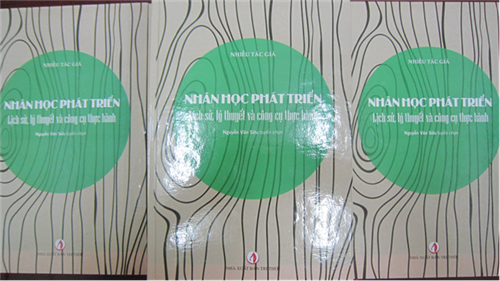
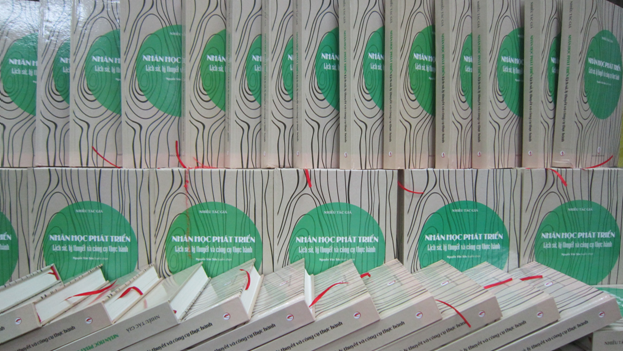
Introducing the book "Developmental Anthropology: History, Theory, and Practical Tools"

Thursday - February 26, 2015 15:34
As one of the subjects of study, application, and practice in anthropology, development, although defined in various ways, can be broadly summarized in several key points. First, development typically implies improvement (a betterment for the local, national, or global community), empowerment (building the capacity to plan and manage changes related to growth), and participation (the involvement of members of social groups in decisions that affect them now and in the future). Second, development often implies externalities, potentially challenging existing cultural practices within developed communities. Development opportunities do not appear as a single package, but rather as part of a complex cultural system encompassing numerous elements, values, and consequences. Third, development is a process, not an event, and not simply a concept. Fourth, the development process often involves negotiation and conflict between groups regarding whose values ​​and goals will be represented in the transformation and whose rules will be applied in the development process. Fifth, for the social sciences, especially for anthropology, development is a form of social transformation.
Giới thiệu sách
Introducing the book "Developmental Anthropology: History, Theory, and Practical Tools"

For anthropology, development is not only a goal to strive for but also a broad subject matter in three aspects: research, application, and practice. Anthropologists often emphasize that development is not a single event but a process encompassing multiple understandings, concepts, contents, entities, levels, and regions, with a history spanning decades. Thus, development includes many different dimensions: housing, sanitation, health, clean water, education, food security, conservation, employment, empowerment, poverty reduction, the ability to influence policy-making, and many other issues. Anthropology's interest in and connection with development also encompasses different approaches and levels, which can be summarized into three basic directions. The first direction is that academic anthropologists take development issues as their subject of study (anthropological research on development). The second approach involves anthropologists applying anthropological knowledge and methods to solve practical development problems (applied anthropology in development). The third approach involves anthropologists participating in policy formulation, policy management, policy implementation, policy monitoring, and policy/program/project evaluation (practical anthropology in development).

The studies compiled in this book address all three aforementioned developmental approaches of anthropology from historical, theoretical, and practical perspectives. This is a collection of articles that will help anthropology students and readers gain a deeper and more systematic understanding of an important field of study: Developmental Anthropology.

Index

Introduction: What is development anthropology?

Nguyen Van Suu

Part 1: History and Theory

  1. Reaffirming Applied Anthropology: Past, Present, and Future

Barabara Rylko-Bauer, Merrill Singer, John van Willigen

  1. Challenges of Applied Anthropology

Paul Sillitoe

  1. Anthropology in Development

John van Willigen, Elaine Drew, Carol Jo Evans, Elizabeth Williams

  1. Discourses on development: An anthropological perspectives

RD Grillo

  1. From participatory observation to participatory development: Making anthropology effective

Paul Sillitoe

  1. The role of ethnographic description: The role of ethnographic description in project evaluation.

Johan Pottier

  1. Anthropology and Development: Critical Frameworks

Thomas Yarrow and Soumhya Venkatesan

  1. Sustainable Livelihood Frameworks: A Comprehensive Analysis of Development and Poverty Reduction

Nguyen Van Suu

Part 2: Practical Tools

  1. Overview of the social impact assessment process

John Western and Mark Lynch

  1. Participatory rural assessment

John van Willigen, Hussein Mahmoud

  1. Action research and participatory action research

Elaine Drew, Wini P. Utari, John van Willigen

  1. Collaborative research

John van Willigen

  1. Cultural brokers

John van Willigen

  1. Cultural action

Barbara A. Cellarius, Deborah Crooks, Patricia Kannapel, Julianna McDonald, Cynthia Reeves, John van Willigen

  1. Social marketing

John van Willigen

  1. Development projects and land conflicts: Some issues concerning anthropological research methods.

Nguyen Van Suu

Author:Nguyen Van Suu

The total score for this article is: 0 out of 0 reviews

Click to rate the article
You haven't used the Site.Click here to remain logged in.Waiting time: 60 second
