
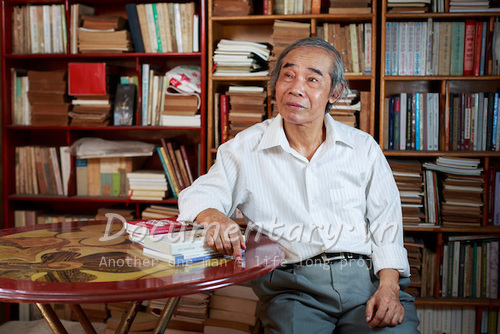
A teacher wholeheartedly dedicated to the cause of education.
Professor Le Van Lan has been associated with the Faculty of Literature for over forty years and served as the Head of the Department of Modern Vietnamese Literature for a long period. Even now, though well past the age of 70, he still teaches, imparting to generations of students, trainees, and researchers comprehensive and profound knowledge, with a calm, gentle demeanor and a work style that is both serious and open.
The professor's lectures, rich in both knowledge and depth, have fueled a passion for Vietnamese literature, especially modern poetry, among generations of students. He particularly emphasized the importance of scientific methods and techniques in literary and poetic research. His lectures primarily aimed at guiding students towards a scientific mindset in studying various literary phenomena. His teaching style was not flamboyant but gentle, like a heart-to-heart conversation with his students, making the academic, profound, yet detailed and specific knowledge easily absorbed. In class, he frequently posed challenging questions requiring deep thinking and high levels of generalization. In answering these questions, he never imposed a single explanation but often used responses that served as a kind of "suggestion." From there, the teacher encouraged his students to work independently and creatively, building upon the achievements of their predecessors. Only then would the results of their research be profound and meaningful, both theoretically and practically. Simultaneously, this process of self-discovery and self-improvement is when students accumulate the most knowledge and experience. This is an extremely necessary and important work ethic for a student, and even more so for a researcher, which a far-sighted teacher has passed on to his students.
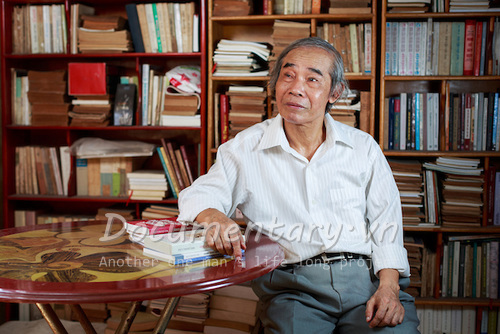
Professor, Doctor, People's Teacher Le Van Lan
In his teaching, Professor Le Van Lan always skillfully combined general knowledge of literary practice with theoretical research, making his lectures engaging and highly effective for generations of students. Throughout his teaching career, he also demonstrated foresight in training his successors. Perhaps thanks to this guidance, many of his former students have achieved significant success in their careers. Many of them now hold high positions in publishing houses, media organizations, universities, and research institutes. Because of these achievements, in 2010 he was awarded the title of People's Teacher, the highest honor bestowed upon educators.
A scientist who conducts research tirelessly.
Professor Le Van Lan's deep connection with literature was not only evident in his role as an educator but also profoundly and enduringly demonstrated in his role as a scientist. In fact, for him, teaching and research were two in one. Scientific work was a way to generalize, synthesize, and enhance information and knowledge, while simultaneously improving the quality of teaching. At the same time, teaching was the process of concretizing the issues he had devoted much time and effort to researching.
Over his more than forty years of work, Professor Le Van Lan has published dozens of scientific works, including monographs, textbooks, articles, journals, and scientific proceedings. All of these works are the result of a long process of researching issues related to modern Vietnamese literature, with a focus on poetry. Even at the age of seventy, a rare age, he continues to work, explore, and create, making discoveries that demonstrate his profound and insightful thinking, along with a systematic and coherent working method. Among the broad research issues in literature, Professor Le Van Lan pays particular attention to the formation, movement, development, trends, themes, writing techniques, and styles of poetry as a crucial part of the overall Vietnamese literature. Professor Le Van Lan's works, initially just surveys drawn from personal experience, later became much more profound thanks to the application of Western poetic theories and schools to the practice of national poetry. A few examples can be cited here to demonstrate the vast knowledge, insightful writing style, and flexible thinking of Professor Le Van Lan in this field. In textbooks such as...Vietnamese Literature 1945 – 1954 (1990), Vietnamese Literature 1954 – 1964 (co-authored) (1990), Understanding Poetry (1997), The Progress of Modern Vietnamese Poetry (2000),Modern Vietnamese literature has been viewed from a comprehensive and systematic historical perspective. This shows that the author possesses a very broad and deep understanding of the literature of those periods in particular and Vietnamese literature as a whole. This work...Poetry – Formation and ReceptionMore recent publications demonstrate the ability to delve deeply into the process of literary creation from the perspective of creative genre psychology, with the broad knowledge of a serious scholar. With this work...Literary debates of the first half of the 20th centuryBased on statistical analysis and a generalization of the content of literary debates in the early 20th century, the professor has presented his own objective and insightful personal analyses and assessments. This work not only demonstrates a broad understanding but also shows a mature writing style capable of delving deeply into complex and controversial issues in literary history. Furthermore, inThe structures of poetryThe professor then focused on exploring several structures of poetry (including both overall and partial structures) and, through that, re-examined some core issues concerning poetry such as: the concept of poetry, a poem, a line of poetry, poetic language, and poetic rhythm; thereby pointing out the relationship between a line of poetry and a line of poetry, and between a line of poetry and poetic words. Most of the issues in the treatise have been published in specialized scientific journals. After being published as a book, journals such asPoetry, the Vietnamese SoulHe reprinted many parts of the treatise. Having spent a long time working in documentation before transitioning to teaching, Professor Le Van Lan was very concerned with accuracy and meticulousness in his research. It is precisely because of this that in his works on literature before 1945, he used very new and modern literary sources that, at the time he wrote them, had never been mentioned before…
Reading the works of Professor Lê Văn Lân, a People's Teacher, one can perceive a refined and sensitive capacity for literary criticism, along with a clear, coherent, and universal theoretical thinking. He emphasized self-discovery in research, rejecting clichés, facile approaches, vague interpretations, or forced impositions on literary phenomena. He aimed to decipher them from an objective, scientific perspective, coupled with a particularly sensitive and appreciative soul for poetry and literature. The foundations of knowledge he dedicated himself to researching have instilled in generations of students a serious and scientific approach to learning, and a lasting belief in and love for literature.
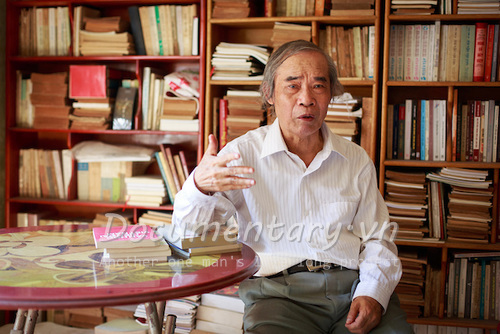
He was the Head of the Department of Modern Vietnamese Literature (1986-2010).
A poetic soul that endures through time.
Beyond being a dedicated educator and a committed scientist, Professor Le Van Lan is also known as a prominent figure in contemporary Vietnamese poetry. His pen name, Ma Giang Lan, is closely associated with his hometown in the Ma River region. His poetic career has been as long and arduous as his scientific research. He has published six volumes of poetry.Dawn and Gunfire(1975)Flowers and the River(1979)A love like that(1990)Fragments of the subconscious(2009)About a bridge(2010)Waves of words(2013). Looking at that career, it can be seen that the teacher's creative path has been interrupted, but the poetic pen and the emotions in it have almost never ceased.
Mã Giang Lân's early poetry collections are imbued with the atmosphere and spirit of a generation of young people full of enthusiasm, energy, and a desire to contribute to the country. The poetry at this time sincerely reflects a genuine, simple love for his homeland, with the images of his hometown river and Hàm Rồng bridge becoming two valuable artistic symbols throughout. This is what earned him third prize in the newspaper's poetry competition.Arts and CultureIn 1969, in his later poetry collections, he maintained his inherent authenticity but also incorporated a shift in artistic thinking—a more modern, abstract, and generalized approach. Throughout his poetic journey, poet Mã Giang Lân revitalized traditional forms by creating a new way of writing lục bát (six-eight syllable) poetry. This involved rhyming at the sixth word of the eight-syllable line, but the special thing was that this sixth word belonged to a reduplicated phrase. Achieving this kind of rhyming required a rich vocabulary in Vietnamese and keen thinking.
Along with that, he began experimenting with prose poetry, a genre that is neither easy to write nor easy to read or understand, yet contains a high level of knowledge and artistry. This was a particularly significant breakthrough in his creative career, marking a fresh shift towards modernity. The combination of a simple, honest soul and a Western-style way of thinking helped create this collection of poems.Waves of wordsHe was honored at the Vietnam Writers Association's Literature Award in 2013. His poetry is subtle and refined, concealing a noble soul and sharp artistic thinking. In his poems, readers can easily recognize a modern writing style that blends the rigorous thinking of a scientist with the dreamy, romantic, and creative spirit of an artist. His poetic voice carries a melancholic tone, leaning towards contemplation, reflection, and philosophy.
***
"Three aspects of life"—teacher, poet, and scientist—coexist harmoniously, complementing each other within Professor Lê Văn Lân. In any role, whether as a teacher, scientist, or poet, he demonstrated a vast knowledge base, a keen ability to grasp issues, and a compassionate and benevolent heart. The scientific path he has followed, is following, and will continue to follow brings many valuable lessons for future generations to inherit, learn from, and continue. Professor Lê Văn Lân is truly a noble image of tireless work ethic, impeccable professional ethics, and a dreamy, creative soul—a role model for future generations to admire and emulate.
|
PROFESSOR, DOCTOR, PEOPLE'S TEACHER LE VAN LAN
+ Affiliation: Faculty of Literature. + Management position: Head of the Department of Modern Vietnamese Literature (1986-2010).
Vietnamese Literature 1945 – 1954(co-authored). University and Vocational High School Publishing House, 1990. Reprinted by Education Publishing House, 1998. The development of modern Vietnamese poetry. Education Publishing House, 2000, 2001, 2004. Poetry - Formation and Reception. National University of Hanoi Publishing House, 2004. Modern Vietnamese Literature - Issues - Authors, Education Publishing House, 2005. The structures of poetry, Vietnam National University, Hanoi Publishing House, 2011. |
Author:Nguyen Huong Ngoc

