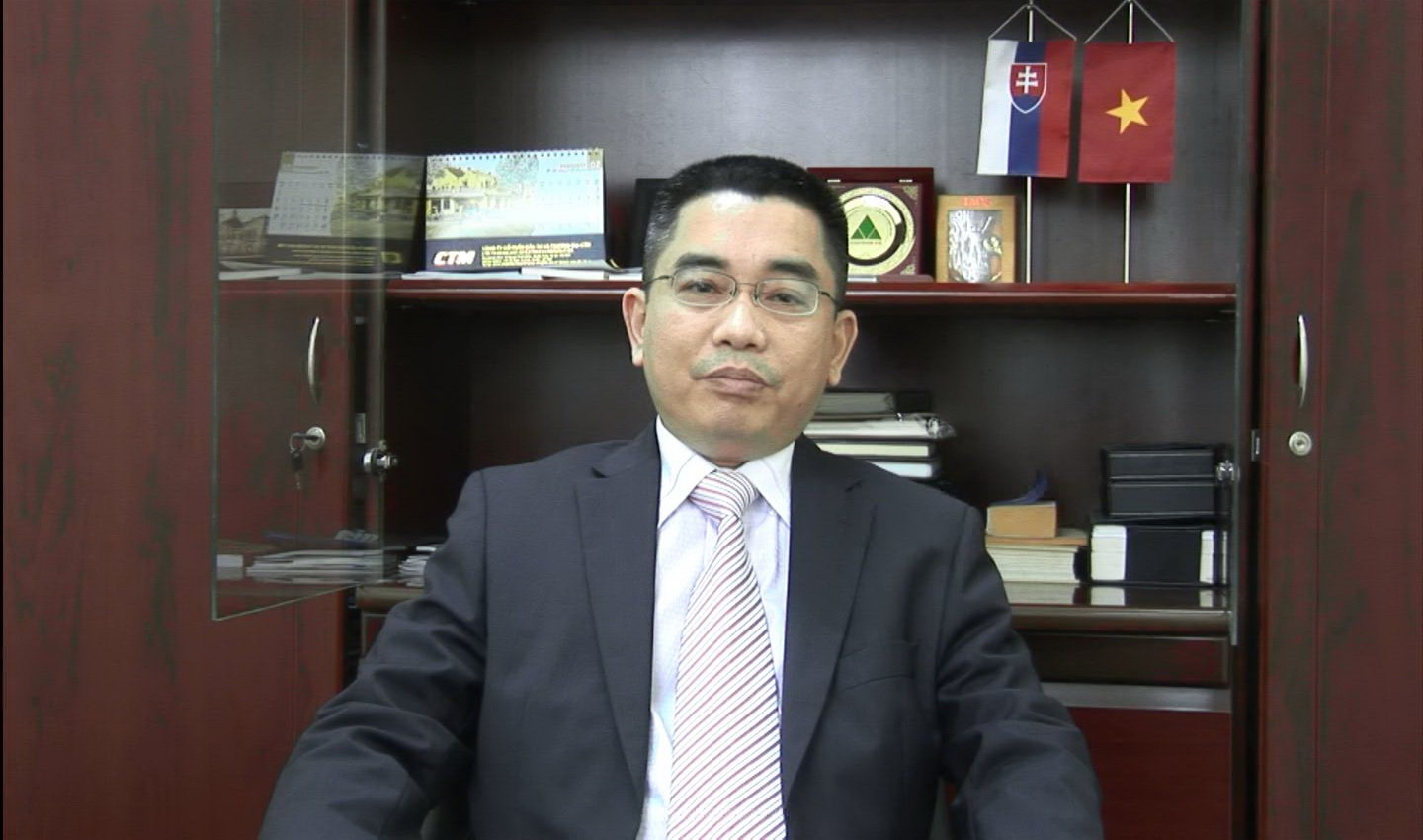
Mr. Tran Son Tung - General Director of CTM Investment and Trading Joint Stock Company
- As a business leader, how do you assess the role of the office administration department?
The office is a crucial department in government agencies as well as businesses. The office has a comprehensive function, encompassing advisory, logistical, and support functions. Its main task is to synthesize and process information, as well as ensure the necessary physical and technical conditions to support leadership and business management. The office's performance determines the smooth operation of the organization. Because it directly supports the organization's operational system, the quality of the office's operations determines the effectiveness of management and the direction of work for the entire organization. Therefore, improving the quality of the office's operations is a vital task for any business.
- What function of the office department in your company do you value most?
The company I run is CTM Investment and Trading Joint Stock Company, formerly the Construction Import-Export Company of the Ministry of Construction. The company was previously a state-owned enterprise, but was privatized in 2004 and has been operating in the market for 10 years. Since no longer operating under state subsidies and planning, we have had to adapt to operating under the principles of market competition, facing significant pressure and requiring proactive management, especially in finding customers. This is particularly complex given our multi-sector operations, ranging from trading and import-export to specialized fields like labor export. All processes of accessing information, processing information, and finding customers are primarily channeled through the official and initial point of contact: the Office Department. Therefore, I highly value the function and capacity of the Office Department in processing and synthesizing information. The faster, more accurate, and more sensitive the information is processed, the greater the opportunity and advantage a company has over its competitors. Of course, modern communication methods and the internet are now widespread and useful, but the skills and expertise of office staff and those in charge of the office are crucial, even determining survival in handling information promptly. There are issues and incidents that arise continuously every day that require very quick action. For example, in the field of labor export, workers go to work in distant markets, including on ships, and if issues are not handled promptly, it will greatly affect the rights of the workers as well as the reputation of our company.
So, could you specify your requirements for a modern office worker?
In Vietnam, for a long time, we didn't pay much attention to training office staff or support staff—a specific task of the office in general. Instead, we relied heavily on a centrally planned, subsidized system, so information processing tasks weren't given much importance. The role of the office at that time was mainly focused on logistics and personnel management. In reality, in a modern, developing society, the role of the office is changing significantly. From the practical experience of businesses like ours, in addition to assisting company leaders with personnel management and logistics, office staff must possess the skills to process information quickly, from handling legal documents to dealing with increasingly complex business situations.
Currently, due to the development of information technologies and the ever-increasing volume of information, the skills and qualifications of an office worker are vastly different from the past. In the past, an office worker only needed to stamp or type documents, but now they must possess other soft skills to process information efficiently and effectively. They are the ones who initially process, classify, and transmit information promptly. Previously, we only transmitted paper documents, but now we have email and other technical and technological means. Therefore, if an office worker lacks the necessary social knowledge, professional expertise, and foreign language skills in the current context of international integration, information processing will face many challenges. Clearly, today's office workers must be highly versatile, highly skilled, and constantly strive to improve their abilities.
In the office, there are many job positions, so each position has different expectations from its leaders. A clerical staff member needs to be meticulous and careful; an administrative officer needs to be dynamic, proactive, and have a broad perspective… In short, I expect my employees to work with a high sense of responsibility, enthusiasm, and a love for their work. Professional qualifications, skills, and qualities constitute an employee's competence. Without skills, one cannot survive in a professional work environment. But qualities are what help them shine and succeed.
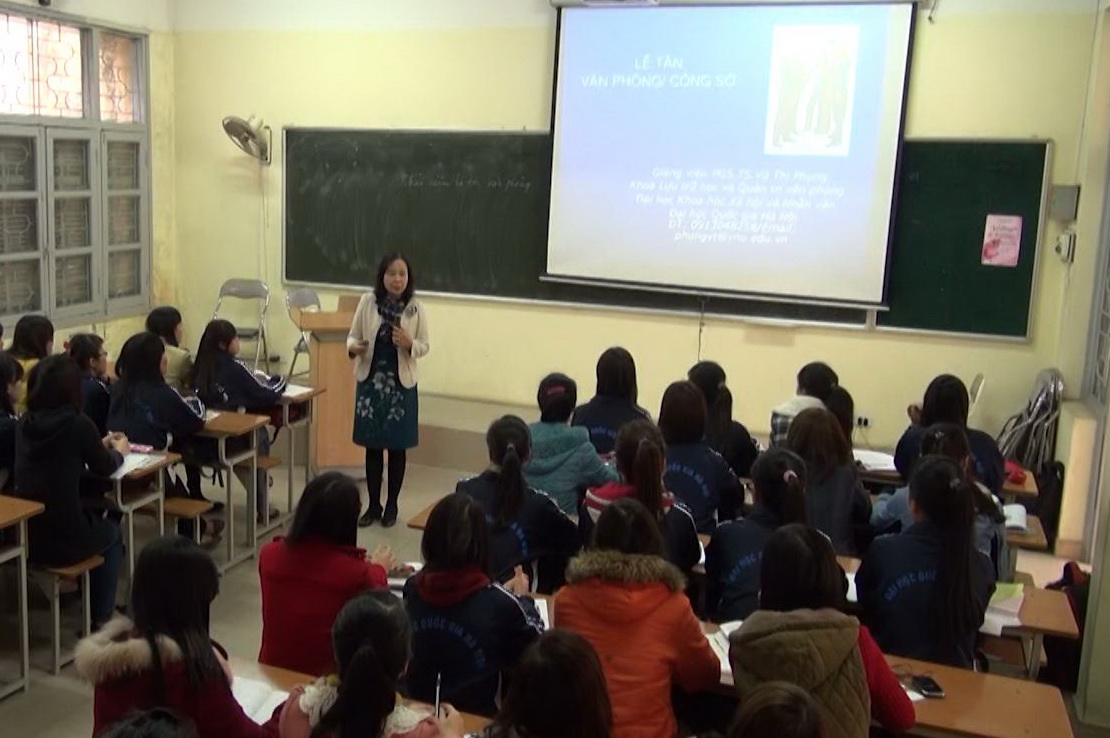
A class session for students majoring in Office Management - University of Social Sciences and Humanities.
- Can you give us a forecast of the current demand for office administration personnel?
The demand for personnel in this field is always high and is trending upwards. Businesses today tend to need high-level office staff, meaning they must be capable of independently handling and advising on information for the company, equivalent to a complete assistant or support staff for the leadership. After receiving formal training at specialized schools such as the Department of Archival Studies and Office Management, University of Social Sciences and Humanities, students must meet requirements in foreign languages, possess good communication skills, be able to handle arising problems, process information quickly, and have a professional work style… If an office employee possesses these capabilities, any business will need them and will be willing to pay a high salary.
In joint-stock companies like ours, there are clear pressures for efficiency and transparency in operations, so the role of highly qualified office staff or secretaries is essential. We recruit annually for our member departments and newly established departments, and the recruitment of office staff is highly valued. Of course, there is selection and dismissal during the work process. Some people meet the job requirements, while others who do not will have to leave.
- We understand that you are a former student of the Department of Archival Studies and Office Management, University of Social Sciences and Humanities, and have held various positions in the office before becoming the top leader of the company. Could you share your experiences and career advancement with the students?
Twenty years ago, I graduated from the Archival Studies program at the Faculty of History, Hanoi University (now the Archival Studies and Office Management program at the University of Social Sciences and Humanities, Vietnam National University, Hanoi). At that time, career paths were quite vague, and there weren't as many favorable conditions in terms of international integration, technology, and modern equipment as there are now. Today's students are much better prepared than we were. When they choose their major, they already have a specific career path in mind. During their four years of university, they have many opportunities to learn and gain practical experience. This is very important.
After graduating, I started working in a company, initially as an office employee, then as a secretary, and later in an operational role. After that, I was appointed as a department head, then as Deputy General Director, and now as General Director of the company. I believe that the training in my major, as well as the practical experience gained from my time as an office employee and secretary, has greatly contributed to my later development. During my university studies, we were equipped with general methods, especially logical information processing methods and administrative skills that other majors rarely have the opportunity to learn, such as document drafting, document management, and record keeping. Working in specific roles in the office – the central point for gathering, processing, and reporting information – I learned how to handle tasks at each stage, gaining a comprehensive and holistic view of the company's operations. With this advantage, coupled with investing thought and honing the necessary skills, I gradually accumulated a wealth of knowledge and skills in business operations and management. As a result, I was able to advance to higher positions and further develop my capabilities.
Therefore, my advice to students is that during your studies, you should try to dedicate time to developing skills ranging from computer literacy to foreign languages, communication skills, and etiquette. Actively seek part-time work to gain practical knowledge. I think the salary isn't as important as the learning experience; it's about gaining experience, and learning through part-time work is free. School time is limited, and the opportunities for practical training are very limited and cannot match the real-world conditions in businesses and government agencies. It's about "learning by doing," which greatly supports your future career. If you only focus on studying to pass exams, I think you'll find it difficult to adapt to the real world after graduation, meaning it will take much longer to succeed.
Thank you for the helpful information and advice.
Author:Thanh Ha
Newer news
Older news

