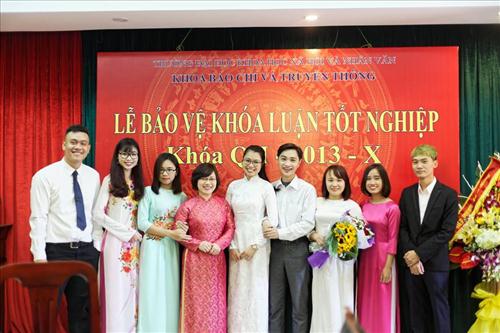
I am very happy and proud of the determination and sincere support from the leadership, colleagues, and students. We had built the training roadmap and envisioned this result many years ago, so it's really not a surprise. As many people know, the Faculty of Journalism and Communication is the first formal research and training institution in Public Relations in the North. Since 2001, we have been publishing research and teaching in this field. However, according to the regulations of Hanoi National University, we could only open a new major when certain prerequisites were met, which could not be achieved overnight, such as having at least one PhD in the relevant field to lead the program, rather than using someone with related or different expertise. To achieve this, the Faculty had to "start first and finish later." While many other training institutions, even without experts, were able to quickly open programs to attract the attention of the labor market, it wasn't until 2010 that we were able to develop a proposal to establish the program, and only in 2013 were we allowed to enroll our first cohort in Public Relations after many persistent efforts to pass the examinations of the Scientific and Training Councils at all levels. Therefore, more than anyone else, we eagerly awaited the day to welcome the students to the school. We worked three or four times harder, opening summer semesters without breaks to help 37 out of 52 students in the first cohort complete their graduation theses early, in order to prepare for the very active recruitment season after the Lunar New Year. In fact, up to 80% of the students in the first cohort have already found jobs in their field by this time. Many students, even on the day of their thesis defense, are still working in the positions they had signed full-time contracts for.

Assoc. Prof. Dr. Nguyen Thi Thanh Huyen - Head of the Department of Public Relations and Advertising, Faculty of Journalism and Communication
- Although the Public Relations major was only established at the Faculty a little over three years ago, it has consistently been one of the most sought-after majors in recent admissions seasons. Could Associate Professor please elaborate on the outstanding directions in training for the Public Relations major at the Faculty in comparison with other training institutions?
Public Relations (PR) has been and continues to be one of the most attractive fields of study in the social sciences and humanities, not only in Vietnam but also worldwide. The number of PR professionals trained in our country over the past years has been insufficient to meet the high demand for labor in all types of organizations, from government agencies to private companies, non-governmental organizations, businesses, schools, hospitals, etc. According to our research, the demand for human resources in this field will continue to grow strongly over the next 10 years, so graduates do not need to worry much about job opportunities. Regarding the training orientation of the Public Relations major in the Faculty, we will continue to adjust and improve the training program that we have developed and implemented over the past three years, focusing on enhancing knowledge and communication skills primarily requested by employers, such as: (i) writing and presenting ideas using multimedia communication formats, (ii) strategic planning based on scientific research and reasoning, and (iii) strengthening in-depth interdisciplinary elective courses (politics, environment, social management, tourism, etc.) so that students can immediately apply their skills according to their aptitude in those fields. At the same time, we will continue to promote interdisciplinary collaboration between the Public Relations and Journalism majors in the Faculty to increase the competitiveness of students from both majors after graduation. In addition, we will also consider developing interdisciplinary programs with other faculties in the university to leverage the best talent in Vietnam's social sciences and humanities from faculties such as Philosophy, History, Literature, Linguistics, Psychology, Sociology, Political Science, Management Science, etc. We will also continue to implement a training method linked to professional practice by increasing the number of recruiters and experts invited to teach in our faculties, as well as organizing more field trips and internships for students to master their professions and cultivate their skills, passion for their work, and readiness to embark on their careers even before graduation. Subsequent student cohorts will also be given the opportunity to graduate early, similar to the first cohort.
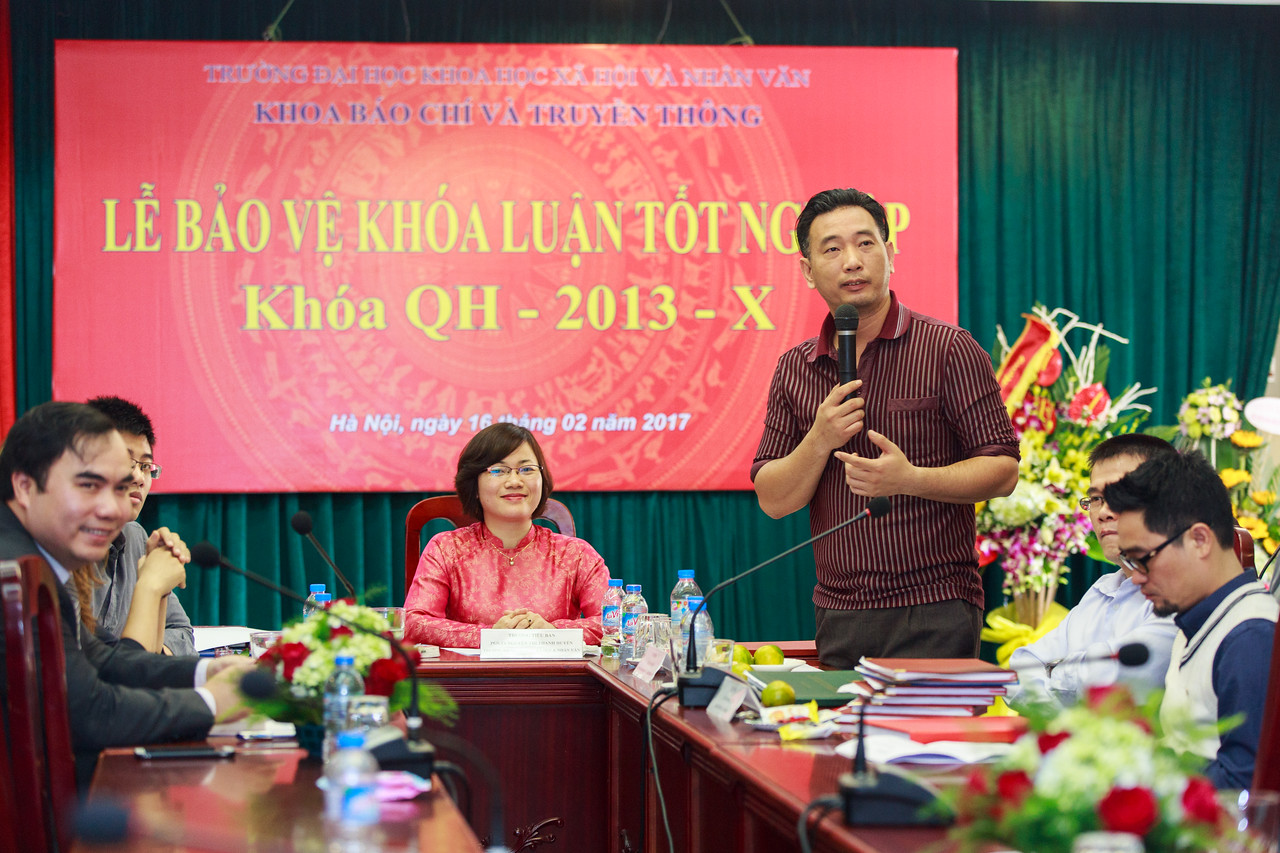
Graduation thesis defense ceremony for students of the Faculty of Journalism and Communication.
- It is known that the Public Relations major places great emphasis on enhancing students' practical professional skills right from their time in school. Could you please share your thoughts on this matter, Associate Professor?
Public Relations (PR) is a highly practical and application-oriented profession; therefore, at the undergraduate level, we place a strong emphasis on practical skills. Students are required to practice and participate in discussions in most of their specialized courses. The learning outcomes for each course clearly state what students should be able to do after completing that course, as well as how to achieve those outcomes. The minimum practical component in all courses is 50%, with some courses reaching 80%, such as courses on writing, planning, and implementing PR programs… For example, the final exam for one of these courses.Event organizationIt is a real event planned by students, who rent the venue, invest the costs, invite experts, handle media coverage, etc.Public Relations ProgramsIt is a customer relationship management (CRM) program implemented for a specific, real client that aligns with their communication strategy.Writing for Public RelationsThis might involve a complete business profile, both in print and online, for self-introduction presentations when the company participates in bidding processes… Even theoretical courses require students to discuss and present by independently researching typical cases in their professional practice, then using theoretical foundations to analyze, explain, and present to the class. Interactive learning is one of the highlights of every course in the Public Relations training program. It's rare to find students sleepy or just copying notes from the teacher in our classes; on the contrary, the classes are always lively and full of inspiration for exploration, expression, and creativity for both teachers and students.
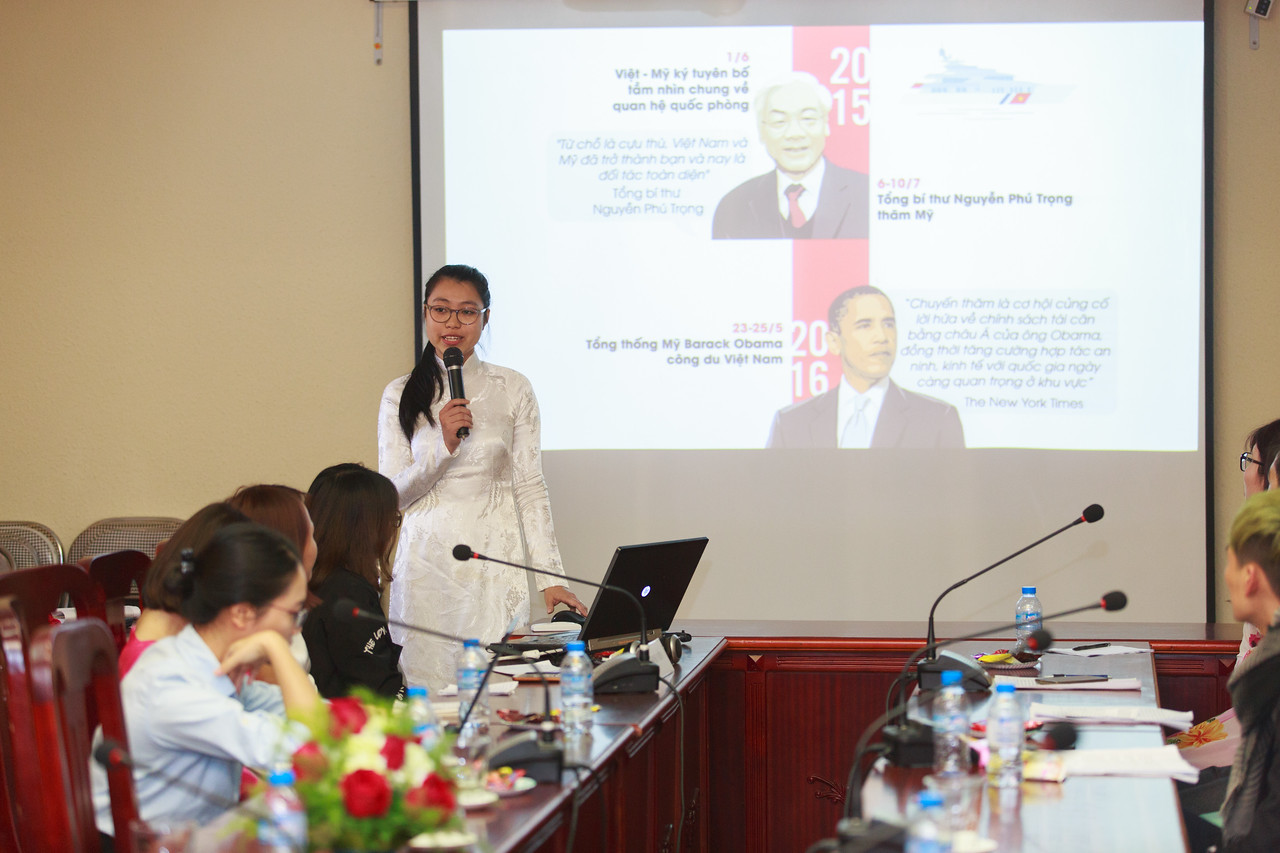
Public Relations students during their graduation thesis defense.
- As the Associate Professor shared, during the training process, teachers not only provide students with foundational knowledge about the field but also help them discover the true beauty of the Public Relations industry and ignite in them a love and passion for the profession. How is this achieved?
Many students enter this field of study with very little understanding of it. We cannot say that this profession is wonderful if it is not. There is a definition of Public Relations that goes like this: "90% doing it well and 10% talking about it." Fortunately, we have so many good examples and stories to demonstrate to the students the beauty of this profession, especially its scientific yet creative nature, its forward-thinking approach, and its warmth and ability to win people's hearts. I always believe that a professional Public Relations officer, in addition to professional skills, must also possess professional ethics, one of the manifestations of which is a sincere love and contribution to their profession and colleagues. We always share this with students so that they gradually absorb it, incorporating a few ideas into each lesson so that they don't feel dogmatic and can absorb it naturally.

- The first cohort of the Public Administration major successfully defended their graduation theses. Could the Associate Professor provide some initial assessments of the Faculty's training output?
The most accurate assessment comes from the satisfaction of employers, and I cannot subjectively speak on their behalf. The road ahead is long, and we are extremely grateful to those who have supported and accompanied the faculty and students of the department. We also hope to continue receiving assistance from all sources so that more skilled public relations professionals can enter the labor market and contribute to societal development.
- Professor, could you share some advice for students who are interested in learning about and choosing Public Relations as a major at the university level, as well as for Public Relations students who are graduating this year?
The University of Social Sciences and Humanities has always been Vietnam's number one training institution for social sciences and humanities disciplines. For students about to take the university entrance exam, if you feel it's suitable, confidently choose Public Relations or any other field as your career path, rather than letting others impose their decision on you. For those about to graduate, always be confident in what you have acquired and honed during your university years. Your teachers and the university are always watching over you and look forward to your return to share your practical experiences with future students, as well as to continue conquering even greater heights on your academic journey.
Thank you for your insights, Associate Professor.
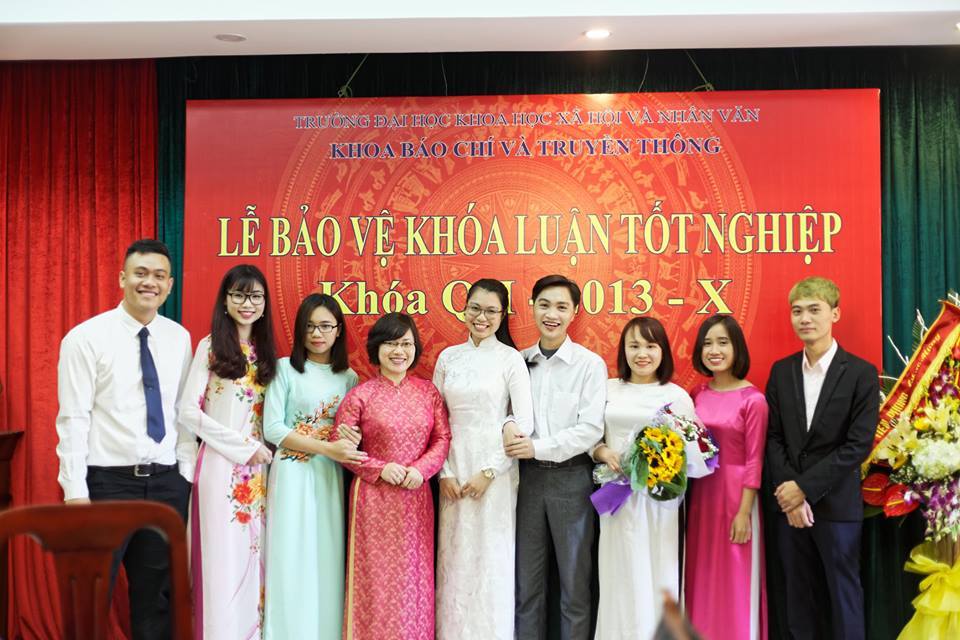
Associate Professor Dr. Nguyen Thi Thanh Huyen and the students of the first cohort of the Public Relations major.
Related news and articles:
http://thanhnien.vn/giao-duc/hang-chuc-cu-nhan-bao-chi-ra-truong-truoc-han-mot-hoc-ky-792071.html
http://vnu.edu.vn/ttsk/?C1654%2FN20175%2FKhoa-sinh-viên-đầu-tiên-của-ngành-Quan-hệ-công-chúng-bảo-vệ-khóa-luận-tốt-nghiệp.htm
Author:Thanh Ha, Photo: Thanh Long
Newer news
Older news