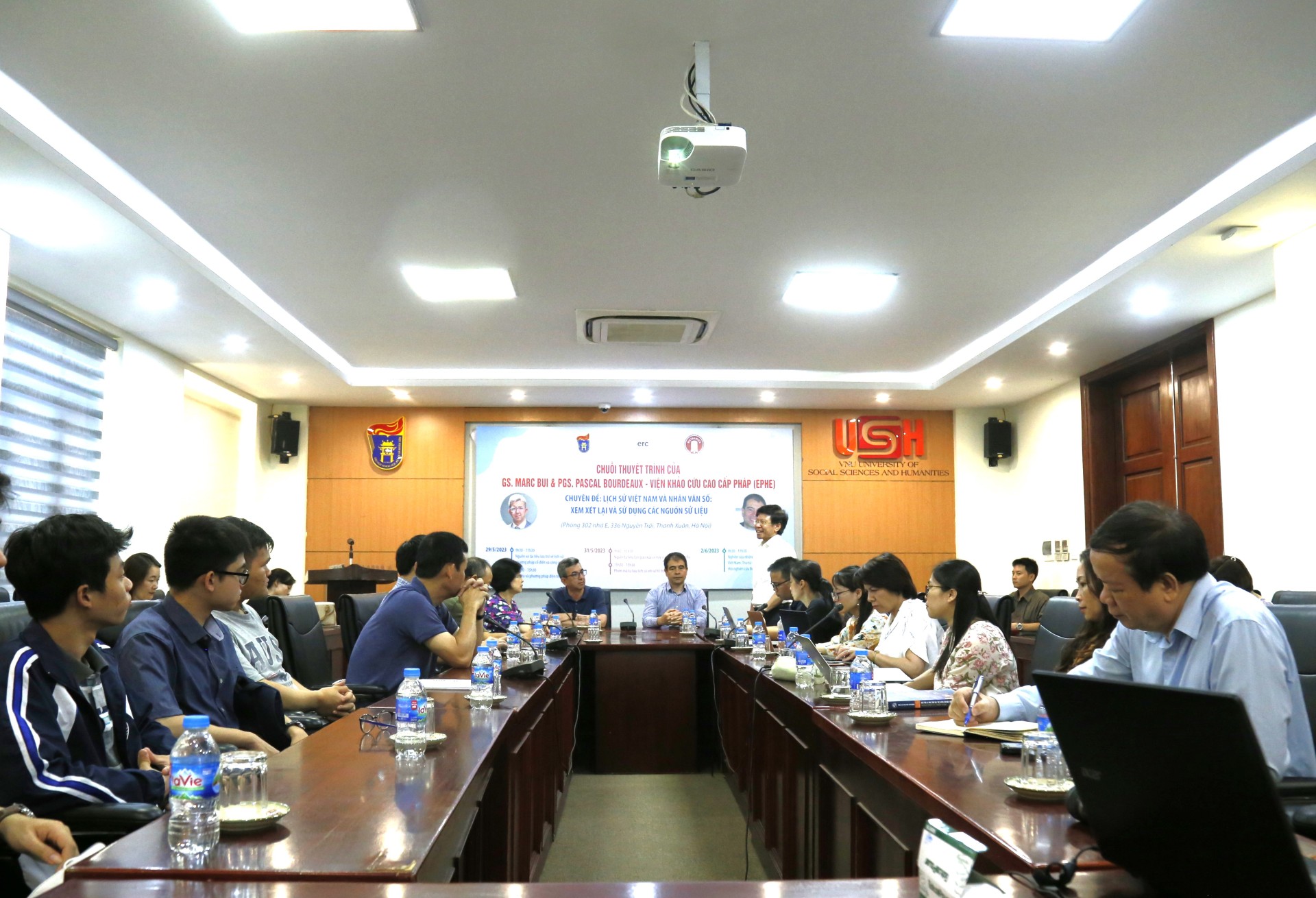
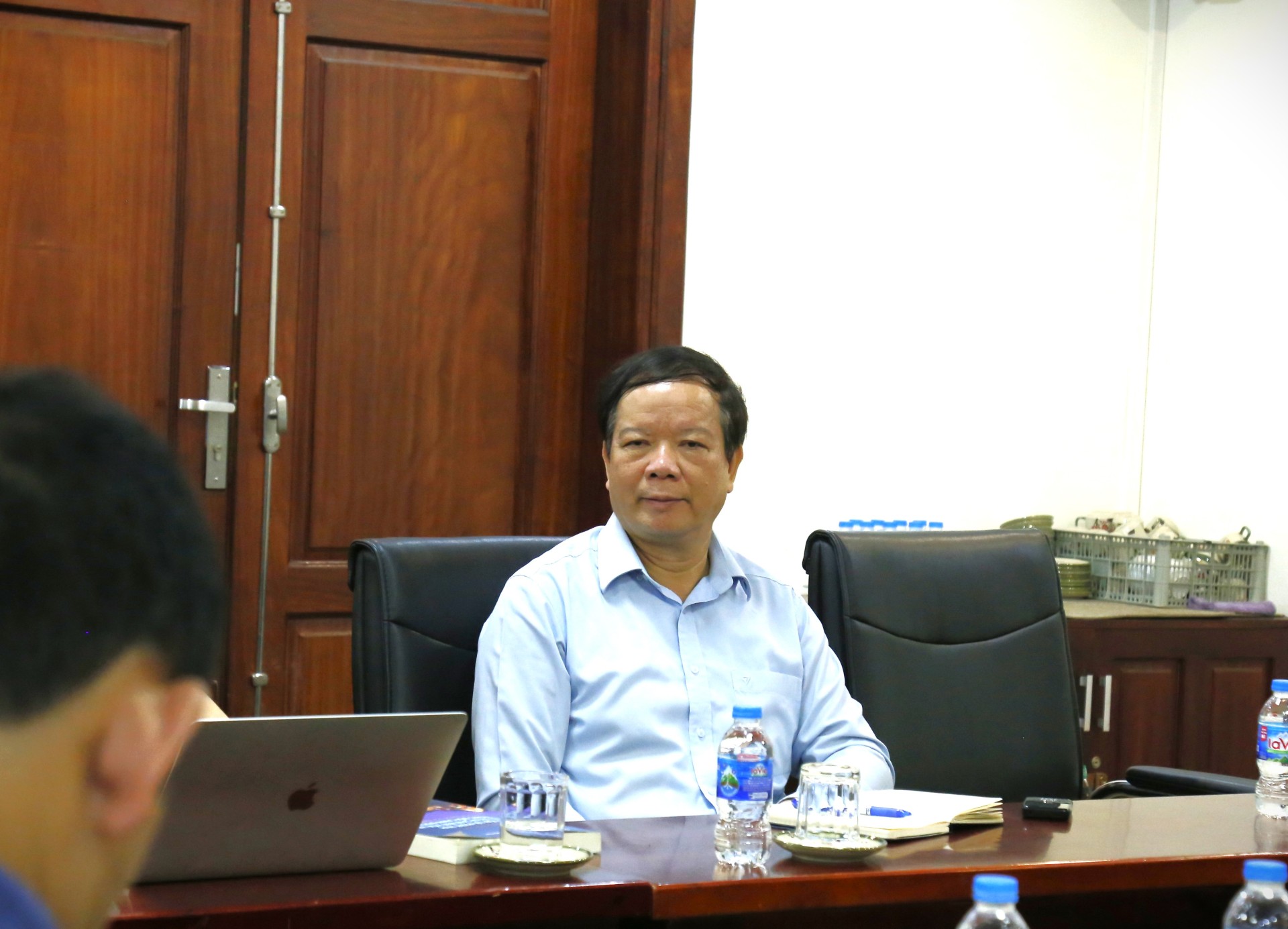
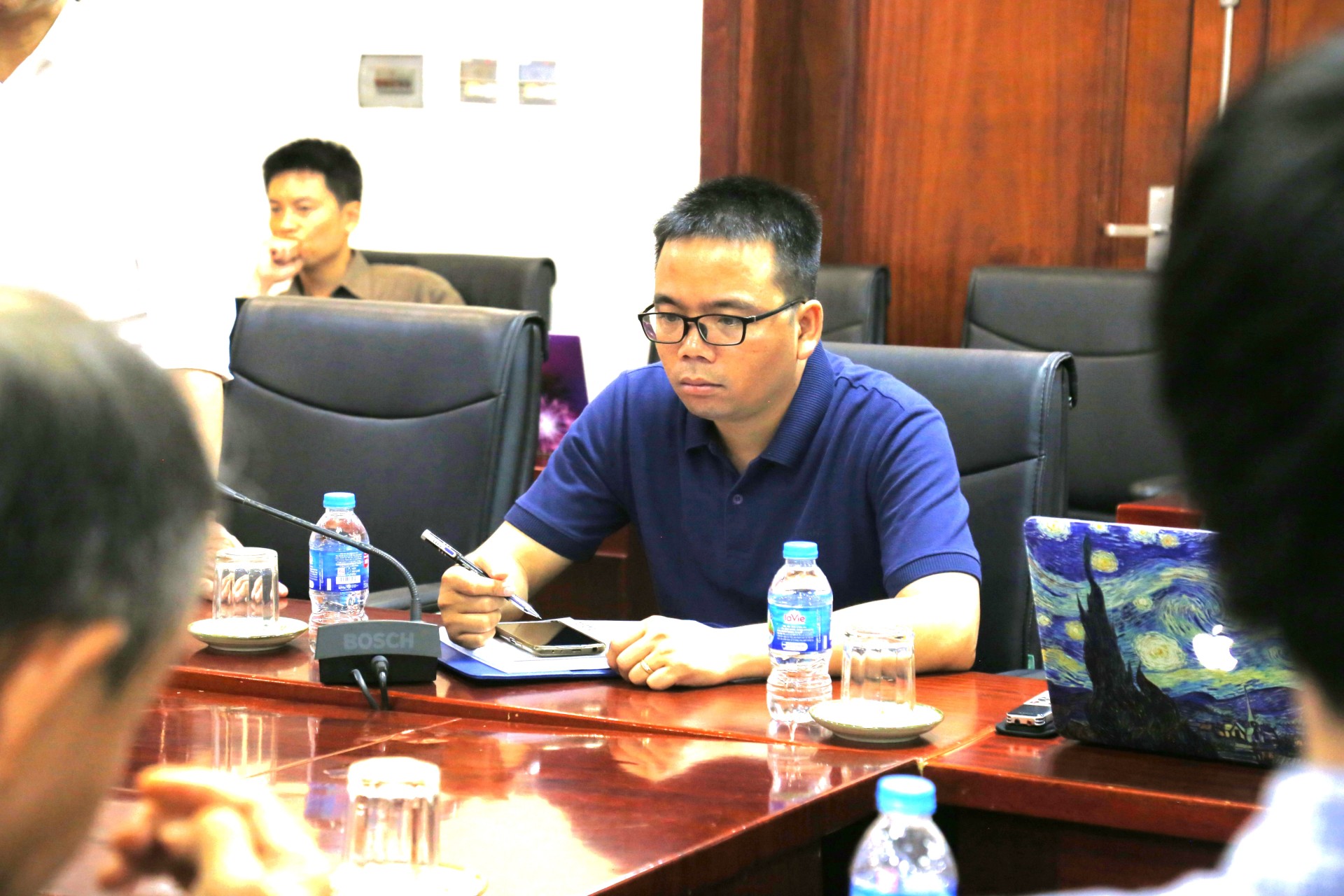
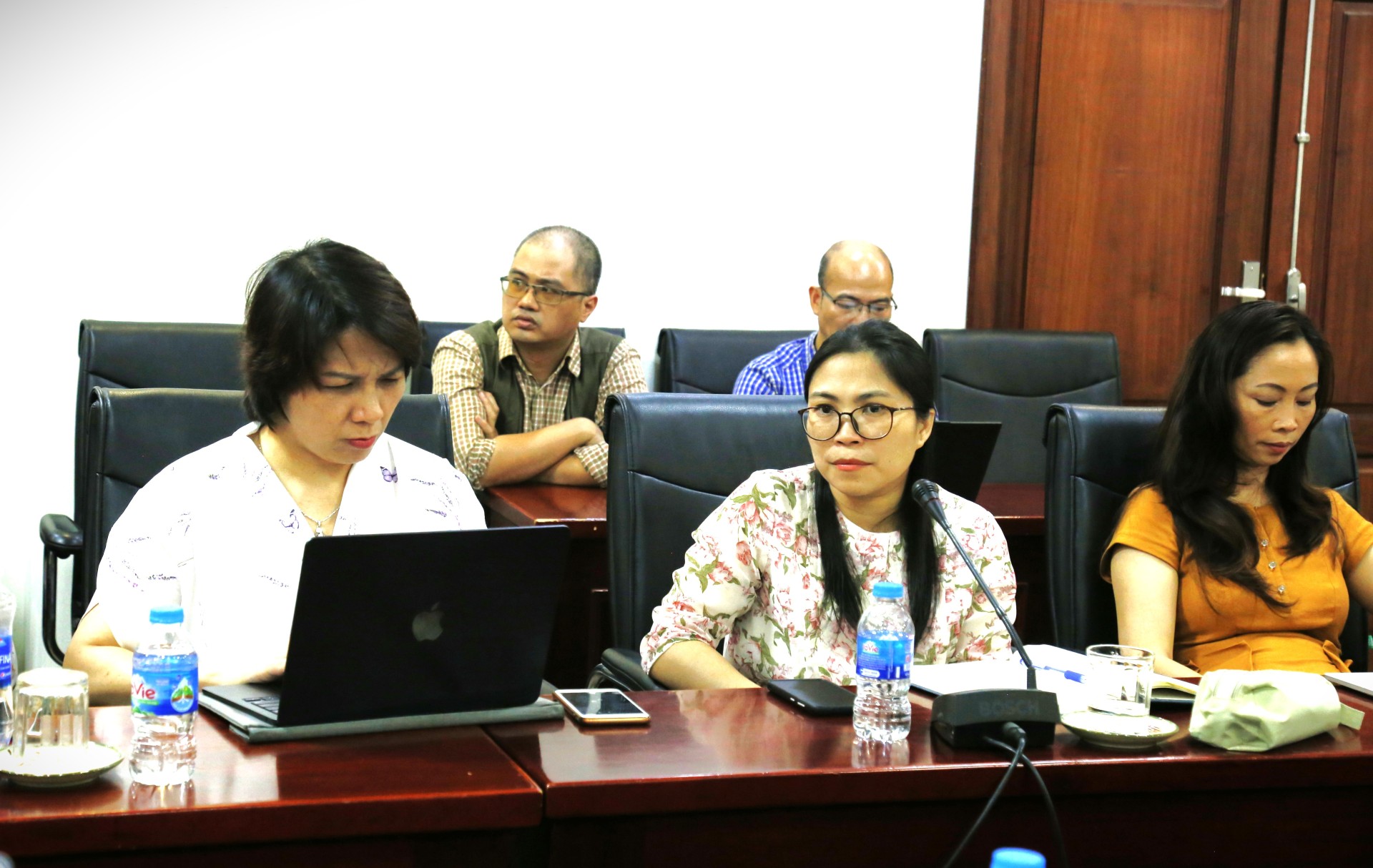
Attending the working session were Prof. Dr. Hoang Anh Tuan - Rector of the University of Social Sciences and Humanities, VNU Hanoi, and leaders of faculties/departments/functional offices under the university, such as the Faculty of History, the Faculty of Information and Library Science, the Department of Religious Studies, and the Office of Cooperation and Development.
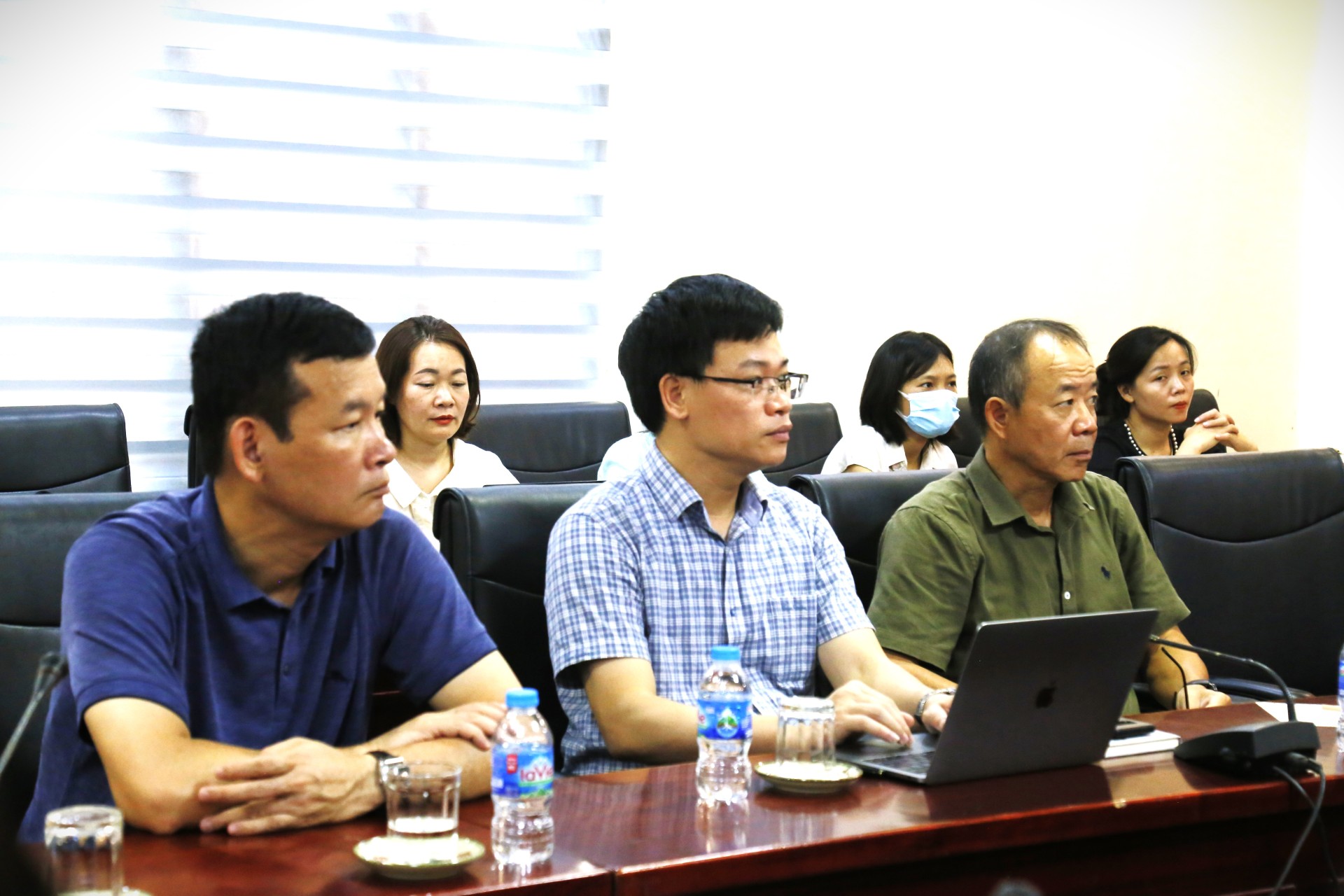
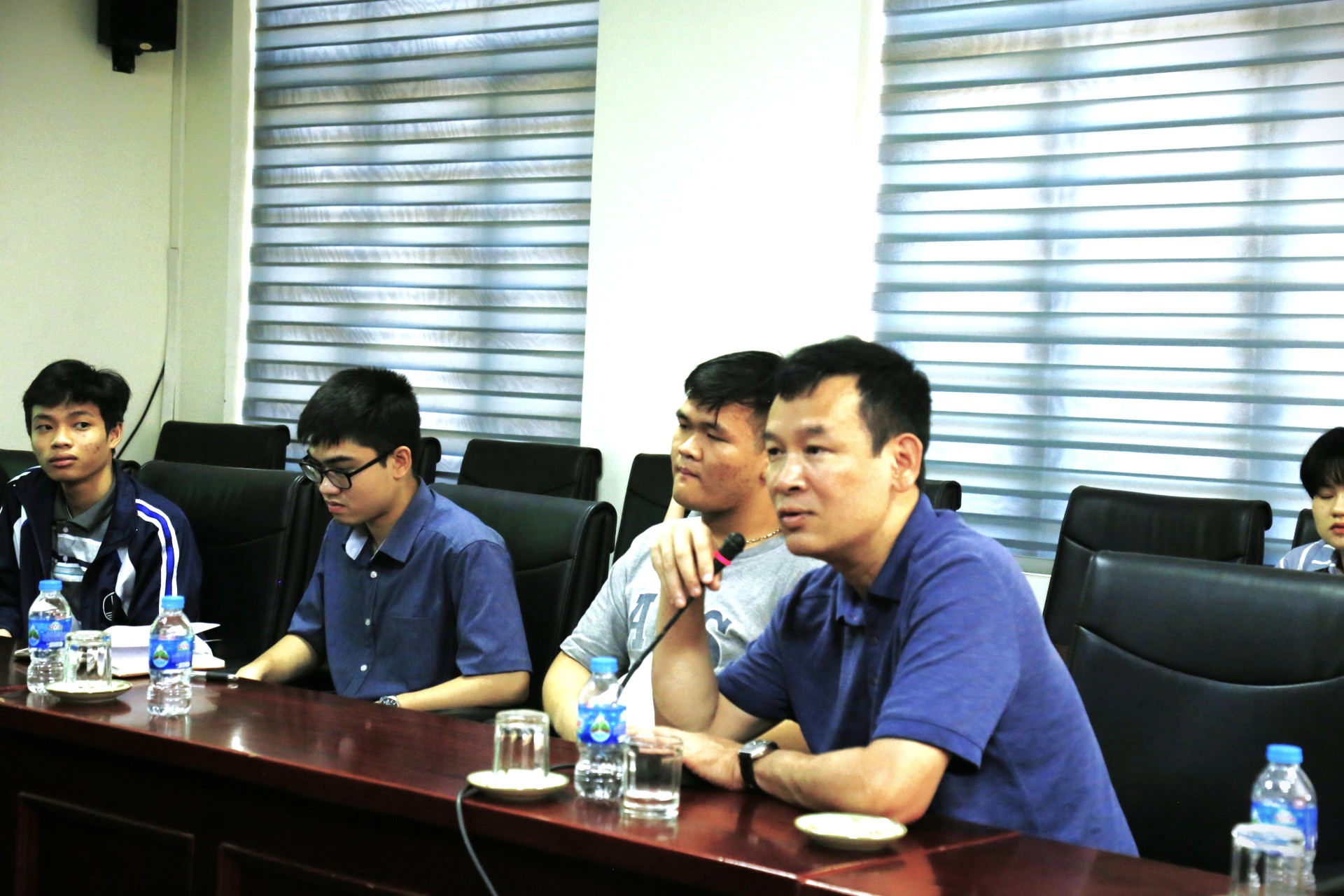
The presentation attracted the participation of scientists, researchers, trainees, and students from the Faculty of History, the Faculty of Information and Library Science, the Department of Religious Studies - University of Social Sciences and Humanities; the Institute of Han Nom Studies under the Vietnam Academy of Science, and Hanoi Pedagogical University.
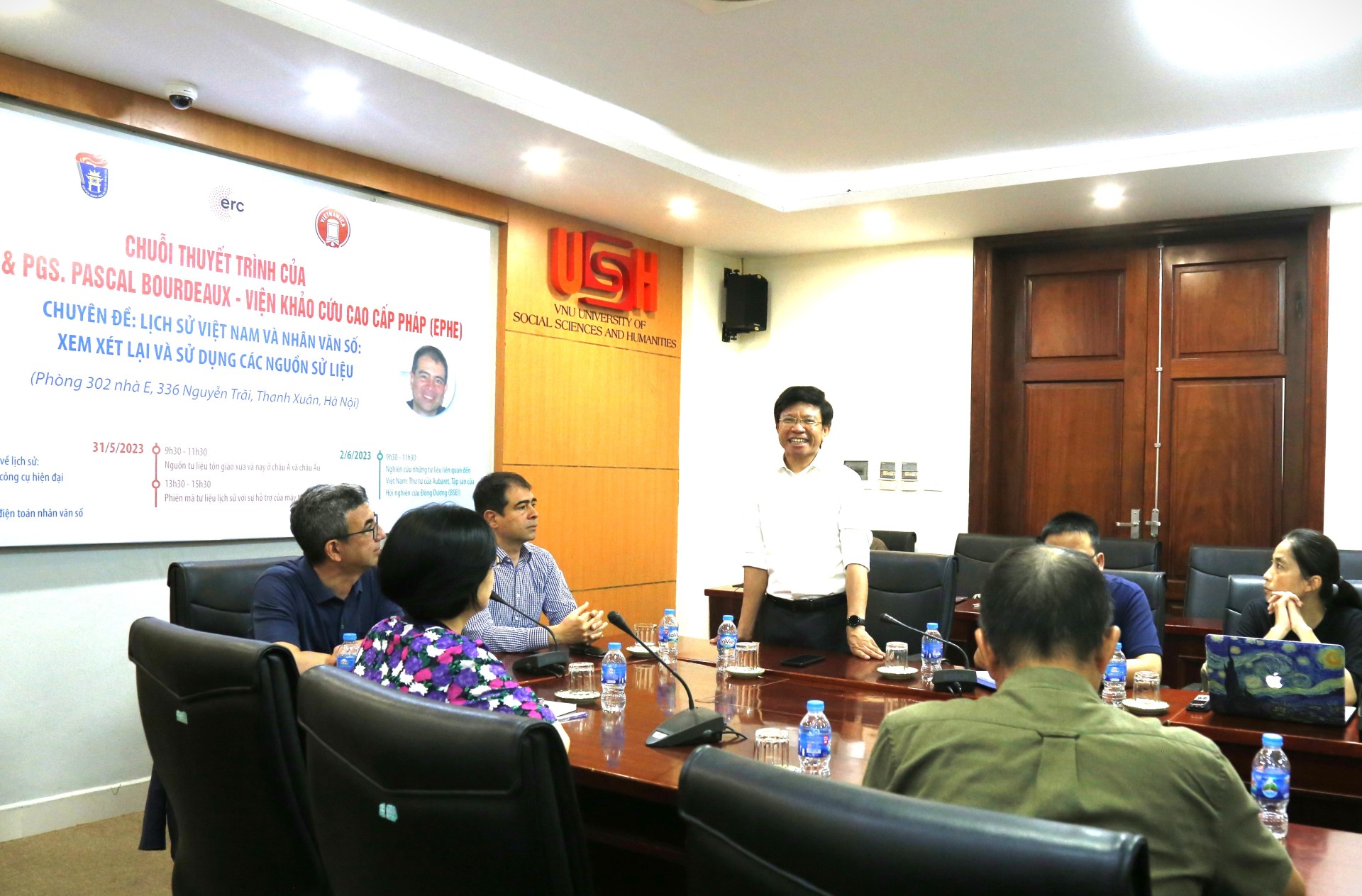
Professor Hoang Anh Tuan, Rector of the University of Social Sciences and Humanities, Vietnam National University, Hanoi, highly appreciated the scientific value of the content in the series of presentations as well as the dedication of the two professors to scientific exchange activities with faculty and students of the university.
Professor Hoang Anh Tuan stated that digitalization in the field of Social Sciences and Humanities is a major policy of the University of Social Sciences and Humanities, Vietnam National University, Hanoi. This policy has received strong support from scientists, staff, and lecturers of the university, especially through the cooperation of international organizations and scientists, including the Vietnamica project funded by the European Research Council, of which VNU-USSH is one of the three strategic members.
Professor Hoang Anh Tuan, Rector of the University of Social Sciences and Humanities, Vietnam National University, Hanoi, highly appreciated the scientific value in the series of presentations by the two scientists from the French Institute for Advanced Studies.
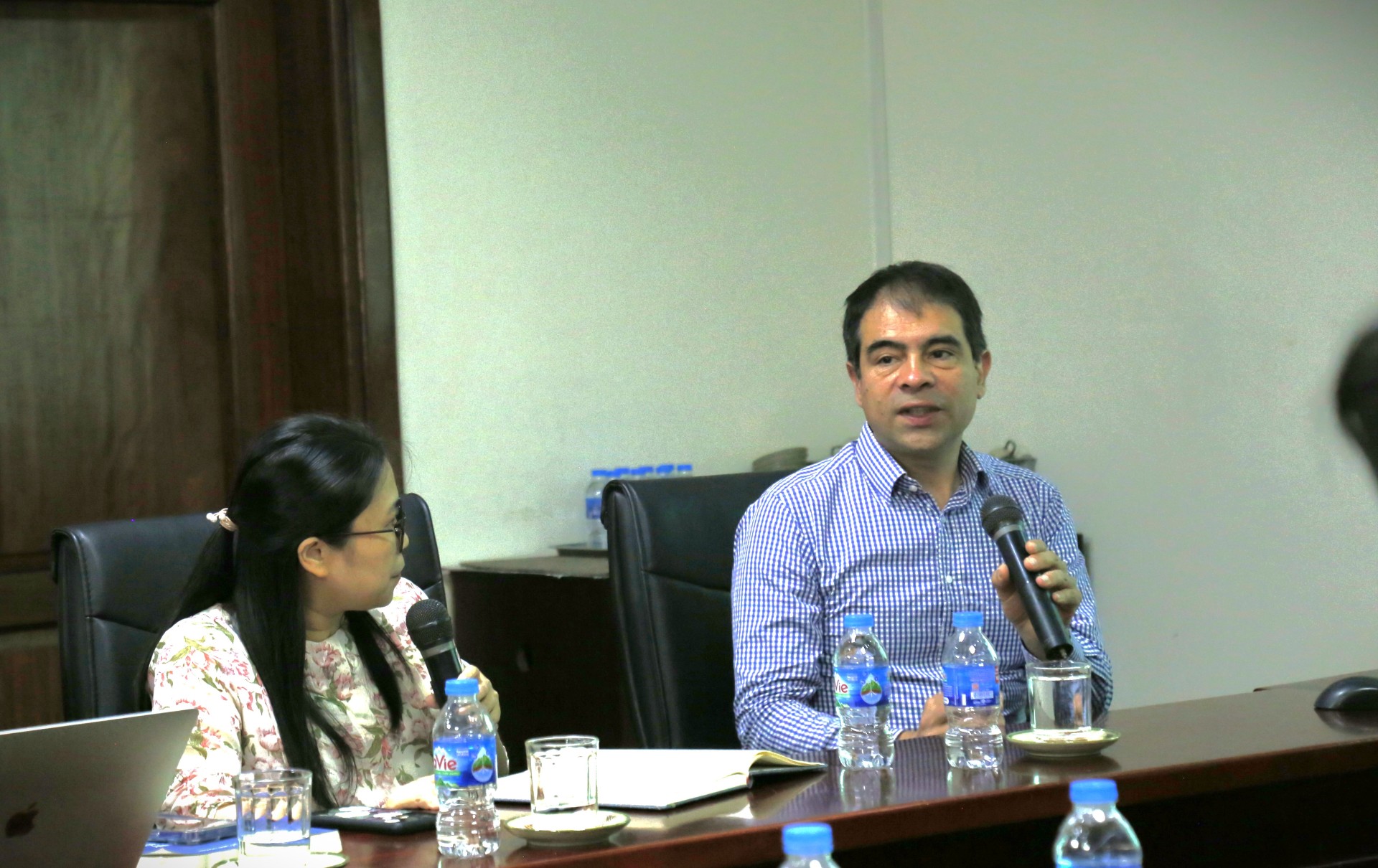
The series of presentations by two professors at the University of Social Sciences and Humanities from May 29, 2023 to June 2, 2023 revolved around topics such as: sources and archival materials on history, classical methods and modern tools; data and methods of digital humanities computing, ancient and modern religious sources in Asia and Europe; transcription of historical documents with the support of computers; research on documents related to Vietnam: Auberet's correspondence, the Bulletin of the Society for Indochina Studies (BSEI).
The presentations generated lively discussions among the attending scientists, researchers, trainees, graduate students, and undergraduates.
The series of presentations attracted the attention of many scientists, researchers, and students from VNU-USSH, as well as many other research institutions and universities.
VietnamThis is a research project on the history and digitization of Vietnamese epigraphic documents, funded by the European Research Council (ERC); Professor Philippe Papin (Vietnam Studies expert at the French Institute for Advanced Studies - EPHE) is the project leader. The project is managed by the French Institute for Advanced Studies, and the participating agency in Vietnam is the Francophone University Organization (AUF).
The project spanned five years (from 2019 to 2024), bringing together numerous research experts and students from the University of Social Sciences and Humanities, Vietnam National University, Hanoi; the French Institute for Advanced Studies (EPHE); and the Institute of Han Nom Studies (under the Vietnam Academy of Social Sciences) across a wide geographical area encompassing Vietnam, France, and several other European countries.
Vietnamica aims to research the history of Vietnamese tribute through inscriptions, digitize Vietnamese social science documents stored in Europe and Vietnam; participate in training postgraduate students and doctoral candidates; establish an electronic library, and translate and publish monographs and comprehensive studies on the history of Vietnamese tribute.
The project aims to analyze and process rubbings of thousands of donated stone inscriptions erected in Vietnamese villages from the 16th to the 20th centuries. These inscriptions, carved in both Chinese and Vietnamese characters, offer new insights into the history of religion, beliefs, economy, and social structure in rural Vietnam.
In addition to in-depth historical research, including monographs on offerings related to village shrines, the Vietnamica Project also focuses on processing all rubbings of stelae using digital humanities technology. Over the years, numerous research programs, seminars, publications, and postgraduate training have been implemented simultaneously, yielding many impressive results.
Related articles:
Approaching "digital transformation" from a social science and humanities perspective.
"Academics are the foundation, modernity is the trend": the direction for the development of basic sciences in the current period.
Leading experts discuss pressing policy and management issues in the context of digital transformation.