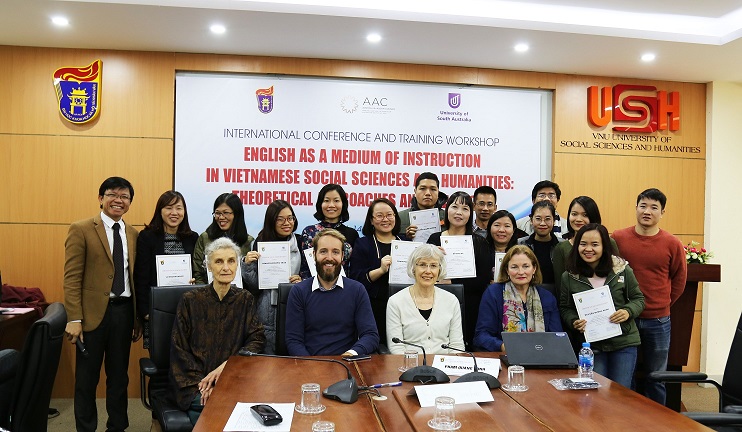
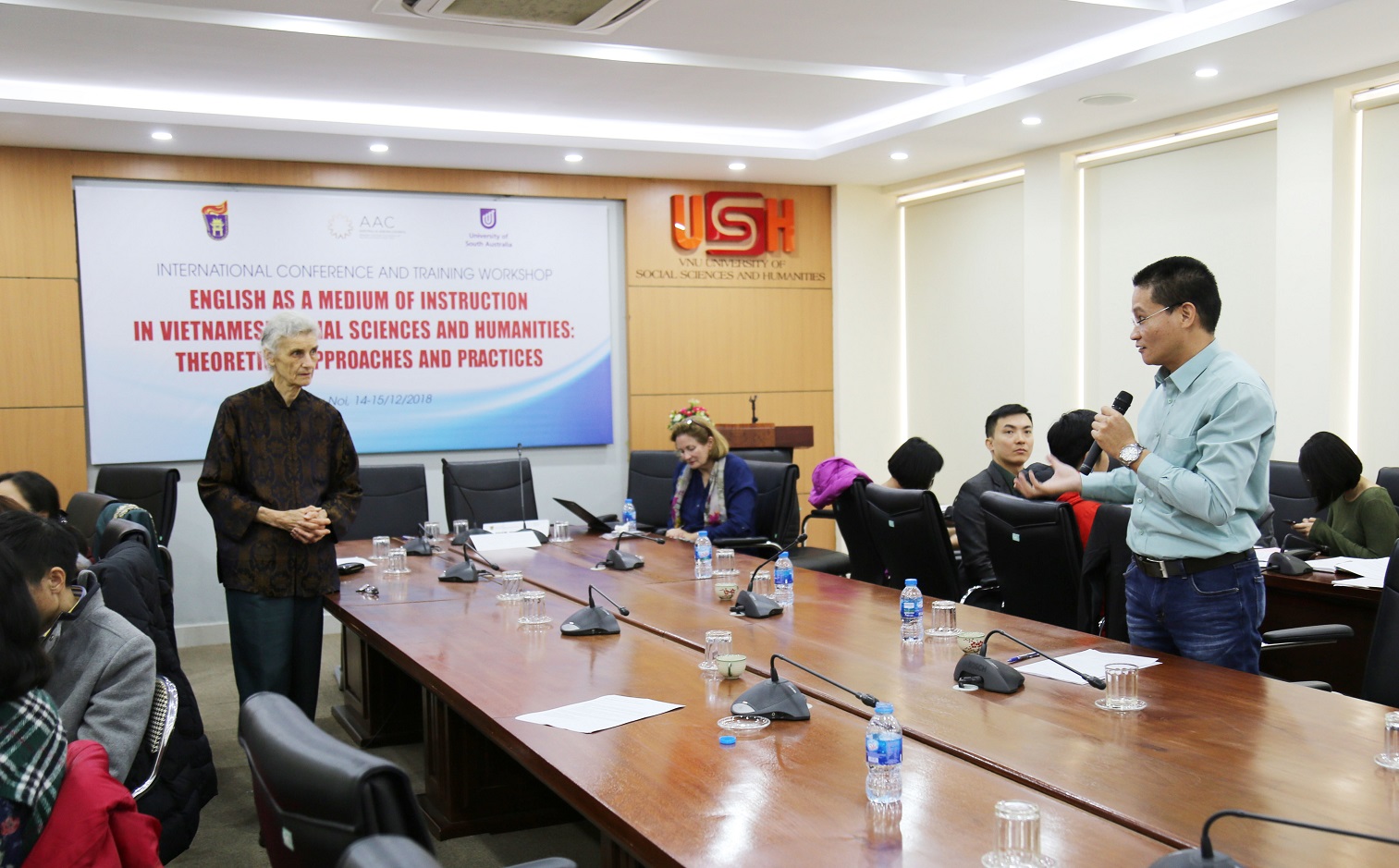
Over 80 lecturers participated in the course, coming from the University of Economics, the University of Foreign Languages, the University of Social Sciences and Humanities, the Faculty of Law - VNU Hanoi, Hai Phong University, Hung Yen University of Science and Technology, and many high schools in Hanoi.
English as a Medium of Instruction and Research (EMI) is a strategy adopted by many universities where English is a foreign language. It originated in European countries such as Sweden, Finland, and New Zealand in the early 2000s, and subsequently spread to Asian countries like Singapore, Hong Kong, China, and Japan. Currently, 24 universities in Vietnam apply EMI in various fields and disciplines.
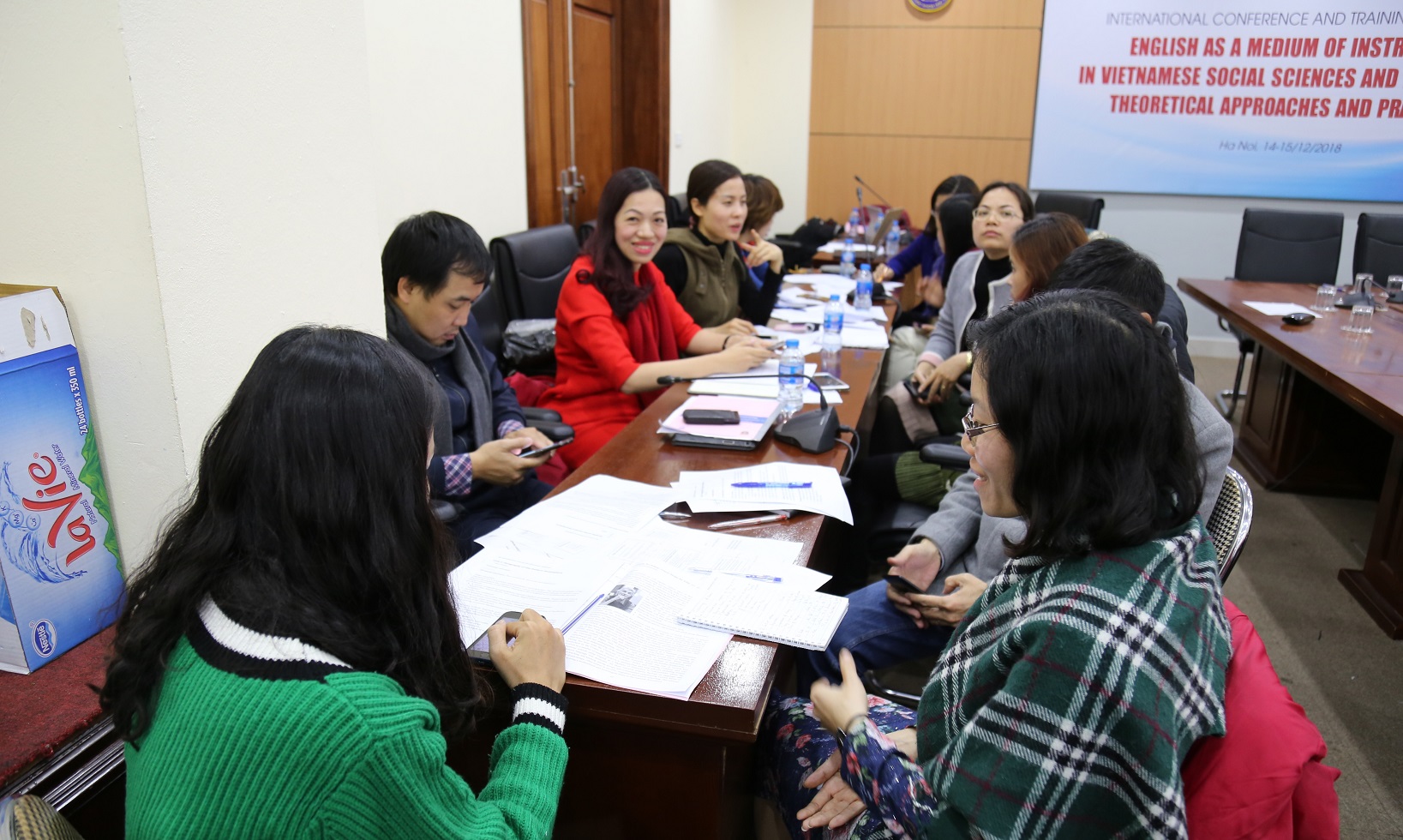
During the training course, instructors were guided in designing an EMI course, from surveying learners' goals, proficiency levels, and learning outcomes to developing the curriculum framework and knowledge modules. Participants were divided into groups according to their field of study for discussion and group presentations.
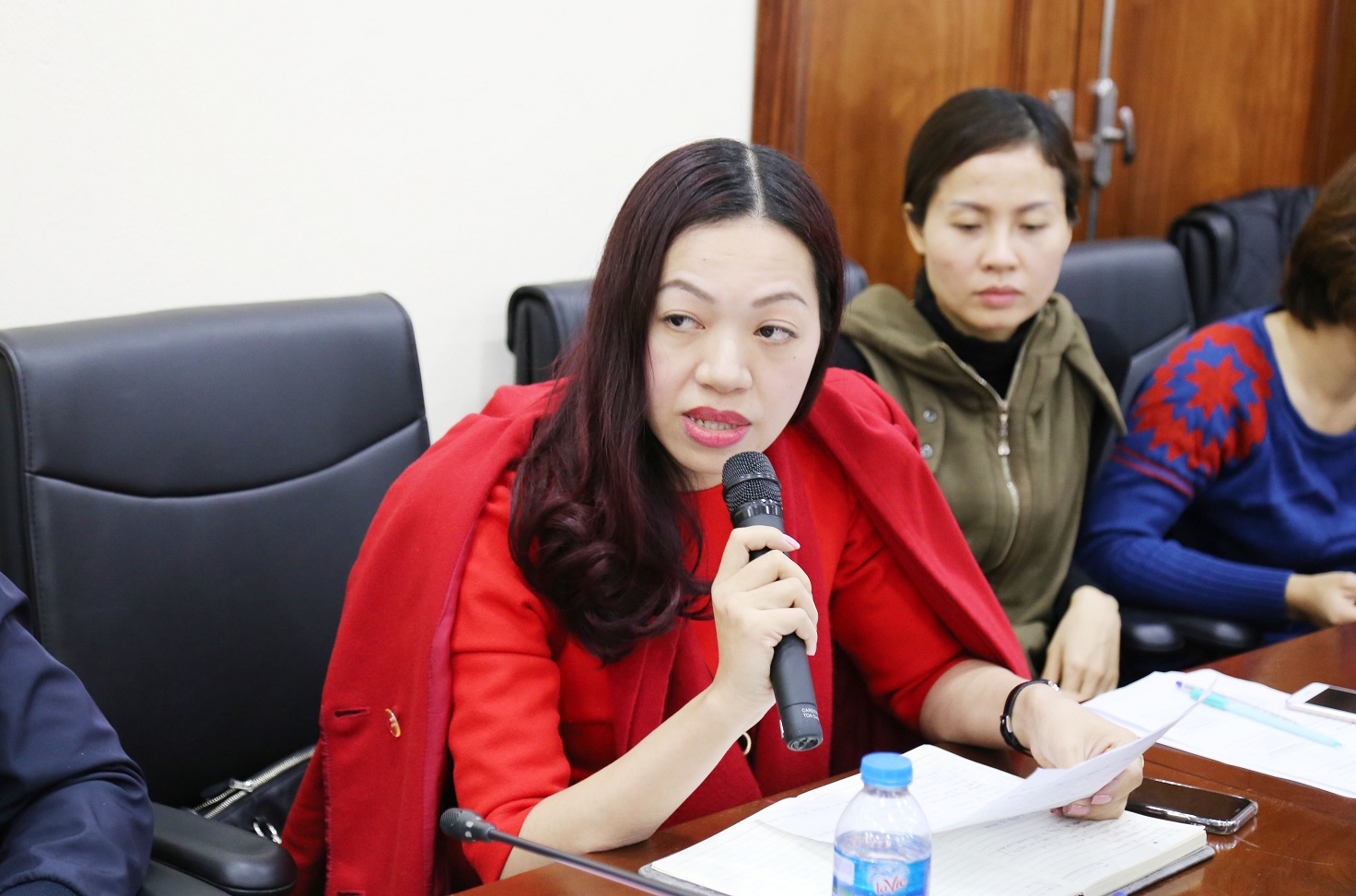
It wasn't until the last decade of the 20th century that investment in teaching EMI courses at Vietnamese universities began, and even then, it was limited to a few institutions with strong international connections or international disciplines such as foreign languages. Efforts to strengthen EMI in Vietnam remain challenging, especially in the social sciences and humanities.
The photo shows representatives from a discussion group presenting their EMI course development plan to the instructor.
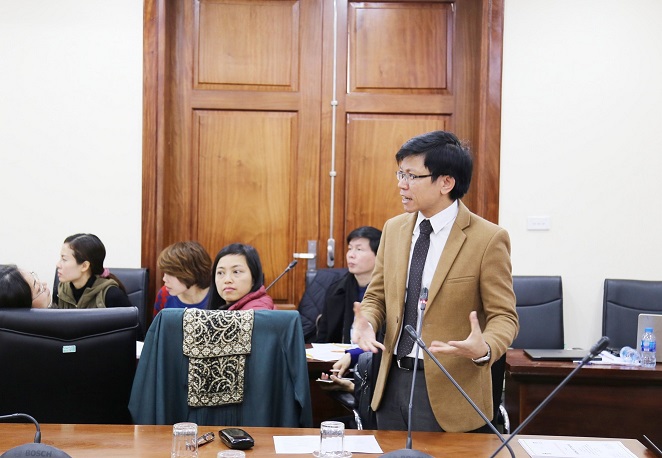
Associate Professor Hoang Anh Tuan (Vice Rector of the University) shared information about EMI courses: EMI has become a popular topic worldwide, especially in Asia. Many universities have recognized EMI as one of the tools to promote higher education and international integration. Vietnam is no exception. Over the past 10 years, the Hanoi University of Social Sciences and Humanities has made efforts to implement EMI, starting with the dream of internationalizing some programs that require more English (and other foreign languages), followed by some courses taught in English by lecturers from the Faculty of International Studies and Oriental Studies. By early 2018, there were approximately 50 lecturers capable of teaching courses in English. In addition, the University of Social Sciences and Humanities welcomes about 50 visiting professors each semester to teach selected courses for students.
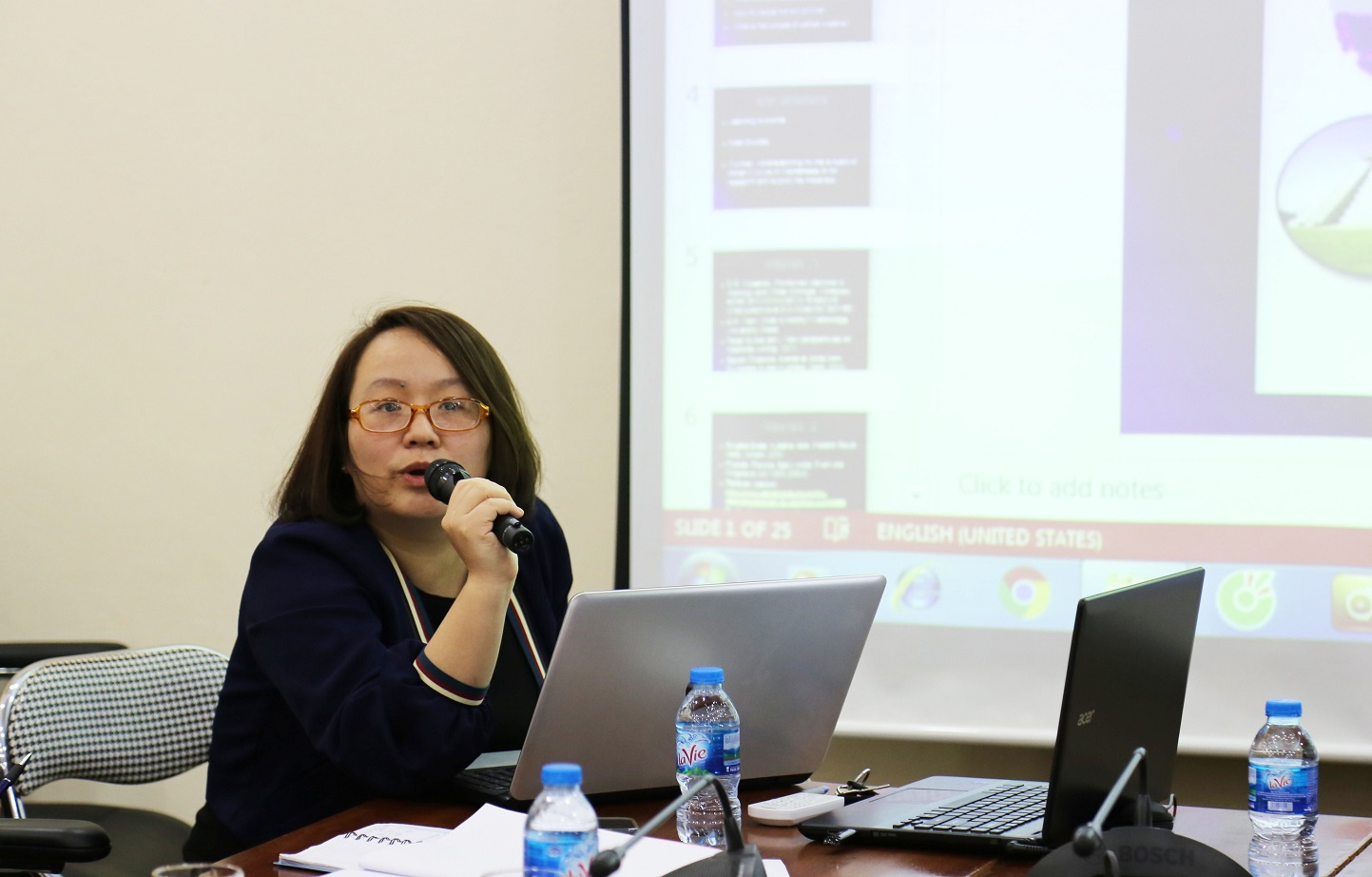
EMI (Employment-Based International Studies) is considered to have potential at the University of Social Sciences and Humanities, given the increasing number of faculty members capable of studying abroad and the relatively high number of students proficient in English. Furthermore, Vietnamese parents are investing in their children's English education from a young age; however, many prefer their children to study international programs domestically rather than abroad. Therefore, in recent years, the potential of EMI courses and programs has increased.
The photo shows a lecturer from the Department of Oriental Studies representing the group in presenting the EMI course design.
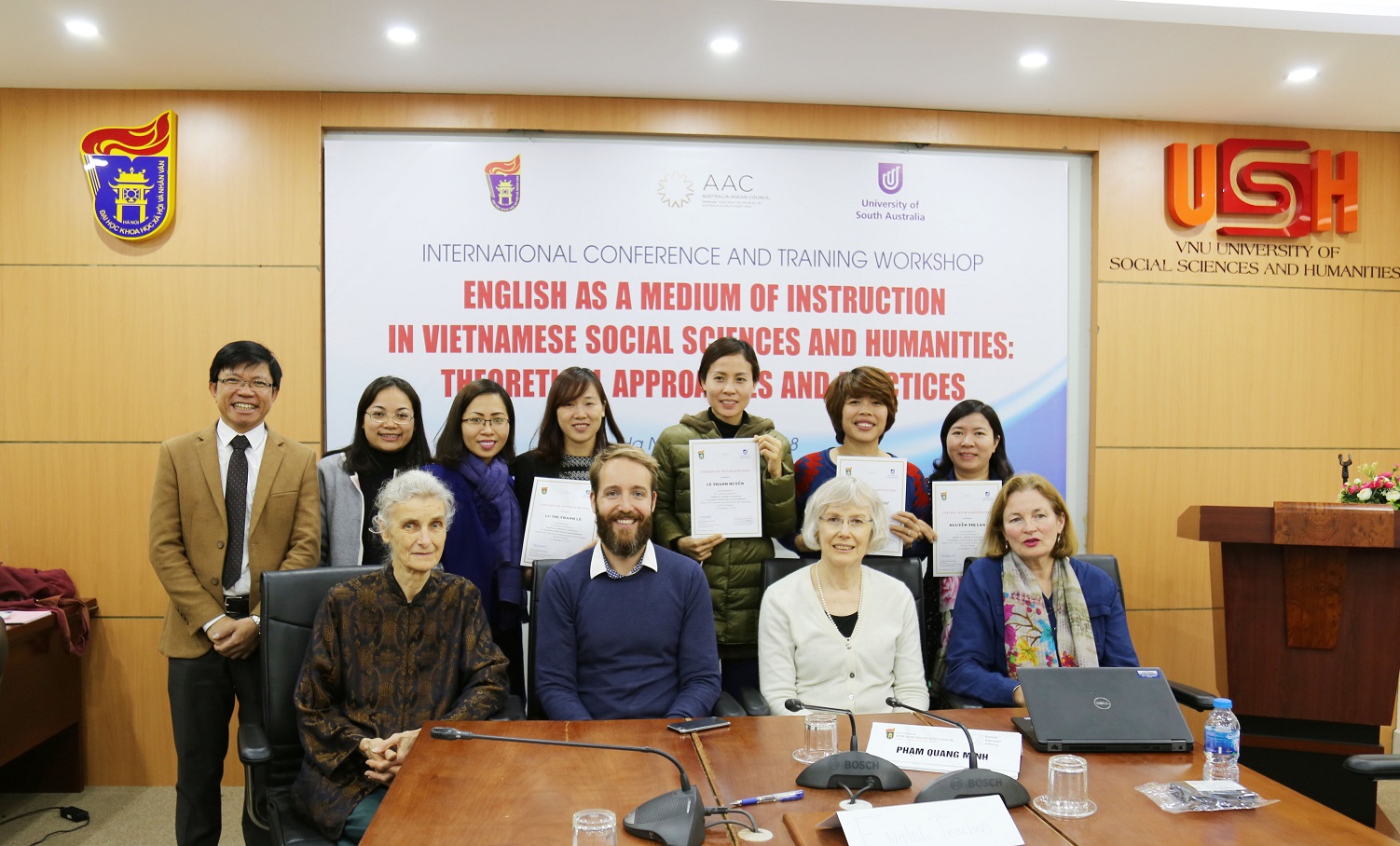
Participants in the course shared positive feedback regarding its content and significance.
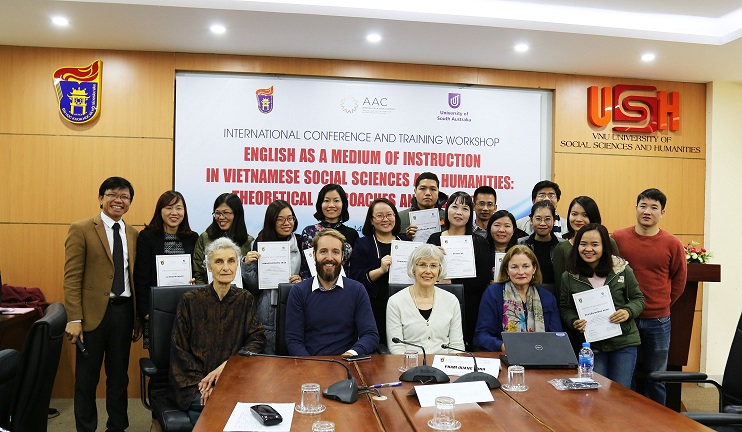
To achieve the goal of enhancing EMI, experts and administrators believe that universities must invest more and implement new policies to encourage staff to organize EMI courses and motivate student participation.
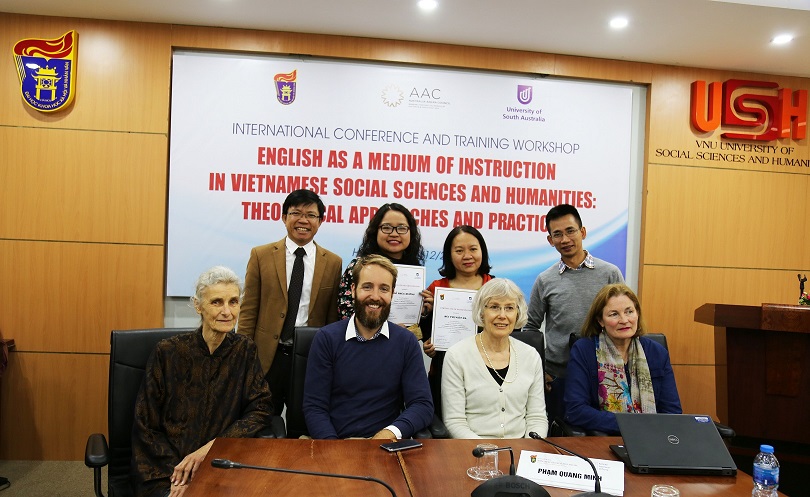
Over the past two years, there have been scattered regulations regarding EMI courses at the University of Social Sciences and Humanities, such as a 1.7 coefficient increase for lecturers, prioritizing international scholarships for EMI students, etc. However, these policies need to be comprehensive and systematic to promote the EMI mechanism at the university.
Author:Thanh Ha
Newer news
Older news

