
Beginning his presentation, Dr. Séamus Ó Tuama introduced the concept of "personhood," which is the state of an individual's existence as a human being. According to Robert Kegan, "personhood" is "an activity as well as a thing – a constant forward movement to create a new form for itself." This means that human identity and character are not fixed and unchanging, but are a process of constant self-renewal and transformation.
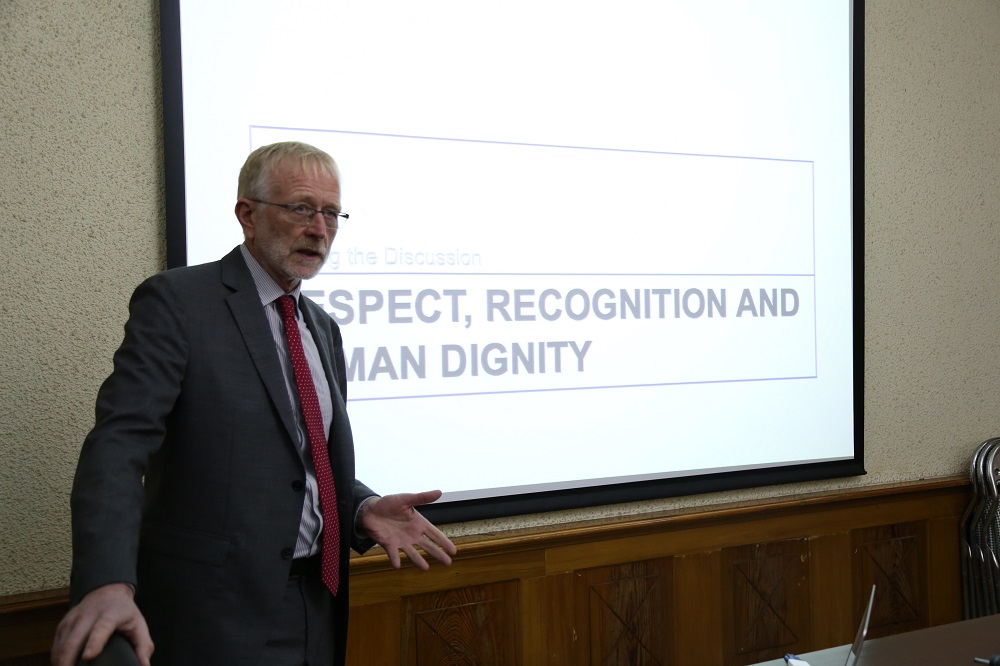
Based on this, Dr. Séamus Ó Tuama argues that personhood is composed of three elements: recognition, respect, and dignity. "Dignity" is the unique set of values associated with a person, "recognition" is the act of acknowledging that dignity, and "respect" is the process by which all people express their recognition of each other's dignity equally.
The first element that Dr. Séamus Ó Tuama delves into is recognition. According to him, mutual recognition in daily experience contributes to the formation of human identity. It helps ensure the quality of life, autonomy, and identity of each individual. According to philosophy professor Thomas McCarthy (1990), interdependence requires people to jointly protect the value of each individual, as well as the network of interpersonal relationships through which they form and maintain their identities. Therefore, from a broader perspective, recognition helps create clear and undeniable foundations for human rights.
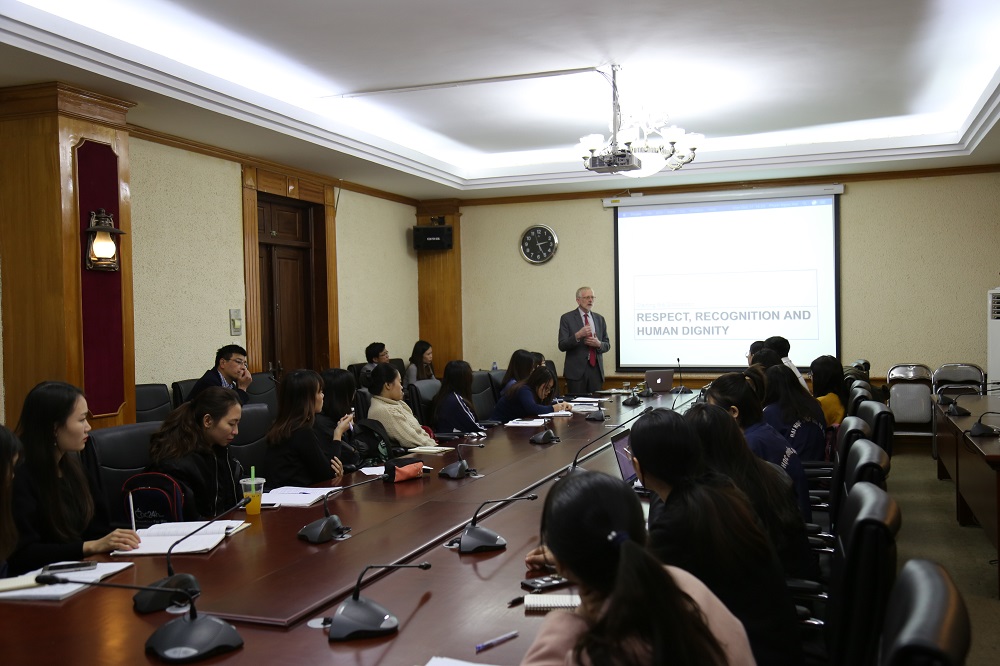
The concept of human dignity is also a foundation of human rights. Regarding this concept, Dr. Séamus Ó Tuama refers to the experiences of migrants to Europe during World War I and II from the perspective of German philosopher Hannah Arendt. According to her, migrants often found themselves in a stateless state and did not enjoy the same rights as citizens of the host country. For example, their freedom of speech was not respected because no one paid attention to what they said. Therefore, over time, human dignity has been formalized into rights in legal documents. Today, laws against discrimination based on religion, ethnicity, race, status, gender, etc., are enacted in many countries. For instance, Ireland, Dr. Séamus Ó Tuama's country, was the first to legalize same-sex marriage in 2015.
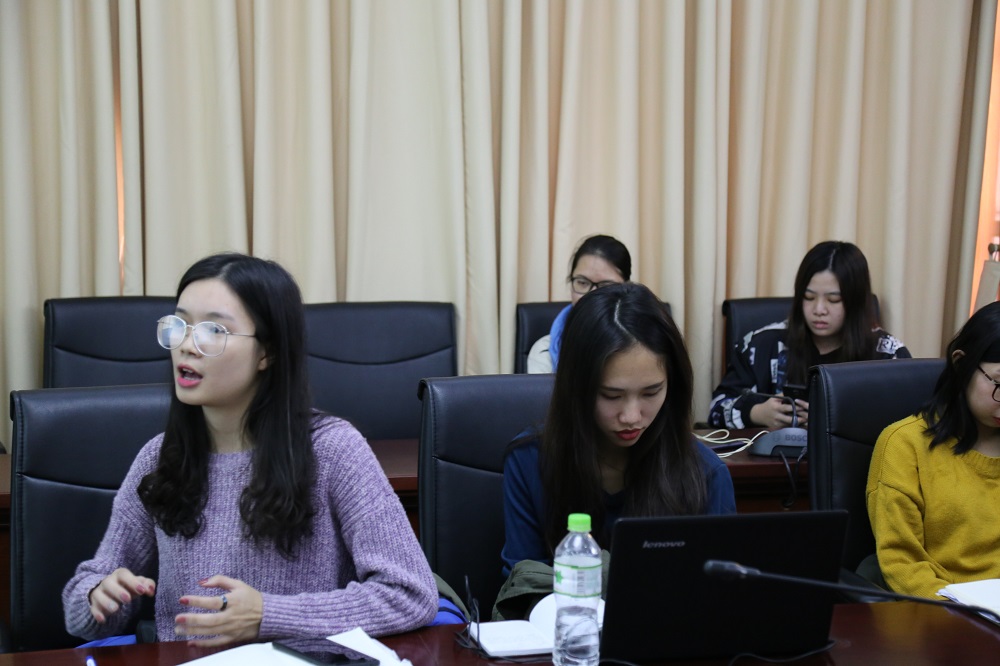
Nguyen Thi Quynh Anh (K60, Faculty of International Studies) shared her personal experience of being treated disrespectfully.
Regarding respect, Dr. Séamus Ó Tuama presents the perspective of psychologist D. Miller (2001). According to him, personal respect comprises three elements: 'voice', which is the ability to speak up or explain oneself; 'interpersonal sensitivity', which is the right to be 'treated courteously and appropriately'; and 'accountability', which is the right to demand explanations for actions and decisions that directly affect oneself. Notably, an individual can sense disrespect without necessarily expressing it verbally. According to Dr. Séamus Ó Tuama, one of the best ways to understand the meaning of respect is to observe and identify situations and behaviors that demonstrate a lack of respect.
To illustrate the presentation, Dr. Séamus Ó Tuama guided the international students in completing two pair assignments. In the first assignment, the students recounted a case where they were treated disrespectfully, the impact on their personal feelings, and their reaction. In the second assignment, they shared a case where they witnessed someone else being treated disrespectfully. Through these assignments, the students drew their own lessons and conclusions about mutual respect in daily life.
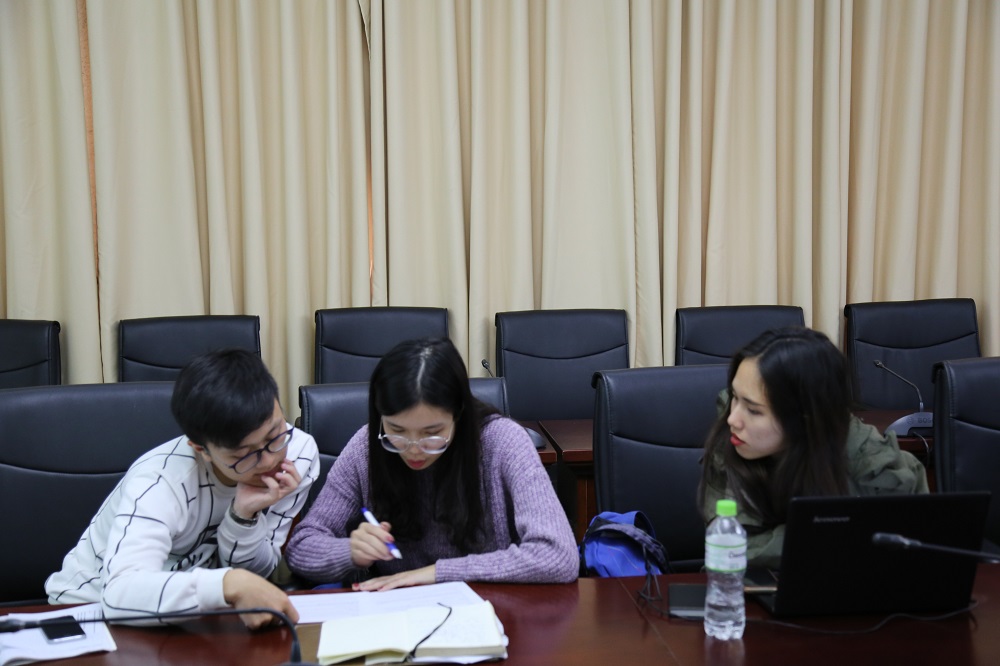
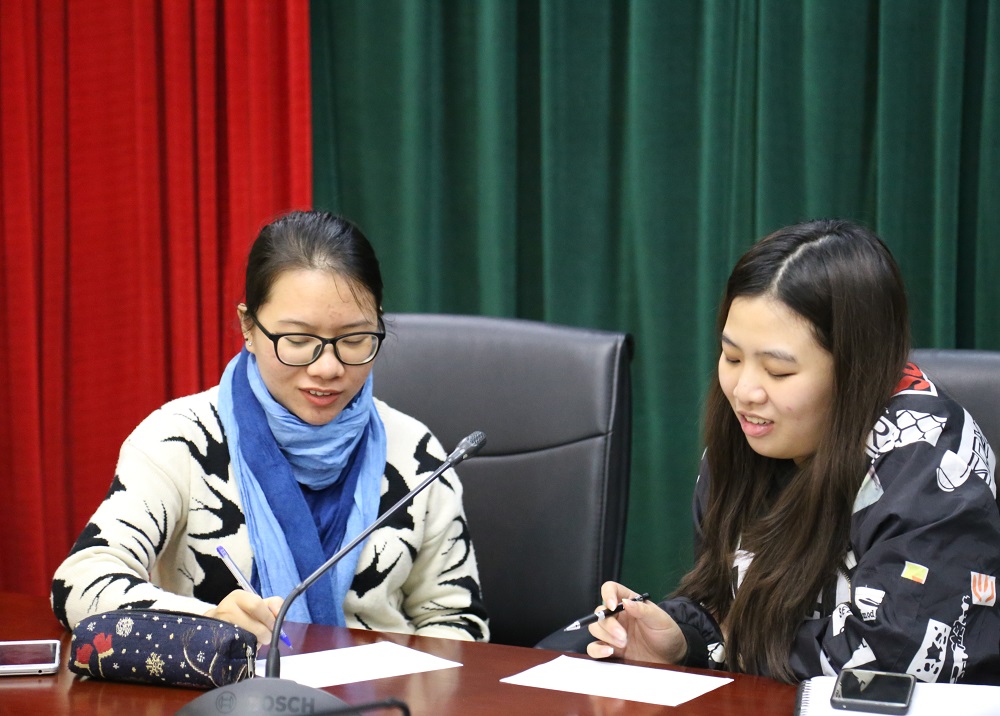
The students will work on the assignment in pairs.
Dr. Séamus Ó Tuama is the Director of the Centre for Continuing Education for Adults at University College Cork (UCC). He received his PhD in Sociology from the National University of Ireland, Cork in 1999. He is also a long-time lecturer in political science in the Faculty of State, UCC. His current research focuses on theories of respect, recognition, dignity, and rights in the field of adult education. He is also interested in topics such as democracy, the social contexts of science, technology, and law.
Author:Tran Minh
Newer news
Older news

