
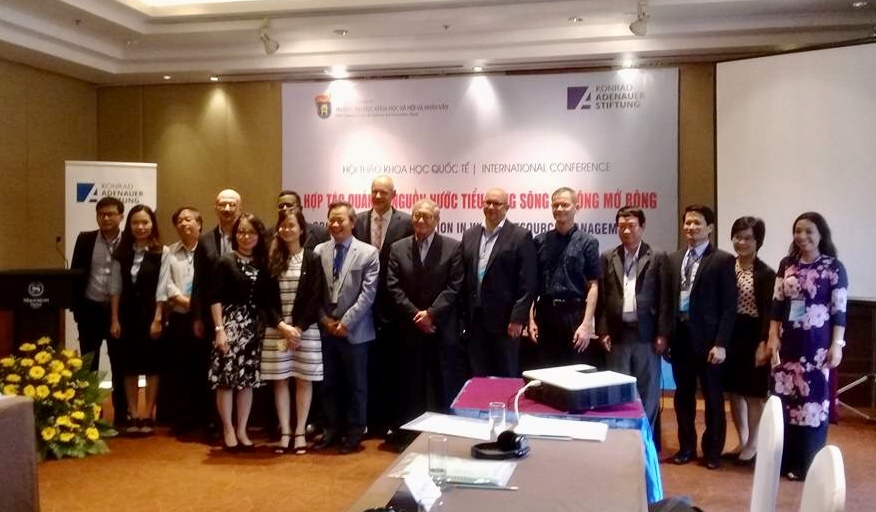
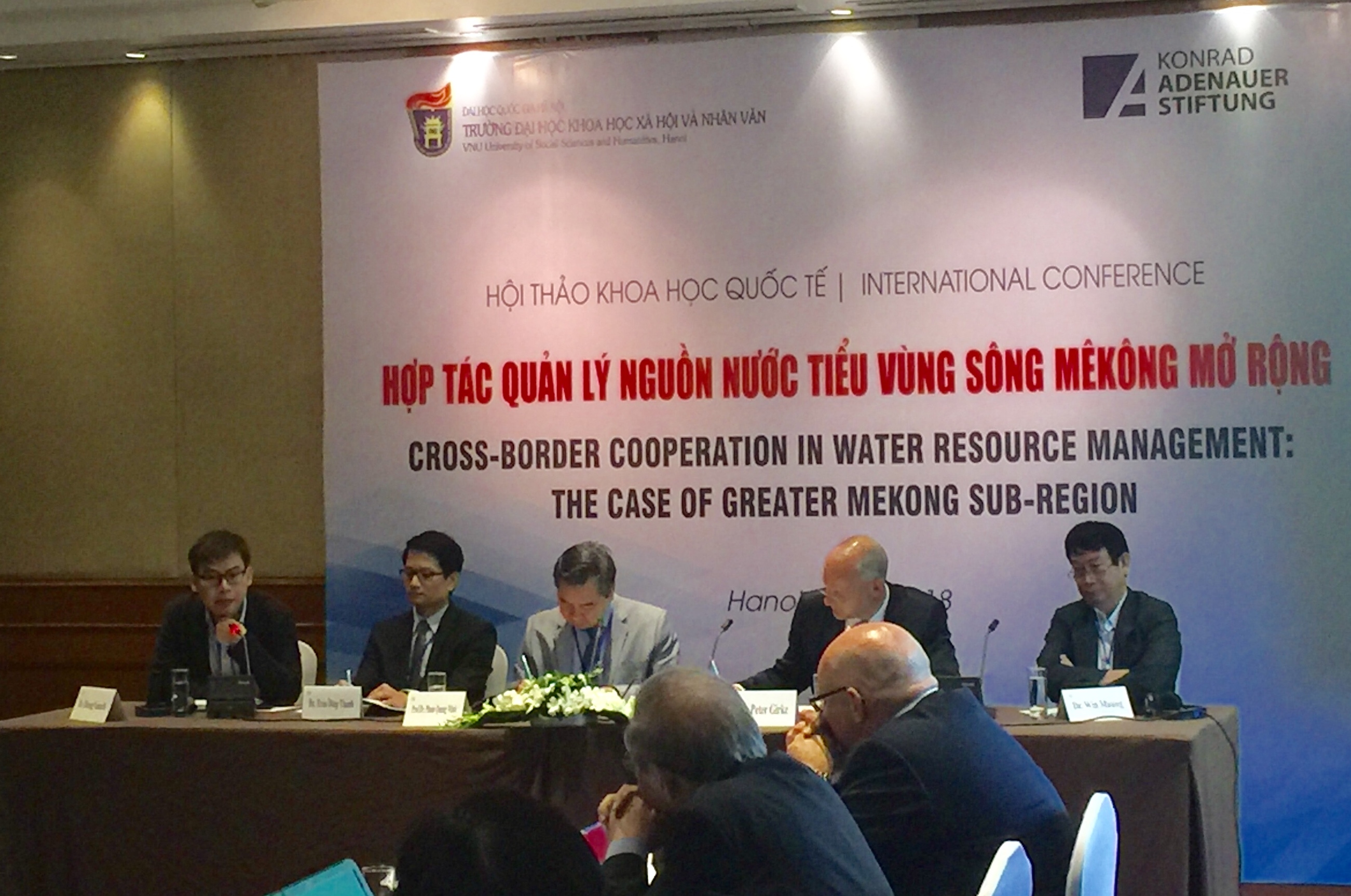
The workshop was attended by experts from countries with a shared interest in river water resource management, such as Prof. Detlef Briesen (University of Giessen, Germany), Prof. Kim Philip Schumacher (University of Vechta, Germany), Prof. Kumaresan Raja (University of Pondicherry, India), Dr. Win Maung (Myanmar Institute of Environment), Dr. Vannarith Chheang (ISEAS-Yusof Ishak Institute, Singapore)... Leading Vietnamese experts such as Prof. Nguyen Ngoc Tran (former Head of the State-level Program on Comprehensive Basic Survey of the Mekong Delta), Prof. Do Tien Sam (Institute of Chinese Studies, Vietnam Academy of Social Sciences) and researchers from the University of Social Sciences and Humanities, Vietnam National University, Hanoi.
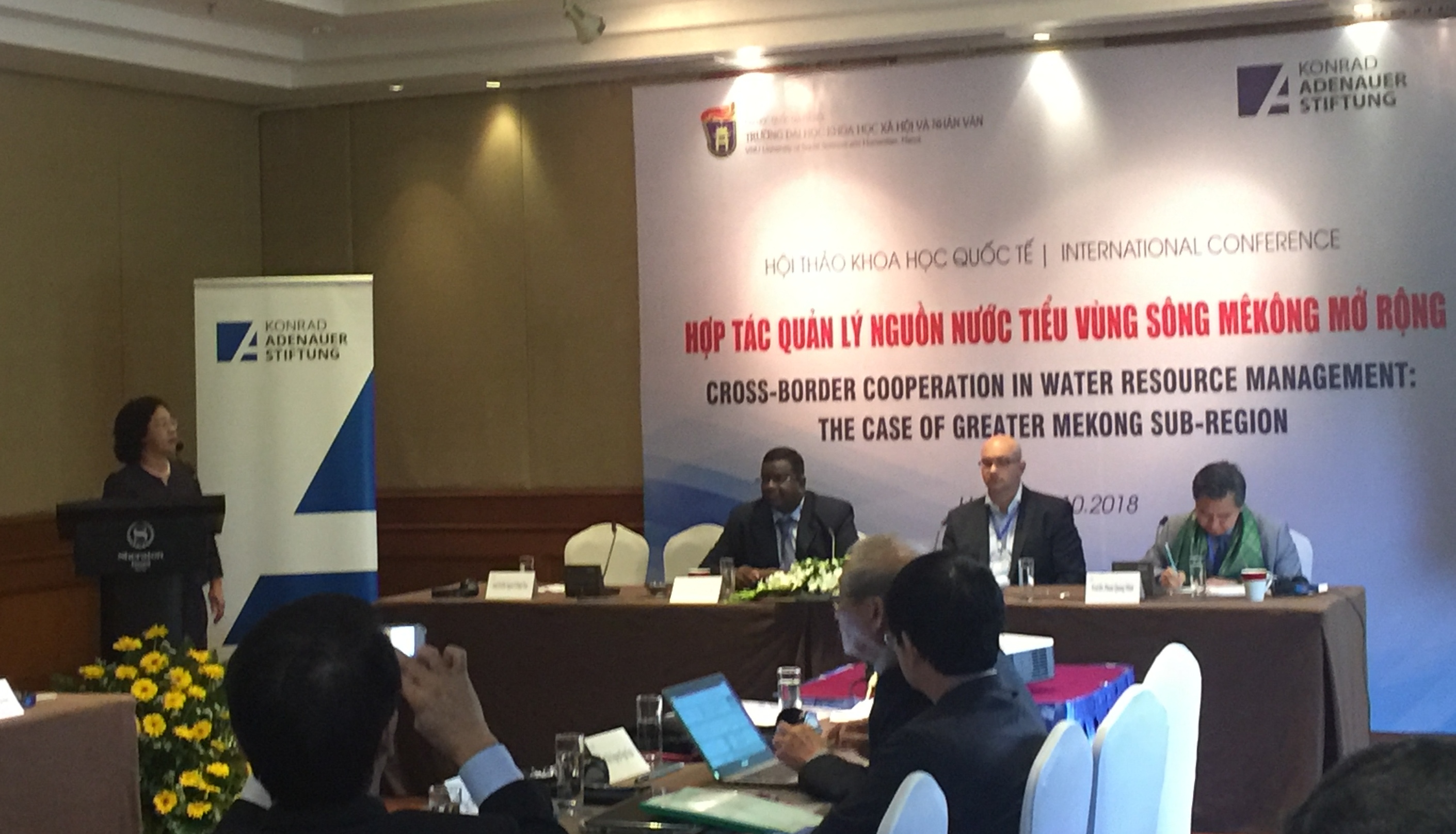
The workshop was divided into four subcommittees with the following main topics: Challenges in transboundary water resource management in the Mekong sub-region; Transboundary cooperation mechanisms in the Mekong sub-region: The role of major countries; Transboundary cooperation in water resource governance: Lessons from other regions of the world; Transboundary cooperation in water resource governance: Practical prospects.
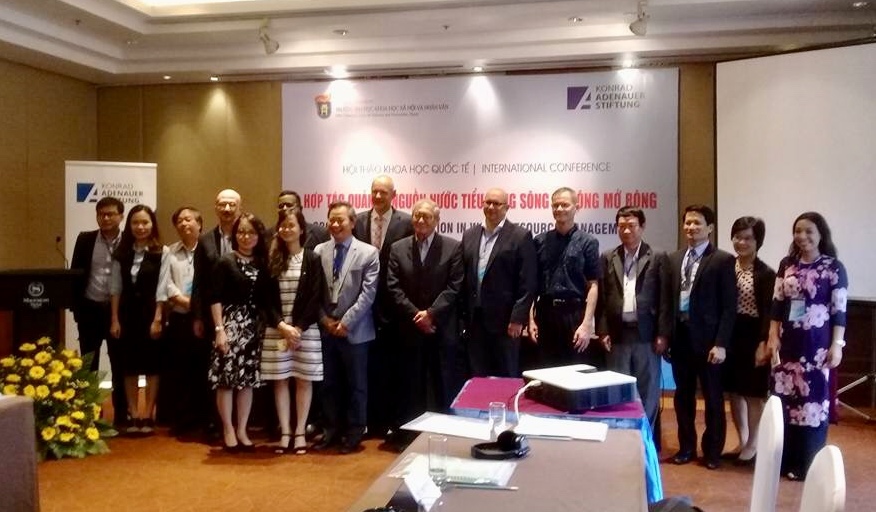
The discussions highlighted the challenges related to the lack of a comprehensive and effective cooperation mechanism among countries directly connected to the Mekong River. As one of the world's longest and most majestic rivers, originating in Qinghai Province on the Tibetan Plateau, the Mekong River (originally from the Tai-Lao language meaning "Mother River") flows through Yunnan Province (China), Myanmar, Laos, Thailand, Cambodia, and Vietnam before emptying into the South China Sea. Effective water management on this regionally significant river requires the participation of all countries, from upstream to downstream, because any impact, however small, on the river has repercussions throughout the entire basin. To address these challenges, in addition to the role of countries directly involved with water resources on the Mekong River, the participation of influential countries such as the United States, France, Japan, and South Korea is also needed to establish a friendly cooperation mechanism for mutual benefit in managing water resources in the Mekong sub-region.
Author:Nguyen Minh Nguyet
Newer news
Older news

