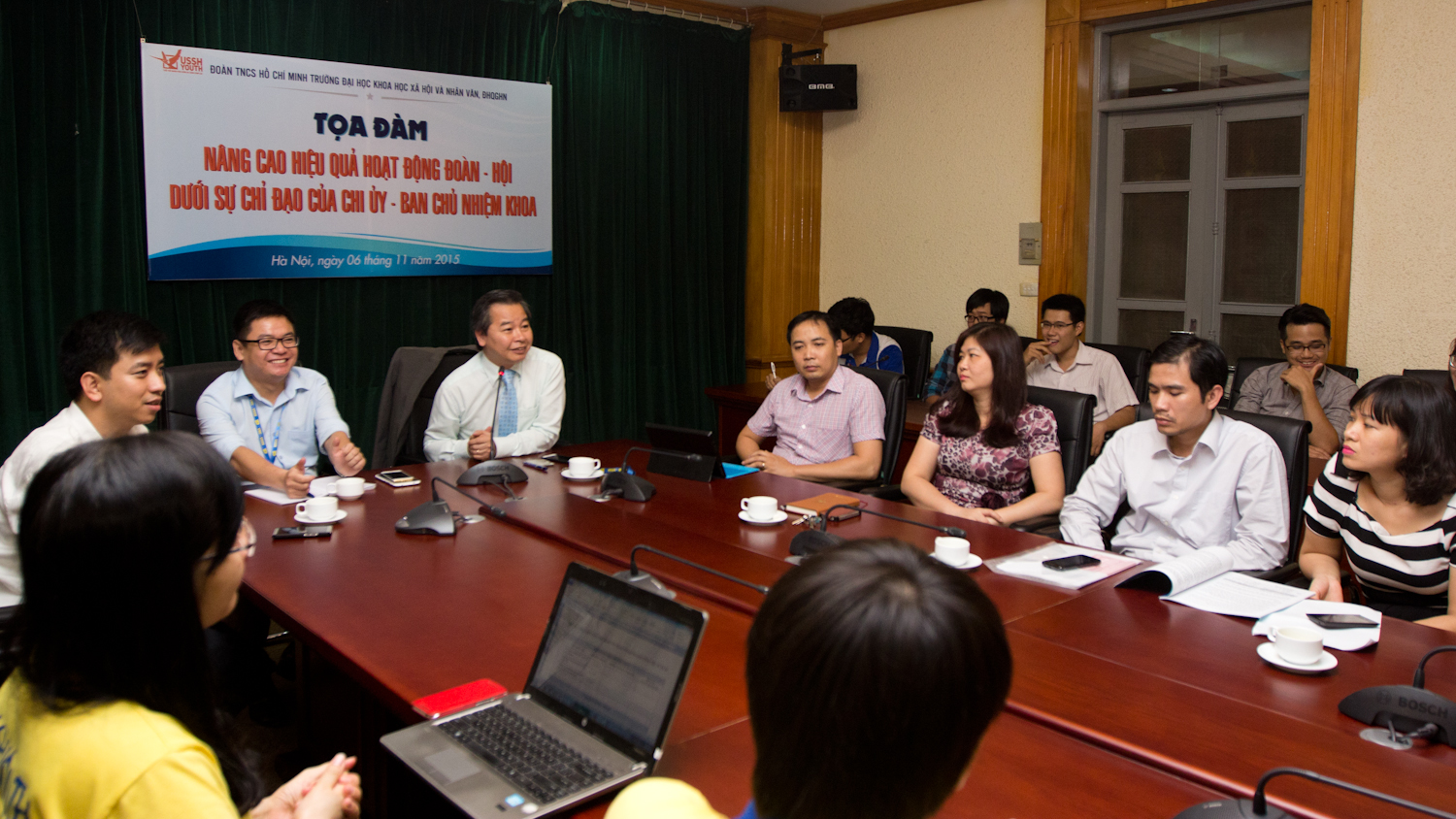
Associate Professor Pham Quang Minh, Deputy Secretary of the Party Committee and Vice Rector of the University, delivered the opening remarks at the seminar.
The Youth Union and Student Association of the University of Social Sciences and Humanities is the first unit in Vietnam National University, Hanoi to implement this discussion format, in order to address immediate difficulties regarding the organizational structure and activities of the Sub-branch Youth Union and Student Association.
Attending the seminar were Dr. Truong Ngoc Kiem, Secretary of the Youth Union of Vietnam National University, Hanoi; Assoc. Prof. Dr. Pham Quang Minh, Deputy Secretary of the Party Committee, Vice Rector of the University of Social Sciences and Humanities; Dr. Ngo Thi Kieu Oanh, Standing Committee Member of the Party Committee, Head of the Personnel Department; teachers representing the Party Committees and Deans of the Faculties; and student leaders of the Youth Union and Student Associations of the faculties in the university.
Significant changes are needed in the activities of the Youth Union and Student Association.
Speaking at the seminar, Associate Professor Pham Quang Minh shared: The Youth Union and Student Association activities of the University of Social Sciences and Humanities in the past academic year have achieved many proud accomplishments, evidenced by awards such as ranking first in Youth Union and Student Association activities at Vietnam National University, Hanoi, and receiving commendations from the Hanoi Youth Union. Many activities of the university's Youth Union and Student Association have been vibrant, meaningful, and practical, such as the "Nang Hong Nhan Van" blood donation campaign and the "Warm Clothes for Children" program… But we should not be complacent with the results achieved. The University's Youth Union and Student Association still need to continue open discussions to develop future directions, continue to build on what has been achieved, overcome shortcomings, and ensure that the Youth Union and Student Association remains a training ground for students and young people of the University.
In the coming period, the activities of the Youth Union and Youth Association must ensure breadth, depth, and quality. As a movement-based activity, it needs to be expanded and spread to all members and young people to participate, not just to enthusiastic and outstanding individuals. Furthermore, the activities of the Youth Union and Youth Association must avoid chasing trends and achievements, but instead focus on depth, quality, community value, and support for training. Associate Professor Pham Quang Minh emphasized, "The activities of the Youth Union and Youth Association must be oriented towards practical values, because only with practical values can we attract and retain members and young people."
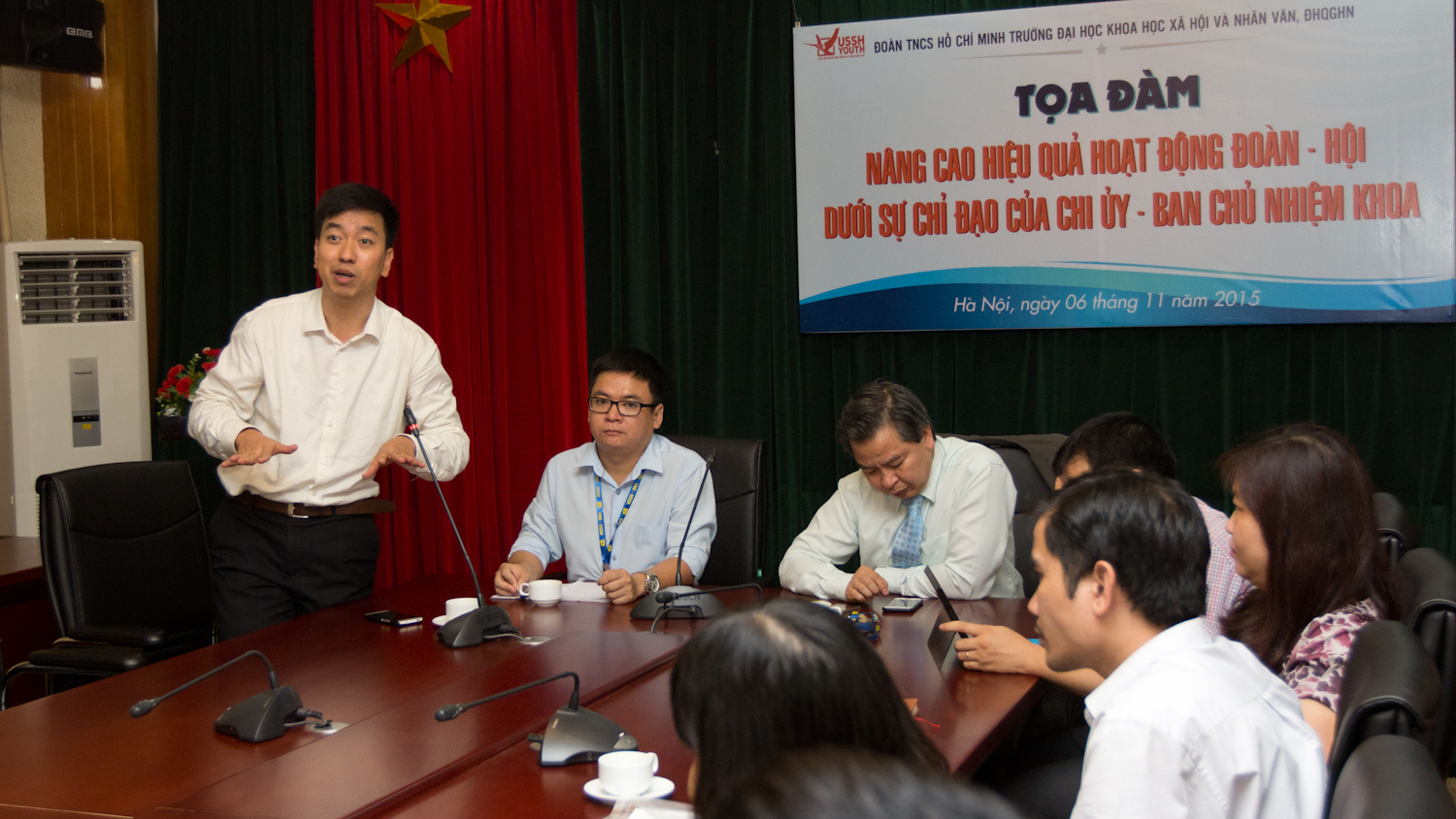
Comrade Truong Ngoc Kiem, Secretary of the Youth Union of Vietnam National University, Hanoi, delivered a speech at the seminar.
Agreeing with the above opinion, Comrade Truong Ngoc Kiem, Secretary of the Youth Union of Vietnam National University, Hanoi, also shared, "We need to look directly at the issue. The activities of the Youth Union and Student Association at the University of Social Sciences and Humanities have been very good, but at the lower levels, the Sub-branch Youth Unions and Branch Youth Unions, there are some very strong units that achieve high scores, but there are also some weak points where activities are not effective."
We need to recognize that, in addition to providing professional knowledge, the school should also create an environment where young people can learn social skills and relationship building in life... These skills are often best acquired through the environment of the Youth Union and Student Association. Comrade Truong Ngoc Kiem gave an example: "The school's training is a beautiful, polished product; the Youth Union and Student Association will carefully package that product, making it more complete, more beautiful, and better suited to the market's demands."
21st-century students have many social needs and interests, so the activities of youth union members and students within the Youth Union and Student Association have changed. Recently, the Youth Union and Student Association of the University of Social Sciences and Humanities have been very proactive and flexible in establishing many clubs. This is a new form of organizing and gathering students. The characteristic of these clubs is that members with shared passions and interests come together. However, this model also reveals weaknesses in organization, namely its heavy reliance on the leader. Effective activities depend on the leader's role and responsibility; otherwise, the club's activities will gradually decline.
Many suggestions for enhancing the role of the Party Committee and the Steering Committee.
At the seminar, many opinions from representatives of the Party Committees and Deans of the Faculties in the school directly addressed the role and position of the Party Committees and Deans in the activities of the Student Unions and Student Associations.
According to Comrade Tran Duc Hoa (Faculty of Information and Library Science), the Party Committee and the Dean's Board of each faculty need to "get involved" in the activities of the Youth Union and Student Association within their respective units. This involvement is reflected in six aspects: paying attention to policy matters; developing the resources of youth union members; promoting student ideas; providing feedback on the organizational aspects of the Youth Union and Student Association; sponsoring and supporting financially, leveraging relationships, and creating motivation to improve the various aspects of the activities.
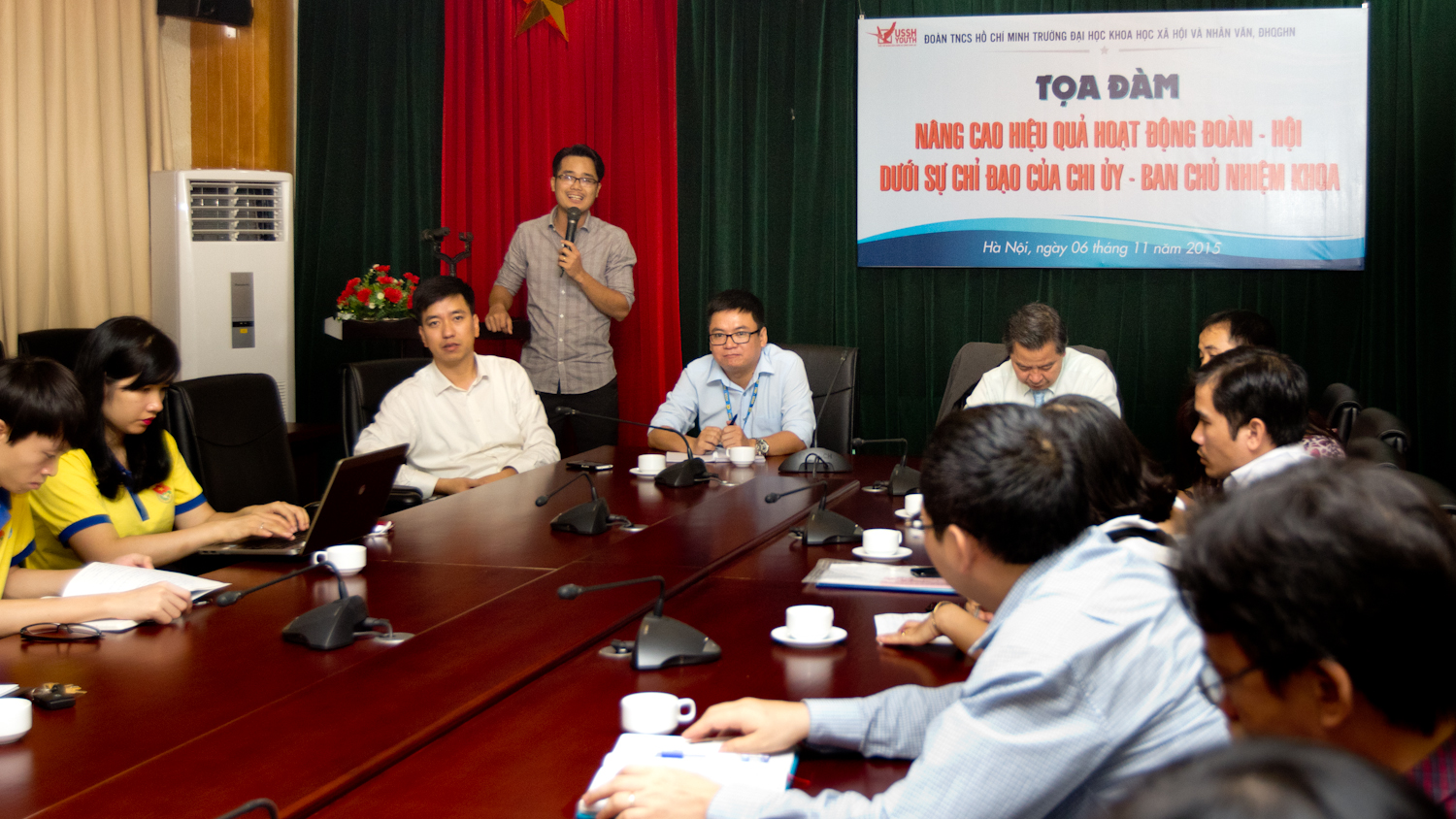
Comrade Tran Duc Hoa (Department of Information and Communication Technology) is sharing the experiences of his unit.
According to Comrade Tran Duc Hoa, all the student union branches and associations in the school receive attention in terms of policy, but the level of participation and involvement of the Party Committees and Executive Boards in each Faculty differs. In some faculties, creativity in student union and association activities is left entirely to the students, based on the belief that young people will have many ideas. Meanwhile, the teachers in the Faculty Party Committees and Executive Boards are experienced individuals with rich knowledge bases, and sometimes they can offer very important ideas or unexpected suggestions for the unit's student union and association activities.
Students' assets are their youth, energy, passion, and enthusiasm. To fully utilize this invaluable resource, the support of the Party Committee and the Faculty Board in terms of funding, finances, and social connections is crucial. The faculty members, being senior, experienced, and possessing extensive social networks, will be the ones to directly support financially or provide advice, assistance, and connections to help the youth union members find funding for their activities," said Comrade Tran Duc Hoa.
Comrade Dieu Linh (Faculty of Archival Studies and Office Management) shared: For the Faculty of Archival Studies and Office Management, the Party Committee and the Faculty Board always provide general guidance, ensuring that Youth Union and Student Association activities are closely linked to the unit's professional work. Young faculty members must assert their position in scientific research, while students must demonstrate their ability to enter the labor market. Instead of general guidance, the Party Committee and the Faculty Board act as a bridge, enabling young faculty members and students to develop their abilities and access opportunities.
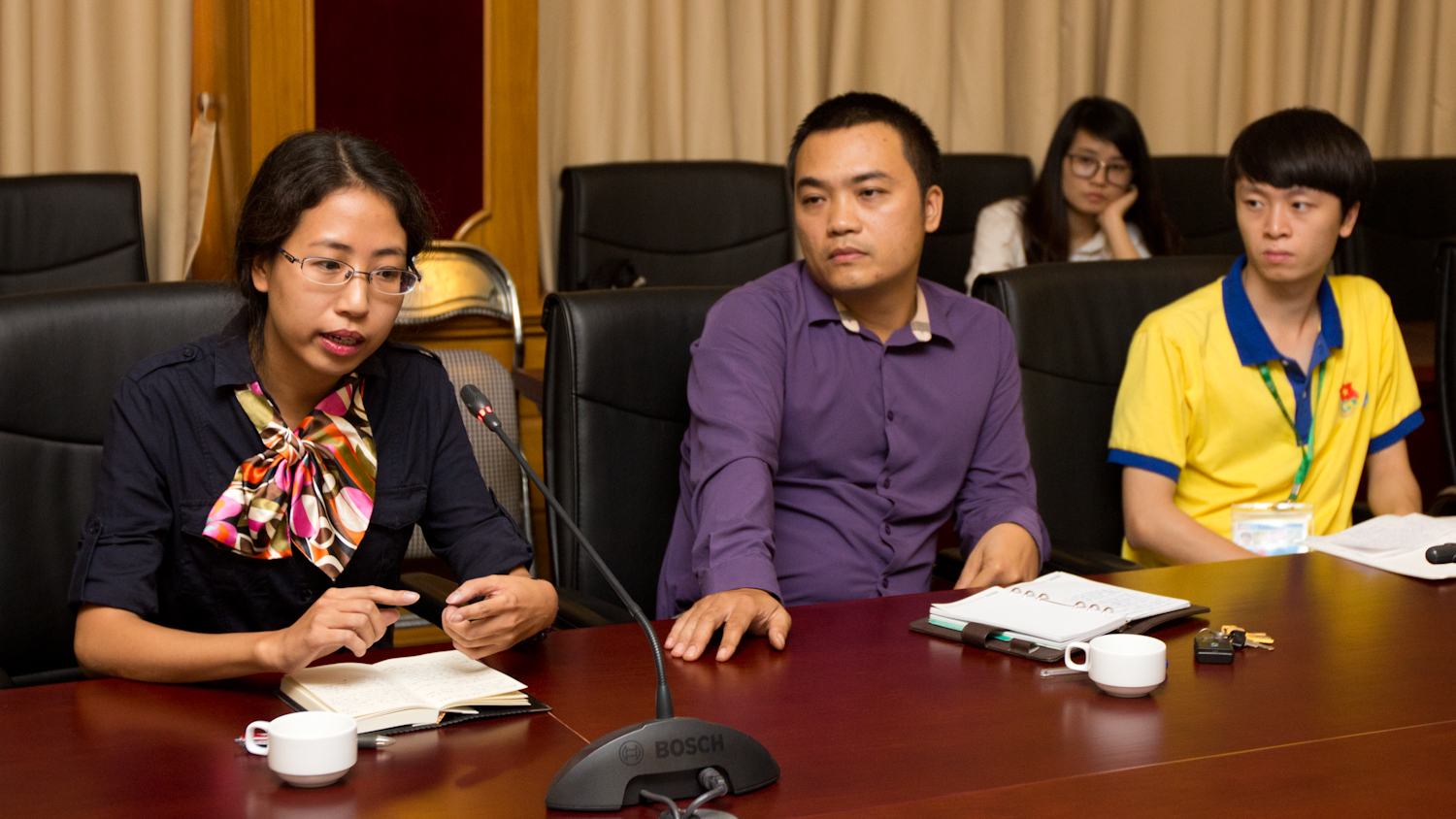
Comrade Dieu Linh (on behalf of the Party Committee - Dean's Board of the Faculty of Law and Public Administration) shared at the seminar.
The Party Committee and the Faculty Board designed a model of "several students following one young staff member, and several young staff members following one senior staff member," which has yielded very concrete results. Many activities of the Youth Union members of the Faculty of Law, Technology and Public Administration have been closely linked to the learning and professional environment. Last year, more than 20 student projects had practical significance for the activities of related external units, resulting in the faculty's students being quickly accepted and given maximum support when working outside the faculty. The consensus, listening, and sharing of the Party Committee and the Faculty Board have created these successes; this is the most core value that strengthens the Youth Union and Student Association activities, said Comrade Linh.
Sharing her unit's experience, Comrade Chi (Faculty of Management Science) said that, with the tradition of the Faculty of Management Science, the activities of the Youth Union and Student Association always receive close attention from the Party Committee and the Faculty's Board of Directors. This attention is shown in specific actions, not just in written documents. At the beginning of each academic year, the Youth Union and Student Association of the Faculty of Management Science must prepare a draft plan of activities and assign specific tasks. From that plan, teachers and students will sit down together to analyze, discuss, and arrange activities, aiming for efficiency and avoiding overlap. When implementing, the Party Committee and the Faculty's Board of Directors will monitor, evaluate, and summarize periodically. On average, they will work with students 1 to 2 times a month.
Regarding the activities of young staff members, Comrade Do Thi Thuy Lan (Faculty of History) also offered many important suggestions. Accordingly, the Party Committee and the Dean's Board of the Faculty should promptly provide professional guidance closely linked to all aspects of the staff's lives: their time at the university, participation in teaching, theses, dissertations, research direction, and professional development. The Party Committee and the Dean's Board of the Faculty should assign the Youth Union to carry out regular scientific activities, provide professional guidance, support the staff's goals both spiritually and materially; and develop a staff strategy, registration mechanism, inspection, evaluation, and supervision.
Author:Text and photos: Hoai An; video: Dinh Hau
Newer news
Older news

