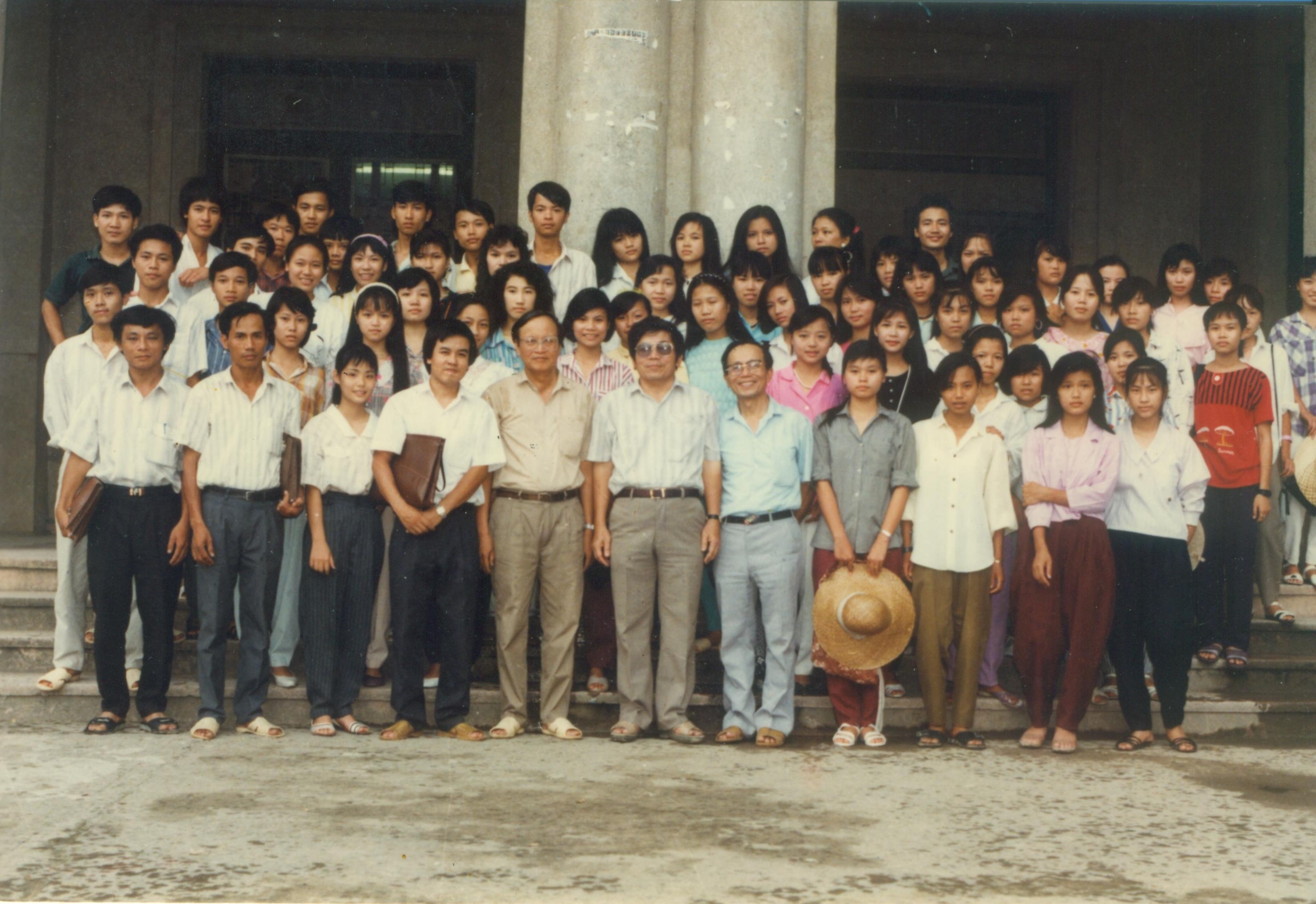
Teachers and students of class K36 (the first cohort of the Faculty) on a field trip.
To achieve that success, from the very first steps in the early days of its establishment, the Faculty was fortunate to receive the dedicated contributions of experienced faculty members, including many prominent and reputable scientists in the field of research and training in Social Sciences and Humanities such as: Professor Ha Minh Duc - the first Dean of the Faculty, Associate Professor Dr. Duong Xuan Son, Associate Professor Dr. Do Xuan Ha, and Doctor of Linguistics Doan Huong. Following them were Professor Dr. Do Quang Hung, Professor Dr. Nguyen Thien Giap, Associate Professor Dr. Dinh Van Huong, Dr. Trinh Ho Khoa, Associate Professor Dr. Vu Quang Hao, Associate Professor Dr. Thanh Hung, and Associate Professor Dr. Nguyen Thi Minh Thai,… all of whom came together to build the Faculty for the cause of training in journalism in our country.
Fulfilling the pioneering and noble mission of the University of Social Sciences and Humanities towards the country is:...leading the way in training high-quality, highly skilled human resources, conducting innovative research, and disseminating knowledge in social sciences and humanities, serving the cause of national construction and development.The Party Committee and the School's Board of Directors always attach great importance to building a high-quality, highly skilled workforce, considering it a core and strategic condition for building and developing the School to meet the requirements of the reform and international integration process. The faculty of the Faculty of Journalism and Communication currently consists mostly of young, dynamic, and creative individuals, well-trained both domestically and internationally, with solid professional qualifications and a passion for scientific research. 100% of the faculty hold a Master's degree or higher, 29% are Associate Professors, and 43% hold a Doctoral degree. Besides the permanent faculty, the Faculty of Journalism and Communication also receives immense and valuable support from part-time and visiting lecturers who are leading experts in journalism and media management, and experienced and skilled journalists in Vietnam today.
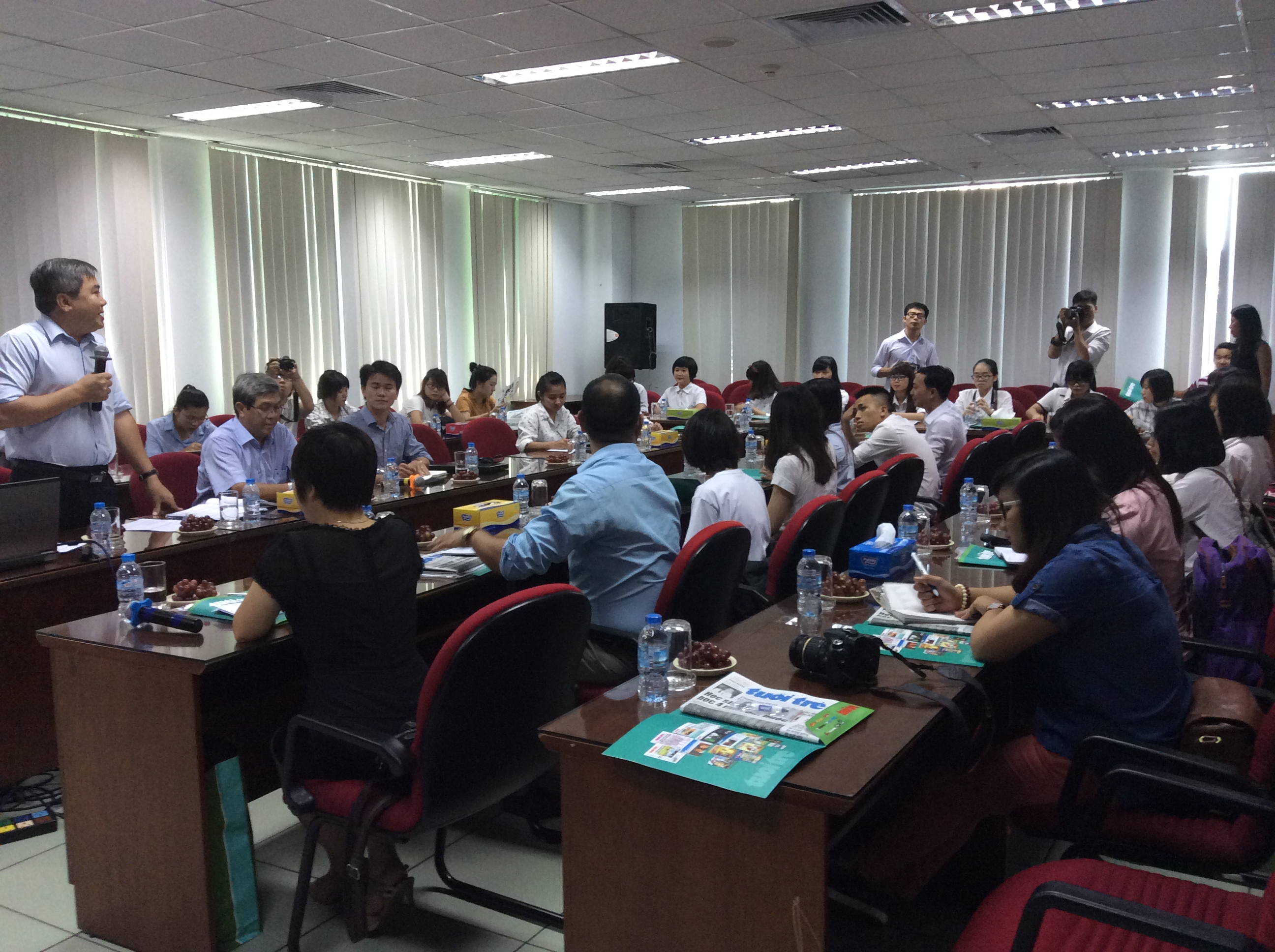
The K57 class field trip group interacted with leaders and reporters of Tuoi Tre newspaper at the editorial office located at 60A Hoang Van Thu Street, Phu Nhuan District, Ho Chi Minh City.
In the context of rapid innovation and international integration, the University has resolutely prioritized and implemented the improvement of the quality and diversification of its training programs. Following several comprehensive and synchronized curriculum development and adjustments, the University of Social Sciences and Humanities currently offers 22 undergraduate programs. These programs are developed in three groups: 1) Basic sciences; 2) Applied sciences; and 3) Interdisciplinary sciences. The University's development orientation focuses on both developing basic and interdisciplinary sciences to fulfill the primary mission of higher education in the social sciences and humanities in Vietnam, while also developing applied sciences to meet the demands of socio-economic development and international integration, which the University's academic and human resource potential can best address.
The Faculty of Journalism and Communication is one of the few faculties at the university that currently offers dual-discipline training in two fields. Thanks to its highly skilled, responsible, dynamic, and creative staff, the Faculty of Journalism and Communication not only successfully trains students in both Journalism and Public Relations, but also achieves outstanding results in both breadth and depth in scientific research. In the past five years alone, more than 200 scientific papers by faculty members have been published in scientific, theoretical, and specialized journals, or presented at conferences both domestically and internationally. In addition to national and university-level research projects, faculty members of the Faculty of Journalism and Communication are currently leading a state-level research project and a project within the national key science and technology program "Science and Technology for Sustainable Development of the Northwest Region," along with numerous projects funded by various foundations. The Faculty's research projects have contributed to the university's overall scientific research achievements, demonstrating knowledge and theoretical understanding of human development and Vietnamese culture in the era of integration and globalization. They also contribute to providing scientific arguments and foundations for the Party's policy formulation and national development.
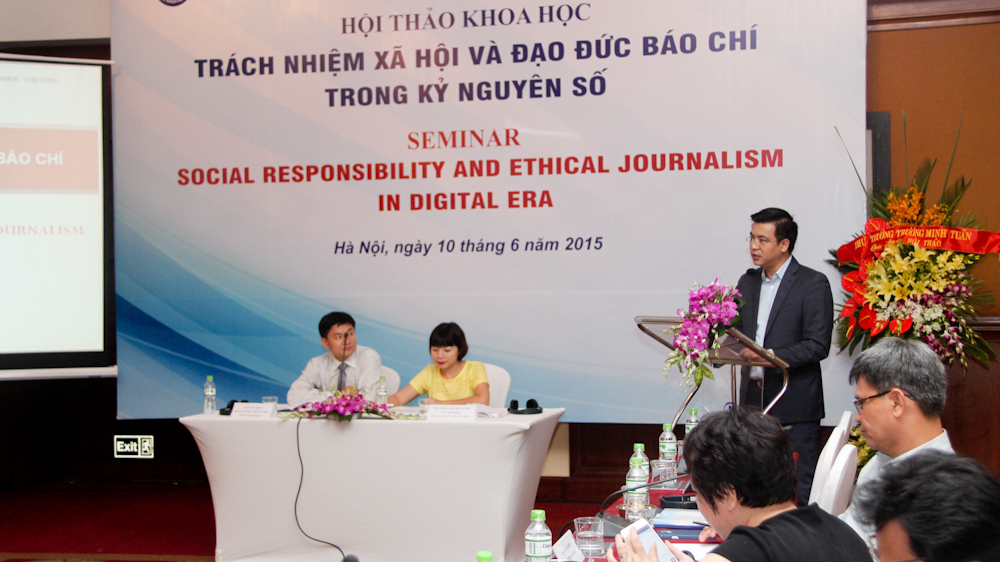
The scientific conference "Social Responsibility and Journalistic Ethics in the Digital Age" was organized by the Faculty of Journalism in collaboration with the KAS Institute (Germany).
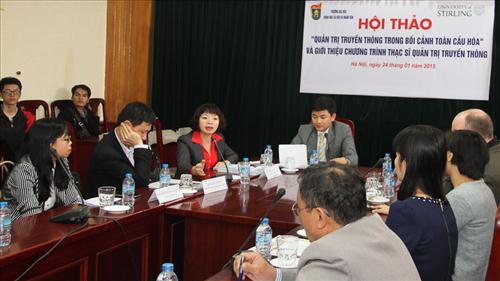
Extensive international cooperation is a rapid and effective way to access advanced knowledge and research methods, especially when aiming to become a research university. The Faculty of Journalism and Communication is one of the most dynamic and active units of the University, always focusing on expanding international cooperation in the field of journalism and communication. This includes joint undergraduate programs with Guangxi University (China); a Master's program in Media Management with Stirling University (UK); the project "Assisting the Development of Journalism Training Schools in Vietnam" (funded by the SASAKAWA Peace Foundation, Japan); the project on Vietnamese History Research (funded by the Toyota Foundation); and the MediaPro project - Building a framework for journalism training programs according to international standards (funded by the British Council). The project to enhance the capacity of young journalists (funded by the US Embassy)... The success of these projects, collaborative training programs, and international scientific conferences not only affirms the prestige and position of the Faculty of Journalism and Communication but also contributes to improving and enriching the university's international cooperation activities, creating a comparative advantage and affirming its position as a leading university in the country.
In order to contribute effectively to the development of education, training, science, and technology, and first and foremost to promote the fundamental and comprehensive reform of education and training, the Faculty of Journalism and Communication needs to further build upon its achievements over the past 25 years, continuously striving to develop the Faculty in depth, improve the quality of training and scientific research, develop a highly qualified staff, perfect the curriculum and training programs, and create new, greater, and more impressive successes in the future. This is also a practical way for the Faculty, together with other units in the University, to successfully achieve the goals and directions set forth by the University Party Congress for the 2015-2020 term: to build the University of Social Sciences and Humanities into a leading research-oriented university in the country in Social Sciences and Humanities, contributing to the industrialization and modernization of the country and the protection of the socialist Vietnamese Fatherland.
Professor, Doctor, People's Teacher Nguyen Van Khanh
Rector of the University of Social Sciences and Humanities
Vietnam National University, Hanoi
Newer news
Older news

