
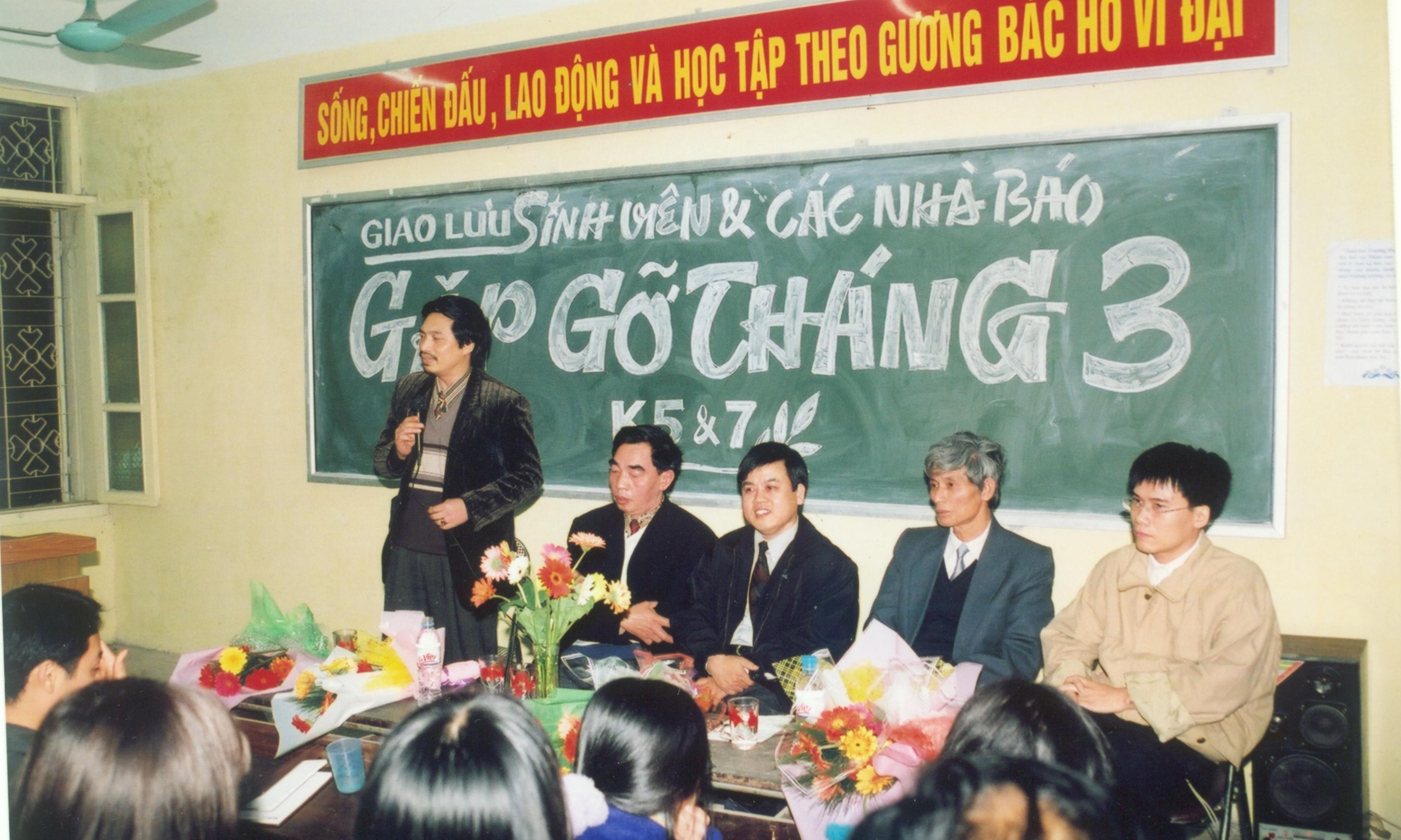
I originally came from a background that was half literature, half journalism. My university diploma states "Graduated from the Regular Program, Literature - Journalism major." The Faculty of Literature, Hue University (now the University of Science), during my studies from 1995-1999, only offered a journalism specialization. At that time, admission to the journalism specialization required an entrance exam, with only 10 to 15 students per cohort. Most of the courses in the journalism specialization were taught by professors from the Faculty of Journalism and Communication, University of Social Sciences and Humanities, Vietnam National University, Hanoi.
Back then, being a journalism student was very prestigious, and I felt very proud to have professors from Hanoi teaching me. The first professors I interacted with at the Journalism Department, University of Social Sciences and Humanities, Vietnam National University, Hanoi, were Professor Dinh Van Huong and Professor Duong Xuan Son. Professor Dinh Van Huong and Professor Duong Xuan Son were invited by the Faculty of Literature to teach journalism as the main instructors at the time. They were the first to sow the seeds that would create the generation of lecturers in the Journalism and Communication Department, Hue University of Science today. And since then, each generation of teachers and students of the Journalism and Communication Department, Hue University of Science, has referred to the Journalism and Communication Department, University of Social Sciences and Humanities, Vietnam National University, Hanoi, as the 'mother department'.
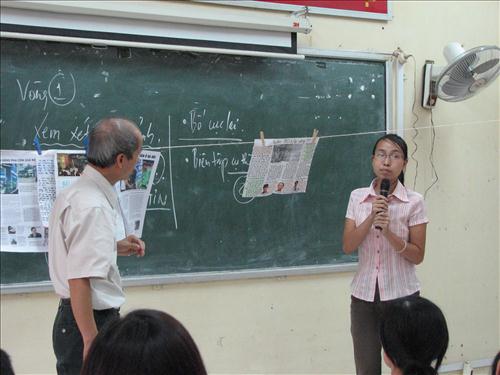
A learning activity of the Faculty
After graduating, I was retained by the Faculty as a lecturer. The Faculty and the University's policy was to develop the Journalism specialization into a Journalism major, training journalism graduates across the country. I was sent to Hanoi to study for a master's degree in journalism to prepare the staff for opening the major. However, because my undergraduate degree wasn't in the correct field, I had to take supplementary courses. It was my first time in Hanoi, completely unfamiliar with the city, and it took me two days to find accommodation, spending two days sleeping in Lenin Park. Luckily, I wasn't robbed; thinking back, it still sends shivers down my spine. Once I had settled in, I went to the Journalism Faculty to register for the course. The secretary (please excuse me for not remembering her name) greeted me very gently: "This year the Faculty isn't offering a standardization course; please wait until next year!" Hearing that, my hands and feet went numb. I sought out Professor Dinh Van Huong, who was then the head of the department, hoping to find a solution. I had been sent to study by the university, and now I was returning empty-handed, unsure how to report to the university and the department. Professor Huong was very kind and explained everything to me, including why the department wasn't organizing the standardized journalism course this year. He even sincerely told me that if the department did open the class next year, he would personally send me a notification. I left the department with a confirmation from Professor Huong stating, "This year the department will not be offering a standardized journalism course," which he said was to inform the university and the department so they wouldn't think I had dropped out or skipped the exam, which would be very troublesome. His thoughtfulness towards a student from a rural area like me deeply moved me. Leaving Hanoi with a feeling of dejection, partly because I had wasted my time traveling such a long distance without achieving my goal, and partly because I was upset about not getting back the money I had paid for my accommodation, I vowed never to go to Hanoi again. Without hesitation, upon returning to Hue, I registered for the Master's program in Vietnamese Literature, even though the Faculty initially refused to let me attend. I took a gamble and studied independently to avoid going to Hanoi. After two years of studying for the Master's in Vietnamese Literature, I received notification about a standardized course for the Master's program in Journalism offered by the Faculty of Journalism and Communication, University of Social Sciences and Humanities, Vietnam National University, Hanoi. The envelope was addressed to me personally, and the handwriting was unmistakably that of Professor Dinh Van Huong. Professor Huong kept his promise; he personally sent me the notification as he had instructed me two years prior. Moved by his sincerity, I abandoned my two-year Master's program in Vietnamese Literature, even though I only had a few months left before my thesis defense and had requested the Faculty to allow me to participate in the standardized course.
My knowledge standardization class at the time consisted of 7 students, most of whom were already working. Fortunately for my class, we had the opportunity to learn from many professors from the Journalism and Communication Faculty. Professor Dinh Van Huong, Professor Duong Xuan Son, and Professor Vu Quang Hao had a dignified, academic demeanor. Ms. Doan Huong was profound and insightful. Professor Tran Quang, however, had a different style. On the first day he came to class, a cigarette dangled from his lips. He leaned back in his chair, exhaling smoke towards the ceiling, and said, "Why are you all taking this knowledge standardization class? To prepare for graduate school? Fine, you'll be better off than me after you finish your graduate studies." The class monitor sitting next to me whispered, "He seems quite nonchalant, doesn't he?" At the end of the course, instead of a written exam like other subjects, he said we should have a dialogue with him, similar to an oral exam. However, the way the professor questioned students was quite unusual. He didn't just ask about subject-related knowledge, but about everything from journalism to literature, history, geography, sociology, psychology... which, according to him, anyone working in journalism should know! He was also quite strict with grading, carefully recording the names and hometowns of his students in his notebook. He said he did this as proof that if anyone became a deputy minister, minister, or prime minister later on, they would all be his students, and there would be no denying it. He was just joking, but we knew he did it out of respect for his students.
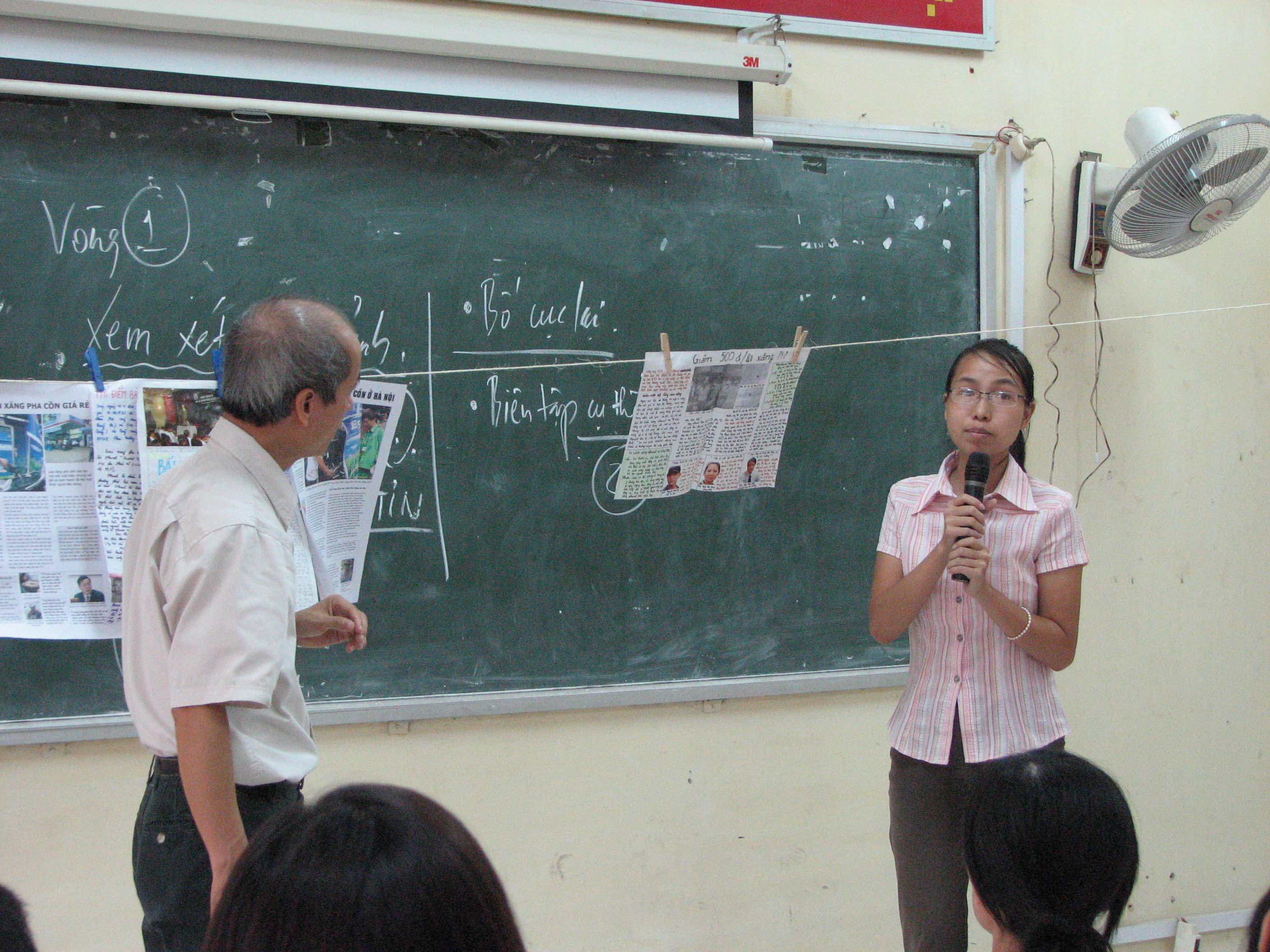
Associate Professor Dr. Vu Quang Hao during a Journalism Text Editing class for the K50 regular program.
After completing my postgraduate studies, I pursued a master's degree in Journalism and Communication from 2007 to 2010. My class had 21 students, but only 15 remained by the time of the defense. During my postgraduate studies, I had the opportunity to interact with many professors from the Faculty and other institutes and media organizations. The knowledge provided by these professors was incredibly useful and necessary for someone like me who is half literature and half journalism. Then, I was supervised by Professor Vu Quang Hao for my thesis. Professor Hao is quite serious about his work. Working with him and receiving his guidance, I learned a great deal of professional knowledge, how to conduct research, and the importance of honesty in my work – all essential qualities for my future studies and career. As a supervisor, he always wanted his students to acquire the best possible scientific knowledge and always considered the circumstances of each student he supervised. I live in Hue, quite far from Hanoi, so when I went to see my professor, he told me not to make too many trips back and forth as it would be too expensive. He suggested I send the completed work to him by mail, and he would revise it and send it back to me. After my thesis defense, I wanted to invite him to dinner to express my gratitude, but he refused, saying that since I had already spent so much on my thesis and defense, it would be better to have tea and chat at his house. Following his advice, I and another student were guided by him to his house for a whole evening of conversation, and he even gave us books. When I was a doctoral candidate, I sought him out for help. He pointed out a research direction for my dissertation topic and reminded me: "Doing a doctorate is much harder and more expensive than doing a master's; you have to work very hard."
When I was pursuing my doctoral studies, I faced many choices. Many people advised me to choose other institutions, as they believed they were more convenient and easier. To be honest, I was initially hesitant, so I bought an application form intending to pursue a doctoral program at an institution in Hanoi. But strangely enough, on the day I submitted my application, I went straight to the Faculty of Humanities instead of the institution I had initially planned to go to. I became attached to the Journalism Department at the Faculty of Humanities. So many times I considered not studying there, but so many times I found myself drawn to it. That's just how I am; it's as if I have a karmic connection with the Journalism Department at the Faculty of Humanities that I can't break.
My NCS entrance exam had 7 participants, but one person dropped out at the last minute. Of the remaining six candidates, my application was the most complicated, as Professor Dang Thi Thu Huong, the head of the department, described it as the most "scandalous." This was because, until the last minute, I still didn't have a supervising professor, and the thesis title was problematic. Professor Huong said that, but I owe my success as a PhD candidate largely to her. She diligently guided me in supplementing the missing data in my application, revising the research direction, and making the thesis title suitable for presentation to the committee. She helped me like a supervising professor, even though it wasn't her responsibility. Without her help at that time, I would hardly have passed the PhD selection exam that year. I also sincerely thank the esteemed professors on the PhD selection committee that year. Thank you to Professor Dinh Van Huong, Professor Duong Xuan Son, and Professor Nguyen Thi Thanh Huyen for their guidance and encouragement, helping me overcome difficulties to complete my studies. In particular, I want to mention one teacher, a teacher who has always been unwavering, someone I will always cherish: Professor Dinh Van Huong. The teacher who trained me from the very basics of journalism during my time studying at the specialized program in Hue, has now extended her arms to welcome me as a student and guide me. Thanks to her, I have become a doctoral student today.
Looking back now, I cherish even more the affection that my esteemed teachers have shown me. I know there will be many challenges ahead in my studies, but I believe that the genuine kindness of my teachers at the institution where I am being trained will be the motivation for me to move forward. I write these lines as a token of gratitude to my beloved teachers at the Faculty of Journalism and Communication, University of Social Sciences and Humanities, Vietnam National University, Hanoi. I pray that my esteemed teachers will always have good health to continue their noble work of guiding students, and to continue to be beautiful figures in the hearts of many generations of students.
Hue, the ancient capital, one summer day - 2015
Phan Quoc Hai
Former graduate students of the 2007-2010 cohort.
Graduate students of the 2014-2017 cohort
Head of the Faculty of Journalism and Communication, Hue University of Science
Newer news
Older news

