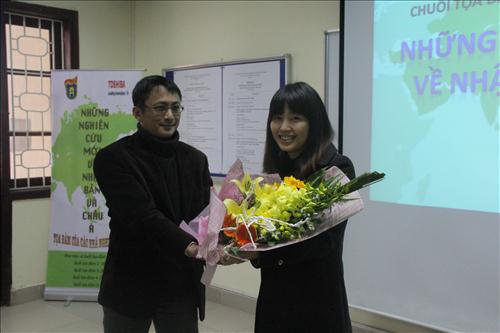
The delegates listened to and discussed two scientific reports by Dr. Nham Thi Ly and Ms. Tran Thi Quynh Trang (Faculty of Oriental Studies).
Dr. Nham Thi Ly presented the report "Mutual Support in the Community Life of the Chinese in Vietnam Through a Survey of Chinese-language Documents." The report surveys the mutual support within the Chinese community in Vietnam through the analysis of written documents such as imperial decrees, royal edicts, horizontal plaques, and couplets. Vietnam, a Southeast Asian country and a gateway on international trade routes, has historically had trade relations with other countries in the region. From the 16th and 17th centuries, groups of Chinese merchants temporarily settled and traded in many coastal areas of Vietnam. From the late Le Dynasty, the Nguyen lords in Dang Trong (Southern Vietnam) facilitated the permanent settlement and commercial activities of the Chinese in this region. Based on the surviving Chinese-language documents of the Chinese in Vietnam, the report shows that mutual support is a common practice in the community activities of the Chinese. Through village activities and community cultural and religious rituals in community halls, the Chinese community consciously advises, protects, and helps each other. This mutual support and solidarity enable the Chinese to develop their social role, affirm the prestige of their community, and maintain their economic position in the host country where they reside.
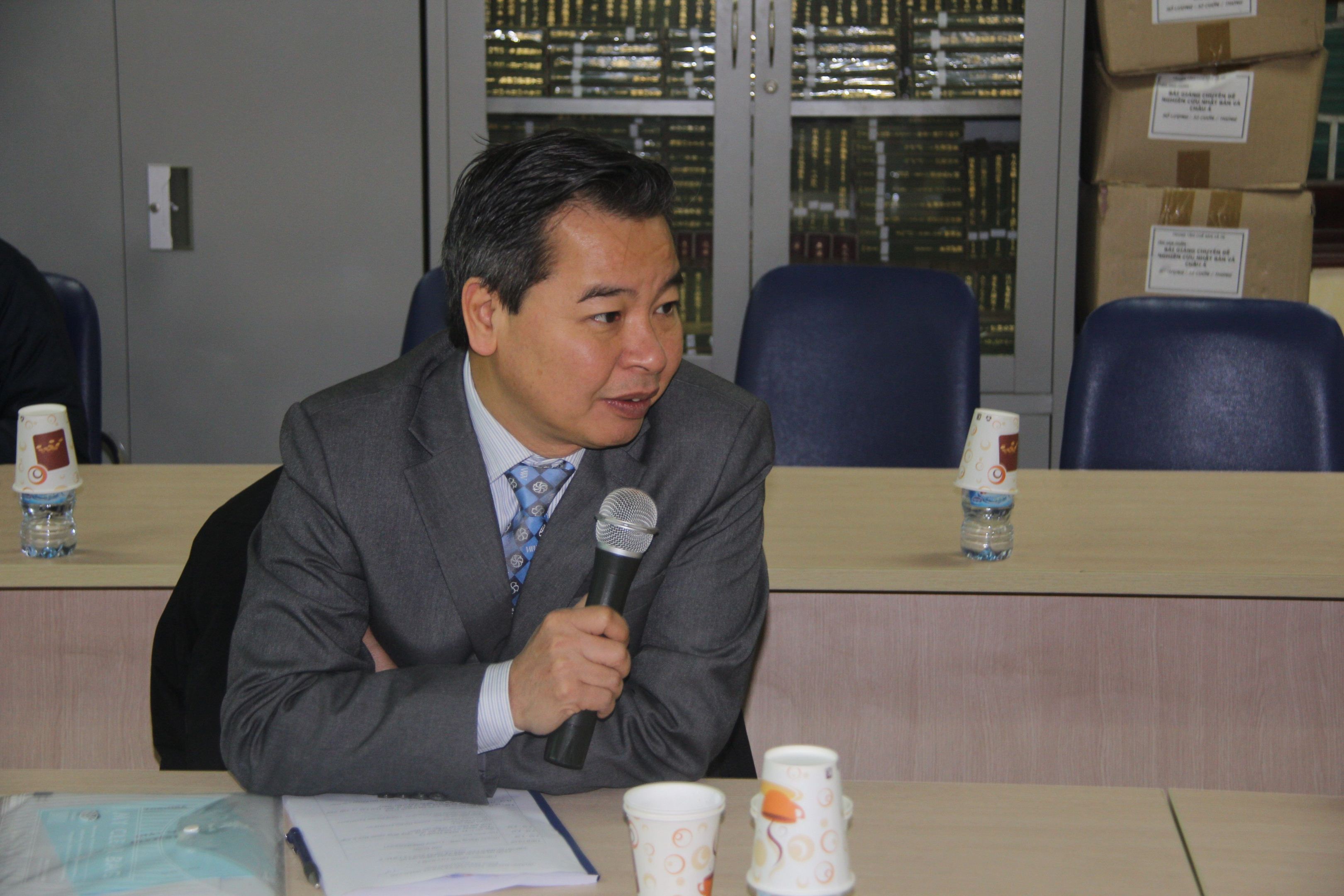
Associate Professor Pham Quang Minh chaired the seminar.
Commenting on the report, Dr. Vo Minh Vu (Faculty of Oriental Studies) stated that this study utilizes a source of information rarely used in previous research: written documents such as inscriptions, imperial decrees, horizontal plaques, and couplets. The report addresses one of the most fundamental issues in the study of the Chinese diaspora: mutual support – an expression of the network characteristic of the Chinese community. However, the commentator also noted that while the author analyzes mutual support within each association, these analyses are only isolated analyses of textual content and lack diachronic and synchronic comparisons. By comparing the documents chronologically, the author could have clearly reconstructed the social landscape of the Chinese diaspora in the past and present, the relationships within the association, between the association and the Chinese diaspora's homeland, or between the associations themselves.
The second scientific report presented at the seminar was "Trade and Investment Relations between Thailand and Vietnam in the First Five Years of the 21st Century (2001-2005)" by young researcher Tran Thi Quynh Trang. The report noted that the first five years of the 21st century witnessed significant achievements in trade and investment relations between Vietnam and Thailand. The mutually supportive relationship between Vietnam and Thailand in the economic field in general, and trade and investment in particular, is evident not only at the government level but also extends to private enterprises. The report delves into the causes, achievements, and challenges in the trade and investment relationship between the two countries, and assesses the impact and influence of this cooperation on economic development and friendly relations between the two countries in the present and future.
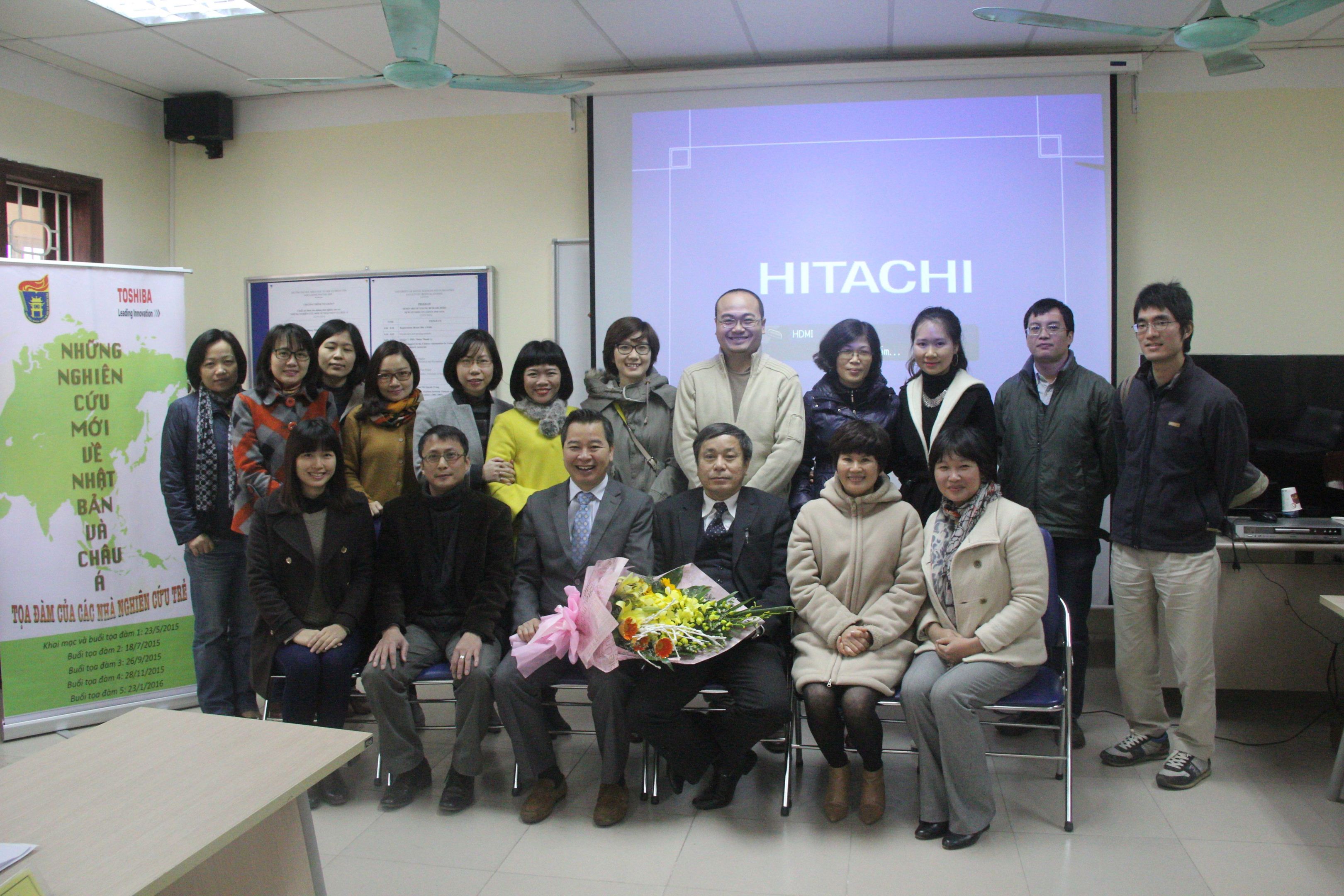
Associate Professor Pham Quang Minh poses for a commemorative photo with the delegates attending the seminar.
Commenting on this report, Associate Professor Dr. Nguyen Duy Dung (Institute of Southeast Asian Studies, Vietnam Academy of Social Sciences) remarked: the author has made considerable efforts to clarify the reality of Vietnam-Thailand trade and investment relations during the period 2001-2005, thereby helping to identify the development of relations between the two countries over the past time. However, the commentator also suggested that the author should make comparisons to help clarify the main points in the trade and investment relations between the two countries during this period, identifying limitations and obstacles, compared to other periods.
This seminar is part of a series of scientific activities by young researchers from the Department of Oriental Studies, aiming to publish new research results on Japan and Asia, and to create a platform for young researchers to learn, exchange experiences, and improve their research capabilities. The seminar series is sponsored by the Toshiba Foundation (Japan).
Author:Text and photos: Thanh Ha
Newer news
Older news

