The seminar is honored to welcome two keynote speakers, Associate Professor Dr. Ham Man Tuyet (Peking University) and Dr. Pham Hoang Hung (Head of the Department of Oriental Studies, University of Social Sciences and Humanities), who will present and share key professional content in the program.
Accompanying the seminar, we are honored to have the participation of Prof. Dr. Vu Duc Nghieu (Former Vice Rector of the University of Social Sciences and Humanities) and Assoc. Prof. Dr. Nguyen Tuan Cuong (Director of the Institute of Han Nom Studies) as guest speakers, along with numerous lecturers, researchers, postgraduate students, and those interested in the study of Chinese characters in Vietnamese.
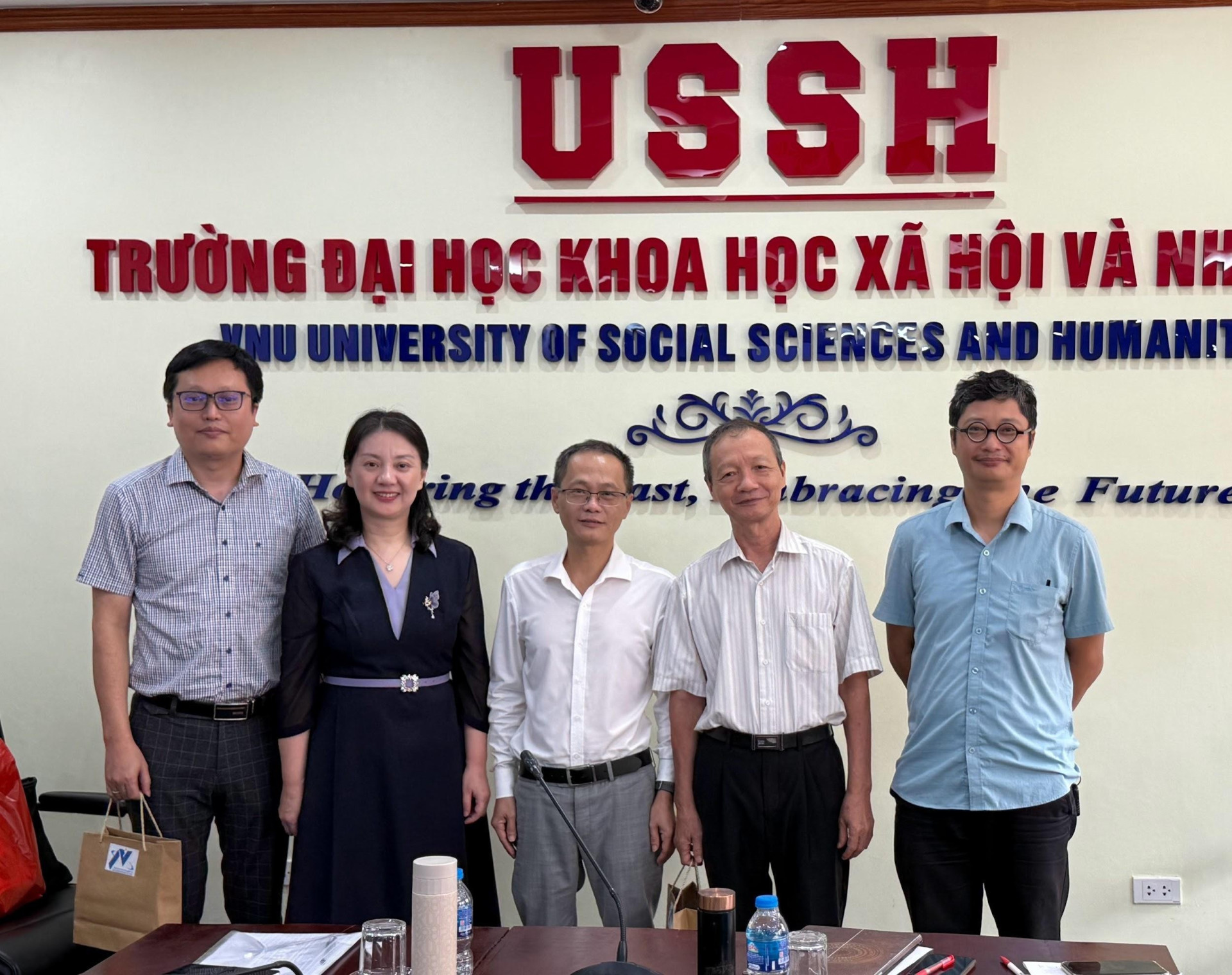
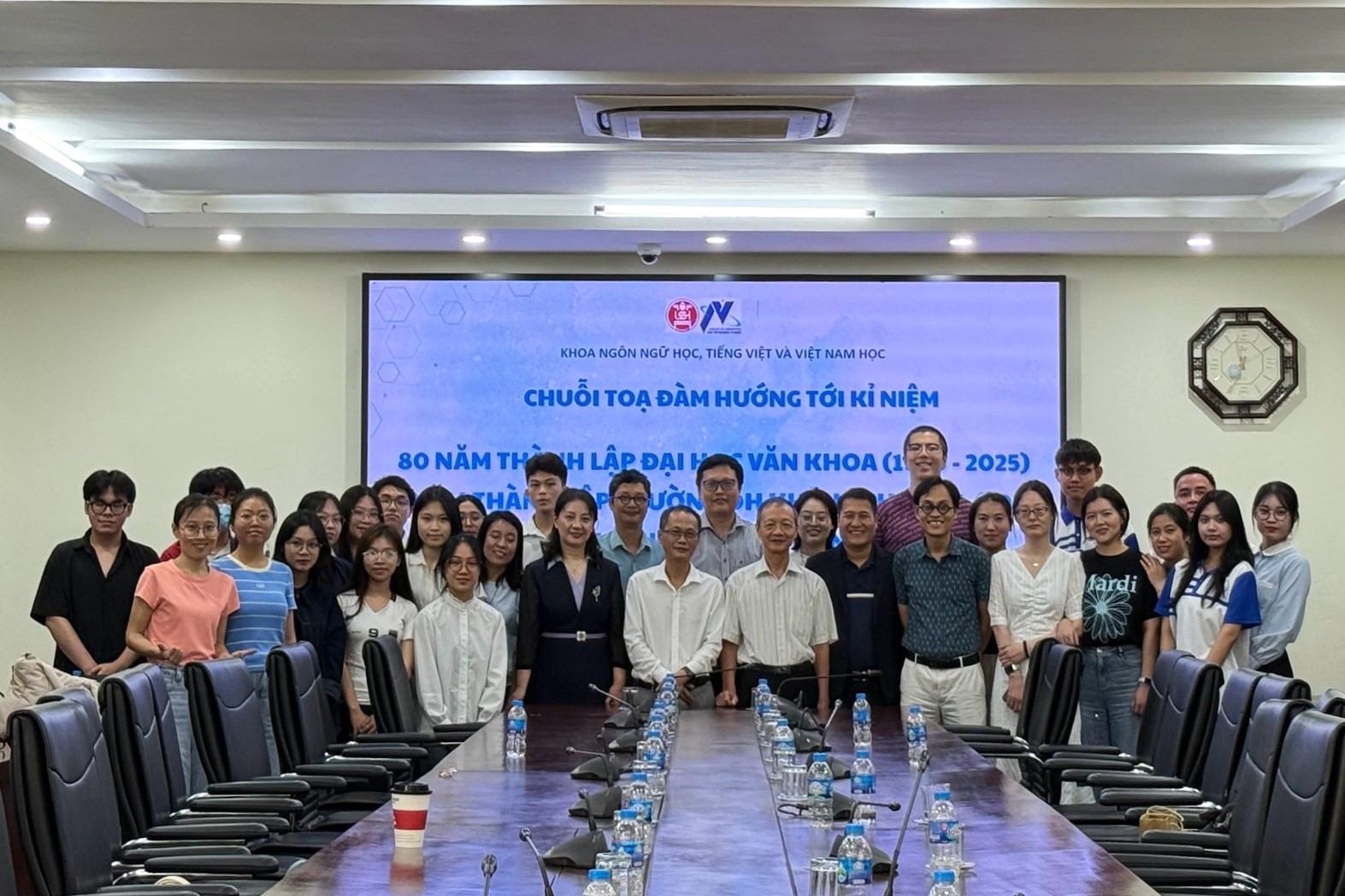
Guests and speakers of the panel discussion
In his opening remarks, Dr. Nguyen Ngoc Binh (Head of the Department of Linguistics, Vietnamese Language and Vietnamese Studies) stated: The Department was officially established on August 4, 2025, based on the merger of the Department of Linguistics and the Department of Vietnamese Studies & Vietnamese Language. This event not only marks a new stage of development, creating conditions for the Department to organize regular seminars, enhance academic exchange and promote in-depth research, but also provides an opportunity for the Department to implement many meaningful activities leading up to significant milestones.
Dr. Nguyen Ngoc Binh delivered the opening remarks at the academic seminar.
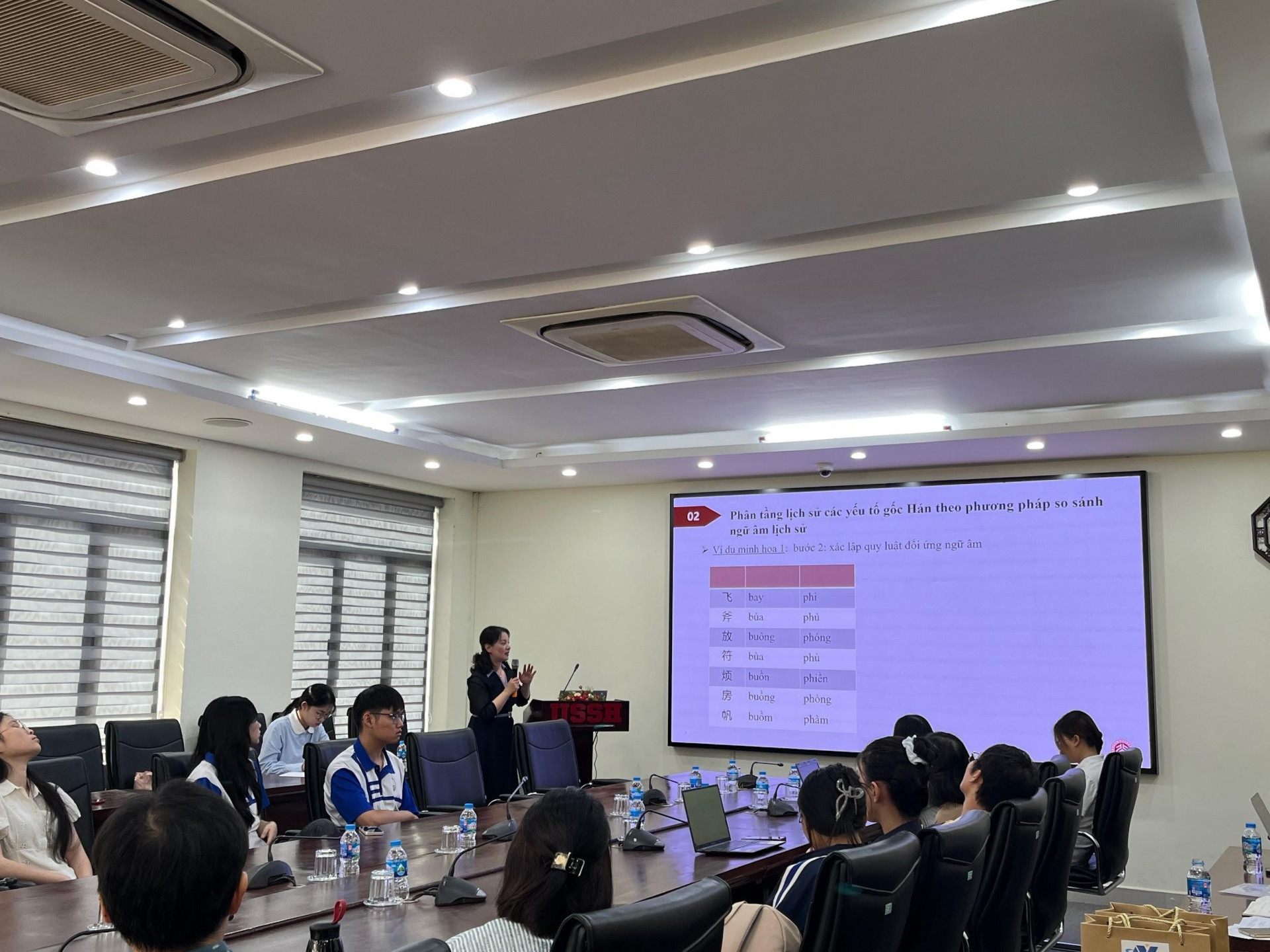
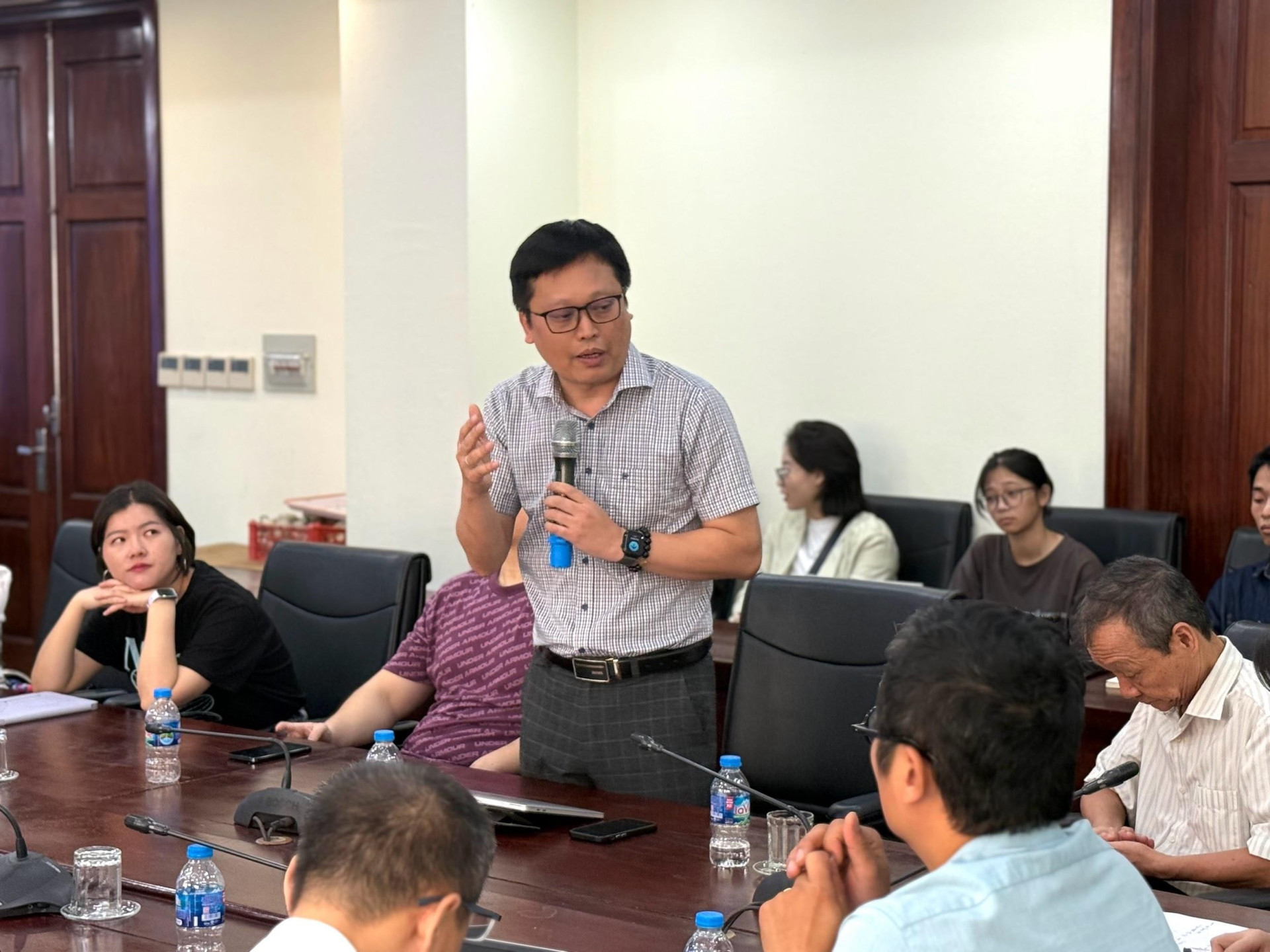
In her professional presentation, Associate Professor Dr. Ham Man Tuyet (Peking University) shared her insights on the topic "The problem of stratifying Chinese-derived vocabulary in Vietnamese from a historical phonetic comparative perspective." The content is based on the historical phonetic comparative method, thereby providing a way to stratify the classes of Chinese-derived elements in Vietnamese. These academic insights offer valuable insights for postgraduate students and researchers when approaching issues in historical lexicology.
Presentation by Assoc. Prof. Dr. Ham Man Tuyet
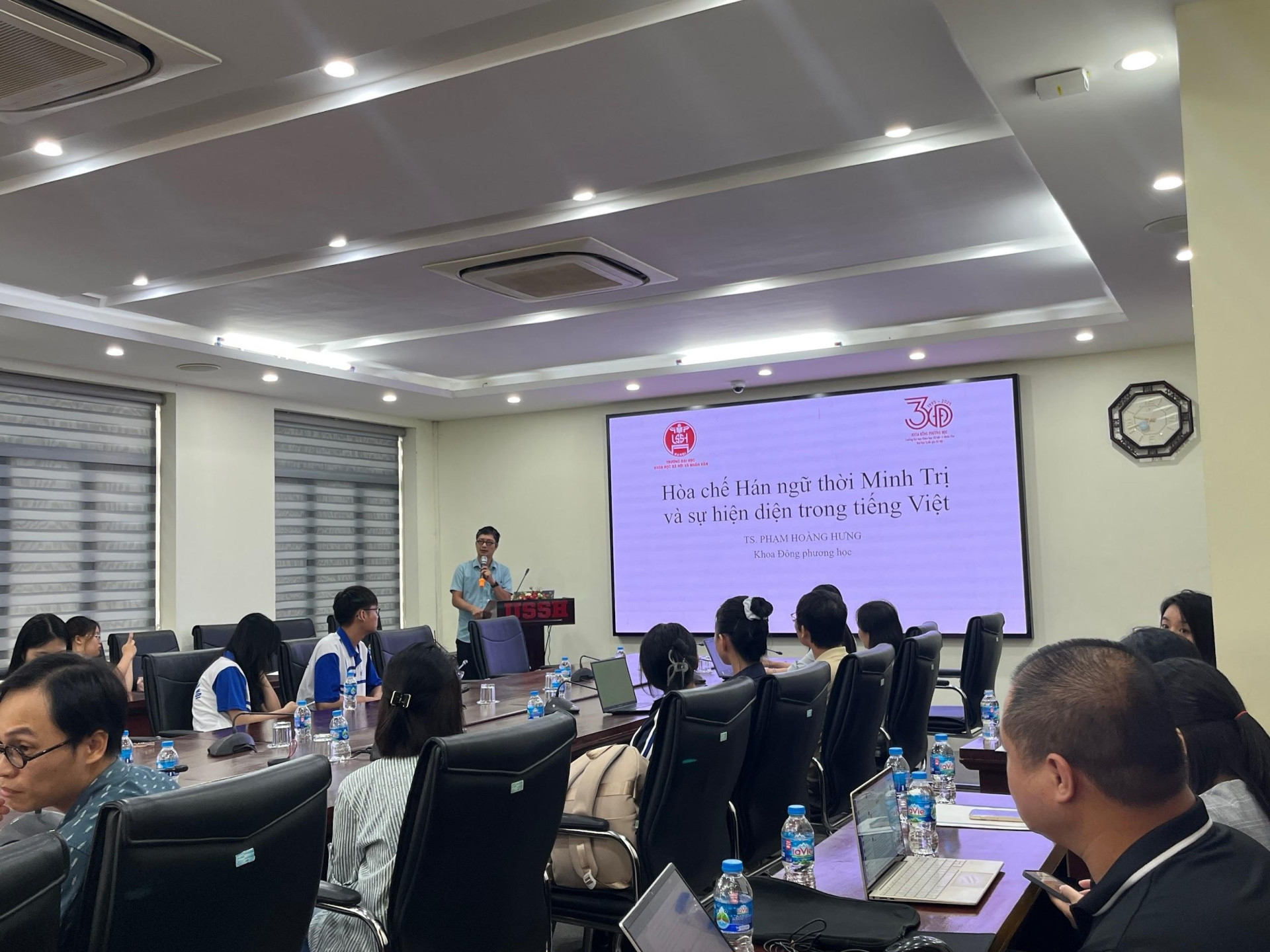
Following this, Dr. Pham Hoang Hung (Head of the Department of Oriental Studies, University of Social Sciences and Humanities) discussed the topic "The Meiji-era Chinese language system and its presence in Vietnamese." From a historical and cultural perspective, this discussion pointed out that among many elements often considered Chinese in Vietnamese, a portion actually originated from Japan during the Meiji period. This content offers a new perspective in determining the origins of vocabulary and expands the scope of Sino-Vietnamese studies to the East Asian context.
Presentation by Dr. Pham Hoang Hung
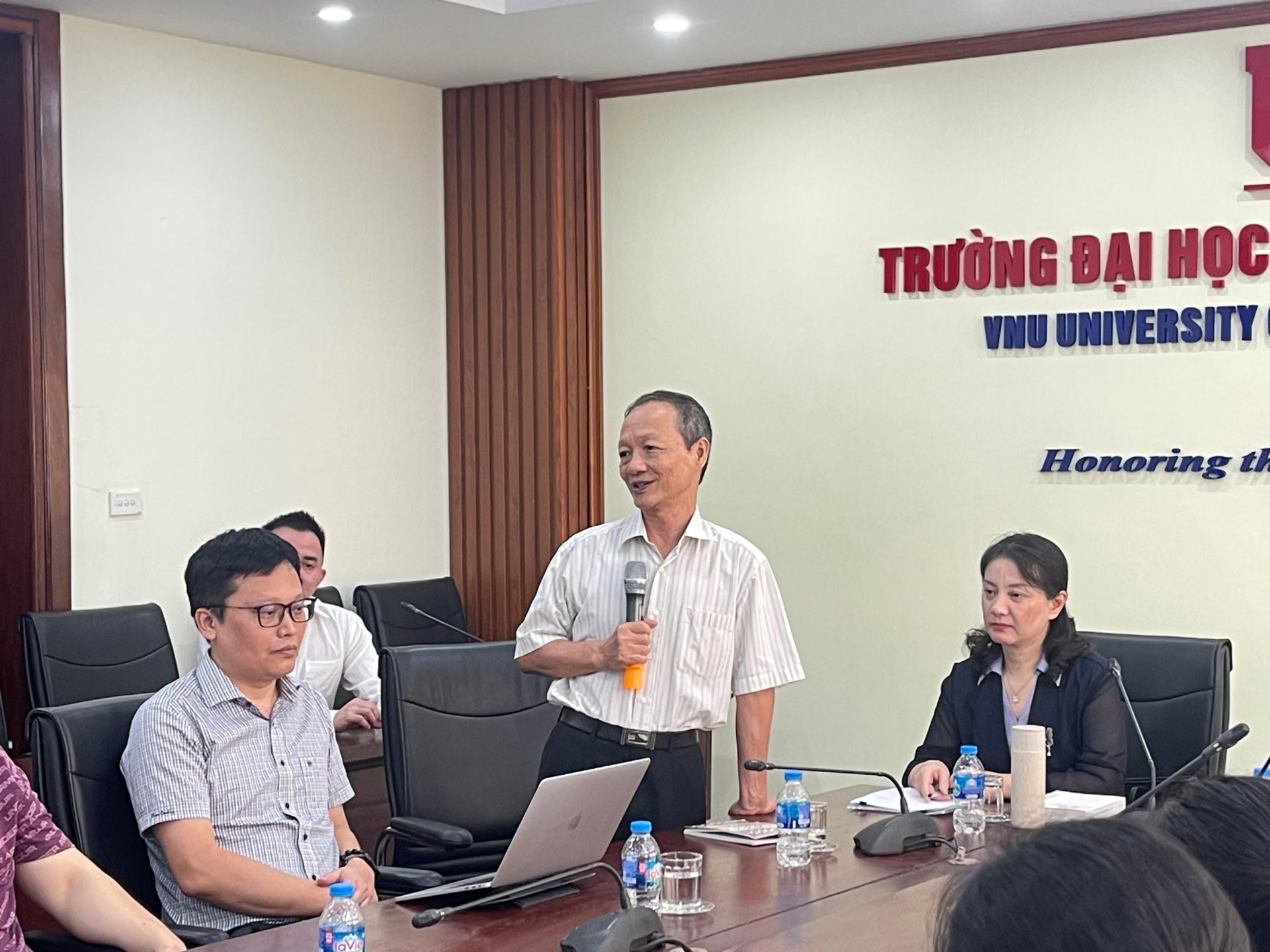
The discussions received significant attention from the participants. The session garnered valuable contributions from Professor Vu Duc Nghieu, graduate students, and faculty members. Professor Vu Duc Nghieu highly praised both topics, emphasizing the clear and consistent working principles in the presentation by Associate Professor Ham Man Tuyet and the new findings on the origins of some Sino-Vietnamese elements in Vietnamese during the Meiji period presented by Dr. Pham Hoang Hung. These exchanges focused on the stratification of Sino-Vietnamese elements in Vietnamese, the influence of Japan during the Meiji period, and the challenges in determining word origins, contributing to clarifying and enhancing understanding of Sino-Vietnamese research issues.
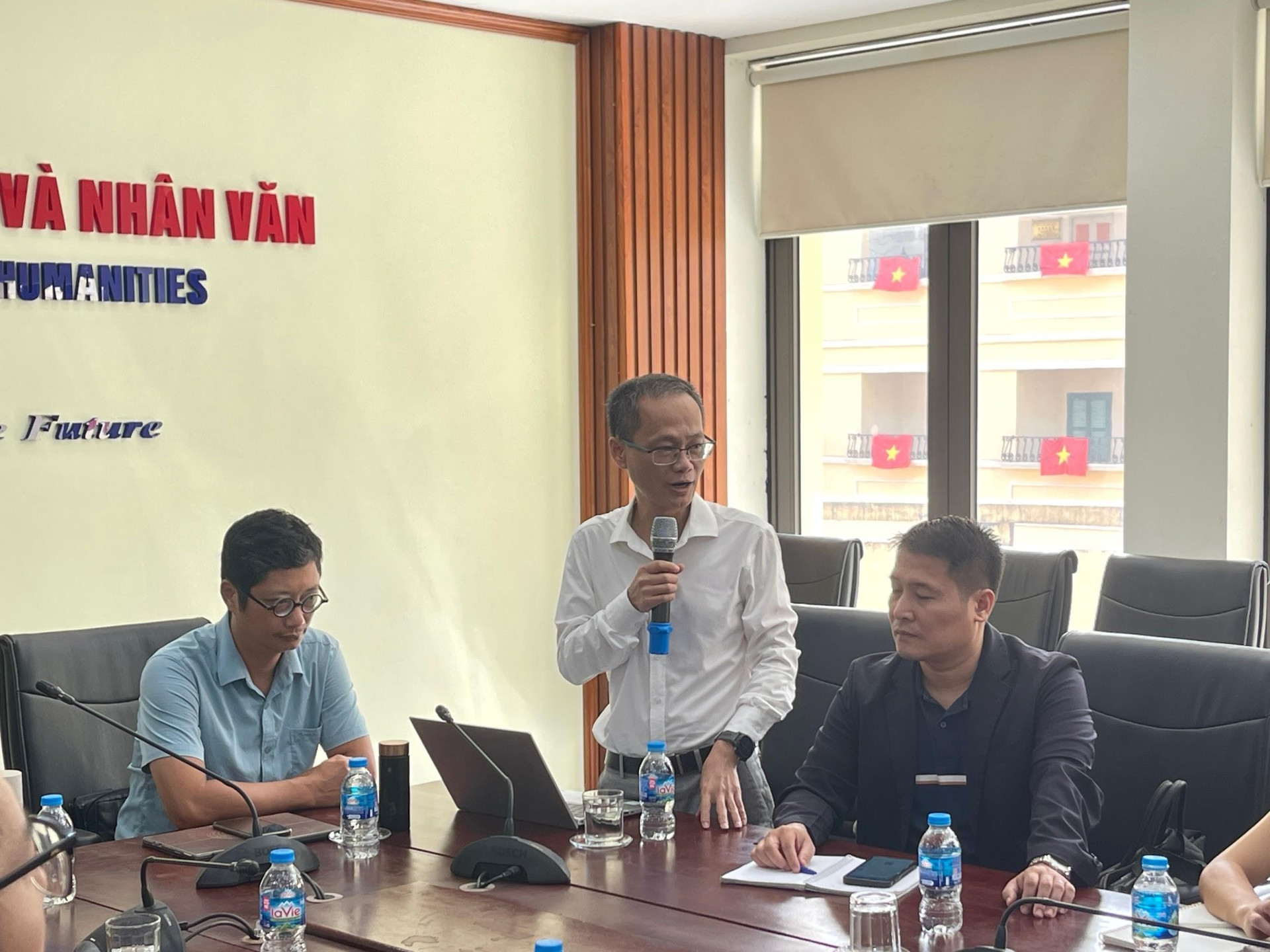
Professor Vu Duc Nghieu evaluated and discussed two academic topics.
Associate Professor Dr. Nguyen Tuan Cuong shared his views during the seminar.
The seminar was a great success, providing many valuable insights for the research and teaching of Chinese in Vietnamese. The event served as an opportunity to recognize the crucial role of Chinese in linguistic research, while also providing a chance for lecturers, researchers, and graduate students to enhance their knowledge, improve their research capabilities, connect with the academic community, and foster a spirit of profound academic sharing and exchange.
Through this, the Faculty of Linguistics, Vietnamese Language and Vietnamese Studies affirms its role as a dynamic academic center, pioneering in promoting research, professional development and academic networking, creating a rich academic environment for faculty and students.