Speaking at the Scientific Conference on Research Integrity, jointly organized by the Ministry of Science and Technology and the Ministry of Education and Training, many scientists emphasized the need to avoid exploiting integrity to undermine, slander, or harm scientists.
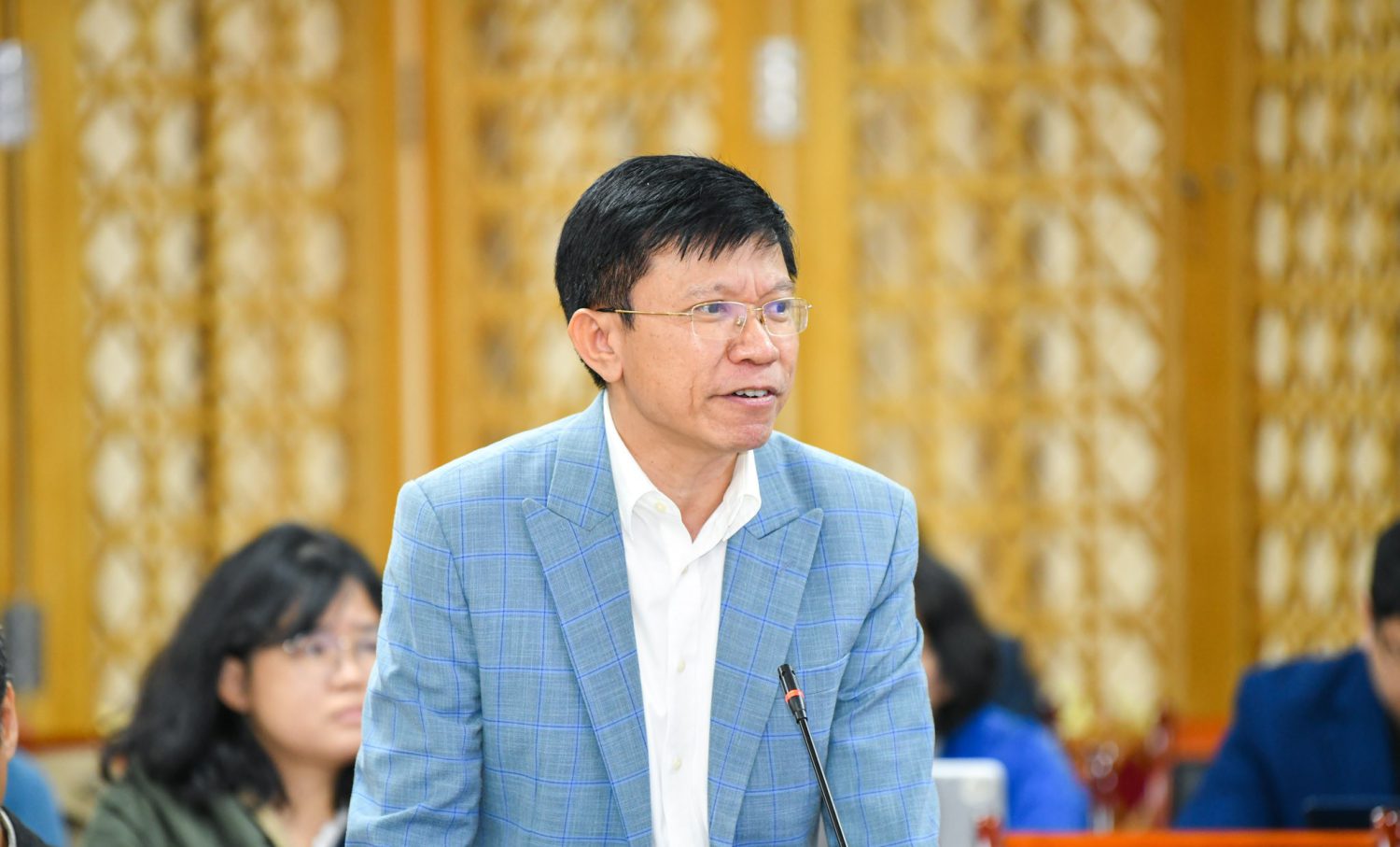
Professor Hoang Anh Tuan, Rector of the University of Social Sciences and Humanities, Vietnam National University, Hanoi: "There needs to be a comprehensive framework or regulation on academic integrity from a state management perspective."Professor Hoang Anh Tuan, Rector of the University of Social Sciences and Humanities, Vietnam National University, Hanoi, shared that in 1995 – when he was still a university student – there was a very good textbook on scientific research methods that mentioned the issue of integrity. However, there was a mismatch between the textbook's mention of academic integrity and its implementation at that time. By the time he started his career, many professors at that time also thought about academic integrity in a very simple, even somewhat naive way.
Professor Hoang Anh Tuan later studied in the Netherlands – a country with a very high level of academic integrity and very clear regulations. Looking back at the 1980s and 1990s, regulations in the social sciences and humanities in the Netherlands, or internationally, were very simple. “For example, my professor’s doctoral dissertation consisted of nine chapters, and those nine chapters were nine articles published in very well-known journals,” he recalled.
Recently, Professor Hoang Anh Tuan inadvertently received a copy of his article that had been translated into Chinese by a very famous journal in Beijing, China – a translation that was sent to him without his permission.
"This shows that there are issues that perhaps need to be shared, considered, and placed in context for better understanding. And importantly, we should aim for what we want to build, to form an institution, a legal framework, or a foundation linked to the cultural and educational foundations within it," said Professor Hoang Anh Tuan.
According to him, in the field of Social Sciences and Humanities today, after some debate, scientists have become highly aware of the issue of academic integrity. Specifically at the University of Social Sciences and Humanities, academic integrity is stipulated in the university's regulations. This issue has not yet become an independent regulation, but it is clearly integrated into the requirements for training and education.
For example, from 2017 to the present, the university has been scanning for duplicate doctoral dissertations, then expanding to master's theses, and beginning to scan the work of scientists funded by the university or articles in the university's journals.
Professor Hoang Anh Tuan believes that a comprehensive framework or regulation on academic integrity from a state management perspective is needed. In this framework, the roles of the Ministry of Science and Technology and the Ministry of Education and Training are crucial, as they have the National Science and Technology Development Fund and the State Council for Professor Titles, which are connected to almost all educational and scientific institutions. This is a fundamental basis, because ultimately, creating academic integrity still depends on individual scientists and scientific organizations.
Specifically regarding the field of Social Sciences and Humanities, Professor Hoang Anh Tuan emphasized that the field of Social Sciences and Humanities is often the most talked about or discussed in terms of academic integrity, but it is also the field with the most problems.
"The problem lies in the fact that, for example, some concepts in the decrees and circulars related to scientific articles are fundamentally defined as journal articles. This definition needs to be revised. In my opinion, a scientific article is a scientific product published in a journal, book, or book chapter. If we 'frame' it solely in journals, scientists in the Social Sciences and Humanities will face difficulties," he said.
Professor Hoang Anh Tuan proposed that scientific articles used as input and output criteria for the National Science and Technology Fund and the State Council for Professor Titles should be scientific products published in international journals or book chapters. The ranking would then be based on the Web of Science or the organizations of international publishers associations.
Professor Hoang Anh Tuan, Rector of the University of Social Sciences and Humanities, Vietnam National University, Hanoi
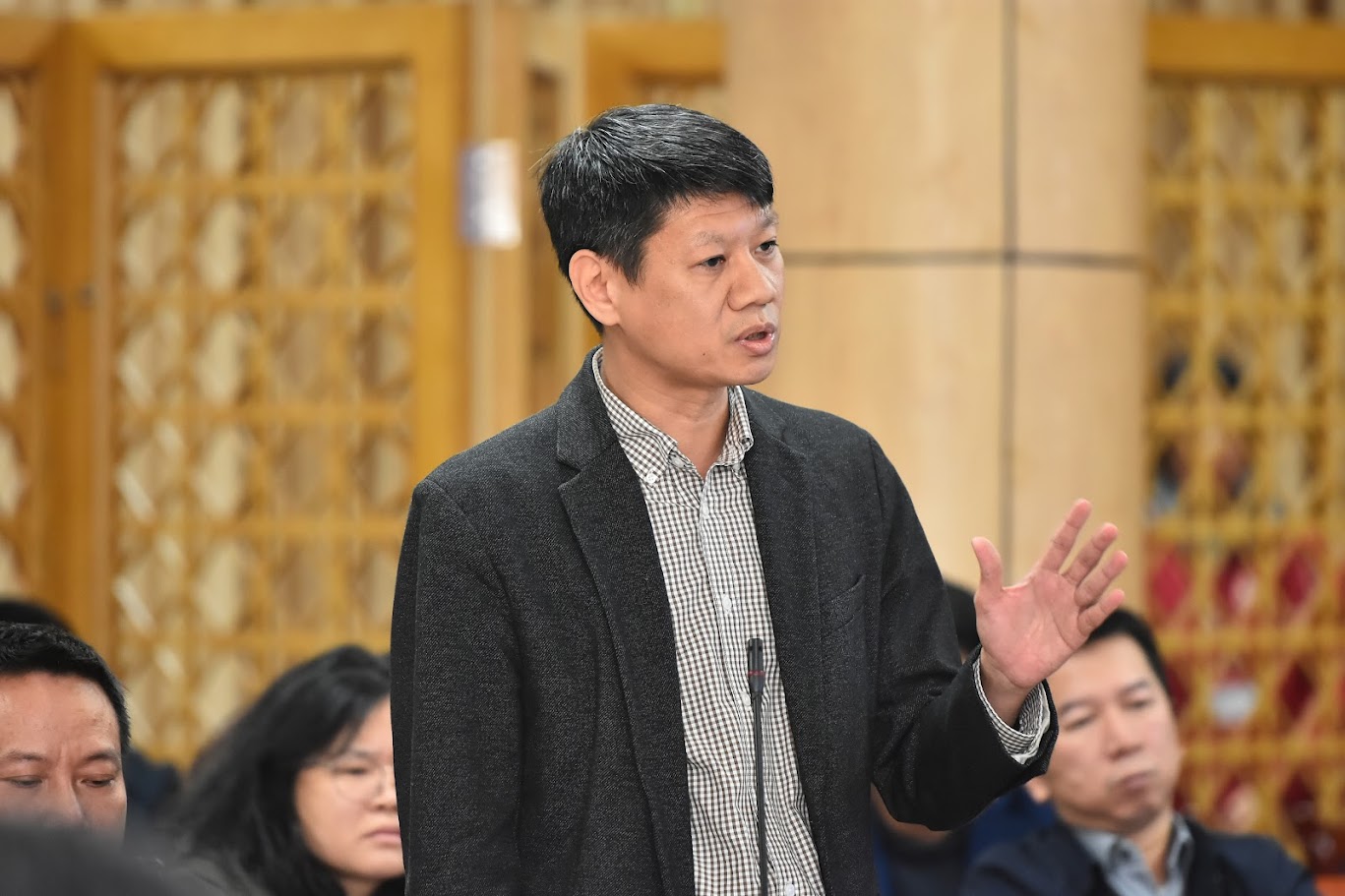
Associate Professor Dr. Nguyen Tai Dong, Director of the Institute of Philosophy: "Scientific integrity today is very sophisticated and complex."
Associate Professor Dr. Nguyen Tai Dong, Director of the Institute of Philosophy, observes that among all professions, research and training are the fields that demand the highest level of integrity.
"Why is that? Because clearly, the research and training sector has neither power nor money, but we pursue knowledge, intellect, and truth. Truth itself is a value; if we don't protect it, there will be no science left," he said.
Associate Professor Dr. Nguyen Tai Dong argues that Vietnam is not a "desert" in scientific integrity. We already have many regulations in laws, decrees, and regulations of the Ministry of Science and Technology, the Ministry of Education and Training, as well as many universities and journals. The only problem is that we lack a comprehensive regulation, and now we need a common legal framework.
Assoc. Prof. Dr. Nguyen Tai Dong, Director of the Institute of Philosophy
The Director of the Institute of Philosophy emphasized that scientific integrity today is very sophisticated and complex. Therefore, what we need is a comprehensive framework.
Associate Professor Dr. Nguyen Tai Dong agrees with the opinion that: law is the minimum ethical standard and ethics is the maximum law. There needs to be uniformity in laws and regulations; it is necessary to research, identify, and develop major principles, universal regulations, and a common set of indicators or criteria for scientific integrity. This is mandatory.
In addition, it is necessary to establish a number of pioneering units to accompany and lead the process, similar to the State Council for Professor Titles and the National Science and Technology Development Fund.
Associate Professor Dr. Nguyen Tai Dong believes that the pioneering and leading role of scientific integrity is very significant. Therefore, the two National Universities, the two Academies, the Ministry of Science and Technology, and the Ministry of Education and Training need to take the initiative to promote leading units, research institutes, universities, and leading journals to set an example.
Associate Professor Dr. Nguyen Tai Dong also suggested that when discussing scientific integrity and academic integrity, one must consider specific historical factors, appropriate to the historical conditions of Vietnam. Scientific and academic integrity is a form of consciousness that must be based on a certain socio-economic foundation and historical-cultural context. Regulations that are consistent with international practices are needed; what is mandatory must be done, but some things require further research and consideration.
"In particular, it is necessary to communicate and guide public opinion to avoid the situation of denouncing scientists under the guise of protecting integrity, turning the work of integrity into an opportunity to slander teachers and scientists - who are the poorest, most honorable, and most honest people," Associate Professor Dr. Nguyen Tai Dong emphasized.
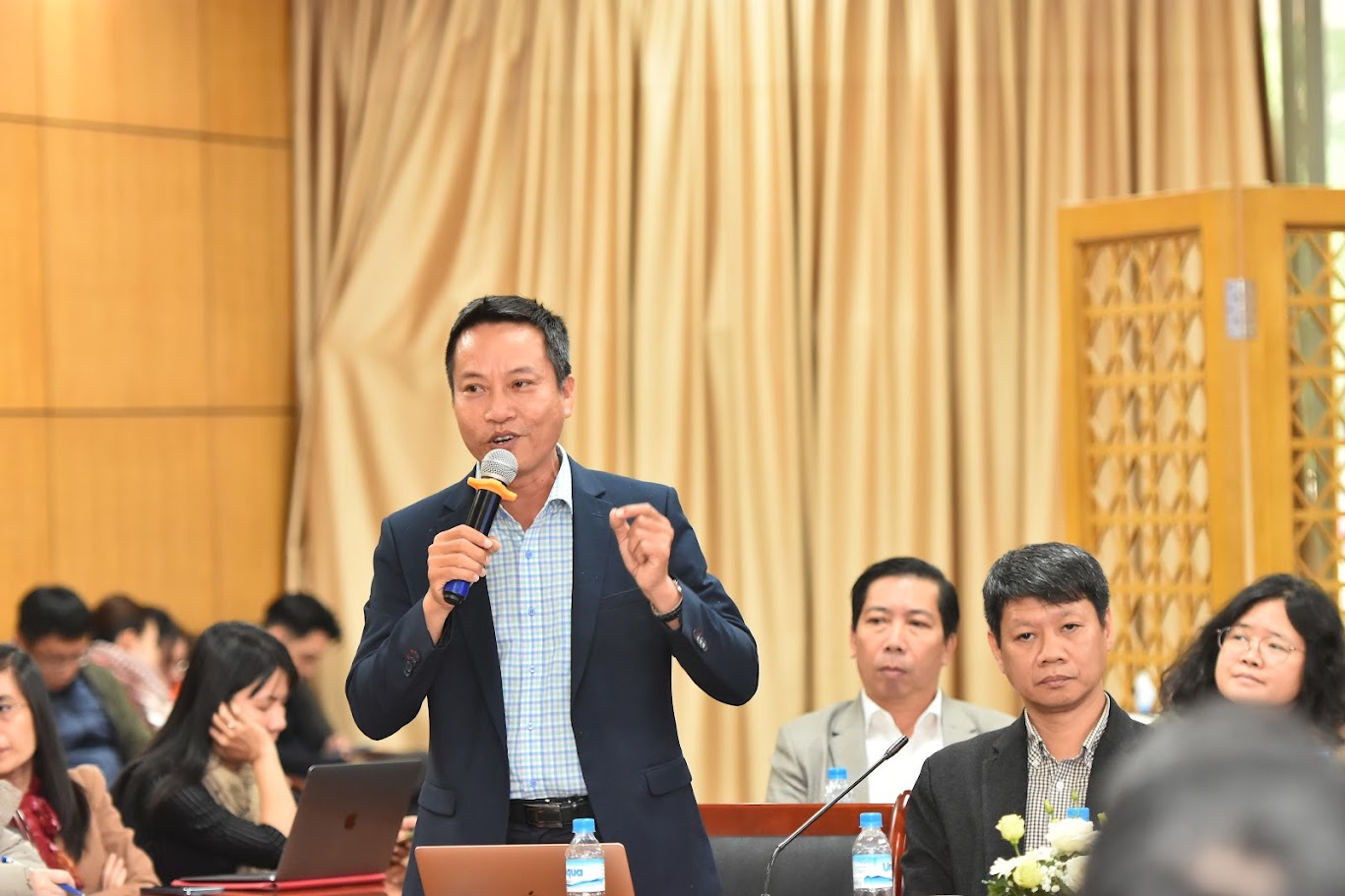
Professor Nguyen Xuan Hung, Ho Chi Minh City University of Technology (HUTECH): “Conducting genuine scientific research is very difficult.”
Discussing the issue of integrity, Professor Nguyen Xuan Hung from Ho Chi Minh City University of Technology (HUTECH) recounted: “In 2006, when I was doing my PhD in the West, after three months of work, my supervisor was astonished and blushed, asking, ‘Where are you from?’ because I hadn’t received formal training in scientific research methods. Fifteen years later, my students still face this question. Conducting genuine scientific research is very difficult.”
Through this, Professor Nguyen Xuan Hung expressed his hope that universities would further promote the subject of scientific research methods. "I myself teach postgraduate courses on scientific research methods, but the number of class hours is very limited, and there are certain constraints," he said.
According to Professor Nguyen Xuan Hung, Ho Chi Minh City University of Technology established a code of integrity in April 2023. However, implementing this code has been very difficult for the faculty, as lecturers holding master's degrees at the university have to handle many other jobs. "Through this story, I hope we can all share and show compassion for our teachers," Professor Nguyen Xuan Hung expressed.
Professor Nguyen Xuan Hung proposed that the Ministry of Science and Technology and the Ministry of Education and Training should soon have a clear, common set of rules on integrity. From this set of rules, schools can use it as a reference to develop and implement their own sets of rules. Over time, a monitoring and post-audit process will be established, leading to specific sanctions. This will take time.
Regarding scientific research methodology, he stated that we still face many difficulties in this area. "My students and the staff in our lab almost all need retraining in scientific research methodology," he said.
Professor Nguyen Xuan Hung acknowledges that pursuing a research career is a very difficult choice. Therefore, he hopes that scientists will have a genuine passion for research, and that the community can share their views with scientists, in addition to making frank contributions.