
Data from the Ministry of Education and Training shows that there are currently about 22,000 foreign students studying at over 160 educational institutions in Vietnam. In the last five years (2016-2022), Vietnam has received and trained more than 45,000 foreign students from 102 countries and territories. On average, between 4,000 and over 6,000 foreign students are admitted to Vietnamese educational institutions each year.
According to Deputy Minister of Education and Training Nguyen Van Phuc, in line with global educational trends, where language proficiency is the key to unlocking the first door in a promising yet challenging learning journey, the Vietnamese Ministry of Education and Training has always identified Vietnamese language proficiency as the crucial factor determining the quality of teaching and learning for international students in Vietnam. Therefore, improving Vietnamese language skills is considered a vital and ongoing task throughout the training process at all educational institutions nationwide.
"Teaching and learning Vietnamese is not just about language instruction and equipping students with the tools to acquire knowledge, but also about promoting culture, spreading national identity, and enhancing intercultural communication skills for international students studying in Vietnam in particular, and foreigners and those who love the Vietnamese language and culture in general."
(Deputy Minister of Education and Training Nguyen Van Phuc)
To create more enriching opportunities for all international students in Vietnam, in 2023, the Ministry of Education and Training organized the first-ever nationwide Vietnamese Public Speaking Contest for international students. This provided an opportunity for international students, Vietnamese students, and teachers to exchange expertise and cultural knowledge, foster friendship based on the common Vietnamese language, and contribute to promoting Vietnamese education and culture to the international community.

That was the title of the entry by a group of eight international students (from the Department of Vietnamese Studies and Vietnamese Language - Faculty of Social Sciences and Humanities - Vietnam National University, Hanoi) in the Final Round of the 2023 Vietnamese Public Speaking Competition for International Students. The group of students, from eight countries: Russia, Ukraine, China, Japan, Australia, the United States, South Korea, and Vietnam, wore traditional Vietnamese clothing such as the "áo bà ba," "áo dài," and the costumes of Quan Ho folk singers to showcase the Vietnamese language growing alongside the nation's history and culture, and to bring Vietnamese culture to the world. With its meaningful content and outstanding presentation, the performance won first prize.
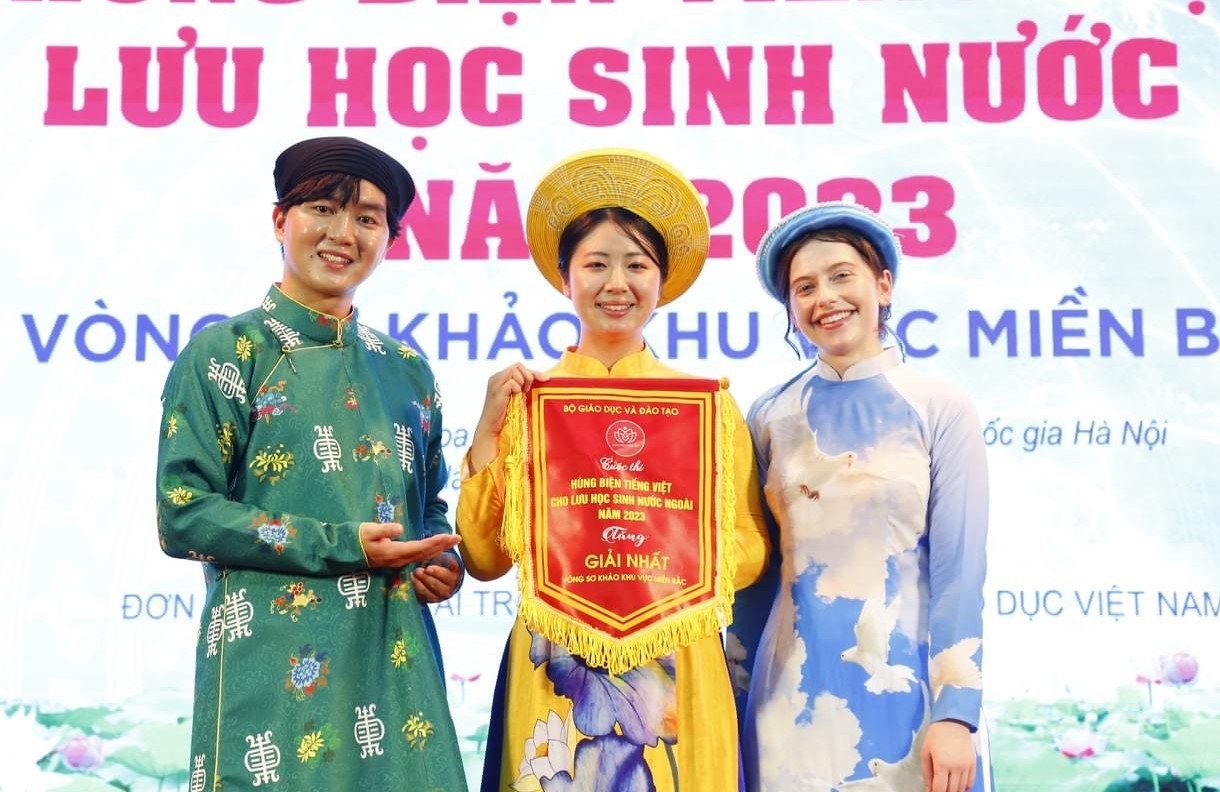
Three members of the team, from the Department of Vietnamese Studies and Vietnamese Language - University of Social Sciences and Humanities, participated in the debate. (Photo: Provided by the team)
Sharing her thoughts on her competition entry, Okabe Chikara (Japan), one of the three contestants, said: “The United Nations Educational, Scientific and Cultural Organization (UNESCO) has honored many famous Vietnamese figures, many of whom are poets and writers, and they have used the Vietnamese language to touch the hearts of readers all over the world. For example, Nguyen Du's *Truyen Kieu* is beloved not only in Vietnam but also in many countries around the world, and has been translated into 20 different languages. That is the idea for the theme of our entry, ‘The Vietnamese Language Touches the Hearts of the World.’ Through this entry, we want to express our love for the Vietnamese language and culture.”
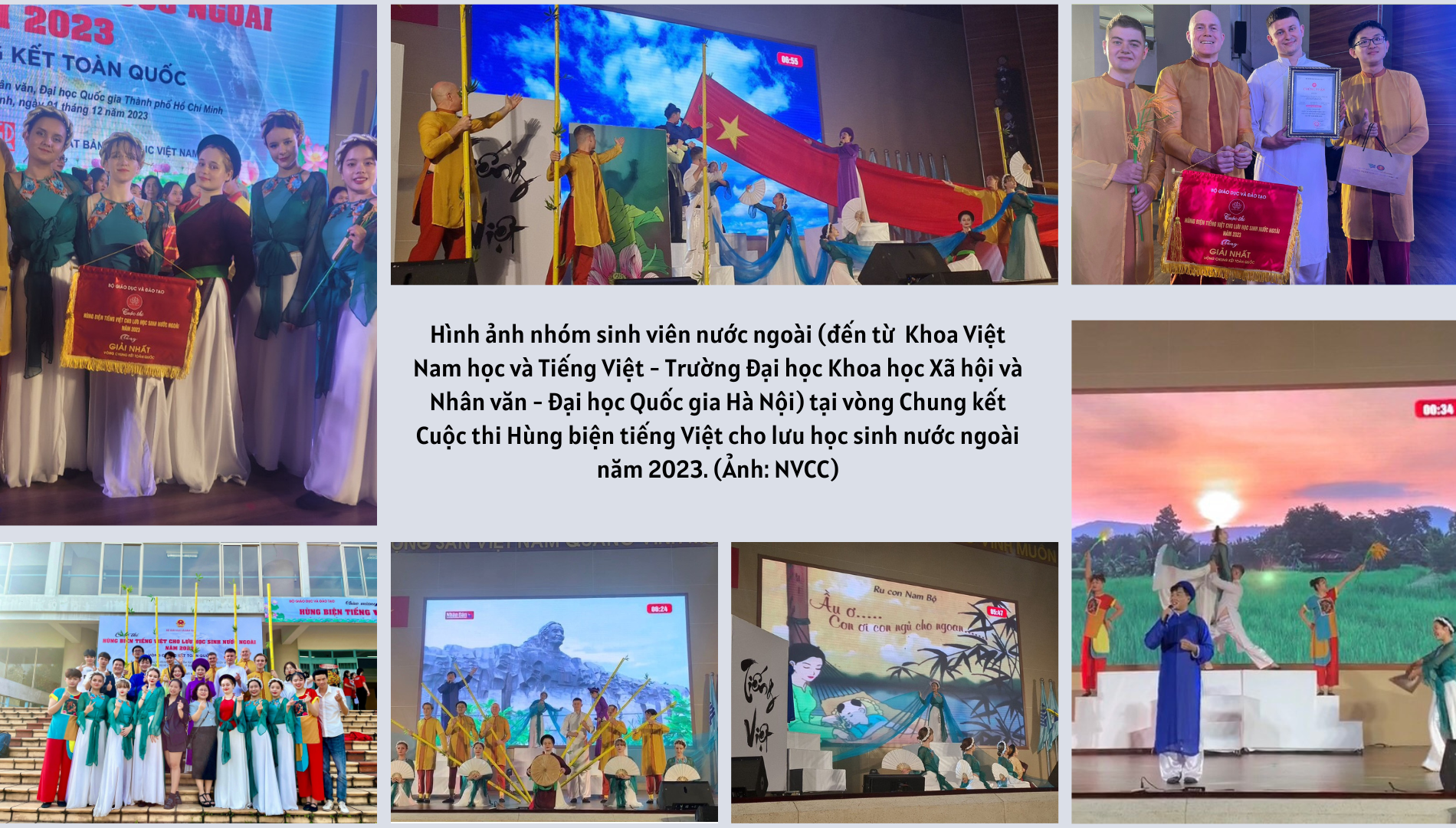 |
Speaking about the training process, Mizuguchi Sayo (Japan), another member of the team, said: “We planned our training very carefully to make the most of our time. Besides 2-3 training sessions per week with the director and a few hours of pronunciation practice with the professors in the department, we also practiced at home. During the training for this competition, the professors corrected my pronunciation a lot. As a result, when speaking Vietnamese in daily life, I pay more attention to accurate pronunciation. Besides that, our performance included folk songs from all three regions of Vietnam, so I practiced singing a lot. For a foreigner like me, the rhythm and tempo of traditional Vietnamese folk songs are very difficult, so I had to try my best to complete the performance well.”
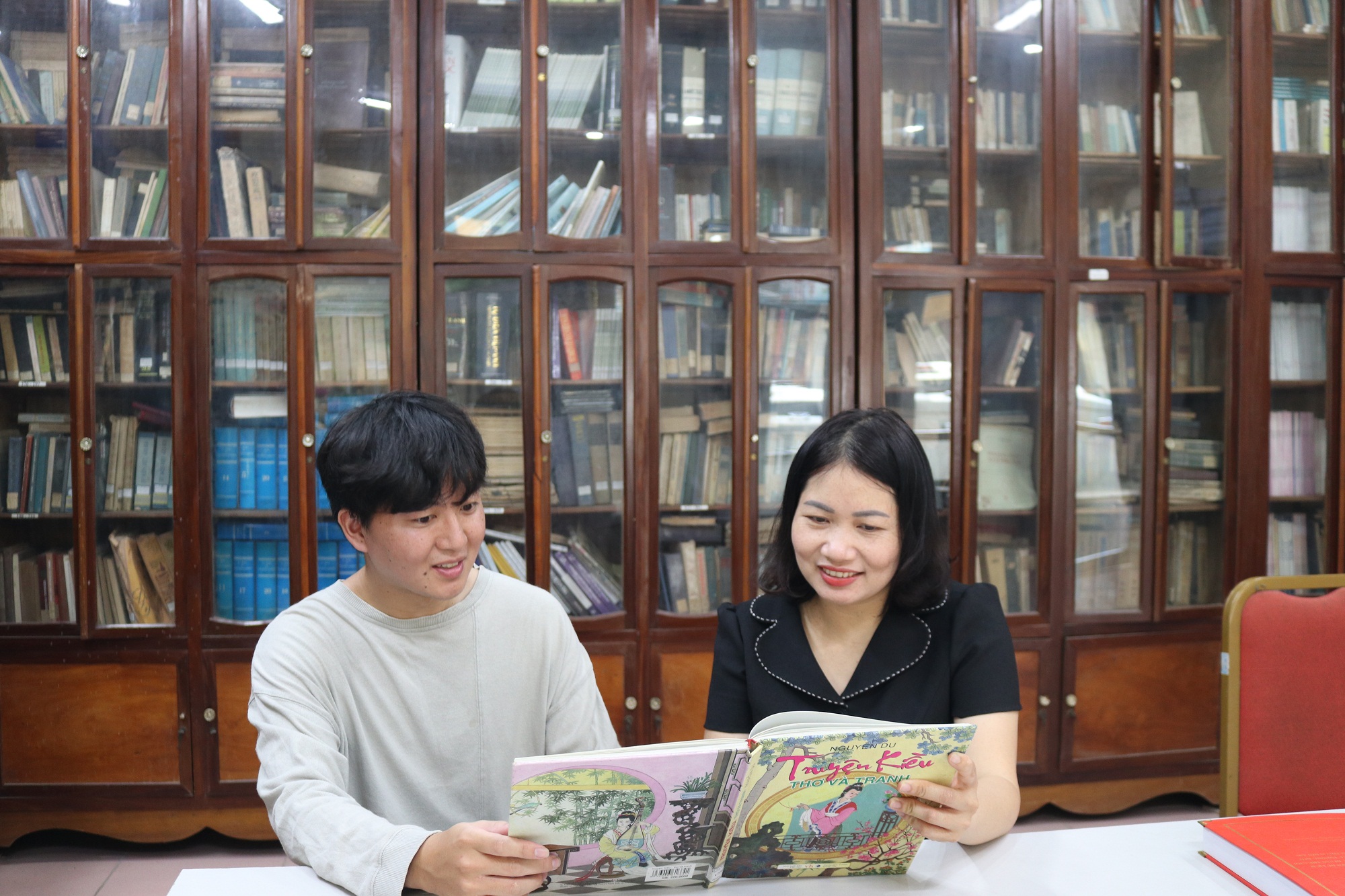 |
| "The Tale of Kieu" by the great poet Nguyen Du is one of Okabe's favorite books. (Photo: Thu Lan) |
Okabe Chikara is currently a fourth-year student in the Department of Vietnamese Studies and Vietnamese Language at the University of Social Sciences and Humanities. She speaks Vietnamese fluently and has a rich vocabulary. Okabe shares that, in addition to her classroom studies, she regularly improves her Vietnamese through reading books and newspapers, watching television, and paying close attention to listening and speaking in daily life. Okabe is particularly impressed by street vendors' calls and can imitate them very well.
Okabe said that she has lived in Vietnam for many years and feels attached to it as her second home. “I travel by motorbike and know many of Hanoi’s routes well. I often wear a blue helmet (like the one worn by ride-hailing drivers), so people have asked me for directions many times. That makes me very happy,” Okabe said.
Like Okabe, Mizuguchi Sayo actively learns Vietnamese from various sources. Mizuguchi has been studying Vietnamese for about five years, including two years at a college in Japan. After enrolling at the University of Social Sciences and Humanities, she studied using Vietnamese textbooks for foreigners and read Vietnamese articles. Recently, she frequently uses TikTok to practice her listening and comprehension skills, and especially watches the VTV24 news program to both understand Vietnamese and stay up-to-date on news about Vietnam.
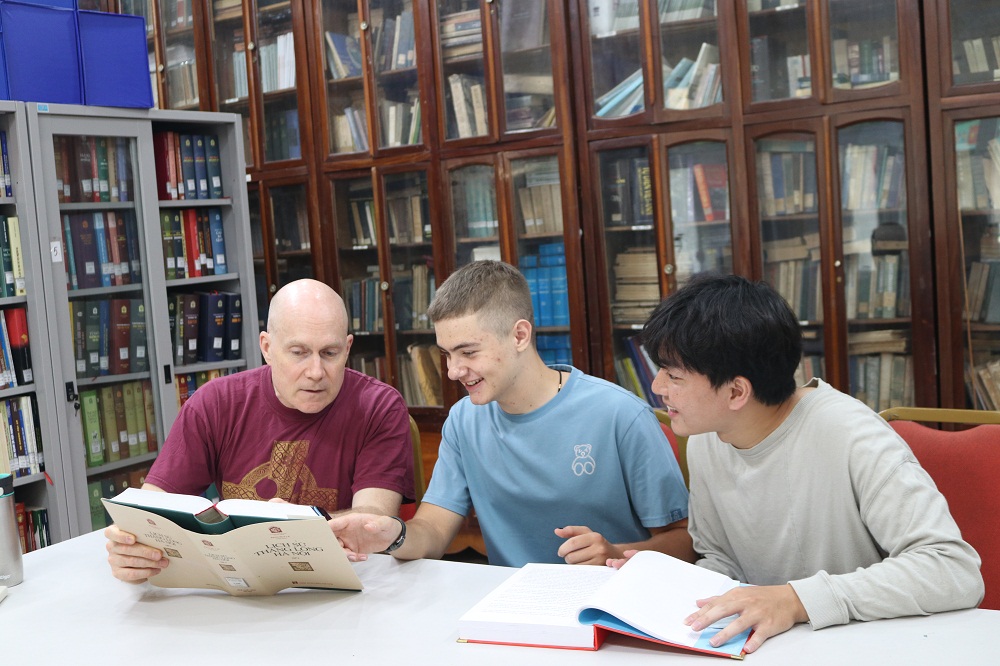 |
| Three students (from left to right): Peter Stuart Meese (USA), Sotnichenko Ivan (Ukraine), and Okabe Chikara (Japan) read books at the Library of the Department of Vietnamese Studies and Vietnamese Language, University of Social Sciences and Humanities. (Photo: Kieu Giang) |
Visiting the Department of Vietnamese Studies and Vietnamese Language (University of Social Sciences and Humanities), we had the opportunity to tour the students' charming study areas. Peter Stuart Meese (from the USA), a rather older student, is an English teacher in Hanoi. Wanting to better communicate with Vietnamese students, Peter decided to learn Vietnamese. "I find grammar the most difficult part of learning Vietnamese," Peter explained.
Meanwhile, Sotnichenko Ivan (Ukraine), a first-year student, shared his motivation for learning Vietnamese: "I want to learn Vietnamese well so I can play and talk with many Vietnamese friends." Sotnichenko Ivan moved to Vietnam with his parents for work and attended an international school in Hanoi from high school. He chose the University of Social Sciences and Humanities for his undergraduate studies and is improving his Vietnamese language skills at the Department of Vietnamese Studies and Vietnamese Language.
When interacting with foreign students in Hanoi, a common feeling we noticed was a sense of closeness and friendliness, regardless of their country of origin. Sitting together, drinking iced tea on the sidewalk, and sharing everyday stories about life in Vietnam... these things helped bridge the gap and cultural differences between us. And the Vietnamese language – that's the bridge that allowed us to chat, exchange ideas, and become friendly friends.
Related articles:
Lesson 1: The thread connecting overseas Vietnamese with their roots
Lesson 2: Working Together to Spread Love for the Vietnamese Language
Author:Communist Party's online newspaper
Newer news
Older news

