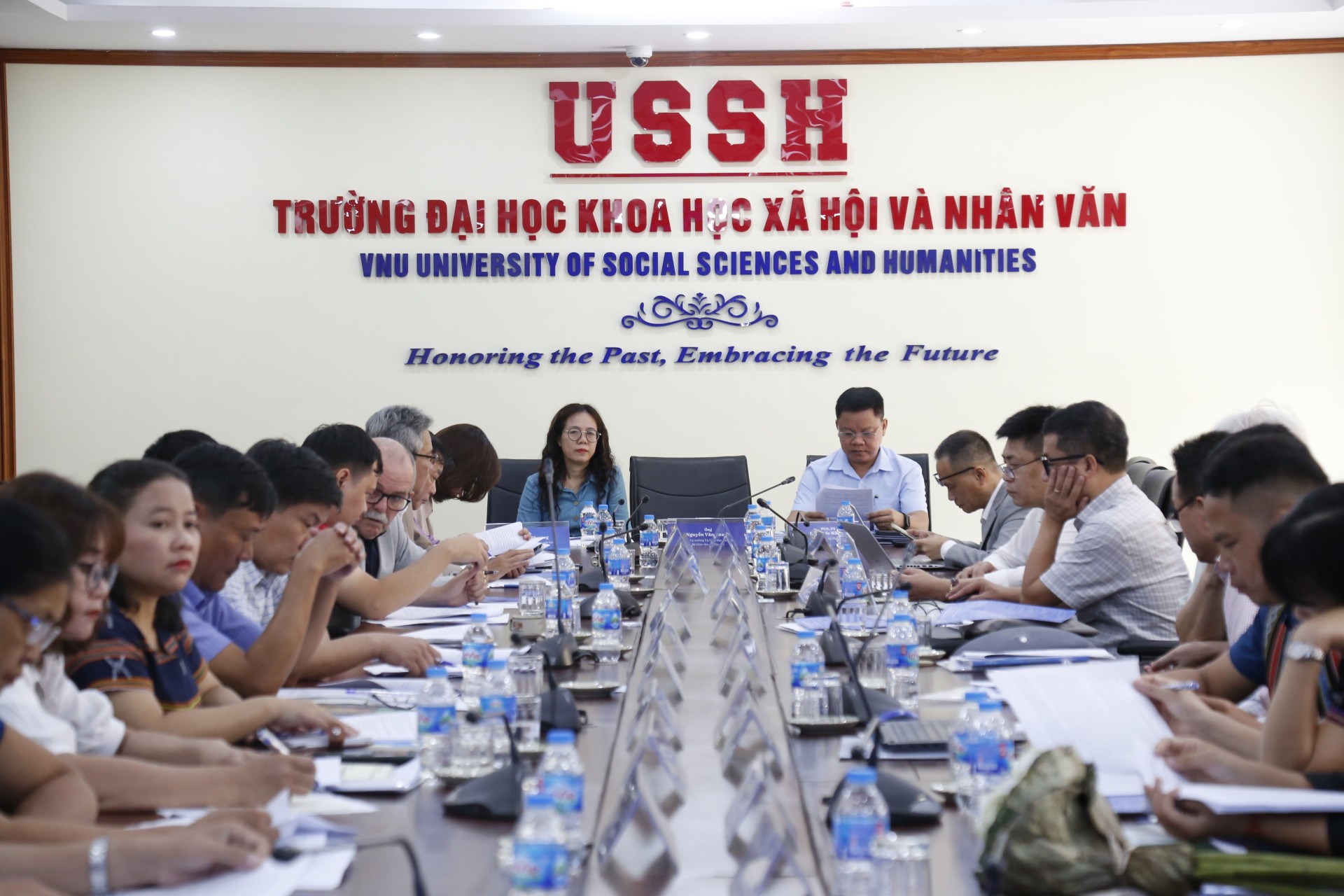
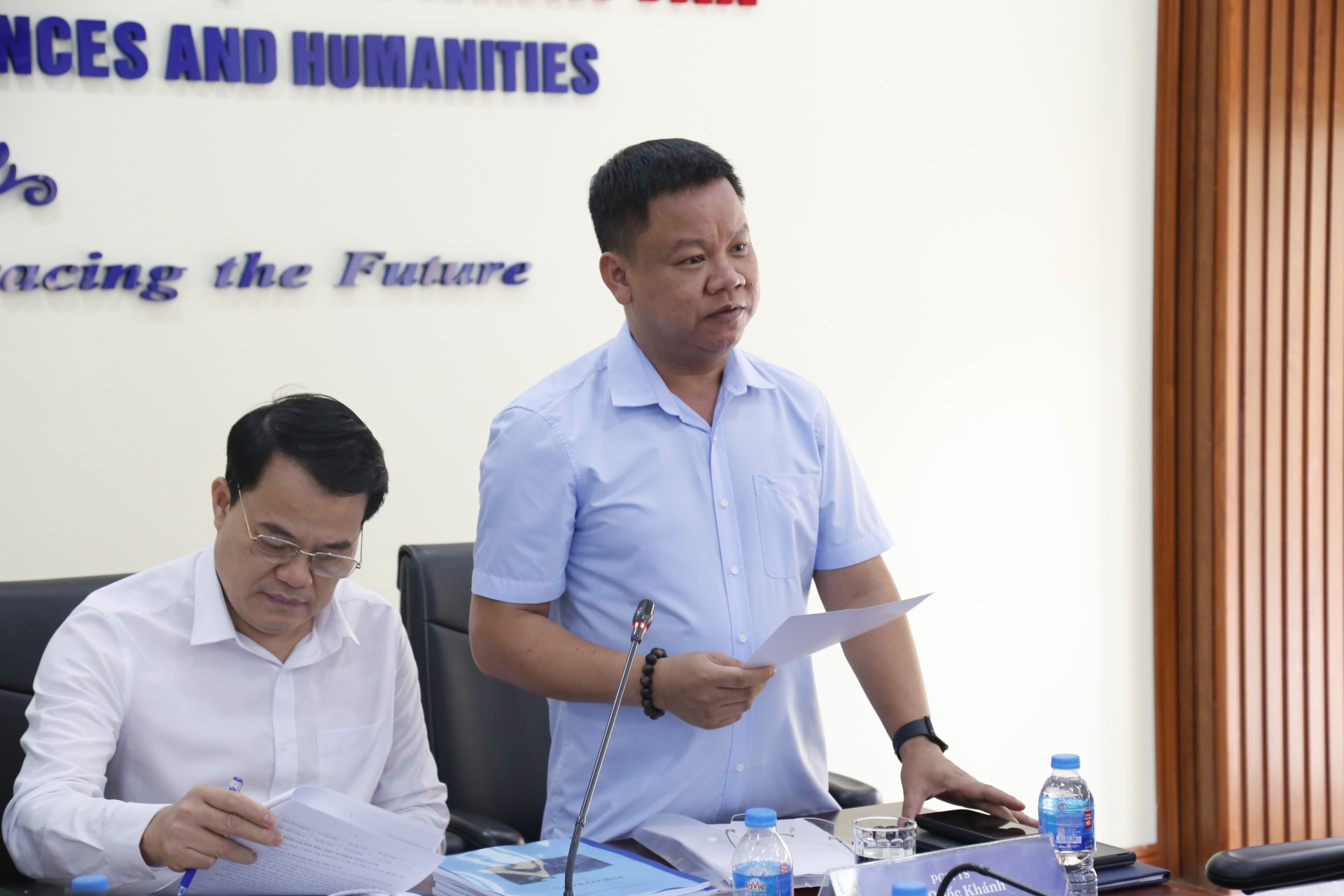
The scientific conference was attended by Assoc. Prof. Dr. Lai Quoc Khanh - Vice Rector of the University of Social Sciences and Humanities; Dr. Nguyen Cong Thao - Vietnam Academy of Social Sciences, Conference Sponsor; and Mr. Nguyen Van Thanh - Deputy Director of the Department of Ethnic Education, Ministry of Education and Training.
Speaking at the opening session of the conference, Associate Professor Lai Quoc Khanh, Vice Rector of the University of Social Sciences and Humanities, stated: One of the most important elements constituting an ethnic group and its culture is language. The diversity of languages has contributed to making Southeast Asia a region with countless unique and distinctive features within the colorful tapestry of humanity.
However, in the context of modernization and globalization today, the status and function of many ethnic minority dialects/languages in many Southeast Asian countries are facing existential challenges. The use of spoken and written languages of some ethnic minority communities is tending to shrink, or even disappear. This reality demands urgent measures and effective tools to preserve and promote these languages.
Vice Rector Lai Quoc Khanh emphasized: Preserving and promoting the linguistic characteristics of ethnic minorities in Vietnam has always been a top priority policy and guideline valued by the Vietnamese Party and State.
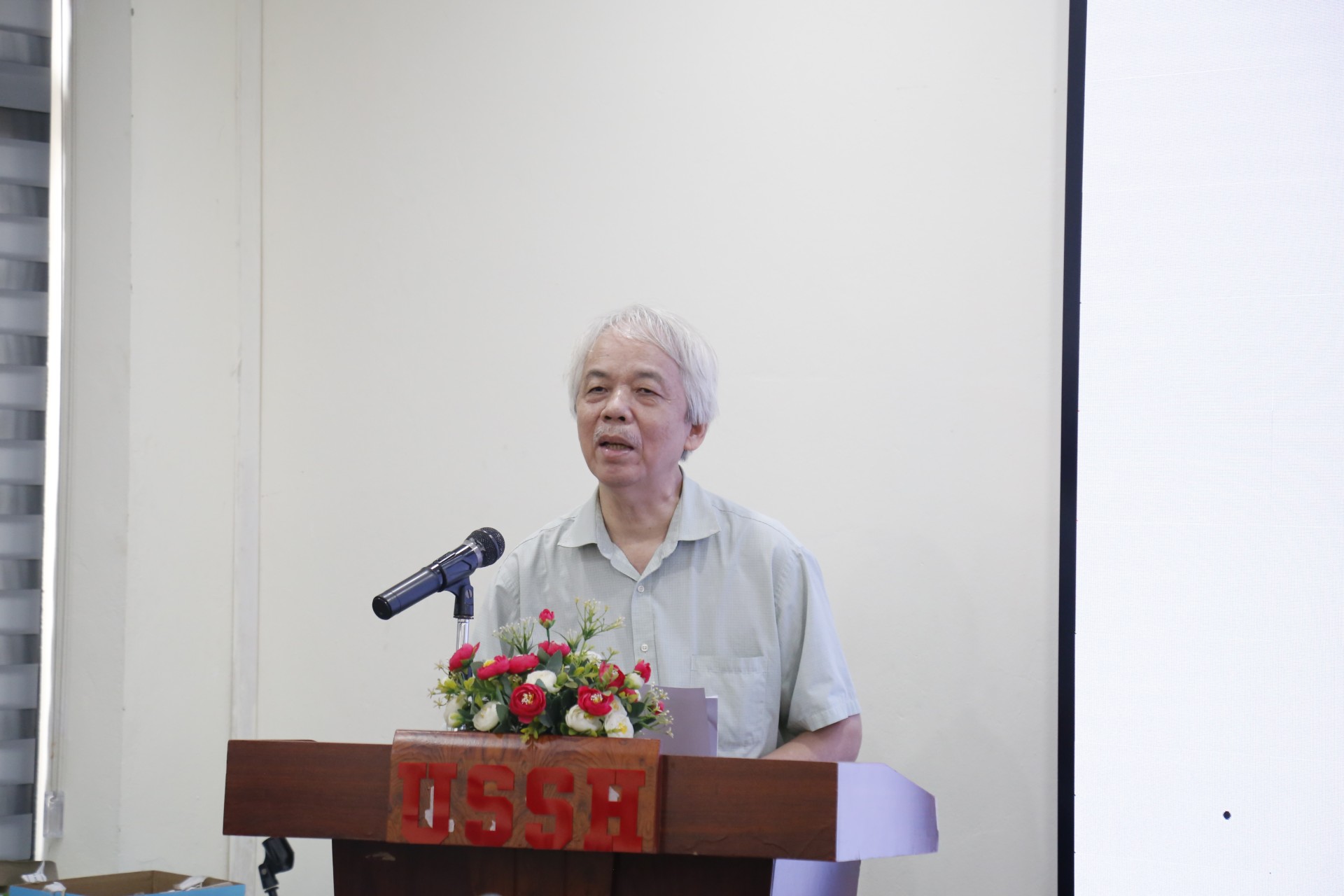
Associate Professor Dr. Ta Van Thong, Vietnam Academy of Social Sciences, presented his paper.
According to published studies, the Co Tu language does not have its own written script other than several Latin-based scripts developed since the 1950s. Its distribution across the two provinces of Quang Nam and Thua Thien Hue, along with the use of various scripts, has led to a lack of uniformity in writing systems within the Co Tu ethnic community.
To date, in addition to the 8 languages already implemented by the Ministry of Education and Training, there are still many other ethnic minority languages not yet on the list but which have been piloted by provincial Departments of Education and Training for inclusion in the official curriculum, including the Co Tu language.
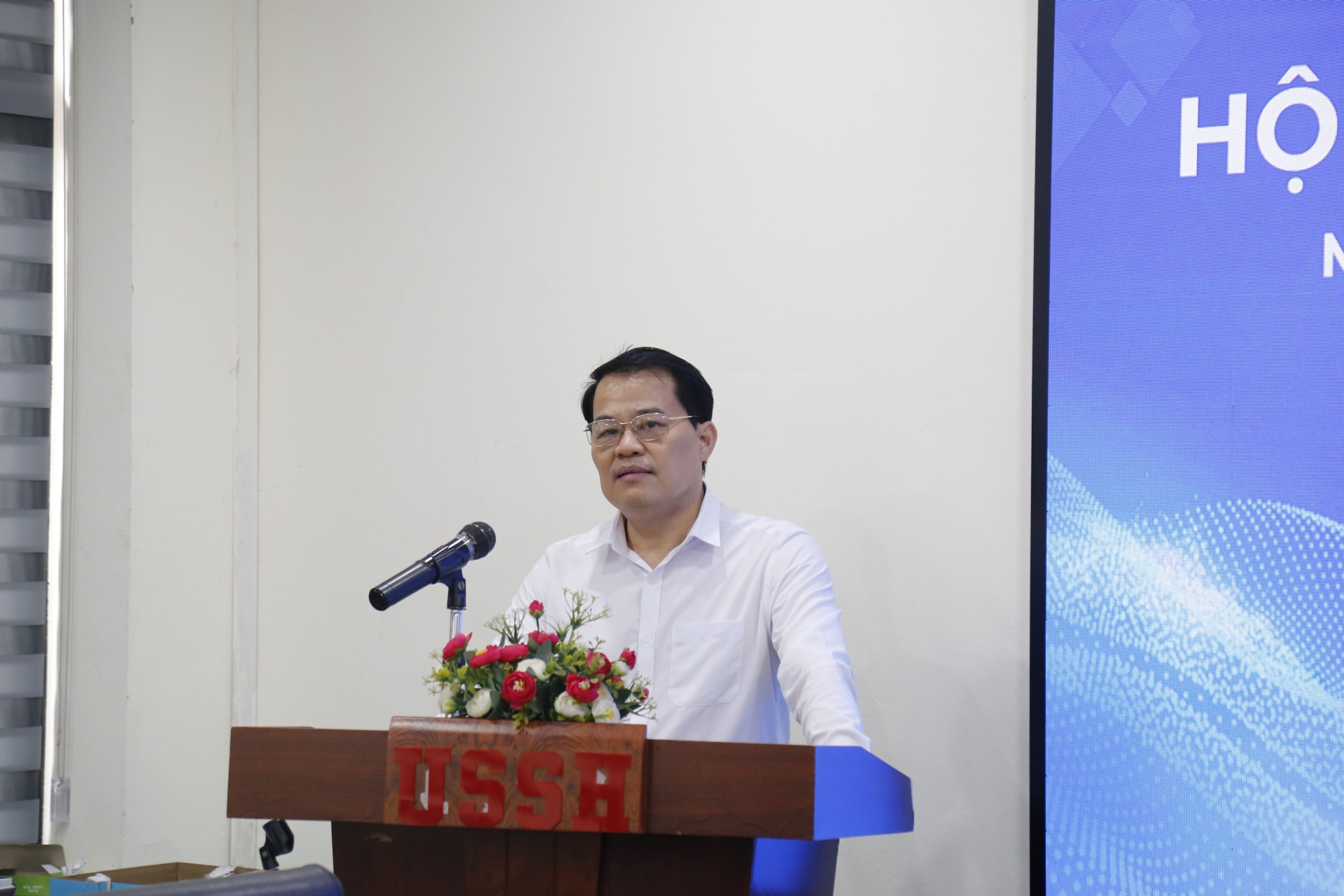
Mr. Nguyen Van Thanh, Deputy Director of the Department of Ethnic Education, Ministry of Education and Training, presented a paper on the actual conditions for teaching ethnic minority languages in general schools.
At this International Scientific Conference, the Organizing Committee received five important reports from authors including linguists, representatives of state management agencies, teachers of the Co Tu language in several localities, and intellectuals of the Co Tu ethnic group. In addition, there was participation from delegates from within and outside the University of Social Sciences and Humanities, as well as the Center for Vietnamese Language and Culture. The presentations included:
ButThe Katu script in Vietnam(Assoc. Prof. Dr. Ta Van Thong - Vietnam Academy of Social Sciences)
ButConditions for teaching ethnic minority languages in secondary schools, from policy to practice.(Mr. Nguyen Van Thanh - Deputy Director of the Department of Ethnic Education, Ministry of Education and Training).
ButThe situation regarding the use and teaching of the Co Tu language to ethnic minority communities in the mountainous districts of Quang Nam province in recent times.(Ms. Arâl Mai Tình - Principal of Tay Giang High School, Quang Nam)
ButCurrent situation and results of the pilot program for teaching written Katu language - Advantages and challenges in Thua Thien Hue province.(MSc. Cao Huu Khoa, Department of Education and Training of Thua Thien Hue Province)
ButAn introduction to the Katu script textbooks for grades 1 to 5 that have been piloted in Thua Thien Hue province: Reality and challenges.(Assoc. Prof. Dr. Nguyen Huu Hoanh, Hanoi University of Industry)
At the workshop, presentations by participating delegates analyzed and highlighted the current state of the Katu language writing systems and proposed options for a unified writing system for the Katu people in Vietnam. The workshop discussions also provided objective assessments of the teaching of the Katu writing system and the accompanying teaching conditions at different educational levels.
The opinions expressed at the workshop will guide the next specific activities to ensure the development of a program to officially introduce the Co Tu language into secondary education in Thua Thien Hue and Quang Nam provinces in the near future, aiming towards the creation of a single Co Tu alphabet in the future.