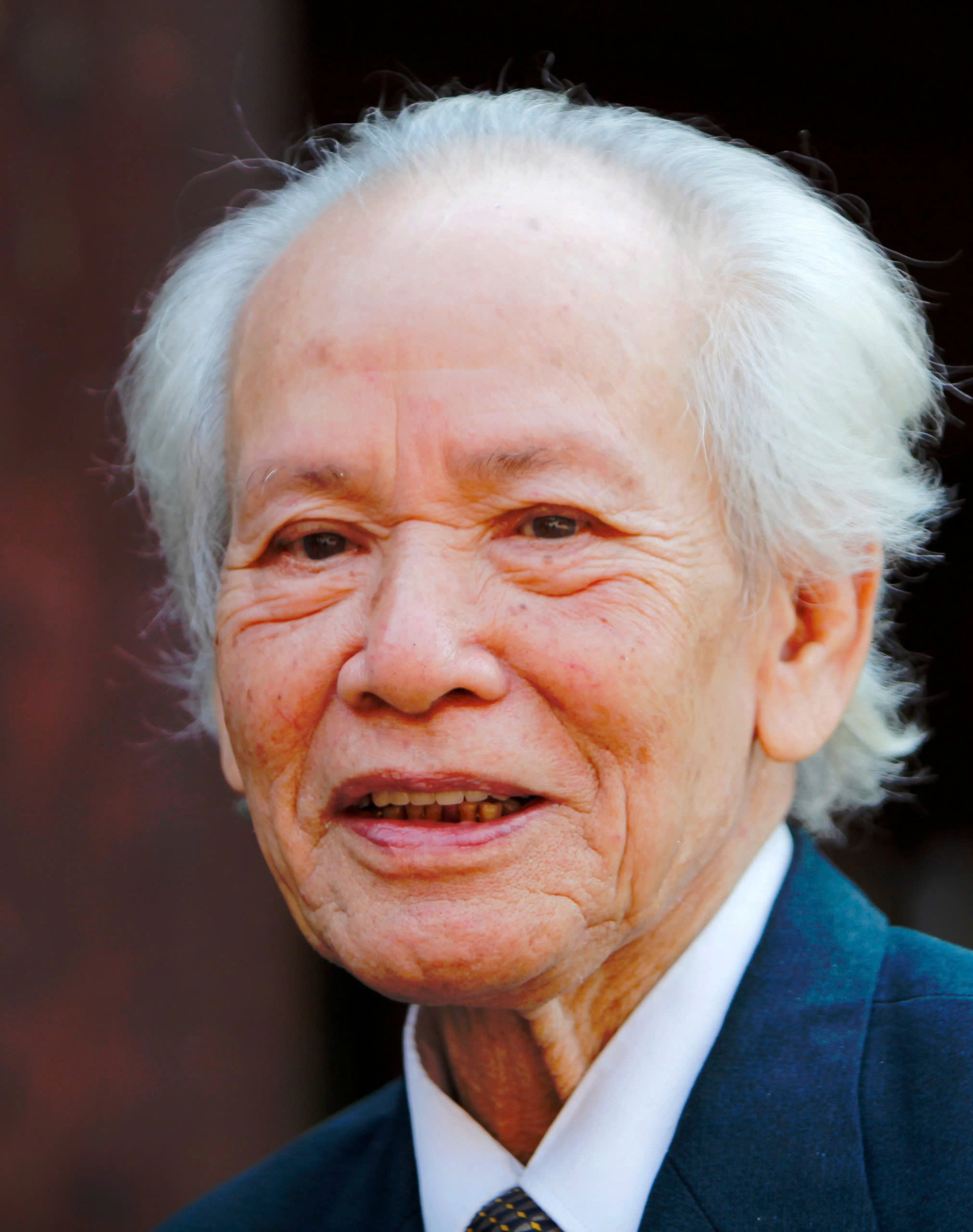
Professor Dinh Xuan Lam, a People's Teacher, was born on February 4, 1925, in Ha Tinh province, into a family of mandarins of the Nguyen dynasty. His father had served as the district chief of Yen Dinh, Thanh Hoa province. In the early 1930s, as a teenager, he was sent by his family to study in Hue, starting from primary school and then continuing on to secondary school.
After graduating with a full Baccalaureate in Philosophy and Literature from Hue National High School, Dinh Xuan Lam returned to Thanh Hoa and decided to pursue a teaching career, becoming one of the first high school teachers of the Democratic Republic of Vietnam immediately after the success of the August Revolution in 1945. During the resistance war against French colonialism, he both taught high school and participated in trade union work within the Thanh Hoa Education sector.
In late 1954, he was sent to Hanoi to study History and Geography at the Faculty of Literature, Hanoi Pedagogical University. After graduating in 1956, he was retained as a lecturer in History at Hanoi University (now the University of Social Sciences and Humanities, Vietnam National University, Hanoi) and worked there until his retirement (in 1990). After 1975, in addition to universities and academies in Hanoi, he was also invited to lecture at many universities in the southern provinces from Hue to Ho Chi Minh City. In the early 1980s, he was also invited to be an education expert in Madagascar and a visiting professor in the Netherlands and the Republic of France. During nearly four decades of teaching and research at the Department of History, he continuously strived for professional excellence, was awarded the title of Professor and People's Teacher by the State, and, notably, contributed to the creation of a school of historiography – the Hanoi University school.
For over half a century of teaching and scientific research (including after retirement), he remained deeply committed to the field of History, leaving a profound impression on colleagues and students through his lectures on modern Vietnamese history, the Can Vuong movement, and the characteristics of French imperialism, etc. Later, with his experiences and professional expertise, he came to understand even more that teaching is truly a noble profession. He once said: "If there is a next life, I would still choose to be a teacher."
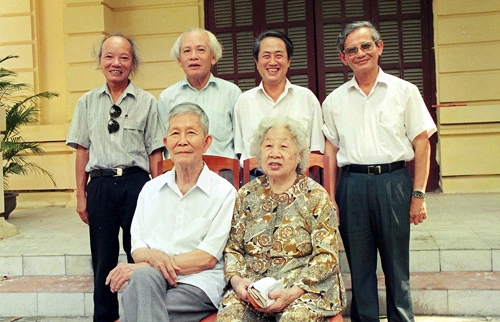
The late Professor Tran Quoc Vuong, Professor Dinh Xuan Lam, Professor Ha Van Tan, and Professor Phan Huy Le – the legendary "four pillars" of the History Department, Hanoi University (now the University of Social Sciences and Humanities, Vietnam National University, Hanoi) – with their teacher, Professor Tran Van Giau, and his wife.
*
As of 2015, in nearly sixty years of writing (from his time as a university lecturer in 1956 until the publication of his last work in 2015), he had published over 500 scientific works, including monographs, reference books, textbooks, guidebooks, and journal articles. His scientific activities were very broad and diverse in terms of research types and topics. In the field of History, Professor Dinh Xuan Lam's research topics were also very diverse, but all focused on the modern and contemporary history of Vietnam, with the following outstanding contributions:
1. Research to clarify the history of the struggle against French colonial aggression, especially the armed struggles of the Vietnamese people to protect and regain national independence from the second half of the 19th century to the beginning of the 20th century, typical examples include the Yen The peasant uprising, the anti-French movement in the Northwest region, the Ba Dinh base and the Hung Linh uprising in Thanh Hoa, the Huong Son - Huong Khe uprising and the Can Vuong movement in Nghe Tinh, etc.
2. The second contribution is reflected in studies on the life and career of President Ho Chi Minh, from his secret activities abroad to his ideology of national independence and, more broadly, his status as a national liberation hero and world cultural figure. Some of Professor Dinh Xuan Lam's studies are highly comprehensive in their assessment of the origins of Ho Chi Minh's patriotic and revolutionary ideology and his contributions to culture and politics.
3. Contributions to the study of historical figures. These figures were mostly patriotic scholars and intellectuals who resisted the French during the modern era. They were objectively assessed from multiple perspectives, contributing to a correct and comprehensive understanding of their lives, careers, and especially the contributions and roles of some key figures in the struggle against the French to protect and regain national independence from the late 19th century to the early 20th century. Most of these studies were later compiled and published as anthologies under the names of authors such as Chương Thâu, Đỗ Quang Hưng, or Trương Hữu Quýnh (Education Publishing House, Hanoi, 1988, 1992, and 2005).
4. Discover and introduce new documents related to some historical figures and patriotic and revolutionary movements from the late 20th century to before 1945, such as the life and death of Hoang Hoa Tham, the writings of Phan Boi Chau; some archival documents about Nguyen Ai Quoc in France; or leaflets of the Communist International (1924), some newly discovered Le Paria newspapers, or French government records on the Nghe Tinh Soviet movement (1930-1931), etc…
5. Another outstanding contribution of Professor Dinh Xuan Lam is demonstrated in academic exchange and dialogue with international scholars. Through book reviews published in specialized journals or at scientific seminars, Professor Dinh Xuan Lam has raised many issues for discussion and exchange of opinions with foreign scholars regarding the sources used, the methods of interpreting and evaluating certain events, figures, or contents of Vietnamese history mentioned in typical research works such as the book "Central and Northern Vietnam: The Years 1885 - 1896 (Scholars and Peasants Facing Colonial Conquest)" by Professor Charles Fourniau.
[1], the book "Phan Boi Chau and Vietnamese Society in His Time" by Professor Georges Boudarel
[2], the book "Ho Chi Minh - From Indochina to Vietnam" by Professor Daniel Hémery
[3], the book "Ho Chi Minh - From Revolutionary to Idol" by Professor Pierre Brocheux
[4](French); Or research works on Vietnam by Professor Shiraishi Masaya
[5](Japan) on Phan Boi Chau and the Vietnamese nationalist movement. In addition, there are several meticulously compiled monographs by foreign authors on the August Revolution in Vietnam, such as the work of Professor David G. Marr (Australia), "Vietnam 1945: The Quest for Power" (California, 1995), or the book "The Vietnamese Revolution of 1945: Roosevelt, Ho Chi Minh and de Gaulle in a World at War" by Professor SteinTonnesson (Norway), which Professor Dinh Xuan Lam and several researchers of the Vietnam Historical Science Association sincerely commented on and offered suggestions in a scientific symposium held in Hanoi at the end of the last century, in the spirit of critical and objective evaluation of both successes and areas requiring further research and discussion.
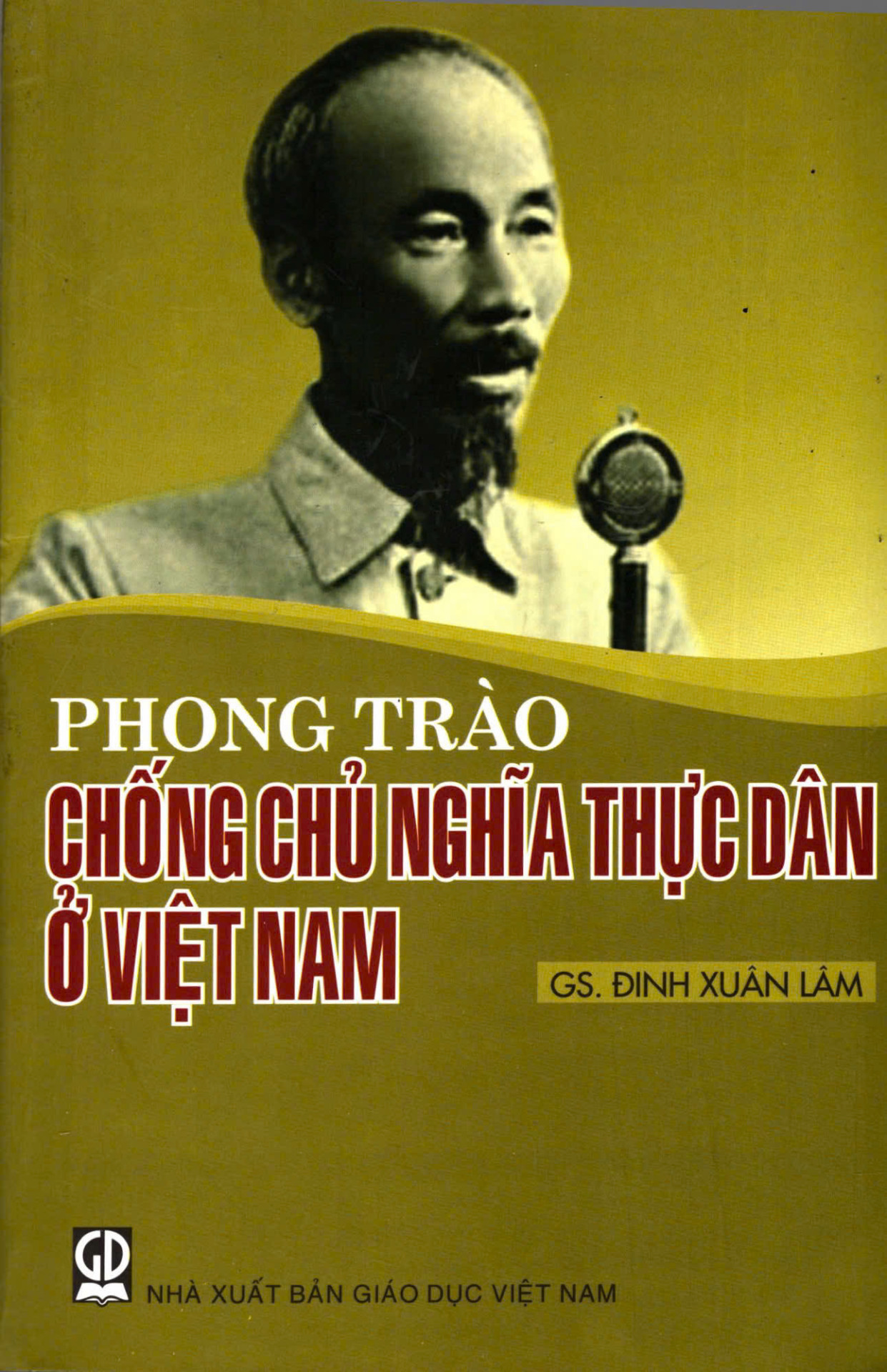
One of Professor Dinh Xuan Lam's outstanding works.
*
In over 500 published works and articles in various publishing houses and specialized journals (most notably the Journal of Historical Studies, the Journal of Military History, and the Journal of Party History), Professor Dinh Xuan Lam's primary and greatest concern was the conspiracies and tactics of the French colonialists in invading Vietnam and the anti-colonial struggle for independence of the Vietnamese people. In his research, he exposed and clarified the brutal actions, the evil and insidious nature of the invading enemy, while simultaneously analyzing and clarifying the role of patriotic traditions, national self-reliance, especially the strength of national unity and the resolute will of all strata of the Vietnamese people to fight for independence and freedom.
For historical figures, especially those whose stories are still shrouded in mystery, such as Nguyen Tri Phuong and Hoang Dieu, or those with conflicting opinions like Phan Thanh Gian, Ton That Thuyet, and Nguyen Van Tuong, Professor Dinh Xuan Lam's research has focused on exploiting various sources, particularly new ones, while employing a multi-faceted approach. He places the analysis within the specific historical context and conditions to examine the figures' viewpoints and actions, thereby drawing comprehensive, objective, and persuasive conclusions for the reader. These are unique, outstanding, and important contributions of Professor Dinh Xuan Lam in resolving the complexities and "bottlenecks" in historical research, contributing to a scientific understanding that is appropriate and closer to historical reality.
What is truly admirable and worthy of praise about educator and scientist Dinh Xuan Lam is that throughout his life, he almost never sought positions or status. During his teaching years in Thanh Hoa, he participated in educational activities, but only in community organizations. Later, when he became a lecturer at Hanoi University, the highest position he held was Head of the Department of Modern and Contemporary Vietnamese History and Chairman of the Trade Union of the Faculty of History. However, from a professional perspective, he was highly regarded by the academic community and his colleagues, and was recommended to be Director of the UNESCO Cultural Research Center and Vice President of the Historical Science Association for many years. He was also invited to participate in the scientific councils of many research institutions and scientific journals such as the Journal of Historical Studies, the Journal of Party History, the Journal of Vietnamese Military History, etc. Throughout his life, he was only passionate about his profession, diligently and wholeheartedly dedicated to teaching and scientific research. With his gentle, tolerant, and magnanimous personality, he was always approachable and friendly with his colleagues, and treated his students with respect and equality. It was this affection, respect, and equal treatment from him that helped young staff members become more confident in their studies and research, enabling them to quickly master specialized knowledge and gradually make academic contributions under his guidance and support.
*
Over 90 years old, with 60 years of writing and teaching, Professor Dinh Xuan Lam has demonstrated the creative spirit, upright character, and integrity of an exemplary educator and a true historian. He persistently pursued his scientific path, passionately pursued research, continuously learned, and resolutely defended correct viewpoints, but was also ready to adjust and change inappropriate assessments when exposed to new research methods or valuable new sources. Many of his studies are considered classics, not only providing insights and laying the foundation for the field but also guiding subsequent research. His lectures, presentations, and research works have contributed to solving many difficult and important problems in Vietnamese historiography. Simultaneously, through in-depth research and academic exchanges with foreign scholars, Professor Dinh Xuan Lam has proven the outstanding talent of a leading historian of international stature from Vietnam.
Highly appreciated for his contributions and dedication to the field of History, Professor Dinh Xuan Lam was awarded high honors by the Party and the State: the First-Class Labor Medal (2006), the Third-Class Independence Medal (2016). Notably, in 2021, the President of the Socialist Republic of Vietnam posthumously awarded him the State Prize for Science and Technology for his work.
The Anti-Colonialist Movement in Vietnam (Hanoi, 2015).
With his outstanding contributions, Professor and People's Teacher Dinh Xuan Lam deserves to be honored as a great scholar, one of the leading exemplary historians of the country in the latter half of the 20th century and the beginning of the 21st century.
----------------------------------------------
[1]These are the opinions exchanged with historian Ch. Fourniau in the article by Dinh Xuan Lam, "Upon reading the article 'The resistance against the French in Binh Dinh - Phu Yen 1858 - 1887 according to French sources (by Charles Fourniau)'", in the Magazine.
Historical research,Issue 2015, 1984. In 1990, Professor Dinh Xuan Lam again wrote an article "Reading books in Central and Northern Vietnam: The years 1885 - 1896 (scholars and peasants facing colonial conquest)", in the Journal of Historical Studies, issue 253 (1990).
[3] Dinh Xuan LamRead the book "Ho Chi Minh - From Indochina to Vietnam" by Daniel Hemery, in the Journal of Historical Studies, issue 263, 1992.
[4]Dinh Xuan Lam, Reading Ho Chi Minh's book – from revolutionary to idol (P. Brocheux), in Journal of Historical Studies, No. 335, 2004.
[5]Dinh Xuan Lam, "Reading the book 'The Vietnamese National Movement and its Relationship with Japan and Asia – Phan Boi Chau's Thought on Revolution and the World'" by Shiraishi Masaya, in the Journal of Social Sciences, No. 11, 2001.
Hanoi, Spring of the Year of the Snake 2025
On the occasion of the 100th anniversary of the birth of Professor, People's Teacher Dinh Xuan Lam (1925 – 2025)