Just three months after signing the Memorandum of Understanding in January 2025, the course was launched as a concrete commitment between the parties.
IPAMand partners. More than just a digital skills training program, it's a powerful affirmation: technology is no longer the privilege of programmers, but has become a universal power for all citizens.
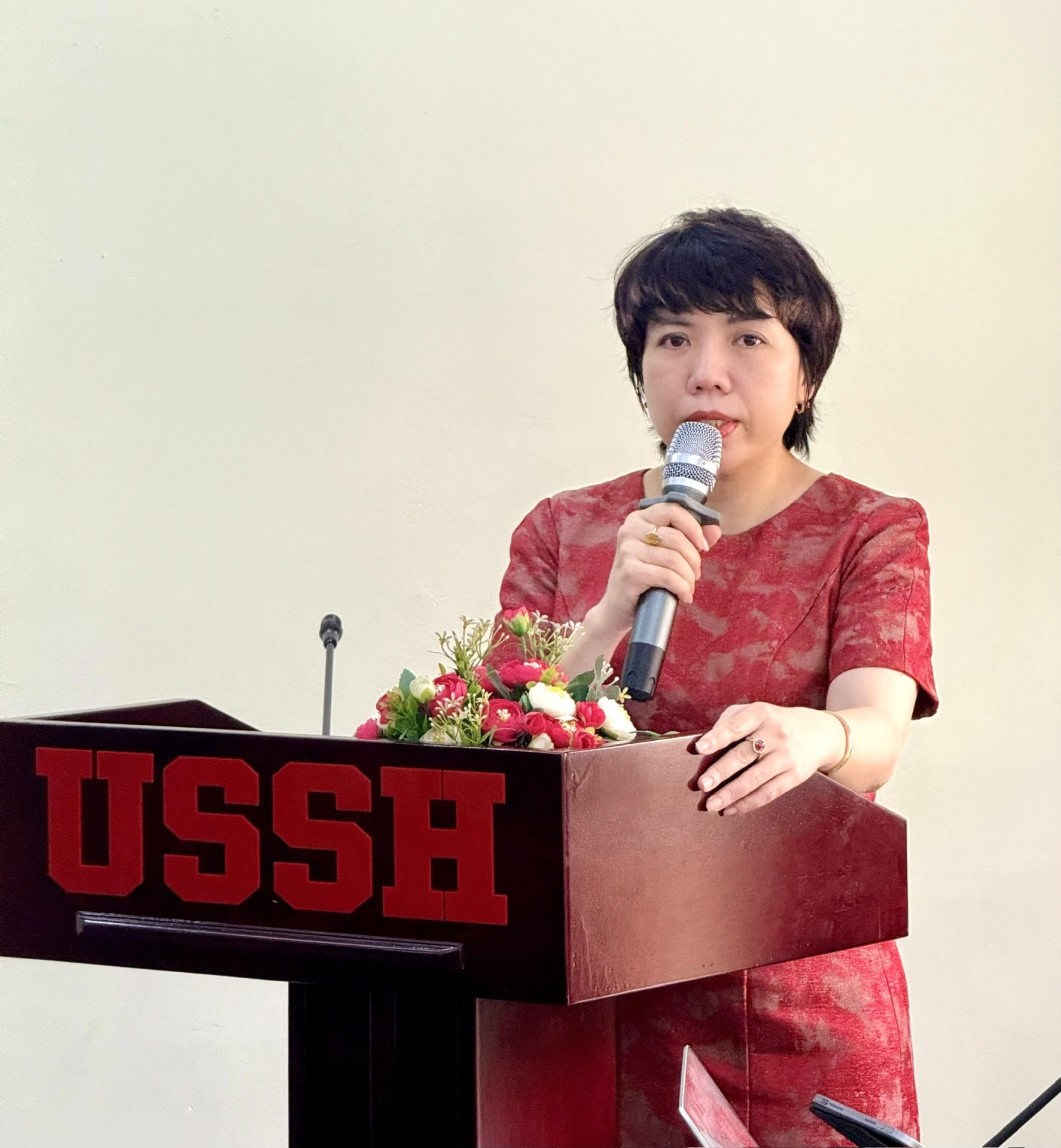
When technology becomes the common language of society.In her opening remarks at the training course, Associate Professor Dr. Do Huong Lan - Director of the Institute of Policy and Management - likened NoCode to a new wave of "digital literacy for the masses." If nearly 80 years ago, Vietnamese people learned to read and write to take control of their lives, today, NoCode is helping individuals "learn to write applications," creating their own tools to serve work, study, and entrepreneurship – without needing to program.
This course is part of the global Young Creators Program (YCP), which aims to equip students and faculty with digital skills, enabling them to proactively integrate, innovate their thinking, and actively participate in the government's strategy for developing the digital economy and digital society.
Assoc. Prof. Dr. Do Huong Lan delivered the opening remarks for the NoCode training course for lecturers and students.
From tech users to solution creatorsThroughout the course, students are introduced to the "learning by doing" method, practicing directly on the Zoho Creator platform to build simple applications such as: human resource management, job performance evaluation using MBO, community surveys, and progress tracking. With dedicated guidance from the expert team, many students created their first digital applications for the first time.
What is commendable is that the majority of the trainees are lecturers and students from the social sciences and humanities, without a technological background, yet they still learn quickly, are creative, and demonstrate great transformative capacity when inspired and given the right tools.
“This is the first time I’ve seen technology so accessible. The course was very useful and practical, helping me feel more confident in building tools for my research group,” shared one student.
According to Dr. Nguyen Thi Thu Huong, Deputy Head of the Faculty of Oriental Studies, this Nocode platform is very suitable for office work, especially in managing research topics, projects, or daily administrative tasks. “I hope that in the future, the program can expand its target audience, not only for lecturers or students, but also for specialists and staff in various departments to participate and apply it to their practical work. Besides that, I think if possible, YCP could collaborate with the University of Humanities to widely and comprehensively apply this platform, helping units within the university optimize administrative management in a more synchronized and efficient way,” said Dr. Nguyen Thi Thu Huong.
Humanistic Technology - Practicing ESG in EducationNoCode has proven to be more than just a tool; it represents a new way of thinking – vividly demonstrating the two pillars of Social and Governance in ESG: Socially (S), the course has contributed to enhancing the digital literacy of the community, breaking down technological barriers for non-specialists, promoting liberal education, and empowering individuals in the academic environment. Governingly (G), the applications built within the course are fully applicable to teaching, research, and administration – from classroom management and internal evaluation to the management of public institutions.
It's no coincidence that 96% of surveyed students rated the course quality as "satisfied" or "very satisfied"; nearly 95% were willing to recommend the program to others; and over 88% wanted to take an advanced course in the future. These numbers are vivid evidence of NoCode's positive impact on higher education.
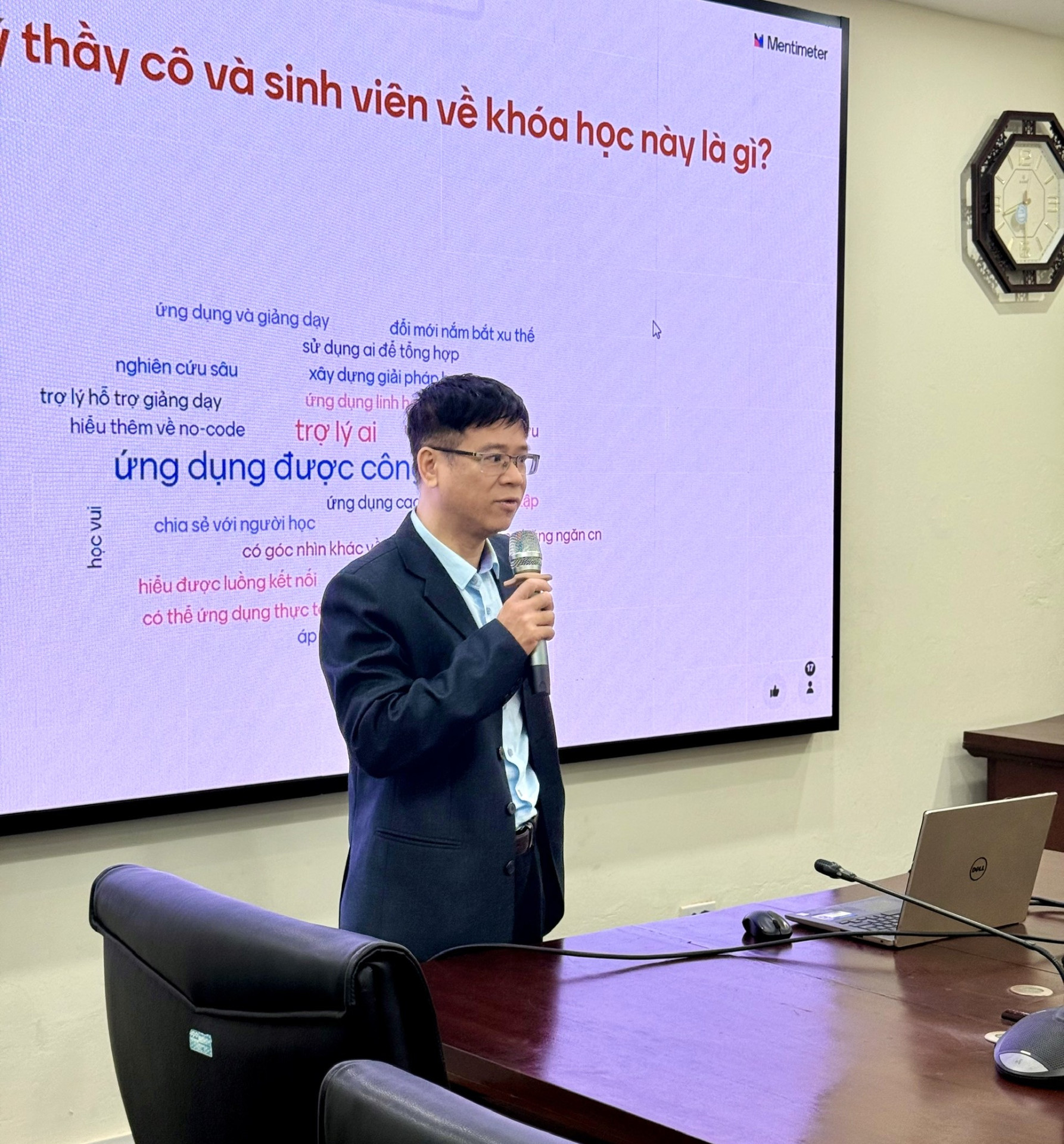
Lecturer Nguyen Duy Long represents i3 Network Systems and Citizen Developer.
Commitment to partnership - Building a sustainable digital futureThis NoCode training course did not conclude with a certificate awarding ceremony, but rather opened a long-term partnership between the YCP Team and IPAM. With the motto "leaving no one behind in digital transformation," YCP commits to:
- Continue supporting students for 45-90 days after the course, potentially extending up to a year, through coaching sessions and practical product implementation consulting.
- Provide official Zoho Creator accounts to students, according to the list provided by the school.
- Organize specialized workshops, technical support sessions, and group mentoring to help nurture and develop each idea.
In particular, the program also laid the foundation for building a team of Coaching YCP (Youth Council Professionals Program) right at USSH. Within the framework of the program, 15 lecturers and staff members and 10 students were awarded scholarships after rigorous evaluation rounds, selected from 45 submitted applications. This is not only a reward for their abilities and proactive spirit, but also a recognition of the pioneering efforts of the trainees in accessing and applying new technologies in the social sciences and humanities. The lecturers and staff members participating in the first course will receive in-depth training, gradually assuming the role of main instructors in subsequent courses, with direct mentoring from YCP experts in the first 2-5 classes. The ultimate goal is to help the university become self-reliant in training in humanities technology, expanding innovative programs applying technology in many fields.
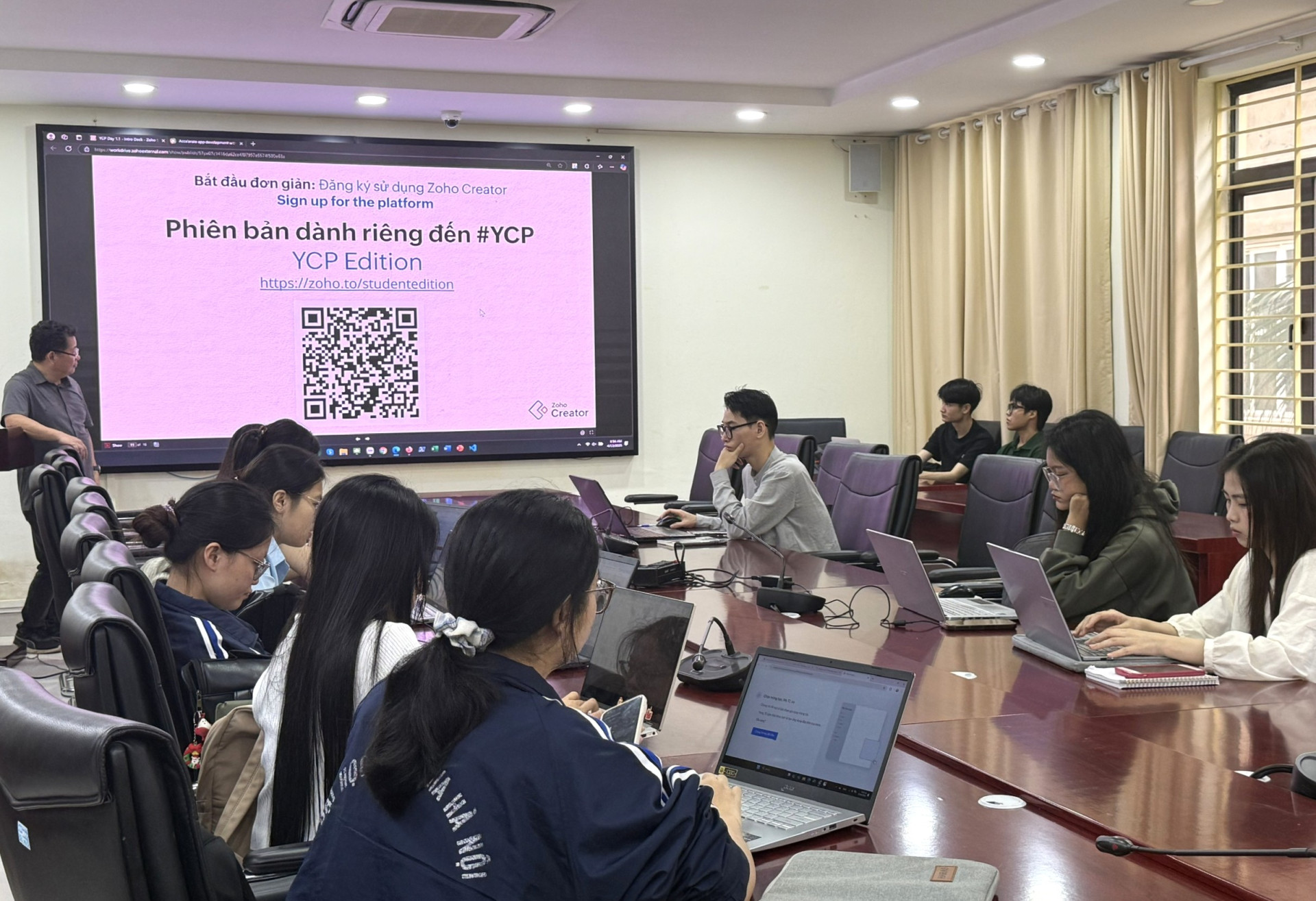
The trainees actively participated in the practical sessions during the course.
Closing a course - Beginning a journeyThe NoCode training course at the University of Social Sciences and Humanities is not simply a skills training activity. It is a declaration of action on technological equality, a catalyst for mindset transformation, and the seed of an innovative ecosystem with a humanistic, liberating, and technological identity.
With the concerted efforts of the university, technology partners, and expert teams, the journey to bring NoCode closer to students in the social sciences and humanities has only just begun – but it has already ignited confidence, inspiration, and proactiveness in the digital age.
"Technology is not exclusive to anyone – it's for everyone. Anyone can become a digital innovator if given the opportunity and the right guidance," as stated by Associate Professor Dr. Do Huong Lan at the closing ceremony of the training course.
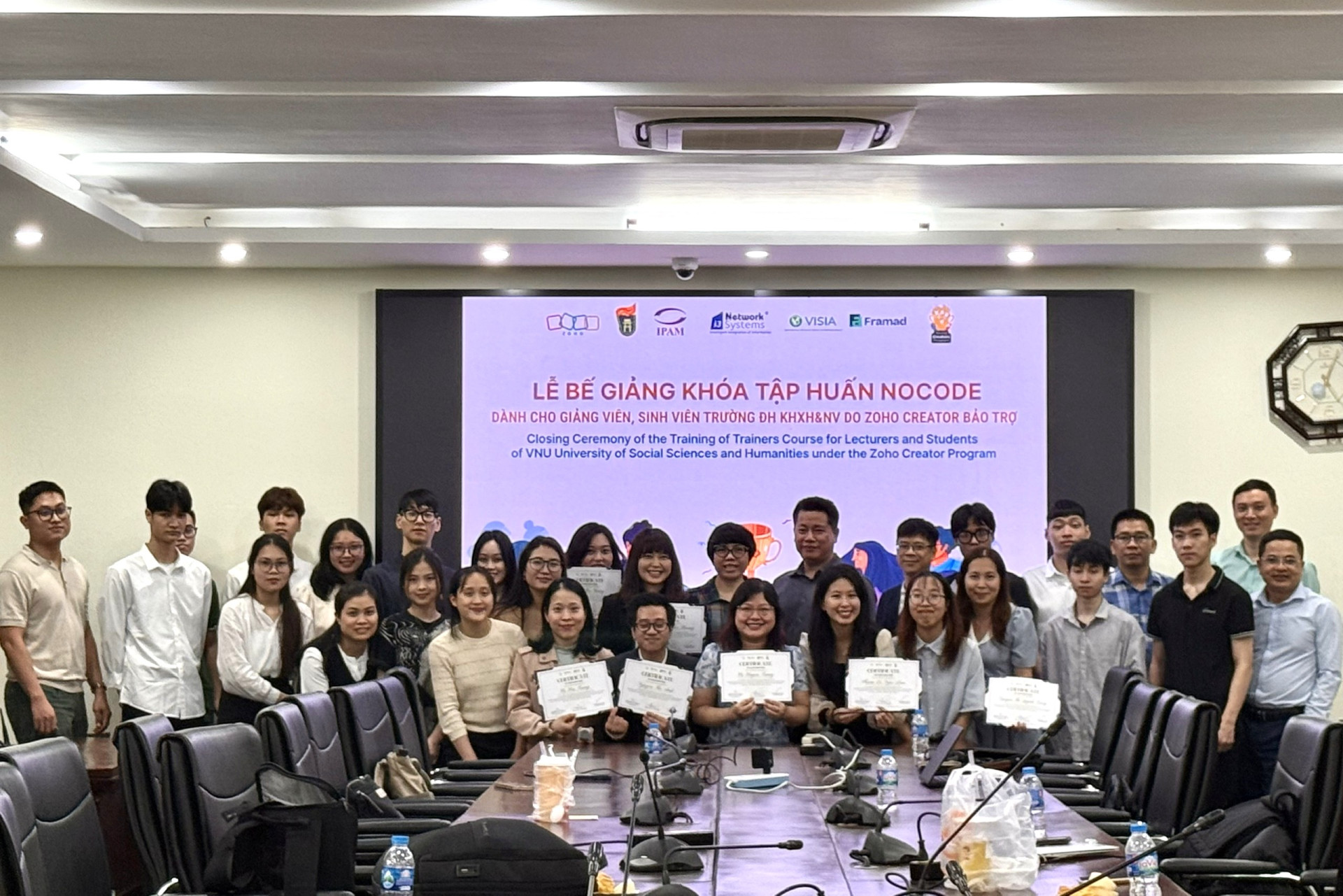
Faculty and students received certificates of participation at the closing ceremony.