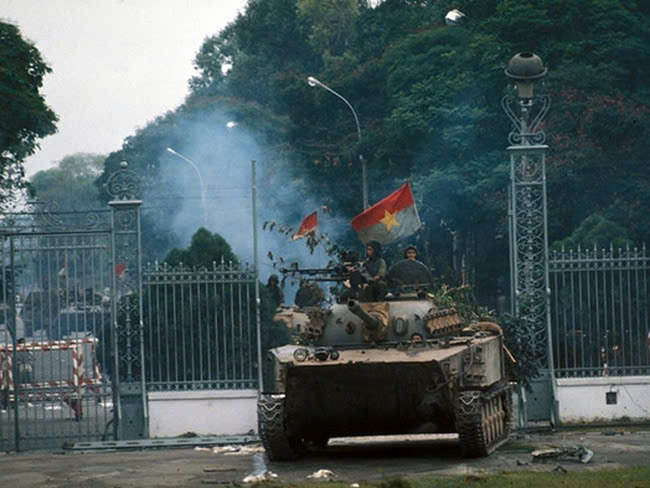
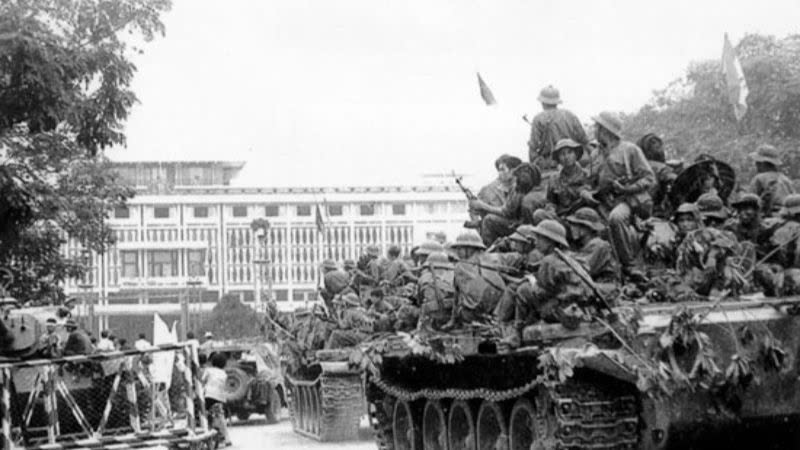
For a long time, Vietnam has been known as a resilient and indomitable nation, renowned in world history for its unprecedented victories. Rising from over a thousand years of feudal rule by the North, a unique phenomenon in human history, the Vietnamese people have steadily progressed into the Đại Việt civilization era. Their three great victories against the Mongol-Yuan empire, the most powerful and ferocious army in the world in the 13th century, demonstrate the comprehensive strength of that civilization.
For over a thousand years of independence, Vietnam has achieved countless glorious victories associated with heroic locations such as Bach Dang, Chi Lang, and Dong Da… But in modern times, a grave challenge befell a nation always proud of its glorious past achievements. Unable to keep pace with the changes of the times, under the rule of the Nguyen dynasty, from the latter half of the 19th century, Dai Nam gradually sank into backwardness, its national strength weakened, and the people became divided. After the fall of Hue in 1885, although the Can Vuong movement continued for a short time, the country's sovereignty effectively fell into the hands of the French colonialists. The long and arduous struggle of the Vietnamese people to regain independence can be considered to have begun from this point. This endeavor spanned a long and arduous 90 years, only being fully completed in 1975.
The great victory of the Spring of the Year of the Rabbit (1945) was a miracle, the pinnacle of glory for the Vietnamese nation in its struggle against foreign invaders. The value of the victory is unparalleled, but the price paid is immeasurable. Millions fell in two wars. The country was severely devastated, and the multifaceted consequences of a long and fierce war became a heavy burden that was not easily overcome immediately after the fighting ceased. This is not to mention the invisible but tangible difficulties of internal division and fragmentation within the nation, with a country having two regimes and a significant portion of its population having collaborated with the invading armies. Reconciliation and harmony cannot be achieved easily overnight, especially in a world divided into factions, with most countries caught up in international conflict… The great victory is the culmination of a tradition of unwavering resilience, becoming a message to the whole world, especially to those with hegemonic ambitions, that Vietnam is a nation that cannot be subdued. This glorious victory has become a value that contributes to the country's current standing.
The immense significance of the Ho Chi Minh Campaign extends beyond a military victory, however great. The historical magnitude of this event is multiplied many times over because the aspiration for national reunification, a sacred wish of the entire nation, was fulfilled.
If the country's unique geostrategic position has meant it has always faced the threat of foreign invasion, forcing successive generations to struggle against powerful and brutal invading armies, then its narrow, elongated shape stretching from North to South is a natural condition easily exploited by forces with divisive intentions. Before the Ben Hai River became the temporary demarcation line after the Geneva Accords in 1954, North and South Vietnam had been separated for centuries during the Trinh-Nguyen conflict. It was hoped that the 17th parallel would no longer be a dividing line and the country would be reunified after general elections in accordance with the Geneva Accords, but this did not happen. The situation became extremely dangerous and serious because the long-term division of Vietnam was part of the calculations of powerful nations.
After April 30, 1975, the entire nation enjoyed the full joy of victory and fulfilled the aspiration for national reunification. Years will pass, but the victory of our people in the resistance war against the US to save the country will forever be recorded in the nation's history as one of its most glorious chapters, a shining symbol of the complete triumph of revolutionary heroism and human intellect, entering world history as a great achievement of the 20th century, an event of immense international importance and profound contemporary significance. It was also a day of reunion for tens of millions of families. National reunification was not only a great victory in spirit but also laid the foundation for further strong development. Everything we have today was built directly from those historic last days of April.
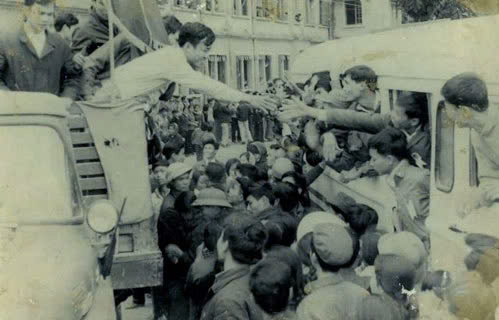
In the joyous celebration of its half-century anniversary, the Vietnam National University, Hanoi (VNU) is also immensely proud of its valuable contributions to the common cause of the entire nation. It has always received special attention from the Party and the State. Immediately after gaining independence, just over two months after the inauguration of the Provisional Government at Ba Dinh Square, on November 15, 1945, President Ho Chi Minh personally presided over the opening ceremony of the first course of the Vietnam National University, a multidisciplinary university reorganized under the Democratic Republic of Vietnam. Continuing this tradition, the University, the leading institution of higher education in Vietnam, has continuously received visits and encouragement from Party and State leaders, who have entrusted it with important tasks and created favorable conditions for its fulfillment. Particularly noteworthy are the events where the University had the honor of welcoming President Ho Chi Minh. Accompanying President Ho Chi Minh were also heads of state such as Chairman of the Supreme Soviet of the USSR Voroshilov (1957), President of India R. Prasad (1959), and President of Indonesia Sukarno (1959).
With the mission of training talented individuals and conducting fundamental scientific research, the foundation for the entire national science, Hanoi University was also personally entrusted by Prime Minister Pham Van Dong with the task of nurturing talent and establishing specialized programs to train many generations of outstanding scientists. The specialized Mathematics program was established in 1965, amidst the fierce war against the US. At that time, the Party and State leaders advocated selecting and training outstanding students and skilled scientists to prepare human resources for the construction and defense of the Fatherland.
The contributions of faculty and students from the units of Vietnam National University, Hanoi (VNU) are not limited to professional and academic fields, but also include the achievements of those who bravely fought in the fires of war. During the fierce years of war, teachers and students not only excelled in their studies but also went to the front lines to directly participate in combat. During the years of the war against the US, from the lecture halls of Hanoi University alone, 1,333 faculty and students put aside their studies to go to war. They bravely fought for the Fatherland, and many fell in the trenches as heroes. The whole country knows the name of the poet Le Anh Xuan (Ca Le Hien), a son of the resilient Ben Tre province, who was a student and later a lecturer in the History Department. He volunteered to fight in the South at the age of 24 and bravely sacrificed his life at the age of 28. He was posthumously awarded the title of Hero of the People's Armed Forces, and his immortal works, including "The Stance of Vietnam," received the State Prize for Literature and Art. Streets in Hanoi, Ho Chi Minh City, and Quang Binh have been named after him.
A contemporary of Ca Lê Hiến was Chu Cẩm Phong (Trần Tiến). After graduating from the Faculty of Literature at Hanoi University, he was also considered for a teaching position, but he resolutely requested to return to the South to fight and bravely sacrificed his life on his homeland. Moved by the courageous example of this student from Quảng province, Professor Hà Minh Đức, his former teacher, said: “Time does not silently pass but records the heroic examples, and Chu Cẩm Phong is one of those heroic individuals, a source of pride for Hanoi University.” During those arduous and fierce days, Chu Cẩm Phong continued to write and left behind outstanding works of poetry and prose. Later, these were compiled into a book of nearly a thousand pages titled "War Diary." His works were awarded the State Prize for Literature and Arts, and he was posthumously awarded the title of Hero of the People's Armed Forces.
Among the students who fell for the cause of liberating South Vietnam and unifying the country, there is a shining example: Martyr and Hero of the People's Armed Forces Hoang Kim Giao. This young man from Hai Phong was a student in the 6th cohort (1961-1965) of the Physics Department at Hanoi University. After graduation, he was assigned to work at the Technical Research Department, under the General Department of Logistics - Ministry of National Defense. Due to his outstanding abilities, he was sent to study in the Soviet Union. However, at that time, the war of destruction was entering its most intense phase. Millions of tons of bombs and ammunition, including magnetic mines and torpedoes, were dropped, disrupting transportation and supplies to the battlefield, significantly impacting the resistance.
Faced with this situation, Hoang Kim Giao undertook research on using electric fields to defuse magnetic bombs. In the midst of wartime shortages, he went directly to the front lines of Zone 4, where the American imperialist bombing campaign was most intense, and together with several comrades, successfully experimented with his research right in the heart of the war zone... Applying the research results to practice, he directly faced death hundreds of times and personally defused 72 unexploded bombs, including 40 magnetic bombs. But at the end of 1968, Hoang Kim Giao bravely sacrificed his life at the age of 27, leaving behind many unfinished plans and dreams for his research projects...
Hoang Kim Giao's work, "Destroying magnetic mines and magnetic bombs to ensure traffic flow 1967-1972," was awarded the Ho Chi Minh Prize for Science and Technology, first round (1996).
During those years, countless other brothers and sisters also perished on the battlefield. The school and friends still remember the names of Nguyen Trong Dinh, Ngo Van So, Pham Ngoc Tuan, Nguyen Van Thac… Each had their own personality, but all the students who went to war shared a common trait: optimism and romanticism. To this day, no one has been able to explain why Nguyen Van Thac, in a letter to his girlfriend from 1971, said he would answer her question, "What is happiness?" on April 30, 1975 (?). Truly miraculous!
These outstanding students of the university never had the chance to reunite with their friends and family, but they bravely sacrificed their lives for the cause of national liberation. To the Fatherland, they are immortal at the age of twenty. To the University, their names will forever remain in the glorious tradition of our beloved Hanoi University.
After the complete liberation of South Vietnam, an unimaginable mountain of work arose. One of these was the takeover and reorganization of universities in the South. At the request of the Ministry of Higher Education and Vocational Training, Hanoi University established a delegation to organize training courses for faculty and students of the Faculty of Literature and the Faculty of Science (later reorganized into Ho Chi Minh City University). After several deployments, Hanoi University sent 112 staff members to reinforce the universities in the South, including 12 leaders and 100 teaching staff (31 of whom held associate doctorates).
Students from the Faculty of Literature and the Faculty of Science, two major universities in Saigon, still vividly remember the image of two professors from the North who came to manage the universities. Both were from Hanoi University. Associate Professor Dr. Ly Hoa, a native of the Mekong Delta, who served as Vice-Chairman of the Faculty of Science and later became the first Rector of Ho Chi Minh City University, was wounded during the resistance war against the French and later trained and matured in the field of Physics. Professor Dr. Phan Huu Dat, former Head of the History Department at Hanoi University, was entrusted with the responsibility of Head of the Faculty of Literature. Along with these two professors, many other university staff members were transferred to the South to participate in management work, such as Associate Professor Dr. Nguyen Quoc Loc, Vice-Rector of Hue University, and Associate Professor Dr. Nguyen Gia Phu, Head of the History Department at Da Lat University…
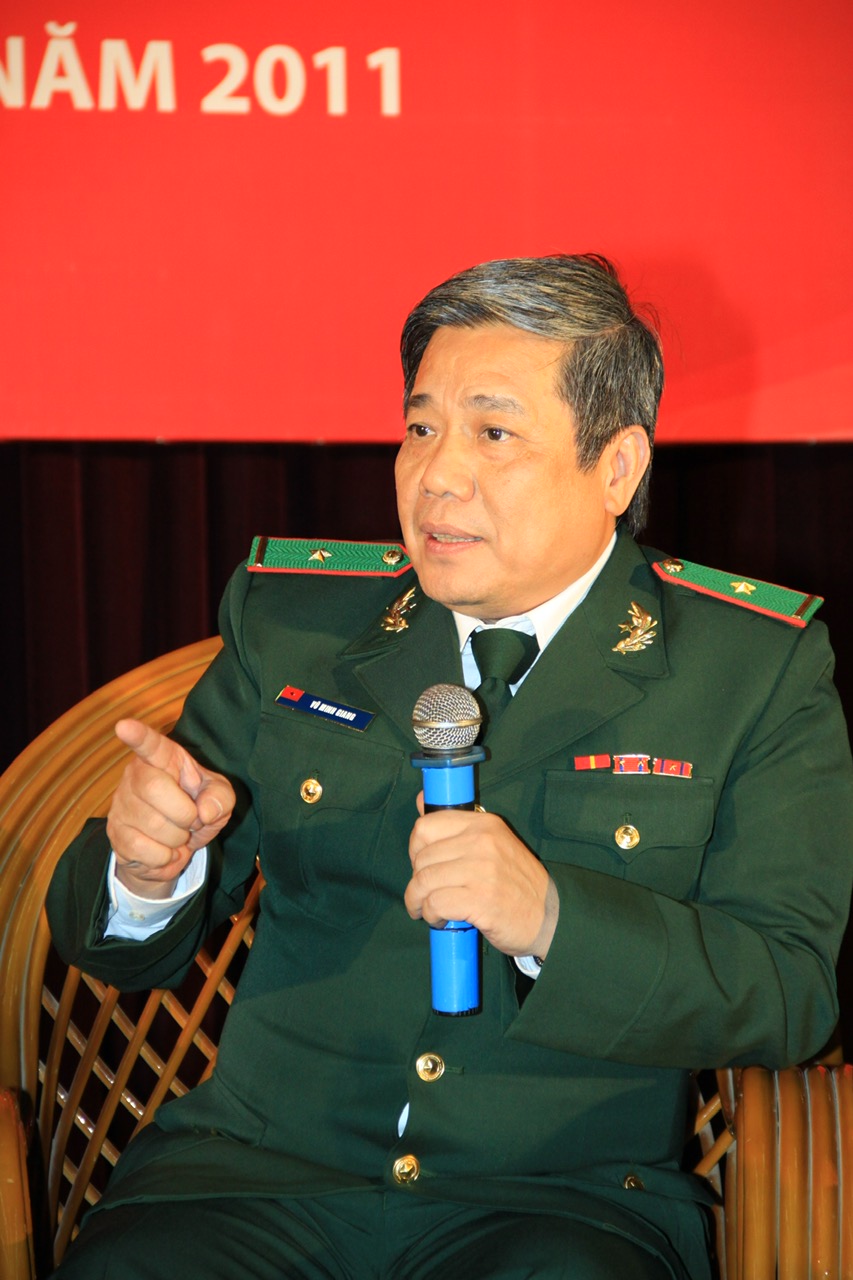
Vu Minh Giang, a fourth-year history student at the University, enlisted in the army on January 10, 1972, when the war was entering its most intense phase.
Half a century has passed, but every time we commemorate the great victory, the national celebration, and joyfully recall the milestone of reunification, every Vietnamese person is filled with sacred feelings mixed with pride and profound gratitude for those who sacrificed themselves for the country. In this shared victory, Vietnam National University, Hanoi (VNU) has made commendable contributions. The entire nation is facing a new era of progress; our glorious history will be a solid foundation for us to reach the pinnacle of glory, fulfilling the aspirations of generations and the wish of President Ho Chi Minh: Vietnam must rise to stand shoulder to shoulder with the great powers of the world.