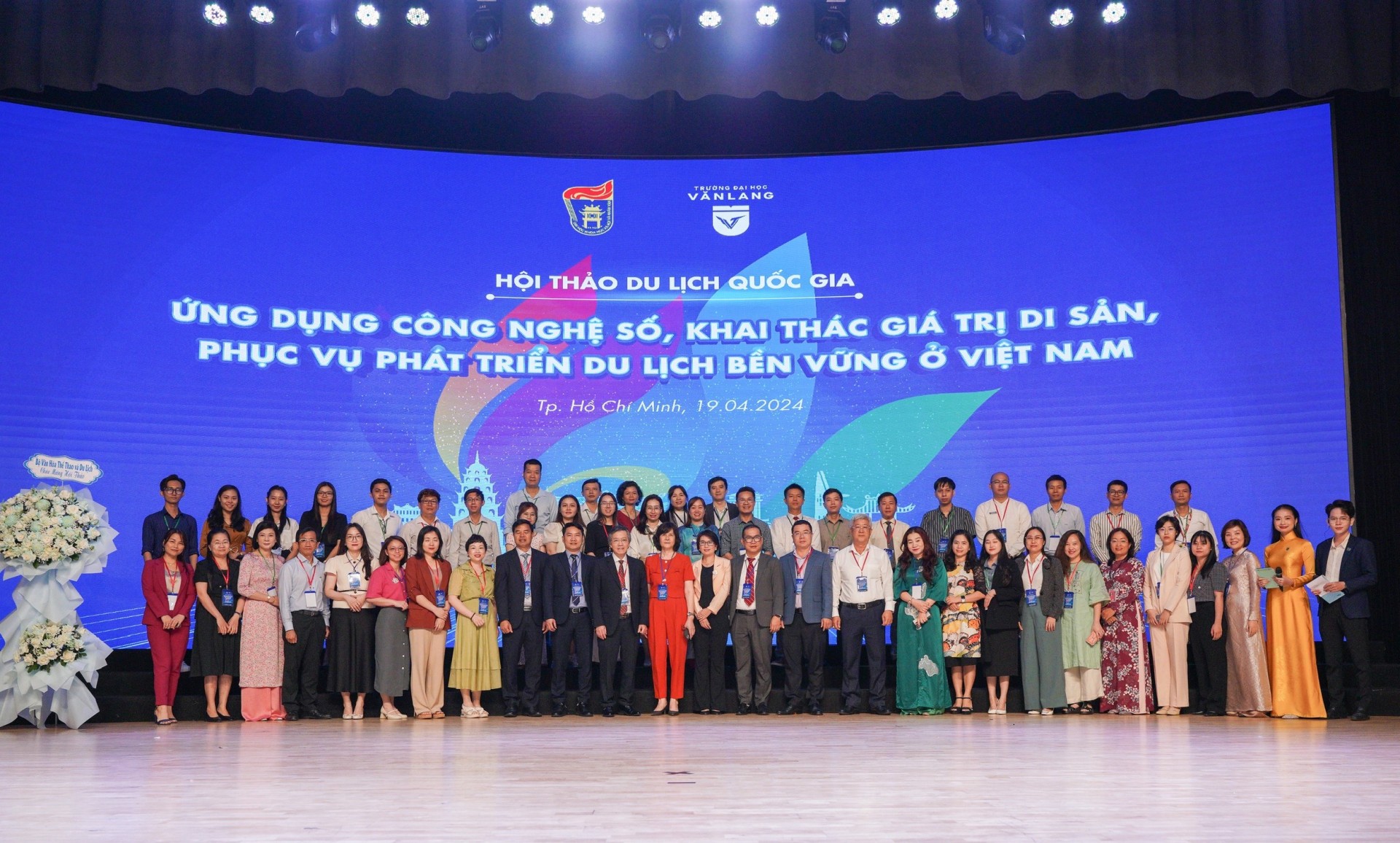
The workshop serves as a forum for experts, businesses, and research institutions to meet, exchange information, assess new research trends, and propose improvements for Vietnamese tourism. Simultaneously, the workshop encourages universities to share experiences in improving the quality of scientific research, thereby applying research achievements to practice and contributing to the sustainable development of the national tourism industry.
The workshop revolved around three key themes: the application of digital technology in tourism; leveraging the value of heritage in tourism activities; and sustainable tourism development, with many valuable contributions from experts, scientists, and policymakers.
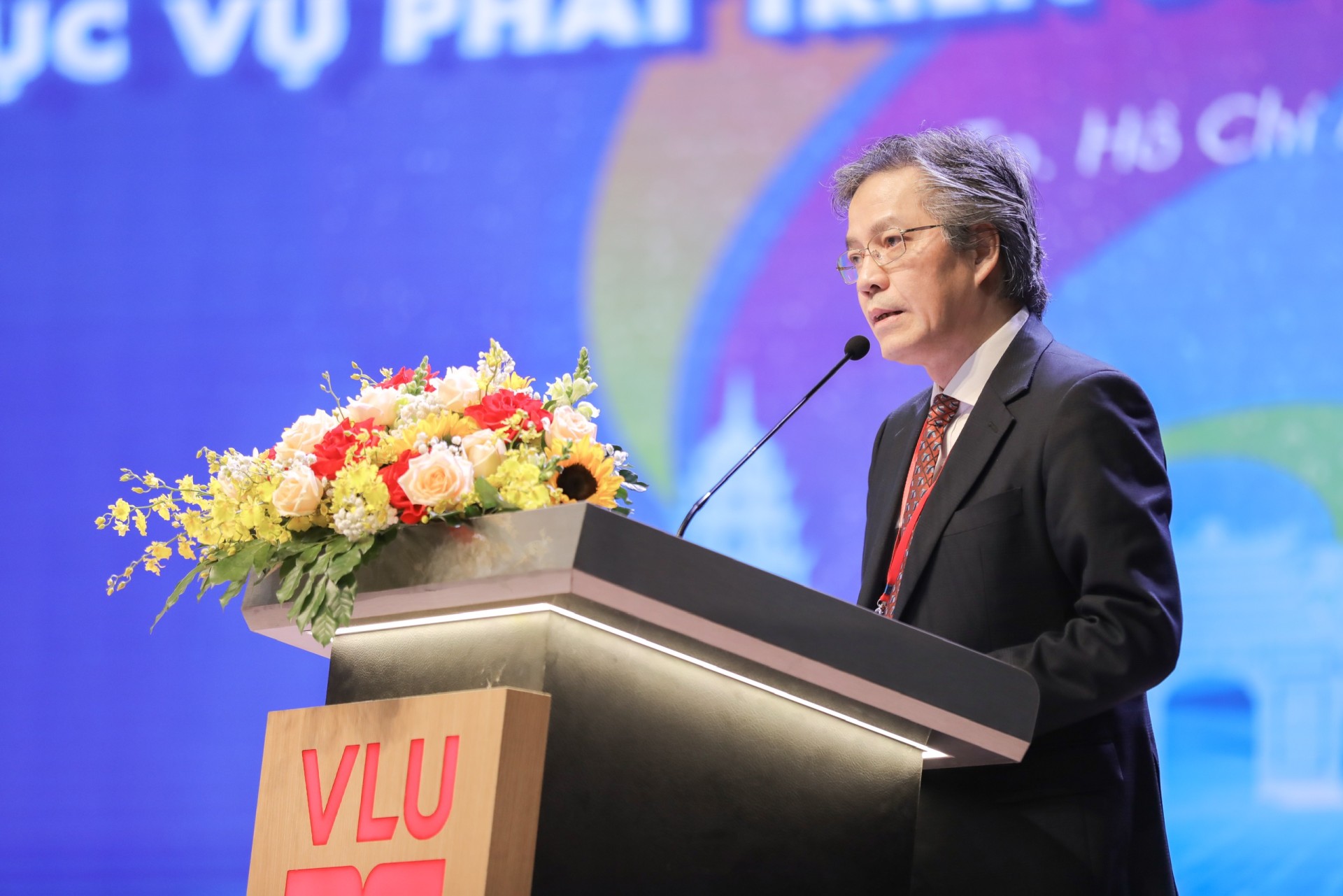
Assoc. Prof. Dr. Pham Hong Long - Head of the Department of Tourism Studies, University of Social Sciences and Humanities, Vietnam National University, Hanoi, presented a paper at the Conference.
In his presentation at the conference, Assoc. Prof. Dr. Pham Hong Long, Head of the Tourism Department, University of Social Sciences and Humanities, Vietnam National University, Hanoi, stated that to develop sustainable tourism, the tourism industry needs to focus on tourism carrying capacity; clean and renewable energy; and carbon-reducing tourism. "In addition, we need to pay attention to climate change, sustainable tourism development policies, and the circular economy. Sustainable tourism is tourism activities that aim to bring economic benefits, create jobs for the community, and satisfy the diverse needs of all participants in tourism… based on the exploitation of resources; while also being conscious of investing in the preservation, conservation, and maintenance of the integrity of natural resources, ensuring a clean environment; and linking the responsibilities and rights of the community in the exploitation, use, and protection of resources and the environment," Assoc. Prof. Dr. Pham Hong Long said.
According to Mr. Hoang Ngoc Hien, Deputy Head of the Tourism Faculty at Van Lang University, to address the limitations and challenges in developing sustainable tourism, the Vietnamese tourism industry needs to invest in the application of digital technology. This includes focusing on applying digital technology directly in the training programs of universities, in each course related to sustainable tourism development; and at the same time, universities need to strengthen cooperation in training on the application of digital technology in tourism by linking with international schools and leading experts.
Mr. Le Anh Tuan, Director of the Training Department, Ministry of Culture, Sports and Tourism
Mr. Le Anh Tuan, Director of the Training Department of the Ministry of Culture, Sports and Tourism, highly appreciated the workshop for closely adhering to the pressing issues of the industry. Currently, the application of smart tourism still faces many challenges, requiring those working in the tourism sector to find solutions and propose appropriate directions to state management agencies. We need to focus on internal resources, general infrastructure, policy mechanisms, human resources... especially the effectiveness of state management in tourism.
Mr. Tuan suggested several practical applications that could be adopted in Vietnam's tourism industry, such as robot hotels and facial recognition technology to maximize the visitor experience. He also mentioned systems like automatic door access, check-in within 3 seconds, or opening room doors, making purchases, and paying with just a smile.
The papers presented at the conference are printed in the Proceedings of the 2024 National Tourism Conference, with an ISBN published by Hanoi National University Publishing House, aiming to amplify the value of the conference and disseminate the knowledge and research experience of experts, scientists, researchers, and lecturers to the professional community.
The press reported on the event:Online Law:
Sustainable direction for Vietnam's tourismMisinform:
Applying smart technology to develop sustainable tourism.Saigon liberated:
Applying digital technology to develop sustainable tourism.