The delegation included Dr. Ngo Tuan Thang – Deputy Head of the Faculty of Politics and International Studies, Dr. Nguyen Van Dap – lecturer in the Faculty, academic advisor for the K68 International Studies program, students, and representatives from the partner company organizing the practical training program.
Representing the Consulate General of Vietnam in Shanghai, Mr. Tran Huy Hung extended a warm and thoughtful welcome to the delegation. During the meeting, the delegation listened to presentations on the functions and duties of Vietnamese diplomatic missions abroad, as well as their role as a bridge promoting cooperation between Vietnamese localities and Shanghai and neighboring provinces. This provided the delegation with updated and deeper insights into the regional situation, citizen protection efforts, and information on career opportunities and the necessary skills to become a future diplomat.
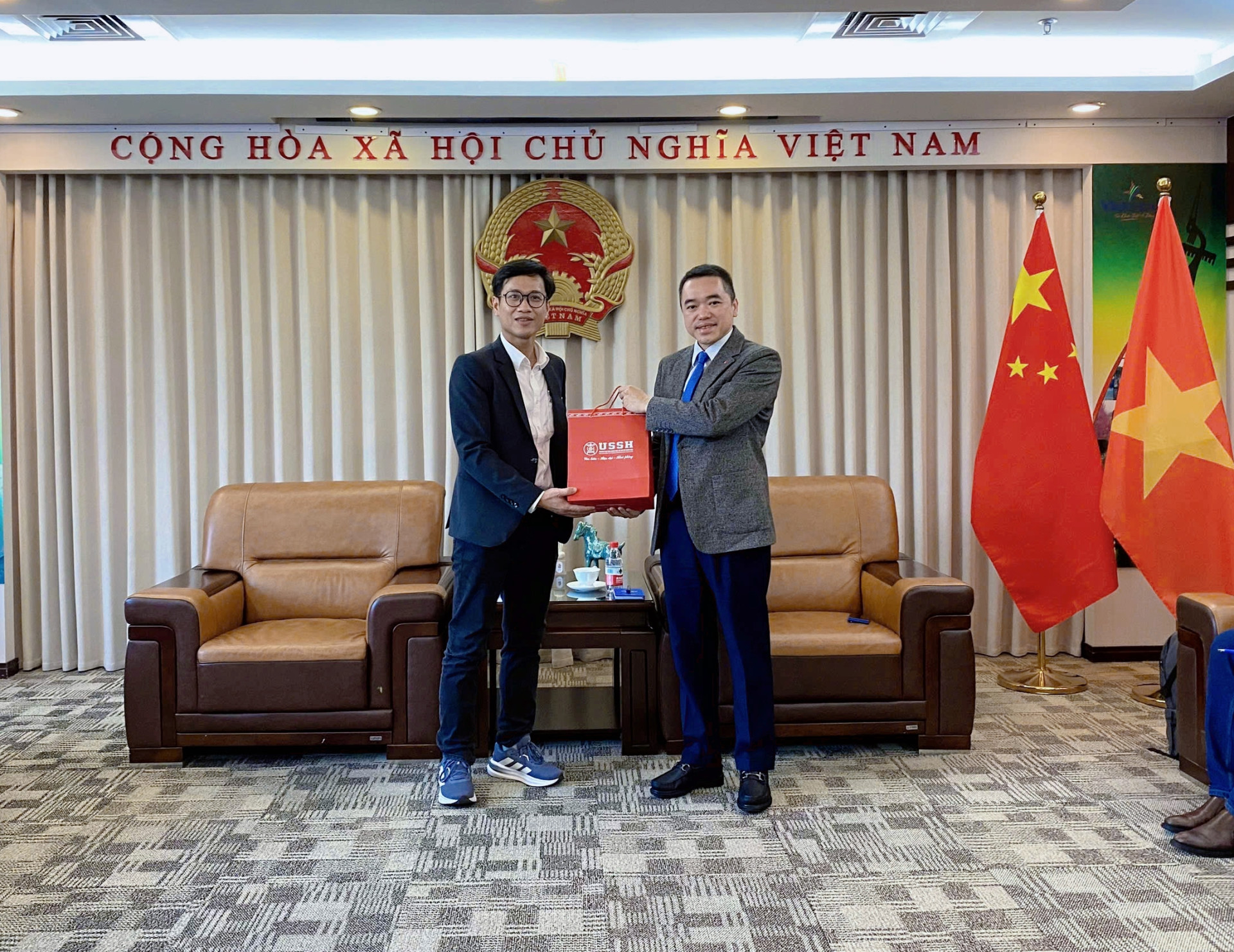
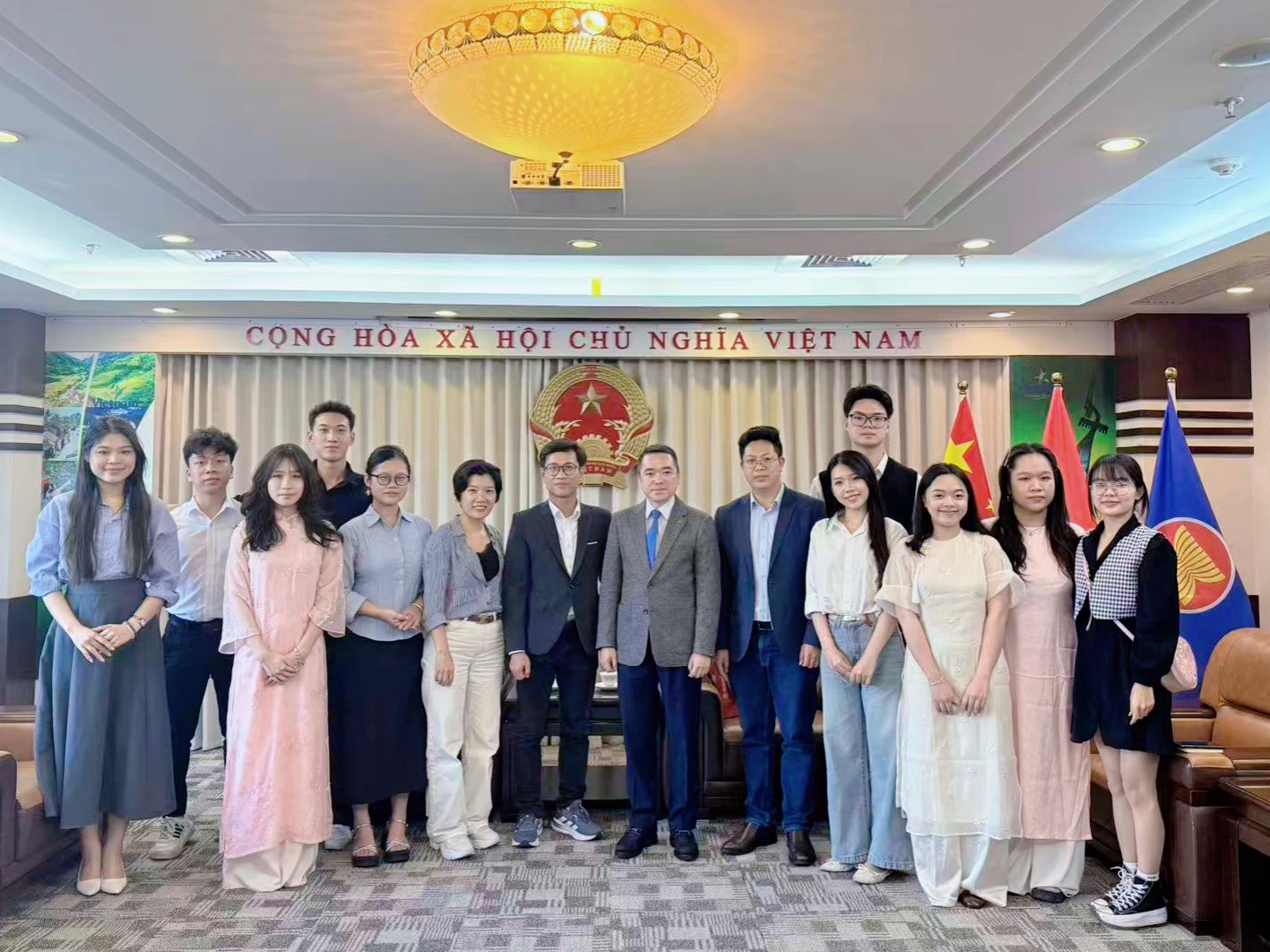
On behalf of the delegation, Dr. Ngo Tuan Thang introduced the practical overseas content of the training program as well as the Faculty and the University. As a reputable institution in training in International Studies and Political Science for over 30 years, the Faculty and the University are very ready to meet the training and professional development needs of officials working in foreign affairs.
The exchange continued in an open and friendly atmosphere. Many questions from lecturers and students about the regional situation, bilateral relations, and career opportunities and work experiences in an international environment were answered thoroughly by the staff at the Consulate General.
With the new content added to the program, the field trip not only helps students gain more practical perspectives related to their majors but also contributes to enhancing their understanding of foreign affairs and Vietnam's position in the context of international integration. This will certainly be a great source of motivation for the students of the Faculty of Politics and International Studies to continue studying, training, and shaping their global thinking in the future. For the Faculty and the University, this will also be an effective channel for connecting with stakeholders in promoting high-quality training, contributing to the realization of the University's development strategies in the new phase.
Author:Department of Politics and International Studies
Newer news
Older news

