Attendees at the presentation included: from central and local government agencies, Assoc. Prof. Dr. Le Anh Tuan (Deputy Head of the Training Department, Ministry of Culture, Sports and Tourism), Mr. Nguyen Cao Tan (Deputy Director of the Department of Culture and Sports of Ninh Binh province), Dr. Pham Thi Khanh Ngan (Information and Documentation Department, Department of Cultural Heritage); from cultural experts and researchers, Prof. Dr. Le Hong Ly (Former Director of the Institute of Cultural Studies, Vietnam Academy of Social Sciences), Prof. Dr. Nguyen Quang Ngoc (Director of the Institute of Vietnamese Studies and Development Science, VNU; Head of the Department of Cultural Studies and Vietnamese Cultural History - Faculty of History, University of Social Sciences and Humanities); from the University of Social Sciences and Humanities, Assoc. Prof. Dr. Vu Van Quan (Head of the Faculty of History), Assoc. Prof. Dr. Tran Thien Thanh (Faculty of History), Assoc. Prof. Dr. Pham Thu Hoa (Deputy Head of the Training Department).
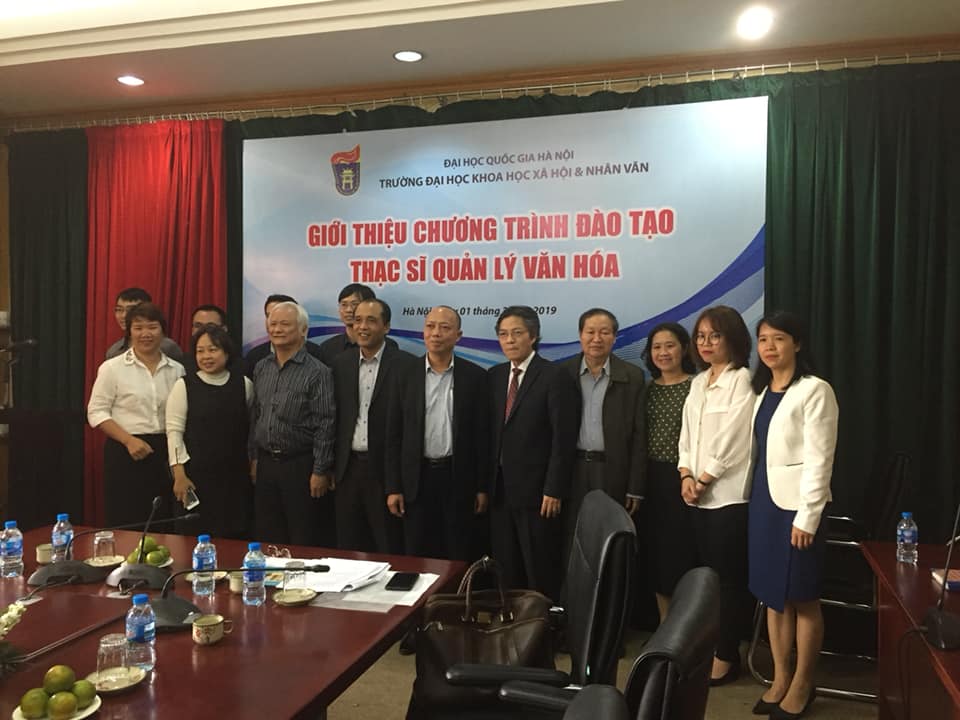
Delegates attending the presentation ceremony
The Master of Cultural Management (MSC) program was established to meet the demand for human resources in the field of cultural management. Based on the fundamentals of Vietnamese cultural history and a summary of experience in cultural management, combined with theories and experiences from countries in the region and around the world, the MSC program provides students with the capacity to manage culture, as well as the ability to advise, design, and develop cultural management policies at the national and local levels. With modern training methods and a faculty of leading experts in history, culture, anthropology, and management science, the program offers students a systematic understanding of modern scientific knowledge, enhancing their skills in applying knowledge to solve practical situations and potential problems arising from the rapid and significant development and transformation of culture.
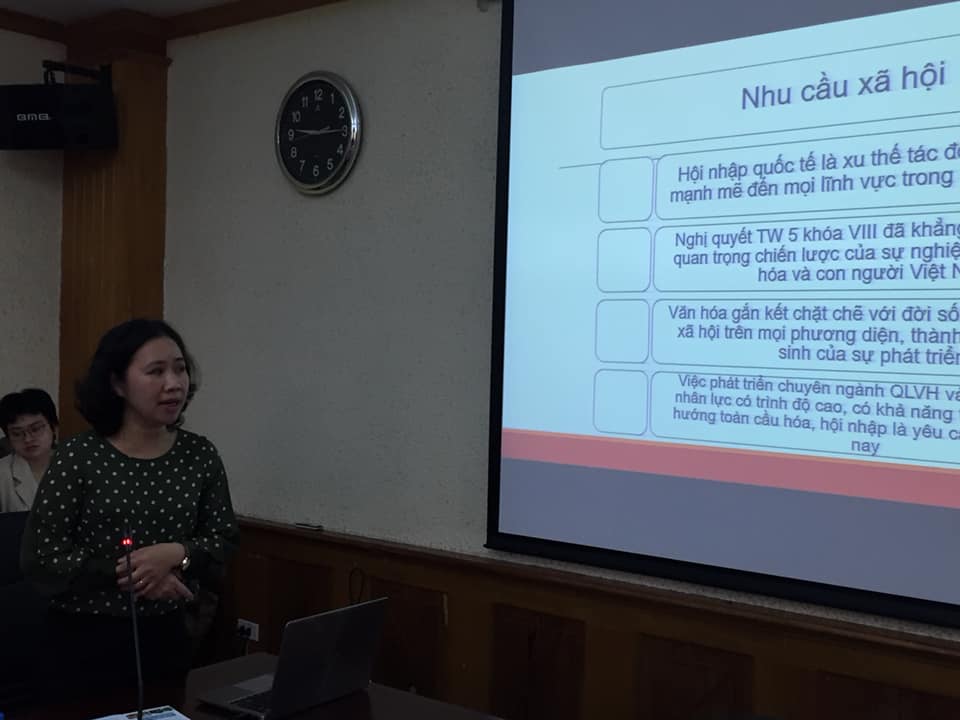
Dr. Do Thi Huong Thao gave a brief introduction to the Master of Management training program.
Graduates will be capable of undertaking tasks in agencies, units, and organizations involved in cultural management, as well as in agencies and organizations responsible for analyzing, planning, and advising on cultural policies. More specifically, students will be provided with the knowledge, skills, and professional competence to work for cultural management agencies from the central to local levels, research institutes, international organizations, and non-governmental organizations.
On behalf of the cultural research community in Vietnam, Professor Nguyen Quang Ngoc stated that the training and research in culture has always been a pressing need. At the Faculty of History, University of Social Sciences and Humanities, the Department of Cultural Studies and Vietnamese Cultural History was established in 1998. The department has trained 18 cohorts of students and plans to develop this specialization into an independent major by 2020. From a practical perspective, culture is increasingly becoming a hot topic in Vietnamese society. Given that current cultural thinking and management practices do not yet meet societal needs, the introduction of the Master's program in Cultural Management is highly significant. Professor Nguyen Quang Ngoc believes that, with the solid foundation of the Department of Cultural Studies and Vietnamese Cultural History, the Faculty of History has the necessary conditions to effectively implement this new program.
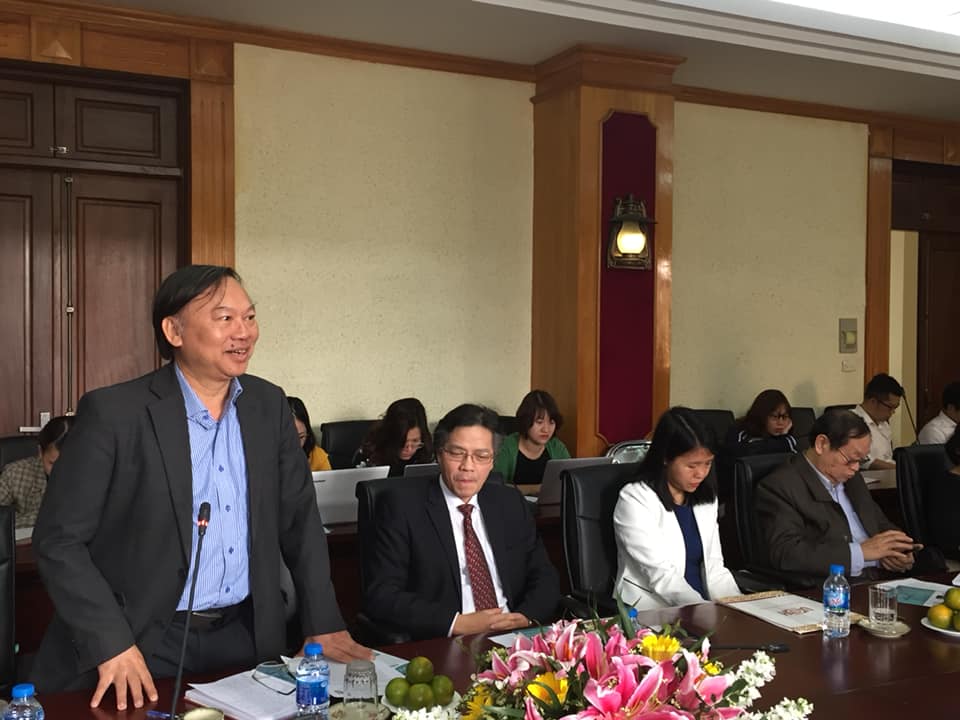
Professor Nguyen Quang Ngoc delivered a speech at the ceremony.
Professor Le Hong Ly emphasized that, in the current context of Vietnam and the international community, the concept of culture is no longer limited to high-level, sophisticated cultural phenomena and products. It has expanded to every corner and field of social life. Behind cultural phenomena such as the Tran Temple seal-issuing ceremony, the buffalo fighting festival in Do Son (Hai Phong), and the pig-slaughtering ceremony in Nem Thuong (Bac Ninh) lie a series of political, economic, and social roots. Therefore, cultural managers need not only practical experience but also a broad and deep knowledge of fundamental and interdisciplinary sciences. This is precisely what creates the unique strength of the University of Social Sciences and Humanities compared to other cultural management training institutions such as the University of Culture, the Central University of Arts Education, and the Hanoi University of Interior Affairs.
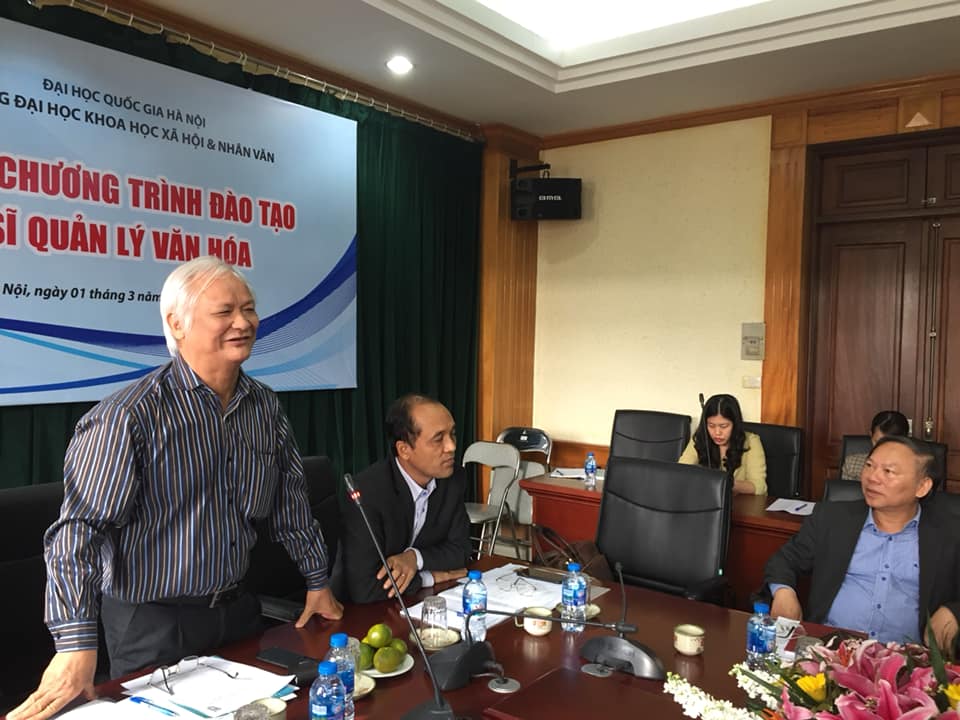
Professor Dr. Le Hong Ly delivered a speech at the ceremony.
At the presentation, representatives from cultural management agencies also contributed their opinions and shared their views on the future of this new program.
Associate Professor Dr. Le Anh Tuan stated that, in the context of the government's approval of the "Project to build a team of intellectuals in the Culture, Sports and Tourism sector by 2020," the need for training high-quality human resources in cultural management is crucial. Therefore, he highly appreciated the efforts of the University of Social Sciences and Humanities in implementing the Master's program in Cultural Management. The Training Department of the Ministry of Culture, Sports and Tourism will support the University in promoting and introducing this new field of study to agencies and departments responsible for and interested in cultural management.
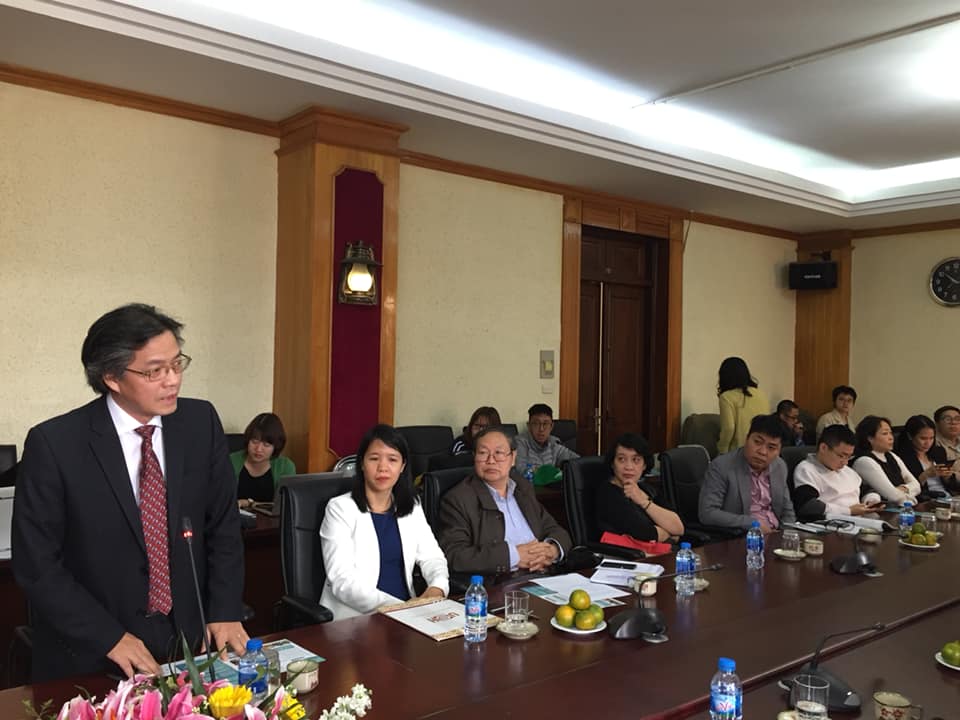
Associate Professor Dr. Le Anh Tuan delivered a speech at the ceremony.
At the local level, the Deputy Director of the Ninh Binh Provincial Department of Culture and Sports, Nguyen Cao Tan, also acknowledged the need to recruit highly qualified cultural management personnel. According to him, cultural criteria are playing an increasingly important role for the scenic spots and historical relics of a locality. This view was also shared by the representative of the Department of Heritage, Dr. Pham Thi Khanh Ngan. Furthermore, according to Dr. Ngan, some tasks require a broad vision and in-depth, up-to-date understanding of fundamental aspects of social life, such as policy and strategy development for culture. For those working in these fields, pursuing a Master's program in Cultural Management at the University of Social Sciences and Humanities could be considered the optimal choice.
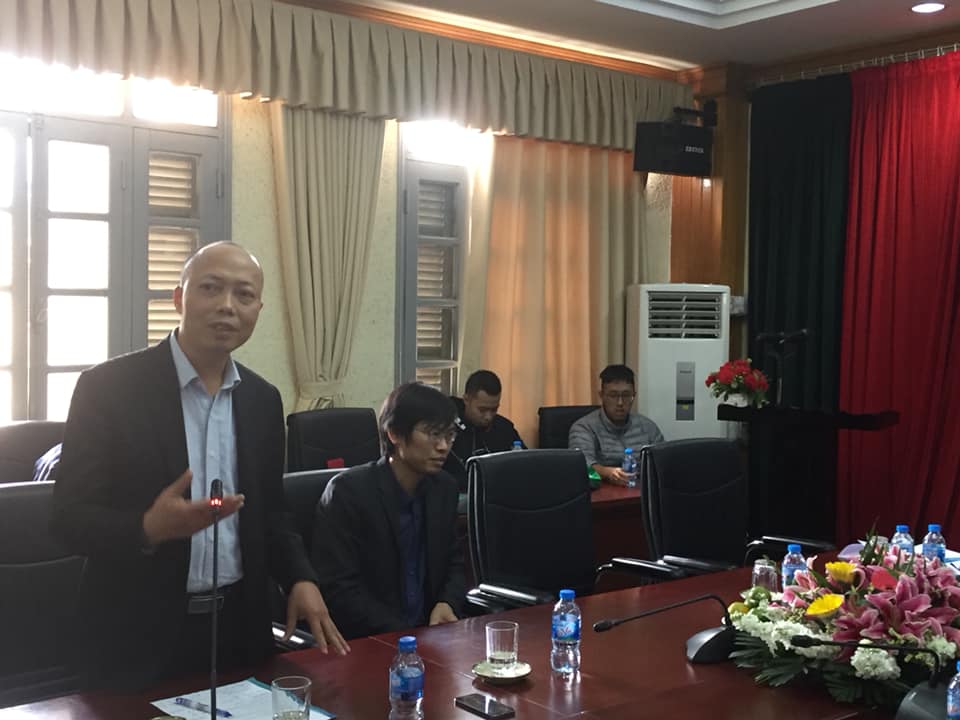
Mr. Nguyen Cao Tan, M.Sc., delivered a speech at the ceremony.
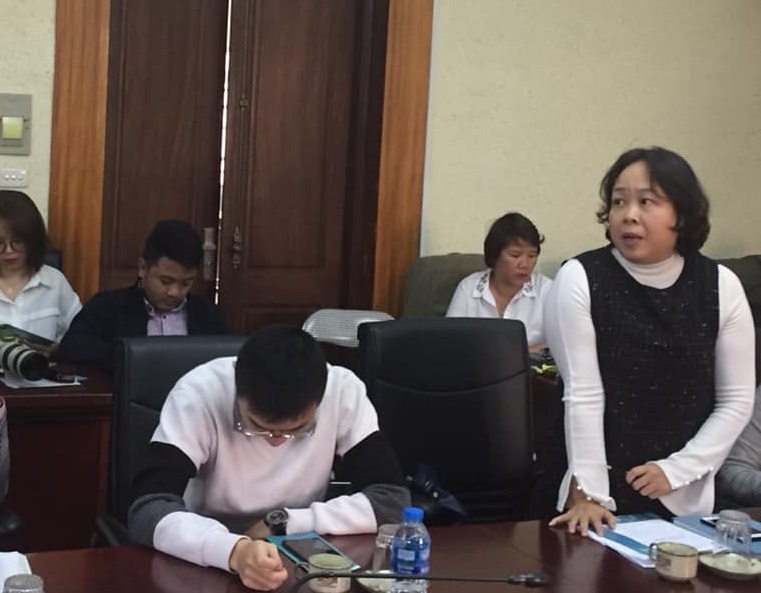
Dr. Pham Thi Khanh Ngan delivered a speech at the ceremony.
Representing the prospective students, Nguyen Duc Anh (a former student of the K59 class of the History Faculty) expressed his joy at the opening of the Master's program in Cultural Management at the History Faculty. He also expressed his confidence in the faculty and the learning environment at the University of Social Sciences and Humanities, affirming that this is a suitable place for students to improve their skills and accumulate the necessary experience for their future careers.
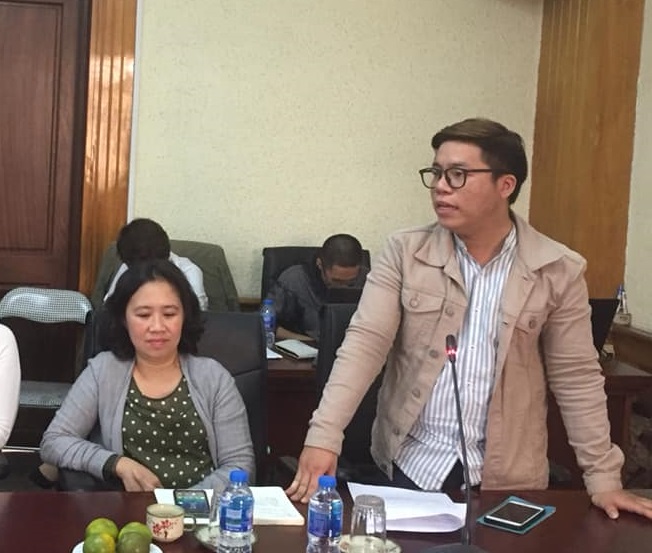
Mr. Nguyen Duc Anh delivered a speech at the ceremony.
|
Detailed information regarding admission to the Master's program in Cultural Management at the University of Social Sciences and Humanities: Register for the entrance exam online through the VNU Hanoi admissions portal:http://tssdh.vnu.edu.vn Online application period: Phase 1: from 8:00 AM on January 20, 2019 to 5:00 PM on April 11, 2019 Phase 2: from 8:00 AM on April 27, 2019 to 5:00 PM on September 5, 2019 Exam dates: Phase 1: April 20-21, 2019 Phase 2: September 14-15, 2019 Exam subjects: + Foreign Language: One of five foreign languages (English, Russian, French, German, Chinese) + Basic subject: Fundamentals of Vietnamese Culture + Foundation subject: Vietnamese History government:http://khoalichsu.edu.vn Admissions information website:http://tuyensinh.ussh.edu.vn |
Author:Tran Minh
Newer news
Older news

