
Everyone has their own perspective on why the US and North Korea chose Vietnam as the location for the second US-North Korea summit. What is your opinion, Professor?
First and foremost, the reason why Chairman Kim Jong-un and President Donald Trump chose Vietnam is Vietnam's growing prestige and position in the international community.
Vietnam is an active, proactive, and responsible member of the international community, as demonstrated by the positions it has held. These include its role as a non-permanent member of the United Nations Security Council for the 2008-2009 term and its upcoming candidacy for a second term; the successful hosting of APEC Vietnam 2017, followed by the hosting of the World Economic Forum on ASEAN (WEF ASEAN) 2018; and in 2020, Vietnam will once again assume the chairmanship of ASEAN… From an economic perspective, the successes in dynamic reform have also proven Vietnam's management capabilities.
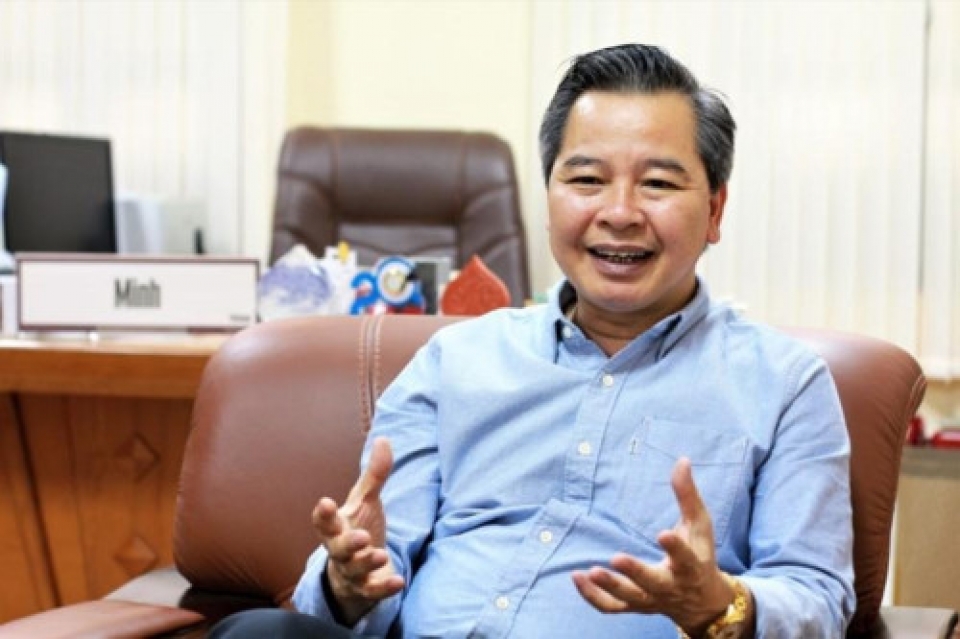
Professor Pham Quang Minh. (Photo: PH)
But perhaps most importantly – the common denominator that led both the US and North Korea to choose Vietnam – is that both Vietnam and North Korea were once adversaries of the US during wartime, and now Vietnam has become a partner with the US, transforming a past of animosity into a friendly cooperative relationship. After the war, Vietnam unified the country, transitioning from a centrally planned economy to a market economy. These are entirely things that Vietnam and North Korea can share. Vietnam can be seen as a symbol of peace, friendship, and prosperity. The miracle that Vietnam achieved with the US can also be achieved by North Korea.
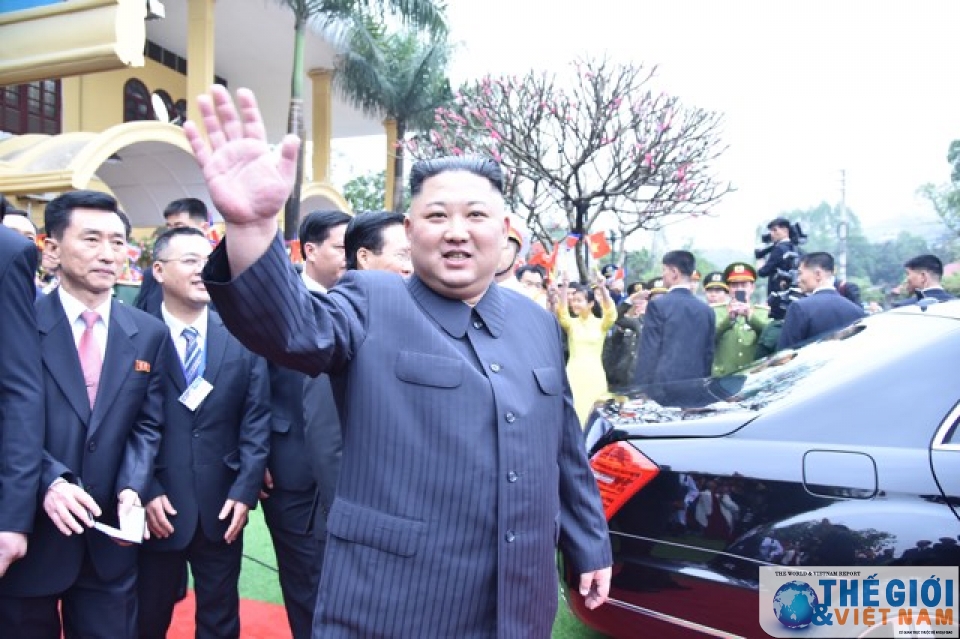
Chairman Kim Jong-un arrived in Vietnam to attend the second US-North Korea summit. (Photo: Nguyen Hong)
Compared to the first conference in Singapore, will this conference be more successful, sir?
The US-North Korea summit in Hanoi offers us much hope. This was the second summit, and both sides have built a certain level of trust, while also witnessing significant shifts in inter-Korean relations in recent times.
We fully hope that this conference will yield concrete results, perhaps a declaration on ending the state of war and moving towards normalizing relations; an agreement to lift sanctions, allowing North Korea to initially integrate into the global economy; or even an agreement on dismantling its nuclear programs. However, this goal requires a long roadmap and requires leaders to outline a path for the denuclearization of the Korean Peninsula. Currently, the greatest hope is securing peace for North Korea, which is of paramount importance; North Korea needs this guarantee for economic development.
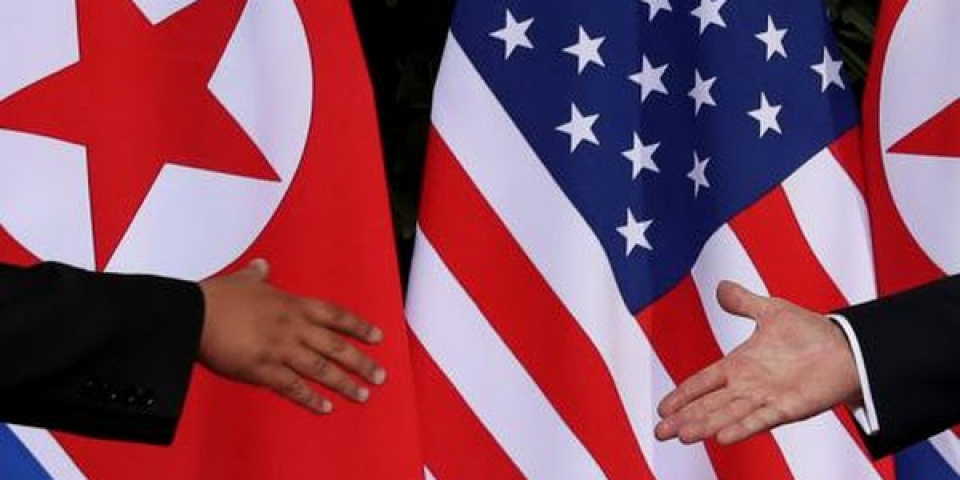
If North Korea can normalize relations with the United States, it would mean that the process of reunification on the Korean Peninsula would be accelerated. (Source: Google News)
If the first conference was deemed unsatisfactory, why are there so many high expectations for this one, sir?
If, at the first summit, our hopes weren't so high, the first summit was dedicated to understanding and exploring each other's attitudes, exchanging ideas, and building trust. The second summit cannot simply be about expressing desires. Neither side is probing the other anymore; they already know each other's desires and have built a certain level of trust. Therefore, coming to this conference, both sides will undoubtedly bring with them more concrete and clear directions.
Furthermore, Chairman Kim Jong-un and President Donald Trump also want to prove to the world that their commitments are substantial. Recently, many have suggested that these two leaders are playing political games, one trying to buy time and the other to demonstrate their power rather than actually resolving any specific issue.
However, what the two leaders have been doing clearly doesn't confirm that. On Twitter, Trump has expressed his desire for North Korea to become an economic powerhouse. He wants economic investments and contracts with Pyongyang. He still prefers bilateral economic agreements over multilateral ones. On the North Korean side, Chairman Kim Jong-un is also eager to reach some kind of international agreement based on the partial lifting of sanctions, thereby expanding trade opportunities.
To answer the question of why North Korea wants to meet with the US, three hypotheses can be emphasized. First, North Korea's economic situation is currently very difficult, with few trading partners and a lack of technology; therefore, the need for economic opening is relatively great. Second, many believe that summit meetings are a tactic by Kim Jong-un to buy time. Third, perhaps North Korea feels strong enough to be confident at the negotiating table. I believe the first reason is the most likely, coupled with North Korea's desire and proposal for guaranteed peace.
Sir, what significance do the developments in US-North Korea relations have for the issue of reunification on the Korean Peninsula?
Those are two sides of the same coin. Clearly, if North Korea could normalize relations with the US, it would mean that the process of reunification on the Korean Peninsula would be accelerated. We all know that the issues on the Korean Peninsula, like the issues of Vietnam or the Federal Republic of Germany in the past, are not just internal matters between the two Koreas, but also involve major powers behind the scenes.
The reunification of East and West Germany was achieved through the 4+2 agreement, which included the Soviet Union, Great Britain, France, and the United States, along with East and West Germany. Regarding North Korea, it's clear that South Korea has now expressed a desire for reunification under President Moon Jae-in, thus the reunification process holds great promise. In 2018, the leaders of the two Koreas met three times and shared the common sentiment of "we are one people." The people of both countries share the feelings of being part of the same family. It must be acknowledged that while a country can be divided, it is difficult to divide a people.
However, the issue of reunification still depends to some extent on China, Russia, and even Japan – some countries that seem to be being left behind on the US-North Korea "train." But with the positive developments, surely all obstacles will gradually be untangled. After all, internal issues between the two Koreas remain crucial; if the Vietnamese people, or the German people in the past, had not been united in their desire for reunification, it would have been difficult to have the Germany or Vietnam as they are today.
According to International News
Author:Phuong Hang
Newer news
Older news

