
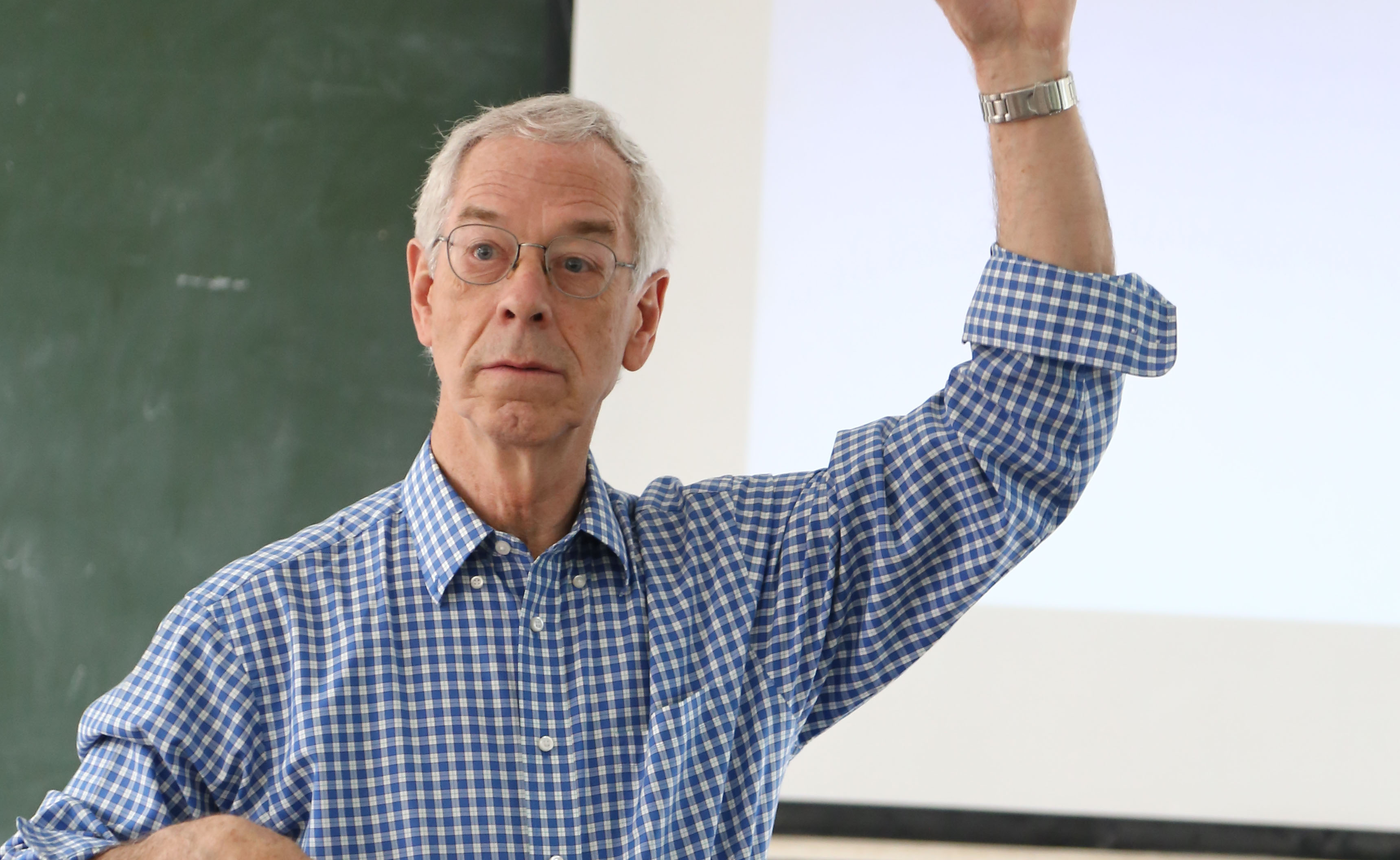
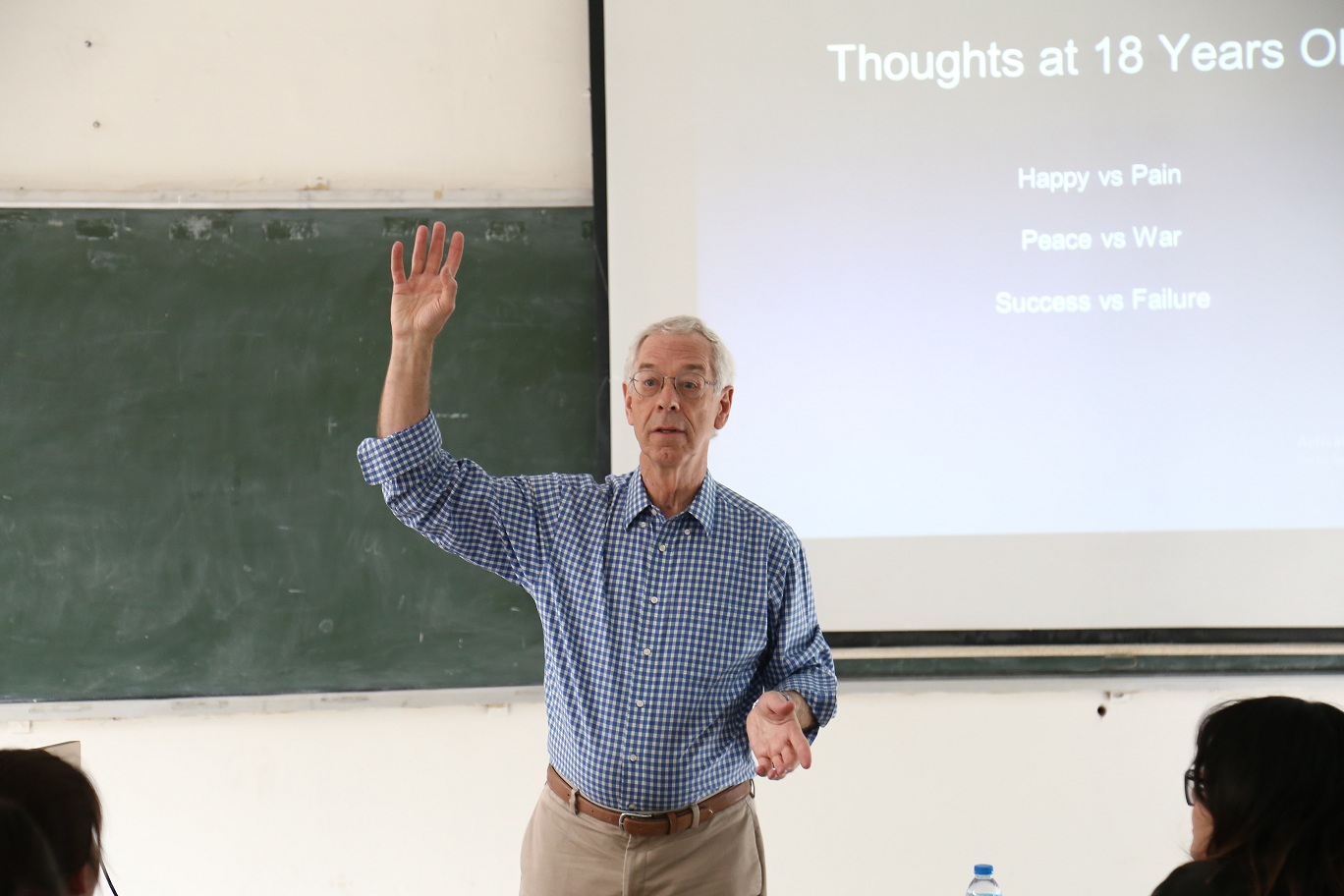
Ted Engelmann is a war photographer and a former US Vietnam War veteran. He is actively involved in activities aimed at healing the wounds of war among American and Vietnamese veterans. In addition, using his expertise, he has directly trained journalists in numerous photography courses organized by the Ministry of Information and Communications in Hanoi for several newspapers.
Ted Engelmann joined the United States Air Force and fought in Vietnam when he was just 21 years old. He was passionate about photography and frequently took pictures of Vietnam during that time. Becoming a freelance photographer, he showed an interest in images of war, and later participated in photographing countries that had experienced war, such as Iraq and Afghanistan.
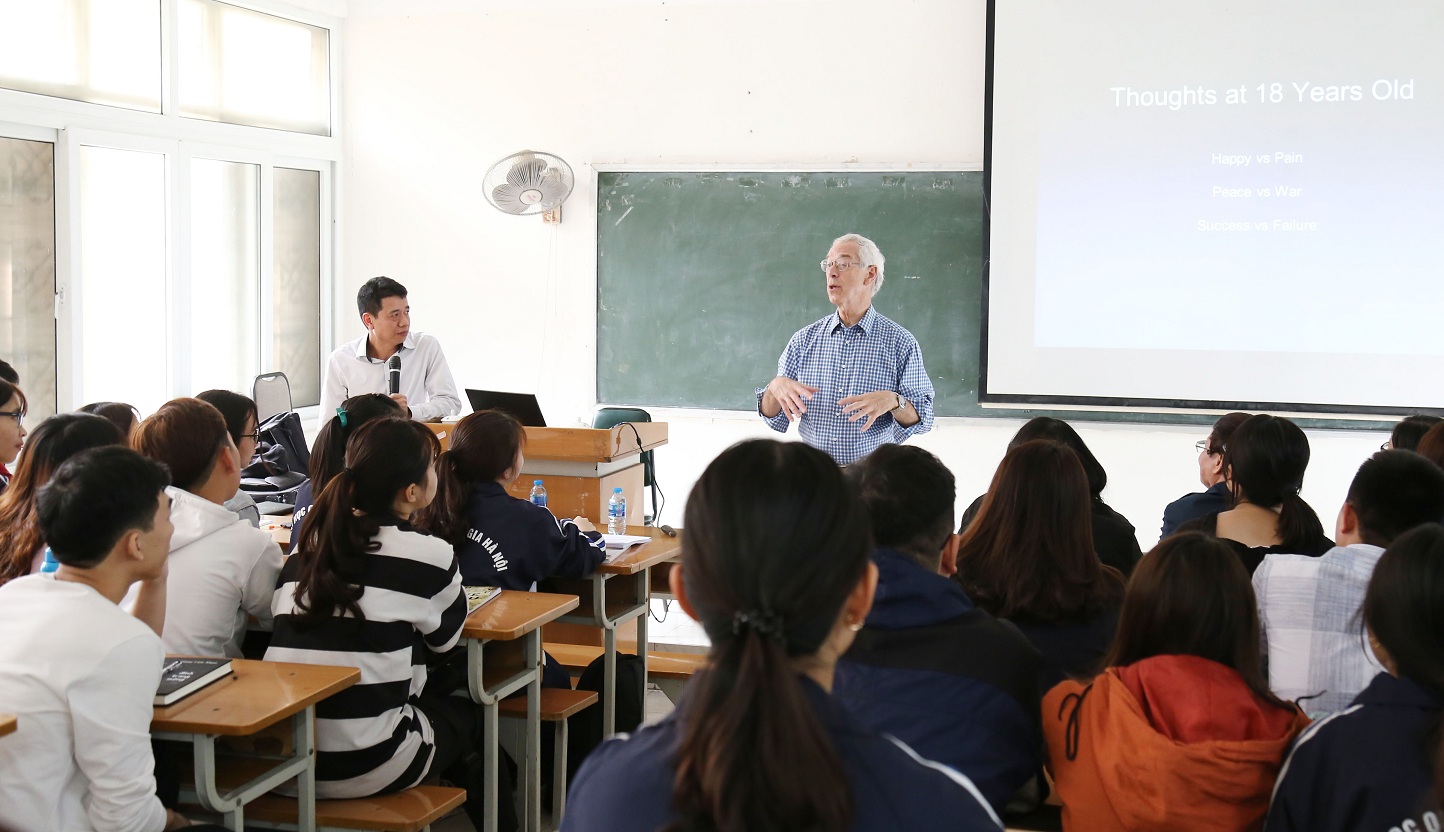
Speaking to students at the Institute of Journalism and Communication Training, Ted didn't choose an academic approach but instead gently shared about his life, career, and worldview through personal photographs or those he took himself in Vietnam and around the world. He clearly explained the context, story, and message conveyed by each photograph. The images genuinely reflect the author's sharing and self-expression.
Ted showed photographs he had taken from an airplane of Vietnamese forests disfigured by the effects of Agent Orange. Other pictures included himself in his pilot's uniform during the war, and an image of a handsome but sad young man. He explained that he was "too sad" and "angry" at the time, realizing just how terrible his actions in Vietnam truly were.
“I regret ever dropping bombs in Vietnam, of ever participating in the war,” Ted said. “That’s the guilt that has haunted me all these years.” And in fact, many American veterans who fought in other countries also experience severe psychological distress, with some even committing suicide because they cannot cope with this pressure.

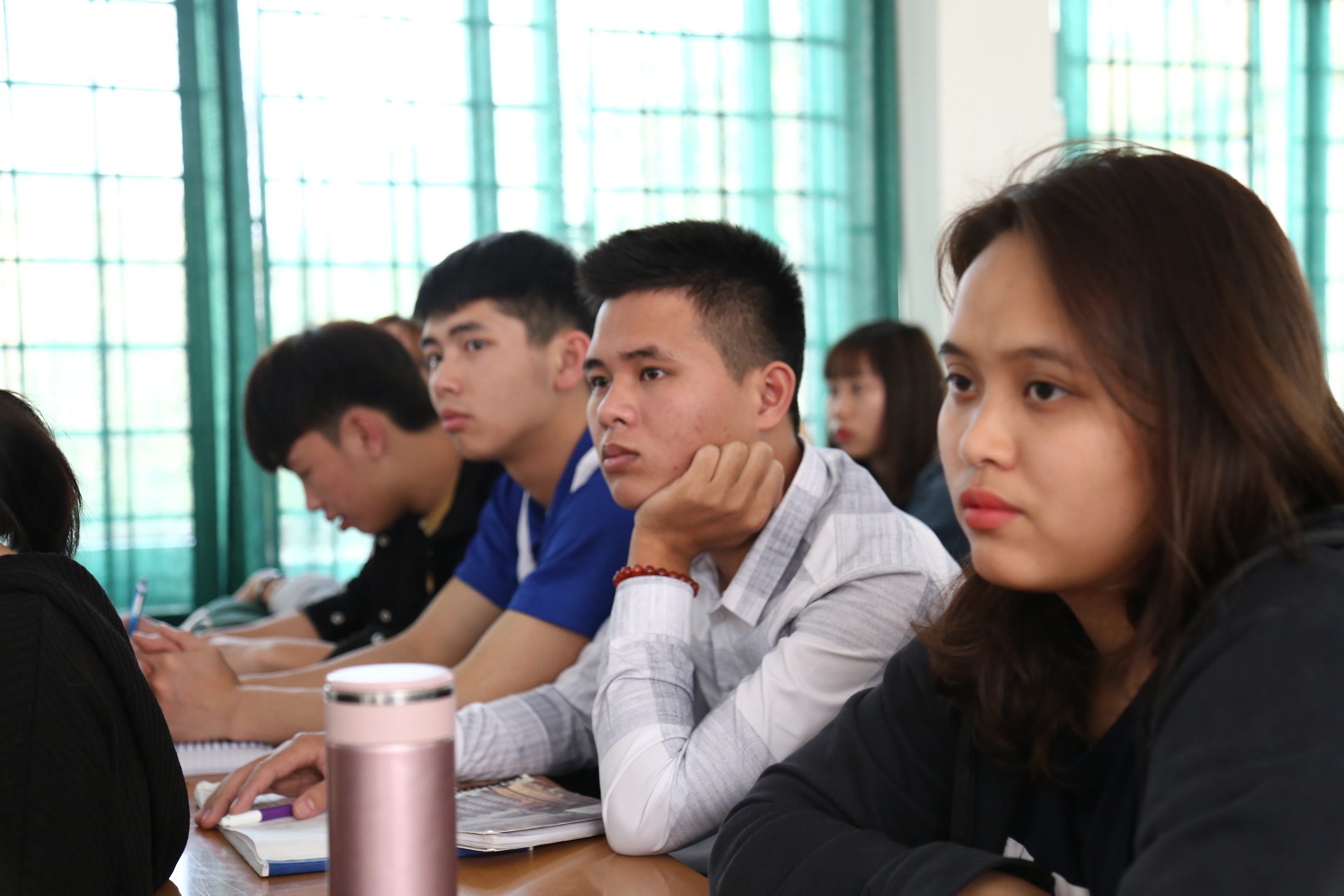
Students from various fields including Journalism, Public Relations, Religious Studies, Vietnamese Studies, Sociology, Psychology, History, Philosophy, etc., attended a talk by an American photographer.
Ted's experiences during the Vietnam War at a young age completely changed him and his life. He doesn't hide his trauma from the war and his "desire to do something to make amends for what he did."
Explaining his reasons for choosing photography as his profession and passion, he said: "I take photos to tell the story of life, as a way to resolve my own psychological issues. I came to Vietnam wanting to help you, but in reality, it's also a way to help myself."
Later, Ted continued to photograph the war in Iraq and Afghanistan, capturing images of people facing conflict, the contrasting perspectives of local people and American soldiers, and a little girl sitting and coloring under the shadow of a barbed wire fence, conveying the message that "children should not be near war zones"...
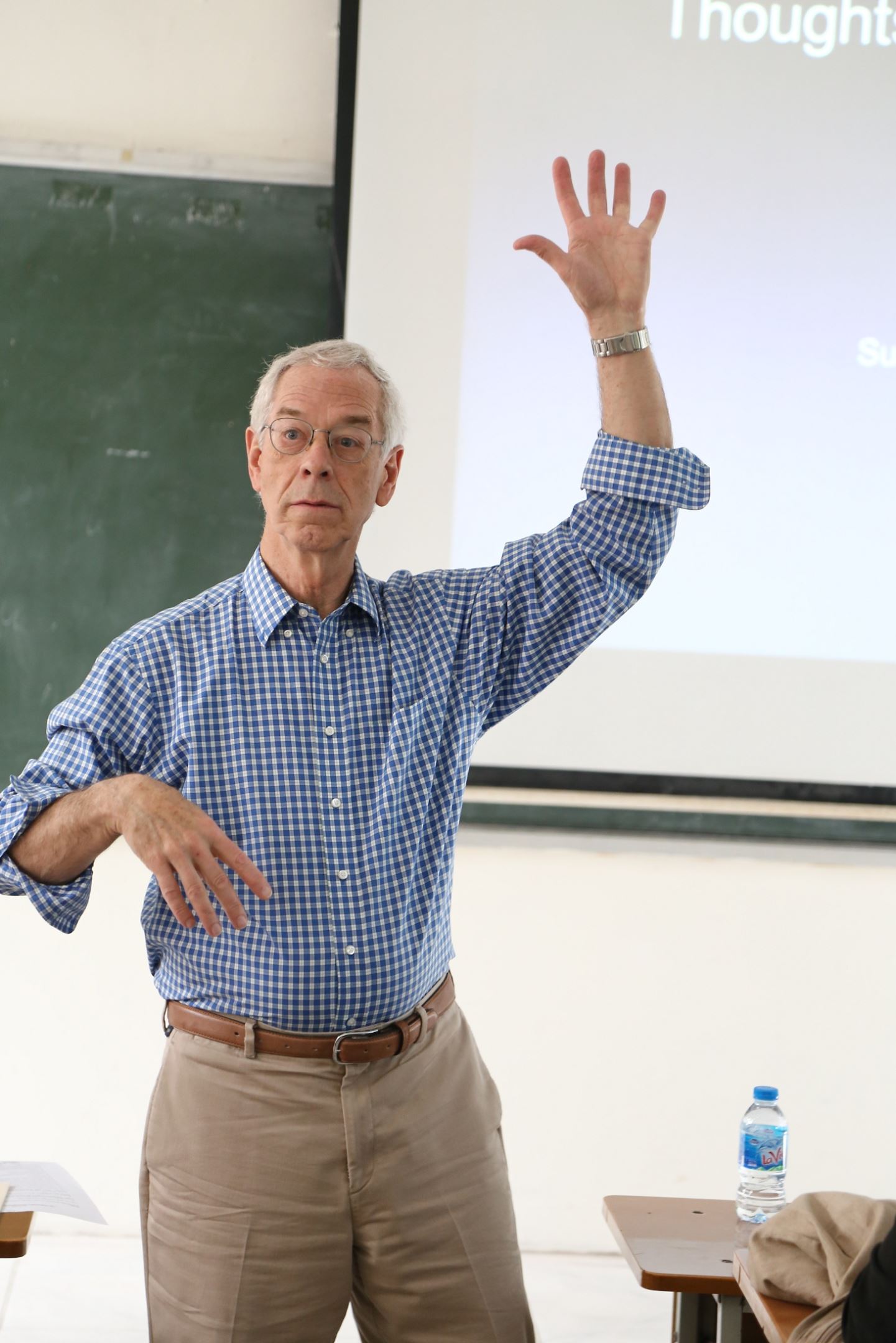
Ted Engelmann shared that he wants to do everything he can to make up for what he did in Vietnam.
Ted was one of the first American veterans to return to Vietnam after the war, working as a teacher at a United Nations high school in Hanoi. He also painstakingly searched for and personally delivered to the family of martyr Dang Thuy Tram a CD containing the "fiery" diary of the female doctor – a diary that veteran Federic Withurs had kept for many years without burning it. In 1989, returning to Vietnam for the first time, the American veteran felt nervous and anxious, unsure of how he would be reacted to by the Vietnamese people and government. But that fear soon disappeared when Ted received friendly, gentle, and forgiving treatment from the country and its people. "I've told my friends many times that I've been treated better in Vietnam than in America," Ted shared emotionally.
Regarding the fortunate opportunity to personally return the diary to the family of martyr Dang Thuy Tram, the American photographer said it was "a miracle and an honor." He cherishes the emotions of young people like Dang Thuy Tram and wants to be the link that brings those memories and emotions back to the family of the female martyr, as well as to the public.
Ted also shared photographs he took in various locations across Vietnam to reflect the country's rapid development after its losses. These photos helped Americans understand Vietnam better, offering new perspectives and reshaping their thoughts and feelings about the country. "Vietnam is a country, not a war"—this message, even inscribed on Ted's business card, served as a sincere affirmation and aspiration from the American veteran.
From a very young age, Ted was actively involved in activities aimed at healing the wounds of war among American and Vietnam veterans. In addition, using his expertise, he directly trained journalists in numerous photography courses organized by the Ministry of Information and Communications in Hanoi for several newspapers.
The American photographer concluded his talk with advice for young people on how to take beautiful photos: although technology has made photography vastly different between my time and yours, to succeed we always need to work and study hard, invest in our work, and develop our skills. "Love your own photos, and then you can make others love them," the photographer emphasized.
|
Ted Engelmann Professional activities
Book and photographic publications
|
Author:Thanh Ha
Newer news
Older news

