
The lecture focuses on analyzing the changes in the ecological environment under the impact of human activity throughout history. According to Professor Giraldez, human society has gone through five major turning points that profoundly affect the ecosystem: the discovery and control of fire, the domestication of plants and animals during the Stone Age, the rise of cities, post-Columbian exchanges leading to ecological globalization, and finally, the discovery and use of fossil fuels, especially oil.
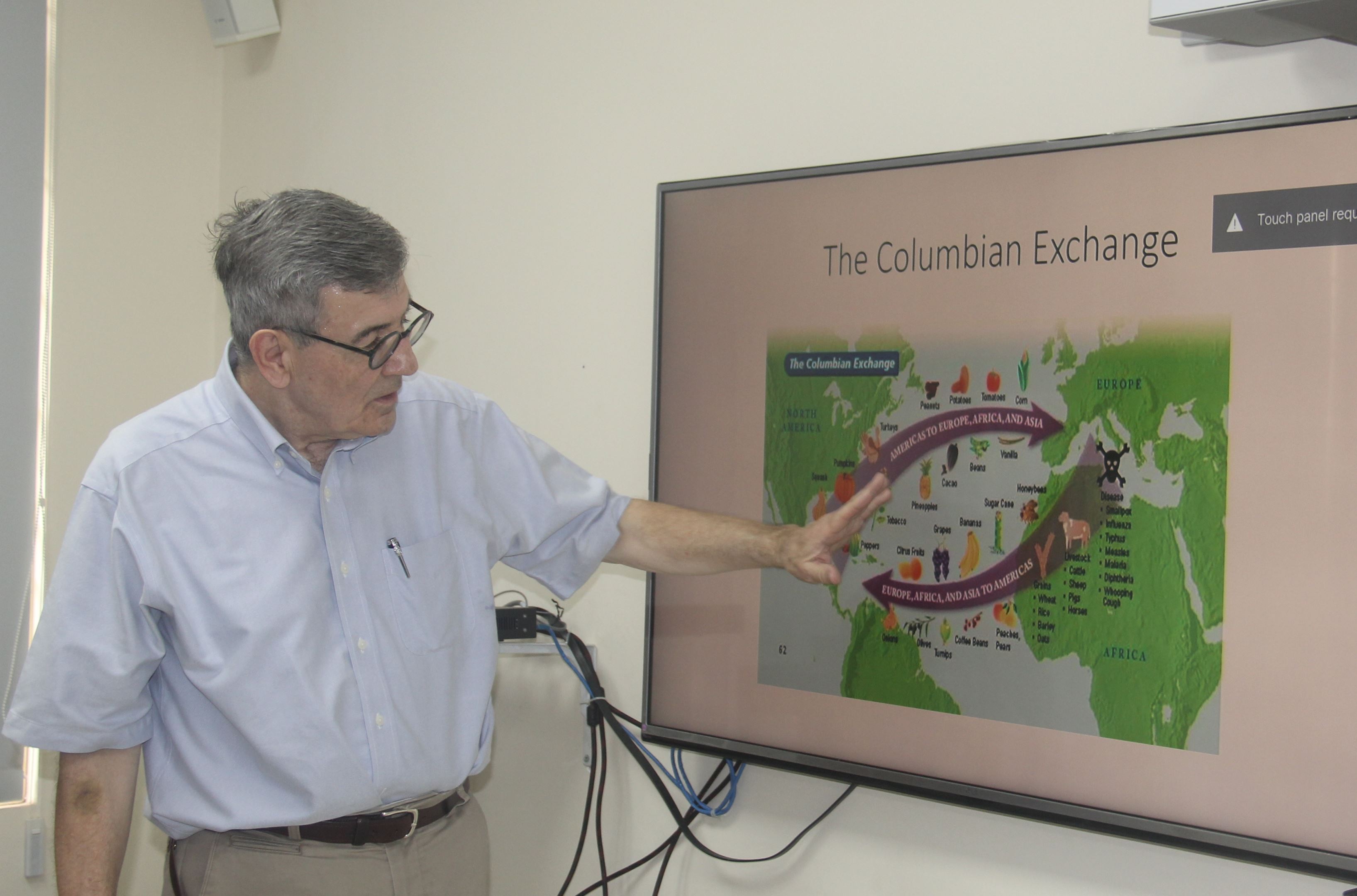
Professor Giraldez particularly emphasized the changes in the global ecosystem that occurred after Columbus's geographical discovery of America in the late 15th century. A wide range of plant species (olive, grapes, lemons, onions, coffee, bananas, sugarcane, wheat, barley, rice) and animal species (sheep, pigs, horses, bees) were brought to America via Europe. Conversely, from America, plant species (sweet potatoes, squash, pineapples, beans, potatoes, peanuts, tomatoes, peppers, cocoa, tobacco, vanilla, corn, etc.) and animal species (turkeys) were transported back to Europe and from there spread to other continents and regions. This exchange of plants and animals enriched the ecosystems of continents, regions, and countries, directly impacting the diets of peoples around the world. However, these post-Columbian exchanges also led to many negative consequences. Diseases such as diphtheria, smallpox, influenza, typhus, measles, malaria, and chickenpox followed Europeans to new lands. Due to underdeveloped immune systems and poor medical conditions, a large portion of the indigenous population in the Americas, Australia, New Zealand, and other regions contracted these diseases and died. Along with colonial conquests by force, global climate change in the 16th-18th centuries, and the spread of disease, these factors led to the collapse of numerous civilizations in the Americas and Oceania.
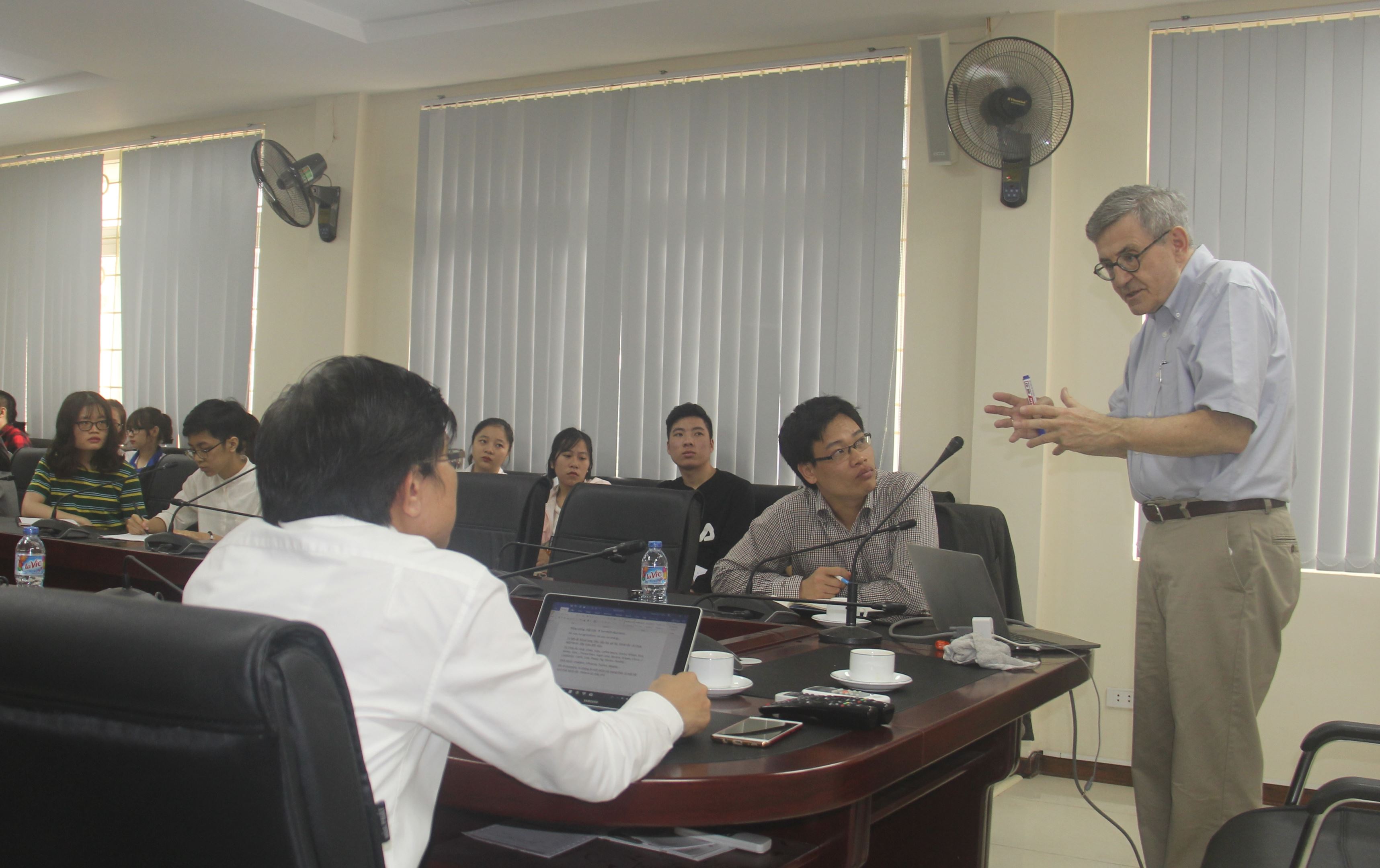
The discussion was very lively. Many questions focused on why, despite also being under European colonial rule, Asian civilizations and peoples did not become extinct. According to Professor Giraldez, unlike the Americas and Oceania, Asia had long-standing contact with Europe, so Asians themselves developed immunity to some common European diseases. In fact, many European diseases originated in Asia. Therefore, Asians were immune to some diseases brought by Europeans. In addition, the high level of medical expertise and traditional remedies of the indigenous peoples reduced the impact of diseases from Europe. Other questions related to the impact of fossil fuel use on ecosystems, the effects of the Little Ice Age, and the domestication of plants and animals were all answered thoroughly and clearly by Professor Giraldez.
Author:Thuy Nguyen (Department of History)
Newer news
Older news

