
Attending the event were Assoc. Prof. Dr. Hoang Anh Tuan (Vice Rector of the University), Prof. Detlef Briesen (Justus-Liebig Giessen University), and representatives from Heinrich Heine Dusseldorf University - Prof. Michael Baurman, along with faculty members and students of the University of Social Sciences and Humanities.
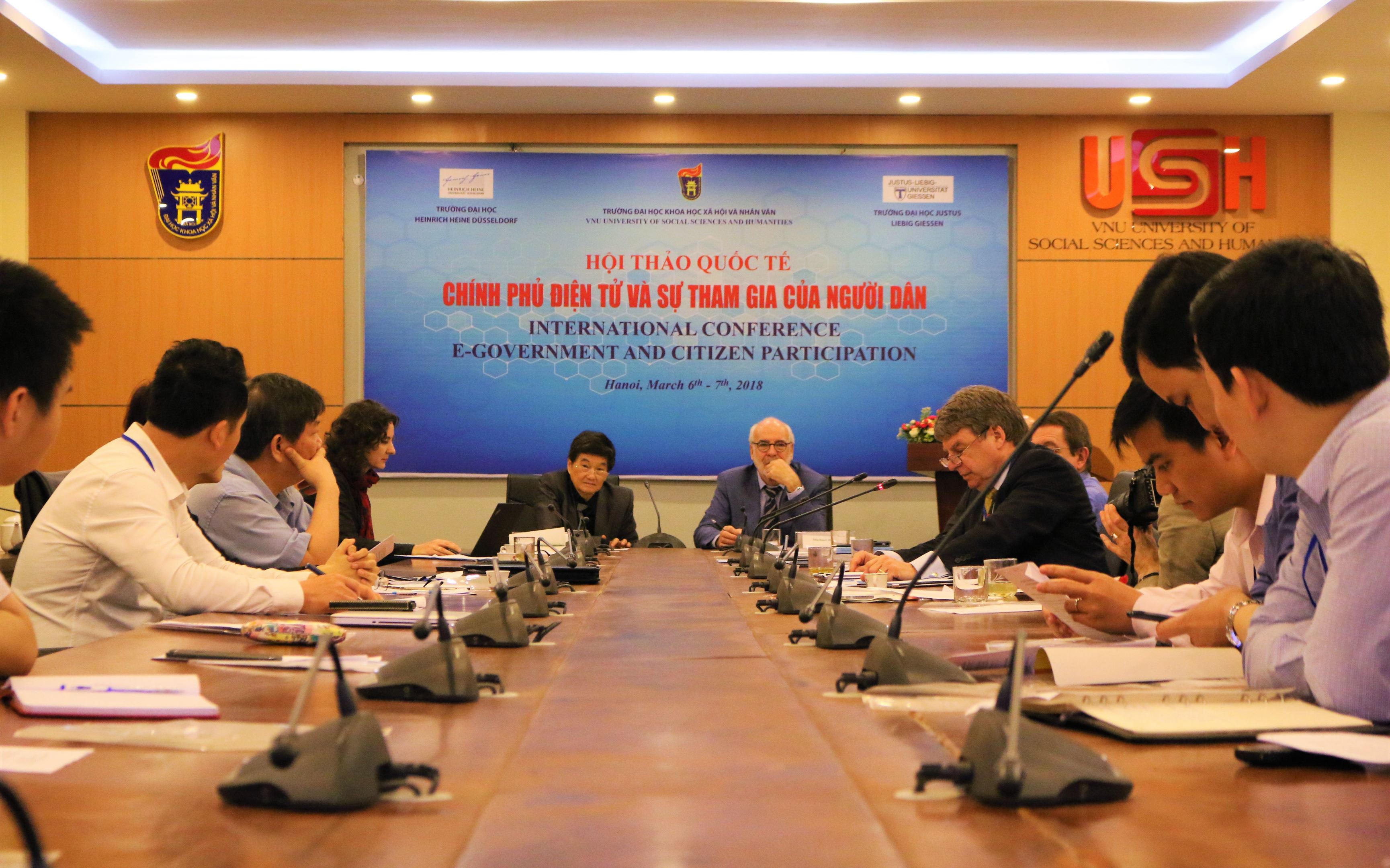
Overview of the workshop
In his opening remarks at the workshop, Associate Professor Hoang Anh Tuan expressed his pleasure in welcoming experts representing various universities to discuss and share issues related to e-government. This workshop helps scientists and managers learn from Germany's e-government development experiences, which can then be applied to Vietnam's e-government model.
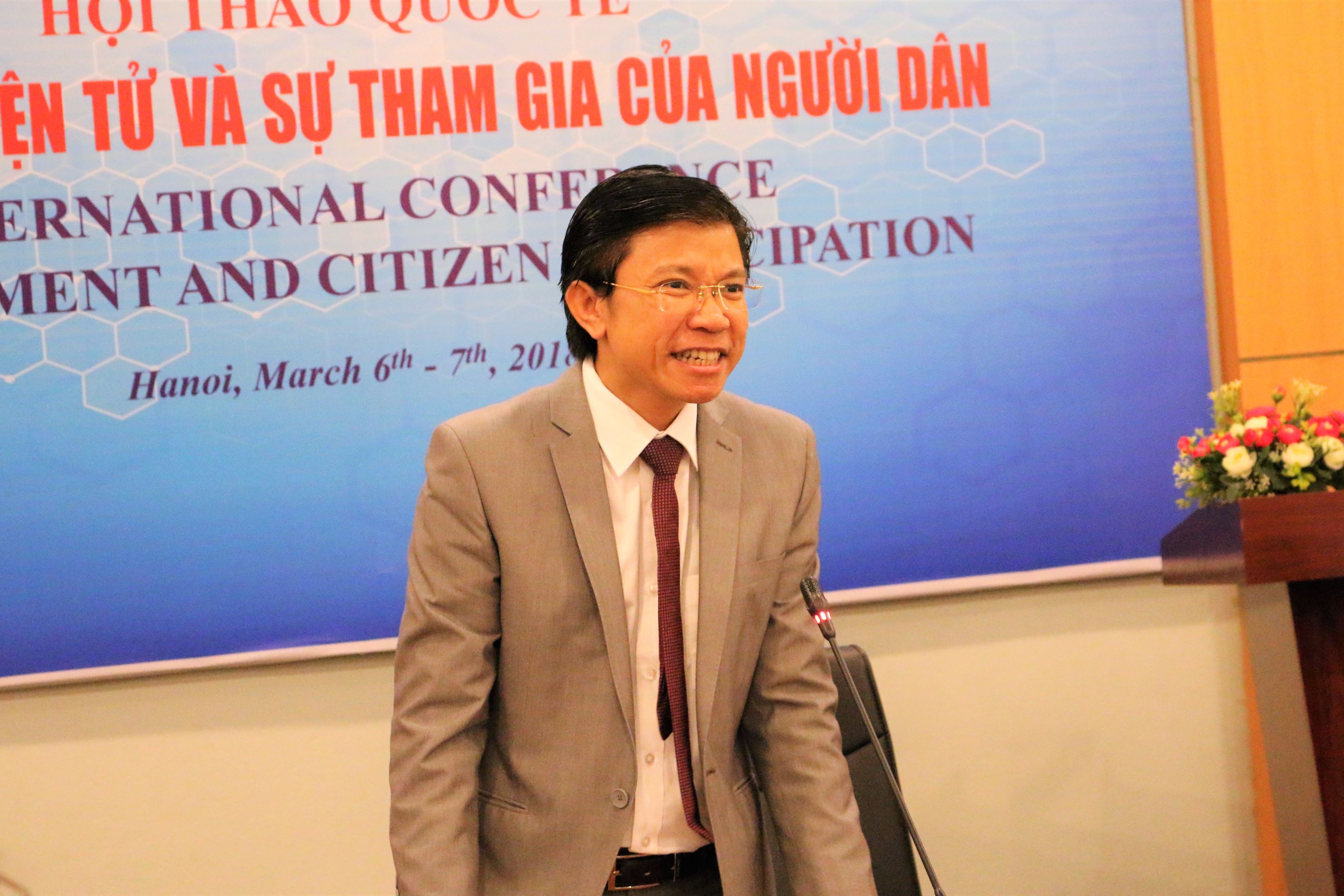
Associate Professor Hoang Anh Tuan delivered the opening remarks at the workshop.
E-Government emerged on the foundation of applying information and communication technology (ICT) to the activities of state administrative agencies from the central to local levels, with the aim of providing better information and services to citizens, businesses, and social organizations. E-Government facilitates citizens' exercise of democratic rights and participation in state management.
At the conference, experts argued that the rapid development of science and technology in the era of the 4.0 revolution has brought many great development opportunities but also many challenges, requiring government agencies, businesses, and organizations to pay more attention to developing technological infrastructure, building databases, and applying appropriate information security solutions. The application of information technology in the development of e-government aims to enhance the management and operational capacity of state agencies, while simultaneously improving the satisfaction of citizens and businesses with public services, thus anticipating the country's development trends.
Professor Detlef from Justus-Liebig Giessen University pointed out four outstanding practical advantages that e-government brings. These are: improving state policies and laws; providing more complete information for decision-making, policies, and legislation; enabling the government to operate more efficiently in management and development; combating corruption and bureaucracy, building a transparent and accountable government; and, above all, bringing the government closer to the people.
In addition, at the workshop, experts also spent time discussing and answering many questions surrounding Germany's experience in managing e-government – a country where, more than ten years ago, e-government was first introduced and brought about remarkable advancements in social management and operation.
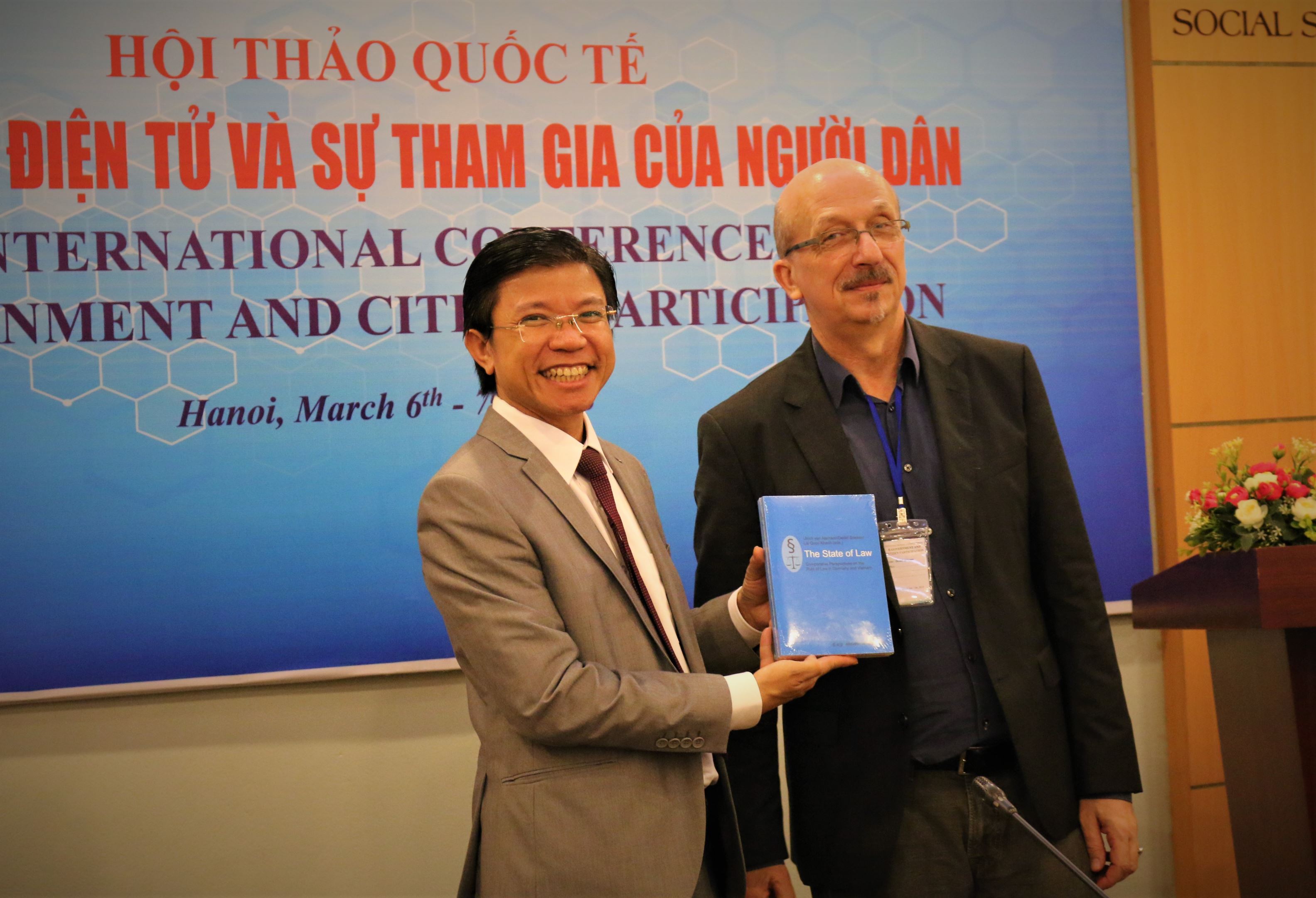
Professor Detlef Briesen presented Mr. Hoang Anh Tuan with a book on e-government.
The workshop was divided into six sessions, taking place over two days, March 6-7:
Author:Tung Nguyen
Newer news
Older news

