
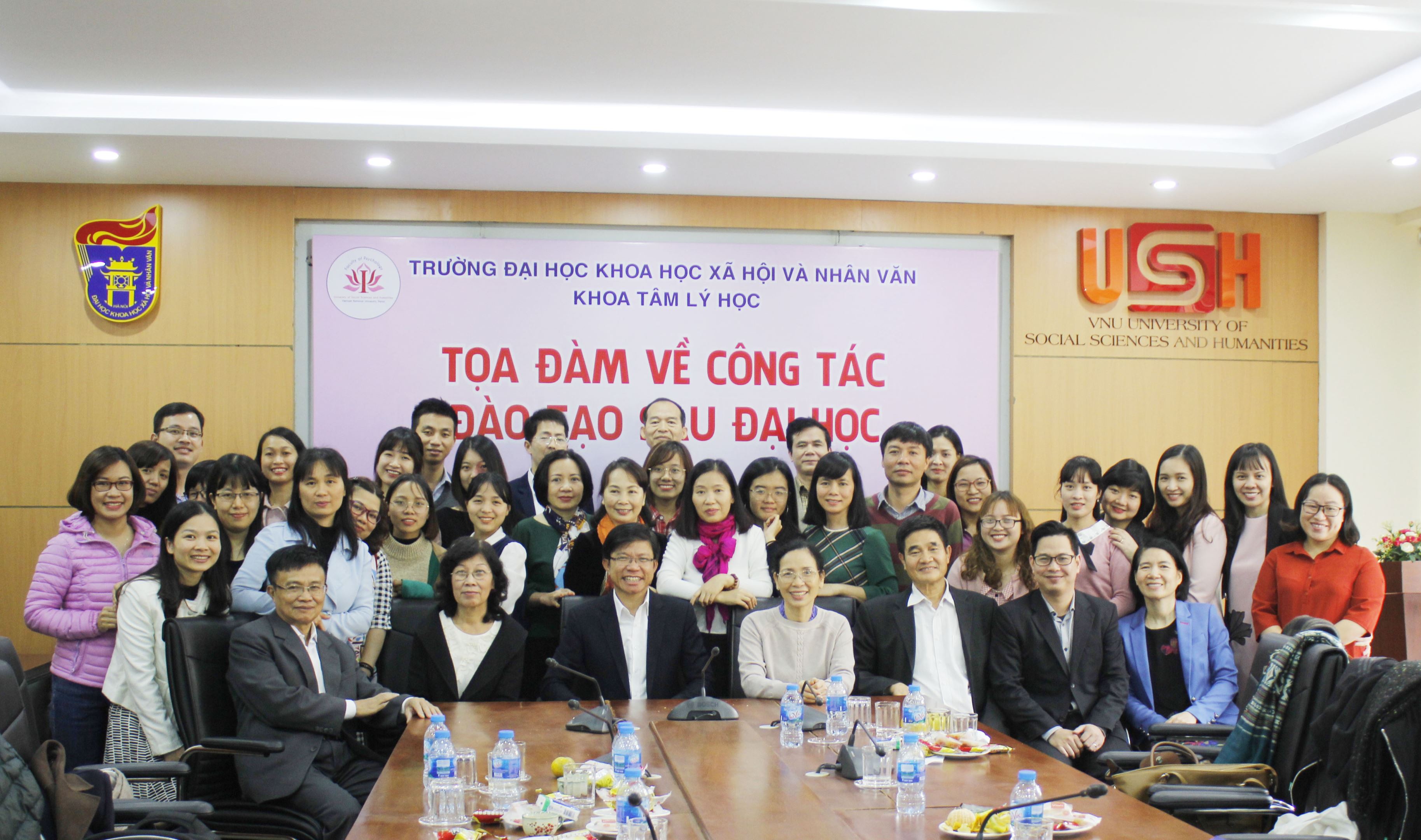
The Faculty of Psychology, Hanoi University of Social Sciences and Humanities, is a leading psychology training institution in Vietnam, offering programs at all three levels from bachelor's to doctoral degrees. The faculty currently offers two Master's programs: Research-Oriented Psychology and Applied-Oriented Clinical Psychology, and one Doctoral program in Psychology.
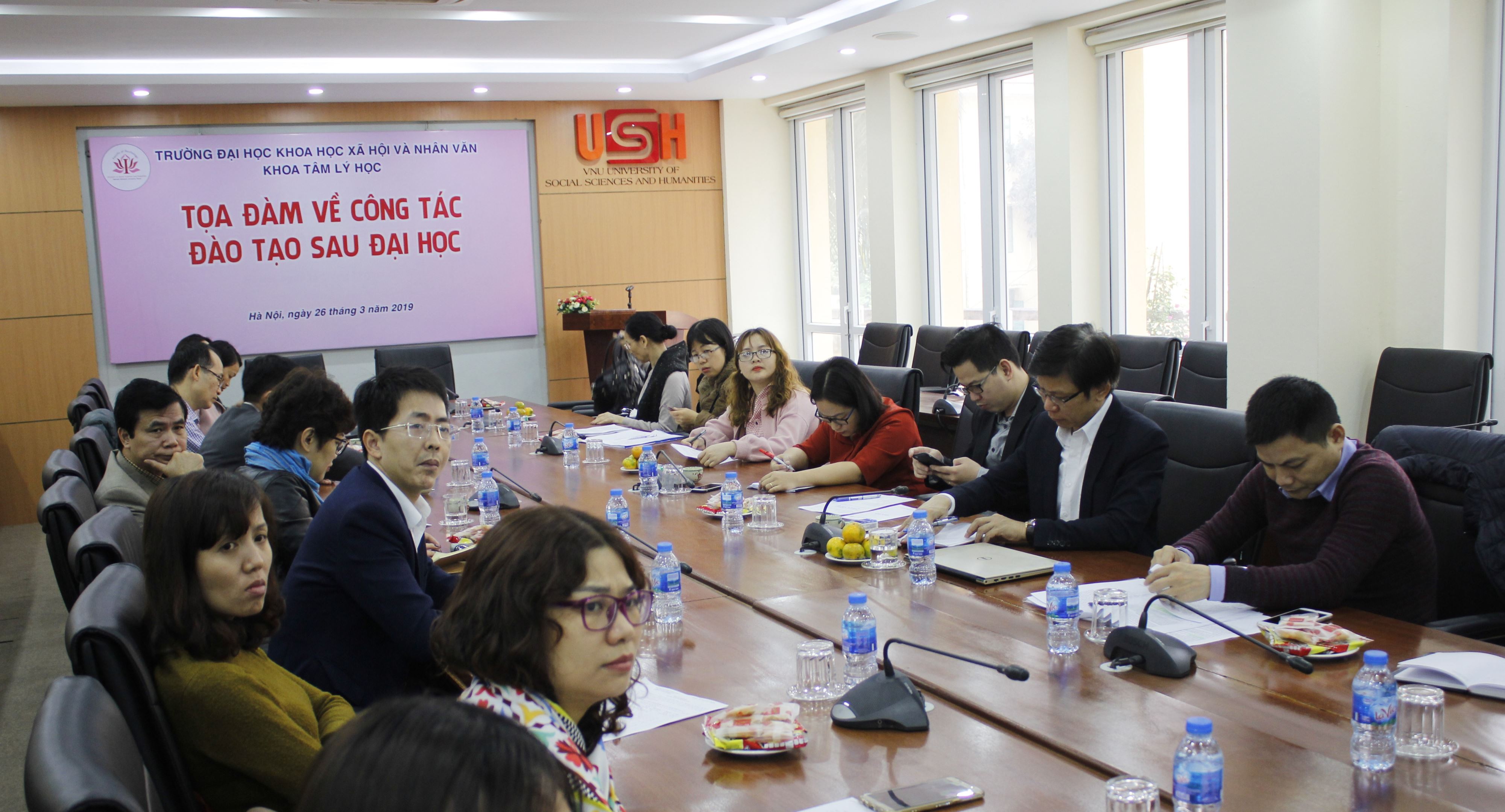
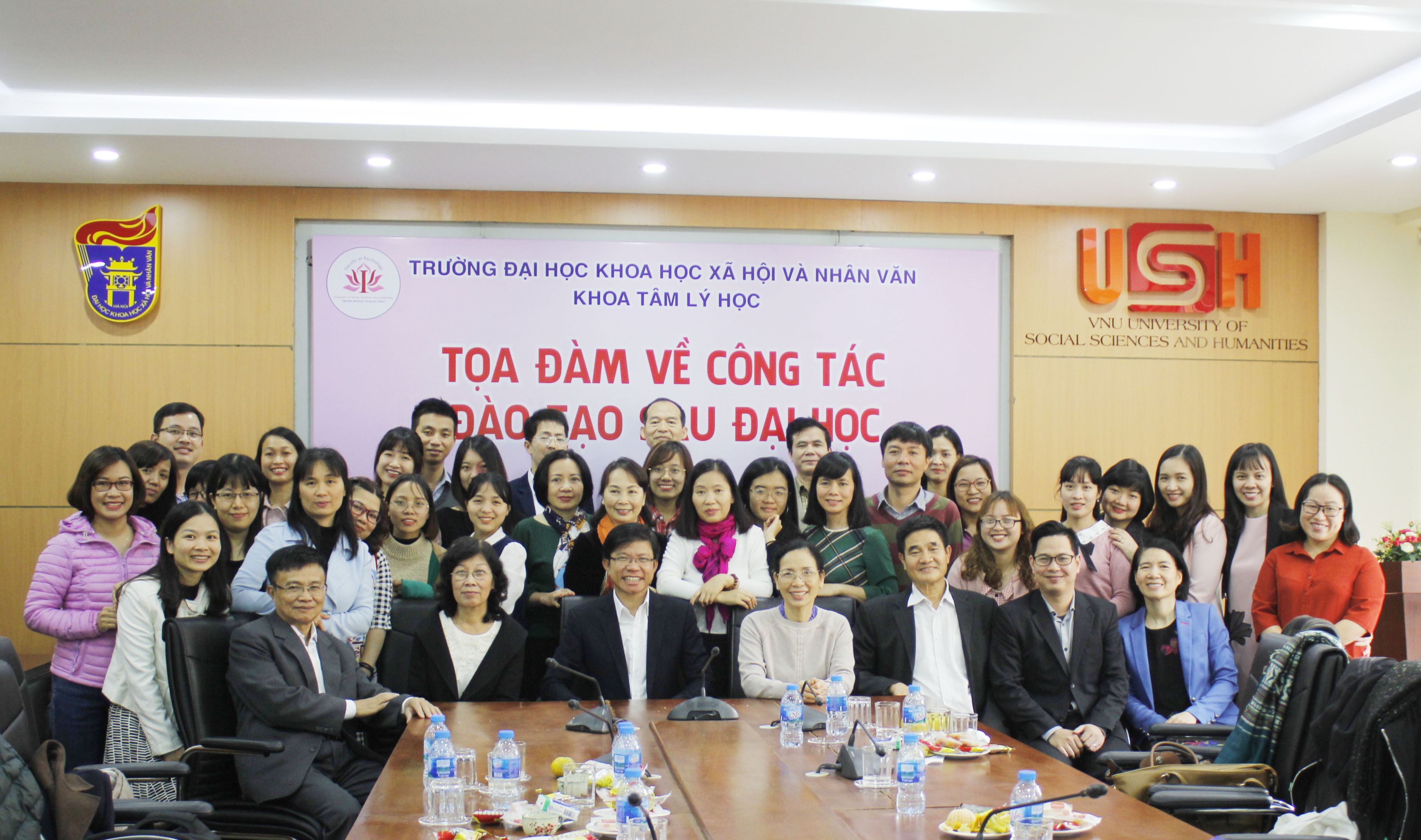
At the conference, with the aim of contributing ideas to further improve the quality of training and overcome the difficulties that the Faculty's postgraduate training is facing, delegates discussed issues related to increasing the time spent on internships and practical training in the Master of Clinical Psychology program; strengthening the connection between training institutions and practice facilities such as hospitals and centers; and opening more master's specializations with an applied orientation that aligns with the Faculty's strengths and market needs.
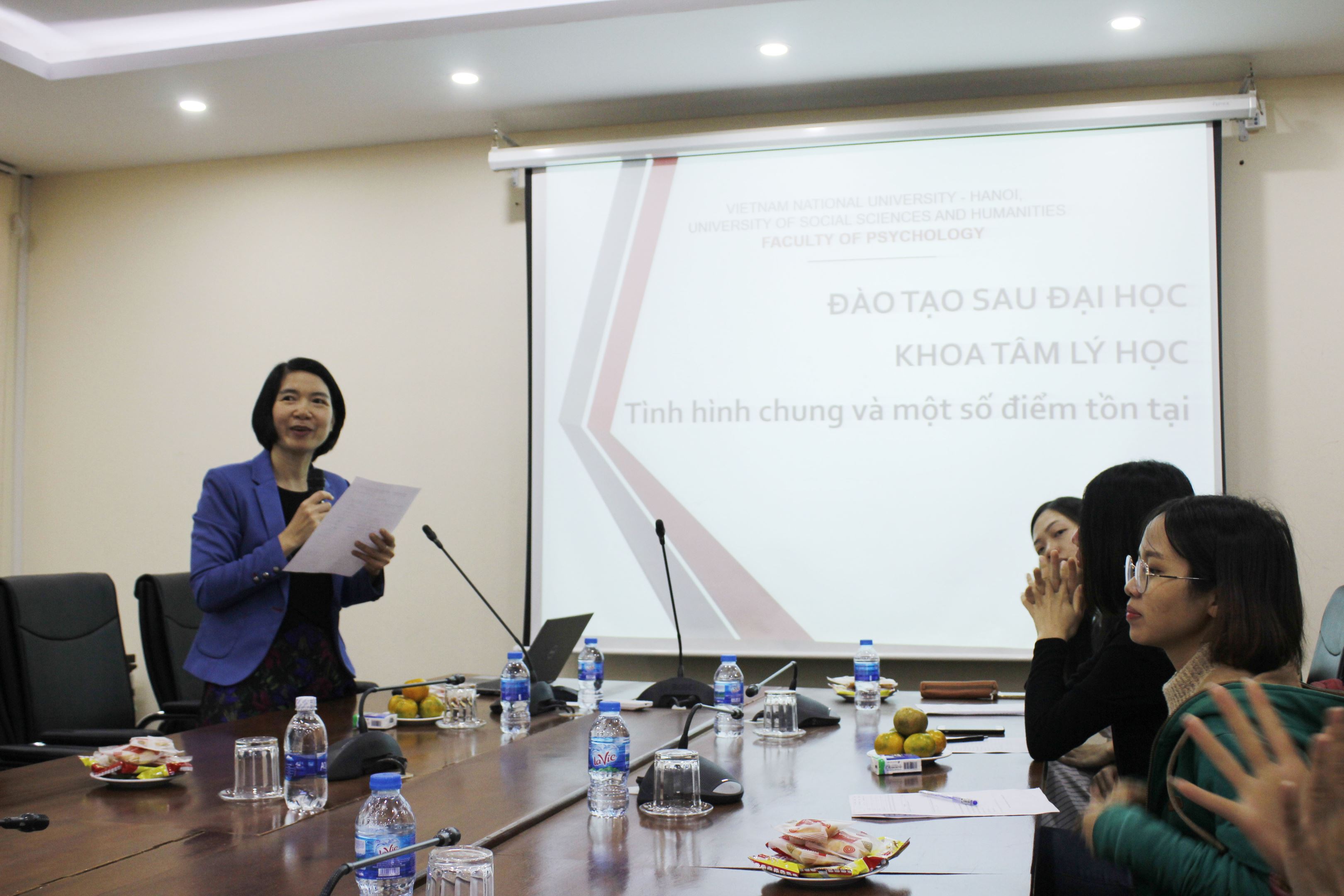
Associate Professor Dr. Truong Thi Khanh Ha - Head of the Psychology Department, presented a report on the postgraduate training situation of the Department.
Associate Professor Tran Thanh Nam (Faculty of Education, Vietnam National University, Hanoi) believes that Master's programs in Clinical Psychology with an applied focus should emphasize practical activities and handling specific cases, therefore, full-time and continuous study is best. However, this poses difficulties for students who are already working. Evaluating students' practical activities should not only be based on the number of hours or cases, but more importantly, on the results of each case: how well they supervised, what the outcomes were, whether they followed through on each case, and how they supported clients and patients…
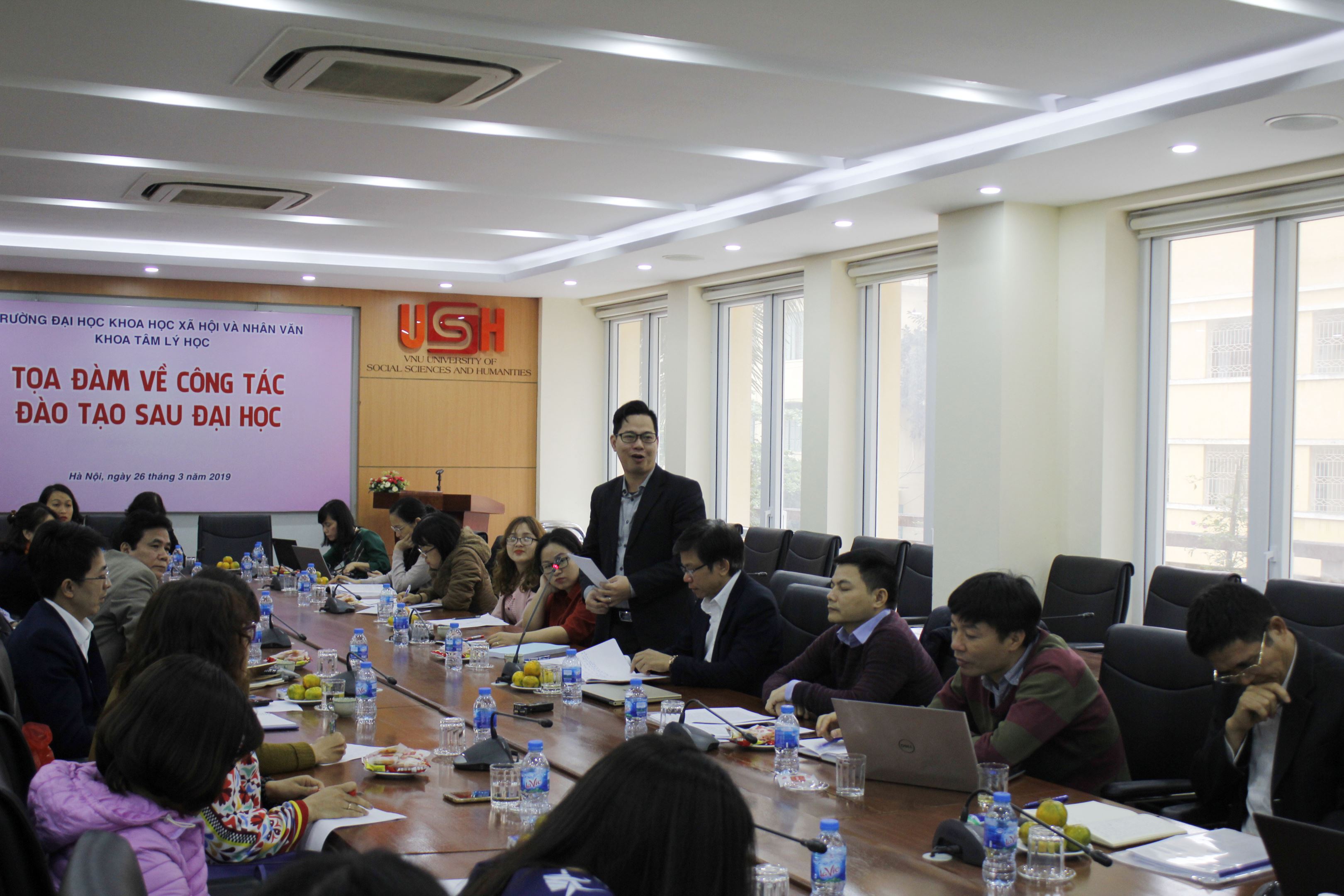
Assoc. Prof. Dr. Tran Thanh Nam - University of Education, Vietnam National University, Hanoi, delivered a speech at the Conference.
Dr. Cong Huan (Bach Mai Institute of Mental Health) stated: The Institute established the Clinical Psychology Department three years ago and it welcomes graduate students and doctoral candidates from the Department for practical training and internships. However, the training period of only 1-2 months is too short; doctoral candidates do not have enough time to familiarize themselves with the work and build case files for each patient.
Ms. Ha (Institute for Psychological Research on Drug Addiction) also agreed with the view that the time spent on practical training at facilities should be increased for trainees, so that they not only grasp psychological counseling techniques but also internalize ethical issues through the process of counseling clients. Ms. Ha also suggested that there should be closer ties between training facilities and supervising lecturers and suggested that the Faculty should open more specialized training programs to meet the real needs of the facilities.
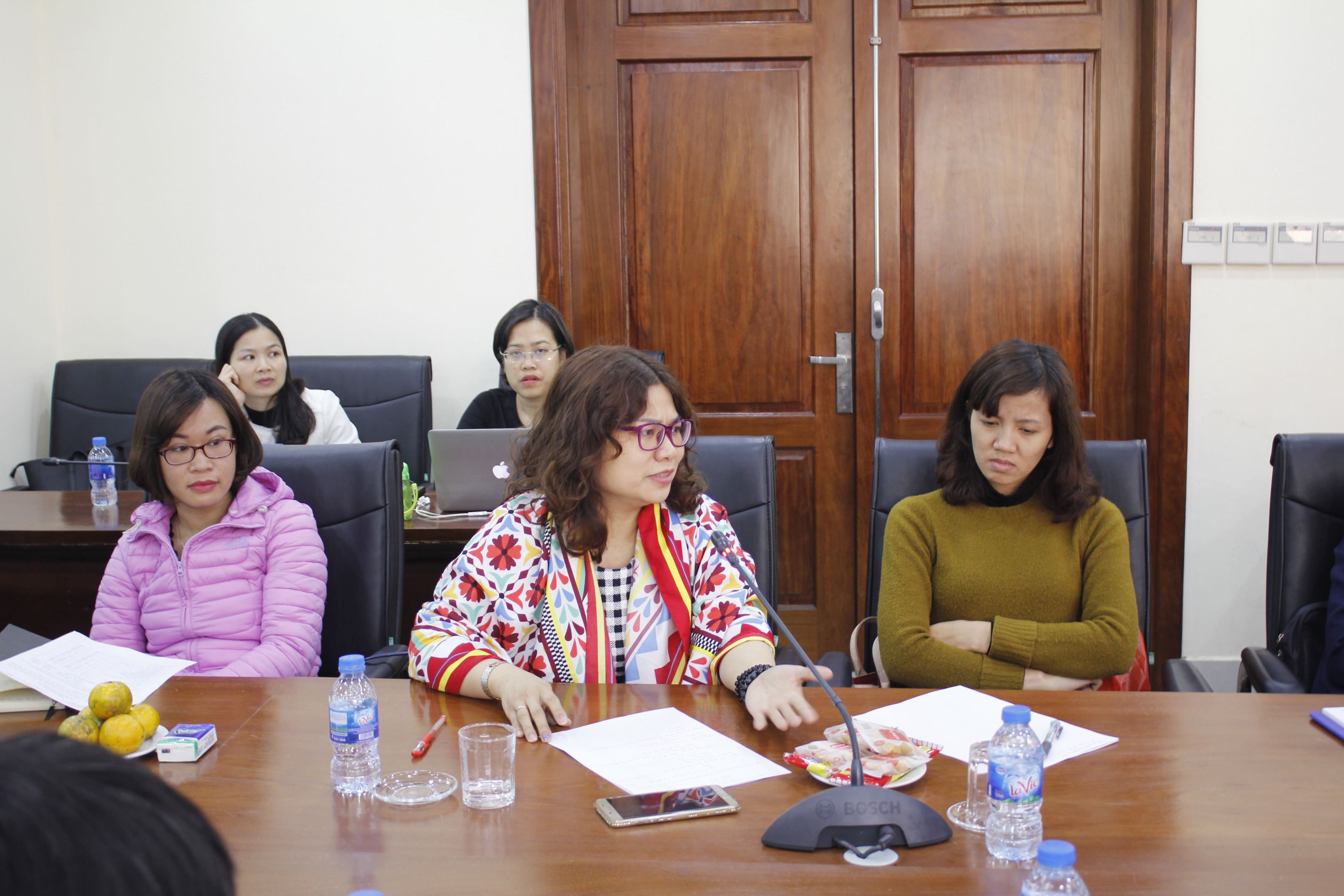
Professor Nguyen Huu Thu (Faculty of Psychology) suggested that the Faculty should evaluate and summarize its postgraduate training activities, combining this with references to psychology training in advanced countries around the world to develop training programs that reflect the Faculty's unique identity, align with global trends, and attract students. Some specializations could be developed through collaborative training with hospitals, research institutes, and psychological counseling and treatment centers, such as Geriatric Psychology – a crucial training direction for the future. Furthermore, the Faculty should take measures to attract the participation of businesses and employers in the training process.
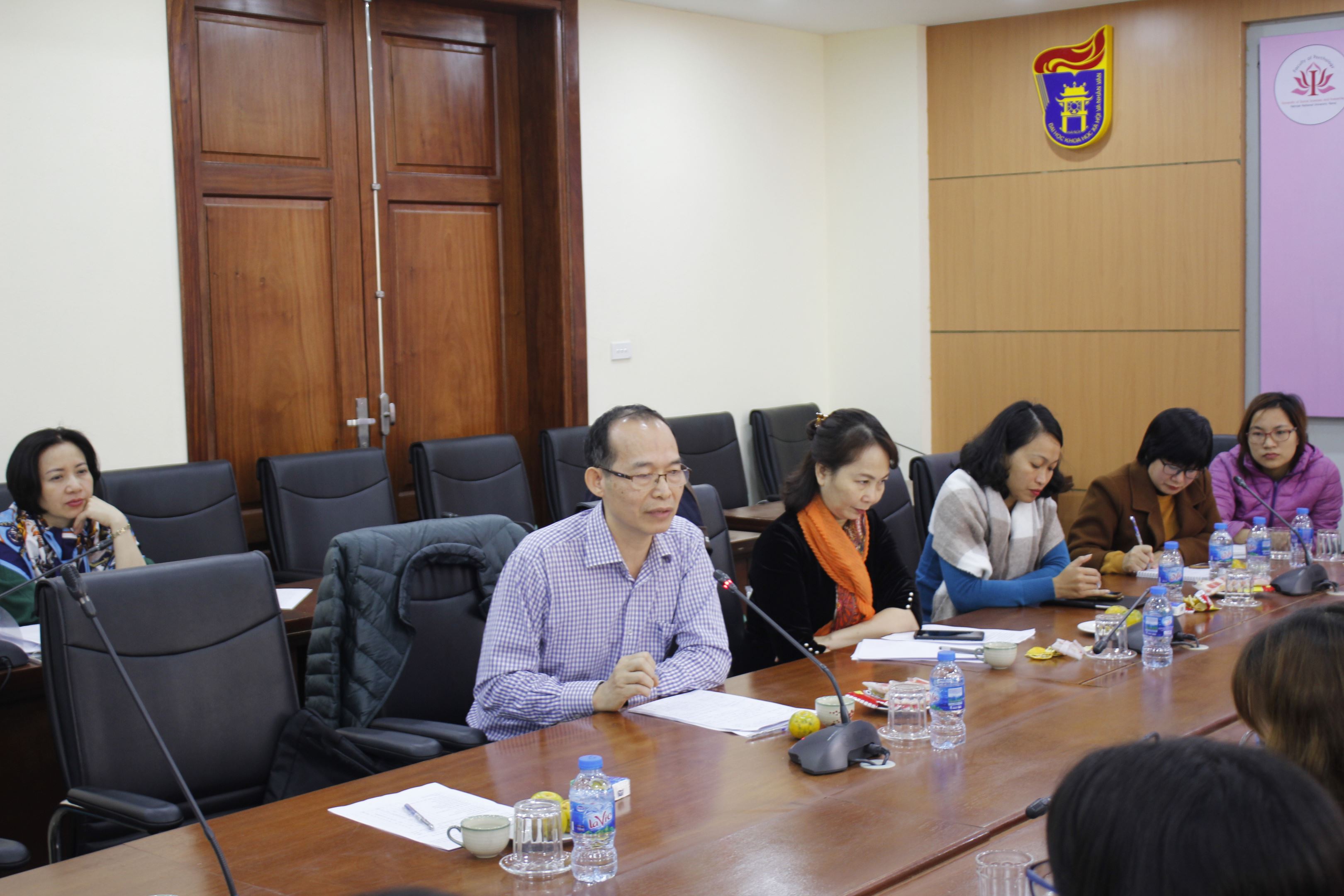
Associate Professor Dr. Le Van Hao (Deputy Director of the Institute of Psychology) delivered a speech at the Conference.
At the conclusion of the Conference, Vice Rector Hoang Anh Tuan, on behalf of the university leadership, delivered a speech highly appreciating the dedication shown by the lecturers and postgraduate students and doctoral candidates of the Psychology Department at the Conference.
The Vice Rector emphasized the fact that in recent years, postgraduate training at the University, VNU Hanoi in particular, and other universities in general, has tended to become saturated, leading to a decline in the number of graduate students and doctoral candidates in all fields. This creates significant difficulties and pressure for training institutions. One of the main reasons is the trend towards a more practical approach among learners. Students are aware that they are investing in their future, learning to work, and therefore have increasingly higher demands on training institutions. This puts pressure on training institutions to innovate teaching and learning methods and improve quality. In this context, the fact that the Faculty of Psychology organized a conference with contributions from many sides is very commendable, demonstrating the Faculty's continuous efforts to innovate to meet practical requirements.
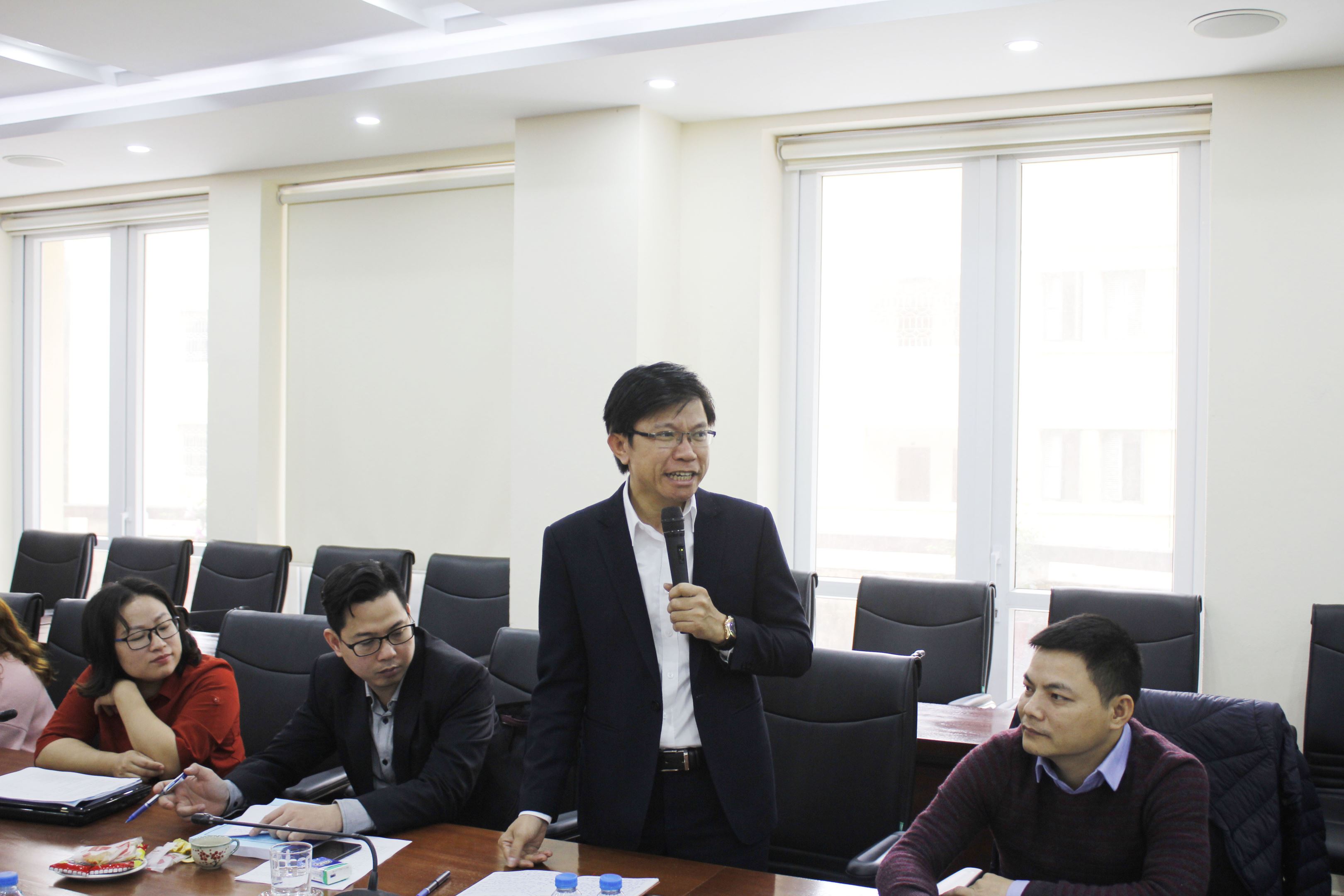
Vice Rector Hoang Anh Tuan delivered a speech at the Conference.
The University of Social Sciences and Humanities pays special attention to postgraduate training and its orientation must meet practical needs. Psychology is a field that is both closely linked to theoretical research and has high practical application. The University supports the Faculty in making adjustments to increase the practical application and the duration of internships and practical training in the curriculum.
Regarding the organization and operation of the training program, the University has been improving the postgraduate training process to make it more flexible and responsive to the specific training characteristics of application-oriented majors, including internship duration and the mechanism for linking training institutions with practical training facilities.
Regarding doctoral training under the new regulations, the University has implemented various solutions to support and promote international publications and enhance research capacity for staff and doctoral candidates, such as providing support of up to 250 million VND for a publication published by a foreign publisher.
Regarding the development of new academic disciplines, Vice Rector Hoang Anh Tuan shared the university's perspective: in addition to maintaining the quality of training in traditional basic science disciplines, the university will develop new specialized training programs with high practical application, in line with social trends. The Psychology Faculty could consider collaborating with other departments in the university such as Social Work, Anthropology, etc., to develop new specialized programs.
Finally, Vice Rector Hoang Anh Tuan expressed his hope that the Faculty of Psychology - one of the units with a high-quality and highly qualified staff - will be a pioneer in innovating postgraduate training activities, maintaining its position as a leading institution nationwide in psychology research and training.
Author:Thanh Ha. Photo: Truong Quang Lam
Newer news
Older news

