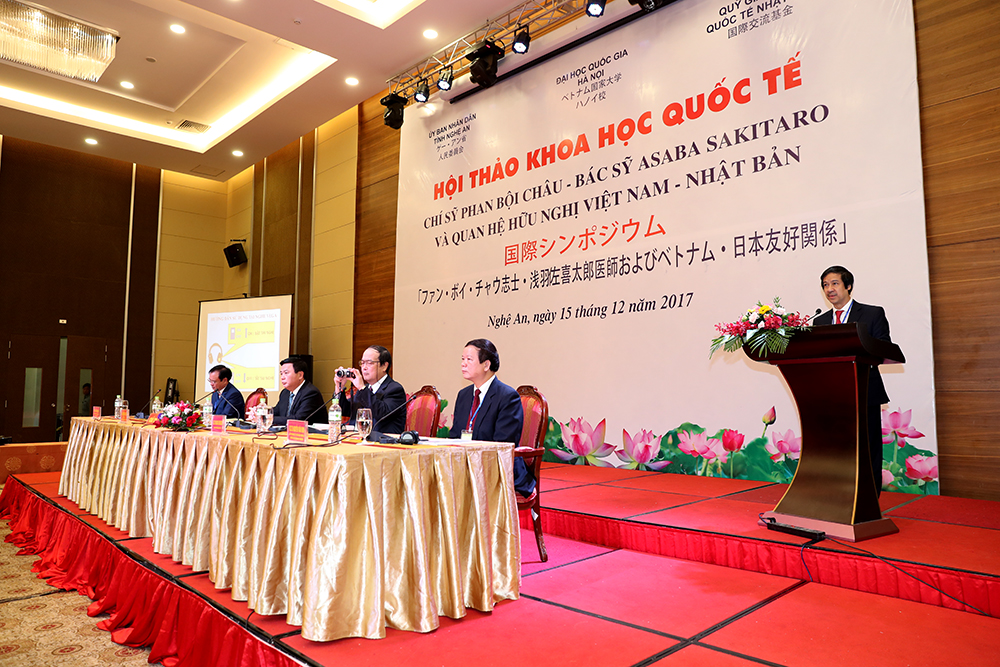
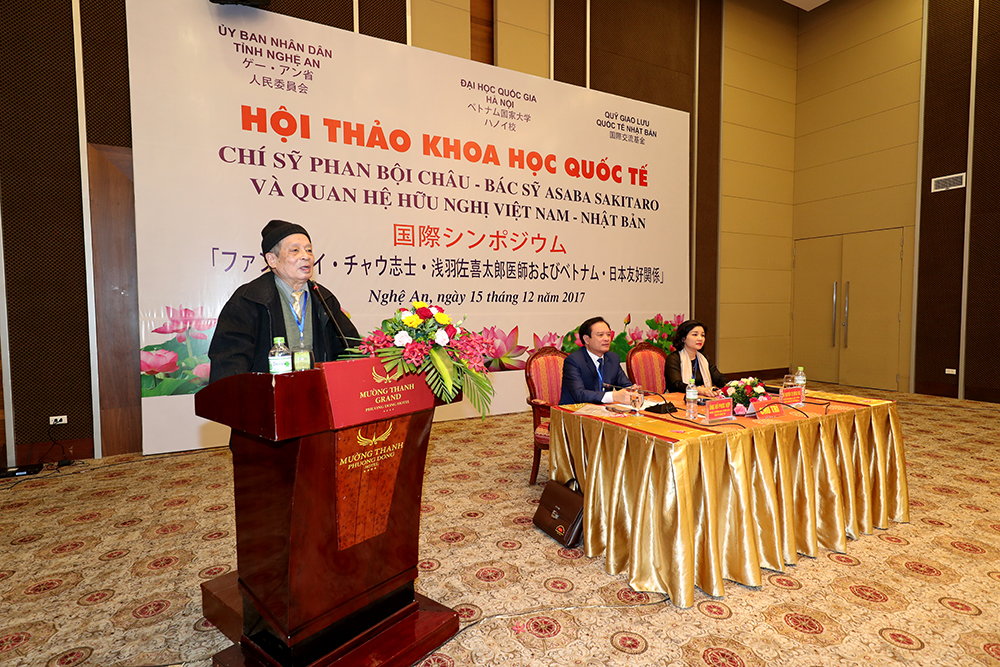
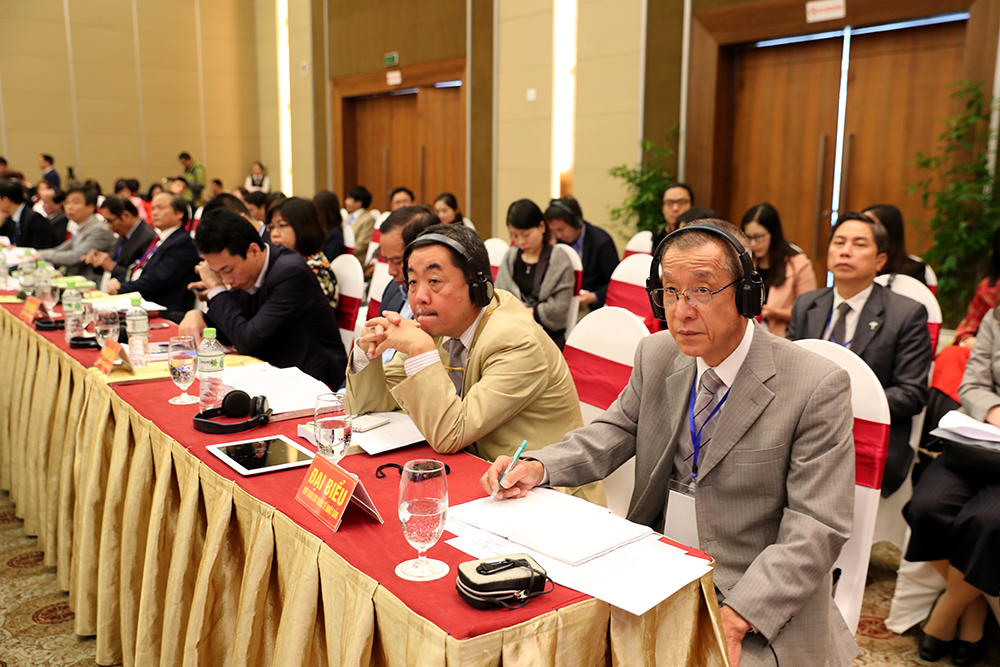
1. After a period of preparation and a day of intensive work, the International Scientific Conference with the theme “Patriot Phan Boi Chau - Doctor Asaba Sakitaro and the friendly relations between Vietnam and Japan."A collaboration between Hanoi National University and the Provincial Party Committee and People's Committee of Nghe An Province, together with the Japan Foundation for International Cultural Exchange (Japan FoundationThe conference, jointly organized by the Vietnam-Japan University (under the Vietnam National University, Hanoi), Waseda University (Japan), and the Asaba Association of Japan, was a great success. The conference was honored to welcome and hear guiding remarks from the following distinguished scholars and scientists: Prof. Dr. Nguyen Xuan Thang, Secretary of the Central Committee of the Communist Party of Vietnam, Director of the Ho Chi Minh National Academy of Politics, and Head of the Central Theoretical Council; Assoc. Prof. Dr. Nguyen Dac Vinh, Member of the Central Committee of the Communist Party of Vietnam, Secretary of the Nghe An Provincial Party Committee; and Assoc. Prof. Dr. Nguyen Kim Son, Secretary of the Party Committee and Director of the Vietnam National University, Hanoi.
Associate Professor Dr. Nguyen The Ky, Member of the Central Committee of the Communist Party of Vietnam, Director General of the Voice of Vietnam Radio, Chairman of the Central Council for Literary and Artistic Theory and Criticism; Dr. Nguyen Xuan Duong, Deputy Secretary of the Provincial Party Committee, Chairman of the People's Committee of Nghe An Province; and many leaders from central departments and agencies; leaders of the Provincial Party Committee and People's Committee of Nghe An Province; representatives from other provinces; leaders of universities and political schools; research institutes and centers; news agencies and media outlets... also showed great interest and attended to exchange professional opinions in the subcommittees of the Conference.
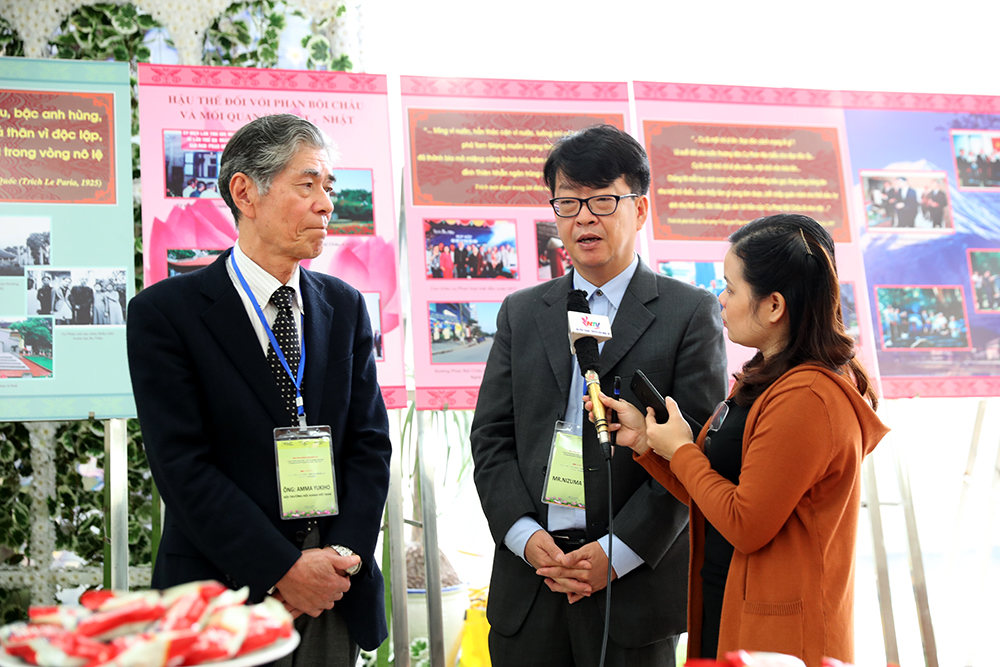
The conference was honored to welcome His Excellency Kunio Umeda, Ambassador Extraordinary and Plenipotentiary of Japan to Vietnam; Mr. Hiroyuki Miyazawa, Member of the House of Representatives of Japan; Mr. Kawai Jun, Deputy Director of the International Cultural Exchange Center - Japan Foundation; Ms. Amma Yukiho, President of the Asaba Association; and Mr. Yamagi Yoji, Chief of Staff of the Japan-Vietnam Friendship Association, along with numerous diplomats, social activists, experts, and researchers from Vietnam and Japan. The presence and contributions of the leaders, distinguished guests, scientists, and experts from both domestic and international backgrounds were crucial factors in determining the success of the scientific conference.
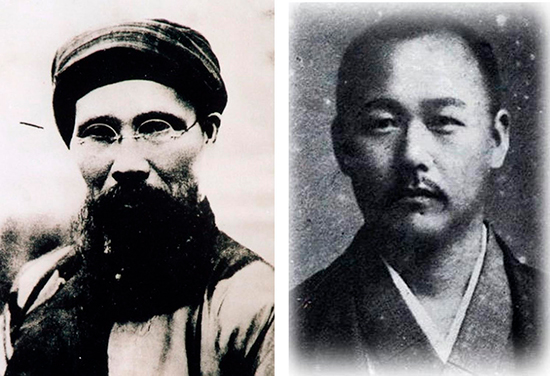
Patriot Phan Boi Chau and Doctor Asaba Sakitaro
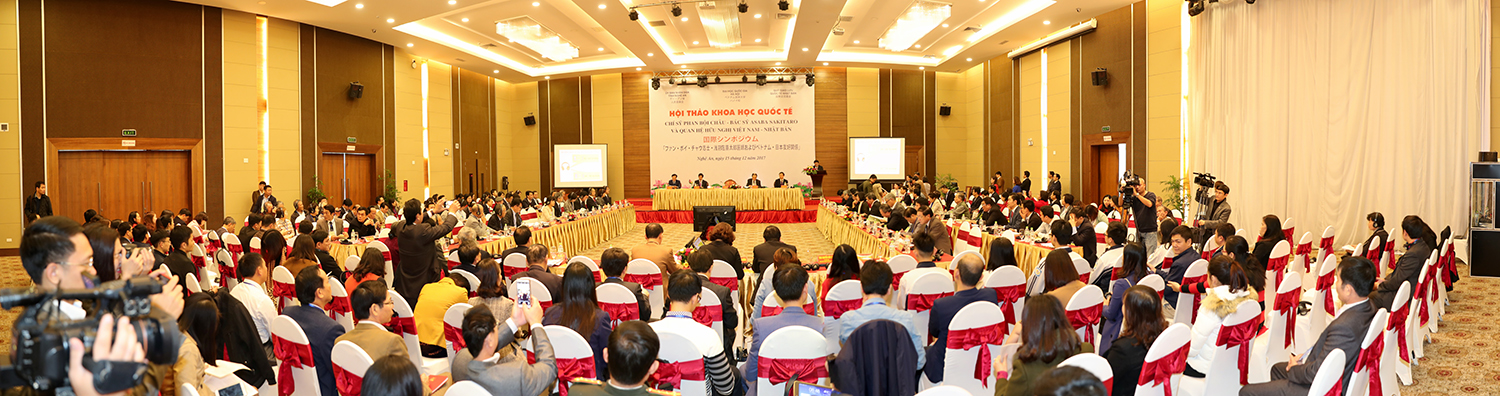
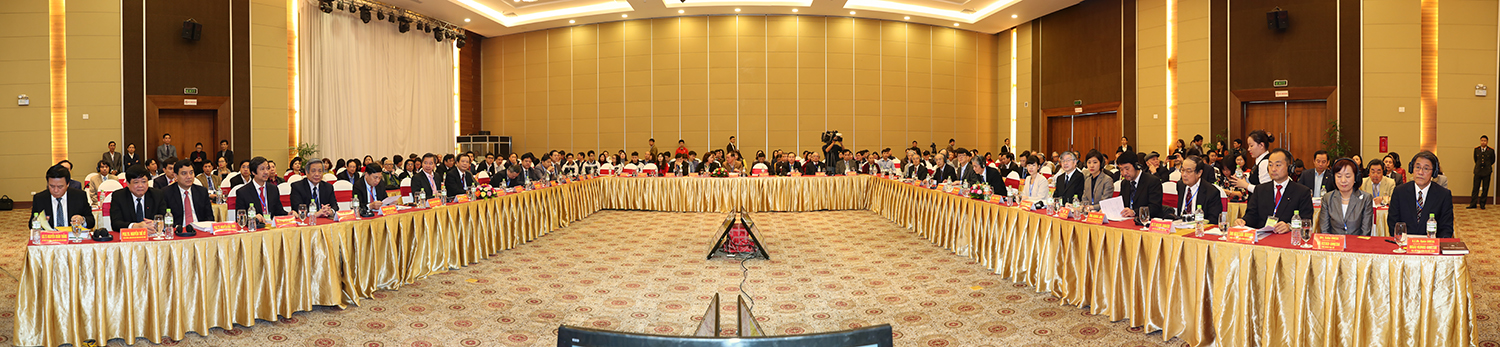
2. International Scientific Conference on “Patriot Phan Boi Chau, Doctor Asaba Sakitaro, and the Vietnam-Japan Friendship RelationsThe conference was held in Nghe An province, the birthplace of the patriotic scholar Phan Boi Chau, President Ho Chi Minh, and many other outstanding leaders, heroes, and cultural figures. The conference was a continuation and development of the research achievements of domestic and international researchers over the years on the patriot Phan Boi Chau, Dr. Asaba Sakitaro, the Dong Du movement, and the history of friendly relations between Vietnam and Japan. With the defined research objectives and content, at the plenary session, along with welcoming remarks, the conference heard presentations from several scientists. Following the general session, professional activities took place actively in four subcommittees: 1.Patriot Phan Boi Chau and his homeland and country.; 2.Patriot Phan Boi Chau and the Dong Du Movement; 3.Patriot Phan Boi Chau - Doctor Asaba Sakitaro and the Vietnam-Japan Friendship Relations; 4.Patriot Phan Bội Châu and his ideas for national salvation.In the subcommittees, 31 out of the 47 papers submitted to the Conference were presented, and there were also 27 exchanges of opinions during the sessions. In fact, the central theme of the Conference, as well as the specific themes of each subcommittee, received enthusiastic attention and discussion from scientists and participants. From the perspectives of various scientific disciplines: History, Political Science, International Relations, Literature, Cultural Studies, Linguistics, Local Studies, etc., the specialized content of the Conference was viewed and analyzed from many different angles and dimensions.A specialized scientific mindset combined with interdisciplinary research permeated all the content and proceedings of the conference.Thanks to this, the Conference achieved many important accomplishments; many new scientific findings, insights, and assessments were presented and raised at the Plenary Session as well as in the subcommittees.
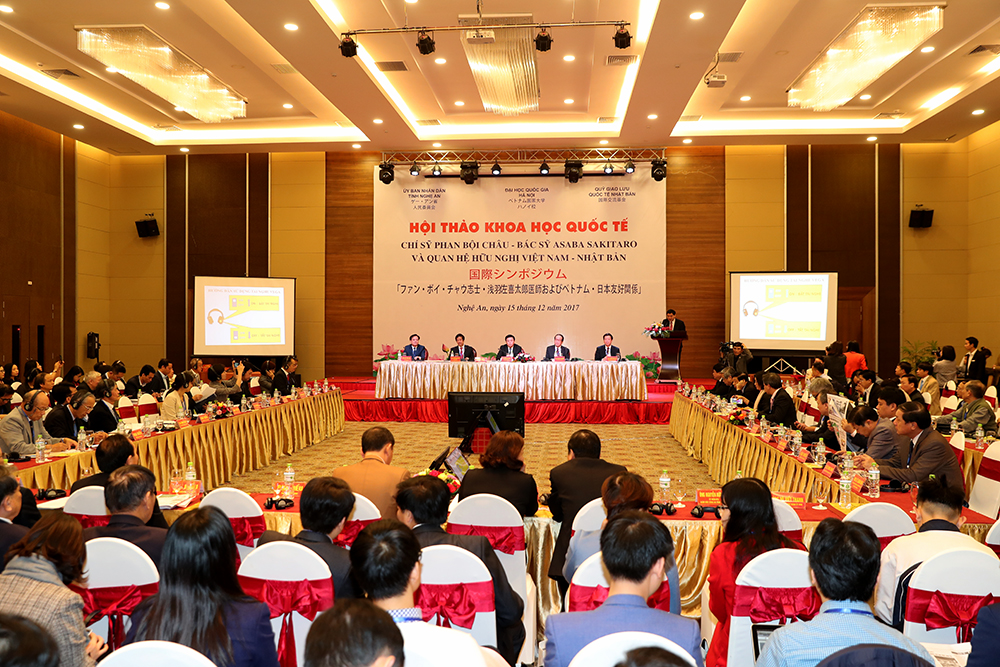
Overview of the conference
3. From a professional perspective, several reports presented at the conference focused on analyzing and clarifying the historical context and political situation in the world, Asia, and Vietnam during the late 19th and early 20th centuries. This was a period marked by significant upheavals in regional and global political life. After a period of development and consolidation, capitalism had strongly penetrated Asian, African, and Latin American countries. From the latter half of the 19th century, imperialist powers increasingly revealed their ambitions to conquer colonial peoples, waging a series of wars of aggression to seize land, and vying for spheres of influence and markets. In the confrontation with Western powers, facing the might of modern weaponry and the enormous volume of goods from the industrial economies of Europe and America, the independence and survival of Eastern nations were presented as a major dilemma and the most serious political challenge.
In Asia, due to its deep-seated economic and institutional struggles, the Manchu Qing dynasty suffered heavy defeats in the Opium Wars and was forced to open up and make concessions to the West. Meanwhile, in the island nations, Japan, despite being threatened by the West and forced to sign many unequal treaties, remained determined to carry out the Meiji Restoration and achieved many important successes. Japan's victory in the Russo-Japanese War of 1904-1905, as well as other achievements, are notable examples.New book,NewsThe ideas of thinkers such as Rousseau, Montesquieu, Liang Qichao, Kang Youwei, Sun Yat-sen, and Fukuzawa Yukichi... swept across Asian nations like a breath of fresh air, awakening regional societies. Many Vietnamese intellectuals, patriots, and revolutionaries looked to Japan with the belief that they could learn from Japan's path and hope to rely on Japan to drive out colonial forces and regain independence and freedom for their nation.
Among the Vietnamese patriots of the early 20th century, Phan Boi Chau emerged as a central figure in the patriotic movement, and in fact, Phan Boi Chau became "A hero, an angel, a selfless figure for independence, revered by 20 million people under slavery.”[1]Phan Bội Châu was a great patriot, a great cultural figure and thinker, leaving a profound mark on Vietnamese history, on the nation's cultural journey, and on the struggle for national revival.
4. At the Conference, especially the presentations in Subcommittees 2 and 4, many reports delved into analyzing the factors leading to the formation of patriotism, the development process, and the fundamental developments in Phan Boi Chau's patriotic thought. Influenced by new ideological trends, with political sensitivity and revolutionary experiences, Phan Boi Chau quickly recognized the limitations of feudal thinking and ideology. He understood that, in the context of capitalism pursuing expansionist policies worldwide, the resistance war against the French could not be organized confined to a single base or locality. For the resistance to succeed, it was essential to organize it on a nationwide scale. Furthermore,For the revolutionary cause to succeed, it requires organization, a political party, a revolutionary program and methods; it also requires strong military forces, modern weapons, solidarity with many social forces, and the support of patriots and revolutionaries in Asia and around the world.A broad political mindset, extending the national vision outward, spurred Phan Boi Chau's revolutionary thoughts and actions. In fact, he not only sought support from Japan, China, and others during his revolutionary activities.Pan-AsianismThis patriotism was formed in Phan Boi Chau's thinking and actions.
On their journey to find a way to save the country, Phan Boi Chau and his comrades analyzed, considered, and chose between various locations and political forces (China, Japan, Siam, Germany, etc.) and finally decided to go to Japan to "seek assistance." The famous Dong Du movement was formed from there and actively operated for four years (1905-1909). During that time, Vietnamese patriots received support from many Japanese social forces and achieved important successes in the fields of: fostering revolutionary spirit; building and consolidating patriotic organizations; and focusing on training young intellectuals for the country. However, by early 1906, due to the Japan-France agreement, Phan Boi Chau and his associates had to leave Japan for Siam and then return to China to continue their activities. With tireless efforts, Phan Sao Nam initiated, founded, and became a key figure in many patriotic organizations such as:Duy Tan Society,East Asian Alliance,Dien-Que-Viet Alliance,Vietnam Restoration Association...
Through these organizations, Phan Bội Châu not only established solidarity and close ties with many Asian patriots and revolutionaries, but also secured their support for the liberation struggle of the Vietnamese people. From founding and participating in revolutionary organizations and in the revolutionary struggle, experiencing both successes and failures, Phan Bội Châu's ideology and principles for national salvation became increasingly refined, clearly demonstrating a transformation from the initial "principle ofseeking help" luxurious "learning"; from "violence" luxurious "modernization"; fromPatriotism,NationalismluxuriousRegionalismand reach forInternationalismFrom a political perspective, the study examines the socio-political theories of Asian and Western thinkers, such as:Social Darwinism”, “Asian Escape Theory" by Fukuzawa Yukichi, theory "Preserving China"In the writings of Okuma Shigenobu, etc., Phan Boi Chau pondered and strived for the establishment of new state models. From the principle of building a state..."Constitutional monarchy(Japanese model), come and show your support.Democratic republic(Sun Yat-sen's bourgeois democratic model), Phan Boi Chau ultimately expressed his attitude towards this model.Proletarian-Socialist State, expressing admiration for Lenin and the October Revolution.
However, due to the limitations of the era, the patriot Phan Boi Chau was unable to comprehensively approach, study the theoretical basis, and reach truly profound understanding of the model of the proletarian state, as well as its role, function, and mission. This process was undertaken by later generations of patriots and revolutionaries, most notably...Leader Nguyen Ai Quoc developed to a new level, a new level of awareness and creative spirit suitable to the realities of the Vietnamese revolution.By linking the Vietnamese revolution with the world revolutionary movement, aligning it with the currents of the times, following the path of the proletarian revolution, and focusing on solving the most fundamental problems of an agricultural country in the East, leader Nguyen Ai Quoc - Ho Chi Minh founded the Communist Party of Vietnam, led our people to the success of the August Revolution of 1945, and waged two sacred wars of resistance, liberating the country and completing the national reunification.
It can be affirmed that, through his rich patriotic activities and revolutionary fervor, with a spirit of continuous self-learning, self-improvement, and self-renewal, Phan Boi Chau essentially kept pace with the rapid changes in revolutionary movements in Asia and the world. Phan Boi Chau played a crucial role in Vietnamese history in the early decades of the 20th century, having a strong influence on patriots of his time and revolutionaries of subsequent generations.His character, his courage, his revolutionary zeal, and his love for his homeland will forever be etched in the memories of millions of Vietnamese people and in the glorious pages of our nation's history..
5. Not only was Phan Boi Chau a fervent patriot, but he was also a great cultural figure of the country.For him, culture was politics, a movement to save the country, a method to gather forces, and a weapon to fight the enemy.During his revolutionary activities in Vietnam, Japan, China, Siam, and other countries, as well as during the last 15 years of his life spent in confinement and under surveillance in Hue, Phan Boi Chau wrote hundreds of poems and compiled dozens of works on various fields, from history, philosophy, politics, and religion to literature and art. His writings are integrated into the comprehensive collection "Complete Works of Phan Boi Chau"(and some new works, or new approaches and analyses continue to be introduced at this Conference), clearly demonstrating profound academic knowledge, love for the homeland, national sentiment, and a burning desire to always be ready to dedicate their lives to the people and the country.That was the courage, fortitude, and wisdom of a patriot, of a revolutionary generation, but also the quintessential character of a son of Nghe An province.,More broadly, it encompasses the cultural space of Nghe An - Thinh Hoa, a land of "sacred places and outstanding people," renowned for its cultural depth, academic traditions, compassion, and unwavering courage and resilience..
It can be said that throughout his life, Phan Bội Châu devoted all his energy to the struggle for national independence.His literary works and his calls to save the nation are the clearest, most representative, and typical manifestations of his academic level, political attitude and thinking, methods of struggle, unwavering will, and revolutionary fervor.Throughout his revolutionary activities and literary works, Phan Bội Châu always devoted his thoughts and feelings entirely to his homeland and country.to understand the profound pain of a nation that has lost its country.! In the workHistory of Vietnam's Loss of IndependenceHe once wrote:Nothing is more painful than being a person who has lost their country, and nothing is more painful than a person who has lost their country and is discussing national affairs."!
From the time he left his homeland for Japan in early 1905 until his death on October 29, 1940, in Hue at the age of 73, Phan Boi Chau's revolutionary career was a journey of tireless struggle and sacrifice. He was ready to go anywhere, do anything, unafraid of hardship or danger, in order to achieve his ultimate goal: bringing independence and freedom to his country. On his journey of fighting for independence, facing political challenges and the influence of the global revolutionary movement, thanks to his intellect and courage, his self-study and reflection, and his interactions and exchanges with revolutionaries and many Asian intellectuals, he was able to overcome these obstacles.Phan Bội Châu was able to frequently access and absorb new intellectual insights on his revolutionary struggle, seeking new models of state that he believed were necessary for Vietnam.Phan Bội Châu also increasingly developed more accurate thoughts, perceptions, and assessments of the fundamental forces of the revolution. The working class, peasants, and the vast majority of laborers were always ready to actively participate in patriotic movements that could overthrow the yoke of Western colonialism and the feudal system.
Although Phan Boi Chau's revolutionary career did not achieve the desired results, the path he walked, the legacy he left behind, and the burning nationalistic sentiment that Phan Sao Nam instilled... have inspired, motivated, and enriched subsequent generations of revolutionaries to fulfill the sacred mission entrusted to them by the Fatherland and the people.
6. At the conference, many scientific reports in Subcommittee 3 focused on presenting and analyzing the special relationship and close bond between Phan Boi Chau and Dr. Asaba Sakitaro. Understanding and admiring the patriotic and revolutionary spirit of Phan Boi Chau and the Vietnamese youth participating in the Dong Du movement, during the extremely difficult times of the Duy Tan Society, Dr. Asaba dedicated a large sum of money to support the movement.The chivalrous act of Japanese doctor Asaba Sakitaro will forever remain a beautiful symbol of the friendship between Vietnam and Japan.It is truly moving to reread the short letters Phan Boi Chau sent to Doctor Asaba and the doctor's sincere reply, along with his swift decision to support Phan Boi Chau and the Dong Du movement.It is dedication and sacrifice for a greater cause.This stele was erected in 1918 by Phan Bội Châu with the assistance of the villagers of Iwata, Shizuoka Prefecture.This is an invaluable message to future generations about the deep, pure, and loyal bond between two patriots, two great personalities in the history of friendly relations between Vietnam and Japan..
During the conference, several scientists also raised the issue of the need to view and evaluate the Dong Du movement within the historical context of Vietnam-Japan relations. From the initial contacts of Buddhist monks from the Kingdom of Lâm Ấp (an ancient kingdom in present-day Central Vietnam) who were invited to Japan to perform court music at the inauguration of Todai Ji Temple in 752, the presence of Abe no Nakamaro (697-770) in Giao Châu in 753, to the vibrant development of Vietnam-Japan trade relations during the period of the Red Seal Ships (1592-1635), the Đông Du movement (1905-1909), the wave of Vietnamese students studying in Japan during World War II (1939-1945), and the wave of Vietnamese students studying in Japan starting from around 1990 to the present… The reports also clearly stated the goals, content, and nature of each of these educational and cultural movements. In addition, some presentations also recognized the legacy of the Dong Du movement and the history of Vietnam-Japan relations as solid foundations for consolidating and building new developments in the current comprehensive, trustworthy, and strategic partnership between Vietnam and Japan, for the peace and prosperity of both countries as well as the Asia-Pacific region.
Furthermore, at the conference, many scientists focused on analyzing the patriotic spirit, noble sentiments, and relationship between Phan Boi Chau and Phan Chu Trinh, and between these two patriots and Nguyen Ai Quoc, as well as many other revolutionary figures. This was not only a relationship of affection, trust, and sincerity, but also a continuation of the revolutionary legacy, and at its core, a passing on of the historical mission between generations of revolutionaries.Revolutionary spirit, mirrorThe sacrifices of patriots; the ideology, the will to selflessly dedicate themselves to the country, and the noble sentiments and close relationships between revolutionary predecessors serve as a guiding light, embodying the sacred values and significance of the patriotic tradition. They are a powerful source of encouragement and motivation for today's young generation of Vietnam to be even more proud of the nation's glorious history, to love their homeland even more, to hone their character, and to be more determined to overcome poverty and backwardness; to work creatively, to promote the entrepreneurial spirit; and to contribute to protecting territorial and maritime sovereignty and building a prosperous and strong Vietnam..
7. At the conference, Subcommittee 1 presented many papers on Phan Van San's (Phan Boi Chau) affection and attachment to his homeland and country. Phan Boi Chau always held the deepest, purest, and most sacred feelings for his homeland, Nghe An, and for Vietnam.The land of Nam Dan, Nghe An, and the Lam River of my homeland have nurtured my physical and spiritual well-being.and fostering patriotism and revolutionary spirit in a son full of ideals and aspirations.It is difficult to express in words the love and affection that Phan Bội Châu had for his homeland and for Vietnam, for his comrades and compatriots, for those he met and collaborated with in Nghe An, Ha Tinh, Hanoi, Hai Phong, Thua Thien Hue, Quang Nam, Vinh Long, and many other regions.That was the profound emotion of a great personality.That sentiment was always amplified during the years spent far from home, during the arduous movements to save the nation. Looking back at Phan Sào Nam's revolutionary life and reading his writings, we always see, everywhere, a profound love for the people and the country surging within us.
In the depths of our hearts and minds,His homeland and country have always held deep and unwavering affection for this patriotic figure.From the time Phan Bội Châu began his first activities in his journey to save the country, he always received invaluable support, protection, and assistance from his homeland, family, friends, and comrades. During the years of the Đông Du movement, sending young people to Japan for study, or when he was active in Siam and China, and then arrested in Shanghai facing the death penalty… Phan Bội Châu always received the fervent protection and support, the special affection of his hometowns of Nghệ An and Hà Tĩnh, of the people of Central Vietnam, and of the entire country. The respect and affection of the people throughout the country for Phan Bội Châu, whether he was sentenced to life imprisonment with hard labor, or when he lived in the capital Huế, or during his visit to his hometown in the spring of the year of the Ox (1926), and even after his death… is a fair recognition and assessment by the people and history of the immense contributions of a revolutionary and a cultural figure to the nation.
8. To commemorate the 150th anniversary of the birth of Phan Boi Chau and Japanese physician Asaba Sakitaro, and in preparation for the 45th anniversary of the establishment of friendly relations between Vietnam and Japan, the International Scientific Conference jointly organized by Hanoi National University and Nghe An province is a significant event and a central activity in the series of events: the Announcement Ceremony - Scientific Conference - Ceremony to receive the Certificate of Special National Monument status for the Phan Boi Chau Memorial Site.The results of the Conference represent a new step forward with many new professional and insightful discoveries in the research on the life and revolutionary career of Phan Boi Chau and his tireless contributions to the survival of the nation, to the preservation of cultural heritage and the sacred values of the country.The conference truly became a vibrant scientific forum among generations of researchers, between domestic and international scientists, and left many positive impressions on the friendly relations between Vietnam and Japan.
Obviously, when studying an outstanding revolutionary, a great cultural figure with a rich life of activity… we also see that there are still many issues and specialized topics regarding Phan Boi Chau's life and career; the influencing factors, the circumstances of the creation of his works and their ideological value; the transformation in his understanding and methods, the path of the struggle for national salvation, the models of state, as well as Phan Boi Chau's groundbreaking thinking during the historical transition period; The relationships, collaborators, and areas of activity of Phan Boi Chau both domestically and internationally, as well as his role in Vietnamese political organizations, patriotic movements, and revolutions, and the context and impact of Asian and global political factors on Vietnamese revolutionary movements in the late 19th and early 20th centuries, etc., are topics that need further in-depth research and clarification. This requires close cooperation between domestic and international experts, especially the participation of Japanese experts, in the collection of documents and research.
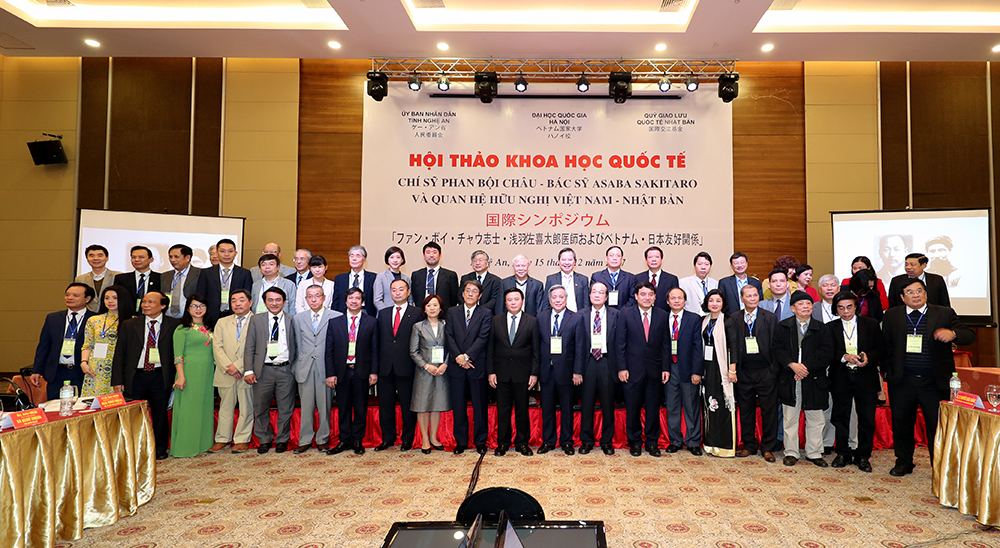
Once again, on behalf of the Organizing Committee and the Professional Committee of the Conference, we would like to express our sincere gratitude for the enthusiastic attention, guidance, and assistance of the Party and State leaders; the leaders of the Nghe An Provincial Party Committee and People's Committee; the Party Committee and Board of Directors of Hanoi National University; the Party Committee and Board of Directors of the University of Social Sciences and Humanities, Hanoi National University; the leaders of the Nghe An Provincial Political School, ... diplomats, political activists, social organizations, management agencies, scientific agencies, experts, researchers from Vietnam and Japan, and all those who have worked with the highest spirit of effort, coordinating, collaborating, and contributing their efforts and intellect to the overall success and many positive results of the Conference.
Vinh City, Nghe An Province
December 15, 2017
[1]Ho Chi Minh: “The Farces, or Varren and Phan Boi Chau”, published in the newspaper The Suffering People, Paris, issues 36-37, September & October 1925. Anthology of Vietnamese Literature, Volume 36, Social Sciences Publishing House, Hanoi, 1980, p. 451.
Author:Prof. Dr. Nguyen Van Kim
Newer news
Older news

