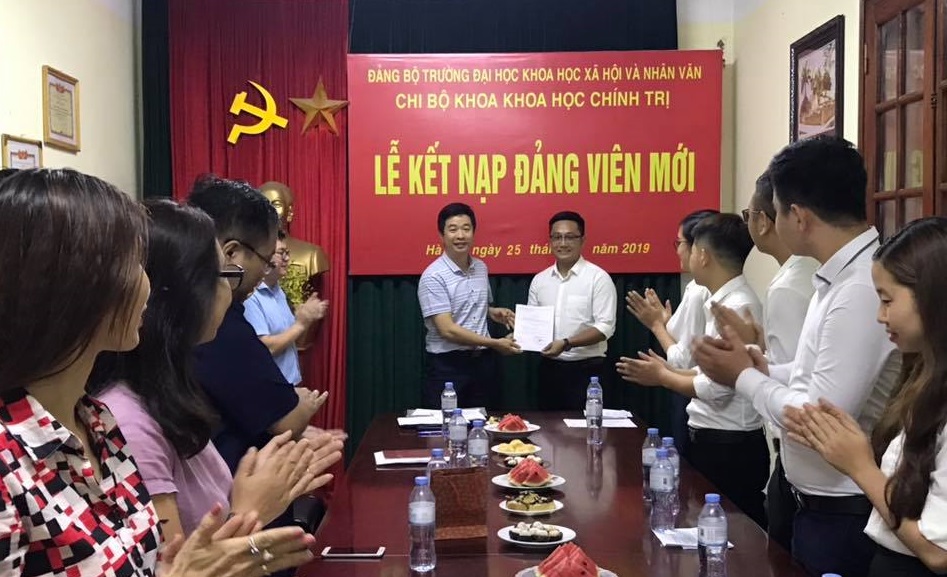
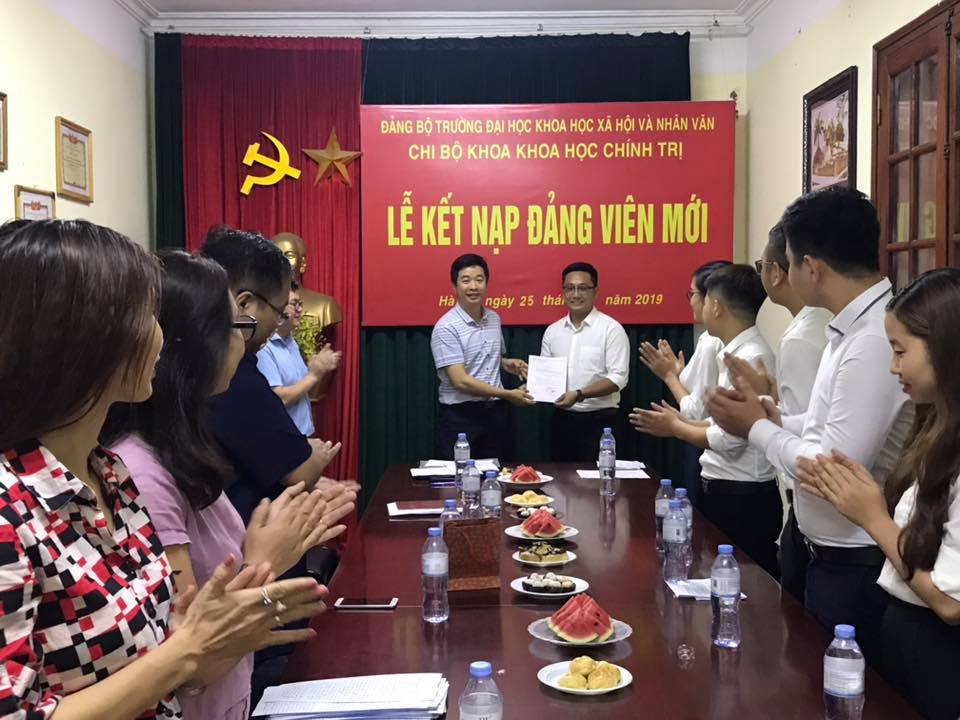
Political and ideological work: Unity creates consensus.
A key highlight of the Political Science Faculty Party Branch during the past term was its consistent practice of democracy and solidarity, fostering high consensus within the unit. The Party Branch built a united and cohesive team, promptly identifying and resolving emerging issues to stabilize the morale of staff, trainees, and students. Political and ideological work was implemented in conjunction with the professional activities of staff, through specific activities of trainees and students. The Party Branch and its Party Committee are a highly unified and cohesive collective in terms of ideological understanding and action, effectively exercising comprehensive leadership in the development of the Faculty.
Organization, degree standards, and expert training.
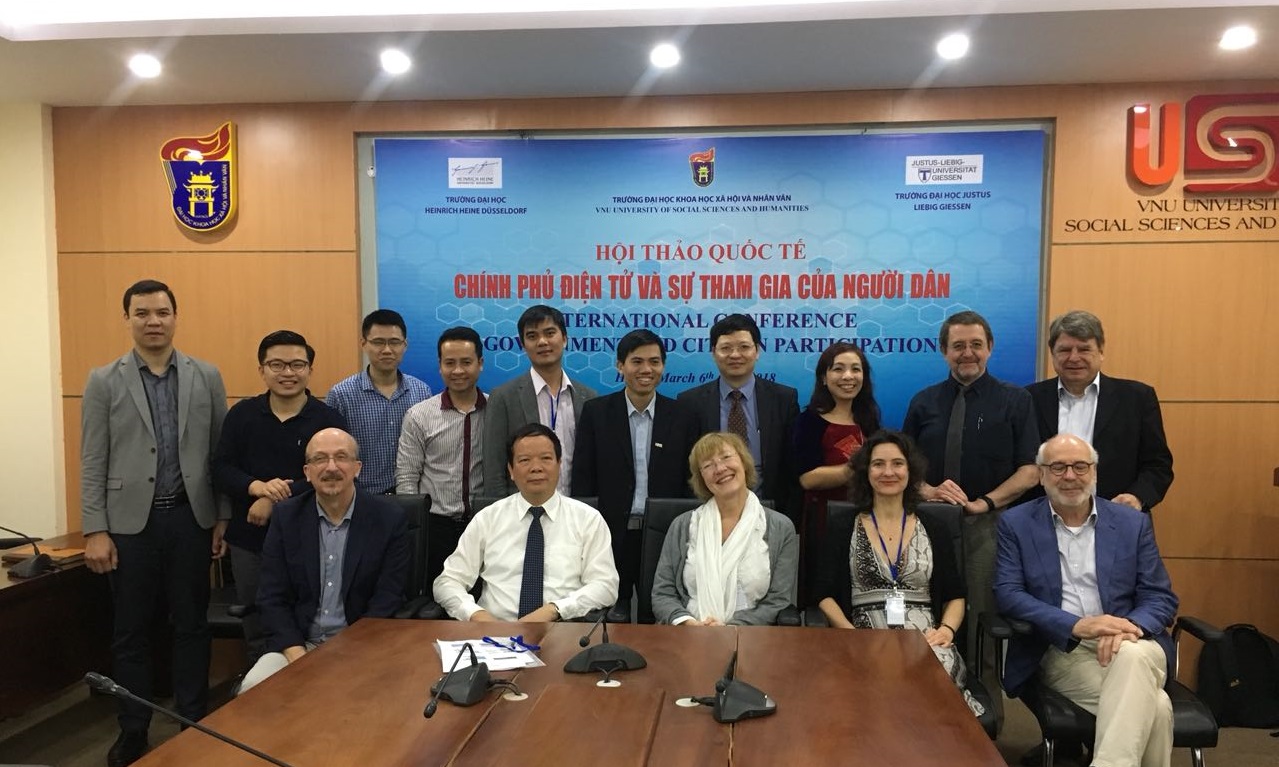
During the past term, the Faculty's organization was adjusted to suit the new situation by streamlining its departments. Currently, the Faculty has three divisions: the Ho Chi Minh Studies Division, the Political Science Division, and the Political Communication Division. The Faculty has also made initial preparations for upgrading itself to an Institute of Political Science to increase its proactiveness and dynamism in organization, training development, scientific research, international cooperation, Faculty management, and financial resources. The Faculty leadership has focused on and paid close attention to improving the professional skills, foreign language proficiency, academic qualifications, and expert training of its staff and lecturers. Many faculty members have been given opportunities for training both domestically and internationally, participating in seminars in South Korea, Germany, Russia, Laos, China, the United States, India, etc. In addition, the Faculty has also hosted numerous international scholarly delegations for seminars, lectures, and work, including experts from South Korea, Germany, the United States, and India, to meet the requirements of building a research university. The quality of the faculty has significantly improved. During the 2017-2020 term, the Faculty had two Party members appointed to the position of Associate Professor, three Party members successfully defended their doctoral dissertations, three Party members passed the doctoral entrance exam, one Party member successfully defended their Master's thesis, and one Party member graduated with a second degree in English.
Professional work: Quality, development
In addition to maintaining traditional short-term training programs, the Faculty has also expanded into new short-term training formats based on cooperation with foreign partners, such as: inviting domestic and foreign experts to give presentations on specialized topics to staff, lecturers, students, and postgraduate researchers; and signing memoranda of understanding on exchange programs for lecturers, students, and postgraduate researchers with foreign partners. Postgraduate recruitment has been prioritized, and recruitment methods are constantly being innovated to attract postgraduate and postgraduate students. Every staff member and lecturer in the Faculty actively and directly participates in recruitment, and many new promotional channels have been implemented. As a result, the Faculty of Political Science has consistently been among the top units in postgraduate recruitment at the University.
The transformation of undergraduate and postgraduate training programs in Political Science and Ho Chi Minh Studies has been carried out effectively and updated in an open, interconnected manner, closely linked to the demands of the labor market. The Faculty plans to develop new undergraduate and postgraduate programs and specializations to meet societal needs.
The Faculty's scientific research activities have yielded outstanding results. Over 95% of the Faculty's staff and lecturers have directly led or participated in numerous scientific research projects at various levels (State-level projects under the KX04 program, Northwest region; Nafosted projects, Ministry-level, National University-level, and institutional-level projects). Many research results from these projects have been refined into recommendations and policy advice for central and local agencies, and have been effectively applied in practice. At the end of 2019, staff of the Faculty of Political Science successfully registered 4 National University-level projects out of a total of 13 projects belonging to the University of Social Sciences and Humanities. During the past term, staff in the Faculty published over 60 works domestically, and notably, about 20 international works, including one work in a world-renowned journal.
Over the past three years, the Faculty has organized more than 20 presentations and seminars by domestic and international experts for faculty, students, graduate students, and doctoral candidates on topics related to Political Science, International Relations, Ho Chi Minh Studies, etc. The Faculty has also served as the coordinating body for 10 international conferences, seminars, and scientific discussions at the Faculty and University levels, including some held abroad. Following these conferences, the research results have been disseminated through conference proceedings, reference books, and monographs published domestically or internationally.
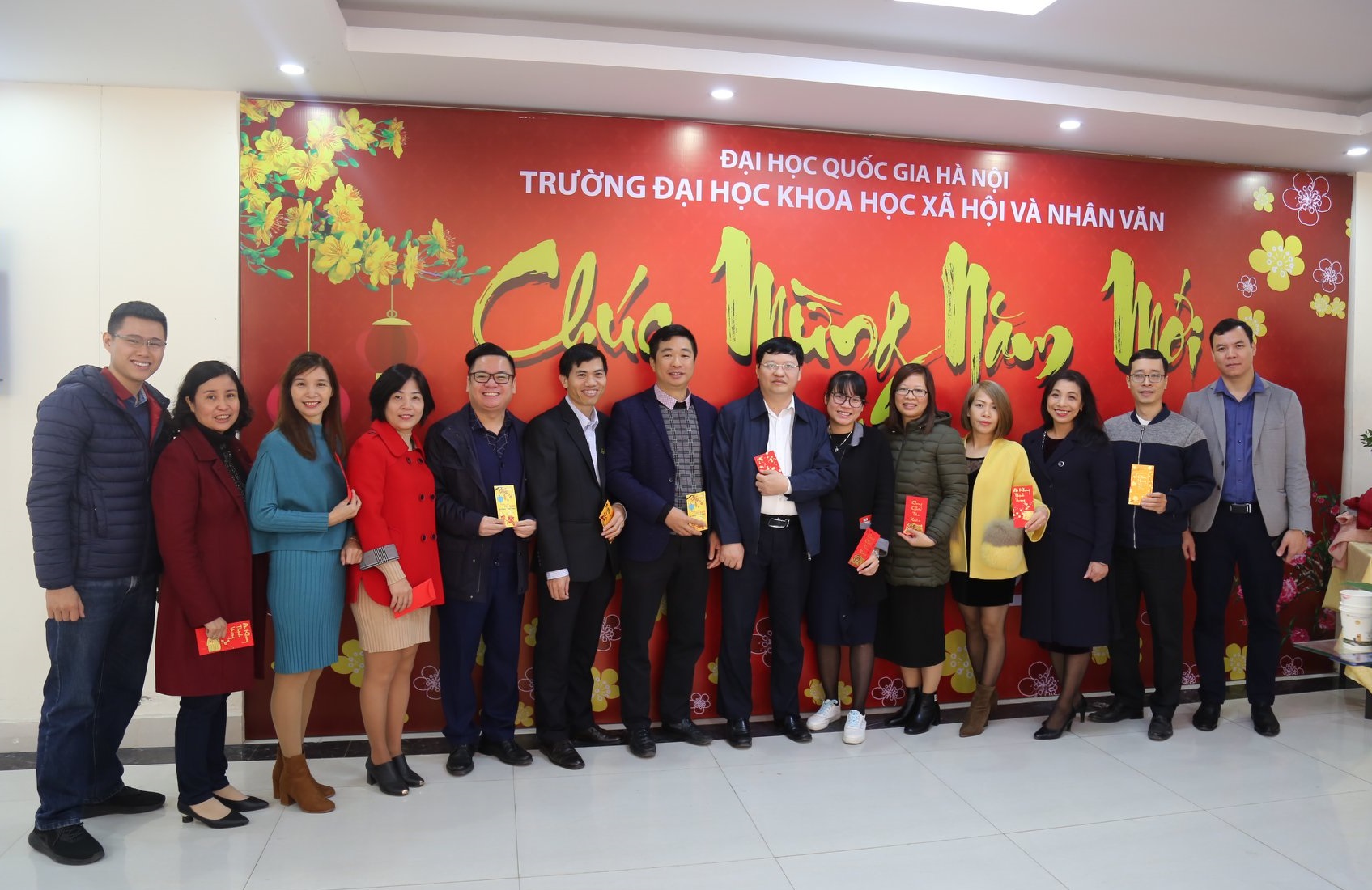
Cooperation and development are a strength of the Faculty of Political Science. The Faculty has built a reputation and maintained good cooperative relationships with traditional partners, while expanding cooperation with new partners such as universities in South Korea, Russia, China, India, the United States, Japan, Laos, etc. International cooperation brings multifaceted benefits to the Faculty, contributing to enhancing the Faculty's and the University's standing in training, scientific research, and development cooperation, while also improving the professional skills, material well-being, and spiritual life of the Faculty's staff and Party members.
With the action slogan for the 2020-2022 term: “Proactive, innovative, and developmental.The Party Cell of the Faculty of Political Science strives to successfully complete the assigned tasks: building a clean and strong Party organization; developing the organization; strengthening the standardization of lecturers and training experts; improving the quality of training; making breakthroughs in postgraduate training, scientific research and development cooperation; improving the living standards of cadres and Party members; building the Faculty into a nationally and internationally reputable specialized academic center for political science, contributing to the development of the University of Social Sciences and Humanities, Vietnam National University, Hanoi.
Author:Party cell of the Faculty of Political Science

