
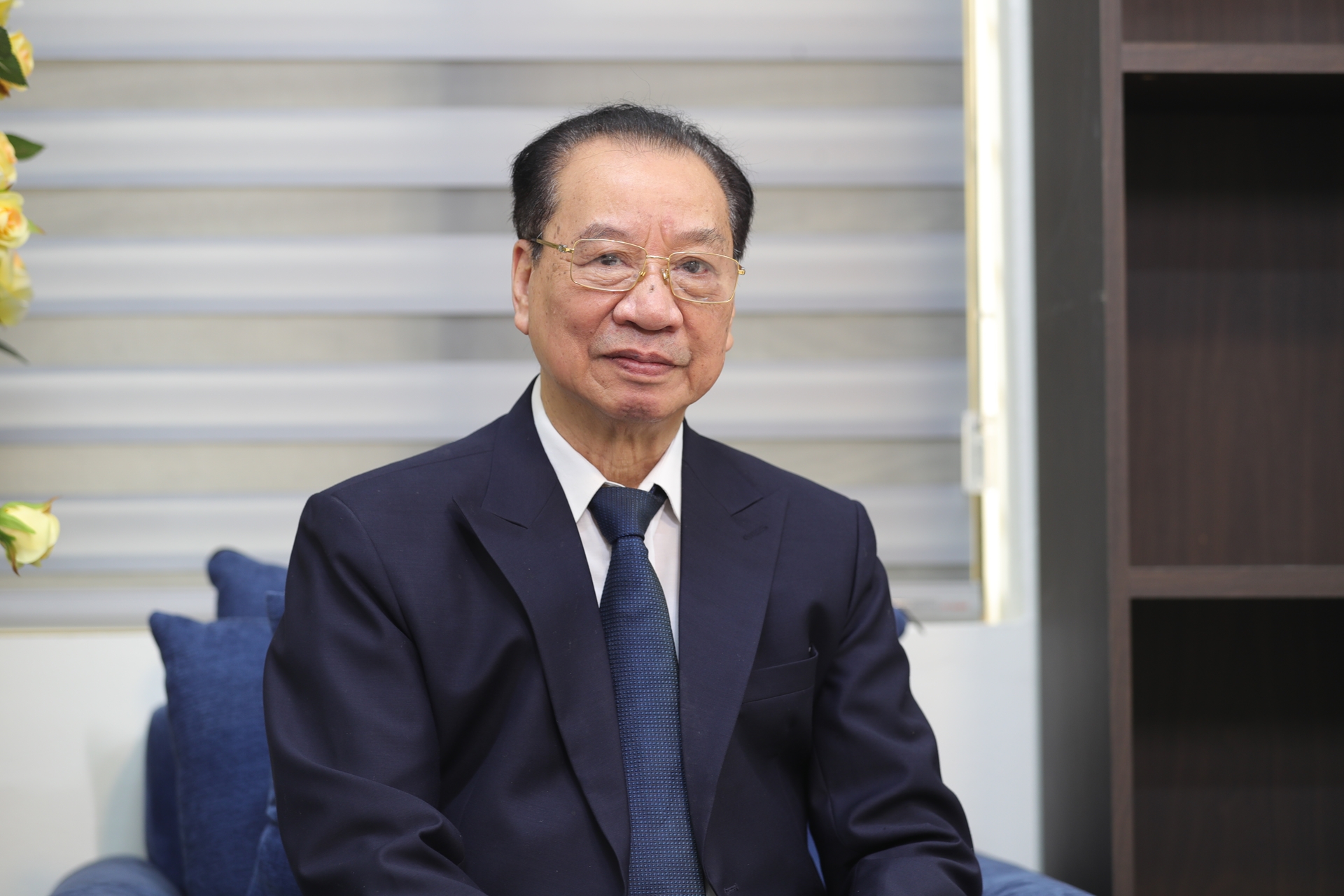
Professor, Meritorious Teacher Phung Huu Phu
A continuous flow of knowledge and elite training.
By 2026, Vietnam National University, Hanoi will have undergone 120 years of construction and development under various names, always adapting to each historical period. Although the purpose, content, and nature of its activities have differed due to historical circumstances, in all stages, Vietnam National University, Hanoi has consistently maintained its status as a leading center of knowledge and elite education in the country.
During the Enlightenment period (1906-1945), the University of Indochina was established by the French colonial government to train indigenous human resources to serve the administrative apparatus in Indochina. However, in reality, the establishment of the University of Indochina went beyond the intentions and control of the colonial government, becoming the only center for higher education that disseminated Western knowledge and civilization according to modern training models and methods. It attracted young intellectuals from Vietnam and several Southeast Asian countries. Among them were many who later became prominent intellectuals, patriots, and revolutionary fighters such as Trường Chinh, Võ Nguyên Giáp, Nguyễn An Ninh, Phó Đức Chính, Nguyễn Thái Học, Đặng Thai Mai, Cù Huy Cận, Nguyễn Đình Thi, Tôn Thất Tùng, and others.
The next historical turning point was the establishment of the Vietnam National University (1945–1954), founded by President Ho Chi Minh and the Government of the Democratic Republic of Vietnam immediately after the successful August Revolution. The Vietnam National University inherited, revolutionized, and Vietnamized the progressive elements of the University of Indochina, developing into the first high-quality, multidisciplinary university in independent Vietnam. It was a place that gathered and fostered the dedication and talent of many prominent professors, scientists, and cultural figures such as Tran Van Giau, Nguyen Van Huyen, Nguyen Xien, and Dao Van Tien… The university played a crucial role in laying the foundation for the formation and development of Vietnam's revolutionary higher education system, while simultaneously training elite human resources to serve the cause of national construction and defense.
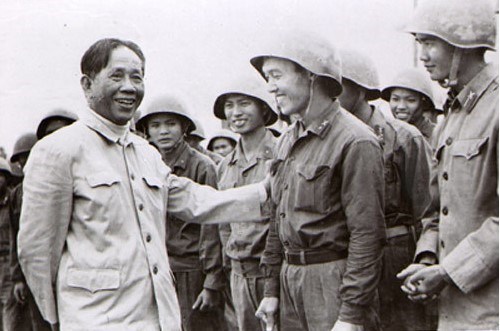
General Secretary Le Duan with Professor Lam Ngoc Thiem - a lecturer in the Department of Chemistry, Faculty of Science - Vietnam National University, Hanoi, a former soldier who had directly participated in combat and returned to continue working, striving to become a reputable professor and educator, actively contributing to the training and nurturing of talent for the country.
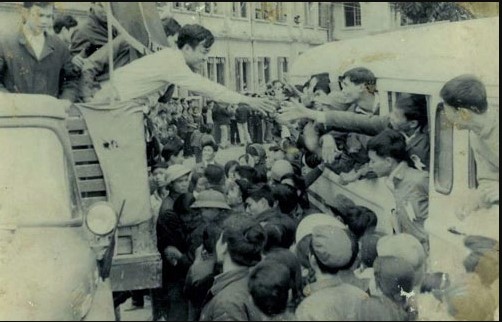
A farewell ceremony for students of Hanoi University as they set off to join the resistance war.
The next period of development was associated with the establishment of Hanoi University (1956-1993). After the victory of the resistance war against French colonialism, the North was completely liberated, entering a period of economic and social restoration and development, building a large socialist rear base to support the struggle for the liberation of the South and the reunification of the country. In that context, the Party and the State decided to establish Hanoi University on the basis of the natural sciences and social sciences & humanities of the Vietnam National University.
Hanoi University quickly became the country's leading center for basic science education; a place for creating and disseminating fundamental and cutting-edge knowledge; and a gathering place for a prestigious team of educators, scientists, and cultural figures. The university has trained a talented group of undergraduate and postgraduate students, many of whom later became outstanding scientists, artists, politicians, and administrators, making significant contributions to the nation's construction, reform, and development.
In particular, during the war, many teachers and students of the School became soldiers and heroes of the armed forces; some bravely sacrificed their lives and blood for the cause of national reunification and the defense of the Fatherland. This is vivid evidence of the close connection between knowledge and civic responsibility.
From 1993 to the present, with the establishment of Vietnam National University, Hanoi (VNU) through the merger of major universities, a period of strong innovation and comprehensive development has begun. To meet the demand for high-quality human resources to serve industrialization, modernization, and international integration, VNU has inherited and built upon the glorious traditions of previous periods, gradually perfecting its organizational structure for training and scientific research, expanding the scale of training, and focusing on cultivating talent.
Vietnam National University, Hanoi (VNU) aims to build a research-oriented, innovative university model, becoming a leading high-quality multidisciplinary and multi-field training center in the country, while gradually establishing its position and high ranking in the international university system.
It can be affirmed that, over 120 years, despite different historical circumstances and different names, the formation and development of Vietnam National University, Hanoi has always been a continuous flow, constantly building its reputation as a leading center of knowledge and a cradle for training the nation's elite.
Identity and service to the Fatherland through the ages
Throughout its formation and development, Vietnam National University, Hanoi has always placed special emphasis on building and nurturing its unique identity, while steadfastly fulfilling its responsibility to serve the nation.
The national identity and responsibility of Vietnam National University, Hanoi (VNU) lies in its role as a leading multidisciplinary and multi-field training center of high quality in the country. Critical thinking and problem-solving abilities; a scientific and modern approach to research and teaching; a passion for academia; and a desire for innovation and dedication to the people and the nation… are the outstanding elements that have created the stature, reputation, and pride of VNU throughout its history.
These values are not abstract, but are embodied in the vitality of the training and research units; reflected in the qualities, capabilities, and style of the faculty, staff, workers, students, and trainees. This identity is vividly expressed in each training program, each scientific research content, each lecture, each scientific work, as well as in the academic and community activities of the university.
A landmark in shaping national responsibility in training high-quality human resources.
Throughout its 120-year journey, Vietnam National University, Hanoi, to varying degrees depending on historical circumstances, has always been closely linked to the destiny of the nation and its people.
From its early days, although the University of Indochina was established to serve the ruling apparatus, it actually fostered a patriotic Vietnamese student body, unaffected by colonial intentions. They knew how to filter and absorb the progressive values of human civilization to nurture their national spirit, becoming the elite seeds in the struggle for independence.
The establishment of the Vietnam National University clearly demonstrates the inseparable bond between the university and the destiny of the nation. During wartime, the university operated flexibly, with teachers and students simultaneously teaching and learning while participating in the ideological front, fostering patriotism and revolutionary heroism.
Hanoi University continues to fulfill its mission of training elite scientific personnel to serve the development of modern education and science. The university emphasizes the combination of basic and applied research, directly serving production and combat. Many faculty members, lecturers, and students directly participated in the battlefield, contributing to the cause of national defense.
During the period of reform, Vietnam National University, Hanoi (VNU) clearly defined "national responsibility" as its core mission and value. The university has implemented advanced training models, integrating internationally; providing high-quality human resources for key sectors; and pioneering in building strong research groups, promoting international publications, and enhancing its position in the global university system.
Vietnam National University, Hanoi also actively participates in policy consultations and proposes scientific and technological solutions to serve the planning and implementation of the country's development policies.
Core values create identity.
In its Development Strategy to 2030, with a vision to 2045, Vietnam National University, Hanoi (VNU) identifies the following core values: Pioneering – Innovation – Excellence – Humanism – Service.
Looking back over more than a century of development, the fundamental values that shape the identity of Vietnam National University, Hanoi can be summarized as: foundational knowledge; intellectual liberation; pioneering spirit; and service to the nation.
These are values that have been nurtured over generations, crystallizing into the school's distinctive identity, and are also an important intrinsic resource for development in the new era.
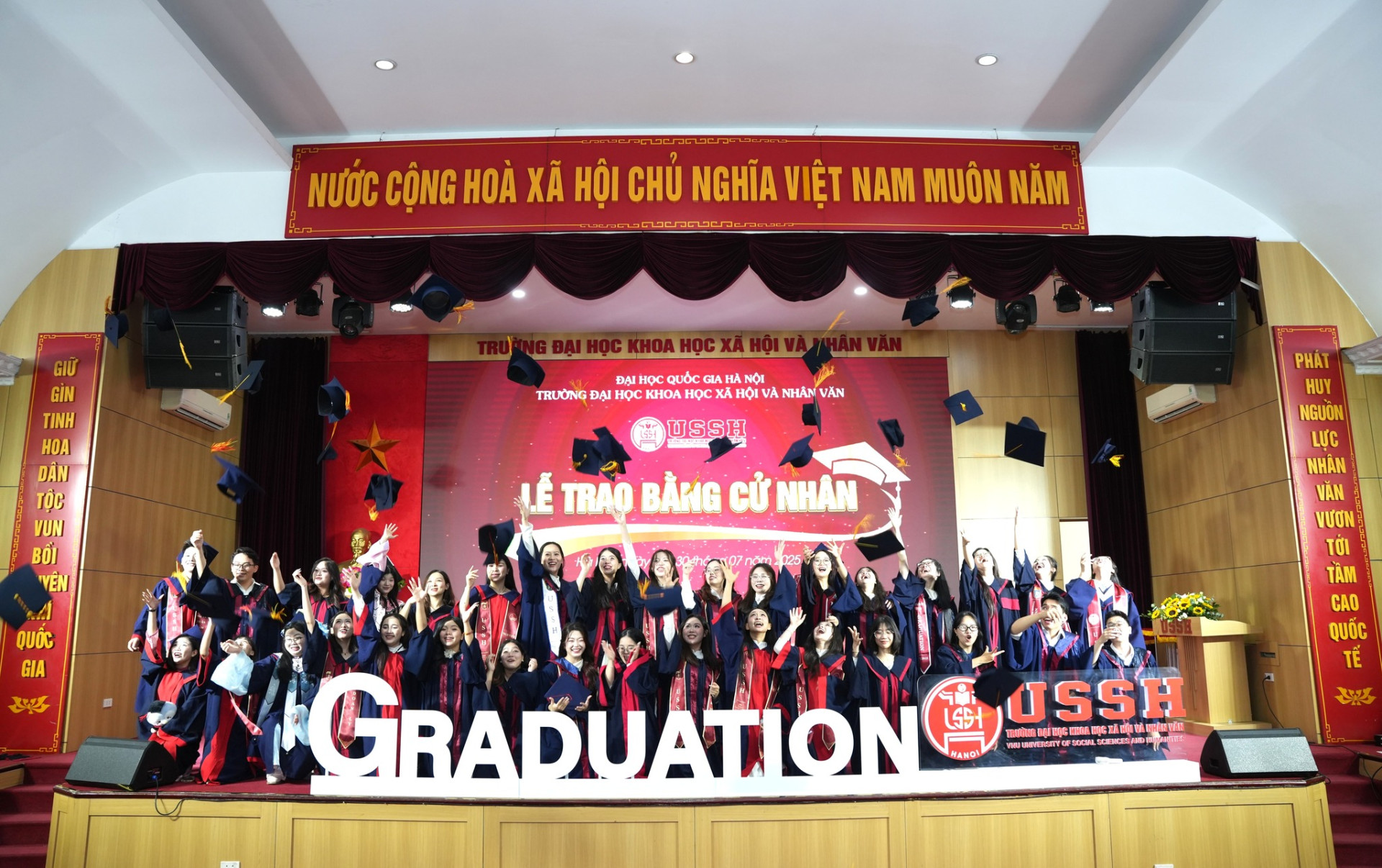
Upholding traditions in the new era
Entering a new era of development, Vietnam National University, Hanoi (VNU), along with the rest of the country, faces many opportunities and challenges. The Party, the State, and the people expect the university to continue to uphold its tradition of training elites, serving the nation, and playing a leading role in guiding the Vietnamese higher education system.
To realize that goal, it is necessary to focus on key tasks: continuing to innovate the organizational and governance model of universities towards modernization; developing high-quality training programs and strategic research areas; pioneering innovation, digital transformation, and international integration; promoting international cooperation; and accelerating the construction of the VNU urban area in Hoa Lac into a modern, ecological, and innovative university city.
Author:Professor, Meritorious Teacher Phung Huu Phu
Newer news
Older news

