The Institute for Policy and Management had a conversation with Mr. Bach Ngoc Chien to jointly spread the spirit of proactiveness among workers in the face of major changes in future careers.
Reporter: Could you please tell us what skills and preparation public sector workers need to have when transitioning from the public to the private sector?
Mr. Bach Ngoc Chien:The first essential asset for employees embarking on a career transition is self-confidence – confidence in their knowledge, skills, and experience gained during their time working in the public sector. This is because the majority of civil servants have undergone rigorous recruitment processes and received thorough and regular training. These capabilities can serve as a solid foundation for effective contributions in a new work environment.
The second crucial element is a readiness to adapt to change. During previous administrative mergers, such as the merger of Ha Tay province into Hanoi, many public sector workers experienced confusion and even feelings of inferiority, believing they were being "eliminated." This self-doubt and inherent stigma can become the biggest obstacles. Therefore, proactively preparing mentally and viewing career transitions as a normal occurrence, or even a new opportunity for development, is absolutely essential.
The third crucial step is acquiring additional knowledge and skills relevant to the private sector's requirements – if one chooses to transition to this environment. Workers need to proactively learn, participate in training courses, or enhance their skills to improve their value. By combining existing strengths from the public sector with the standards and expectations of the private sector, workers can become more confident, adapt better, and be more receptive to new career opportunities in a proactive and effective manner. This is also one of the distinct advantages of the public sector workforce after downsizing and streamlining the administrative apparatus.
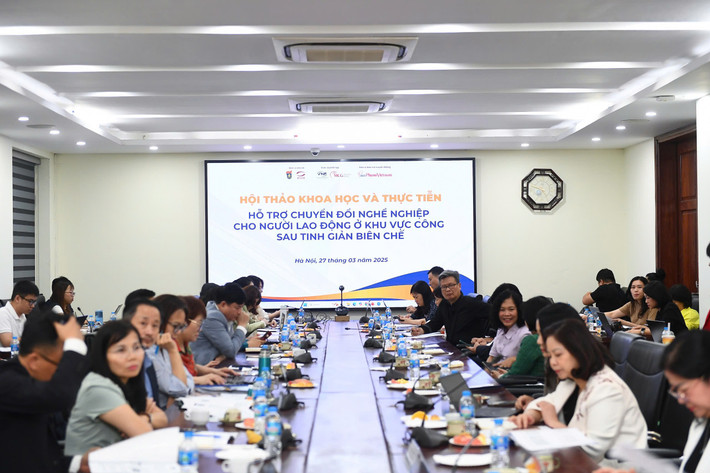
A scientific and practical workshop on the theme "Supporting career transition for public sector workers after downsizing" was organized by the Institute of Policy and Management, Faculty of Social Sciences and Humanities, Vietnam National University, Hanoi in March 2025.
Reporter: Following the streamlining of the administrative apparatus and reduction of personnel, workers can transition from the public to the private sector, or from the public sector to entrepreneurship. In your opinion, what are the differences in these transitional options?
Mr. Bach Ngoc ChienThese are extremely different options, but ultimately, a successful transition is impossible while you're still hesitant. No matter where you work, discipline, procedures, regulations, and a diligent attitude are essential. As the saying goes, "attitude is more important than skill."
If workers want to start a business, they need to pay attention to capital and resources. First and foremost, they need a unique and innovative business idea or product to have a chance of success. Offering a product or service similar to others makes it difficult to create differentiation. Many people also confuse choosing to work with starting a business. For example, opening a coffee shop as a startup is different from selling sticky rice or bread. Startup products must have a high level of creativity and profit potential.
The key to a startup business is capital. Capital is crucial because there will be a long period of spending, or as we often say, "the snake eats its tail." Every business may eventually enter a borrowing phase, needing financial resources to survive. Therefore, it's necessary to build financial projections for at least 5 years with multiple revenue and expenditure scenarios to find solutions suitable for each scenario. When I was working on my MBA thesis, I only calculated the losses of the business in the first year and that it would become profitable in the second year; my thesis was immediately rejected by my professor as "unrealistic." Technology companies can lose capital for 2-3 years, or even longer. Some sectors lose capital for 7-8 years, for example, investing in schools. Sometimes, it's not until the 9th or 10th year of a cycle that a product proves its value and generates profit. Startups need to be creative, unique, not follow trends, and need to choose the right market segment.
It's often said, "Having capital is more important than having talent," and startups often face difficulties when they lack collateral in the early stages of borrowing. Many startups succeed by selling their products early, allowing them to offset expenses and generate profits. As we know, Apple is a very successful technology corporation, and they also have interesting financial principles. They extend the payment period to suppliers as long as possible and collect debts as quickly as possible. They may delay payments for up to three months and require buyers to pay within the shortest time. This allows them to leverage other sources of capital, allowing them to focus on business development. One crucial factor is finding suitable partners who can offer constructive criticism. Many startups achieve initial success, but internal disagreements and lack of consensus lead to quick bankruptcy and breakup. When starting a business, avoid rushing the process; focus on building a solid legal foundation. Early partners should share profits fairly.
As for workers looking to transition to the private sector, my advice is to focus on work efficiency, serious cooperation, and hard work. Businesses that hire employees from the public sector are already prepared for the retraining process.
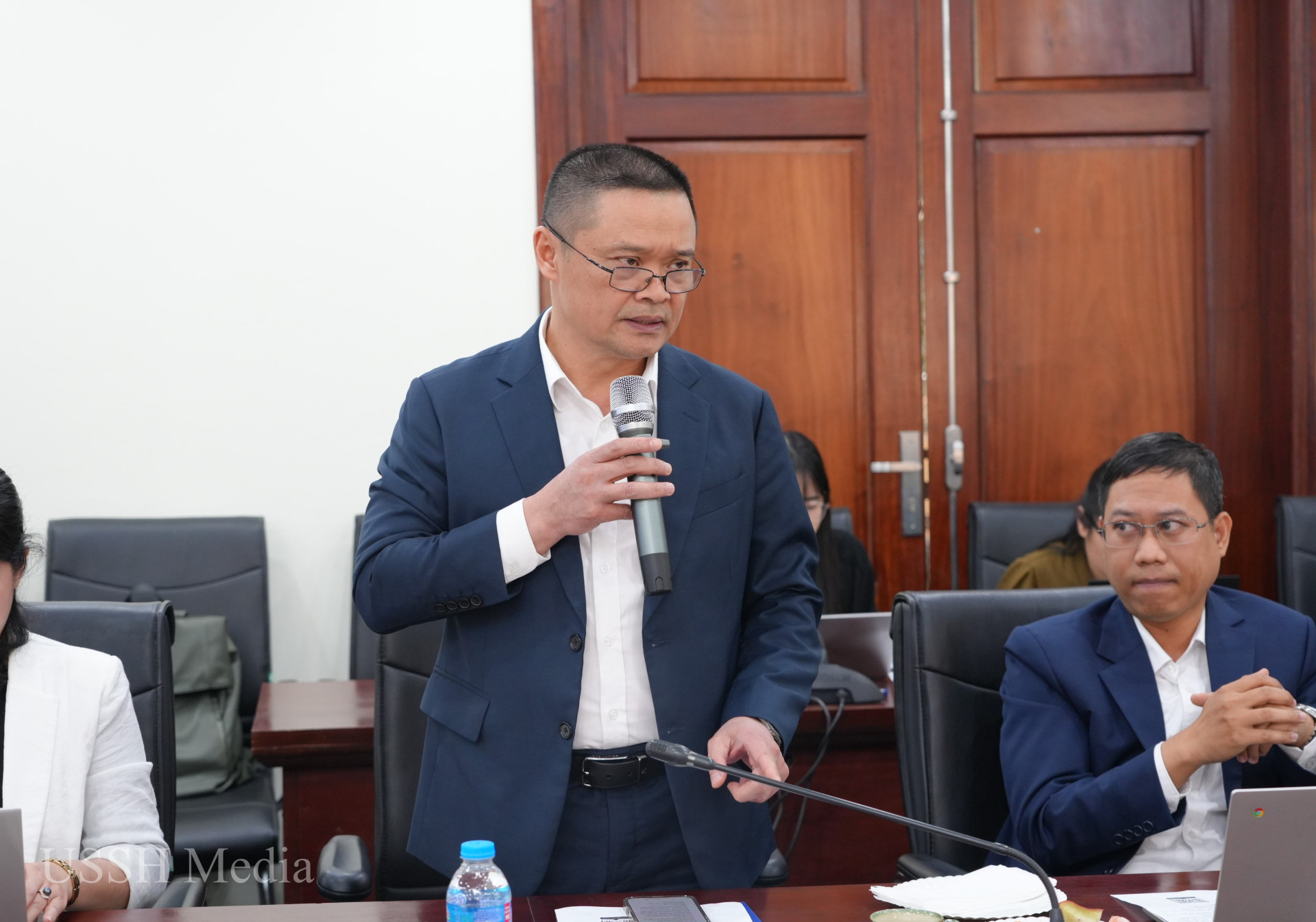
Mr. Bach Ngoc Chien, General Director of VOVINAM Digital, shared his personal career transformation story and the synergy within the ecosystem at the Scientific and Practical Workshop organized by the Institute of Policy and Management, Faculty of Social Sciences and Humanities, Vietnam National University, Hanoi.
Reporter: You mentioned proactively preparing yourself mentally for a career change. During your journey to find a new job, did you ever feel "passive," anxious, or pressured when exploring new career opportunities? And how did you overcome that?
Mr. Bach Ngoc Chien: I don't think about being proactive or passive; when we have to look for a job, we're already being proactive!In 1997, I started working at the Ministry of Foreign Affairs. After a week, I felt discouraged because the job was different from my previous one – proactive, flexible, with a higher income and more experiences. While working there, I spent all day using a typewriter to "produce" a document. But I typed quite slowly, sometimes taking a whole day while the person in charge could process it in just a few minutes. One day, I felt so discouraged that I stopped halfway to work, considering turning back and quitting (even though working at the Ministry of Foreign Affairs was incredibly difficult at that time). After a period of internal struggle, I told myself, "If others can do it, so can I." And so I continued working, and my career progressed. From then on, I became a "changer." During the most difficult times in my life and career, I realized that I could only rely on myself. I had to be confident, I had to motivate myself to move forward.
From someone who typed with one finger at a time, I was determined to learn to type with all ten fingers, and later I became one of the fastest typists in the office. Meetings were finished by the time I had the minutes typed up. It was such a simple skill that I almost quit my job, but overcoming it and improving this skill helped me rise to the top. Another difficulty was discrimination. Some colleagues thought I was "a Russian speaker with poor English," an "outsider" because I didn't study diplomacy. I asked to take extra English lessons from Mr. Luu Doan Huynh, a renowned expert at the Ministry of Foreign Affairs at the time. Seeing that I was a "Russian speaker," he placed me in a class with university students, including one who was still in high school. But after a while, Mr. Huynh and my colleagues realized my English wasn't as bad as they thought. I was even trusted and chosen to be the interpreter for the Ministry of Foreign Affairs spokesperson at regular international press conferences at the end of 1998. At the end of 1999, I won a Master's scholarship in diplomacy and trade from Australia, and by then no one considered me an outsider anymore. The initial prejudice from some colleagues actually motivated me to strive harder. Thanks to my high motivation and eagerness to learn, starting from a low point when I first entered the field, 10 years later I was appointed Deputy Director.
I've always believed that there's no such thing as an "easy job with a high salary." Whatever job you have, you have to strive to get it; you must earn your reward.
Reporter: Among the workers changing careers, there are many middle-aged individuals. Do you think this workforce will face enormous challenges after the streamlining of the organizational structure and reduction of personnel?
Mr. Bach Ngoc Chien:The average age in Vietnam is 79-80, meaning middle-aged people still have 30-40 years to live. Therefore, they must look at the length of their lives and seek opportunities. Attitude is crucial; age cannot be used as an excuse for failure. No matter age, one must strive. No one can have enough "food supplies" to live on for a lifetime, because even a few minor setbacks can deplete that reserve. Only a sustainable livelihood is truly important. Even if starting a career change at 40-50, workers need to maintain the same enthusiasm and eagerness as when they were young. Young people have more motivation, but at 40-50, they need to live healthily and decently with a sustainable livelihood and be self-sufficient. There's nothing better than a life of hard work and dedication. I myself have never thought about retirement; I prefer working to make my life meaningful. Many people retire at 60 and become depressed because they have nothing to do, no opportunities for leisure or entertainment, only to find themselves bored and quickly lose interest. The joy of working lies in creating value for life and having the motivation to develop oneself.
Reporter: What are your observations on the current labor market and the impact on career transitions following the streamlining of the administrative apparatus and reduction of personnel?
Mr. Bach Ngoc Chien:The Vietnamese labor market is currently experiencing unprecedented volatility, influenced by both domestic and international factors. The US government's imposition of high retaliatory tariffs on Vietnamese goods is a prime example, potentially forcing many businesses to scale back production, close down, or go bankrupt, leading to widespread job losses. This represents a major nationwide career transition, impacting everyone from high-ranking executives to the lowest-level workers. In this context, policies prioritizing the private sector as a pillar of the national economy are expected to bring about positive changes, most notably the emergence of many new businesses, thereby creating numerous job opportunities for workers.
The rapid development of science, technology, and especially artificial intelligence (AI) is posing enormous challenges to the labor market. Automation could lead to mass unemployment, even in common or specialized jobs if they can be replaced by machines and algorithms—for example, cashiers, accountants, lawyers, or even doctors. At some Amazon stores, the automated sales model has completely eliminated the role of cashiers, demonstrating that the trend of replacing labor with technology is entirely feasible.
In this context, a key challenge is the future employment of young people. In Vietnam, although the young workforce is abundant, the majority are still concentrated in low-knowledge jobs. Automation not only creates the risk of unemployment but also necessitates that individuals proactively learn and update their knowledge and skills to adapt to change. Furthermore, there are still concerns such as, "If artificial intelligence (AI) can do everything, what will humans do?" In this context, focusing on developing a strong foundation in basic science becomes even more crucial. In a recent speech, General Secretary To Lam emphasized the necessity of studying advanced mathematics and training in basic sciences so that learners can master fundamental principles and theories to apply them to practical solutions.
The government needs to invest more heavily in education to equip Vietnamese people with the knowledge and resilience to cope with future changes. In reality, self-education and personal development are the most sustainable paths during times of transition or crisis. Currently, many online learning platforms like Coursera have opened up widespread learning opportunities, where many people have grown and transformed their lives through self-learning and continuous adaptation.
Reporter: What are your predictions regarding the ongoing career transition following Vietnam's current streamlining and downsizing of the workforce?
Mr. Bach Ngoc Chien:We have reason to be optimistic about the movements in the labor market, but this optimism should not be naive. In particular, the career transition process for public sector workers needs to be considered carefully. In my opinion, people and society always strive for betterment. To survive, people need a livelihood, and to adapt, each individual needs motivation to live and work in a way that suits their new circumstances.
Streamlining the organizational structure and reducing the workforce, if accompanied by appropriate support policies, can become a catalyst for stronger individual development. The key is to identify risks and proactively address them, thereby determining the skills, knowledge, and experience needed to adapt to the changing labor market. Another positive aspect is that today's labor market is no longer limited to national boundaries. We are living in a global labor market where skill gaps still exist but also create numerous opportunities. I expect that Vietnamese people will not only be known through the service sector but also assert their position in many other fields, especially engineering and technology.
Vietnamese people are highly adaptable. New government policies are contributing to opening up more opportunities for lifelong learning and entrepreneurship, helping workers gradually redefine their roles in a rapidly changing world.
Reporter: Do you have any advice for young people today regarding career choices in the near future?
Mr. Bach Ngoc ChienAs university students, we must be highly proactive. Instead of waiting for the university to change or adjust the curriculum, students should first develop their own action plans, depending on their individual circumstances. We shouldn't blindly follow trends but rather develop our own abilities and strengths. The university should create opportunities and encourage students to develop their potential. A common trend is for students to flock to fields considered "high-paying," neglecting fundamental subjects, especially social sciences. Interestingly, most senior leaders of large corporations worldwide studied social sciences. Because all issues relate to people, technology should be geared towards people and human values. My advice to students is not to choose a career based on trends but on their passion and strengths. Passion breeds creativity, so young people should pursue their passions. A crucial asset for students is discipline, because only through discipline can they change themselves. In addition, students need to pay attention to their health, improve their physical fitness, and develop personal resilience to face the challenges of life.
The younger generation – especially students, regardless of their chosen field – need to hone their communication skills, particularly speaking skills, as a crucial foundation for building well-rounded individuals. A worrying reality is that many university graduates have very limited foreign language proficiency. This is a major obstacle to international integration and career development. Therefore, it is necessary to promote foreign language learning both inside and outside of school, especially emphasizing the role of self-study and a proactive, lifelong learning spirit.
Mr. Bach Ngoc Chien is one of the few individuals who have held high-level leadership positions in the public sector and successfully transitioned to the private sector. His career journey is a vivid testament to adaptability, innovative thinking, and the creation of new roles after a career change.
Currently, Mr. Bach Ngoc Chien is the General Director of Vovinam Digital Company, Vice President of the Vietnam Vovinam Federation and the World Vovinam Federation.
Prior to this, he held important positions in the public sector, including:
- Specialist in the Press and Information Department – Ministry of Foreign Affairs.
- Press Attaché – Embassy of Vietnam in the United States.
- Deputy Director of the Department of Foreign Policy – Ministry of Foreign Affairs.
- Head of the Foreign Affairs Television Department (VTV4) – Vietnam Television Station.
- Vice Chairman of the People's Committee of Nam Dinh province.
- Vice President and Secretary General of the Vietnam Union of Friendship Organizations.
From 2020 to 2023, he transitioned to the private education sector as Vice President of EQuest Education Group, overseeing strategic planning and communications.
Related articles:
What solutions can support career transitions for public sector workers after downsizing?
Launching an ecosystem to support social innovation startups for VNU-USSH students.
NoCode - Technology for a sustainable digital society and digital humanism - has been disseminated at USSH.