
Attending the seminar were Assoc. Prof. Dr. Hoang Anh Tuan (Vice Rector of the University), and Dr. Ngo Thi Kieu Oanh (Chairperson of the University's Trade Union, Head of the Personnel Department).
Speaking at the seminar, Associate Professor Hoang Anh Tuan affirmed that the academic qualification standard for lecturers, as stipulated by Hanoi National University, is a doctoral degree. Currently, the percentage of lecturers meeting the qualification standard and the percentage of lecturers holding the titles of Professor and Associate Professor at the University are quite high compared to the general average of universities in the social sciences and humanities. However, to further improve the quality of education and enhance the University's prestige, the University hopes that lecturers will focus on completing the qualification standard as soon as possible, quickly and on schedule. Associate Professor Hoang Anh Tuan also emphasized the importance of the quality of the teaching staff in attracting students and improving the quality of training.
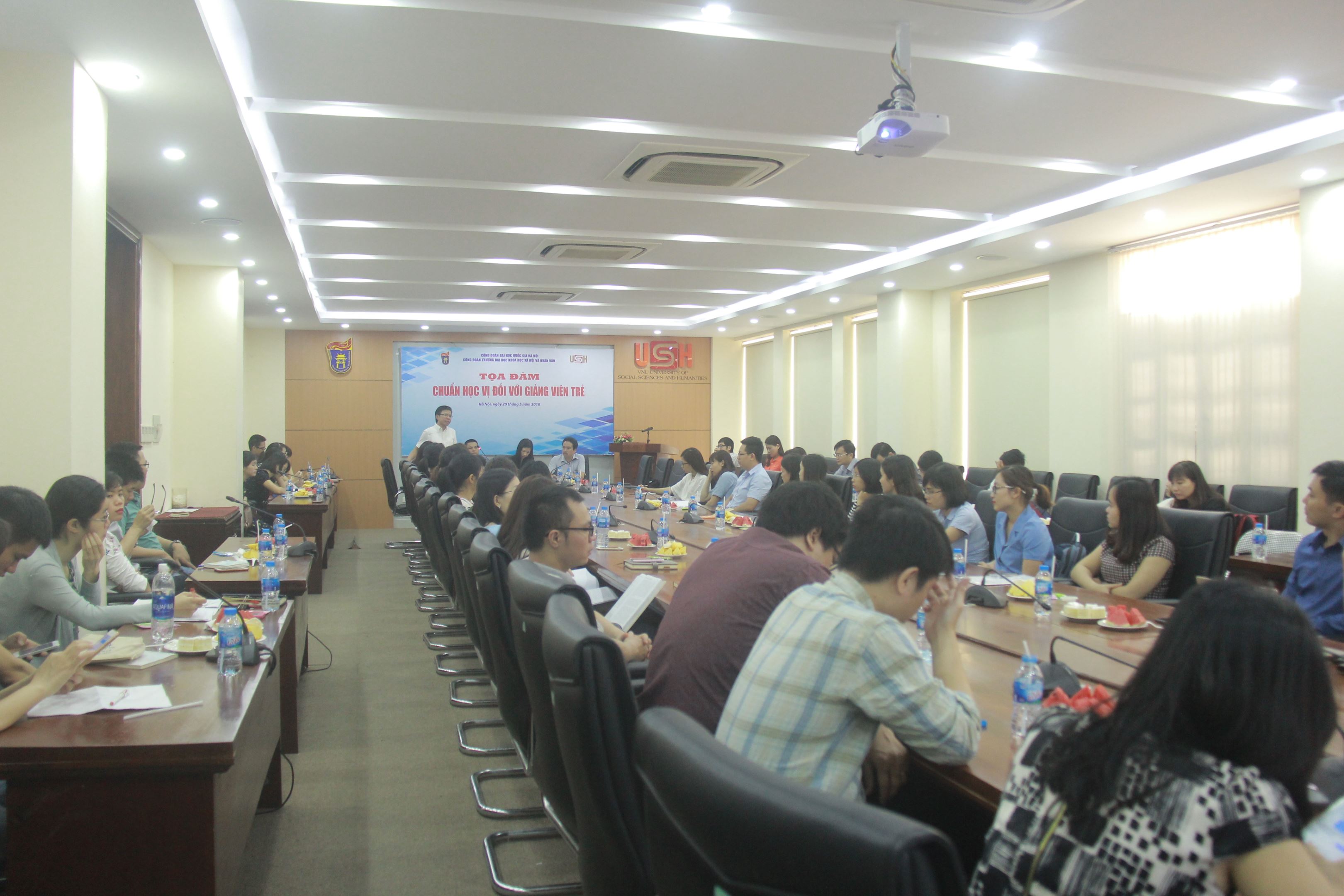
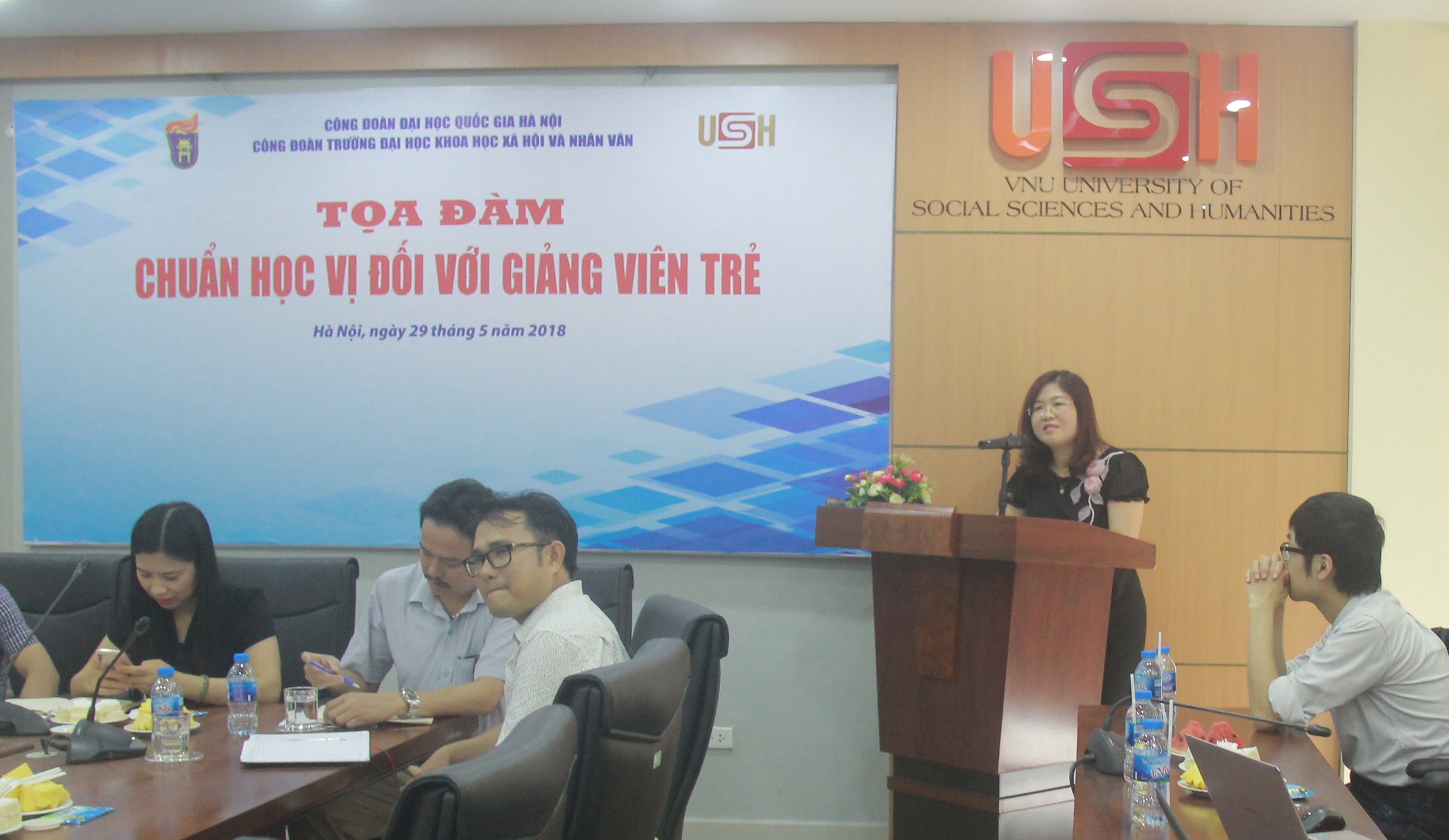
In her report on “Current Situation and Solutions to Improve the Quality of Faculty Meeting Academic Degree Standards in the Period 2018-2020,” Dr. Ngo Thi Kieu Oanh stated that academic degree standards will directly impact individual lecturers in a positive way. According to regulations, the university currently only recruits candidates with a PhD through special procedures. Lecturers with a PhD are eligible to teach high-quality programs, postgraduate programs, and supervise postgraduate students… A PhD is an essential condition for the recognition and appointment of Professor/Associate Professor titles…
A faculty with qualified academic degrees will significantly impact the development of the university. Specifically, having faculty with qualified degrees will affirm the existence and development of training programs and specializations. Furthermore, improving quality is a prerequisite for considering the opening of new training programs. At the same time, academic qualifications will affect the faculty-to-student ratio, the evaluation and accreditation of training quality, and the implementation of the university's targets and plans.
According to the report, the university's target for 2020 was for 28% of faculty members to achieve the title of Professor/Associate Professor and 65% to hold a doctoral degree. In reality, statistics to date show that the number of faculty members with a doctoral degree accounts for 63.2%. This is a very encouraging figure and is only 1.8% short of the target.
However, the number of lecturers currently pursuing doctoral degrees remains high, posing a challenge. Furthermore, recruiting lecturers with doctoral degrees is quite difficult. On average, the university recruits only about 5 PhDs through special admissions processes each year. Very few PhD holders transfer to the university. Therefore, the university must proactively train its own staff. On average, more than 20 faculty members defend their doctoral dissertations each year. In addition, the number of faculty members retiring annually is also an obstacle in achieving the university's goals.
Based on this reality, the University has been implementing many solutions and policies to support and encourage lecturers to quickly obtain their doctoral degrees. Lecturers pursuing doctoral degrees receive reduced working hours while still receiving full salary; they can take a semester off; they receive tuition support; funding for their dissertations; and bonuses for completing their dissertations on time, etc.
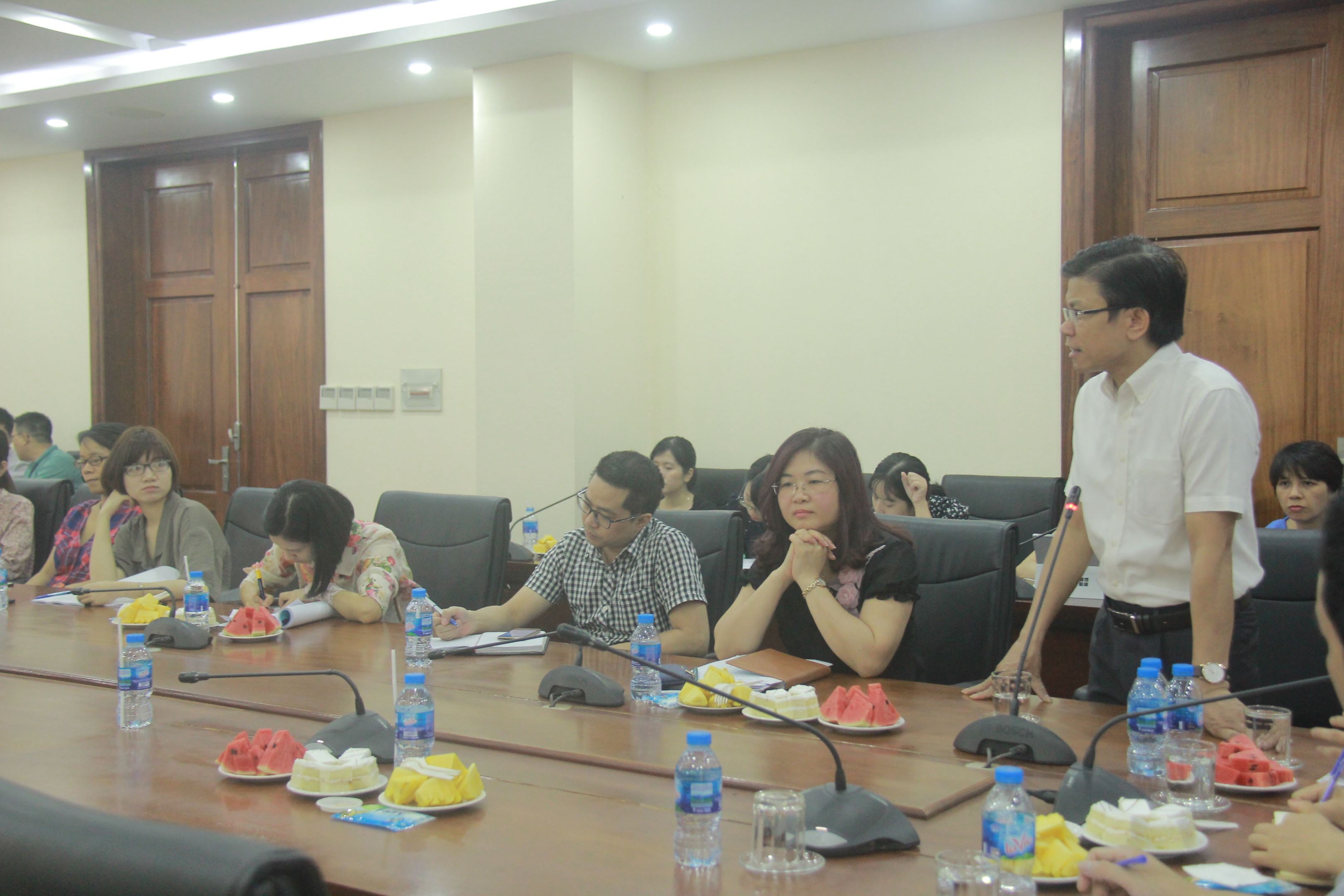
To quickly achieve the set targets, Dr. Ngo Thi Kieu Oanh proposed solutions for the process of obtaining academic qualifications for young lecturers. These solutions, both implemented and planned, include strict penalties for lecturers and departments with lecturers who fall behind schedule; departments and faculties needing to provide maximum support when assigning tasks to lecturers who are currently working on their dissertations; and the strict implementation of annual performance targets and evaluations for each lecturer, department, and faculty. In particular, the Training Department needs to enhance its management role over students and supervising lecturers to provide timely support.
The seminar also heard Dr. Nguyen Thi Kim Dung, representing the Trade Union's Professional Committee, summarize the survey of young lecturers' opinions. According to the survey, the highest percentage of lecturers were aged 30-35, while those over 40 accounted for a smaller proportion. Regarding gender, the majority of young lecturers were female, accounting for 65%. The survey indicated that age and gender significantly influence the level of obstacles and difficulties in the process of completing and defending dissertations, such as health issues, family circumstances, and time constraints, especially for female lecturers.
Author:Hai Duong (CMP)
Newer news
Older news

