
The workshop "Towards building social norms within the framework of the WTO" was organized by the University of Social Sciences and Humanities in collaboration with the Konrad Adenauer Stiftung (KAS) - Federal Republic of Germany on November 13, 2009.
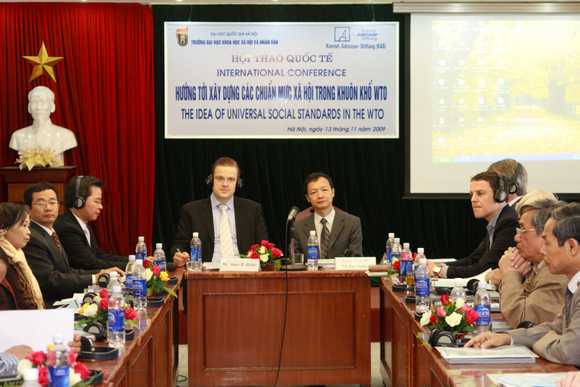
The workshop "Towards building social norms within the framework of the WTO" was organized by the University of Social Sciences and Humanities in collaboration with the Konrad Adenauer Stiftung (KAS) - Federal Republic of Germany on November 13, 2009.
The delegates at the workshop discussed the following key issues: why is it necessary to establish social norms within the WTO framework? How should the WTO develop social norms to achieve greater effectiveness? What changes will Vietnam need to make to meet WTO standards? How will participation in global social norms affect Vietnam's development in all aspects?

Author Tran Bach Hieu (University of Social Sciences and Humanities) defines WTO social standards as: “the principles and standards concerning the environment, labor, health, safety, prosperity, democracy, freedom, equality, as well as the openness, transparency, and effectiveness of the WTO in relation to global trade and global society, which all its members comply with and implement.” Based on an analysis of the practical and urgent reasons leading to the need to consider building common standards, the author proposes several solutions to make the WTO more effective: building these standards based on the principle of prudence; reforming the principles and procedures within the WTO; establishing a dialogue mechanism with those who wish to speak on trade and opening up the dispute resolution process; conducting trade liberalization negotiations in a systematic manner; ending the unfair competition among many countries regarding tariff preferences; and separating the resolution of trade issues within the WTO from other issues…
Professor Hermann Sautter (Federal Republic of Germany) views social norms as a crucial factor, an indispensable component of the international economic and social order, and demonstrates this through a series of major laws and historical events that have occurred throughout human history. He stated: “Ensuring social norms is not only an effective means of achieving social justice but also a constitutional goal. Absolute respect for social norms is also a good strategy to maintain a country's trade policy advantage.”

Author Tong Van Chung (University of Social Sciences and Humanities) delves deeper into the standards that Vietnamese businesses must understand and follow when participating in the international trade market, based on a thorough analysis of the basic provisions regulating the role of businesses in trade activities under the WTO. The author argues that: "In the context of integration, the social standards of businesses are actions to meet the requirements of partners at all levels within the framework of their cooperation."
The presentation "Building Standards on Intellectual Property in accordance with WTO Regulations" by Dr. Tran Van Hai (University of Social Sciences and Humanities) addresses the need to develop a common, unified set of standards in Vietnam that are consistent with WTO regulations in a new but crucial area of world trade: intellectual property, specifically in two aspects: standards for copyright enforcement and standards for intellectual property management.
Discussing the impact of trade liberalization in services within the WTO framework on Vietnamese society, Dr. Ha Van Hoi (Faculty of Economics, Vietnam National University, Hanoi) stated: “Vietnam joined the WTO when the competitiveness of its economy was not yet high. In that context, trade liberalization in services brings both opportunities and challenges, impacting all aspects of social life. Vietnam needs to clearly understand these impacts in order to proactively seize opportunities, overcome difficulties, and gradually improve social standards within the WTO.”
Other reports analyze the impact of economic integration on the formation of business norms in Vietnamese enterprises, norms regarding corporate social responsibility and the role of managers, the impact on education and training activities, as well as the formation of socio-cultural behaviors of young people...
Author:thanhha
Newer news
Older news

