
The speaker stated that this is a very important topic in political communication in Germany, as well as in other countries around the world today. Whenever a politician is elected, public opinion and the media share information, discuss, and express their belief and trust in them in various ways.
Dr. Martha refers to the concept of belief from a renowned sociologist, Niklas Luhmann. In today's complex world, people cannot possibly have complete information about everything. However, people still need to believe in something because belief motivates action. Therefore, belief reduces the complexity of society and the world, helping us overcome the limitations of information scarcity and generalize our expectations about behavior. In other words, belief replaces unknown information with internal assurance.
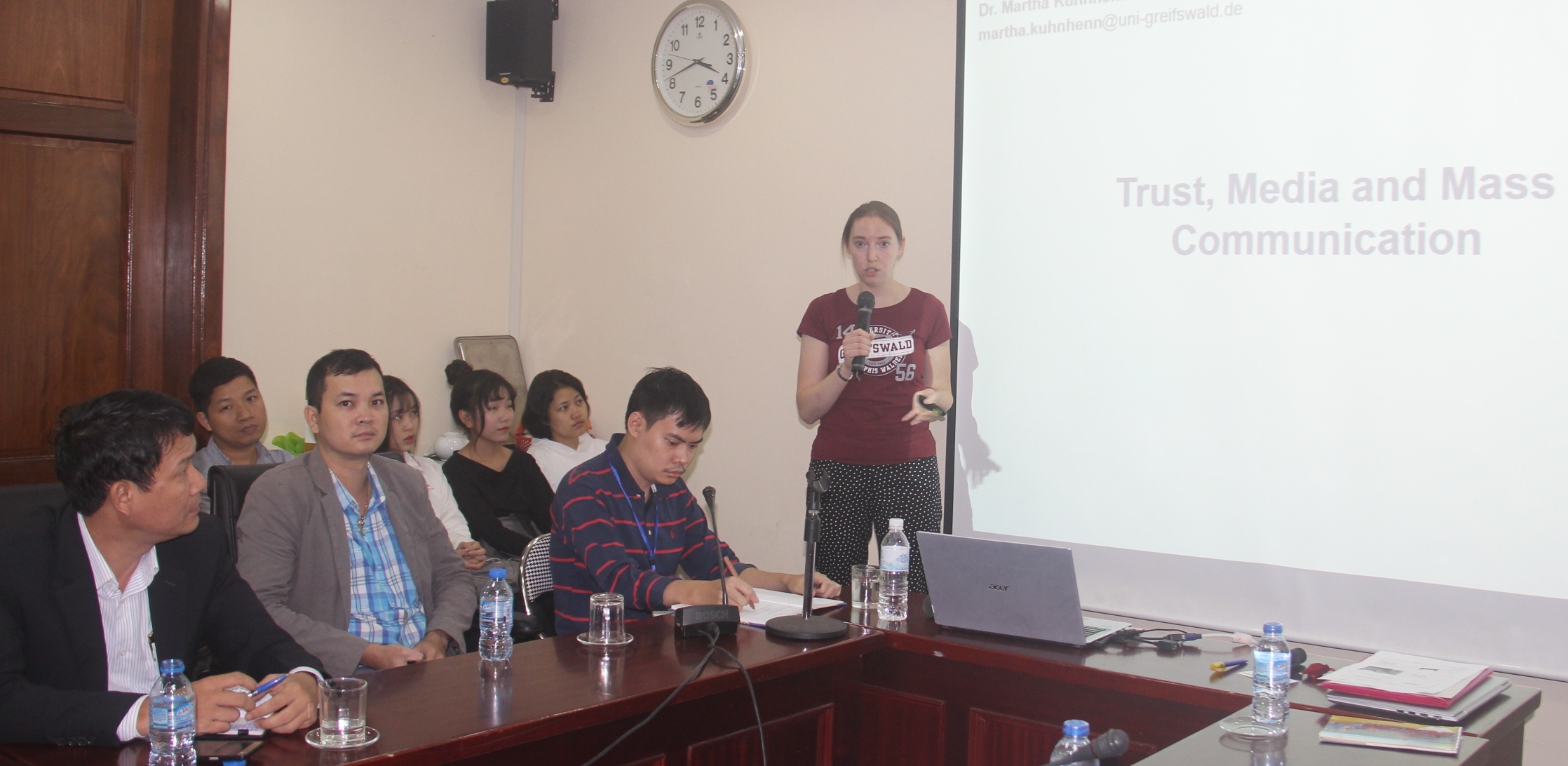
Trust is essential in many different situations in life. Trust occurs at many levels: the level between individuals; the institutional or organizational level; and the highest level, the societal level.
Dr. Martha also mentioned the difference between belief and hope. Belief is an action based on certain certainty and expectations, and people use it to make decisions. But hope is based on feelings and information that are less clear and uncertain than belief.
Another concept related to trust is credibility. The speaker argued that credibility is a lower level of trust. It's a characteristic associated with any individual or organization, but only acquired after a process of interaction, connection, and sharing. And credibility is also expressed and perceived in multiple dimensions and directions. While trust is a concept related to the future, credibility is a concept related to the present moment.
Discussing the factors that build credibility for politicians in the context of political communication, the presentation delves into an analysis of four elements: competence, social interaction, credibility, and empathy. In particular, media research has shown that politicians often build credibility and trust effectively through their social interaction skills, creating emotional connections to seek public understanding and empathy.
So what criteria or factors should journalists and media professionals focus on to build reader trust? Dr. Martha shared that focusing on data, facts, and specific, accurate information will help readers trust journalists. On the other hand, journalists need to focus on building and sharing stories with emotion and specific situations to create more appeal, empathy, and understanding from readers.
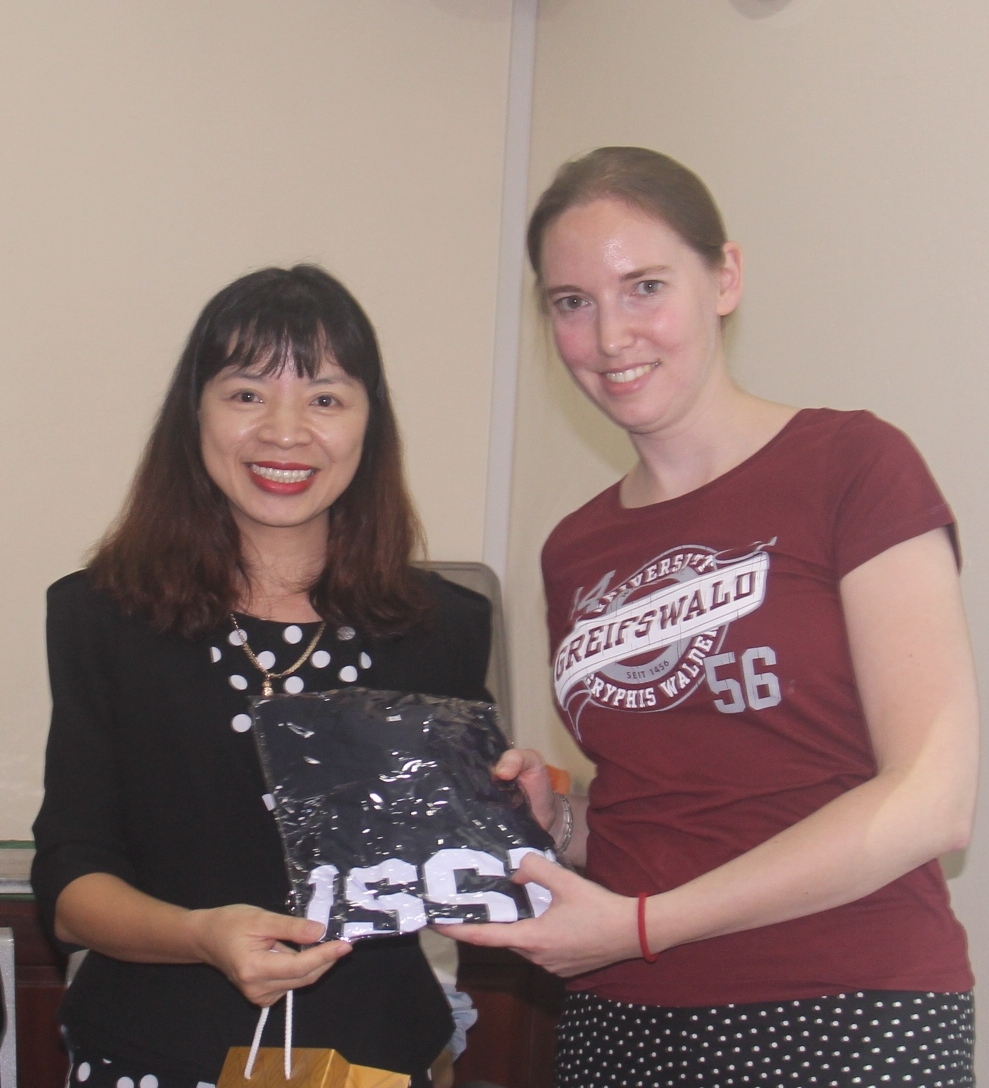
Assoc. Prof. Dr. Dang Thi Thu Huong (Head of the Faculty of Journalism and Communication) poses for a commemorative photo with Dr. Martha Kuhnhenn
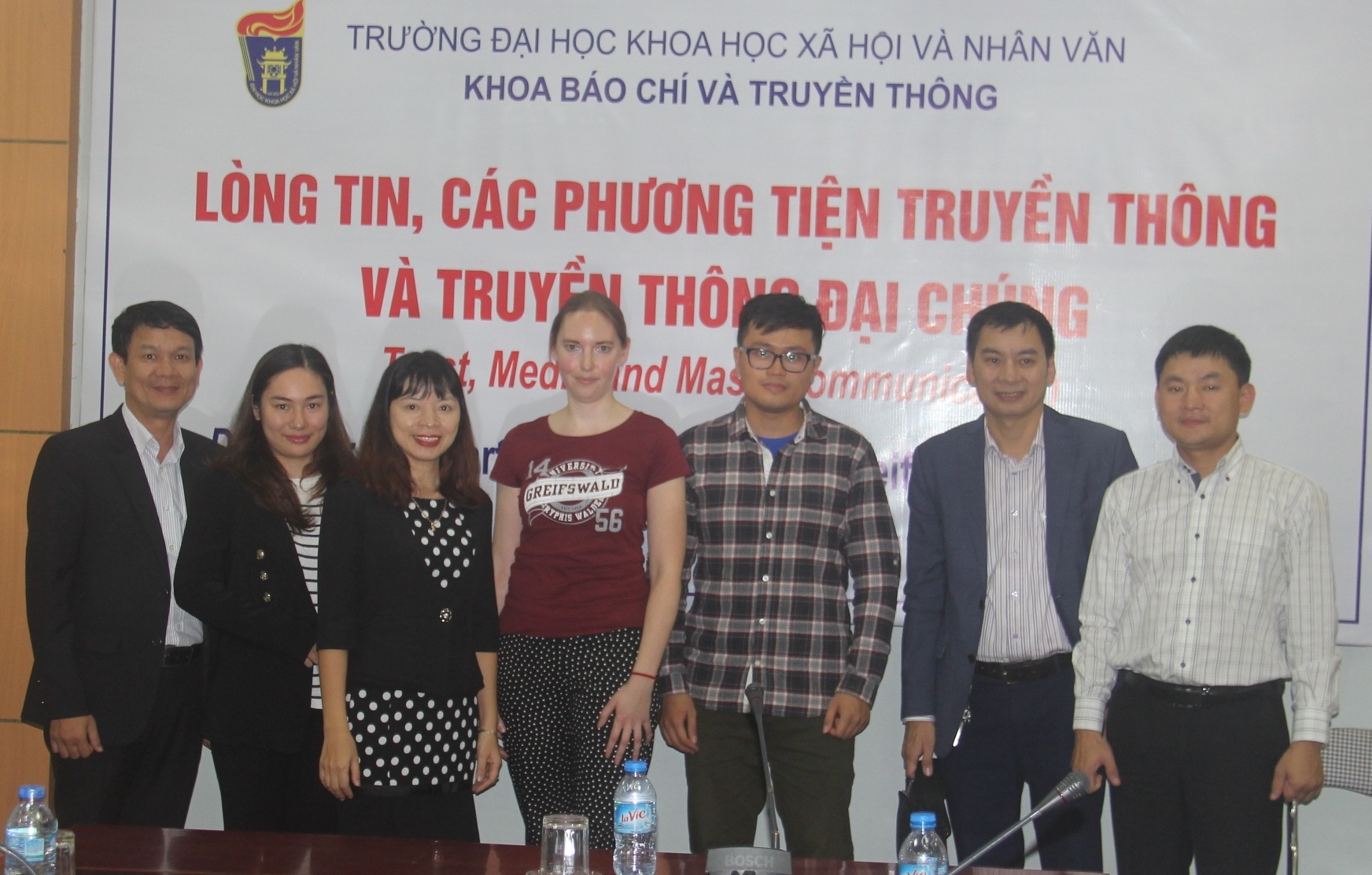
Dr. Martha Kuhnhenn poses for a commemorative photo with representatives from the Faculty of Journalism and Communication.
Author:Thanh Ha
Newer news
Older news

