
 In response to World AIDS Day (December 1st), the Reproductive Health Awareness Team of the University of Social Sciences and Humanities organized a widespread communication campaign about HIV/AIDS to reach a large number of students.
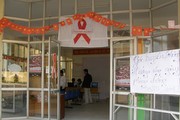 In response to World AIDS Day (December 1st), the Reproductive Health Awareness Team of the University of Social Sciences and Humanities organized a widespread communication campaign about HIV/AIDS to reach a large number of students.
The awareness campaign included: distributing leaflets, books, and instructional materials on HIV/AIDS to students; displaying posters and promotional images on HIV/AIDS prevention; and showing films promoting healthy lifestyles among young people. This campaign lasted from December 1st to mid-December 2008.
These activities aim to provide information about the alarming current state of HIV/AIDS infection in Vietnam. According to statistics from the Ministry of Health, from the discovery of the first HIV infection in Ho Chi Minh City in December 1990 to December 31, 2006, there were 116,565 people infected with HIV, 20,195 AIDS patients, and 11,802 deaths due to AIDS. The majority of HIV infections are due to sharing unsterilized needles. According to a report by the Vietnam HIV/AIDS Prevention and Control Department - Ministry of Health, the number of intravenous drug users infected with HIV accounts for 59% of the total number of HIV/AIDS cases nationwide.
[img class="caption" src="images/stories/2008/12/04/pc013210.jpg" border="0" alt="“Removing one strange look adds one ray of hope” " title="“Removing one strange look adds one ray of hope” " width="169" height="240" align="right" ]According to VOV News, in the first nine months of 2008, 1,860 new HIV infections were detected throughout Hanoi, including 1,513 in the former Hanoi area and 347 in the former Ha Tay area. Of these, 417 cases were AIDS patients and 155 resulted in death from this devastating disease. Currently, 417 out of 576 communes and wards in Hanoi have detected HIV infections. Statistics show that HIV/AIDS cases are still mainly concentrated in high-risk groups such as injecting drug users (70.54%), tuberculosis patients (9.16%), and those who have sex with men (7.33%). Notably, the rate of HIV infection among women is trending upwards (14.07%), and the majority of infected individuals are young, with those aged 20-39 accounting for 89.57% of the total number of recorded HIV/AIDS cases.
The HIV/AIDS pandemic has not only caused enormous economic and social consequences but also left countless misfortunes for those infected with HIV/AIDS and their families. Particularly worrying is the increasing number of young people infected with HIV/AIDS – the age when they are most productive and contribute the most to their families and society. Given this situation, HIV/AIDS prevention and control is the responsibility and duty of the entire society, each family, and each individual infected with HIV/AIDS. To achieve this, each person in the community must have a deep understanding of the nature of the HIV/AIDS epidemic, know how to protect themselves and the community, and know how to care for themselves and their loved ones when infected with HIV/AIDS.
The informational content also focuses on providing guidance on: general information about HIV/AIDS; how to prevent HIV/AIDS transmission; community attitudes towards HIV/AIDS patients; and counseling on love and reproductive health for teenagers...
Author:thanhha
Newer news
Older news

