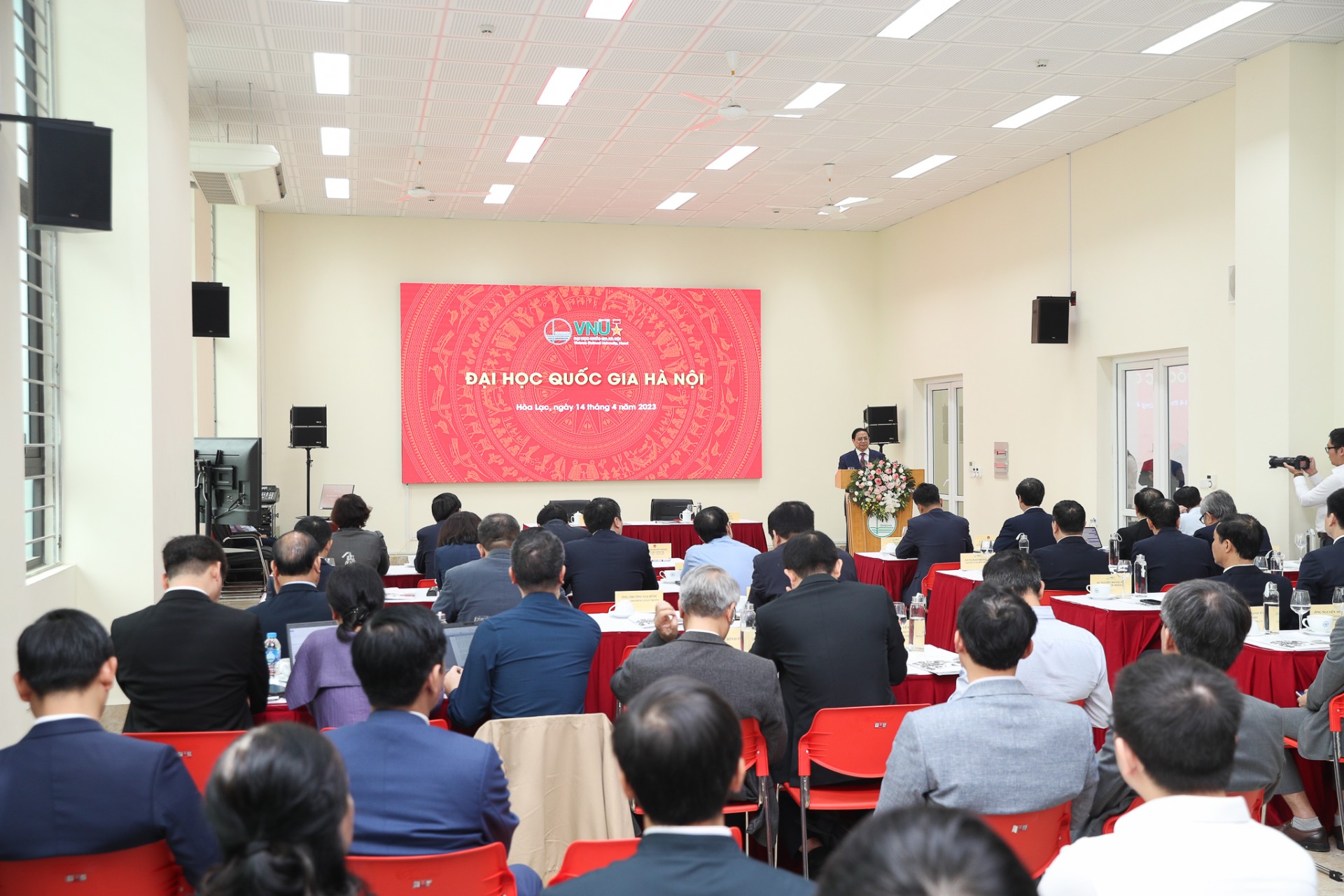
Also attending the working session were Central Committee members: Minister of Planning and Investment Nguyen Chi Dung, Minister of Labour, Invalids and Social Affairs Dao Ngoc Dung, Minister of Home Affairs Pham Thi Thanh Tra, Minister of Education and Training Nguyen Kim Son, Minister of Science and Technology Huynh Thanh Dat; Director of Vietnam National University, Hanoi Le Quan; leaders of ministries, central agencies, and Hanoi city; and representatives of large corporations, general companies, and enterprises.
During the meeting, Prime Minister Pham Minh Chinh listened to a report from the leaders of Vietnam National University, Hanoi (VNU) on the overall organization and operation, including the training of talented individuals and high-quality human resources, as well as the training and scientific research situation in the field of semiconductor integrated circuits at VNU.
Vietnam National University, Hanoi - a model of higher education with a mission to lead and pioneer.According to the Director of Vietnam National University, Hanoi (VNU), Le Quan, VNU has basically completed the model of a multi-disciplinary, multi-field university in line with the Government's orientation, with 9 member universities, 5 research institutes, and 22 affiliated training, scientific research, and service units. The total number of staff and employees is 4,667, including 2,634 full-time scientific staff. Among the 2,251 full-time lecturers of VNU, there are 62 professors and 414 associate professors, accounting for 20%; the percentage of scientific staff with doctoral degrees or PhDs among the total number of full-time lecturers is 66%. International publications have become an academic culture of VNU, with the number of international articles in the ISI/SCOPUS system continuously increasing year by year, from 400 articles in 2012 to approximately 1,600 articles in 2022.
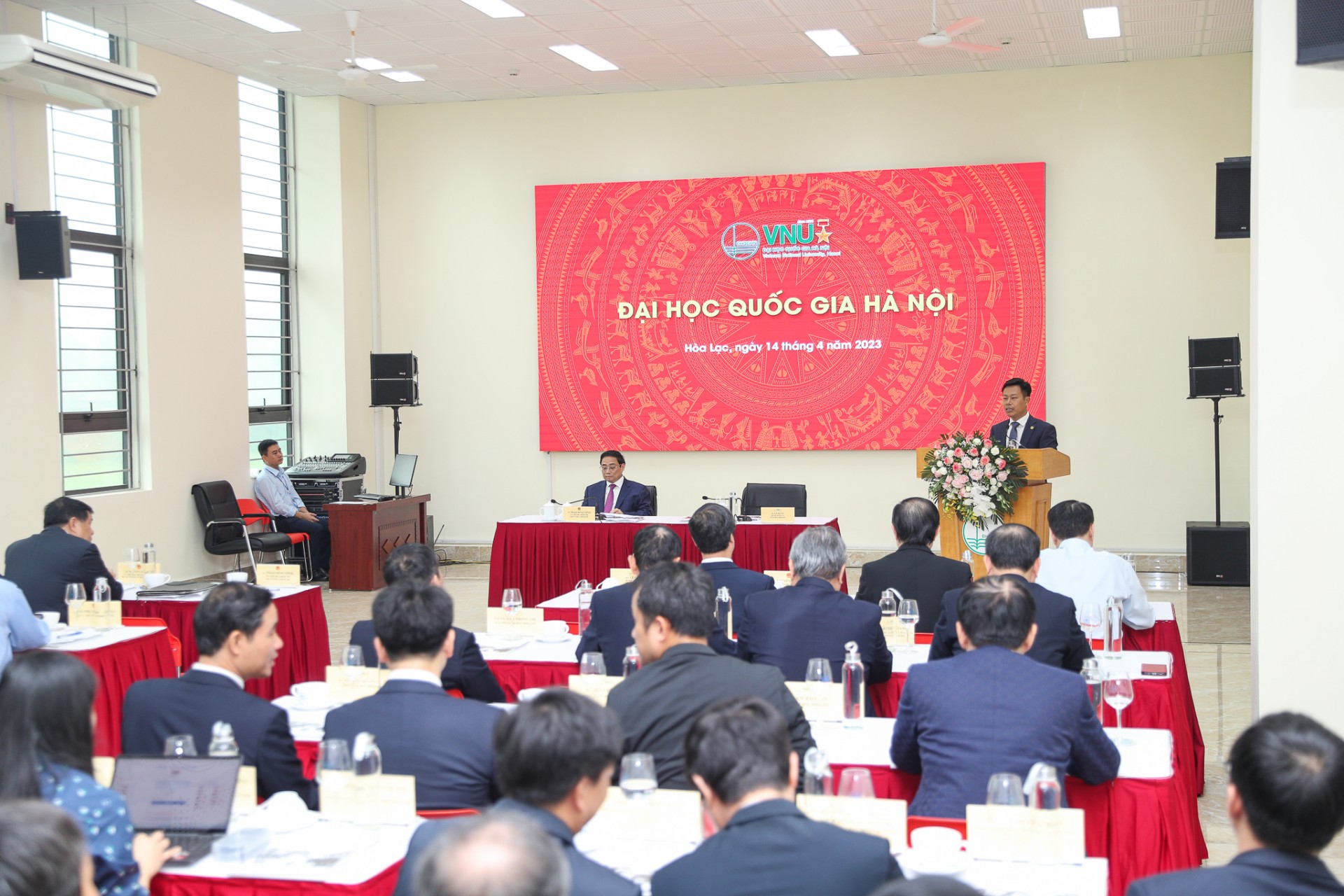
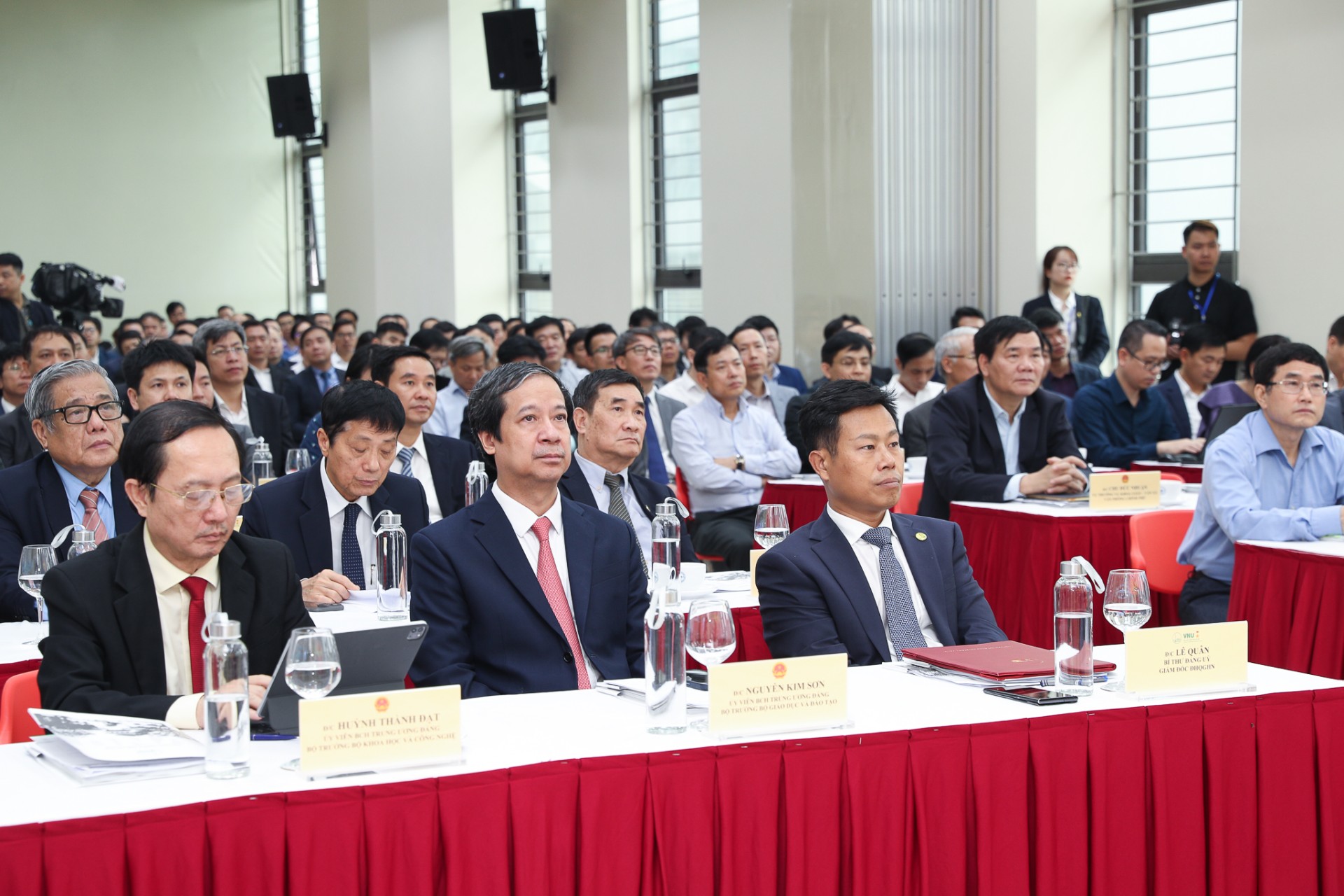
Recently, Vietnam National University, Hanoi (VNU) has focused on implementing the Prime Minister's directives, with a particular emphasis on activities within the Hoa Lac University Urban Area. In May 2022, VNU officially relocated its headquarters to Hoa Lac, marking a transformation of the system towards a new development space in terms of infrastructure, academic life, and university administration. The infrastructure and landscape of the university urban area are continuously being improved. The core area of 163.8 hectares has been established and is gradually expanding to 595 hectares. The facilities and equipment are sufficient to accommodate the current 6,000 students and are being upgraded to serve 25,000 students by 2025. In the 2022-2023 academic year, VNU held its first Opening Ceremony to welcome full-time students to study and live in Hoa Lac, achieving very good enrollment results. To date, 24 out of 36 units within Vietnam National University, Hanoi have relocated their offices and established a presence in Hoa Lac.
Director Le Quan further stated that, in implementing the Prime Minister's directive on building the Vietnam National University, Hanoi (VNU) urban area according to the "5-in-1" model, VNU has developed an Action Framework with component structures including: Urban Landscape Framework; Urban Activity Framework - Knowledge Economy - Higher Education Framework; and Information and Communication Technology (ICT) Infrastructure Framework, aiming to achieve the following goals: Reorganizing the overall space to attract investment according to market economics; Connecting the overall development space with urban activities to control the formation and operation of the urban area - knowledge economy space - university - public areas and housing for students and lecturers, connecting with adjacent urban and industrial sub-areas, and quickly connecting with the Hoa Lac Urban Area of Hanoi city...).
Director Le Quan emphasized that investing in human resources, particularly the scientific team, is a key focus in the Vietnam National University, Hanoi's development strategy. Many policies have been enacted to leverage internal strengths and nurture young scientists, supporting lecturers, staff, and students with numerous advantages and international integration. This significantly contributes to motivating lecturers and scientists to enthusiastically innovate, improve the quality of teaching and scientific research, and attract and develop a highly qualified scientific workforce.
Training and scientific research in the field of semiconductor integrated circuit design industry.Regarding the training and scientific research situation in the field of semiconductor integrated circuit design, this is an interdisciplinary field involving many different basic sciences, technologies, and engineering disciplines. Personnel in integrated circuit design require design thinking and problem-solving skills, rather than simply understanding and grasping the operating principles of the system. Due to its interdisciplinary nature and high quality requirements, Vietnam National University, Hanoi (VNU) is one of the pioneering institutions in Vietnam capable of participating in and leading training, research, and application development related to both integrated circuit design and manufacturing technologies.
Each year, Vietnam National University, Hanoi (VNU) provides approximately 1,200 graduates in fields directly related to integrated circuit design and related disciplines. The total number of graduates in these fields at VNU is over 12,000. Many VNU students, trainees, and researchers who graduated from these programs are currently working in the field of integrated circuit design at research organizations and businesses both domestically and internationally.
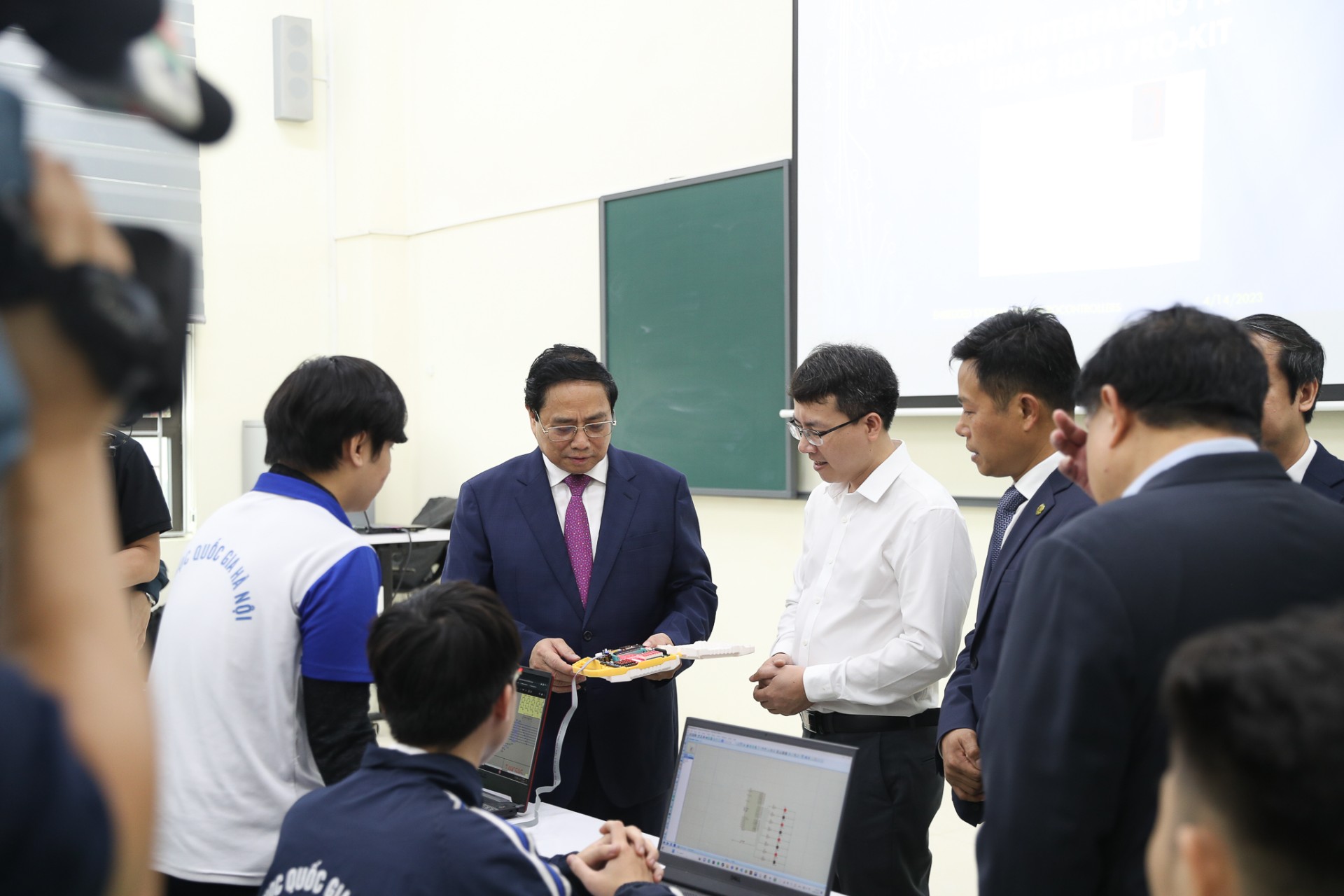
Vietnam National University, Hanoi (VNU) currently has 9 strong research groups and 6 laboratories invested in this field. The development orientation of integrated circuit design technology at VNU focuses on deploying IoT chip-based system models combined with artificial intelligence for applications in smart cities and digital societies, digital transformation, and digital agriculture. In addition, research groups are also interested in designing security chips for applications in national defense and security through research collaborations with the Government Cipher Committee, the Military Technical Academy, and the Institute of Military Science and Technology.
Besides design technology, with its tradition and strengths in physics and chemistry, the field of semiconductor manufacturing has also been of interest to scientists at Vietnam National University, Hanoi for decades, with a number of products in thin-film materials technology, infrared sensor technology, magnetic field sensor technology, etc.
The Director of Vietnam National University, Hanoi, Le Quan, proposed that the Government support the establishment of a National Integrated Circuit Design and Testing Support Center (IC Design House) located in the Vietnam National University, Hanoi urban area in Hoa Lac, as a shared resource for Vietnam's semiconductor industry.
With its strengths in basic science, materials science, and new space in the Hoa Lac urban area, Vietnam National University, Hanoi (VNU) has the opportunity and potential to develop the semiconductor integrated circuit design industry in particular and high-tech fields in general, and to build and organize training and research programs on semiconductor integrated circuits within the Ministry of Education and Training's talent and excellence training program in Industry 4.0.
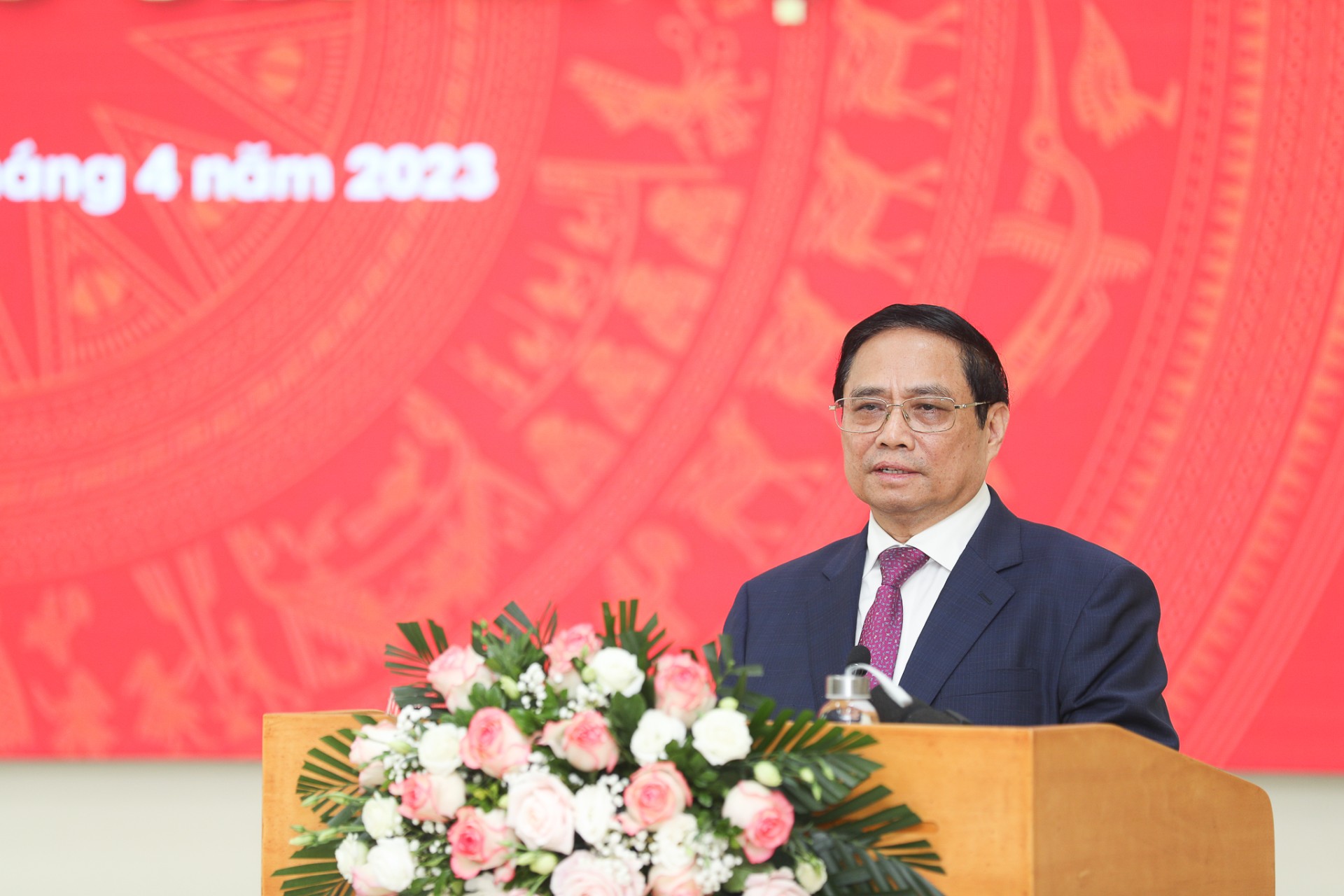
A gathering place for leading scientists from Vietnam and around the world.Speaking at the meeting, Prime Minister Pham Minh Chinh, on behalf of the Party and State leaders, acknowledged and commended the great efforts and high determination of Vietnam National University, Hanoi (VNU) on its achievements in recent years, making positive contributions to the development and education and training of the whole country, especially in training high-quality human resources.
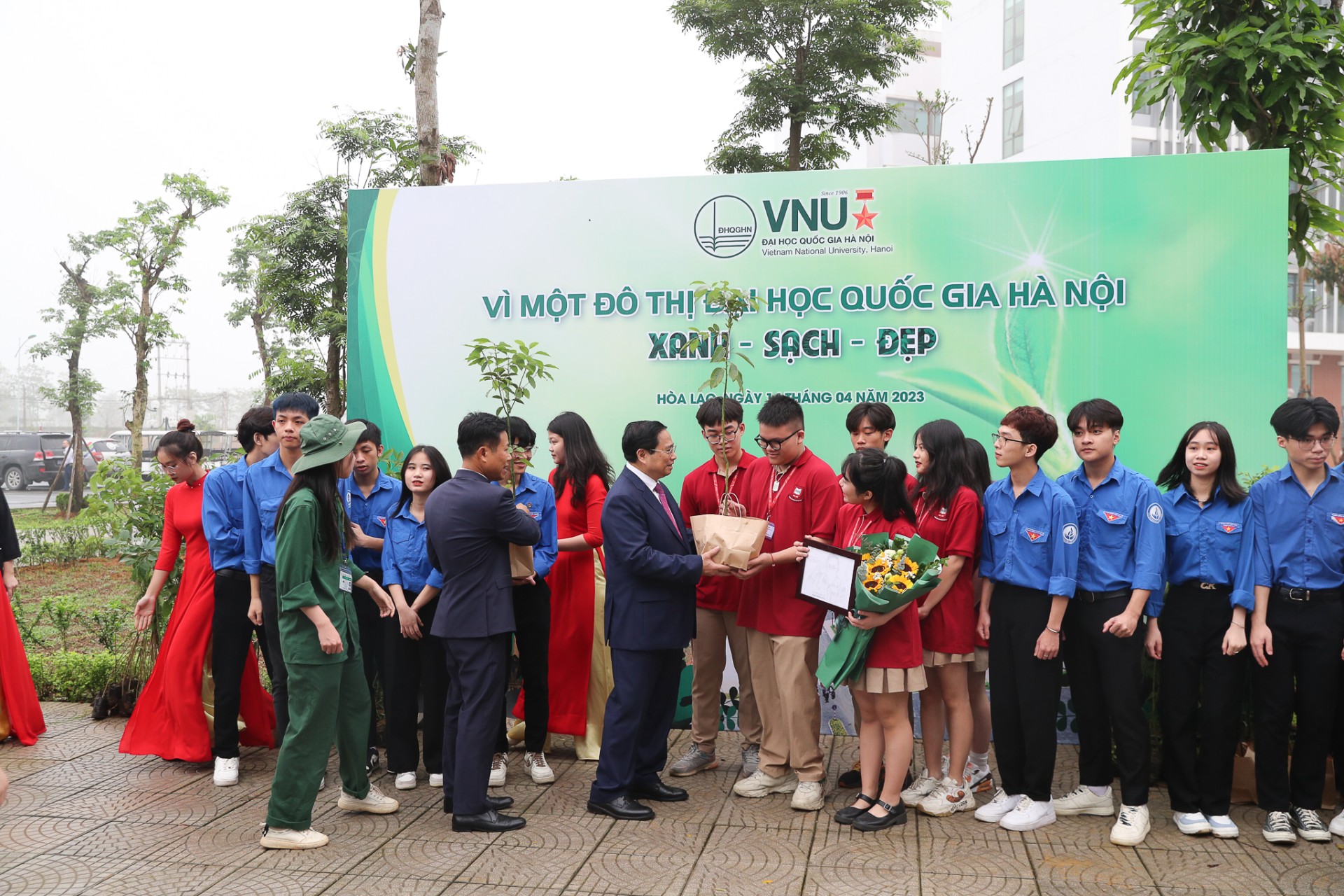
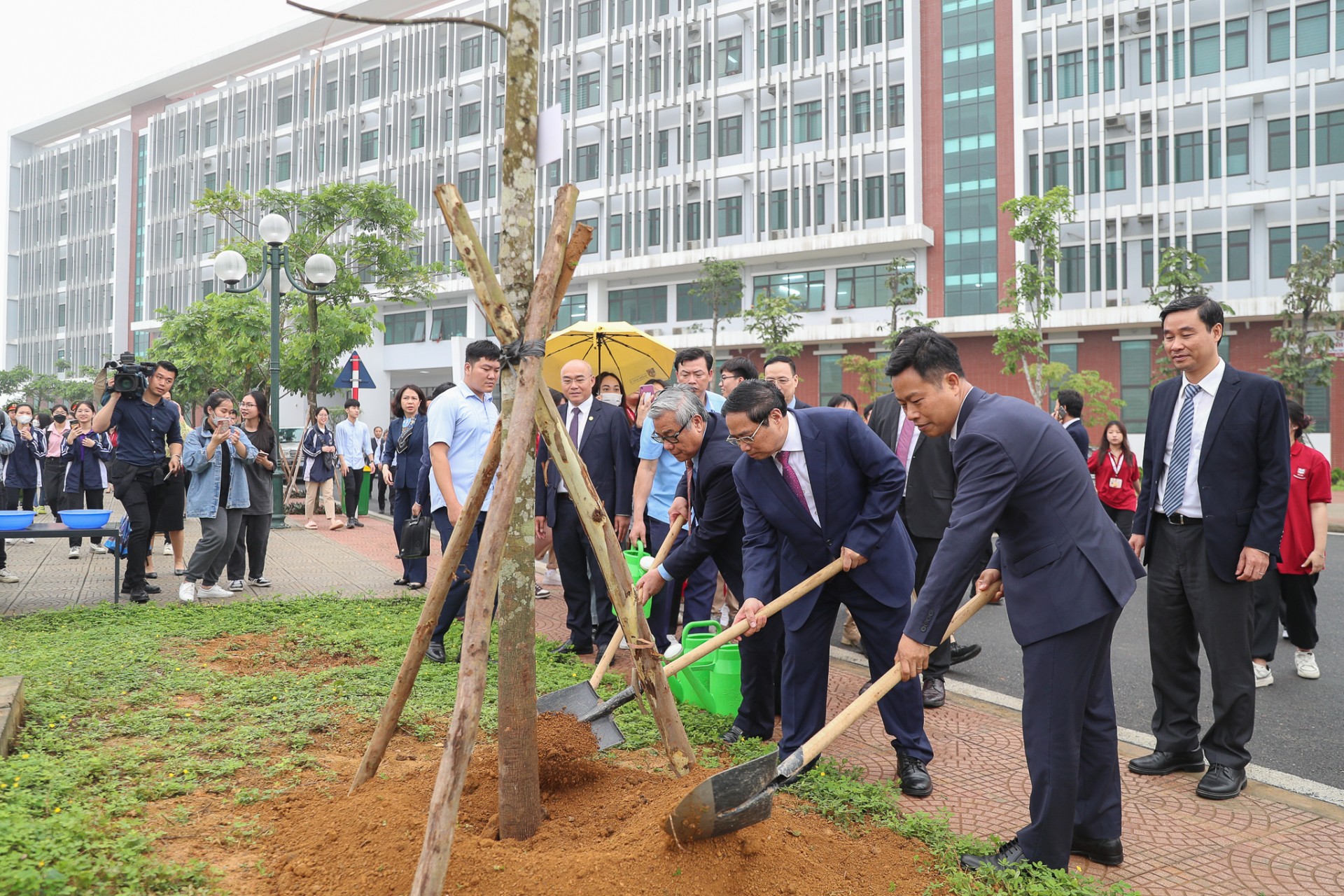
The Prime Minister emphasized that Vietnam National University, Hanoi (VNU) has always been closely associated with the cause of national construction and defense; previous generations have built the VNU brand as it is today. The Prime Minister expressed his confidence and hope that VNU will uphold this historical tradition; be determined to maintain a green, clean, and beautiful environment and plant more trees.
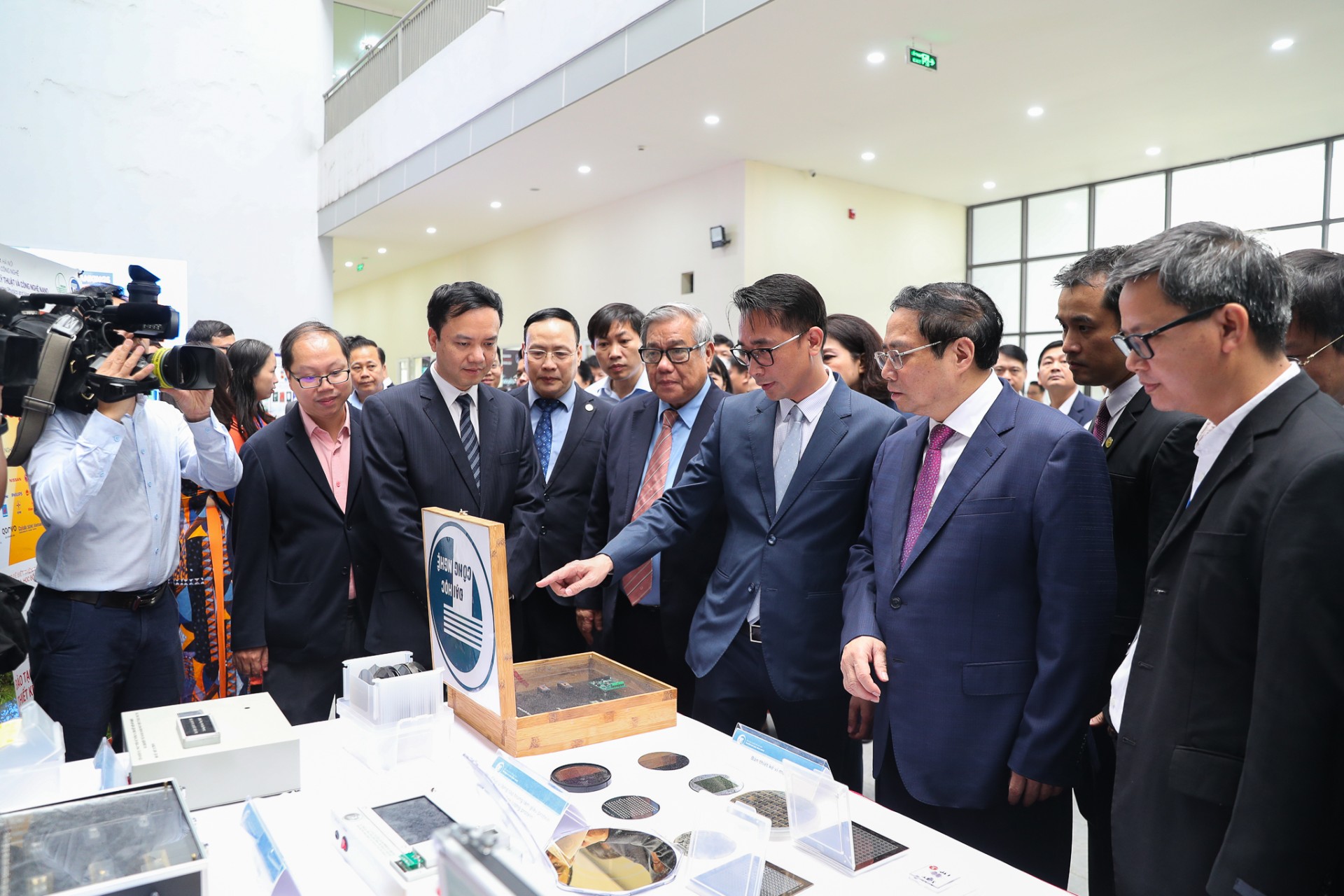
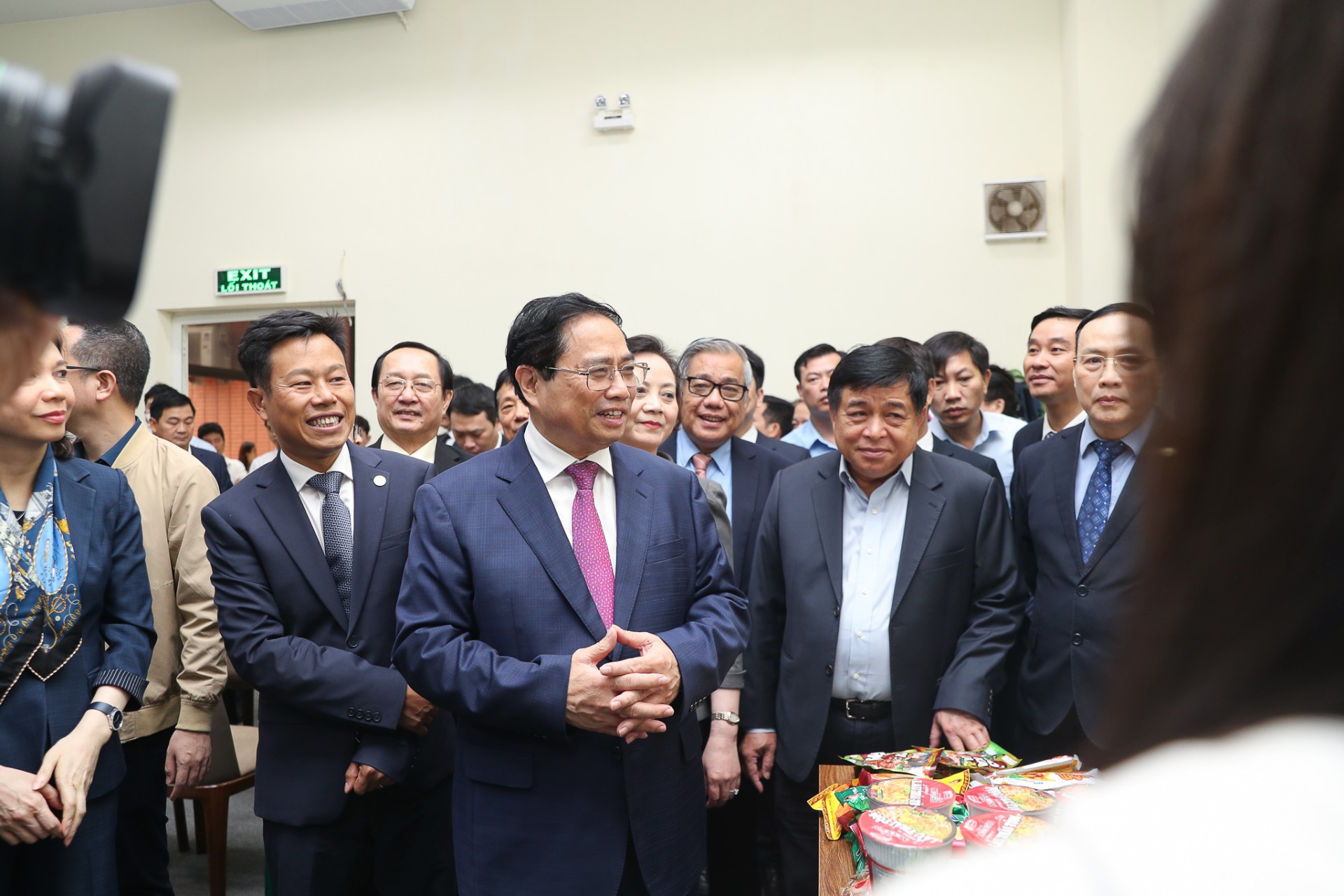
The Prime Minister was impressed by the students' health, cheerfulness, serious study habits, scientific research, and vibrant participation in physical activities, sports, and culture, reflecting the youthfulness, knowledge, and abundant human resources of our country. The Prime Minister was also impressed by the exhibition area showcasing semiconductor chip research and related fields at Vietnam National University, Hanoi, noting that transitioning from the research phase to commercial production still faces many difficulties that need to be overcome.
The Prime Minister stated that Vietnam is building an independent and self-reliant economy, coupled with proactive and effective integration into the international community. This has been further demonstrated by recent global changes.
“To achieve this, we need knowledge, expertise, and opportunities for learning that are appropriate to the country's circumstances and conditions. Education and training must inherit the nation's tradition of valuing learning, but also embrace the achievements of humanity in the context of the Fourth Industrial Revolution. We cannot stand alone. Regarding chip research, it is clear that we must conduct research, cooperate, and place orders… This necessitates collaboration in training, fostering, and learning from the best and most advanced models in the world,” the Prime Minister emphasized.
The Prime Minister emphasized that the key issue is to train human resources for basic research, management, practice, and application to ensure comprehensiveness, inclusiveness, and holistic development while balancing it with the country's development conditions; and to promote the training of applied research engineers in chips and microcircuits. According to the Prime Minister, training should focus on industries that are trending globally, developing sustainably, and must be on the right track, suitable to the circumstances and people of Vietnam. Throughout this process, the focus remains on people; education and learning are essential to fully utilize unique potentials, outstanding opportunities, and competitive advantages. Therefore, it is necessary to directly address cutting-edge fields and global trends: digital transformation, green economy, circular economy, knowledge economy, innovation, and environmental protection.
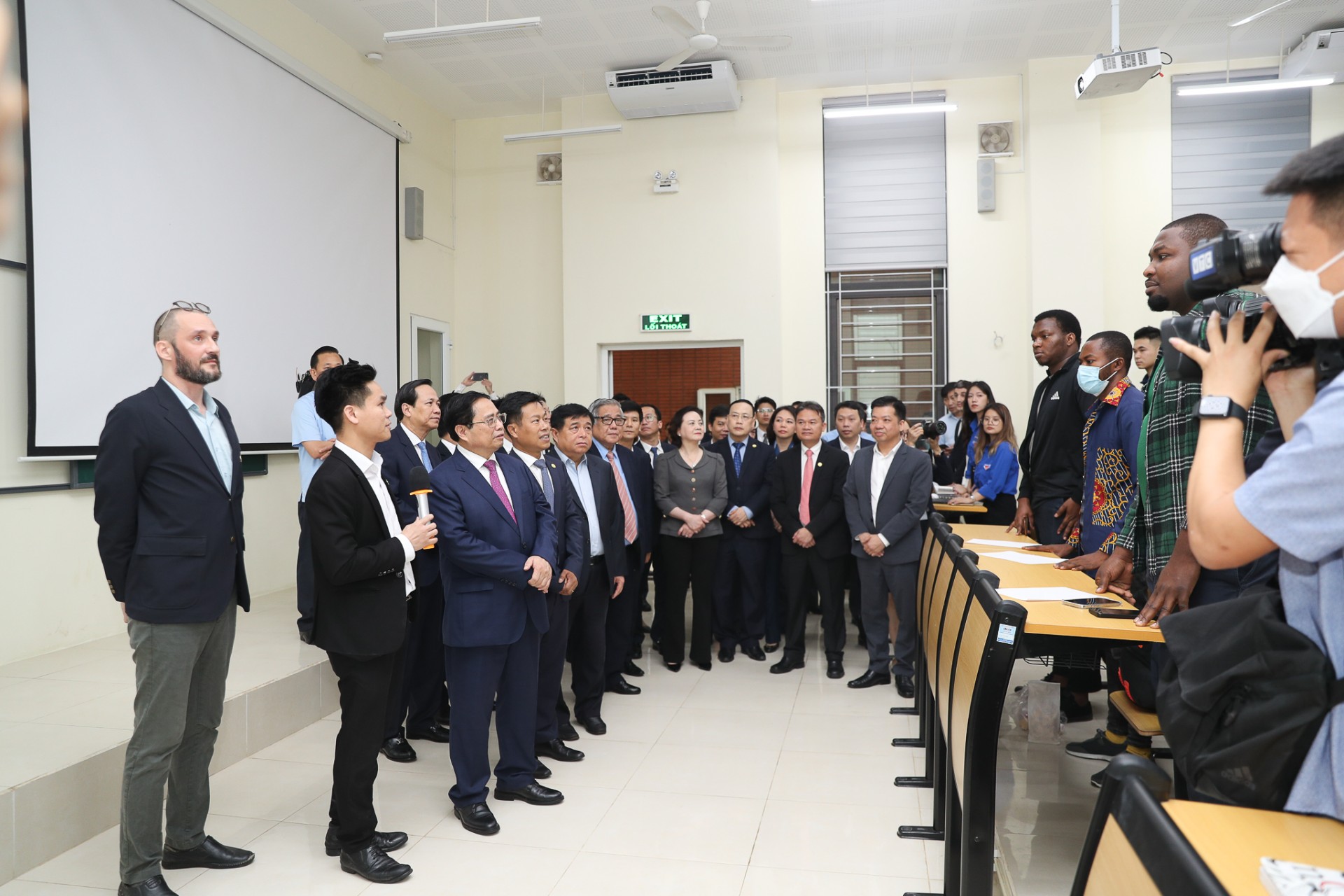
The Prime Minister hopes that Vietnam National University, Hanoi will closely adhere to the Party's guidelines and policies, and concretize them for implementation; we need to think together to do this well. People must have education, learning, nurturing, and cultivating talent in order to allocate resources, develop all abilities, and exploit all potential and opportunities for rapid and sustainable development.
The Prime Minister expressed his delight at the historical tradition of Vietnam National University, Hanoi, noting that successive generations of leaders have always inherited and developed it, achieving the results it has today. Throughout this process, there have been many remarkable developments, making it a place for training high-quality human resources and nurturing talent. The university urban area is gradually becoming greener, cleaner, and more beautiful, in line with global trends.
"This should be a model for universities nationwide. The government, ministries, and agencies will work together with Vietnam National University, Hanoi to continue improving infrastructure and ensuring sufficient equipment to link learning with practice," the Prime Minister affirmed.
The Prime Minister expressed his hope that Vietnam National University, Hanoi would stabilize its infrastructure, provide comprehensive training in knowledge and physical fitness, and integrate scientific research with education and training, as well as the task of national construction and defense. The Prime Minister also instructed the Ministry of Transport to study and implement investment in building diverse and convenient transportation connections from the city center to the Hoa Lac satellite city.
To develop Vietnam National University, Hanoi into a leading, modern, and prestigious institution in the region and internationally.Regarding future development, the Prime Minister emphasized that the world is changing rapidly, with a high level of knowledge, and responding to non-traditional security challenges must be quick, timely, and effective. The forecast for the coming period indicates more difficulties and challenges than opportunities and advantages. Therefore, we must adapt to these changes, and to do so, we need knowledge, training, and research; focusing on the knowledge economy, green economy, circular economy, digital transformation, and combating climate change.
The Prime Minister requested that Vietnam National University, Hanoi focus on doing well in the following areas:
Firstly, we must leverage our rich history, considering it an invaluable asset, and further enhance the effectiveness of valuable lessons, experiences, and effective practices. We must continue to build and strengthen a united and robust collective, constantly innovating to suit the new situation and circumstances, in order to build Vietnam National University, Hanoi into a modern, prestigious institution for human resource training and scientific research in the region and internationally; one that aspires to excel and achieve breakthroughs; and one that develops comprehensively in both breadth and depth, focusing on a number of basic scientific fields, specialized training, cutting-edge programs, and high-quality training in areas where Vietnam has strengths, in line with global trends, especially in specialized training in digital transformation, green transformation, circular economy, and sustainable development.
Secondly, it is crucial to closely link training with the promotion of scientific research, developing both natural sciences and social sciences/humanities, basic and applied sciences, and high-quality human resources. This is especially important in contributing to the development and refinement of the ideological foundation, providing reliable scientific arguments for the Party and State in formulating strategies, policies, and plans for the country's socio-economic development, protecting national security and defense, and maintaining political stability.
Thirdly, we must adhere closely to reality, starting from reality, respecting reality, using reality as a yardstick, and focusing on solving major problems, bottlenecks, difficulties, and obstacles, both theoretical and practical, at the international, national, and local levels. As the situation changes, so too must our thinking; only then can we harness the strength of the people. We must promote entrepreneurship, innovation, and the commercialization of scientific research results and products based on enhanced public-private partnerships; and accelerate digital transformation and the application of science and technology to emerging and key industries.
Fourth, we must demonstrate a strong aspiration for advancement, focusing on developing a high-quality faculty and research staff of regional and international standards. In this process, we must pay attention to the specific characteristics of the country. These are crucial foundations of Vietnam National University, Hanoi; therefore, we must have a greater aspiration aligned with the nation's aspirations. Only then can we create a ripple effect and inspire the training of human resources and the nurturing of talent. We must innovate and improve the quality of teaching and learning to meet the needs of the domestic and international markets and the trends of the times.
Continuing to promote and expand appropriate and effective admission methods, including the assessment of high school students' abilities; based on practical experience, Vietnam National University, Hanoi needs to propose mechanisms and policies for development; and mechanisms to encourage students to study basic sciences, specialized fields, and rare fields to both serve the preservation and promotion of the unique identity and values of the nation and people, and to serve the rapid and sustainable development of the country.
Particular attention should be paid to increasing investment in the development of human resources for research in semiconductor integrated circuit technology in Vietnam; focusing on strengthening close cooperation with domestic and foreign enterprises to train, research, transfer technology, and commercialize in this field; attracting investment; adapting to the country's circumstances and realizing the nation's aspirations, while maintaining a comprehensive, holistic, and holistic approach, and also focusing on key areas. Support should be provided for training human resources in remote, border, and island areas, especially in the mountainous regions of the North, Central Highlands, and Southwest Vietnam.
Fifth, mobilize and effectively utilize all resources to promptly complete the task of building the Vietnam National University in Hoa Lac, forming a green, modern, smart university urban area on par with the region according to the 5-in-1 model; strengthen public-private cooperation in training and boldly conduct pilot projects.
The Prime Minister requested relevant ministries, agencies, and the Hanoi People's Committee to actively coordinate, support, and create favorable conditions to effectively resolve the difficulties and obstacles faced by Vietnam National University, Hanoi as soon as possible.
The Prime Minister urged generations of students at Vietnam National University, Hanoi to be proud of their historically rich learning environment, and for each student to nurture their passion, cherish their ambitions, and ignite the flame of enthusiasm to strive together with friends and colleagues, take control of their lives, and make many positive contributions to themselves, their families, the community, and society.
Regarding the recommendations and proposals of Vietnam National University, Hanoi (VNU), the Prime Minister assigned VNU to take the lead and coordinate with relevant ministries and agencies to develop a report proposing the investment policy for the construction of the National Microchip Design and Testing Support Center and the Microchip Manufacturing Laboratory located in Hoa Lac, to be operated by VNU, and submit it to the competent authority for approval.
Vietnam National University, Hanoi (VNU) is a leading and prestigious center for training and scientific research in Vietnam, especially in information technology, digital transformation, and integrated circuit design. The Prime Minister has assigned the Ministry of Education and Training to consider and designate VNU as the focal point for developing and organizing training and research programs on integrated circuits under the "Development of a System of Centers for Excellence and Talent in Industry 4.0 Technology" project.
The Prime Minister requested that Vietnam National University, Hanoi (VNU) coordinate with the National Innovation Center to build innovation centers and technology incubators, combined with improving transportation infrastructure, so that Hoa Lac can soon become the largest satellite city of Hanoi according to the general plan approved by the Prime Minister.
Besides direct contributions to training high-quality, highly skilled human resources, publishing hundreds of scientific articles, and registering numerous intellectual property rights, the research groups have developed several outstanding semiconductor-related products with high commercialization potential, such as: Video signal encoding integrated circuits using the advanced H.264/AVC standard (VENGME), Dual-band IoT transceiver integrated circuits for high-tech agriculture (IoTA), Lightweight security integrated circuits for IoT (SNACk), Security integrated circuits for RFID cards, Secure IoT integrated circuits and devices for smart cities (Secu-IoT), Embedded fire alarm systems, Smart power supply design solutions, Magnetic field sensor components, Electronic compass devices; Thermal infrared image sensor chips, Thermal infrared cameras, etc.
To access highly multidisciplinary fields and cutting-edge technology, the training and research units of Vietnam National University, Hanoi (VNU) have proactively strengthened research cooperation with reputable domestic and international partners: the United States (University of California, Davis; University of Illinois Urbana-Champaign, University of South Florida, chip manufacturer Global Foundry, chip manufacturer Avnet/AMD…); the Netherlands (Delft University of Technology, University of Twente); France (CEA-Leti/Minatec, University of Paris-Saclay, University of Grenoble Alpes…); Germany (RWTH Aachen University, Siemens/Mentor Graphics...); Spain (Institute of Micro/Nano Technology – National Center for Microelectronics); Japan (AIST, JAIST, IMRA, Osaka University, Wasada University, UEC, University of Tokyo…); South Korea (KAIST, Daegu Gyeongbuk Institute of Science and Technology (DGIST),…); Taiwan, China (National Chung Cheng University, National Chiao Tung University, National Chiao Tung University, chip manufacturer TSMC…)
The press reported on the event:
Workers:Hanoi National University plays a leading role in the higher education system.
Nhan Dan Newspaper: Prime Minister Pham Minh Chinh visits Vietnam National University, Hanoi and FPT University.
Education and Times Newspaper:Building Vietnam National University, Hanoi into a prestigious training institution at the regional and international levels.
Hanoi New Newspaper:Prime Minister Pham Minh Chinh: Education and training must be linked to the task of national development.