
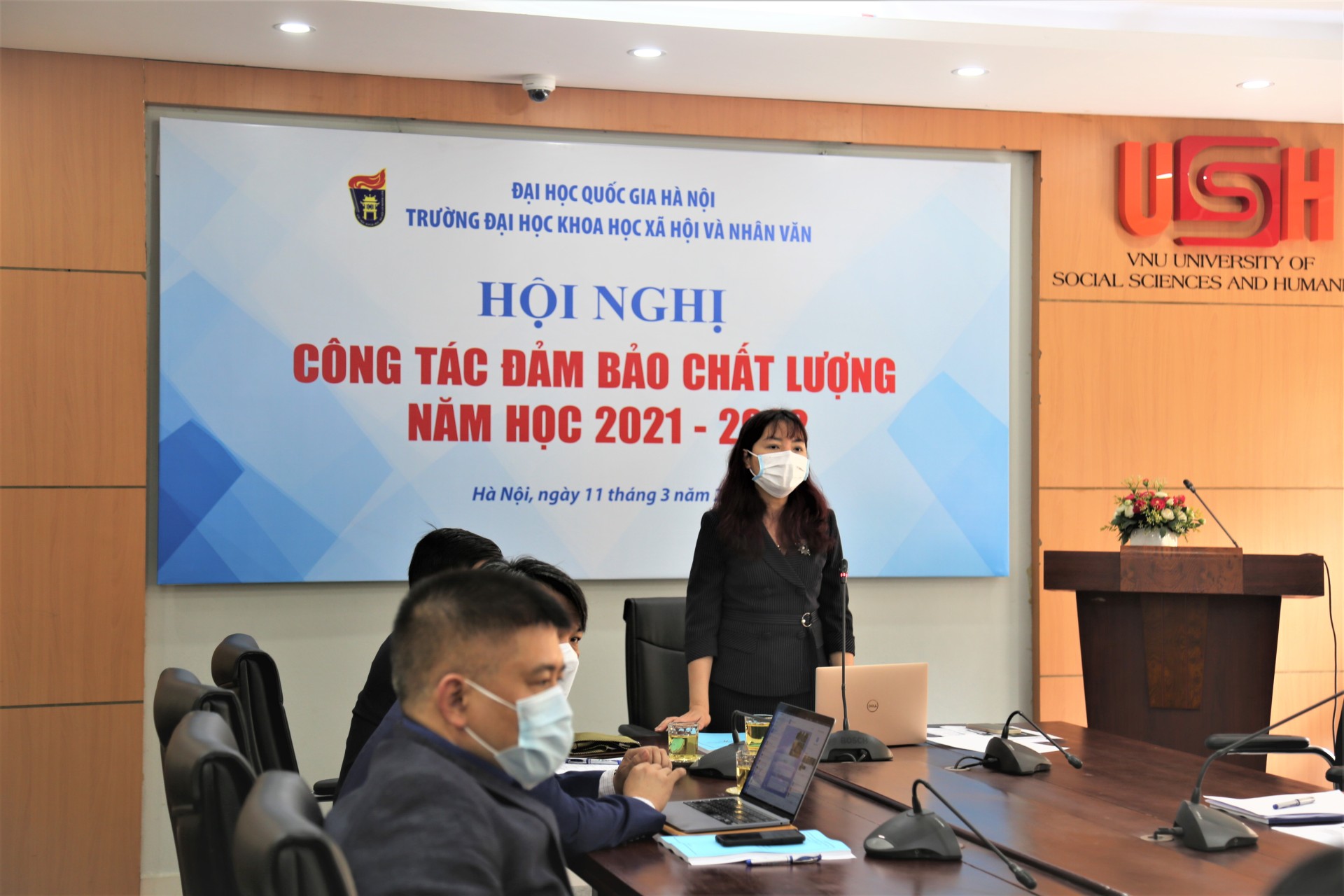
Associate Professor Dr. Dang Thi Thu Huong (Vice Rector) chaired the conference.
Delegates attending the Conference listened to a presentation by representatives of the University's Training Quality Assurance Center, summarizing quality assurance activities from the past to 2021 and the results of the 2021 training program quality assessment. Accordingly, by 2021, the quality assurance work of the University of Social Sciences and Humanities had achieved very noteworthy results:
- Regarding organizational structure and apparatus: The University of Social Sciences and Humanities is currently the first university within the Vietnam National University, Hanoi to establish a dedicated Center for Quality Assurance; in addition, it has a University Quality Assurance Council, responsible staff in faculties and departments, and many other experts. The university has developed quality assurance plans for each year, as well as long-term plans (up to 2025); and a system of specific evaluation tools and procedures.
- Regarding accreditation results: Accreditation of educational institutions (completed the self-assessment report, achieving 92% according to the standards of the Ministry of Education and Training); Accreditation of training programs (8 training programs have been accredited according to AUN standards; 4 training programs according to the standards of the Ministry of Education and Training, 18 undergraduate training programs and 2 master's training programs have undergone peer review).
Speaking at the conference, Dr. Nghiem Xuan Huy highly appreciated the achievements of the School in quality assurance, while also pointing out some areas for improvement in the quality assessment and accreditation process at the School: the need to develop specific assessment tools, compare with training programs at other schools in the country and internationally, promote the role of stakeholders (especially students and employers), have incentive and reward mechanisms, and make appropriate investments in accredited programs, etc.
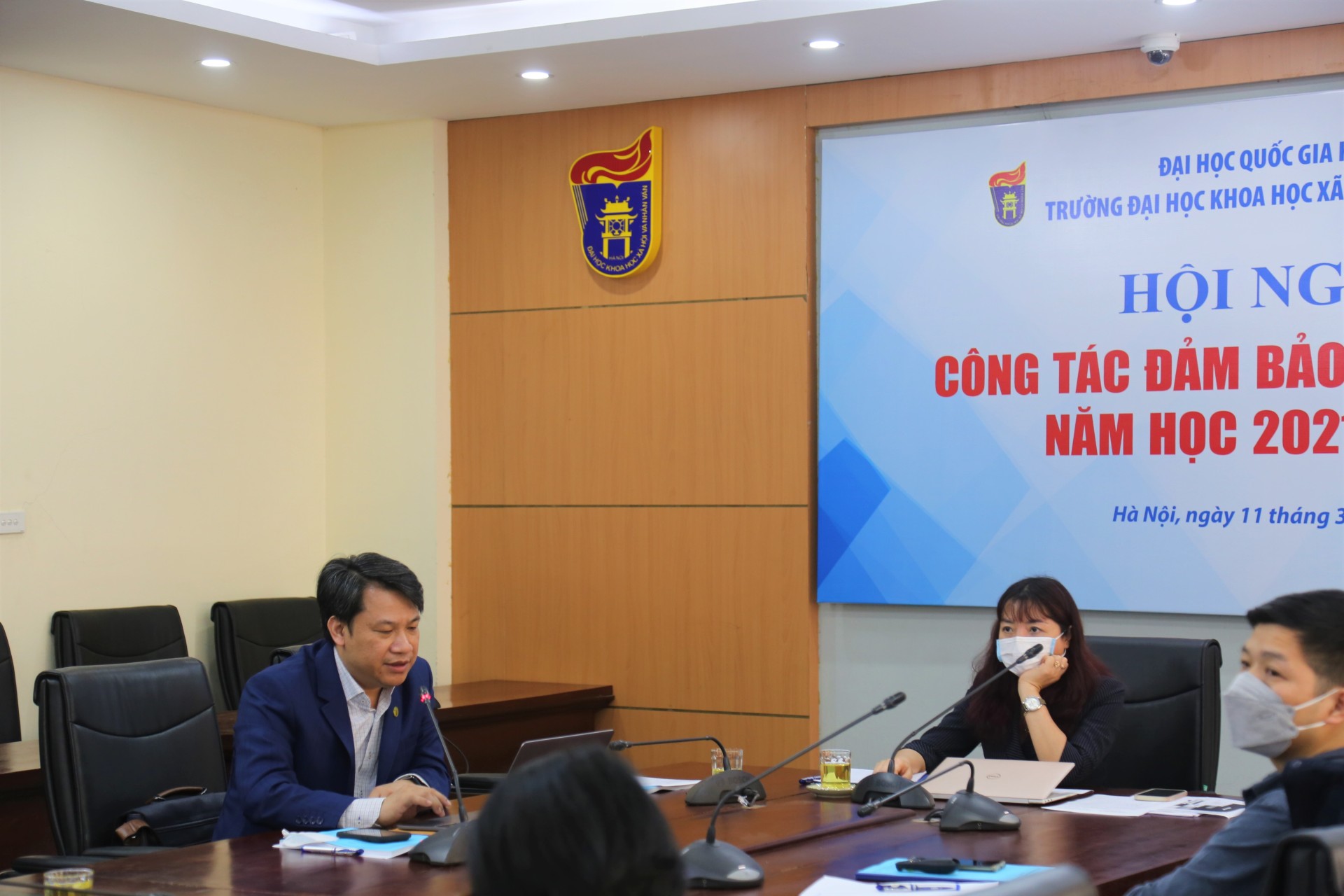
Dr. Nghiem Xuan HuyThe Director of the Institute for Educational Quality Assurance - Vietnam National University, Hanoi, delivered a speech.
The conference heard many opinions exchanged from various units, highly appreciating the significance and role of accreditation in contributing to improving the quality of training institutions and training programs. The faculties and departments expressed their consensus and readiness to prepare reports for accreditation at all levels (self-assessment, external assessment, peer assessment) in the 2022 plan, as well as subsequent years, as directed by the University's Board of Directors.
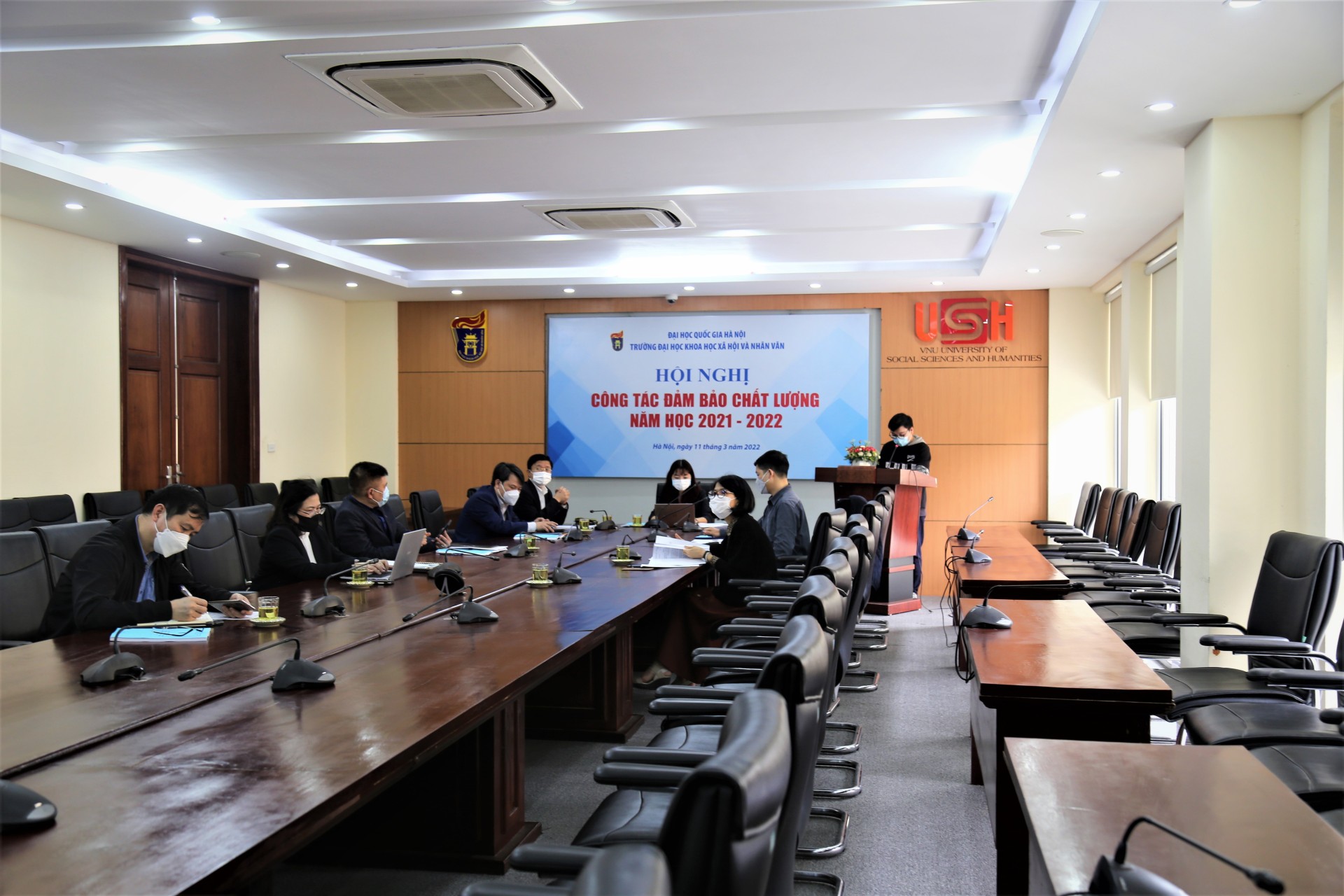
Delegates attended in person at the meeting hall.
Concluding the conference, Assoc. Prof. Dr. Dang Thi Thu Huong emphasized: The highest goal of quality assurance is to build a culture of quality in educational institutions and to improve and enhance the quality of training after accreditation. Regarding the 8 training programs...(Psychology, Sociology, History, Political Science, International Studies, Archival Studies, Literature, Vietnamese Studies)Having completed the accreditation process at the Ministry of Education and Training level, it is necessary to urgently develop a student enrollment plan based on economic and technical standards (according to Government Decree 81) to ensure timely implementation in 2022; for other training programs, it is necessary to urgently complete reports to be ready for accreditation at all levels. During the teaching and training process, lecturers and staff in faculties and departments need to retain evidence to create a rich data source that can be used immediately when preparing reports. In addition, attention should also be paid to improving the quality of training programs after accreditation.
Author:Hanh Quynh
Newer news
Older news

