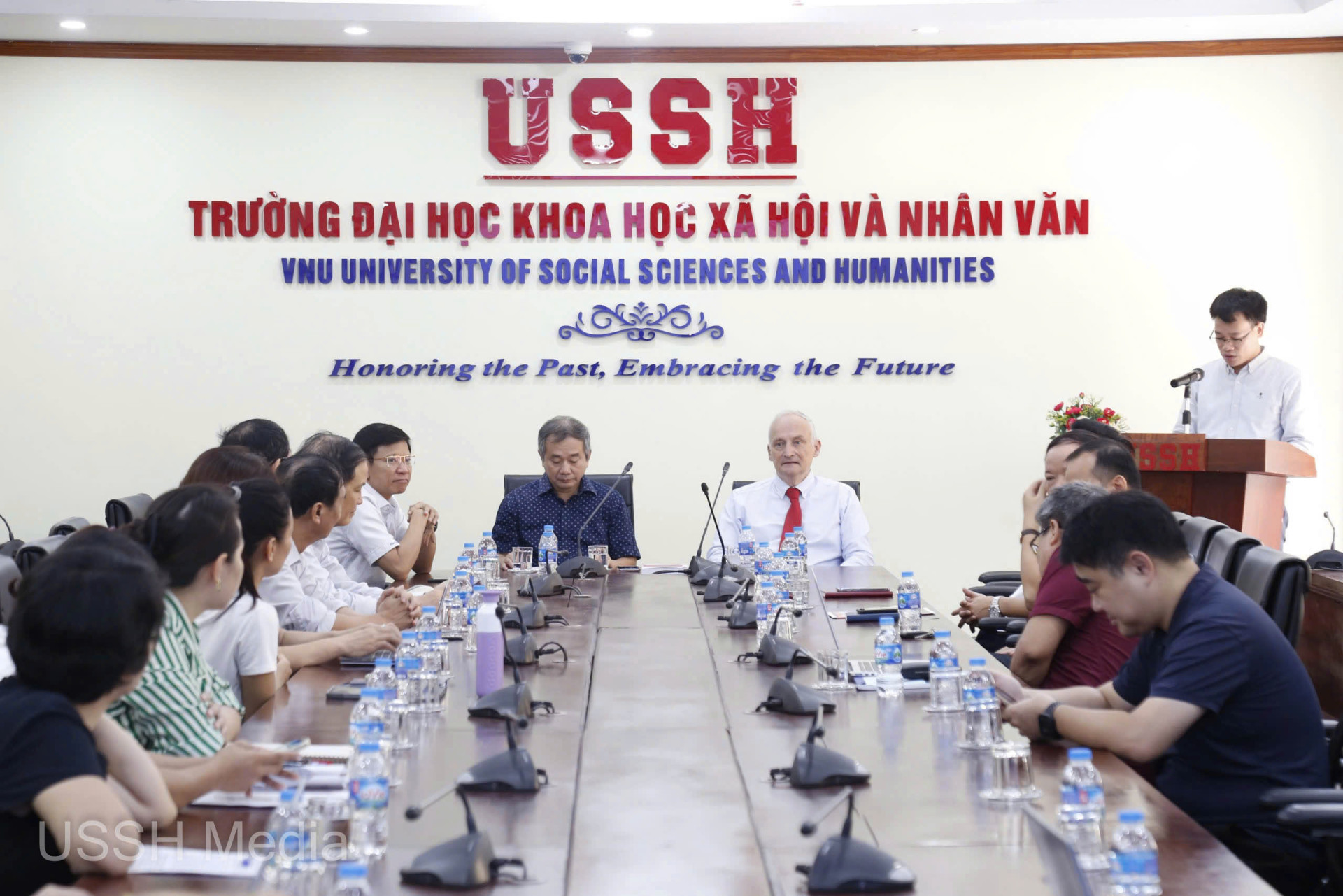
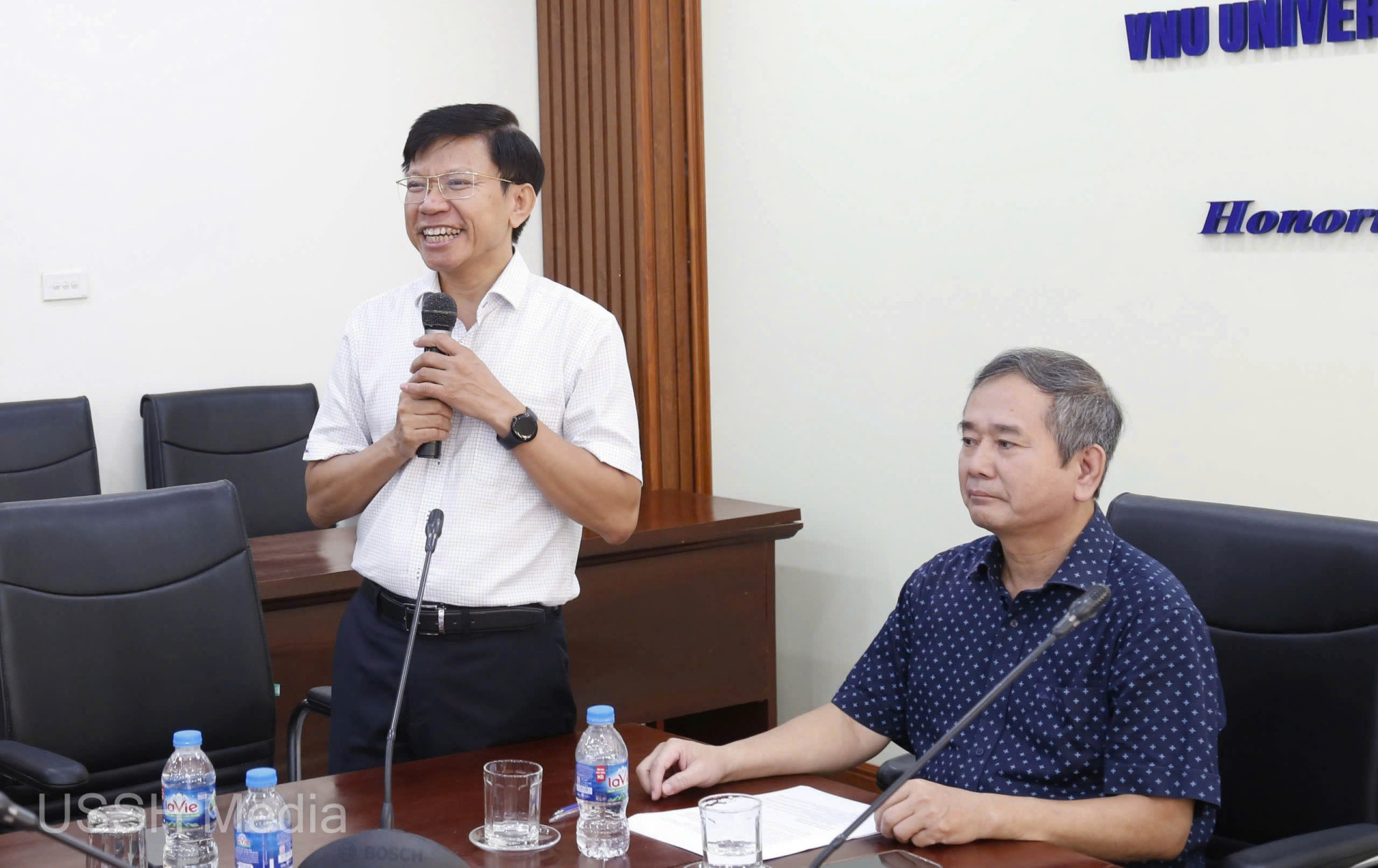
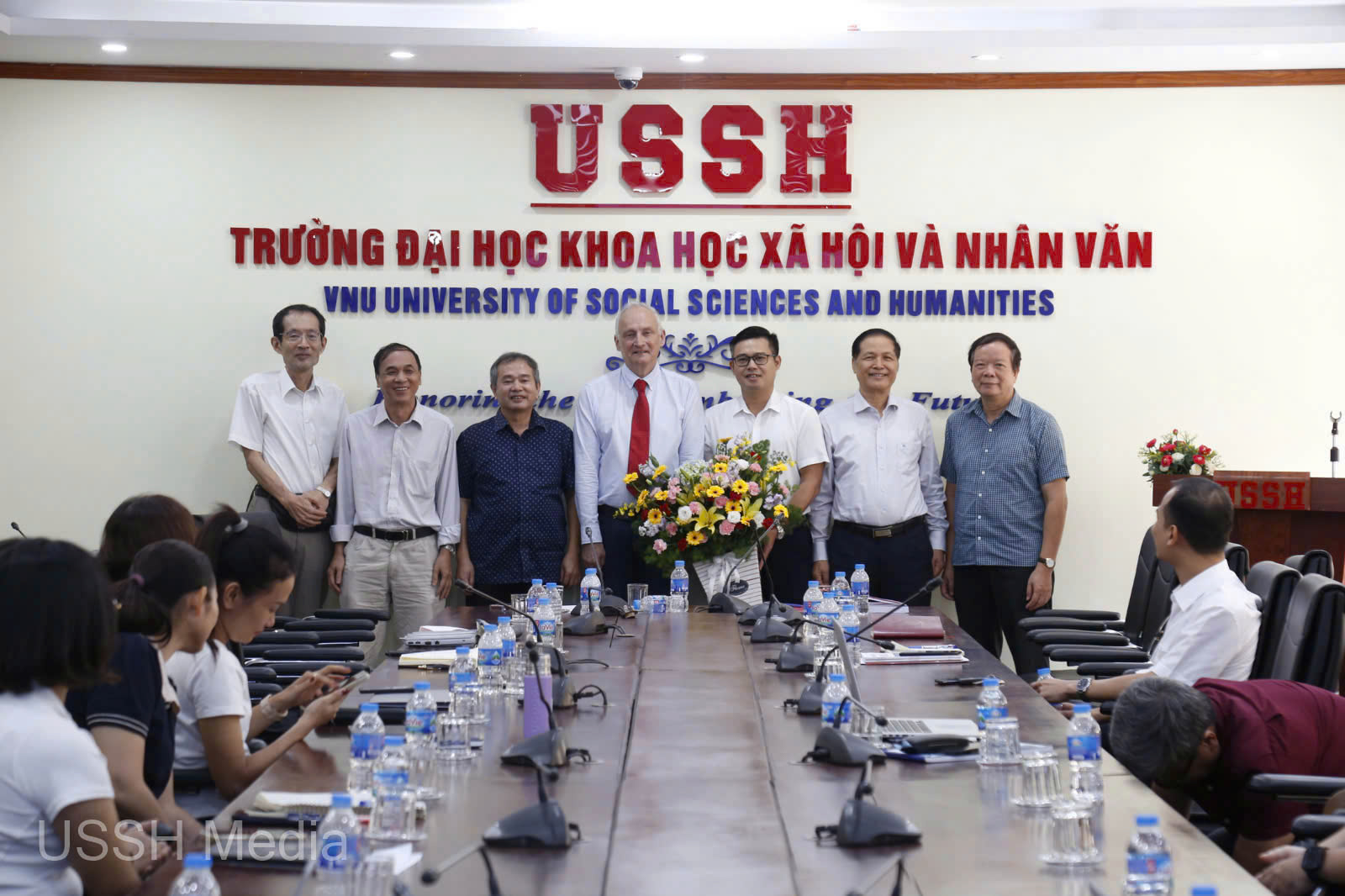
The seminar was attended by Prof. Dr. Hoang Anh Tuan - Rector of the University of Social Sciences and Humanities, Vietnam National University, Hanoi; Prof. Dr. Pham Hong Tung - Former Director of the Institute of Vietnamese Studies; Prof. Dr. Nguyen Van Kim - Former Director of the Center for Marine and Island Studies; Prof. Dr. Momoki Shiro - Vietnam-Japan University; and Dr. Pham Duc Anh - Director of the Institute of Vietnamese Studies and Development Science, along with many researchers and graduate students from within and outside the university.
At the seminar, Rector Hoang Anh Tuan expressed his deep gratitude for the contributions of Professor Vincent Houben to the development of the university over the past decades.
Professor Hoang Anh Tuan shared: "Throughout his time working at the University of Social Sciences and Humanities, Professor Vincent Houben has contributed greatly to the development of the University through valuable research works and inspiring scientific seminars. The professor not only brings in-depth knowledge in many fields but also serves as a cultural bridge, helping VNU-USSH students and faculty access diverse international perspectives."
'Taking time off from work is not about resting, but about changing the way we work and conduct research in a new way.'Rector Hoang Anh Tuan expressed his hope that in the future, Professor Vincent Houben will return to collaborate with the University on many international educational and research projects.
Professor Vincent Houben emotionally recalled his first visit to Vietnam 34 years ago, with a warm welcome from the late Professor Phan Huy Le and Professor Nguyen Van Kim.
Professor Vincent Houben shared about his connection with the University of Social Sciences and Humanities, as well as with Vietnam and its people: After becoming a professor at Passau University in 1997 and then at Humboldt University in Berlin, he returned to Hanoi a total of 18 times until 2018. During that time, the professor had the opportunity to supervise research and work with scientists from the University of Social Sciences and Humanities such as Prof. Dr. Pham Hong Tung, Prof. Dr. Nguyen Quang Hung, and Prof. Dr. Pham Quang Minh. In 2018, he and many other scientists organized a summer course with German and Vietnamese students on the topic of local globalization.
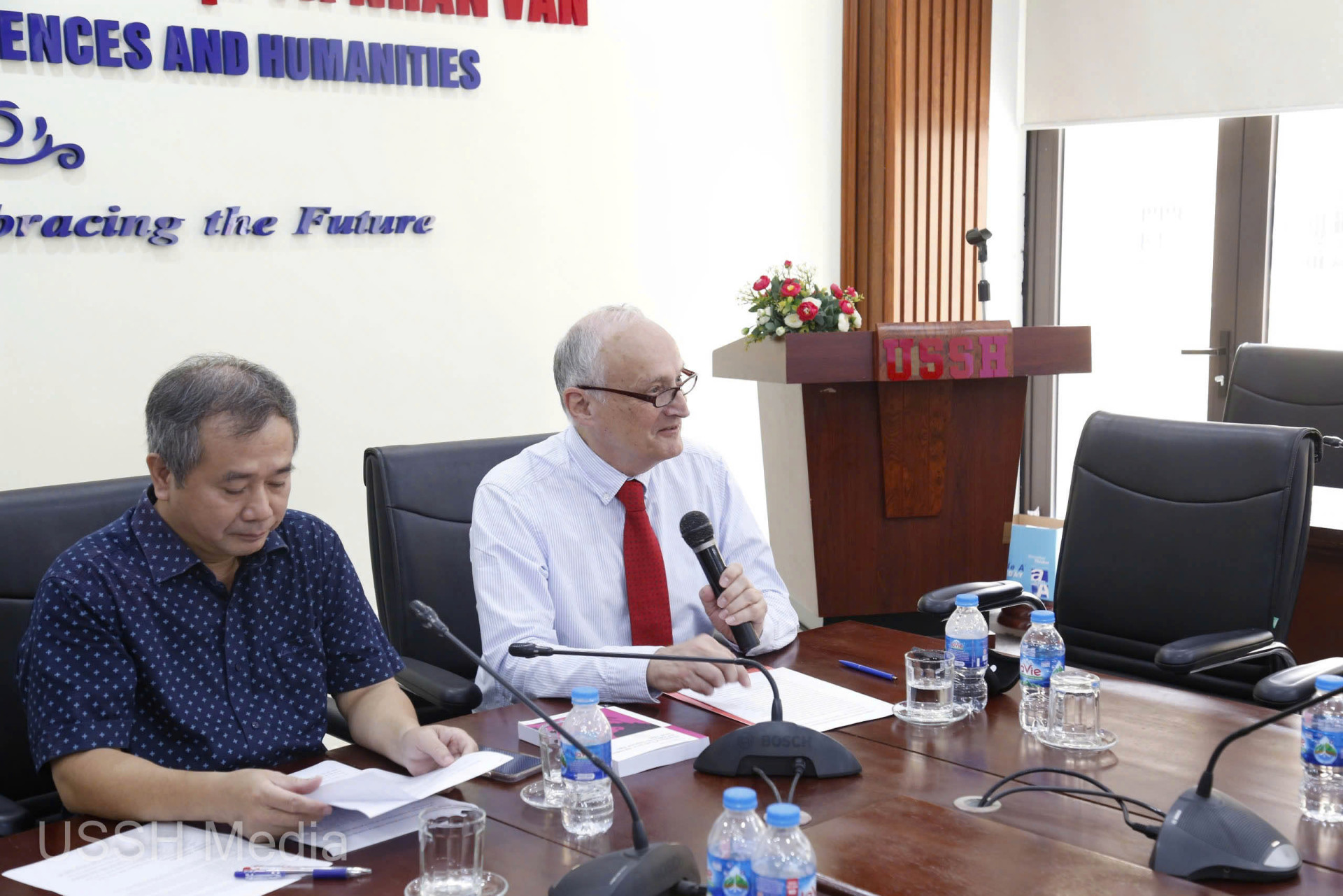
"Today, on this special occasion, I would like to give one final presentation to bid farewell to my colleagues, fellow scientists, and close friends."In his presentation, Professor Vincent Houben emphasized the importance and practical application of regional studies throughout history: “Regional studies have always reflected the context of their time – the colonial era, the Cold War, the globalization period, and the present day have all named regions in a way that is appropriate to their time, and regional studies have followed this spatial model to this day.”
Specifically, according to the professor, "region" is not a static space but a method or approach. Specifically, a region encompasses a particular, deliberately selected configuration of locations and spatial scales, from local to global, that is relevant to the study of a particular phenomenon or development. It combines both the general and the particular, and primarily seeks differences. Regional research is also a methodological challenge. It requires the application of a combination (triangular approach) of methods from history, anthropology, sociology, political science, international relations, etc., through three approaches:
(1) Kaleidoscopic dialectics (seeking configurations based on viewing the area from every possible angle);
(2) Situational analysis, in which data is processed in situational space and reduced to larger contexts;
(3) Network analysis is adapted based on flows and connections, focusing on actors and spatial distinctions.
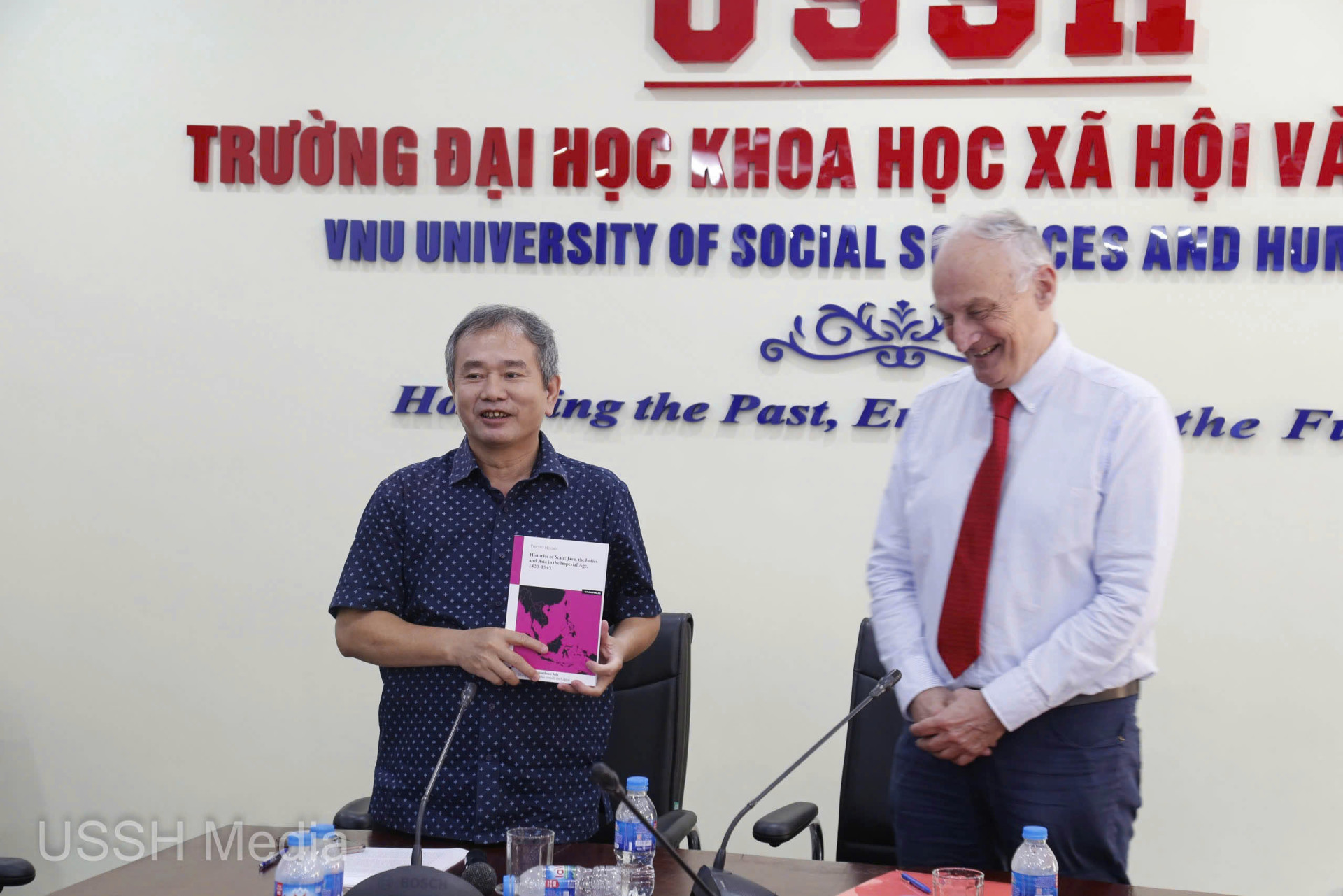
During the discussion session, scientists exchanged specific ideas and raised many questions about the future of regional studies research. Professor Vincent Houben also expressed his desire to donate books to graduate students and scientists interested in research in various fields.