
Building and developing universities with a research focus has become a trend among universities worldwide today. Although these two universities have only officially begun implementing this policy within the last 10 years, they have achieved successes that are worthy of emulation and admiration.
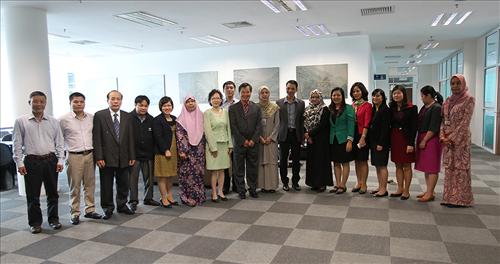

Colleagues at the University of Malaya shared in detail the process of changing perceptions and actions regarding the university's transformation into a research university. The main reason for the university's success lies in the meticulous and elaborate design of processes and plans for each individual, coupled with the determination to overcome numerous difficulties. A prime example is the development of Key Performance Indicators (KPIs) for evaluating the performance of faculty and staff. Each year, the university establishes KPIs for each faculty member, lecturer, and researcher. For lecturers, KPIs include approximately 80% indicators related to professional work, 15% related to attitude and personal conduct, and 5% related to contributions to the academic community and other non-teaching activities. Based on these KPIs, faculty members, depending on their seniority and position, clearly understand their responsibilities, and leadership can easily monitor and evaluate their performance. The implementation of the research-oriented university model was tested for the first three years, then continuously adjusted and applied. To accelerate ranking improvements, the university invited many renowned foreign professors and experts to work and collaborate. Simultaneously, the university constantly researched and grasped the evaluation methods and trends of other universities worldwide to adjust its training programs and promote its reputation internationally. The five factors contributing to the success of the University of Malaya are summarized as follows: the passion for science of the majority of the university's staff, the determination of the leadership, abundant financial resources, a competent workforce, and appropriate policies.
Nanyang Technological University (NTU) in Singapore, the second institution visited by the delegation, has also developed and implemented major policies to transform itself from a teaching-focused institution into a research university since 2006. To improve the quality of its faculty, NTU applies the American Competency Management System (PMS), under which faculty members must strive to become associate professors after six years of employment and professors after nine years. Those who fail to meet these requirements will be dismissed. However, the university also provides maximum support to its staff and faculty to help them successfully complete their research tasks, such as introducing them to specialized journals, editing and translating articles into English, etc. Specifically for the social sciences and humanities, in addition to articles in specialized journals, NTU considers publications such as chapters or sections of books published by reputable foreign publishers. Professors from the Rajaratnam School of International Studies (RSIS, a member institution of NTU) stated that the biggest challenge for faculty members is balancing time and resources for simultaneously pursuing research projects funded by the government, sponsoring agencies, and private research. Another challenge is the occasional discrepancy between personal scientific viewpoints and government policy. Furthermore, RSIS scholars work in a highly internationalized and competitive environment, with over 60% of the faculty being foreign, many of whom are experts from developed countries.
Drawing on the experiences of the University of Malaya and Nanyang Technological University, the delegation from the University of Social Sciences and Humanities gained a clearer understanding of the opportunities and challenges of developing the university into a research university. Many ideas emerged from this highly effective and meaningful trip, signaling positive changes in the implementation of the university's research-oriented development plan in the future. The key is to proactively exchange knowledge, learn from others, expand the network of collaborations, and embark on concrete scientific partnerships.
Author:Dr. Nguyen Thi Thanh Huyen
Newer news
Older news

