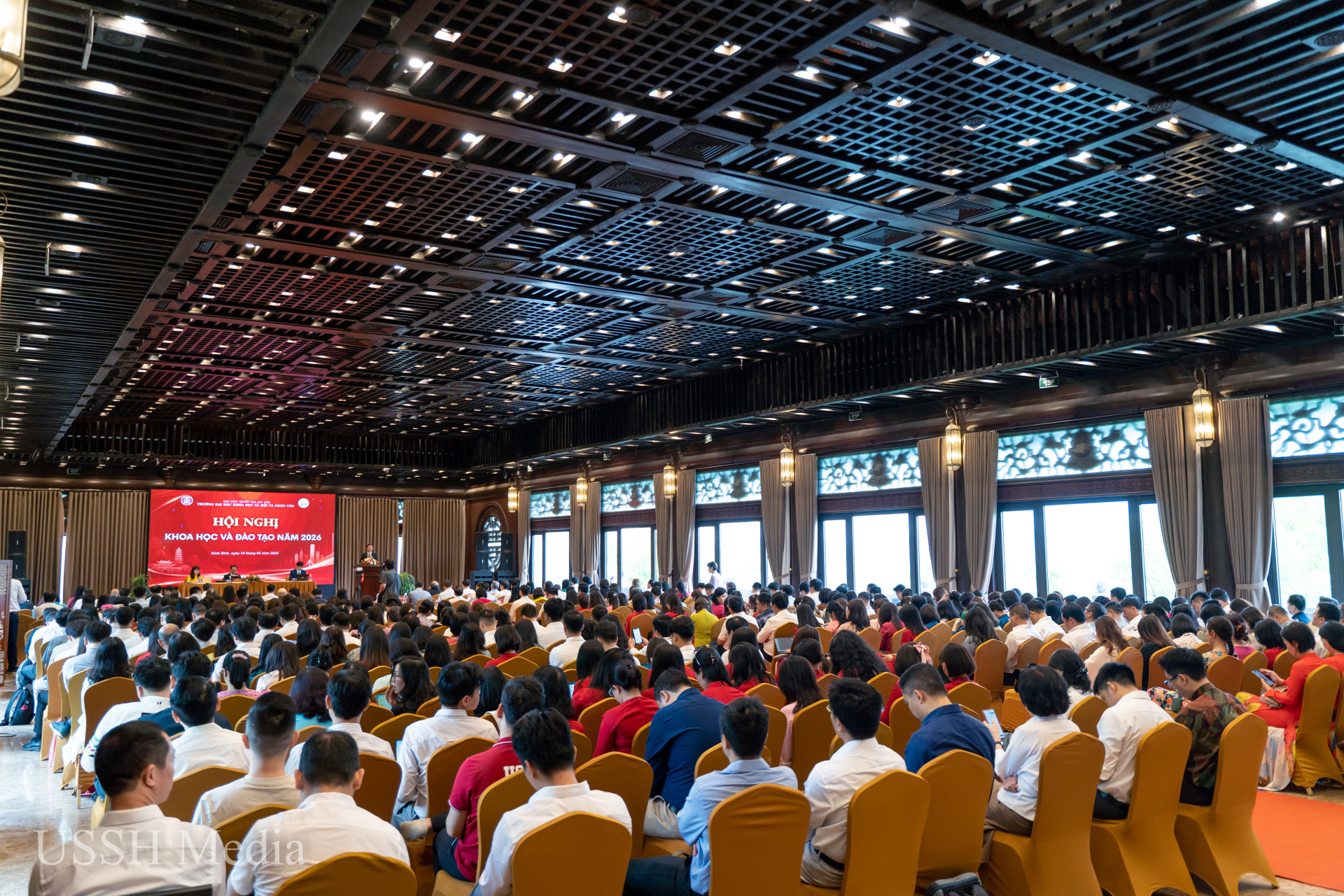
The conference was attended by the leadership of Hanoi National University, scientists and managers who are close partners of the university, current and former leaders of the University of Social Sciences and Humanities, and all staff and lecturers.
The strategy is to develop VNU-USSH into a leading research university, contributing to national development.
In his opening remarks and introductory report on the Development Strategy of the University of Social Sciences and Humanities for the period 2026–2035, with a vision to 2045, Professor Hoang Anh Tuan emphasized fundamental issues for the University's development process in the context of the strong transformation of science, technology, and higher education. Social sciences and humanities, characterized as a field that embodies knowledge, life experience, cultural values, and critical thinking, are facing the requirement to adapt to the trend of applying science and technology, international integration, and simultaneously play a role in community development.
While social sciences and humanities will continue to develop with some of their inherent characteristics, the need for more substantive application of science and technology and international integration cannot be denied. This is crucial to avoid falling behind, maximizing potential, and optimizing contributions to community development. Therefore, the University of Social Sciences and Humanities needs to clearly identify the context and understand the trends in science and education in order to orient its development towards 2035, with a vision extending to 2045.
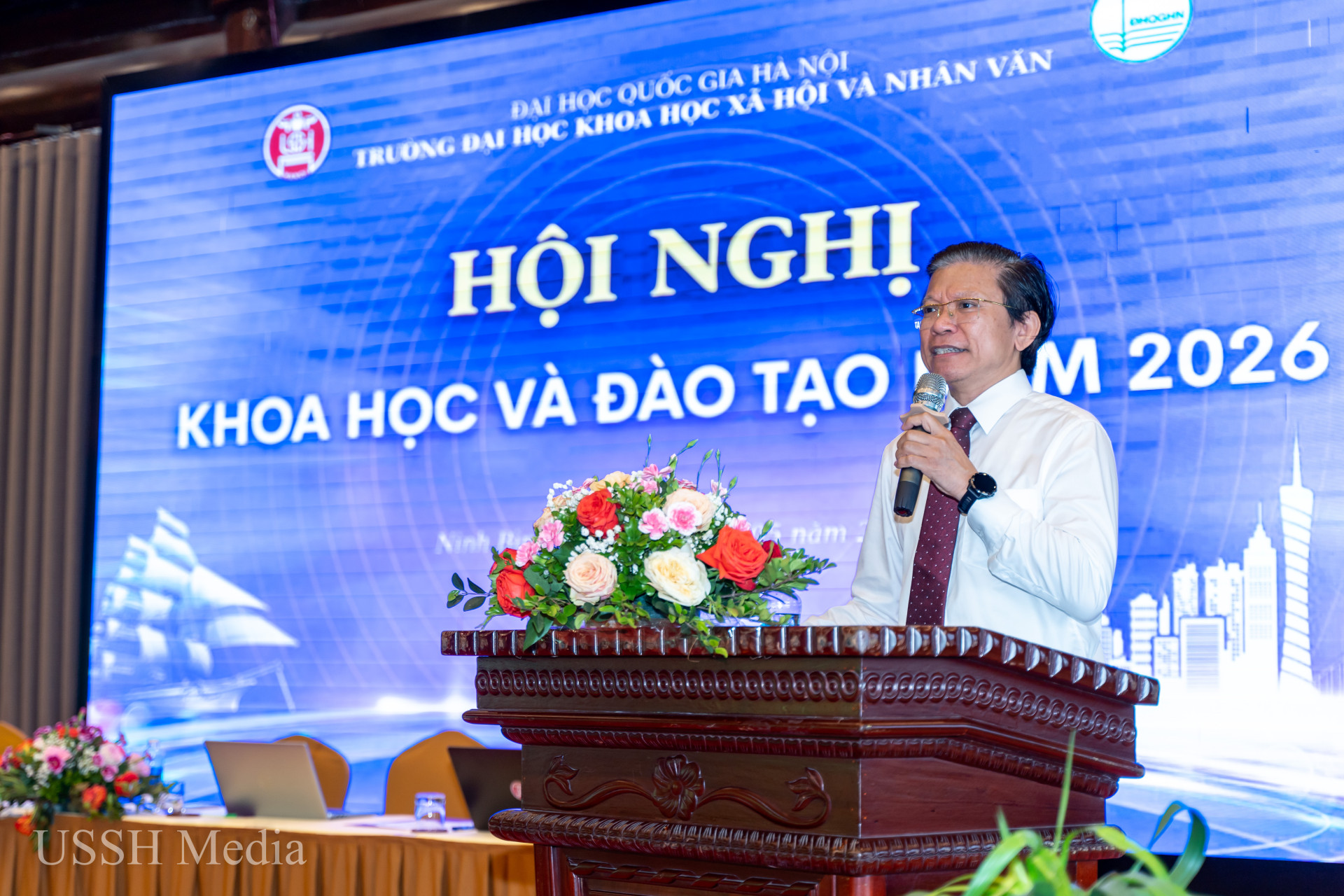
Professor Hoang Anh Tuan delivered the opening remarks and presented the Development Strategy of the University of Social Sciences and Humanities for the period 2026–2035, with a vision to 2045.
The university defines its mission as training high-quality human resources, conducting outstanding scientific research, and providing top-tier policy advice; nurturing national culture and promoting Vietnamese cultural values; creating, leading, and disseminating knowledge, absorbing the best of human culture; serving the nation and promoting international integration.
The vision for the University of Social Sciences and Humanities by 2045 is to become a leading research university, a national development center, using basic science as a foundation to promote applied science to serve the community; training high-quality human resources, conducting outstanding scientific research, and providing top-tier policy advice. The strategy sets specific development milestones: by 2030, at least 2 disciplines will be ranked in the top 150 in Asia and 2 in the top 300 globally; by 2035, at least 4 disciplines will be in the top 150 in Asia and 4 in the top 300 globally; and by 2045, at least 6 fields will be ranked in the top 100 in Asia and top 150 globally.
With the core values of "Cultural Heritage - Modernity - Enlightenment" and the motto "Pioneering - Innovation - Service - Excellence," the University of Social Sciences and Humanities defines its major strategic directions: building a center for elite science and training, conducting outstanding scientific research, and providing top-tier policy advice; attracting scientific talent and developing its workforce; implementing elite, high-quality training programs; developing a system of practical scientific research projects; and strengthening scientific and educational cooperation domestically and internationally.
In his speech, Professor Hoang Anh Tuan emphasized the need to continue implementing planning and organizational restructuring in accordance with the spirit of Resolution No. 18 of the Central Committee; reviewing and merging single-discipline faculties to create a foundation for the formation of new faculties, institutes, and training centers, in line with the development trends of science and higher education worldwide. The university aims for a modern organizational model, constructive governance, clearly defining the functions between the science-training sector and the service-support sector; and simultaneously building an advanced, intelligent management and operation system, promoting digital transformation to improve work efficiency.
Regarding training, the strategy emphasizes the need to develop programs at all levels, from undergraduate to postgraduate, in line with new trends in higher education both domestically and internationally. The pillar of elite training is defined by planning and developing a modern, multidisciplinary, interdisciplinary, cross-sectoral, and internationalized training structure and programs; using basic science as a foundation and applied science to serve the training needs of elite, highly skilled human resources for the new era of national development.
In the field of science, the University aims to become a leading center of social sciences and humanities knowledge in Vietnam and the region. The pillar of excellent scientific research and top-tier policy advice emphasizes the need to promote international publications in harmony with national publications, implement long-term key scientific programs, form clusters of outstanding scientific products, aiming for prestigious national and international scientific awards, and provide top-tier policy advice to central and local government agencies and departments.
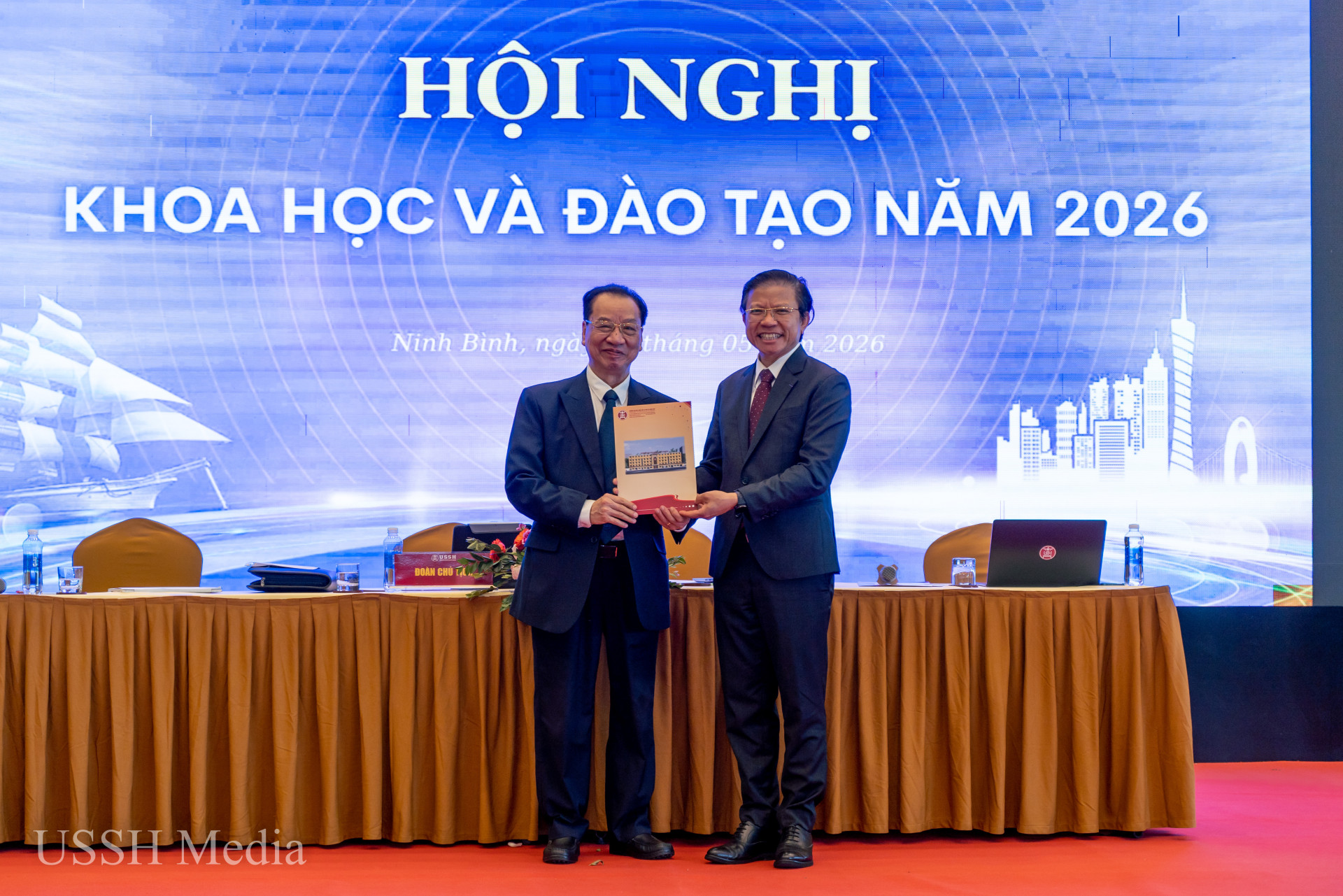
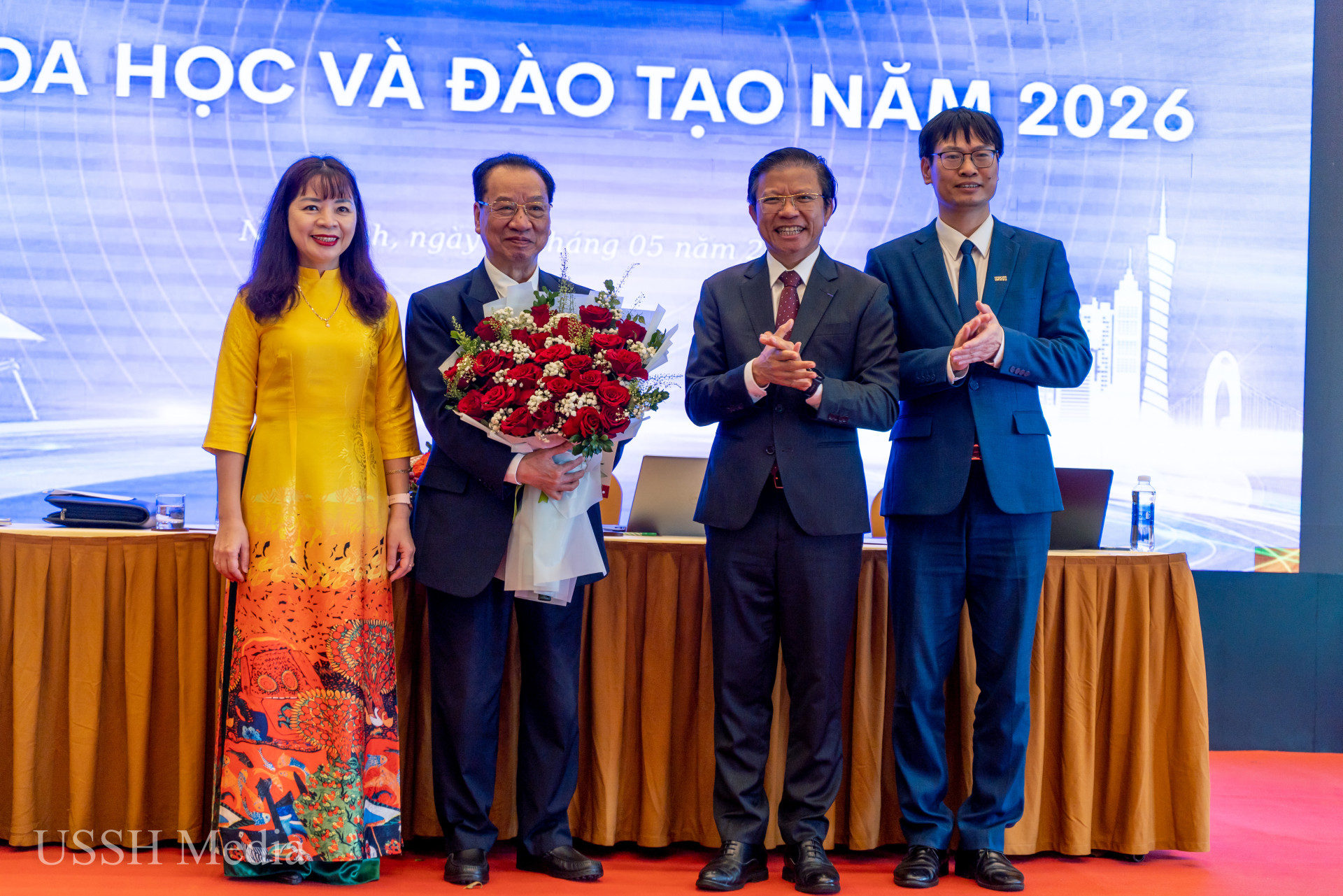
The Rector presented the Decision on the establishment of the Science and Training Council of the University of Social Sciences and Humanities for the term 2026-2031 to Prof. Dr. Phung Huu Phu - Chairman of the Council.
Fundamental solutions for the development of VNU-USSH in the new phase.
In his keynote address at the conference, Associate Professor Bui The Duy, Director of Vietnam National University, Hanoi, emphasized the central themes with keywords: innovation – specialization – interdisciplinary. The Director of Vietnam National University, Hanoi, affirmed the need to build a professional governance model under the conditions of university autonomy. The quality of a university is not only created by its faculty, but also by the entire ecosystem serving daily academic, research, and learning activities. The administrative, faculty, and research sectors all contribute to overall quality. Therefore, the university needs to develop an effective academic governance model, gradually shifting towards output-based governance, building a commitment to the profile of graduates, as a basis for innovating programs, curricula, content, and training methods.
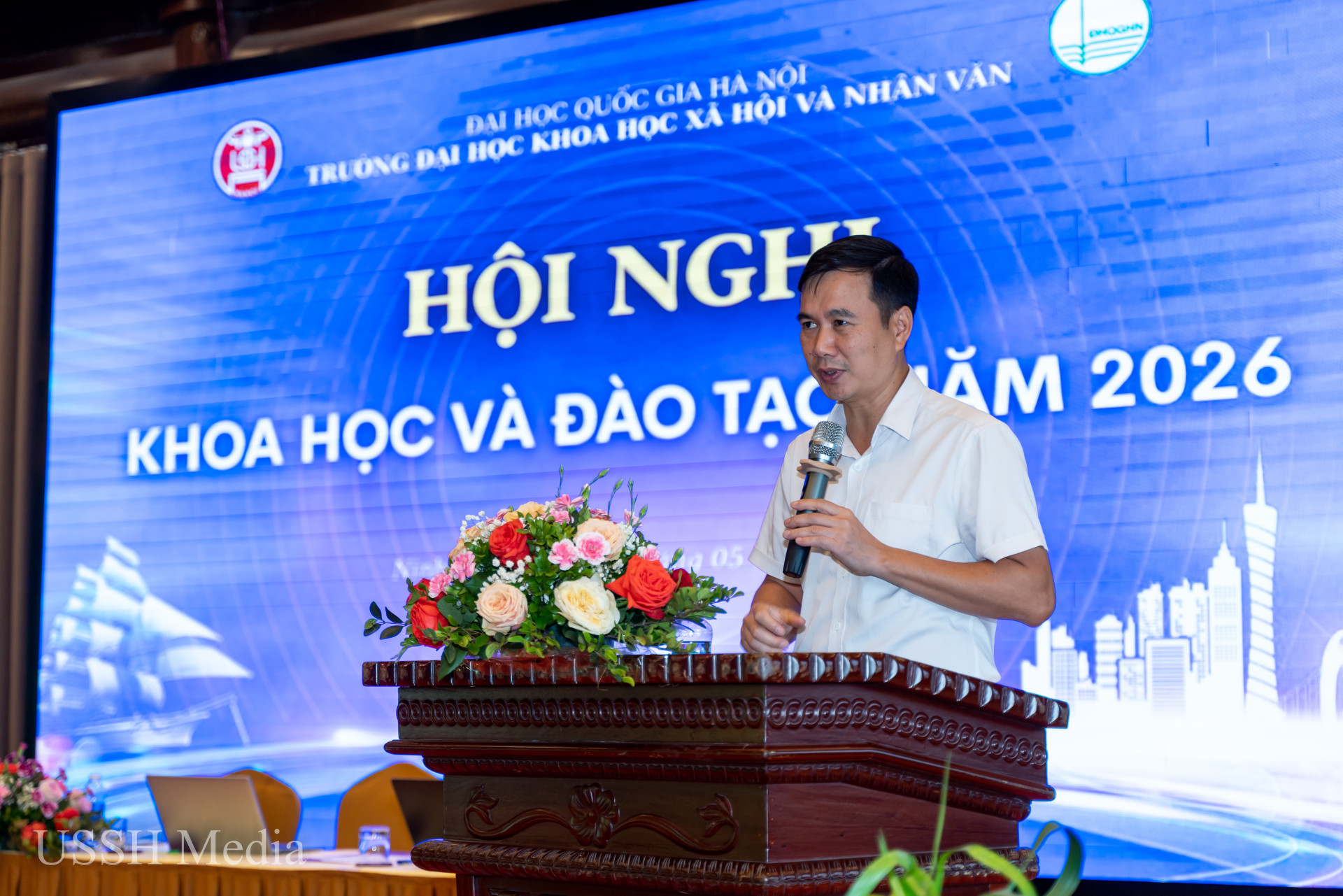
Associate Professor Bui The Duy - Director of Hanoi National University, delivered a keynote address at the conference.
Professor Phung Huu Phu, Chairman of the Science and Training Council and the first Rector of the University of Social Sciences and Humanities, highly appreciated the significance of the 2026 Science and Training Conference. He emphasized that this is an important forum, organized openly, transparently, and democratically, helping all staff and faculty members of the University to clearly identify its current position, advantages, challenges, and tasks to be implemented in the coming time. According to Professor Phung Huu Phu, the University's development potential is still very large, but that potential can only become a real resource if it is transformed into determination, action, and appropriate solutions.
Professor Phung Huu Phu also noted that the quality and image of a university are not only created by its faculty, scientists, or training and research units, but also by the entire administrative, management, service, and support system. From offices, administration, security, and the environment to the forces ensuring daily working and learning conditions, all contribute to the overall operation of the university. Therefore, along with the innovation of strategies and development models, the university needs to pay attention to the lives, working conditions, and dedication of its staff and employees; and at the same time, require faculties, institutes, departments, and affiliated units to continue to concretize the directions after the Conference, transforming awareness into action, creating synchronized and substantive change.
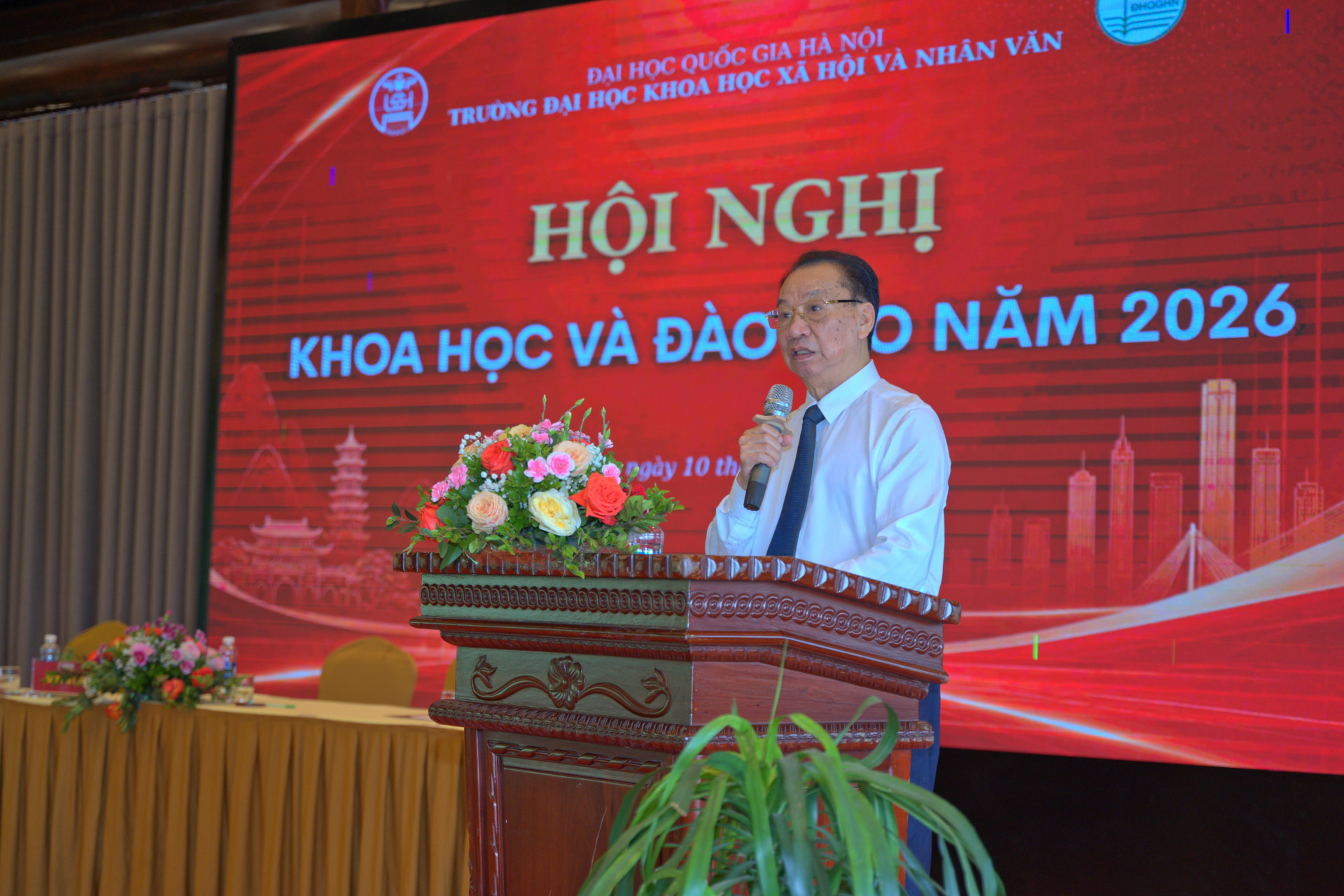
Professor Phung Huu Phu - Chairman of the School's Science and Training Council, delivered a speech at the Conference.
Within the framework of the Conference, the delegates' presentations focused on identifying the core and practical issues of the University's development process and proposed many solutions for effectively implementing the Development Strategy of the University of Social Sciences and Humanities in the new phase.
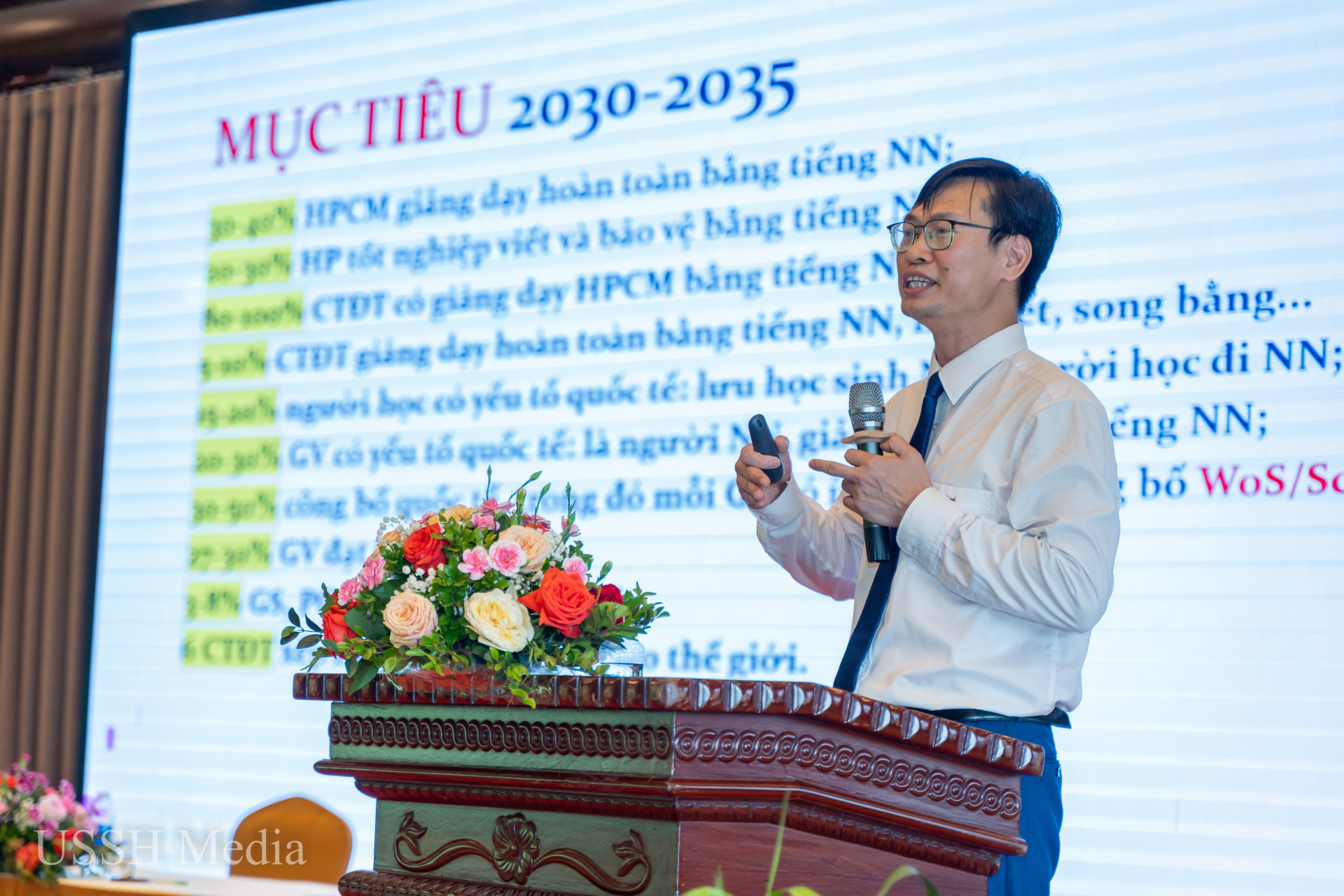
Associate Professor Dr. Dang Hong Son presented a paper titled "Internationalization of Education: A Strategy to Enhance Quality in Higher Education Competition".
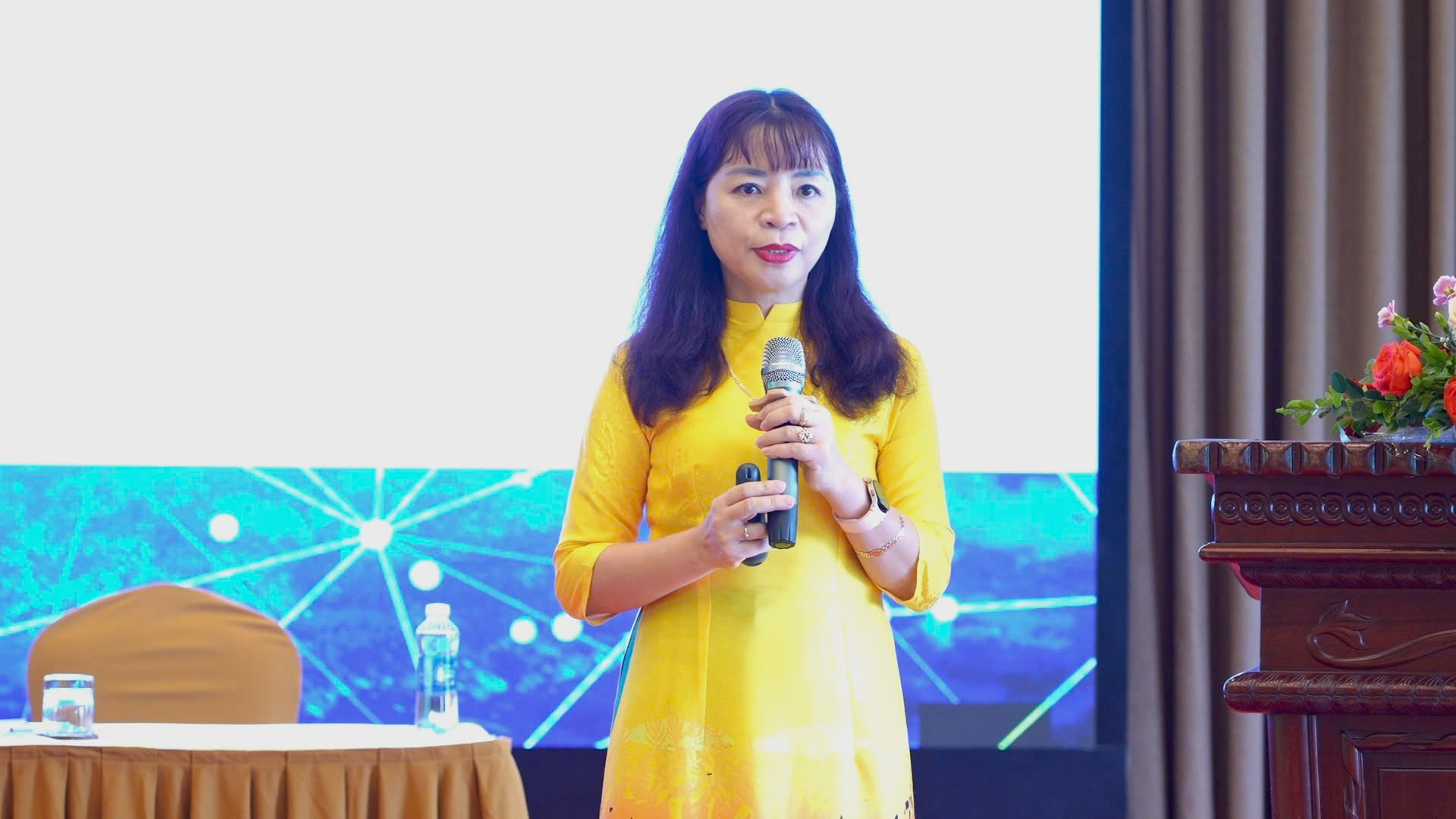
Associate Professor Dr. Dang Thi Thu Huong presented a paper titled "International Cooperation and Local and Business Connections in Scientific Research and Transfer of Research Results to Serve the Community and Society".
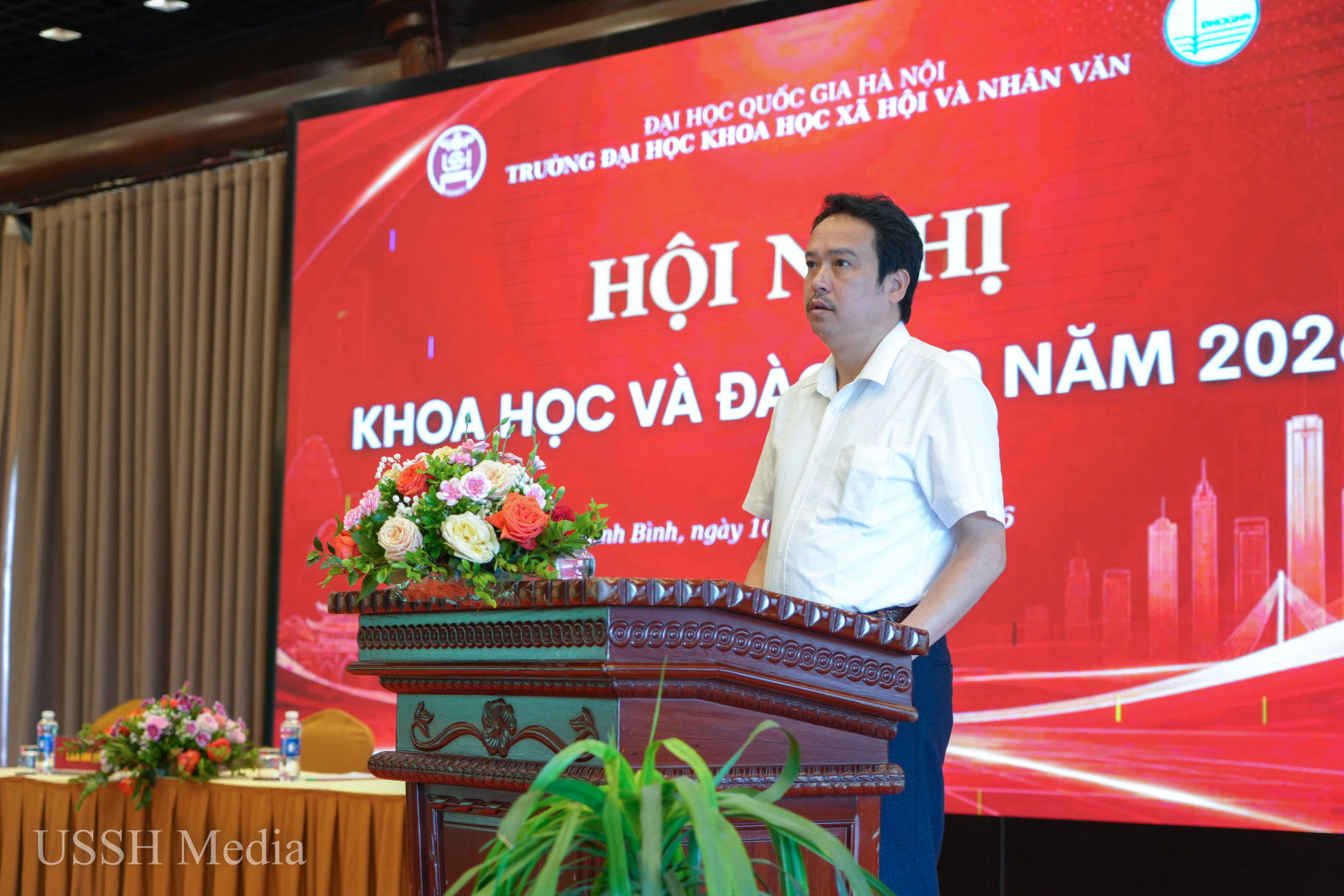
Dr. Dinh Tien Hieu presented a paper titled "Inspection and Evaluation in the Context of AI Impact".
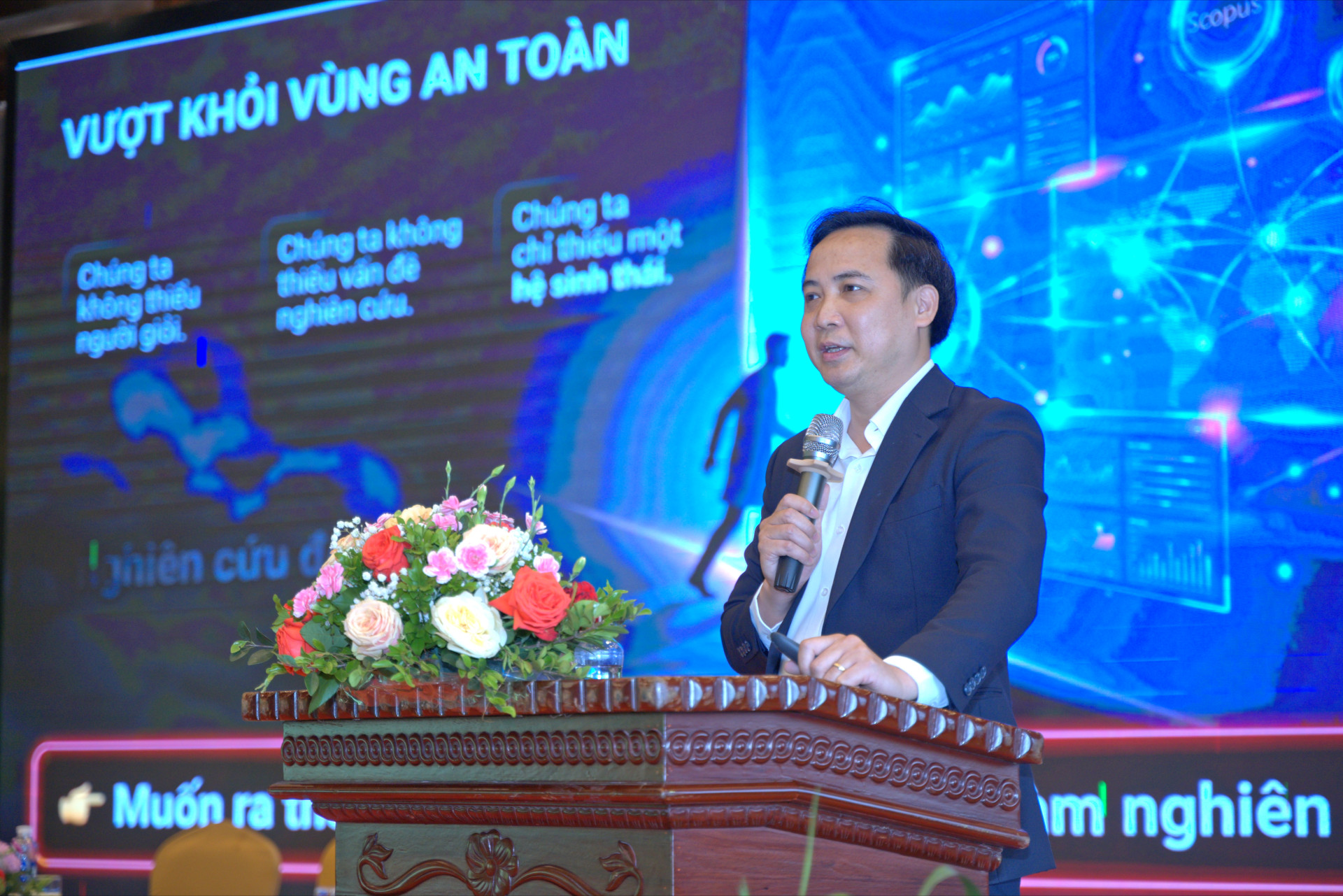
Assoc. Prof. Dr. Do Van Hung presented a paper titled "Stepping Outside the Comfort Zone: Facing the International Publication Gap and the Transition Requirements at USSH".
Also at the Conference, the University organized the awarding of decisions on the establishment and renaming of departments and faculties; personnel appointments; the awarding of the QS 2026 university ranking certificate for the Linguistics major; and the introduction of two professors recruited to work at the University of Social Sciences and Humanities. These events demonstrate that the University's development strategy is not merely a guideline, but is being gradually concretized through organizational structure, staff development, improved training quality, promotion of science and technology, and affirmation of its academic standing.
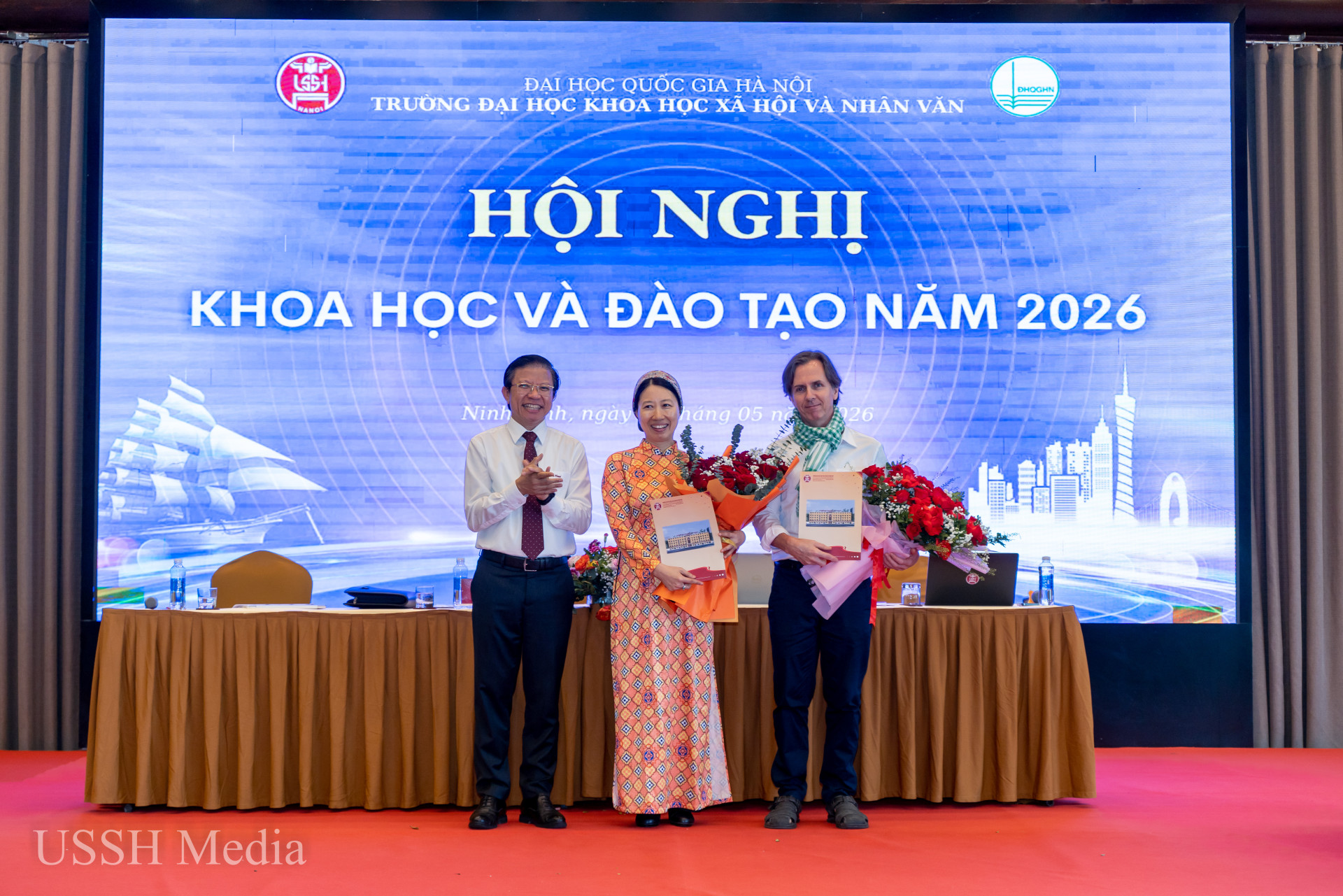
Two international scientists have been appointed to work at the University of Social Sciences and Humanities.
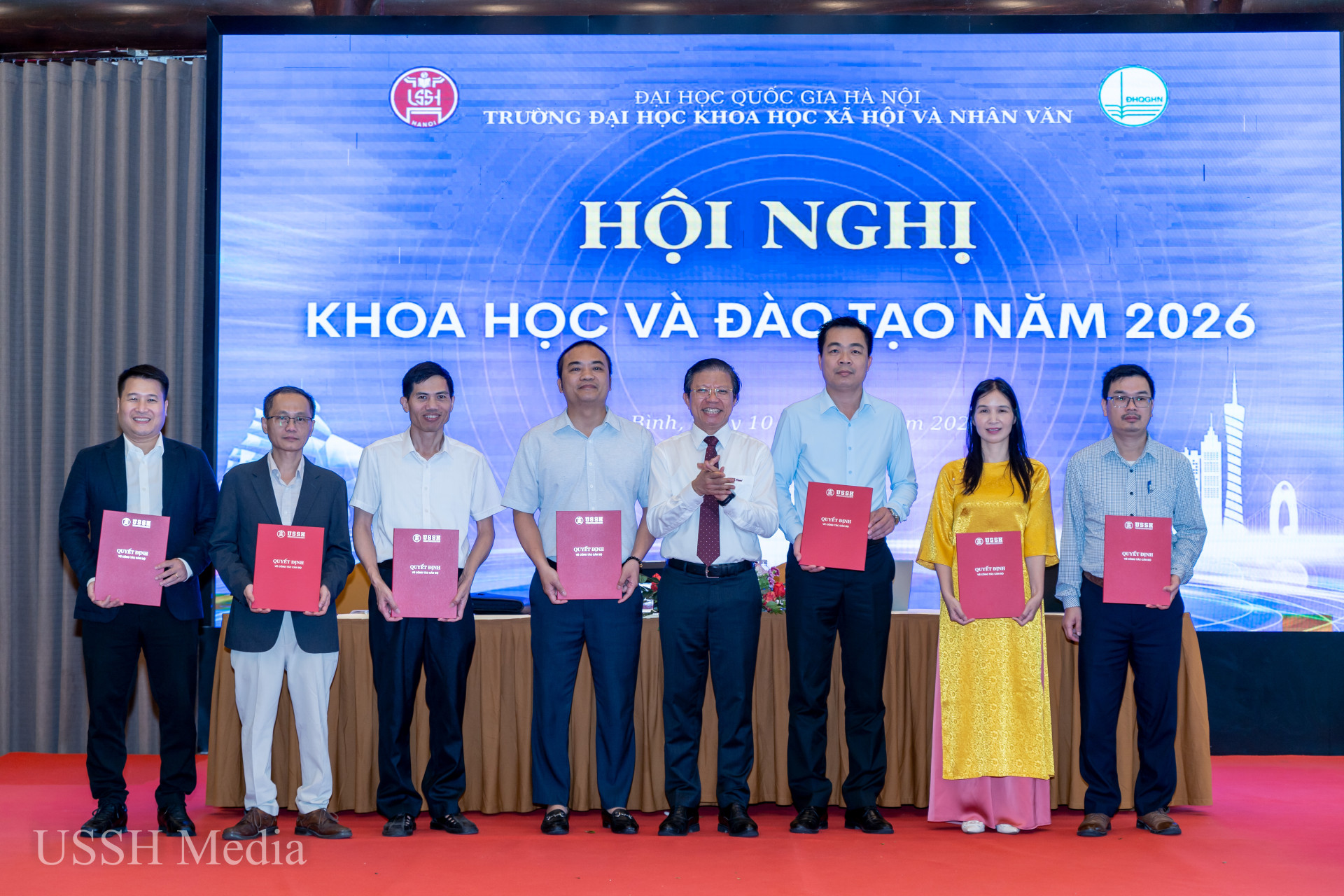
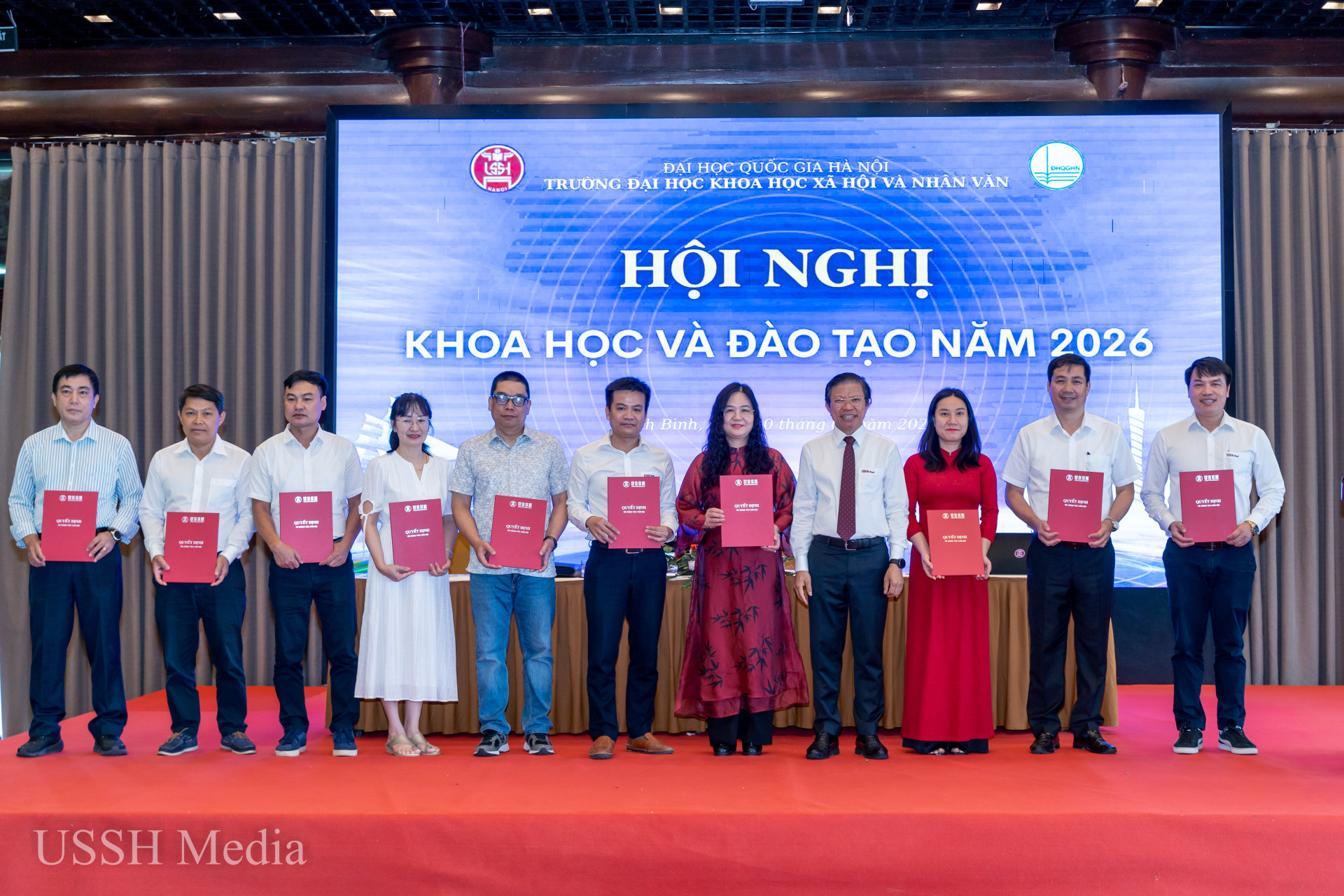
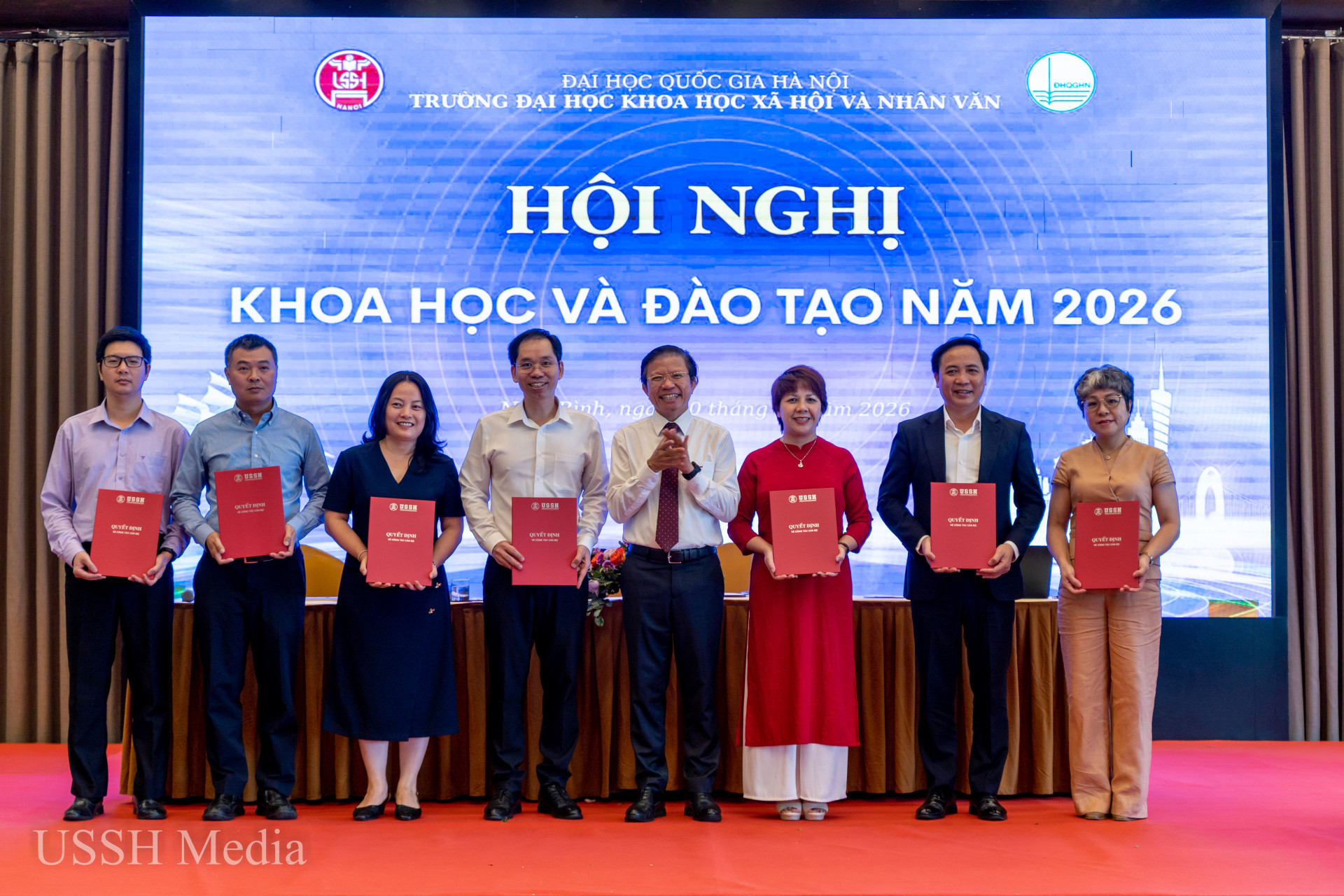
The 2026 Scientific and Training Conference is a significant milestone in the development of the University of Social Sciences and Humanities. With a spirit of openness, transparency, democracy, and responsibility, the Conference is not only an opportunity to discuss the University's development strategy for the period 2026–2035, with a vision to 2045, but also a forum for all staff, lecturers, and scientists to identify the position, advantages, challenges, and key tasks in the new phase.
In that sense, the 2026 Scientific and Training Conference embodies the spirit of a "Dien Hong Conference" in the history of the university's development, a gathering place for the collective intellect, responsibility, and determination of the university community, transforming strategic vision into concrete, synchronized, and substantive actions, creating a foundation for the university to continue developing in a cultural, modern, and liberal direction, aiming to become a leading research university and a national contributor.
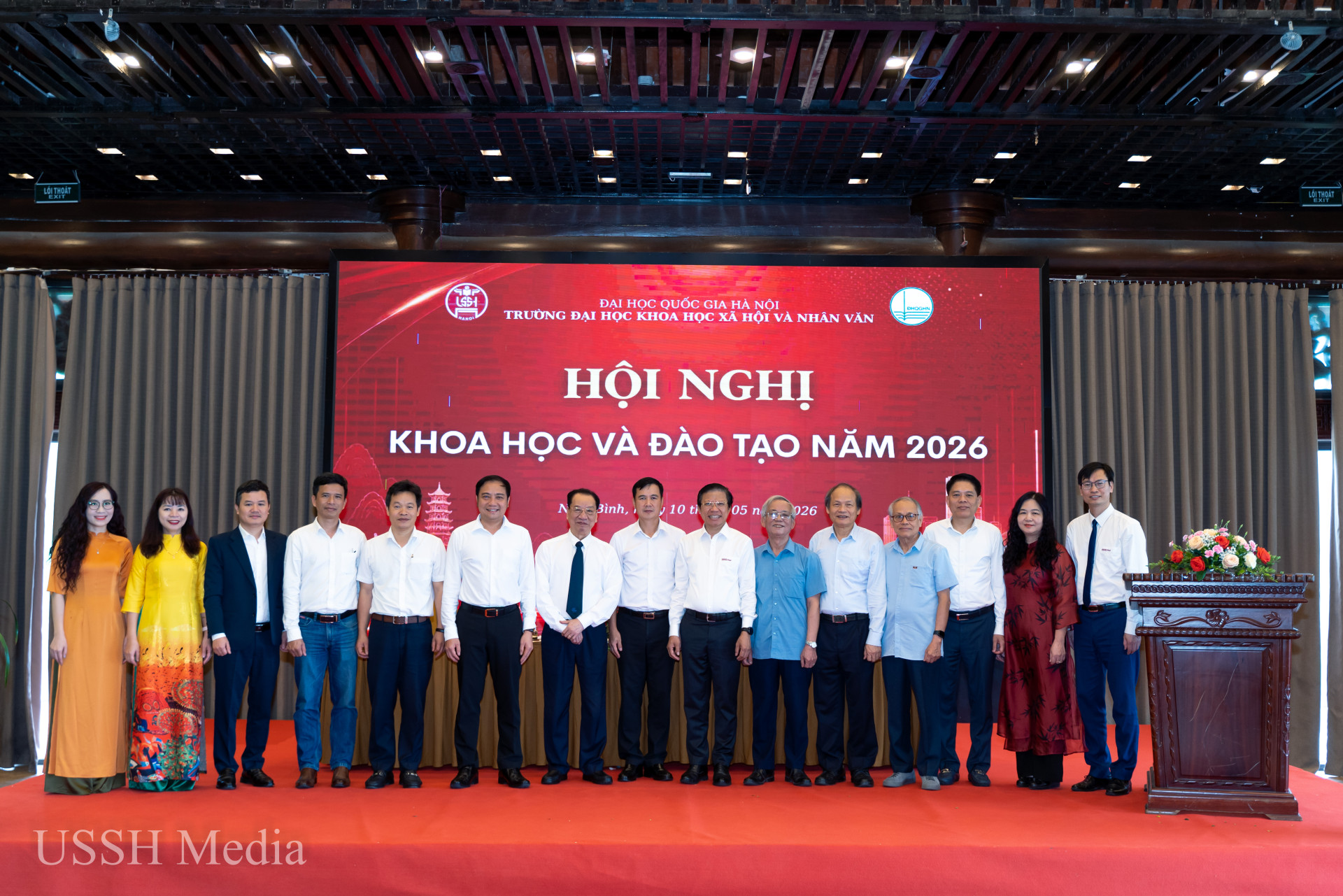
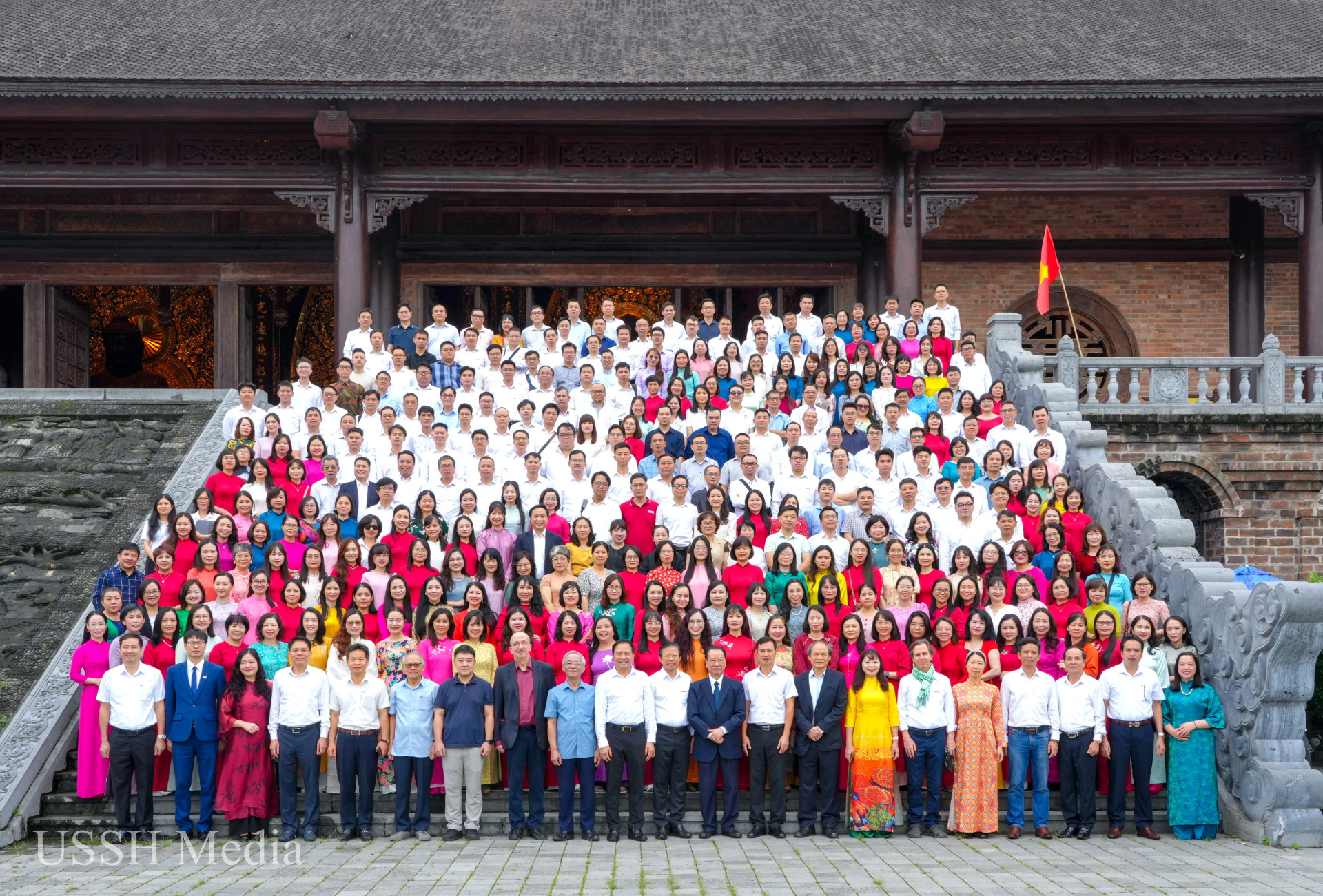
The delegates attending the conference took a commemorative photo.
Related articles:
VNU-USSH's administrative work: Tidy, professional, standardized, and focused.
Author:Thùy Dzung, Đình Tùng, Duy Phương - USSH Media
Newer news
Older news

