The performance provided students studying Japanese Studies and young people with a passion for Japan with an opportunity to interact, experience, and gain a deeper understanding of Japanese culture and people, thereby fostering their love for their field of study.
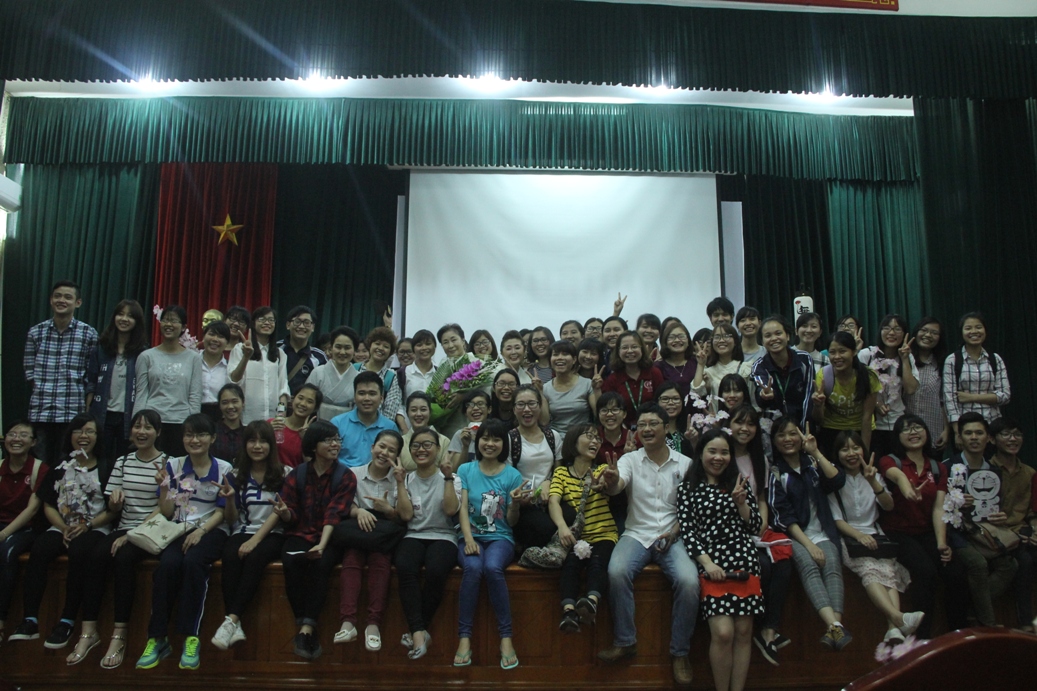
Faculty and staff of the Department of Oriental Studies, along with students, took a commemorative photo with artists from the Maine no Mamori Club.
The arts program includes the following main activities: Tea ceremony, Shinobue flute and Shakuhachi playing, and piano playing; Kirigami paper cutting art and Origami paper folding art.
The spectacular cultural program opened with the resonant and heartfelt flute and string instrument piece "Homeland," and concluded with a traditional Japanese folk song.
During the Tea Ceremony performance, students were guided to brew tea themselves and enjoyed various pastries that complemented the distinctive flavors of Japanese tea ceremony.
In particular, the Kirigami paper-cutting and Origami paper-folding demonstrations, along with the unique and meaningful prizes, greatly excited the students.
The teachers from the Maine no Mori Club presented many unique performances that made a strong impression on the teachers and students of the University of Social Sciences and Humanities.
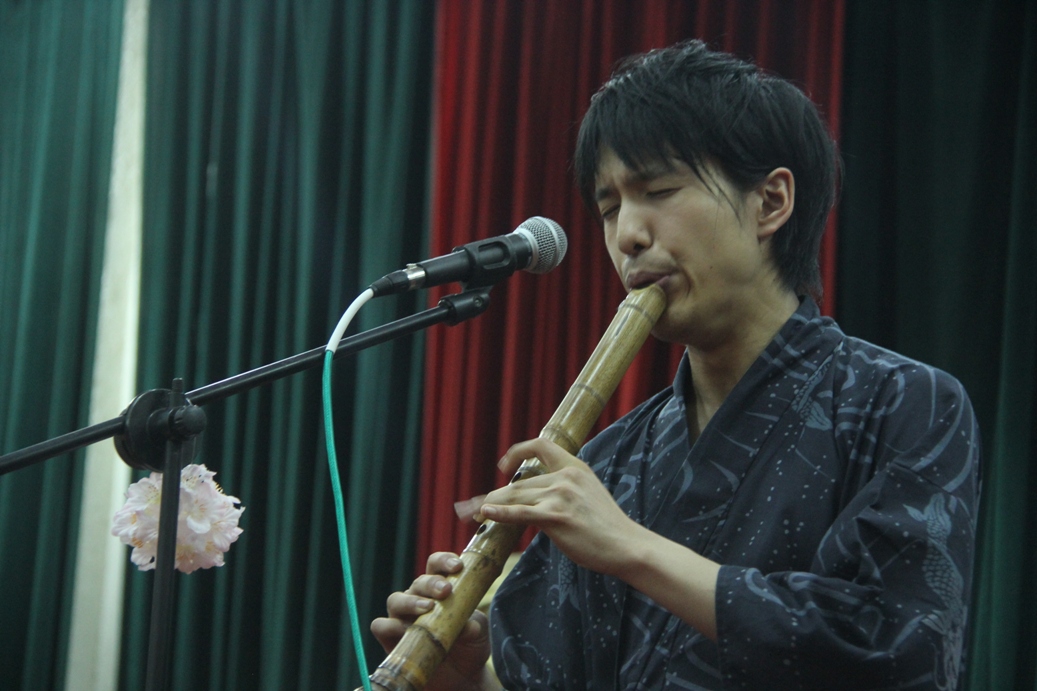
Shinobue flute performance accompanied by piano music.
“This is my first time experiencing traditional Japanese art. I especially enjoyed the singing and flute accompaniment in the cultural performance. The sound of the Japanese flute is beautiful and distinct from the Vietnamese flute, and the singer's voice was very expressive. I was very happy to attend this interesting performance,” shared Nguyen Thi Thu, a K58 Japanese Studies student, after saying goodbye to the Japanese artists.
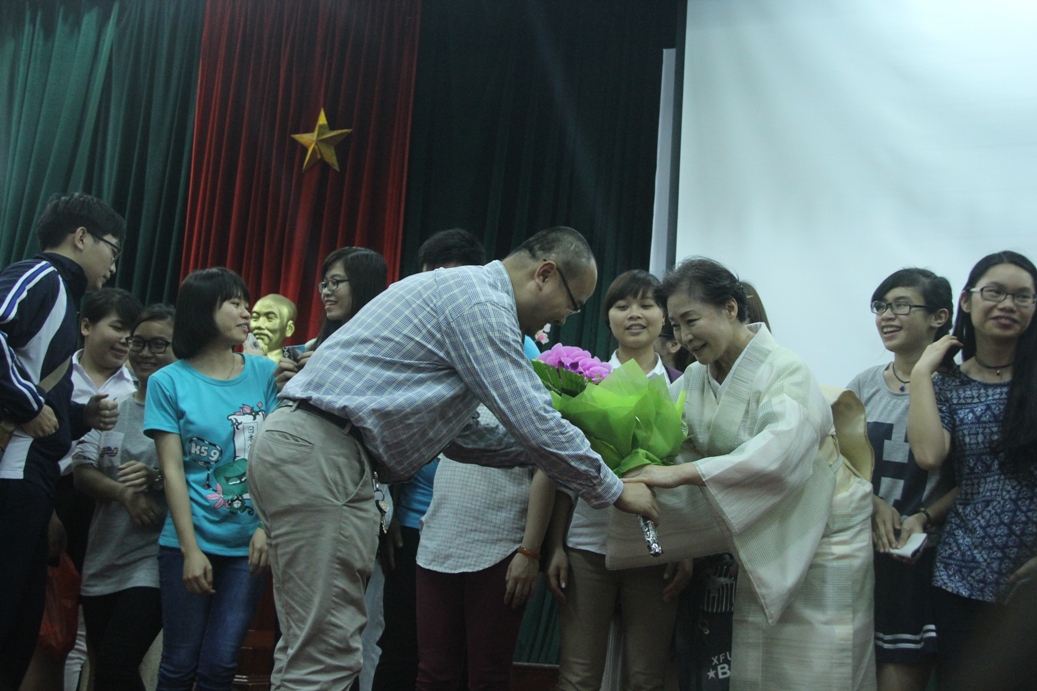
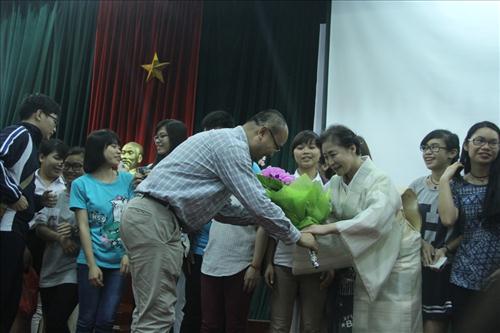
Representatives from the Department of Oriental Studies presented flowers to the performing artists at the program.
Author:Huyen Pham
Newer news
Older news

