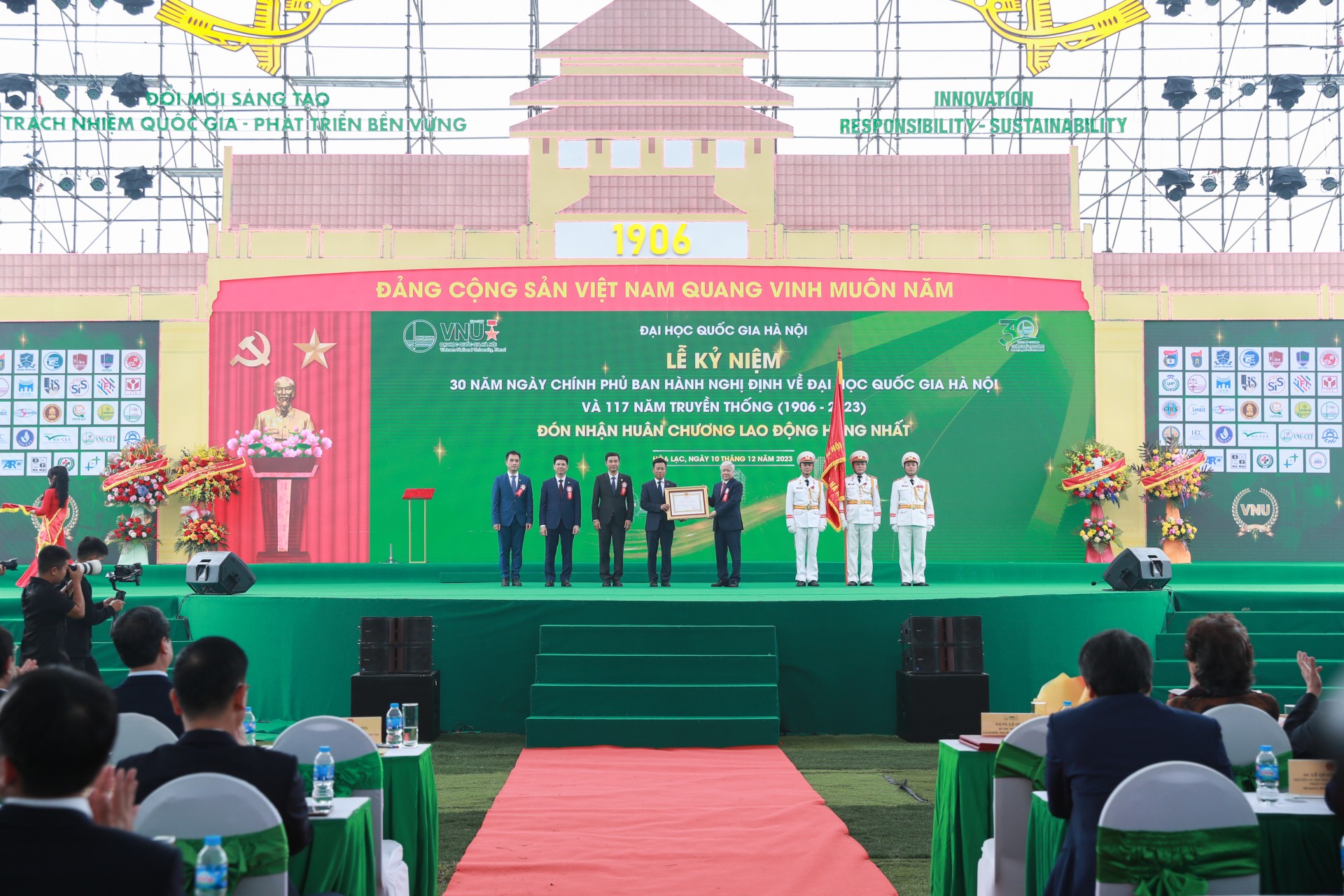
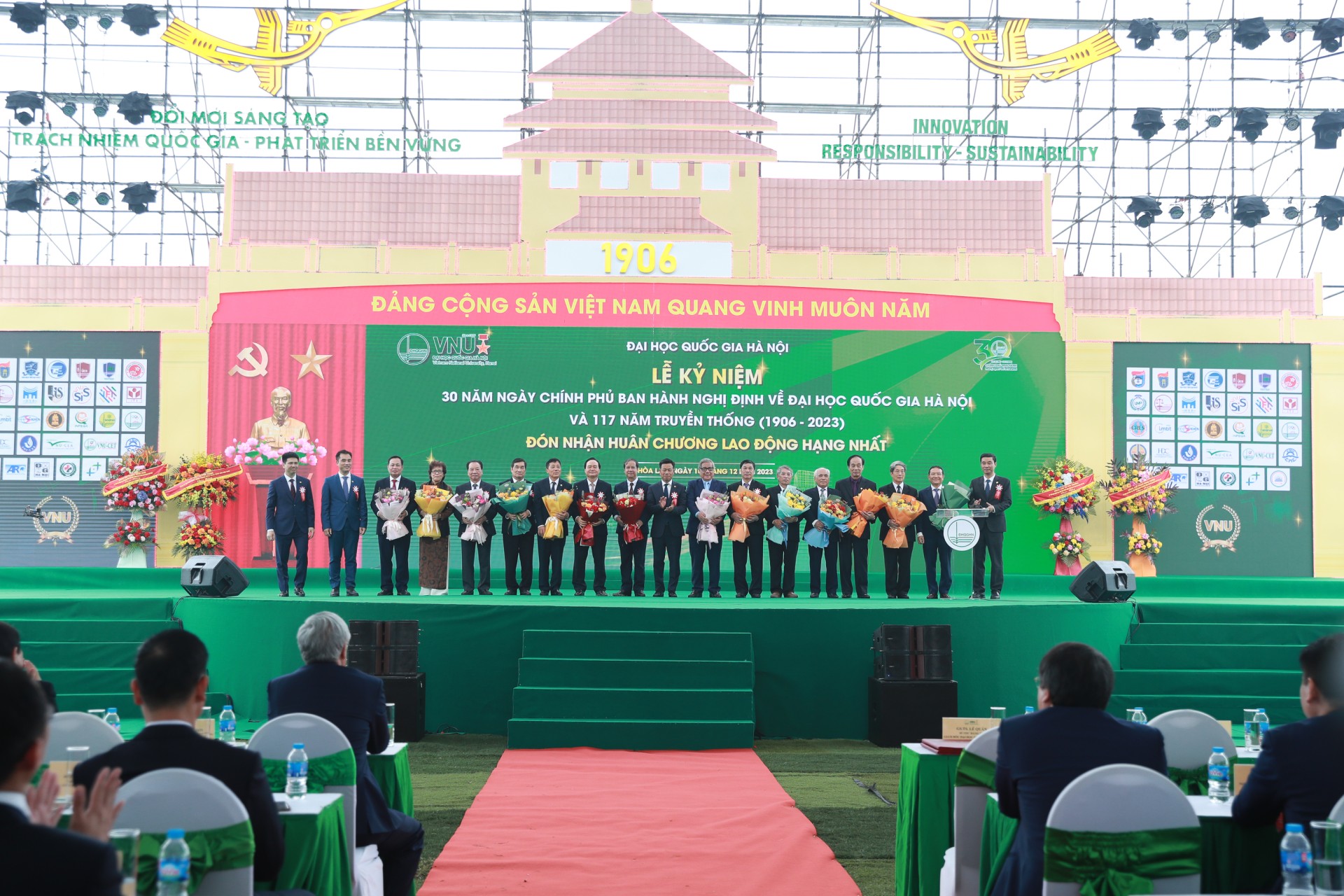
Comrade Do Van Chien presents the First Class Labor Medal.
Attending the commemoration ceremony were Comrade Do Van Chien - Secretary of the Central Committee of the Communist Party of Vietnam, Chairman of the Central Committee of the Vietnam Fatherland Front; Comrade Nguyen Thuy Anh - Member of the Central Committee of the Communist Party of Vietnam, Member of the Standing Committee of the National Assembly, Chairwoman of the Social Affairs Committee of the National Assembly; Comrade Dao Ngoc Dung - Member of the Central Committee of the Communist Party of Vietnam, Minister of Labour, Invalids and Social Affairs; Comrade Nguyen Kim Son - Member of the Central Committee of the Communist Party of Vietnam, Minister of Education and Training, former Director of Vietnam National University, Hanoi; Comrade Huynh Thanh Dat - Member of the Central Committee of the Communist Party of Vietnam, Minister of Science and Technology; Comrade Dao Hong Lan - Member of the Central Committee of the Communist Party of Vietnam, Minister of Health; Comrade Hau A Lenh - Member of the Central Committee of the Communist Party of Vietnam, Minister and Chairwoman of the Committee for Ethnic Minorities; Comrade Pham Tat Thang - Member of the Central Committee of the Communist Party of Vietnam, Deputy Head of the Central Committee for Mass Mobilization; Comrade Vu Hai Quan - Member of the Central Committee of the Communist Party of Vietnam, Director of Vietnam National University, Ho Chi Minh City. Comrade Luong Quoc Doan - Member of the Central Committee of the Party, Chairman of the Central Committee of the Vietnam Farmers' Association, along with leaders of departments and bureaus under the Central Party Office, the Presidential Office, the National Assembly Office, the Government Office, the Central Inspection Committee, the State Audit Office, the Government Inspectorate, and ministries, branches, localities, enterprises, universities, research institutes, foreign embassies and international organizations in Vietnam.
On the VNU side, there were the VNU Board of Directors, leaders of the Office, functional departments, leaders of member and affiliated units of VNU, along with generations of leaders, scientists, teachers, managers, and students, graduate students, and doctoral candidates of VNU from all periods.
Utilize all resources to unleash the full potential of Vietnam National University, Hanoi.
The 30th anniversary of the Government's issuance of the Decree on Vietnam National University, Hanoi (VNU) and its 117th anniversary is a significant milestone in VNU's development history. It is an opportunity for VNU to express gratitude and strengthen connections and cooperation with central and local government agencies, businesses, and domestic and international partners. It is especially a chance to honor the generations of teachers and students who have accompanied VNU's development over the past 30 years, thereby upholding traditions, promoting core values, fostering pride, and strengthening unity and consensus in implementing VNU's development strategy for the new phase. Furthermore, this is an opportunity for VNU to review and evaluate past achievements and lessons learned, and to formulate strategies and important directions to elevate VNU to a new level in the new context of the country and the times.
On this occasion, Comrade Nguyen Phu Trong, General Secretary of the Central Committee of the Communist Party of Vietnam, sent a congratulatory letter to Vietnam National University, Hanoi (VNU). On behalf of the Party and State leadership, and with personal sentiment, General Secretary Nguyen Phu Trong acknowledged, congratulated, commended, and thanked VNU for the achievements made in recent years, especially since relocating its headquarters to the new urban area in Hoa Lac. This is a great recognition, encouragement, and motivation for VNU. The General Secretary wrote: “After 30 years of striving to build and develop, VNU has achieved outstanding achievements and has truly become a large multidisciplinary training and scientific research center, holding a particularly important leading position in the country, playing a core and leading role in the Vietnamese higher education system.”
Vietnam National University, Hanoi (VNU) was honored to receive congratulations and flower arrangements from General Secretary Nguyen Phu Trong, President Vo Van Thuong, Prime Minister Pham Minh Chinh, and National Assembly Chairman Vuong Dinh Hue.
In light of the achievements of Vietnam National University, Hanoi, Mr. Do Van Chien, Secretary of the Central Committee of the Communist Party of Vietnam, Chairman of the Central Committee of the Vietnam Fatherland Front, and Vice Chairman of the Central Emulation and Commendation Council, sent his congratulations to the generations of teachers, scientists, trainees, and students of the university for their continuous efforts over the past time.
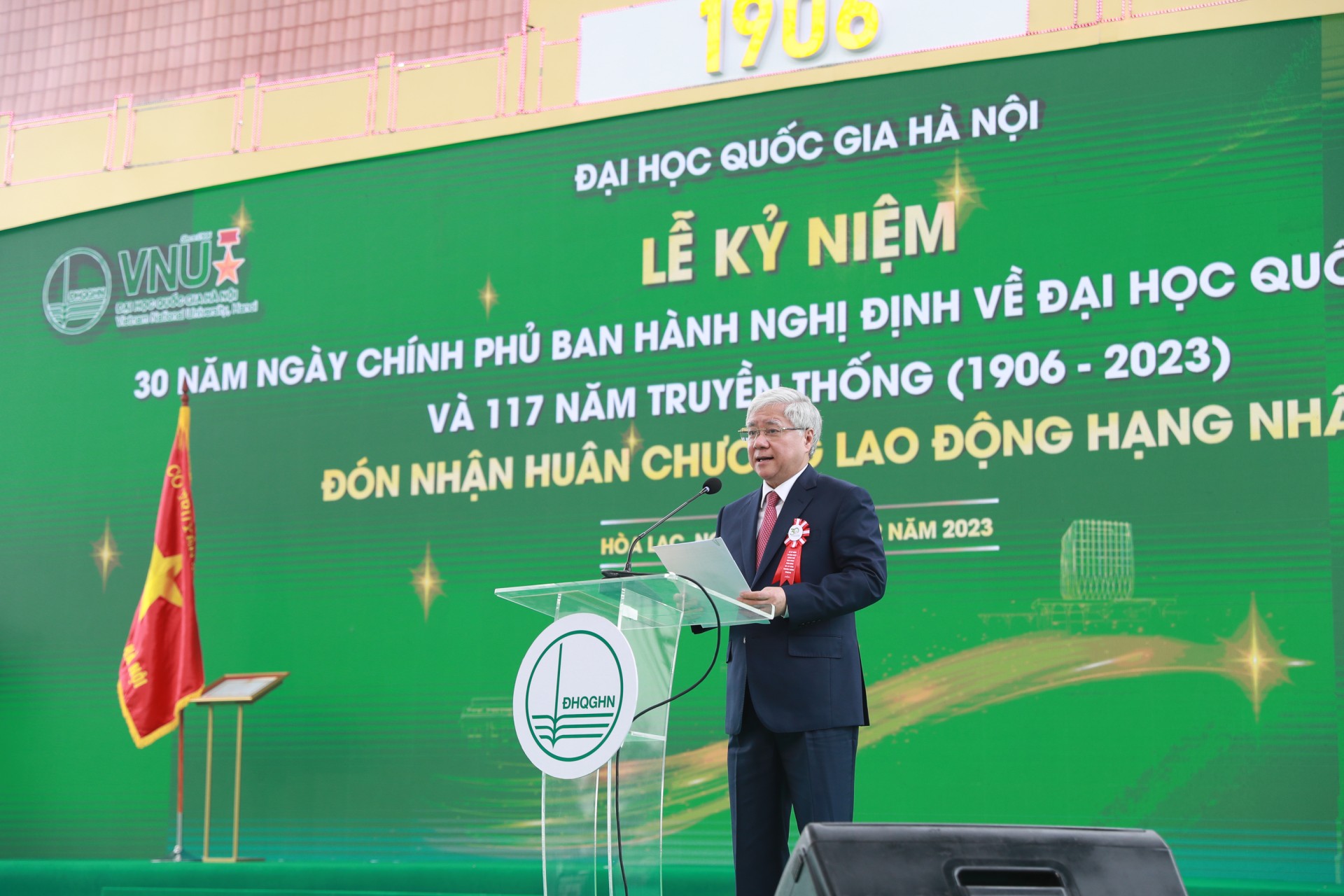
Comrade Do Van Chien delivered a speech at the commemoration ceremony.
Over 30 years of construction and development, generations of lecturers, trainees, and students of Vietnam National University, Hanoi have continuously strived, overcome many difficulties and challenges, and achieved commendable and proud results in training, scientific research, technology transfer, and serving the development of the country. It has become a prestigious training institution in the country and the region, and is gradually establishing its position on the international stage.
"The achievements of 30 years of implementing the multidisciplinary university model have contributed to further enhancing the glorious 117-year tradition, making a worthy contribution to the cause of building and defending the Fatherland, and have been recognized by the Party and the State, receiving the Golden Star Medal and many other prestigious awards," Mr. Do Van Chien emphasized.
Comrade Do Van Chien, Secretary of the Central Committee of the Communist Party of Vietnam and Chairman of the Central Committee of the Vietnam Fatherland Front, requested that the Vietnam National University, Hanoi (VNU) thoroughly understand the Resolution of the 8th Plenum of the Central Committee of the Communist Party of Vietnam and the Party's guidelines and policies, and dedicate efforts to developing and submitting to the Government for consideration and approval solutions, mechanisms, and resources to maximize VNU's potential, including the construction of the VNU Urban Area in Hoa Lac to become a source of pride, a symbol of intellect, and a place of inspiration for learning, research, creativity, and cooperative development within the Vietnamese higher education system.
The journey of persistent innovation in the model of a multidisciplinary, multi-field university.
With the Party's strategic vision and aspiration for the development of Vietnamese higher education, the Fourth Conference of the Central Committee of the Communist Party of Vietnam (7th term) issued a Resolution clearly outlining the task of "Establishing a number of key national universities" to serve as the leading force and cornerstone of the country's higher education. On December 10, 1993, Prime Minister Vo Van Kiet signed Decree No. 97/CP establishing the Vietnam National University, Hanoi (VNU) based on the restructuring and reorganization of several universities and scientific research institutes in the Hanoi area.
The Decree stipulates that Vietnam National University, Hanoi (VNU) is a large multidisciplinary training and scientific research center, linking training and research with practice, with the task of training high-level experts in science and technology, and providing academic support to other universities. VNU is a central-level public service unit, operating according to the Government Decree and the Regulations on Operation issued by the Prime Minister, with a seal bearing the national emblem, a level 1 budget-allocated unit, and a Board of Directors appointed by the Prime Minister. It enjoys a high degree of autonomy in professional, financial, and personnel matters; and has been prioritized by the State to be allocated nearly 1,200 hectares for the construction of the VNU Urban Area in Hoa Lac.
Vietnam National University, Hanoi (VNU) was established with the vision and expectations of generations of Party and State leaders for the largest higher education institution in the country with an international stature, with the mission of training high-quality, highly skilled human resources, nurturing talent; conducting scientific research, developing technology and transferring knowledge across multiple disciplines and fields; contributing to building, developing and protecting the country.
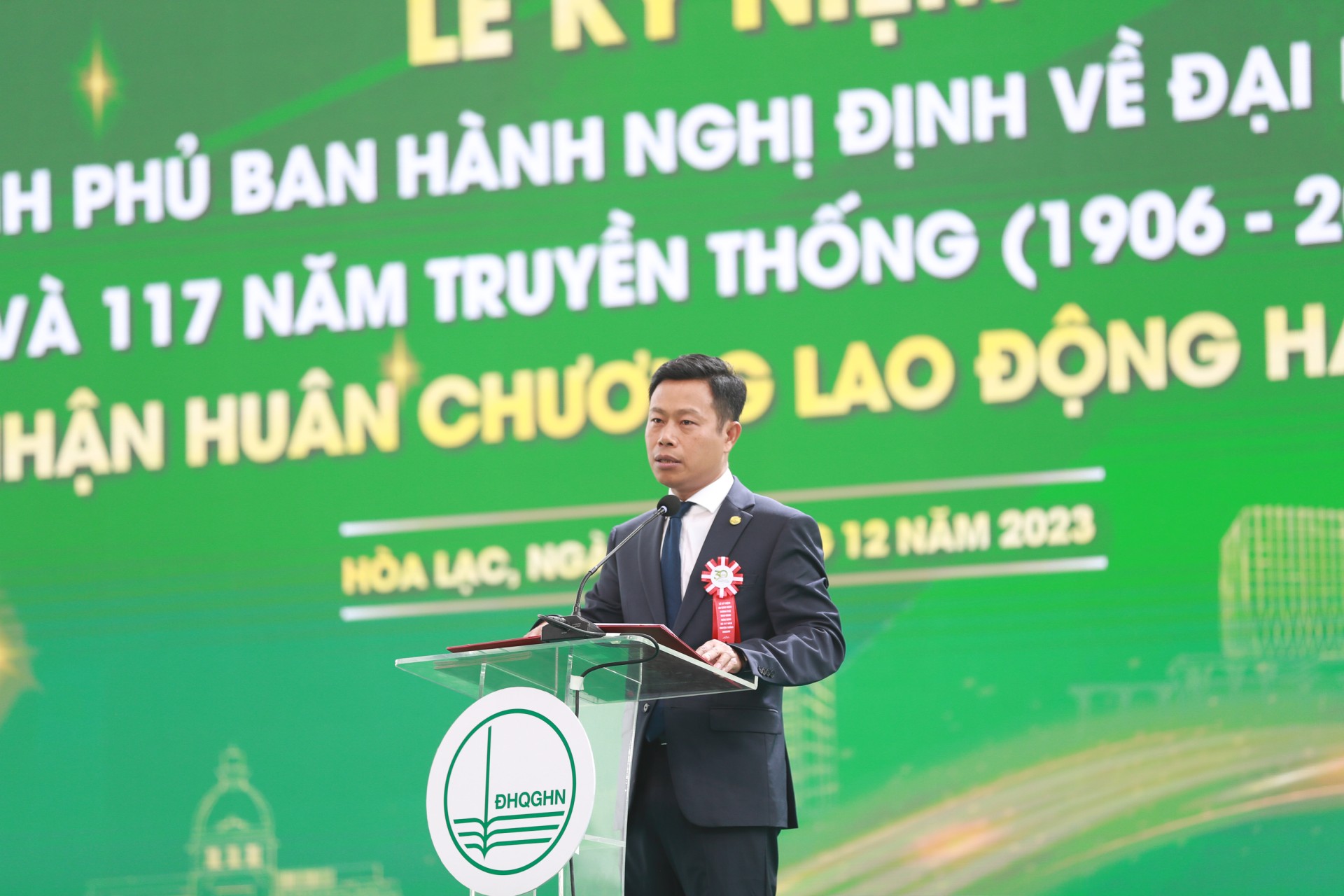
The Director of Vietnam National University, Hanoi, Le Quan, reviewed the achievements and lessons learned of Vietnam National University, Hanoi.
In his commemorative speech, the Party Secretary and Director of VNU, Le Quan, shared that VNU is proud to inherit the rich history and glorious traditions of 117 years from the University of Indochina (1906), the National University of Vietnam (1945), and the University of Hanoi (1956). These traditions include visionary thinking, high quality and advanced training, academic excellence, and proactive international integration; a tradition of training and nurturing talent, with a spirit of always being pioneering, innovative, and ready to serve the nation.
After 30 years of promoting autonomy and high accountability, Vietnam National University, Hanoi (VNU) has achieved many important accomplishments and is constantly striving to adapt to the new context. In particular, through practice, the VNU model has affirmed the superiority of a multi-disciplinary, multi-field university operating under an autonomous mechanism. This model allows VNUs to experiment with new policies and regulations, greatly contributing to the development of the country's higher education system. Based on the experiments of the two VNUs, many regulations specifically applied to VNUs have been extended to all other universities in Vietnam, such as: autonomous admissions, diploma printing, and signing of doctoral and master's degrees.
The Director of Vietnam National University, Hanoi, Le Quan, emphasized that with its glorious tradition and a team of leading scientists in the country, the extraordinary efforts of generations of teachers and students, the special attention of the Party and State, and the support and cooperation of the Government and ministries, and with a high degree of autonomy, Vietnam National University, Hanoi, has always been creative, pioneering, training many talents for the country, proposing and successfully piloting many important policies, pioneering in the reform of higher education, and rightfully being the flag and pillar of Vietnamese higher education.
The past 30 years of growth and development have been a continuation and inheritance of persistent innovation, striving for outstanding development, becoming a leading and pioneering university in Vietnamese higher education, and a journey to affirm the position of Vietnam National University, Hanoi both domestically and internationally.
Gradually improve the organizational structure of the multi-sectoral and multi-field apparatus.
Vietnam National University, Hanoi (VNU) was developed based on two major universities in Hanoi: Hanoi University of Science and Technology and Hanoi University of Foreign Languages Education. Over 30 years of construction and development, VNU has grown steadily in terms of scale, training fields, and the level and quality of its education.
“Many scientists at Vietnam National University, Hanoi are leading scientists in their fields, ranking highly – among the top in Vietnam and in the group of the most influential scientists in the world, having received numerous State awards, Ho Chi Minh awards, as well as prestigious international scientific awards. This is the pride and most valuable asset of Vietnam National University, Hanoi,” affirmed Director Le Quan.
To date, Vietnam National University, Hanoi (VNU) has essentially completed its multidisciplinary and multi-field structure with 37 units. Notably, the training and research units operate under an open and interconnected mechanism within the unified management and coordination of VNU, sharing scientific staff and technological infrastructure and facilities. The scientific staff working in these units serve as a shared human resource when participating in training and scientific research.
From having just over 50 training programs, Vietnam National University, Hanoi (VNU) now offers more than 500 training programs with approximately 60,000 students, including about 1,000 international students. Since 1993, around 280,000 people have graduated from VNU, including 230,000 bachelor's degree holders, 43,000 master's degree holders, and nearly 3,000 doctoral degree holders. Notably, over 60% of VNU's doctoral students are lecturers from universities and research institutes nationwide. With its prestige and quality, VNU has truly become a leading institution for training faculty members for many universities across the country.
With its multidisciplinary and multi-field structure, Vietnam National University, Hanoi (VNU) has a strong team of scientific staff capable of participating in solving key scientific and technological problems of the country in all fields, from basic sciences in natural and social sciences and humanities to economics, law, science and technology, educational science, health sciences and interdisciplinary fields.
Emphasis should be placed on identifying, nurturing, and training talented individuals.
The identification, nurturing, and training of talent is one of the special tasks that the Vietnam National University, Hanoi (VNU) always pays attention to and implements systematically, including identifying and nurturing students from their high school years and continuing their training and development at the undergraduate, master's, and doctoral levels.
Long-established specialized high schools with a rich history of achievements are known nationwide, such as: the High School for Gifted Students in Natural Sciences (affiliated with the University of Natural Sciences) and the High School for Gifted Students in Foreign Languages (affiliated with the University of Foreign Languages); more recently, the High School for Educational Sciences (affiliated with the University of Education), and the High School for Gifted Students in Social Sciences and Humanities (affiliated with the University of Social Sciences and Humanities). Notably, students from the High School for Gifted Students in Natural Sciences have won 301 international and regional Olympic medals, including 77 gold medals, 87 silver medals, 76 bronze medals, and 61 regional Olympic medals. In 2023 alone, the number of gold medals won by Vietnam National University, Hanoi accounted for 50% of the total gold medals won nationwide.
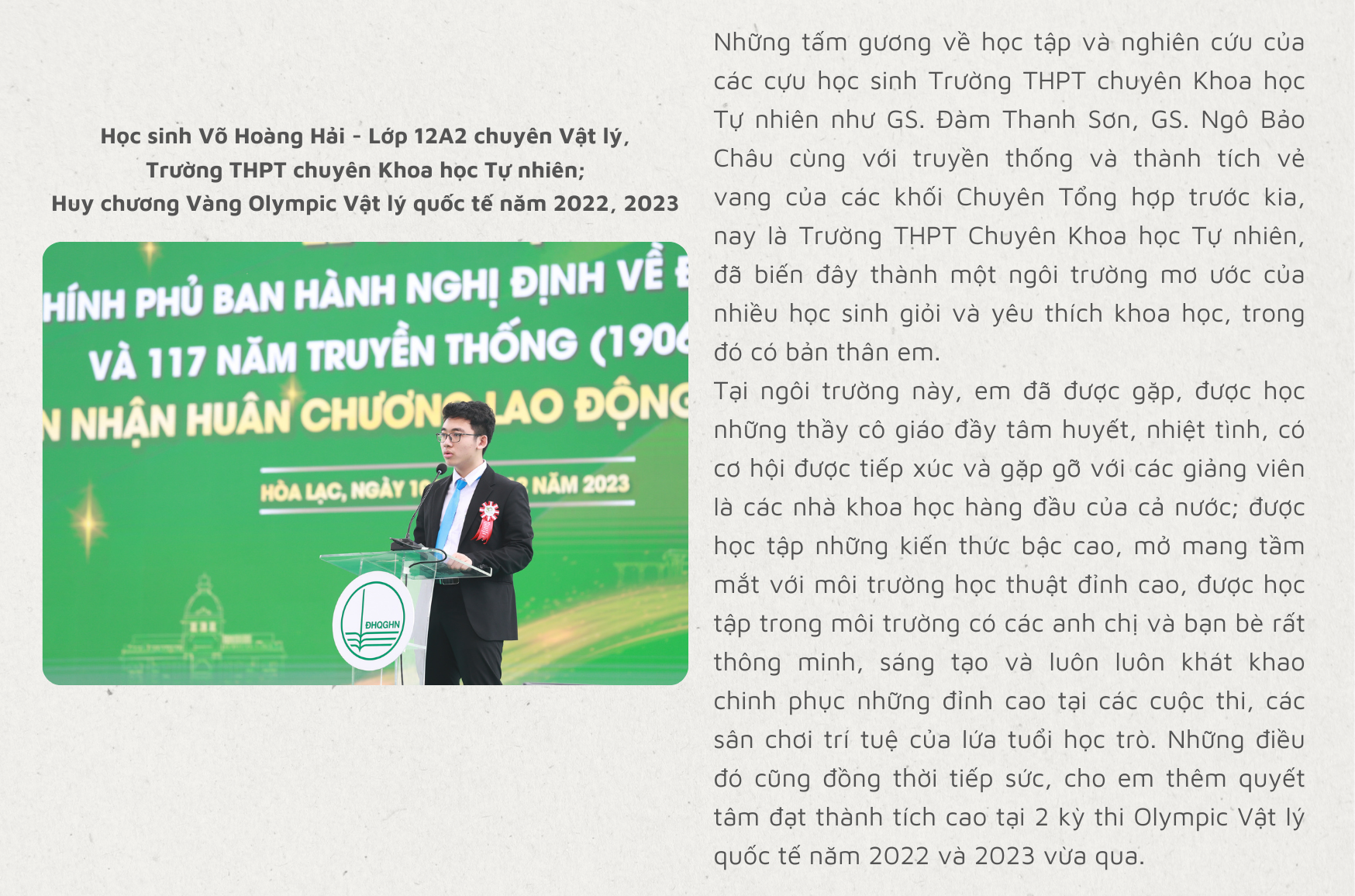
The model for training gifted students at high schools under the Vietnam National University, Hanoi (VNU) over the years has been a pioneering model nationwide in identifying, nurturing, and training talented individuals for the country. Many leading researchers, scientists, entrepreneurs, and outstanding leaders have emerged from VNU's training units.
In addition to standard training programs, Vietnam National University, Hanoi (VNU) has developed special programs to train and nurture talent. Accordingly, the new training regulations issued at the end of 2022 stipulate that VNU's current training programs include: Talent training programs, high-quality training programs (including advanced, internationally standardized training programs - training according to the content and curriculum of prestigious universities around the world), and standard training programs.
The Vietnam National University, Hanoi (VNU) has developed the "Young Scientist Incubation Program at VNU" to concretize and implement the Party and State's guidelines and policies, and to deploy VNU's development strategy until 2030, with a vision to 2045. All students and trainees who aspire to become scientists and meet the required competency standards will be eligible to participate in VNU's program. The Young Scientist Incubation Program at VNU is implemented comprehensively, from career guidance and attracting talented students from high schools, to undergraduate, postgraduate, and postdoctoral training at VNU and international partners, to recruitment, placement, and development of human resources.
Continuously improving the efficiency of scientific and technological activities.
In recent years, Vietnam National University, Hanoi (VNU) has consistently been at the forefront of technology development, entrepreneurship, and knowledge transfer, contributing to the sustainable development of the regions and localities where VNU collaborates. VNU has been entrusted by the State and Government to lead the development and implementation of many important national-level scientific projects and tasks, such as: the State-level Key Science and Technology Program for Sustainable Development of the Northwest Region, the task of building the National Geographical Encyclopedia of Vietnam, the project on translating and promoting the value of the essence of classic Eastern works, and the Vietnam Studies Documentation Center project…
Scientists from Vietnam National University, Hanoi (VNU) have contributed ideas to the development of numerous resolutions and documents for Party congresses at all levels; promoted new scientific trends; and implemented large-scale research programs with significant contemporary, national, and humanistic value, possessing high scientific and practical significance for the development of society, the country, and global issues such as climate change and the upheavals of the world after the Covid-19 pandemic.
Vietnam National University, Hanoi presents flowers to express gratitude to generations of leaders throughout the years.
The development strategy of Vietnam National University, Hanoi (VNU) follows the model of a research-oriented, innovative university. To date, VNU has 36 research groups recognized as strong research groups at the VNU level, playing a leading role in many scientific fields and advanced research directions domestically and regionally. Under the leadership of leading scientists, these research groups have played a crucial role in training talented students, focusing on individualized training, while also promoting international publications and innovative activities.
Vietnam National University, Hanoi (VNU) has developed a plan for its science and technology organizational system and plans to invest in the development of strong research organizations. VNU is one of the leading institutions nationwide in terms of the quantity and quality of scientific works, with the rate of publications indexed in the Scopus database increasing by an average of approximately 16% per year and accounting for about 10% of the total international publications nationwide. The number of publications indexed in the WoS/SCOPUS database by VNU has gradually increased over time. In the past 30 years, VNU staff, lecturers, researchers, and students have published 11,477 works/articles indexed in the Scopus and Web of Science databases; there are 26,394 authors participating in research; the average number of citations is approximately 15 per work; and 108 science and technology products have been granted patents/utility model certificates.
In line with the trend of development in both breadth and depth, and with the support of relevant agencies, Vietnam National University, Hanoi (VNU) will accept Ha Tinh University as a member university, upgrading it to become a training and research center of VNU in Central Vietnam to implement science and technology programs serving to attract investment and develop the socio-economic conditions of coastal provinces, and to implement cooperation projects with neighboring countries Laos and Cambodia.
Vietnam National University, Hanoi (VNU) always prioritizes strengthening cooperation with businesses and localities, contributing to solving socio-economic development challenges in the implementation of national-level science programs and regional and local development. Besides continuing to implement VNU-level science and technology programs such as the Digital Economy Program, the Artificial Intelligence Program, and the Basic Science Development Program in Chemistry, Life Sciences, Earth Sciences, and Marine Sciences, in 2023, VNU continued to participate in the development of national-level research programs such as the semiconductor chip program, hydrogen fuel, biotechnology, medicine, marine science, and health sciences…
Effectively implement cooperation models in training and research, technology transfer, and service provision.
Collaboration is a hallmark of the research and innovation university model. Vietnam National University, Hanoi (VNU) has signed cooperation agreements with numerous ministries, sectors, and economic corporations; effectively operating public-private partnership models to enhance training efficiency and contribute to the successful implementation of many important science and technology cooperation tasks. In the past, VNU successfully piloted many models of affiliated faculties and research centers… The School of Management and Business (HSB) model is a prime example of cooperation between VNU and businesses. VNU has established and developed collaborative units to support startups and knowledge transfer; develop science and technology enterprises and spin-off businesses.
In recent years, Vietnam National University, Hanoi (VNU) has continued to be a pioneer in investment promotion and public-private partnerships. VNU's investment promotion conference attracts significant interest from numerous businesses and creates a distinct value by promoting the role of university-business cooperation in human resource development. In December 2023, VNU inaugurated two public-private partnership training and research centers with RMIT University in technology and SHB Bank in finance… In the coming years, VNU is tasked with pioneering public-private partnerships (PPP) in projects such as utility centers, conference centers, hospitals, technology exchange centers, pharmaceutical trade centers, cultural and artistic centers, and sports facilities…
Director Le Quan believes that, in the near future, the Vietnam National University, Hanoi at Hoa Lac will truly be a place for large businesses and a place to support and incubate small and medium-sized enterprises, science and technology enterprises, social enterprises, etc.
Improve your ranking in prestigious university rankings.
To date, Vietnam National University, Hanoi has established cooperative relationships with over 320 international universities, science and technology organizations, and multinational corporations.
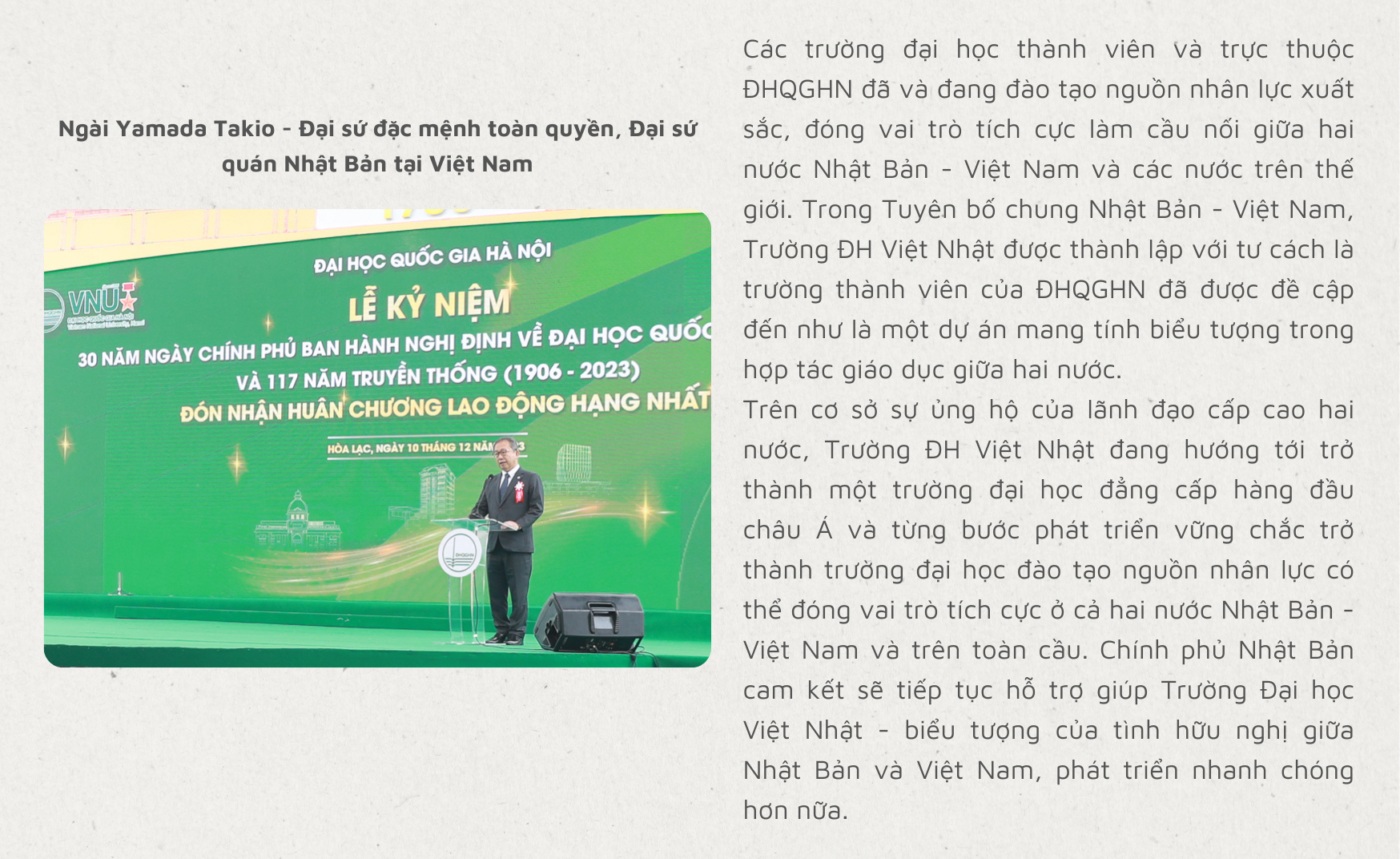
In 2018, Vietnam National University, Hanoi (VNU) was ranked among the top 1,000 universities in the world for the first time according to the QS rankings and continued to maintain its number one ranking in Vietnam. To date, VNU has continuously developed and strengthened its ranking on prestigious international rankings, consistently maintaining its position in the top 1,000 universities worldwide. In 2022, VNU became the first university in Vietnam to win the QS Quality Improvement Award, with six areas ranked between 350 and 600 globally. In 2023, eight fields of study at Vietnam National University, Hanoi (VNU) were ranked in the top 1,000 of the 10 ranked fields worldwide, placing universities in the 401-600 group according to the THE Impact Rankings criteria, with the Quality of Education index reaching position 70 globally (5th in Southeast Asia and 1st in Vietnam).
Scientists from Vietnam National University, Hanoi (VNU) in several fields have also been internationally ranked among the most influential scientists in the world and leading scientists in Vietnam. These successes of VNU not only affirm the success of the national university model, but also contribute to affirming the comprehensive reform policies and guidelines for higher education of the Party and the State.
Looking towards the future
In harmony with national aspirations, inheriting and continuing 117 years of glorious tradition, and bearing national responsibilities, Vietnam National University, Hanoi (VNU) looks towards the future with very clear strategies and goals, with two important new factors impacting all of VNU's activities in the current context: university autonomy and infrastructure development.
Regarding the development of the Vietnam National University, Hanoi (VNU) urban area in Hoa Lac, aiming for a smart, modern, sustainable urban environment on par with the region, the goal is to have 25,000 students by 2025 and reach a population of 100,000 by 2030, including 80,000 students and approximately 10,000 faculty and staff, becoming a center for innovation linked to businesses. VNU identifies itself as the core center of Hoa Lac City within Hanoi.
Regarding staff development, in addition to maintaining the tradition of nurturing and developing talent, VNU focuses on attracting talent with flexible and effective mechanisms, following the principle of creating an environment for outstanding scientists to maximize their professional capabilities, aiming for high-quality, valuable works that make practical contributions to socio-economic development.
In terms of education, quality is the core value and guiding principle of Vietnam National University, Hanoi (VNU). VNU prioritizes discovering and nurturing talent, considering the training of basic sciences/experts/scientists/university lecturers as a fundamental task; promoting training in engineering, technology, creativity, and arts (engineering and technology fields account for nearly 30%); promoting applied and practical training; and focusing on training according to international standards. At the same time, the goal is to educate students comprehensively – excelling in their professional field, possessing the capacity for integration, understanding national culture and traditions, and especially improving their physical fitness.
Regarding scientific research and innovation, Vietnam National University, Hanoi (VNU) continues to leverage its strengths in cooperation with provinces in the Northwest region while simultaneously promoting cooperation with coastal provinces to boost socio-economic development in coastal areas; and strengthening ties with investors and businesses in key economic regions. In this process, the inclusion of Ha Tinh University as a member university will create further opportunities to promote research and technology transfer related to the marine economy and strengthen cooperation with Laos and Cambodia.
Deserving of the many prestigious awards bestowed by the Party and the State.
The sustained and robust development of Vietnam National University, Hanoi (VNU) has always been a focus of attention and recognition from the Party, State, and Government. Throughout this journey, many member units of VNU have received the title of Hero of Labor and other prestigious titles from the Party and State. VNU was honored to receive the Golden Star Order in 2006 – on the occasion of the 100th anniversary of Indochina University – the predecessor of VNU, along with many other prestigious titles from the Party and State over the years.
Most recently, at the Eighth Conference, the 13th Central Committee of the Communist Party of Vietnam issued Resolution No. 45 on building and promoting the role of intellectuals to meet the requirements of rapid and sustainable national development in the new period. Accordingly, the Party and the State are determined to focus on building breakthrough mechanisms and policies and investing resources to develop Vietnam National University, Hanoi (VNU) to be on par with advanced countries, with sufficient capacity and conditions to play a pivotal role in training and research, and to bring VNU into the group of the top 500 universities in the world.
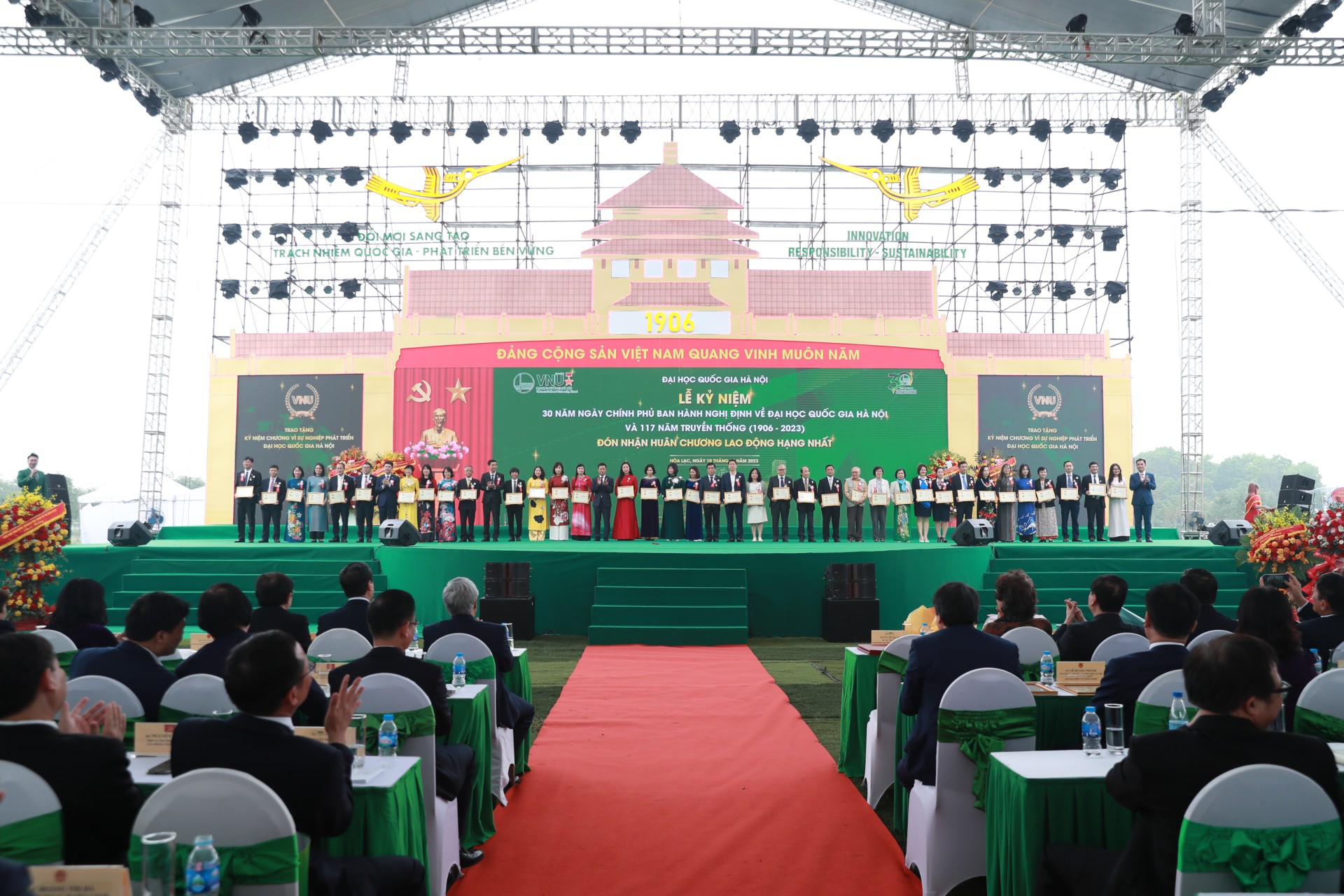
Leaders of Vietnam National University, Hanoi (VNU) present commemorative medals for contributions to the development of VNU.
To recognize the outstanding achievements of Vietnam National University, Hanoi (VNU) in contributing to the cause of building socialism and defending the Fatherland, on the occasion of the 30th anniversary of the Government's promulgation of the Decree on VNU and its 117th anniversary, the President of Vietnam has decided to award the First Class Labor Order to VNU.
As part of the celebration, the leaders of Vietnam National University, Hanoi (VNU) awarded the "For the Development of VNU" commemorative medal to 162 individuals to recognize and express gratitude to individuals inside and outside VNU who have made outstanding achievements and contributions to the building and development of VNU over the past 30 years.
Vietnam National University, Hanoi (VNU) has become a multidisciplinary university with 9 universities, 5 scientific research institutes established by the Prime Minister; 2 schools, 2 faculties and 1 research institute directly under its direct management; 2 training and research centers; and 15 service units.
Currently, Vietnam National University, Hanoi (VNU) has 5,200 staff members. Of these, 2,739 are scientific staff; including 66 professors, 490 associate professors, and nearly 1,700 PhDs and Doctors of Science. Currently, the percentage of lecturers with PhDs at VNU is 62% (more than twice the national average); the professor-to-associate professor ratio is five times higher than the national average.
Vietnam National University, Hanoi is currently implementing 190 undergraduate programs, 198 master's programs, and 118 doctoral programs.
The current training scale is approximately 60,000 students, including about 1,000 international students. Over the past 30 years, Vietnam National University, Hanoi has trained nearly 230,000 bachelors, nearly 43,000 masters, and 3,000 doctoral graduates.
Vietnam National University, Hanoi (VNU) currently has 211 laboratories in various fields, including 1 key national-level laboratory, 8 key VNU-level laboratories, 2 key VNU-level research centers, and 200 targeted, specialized, and basic practical laboratories. |