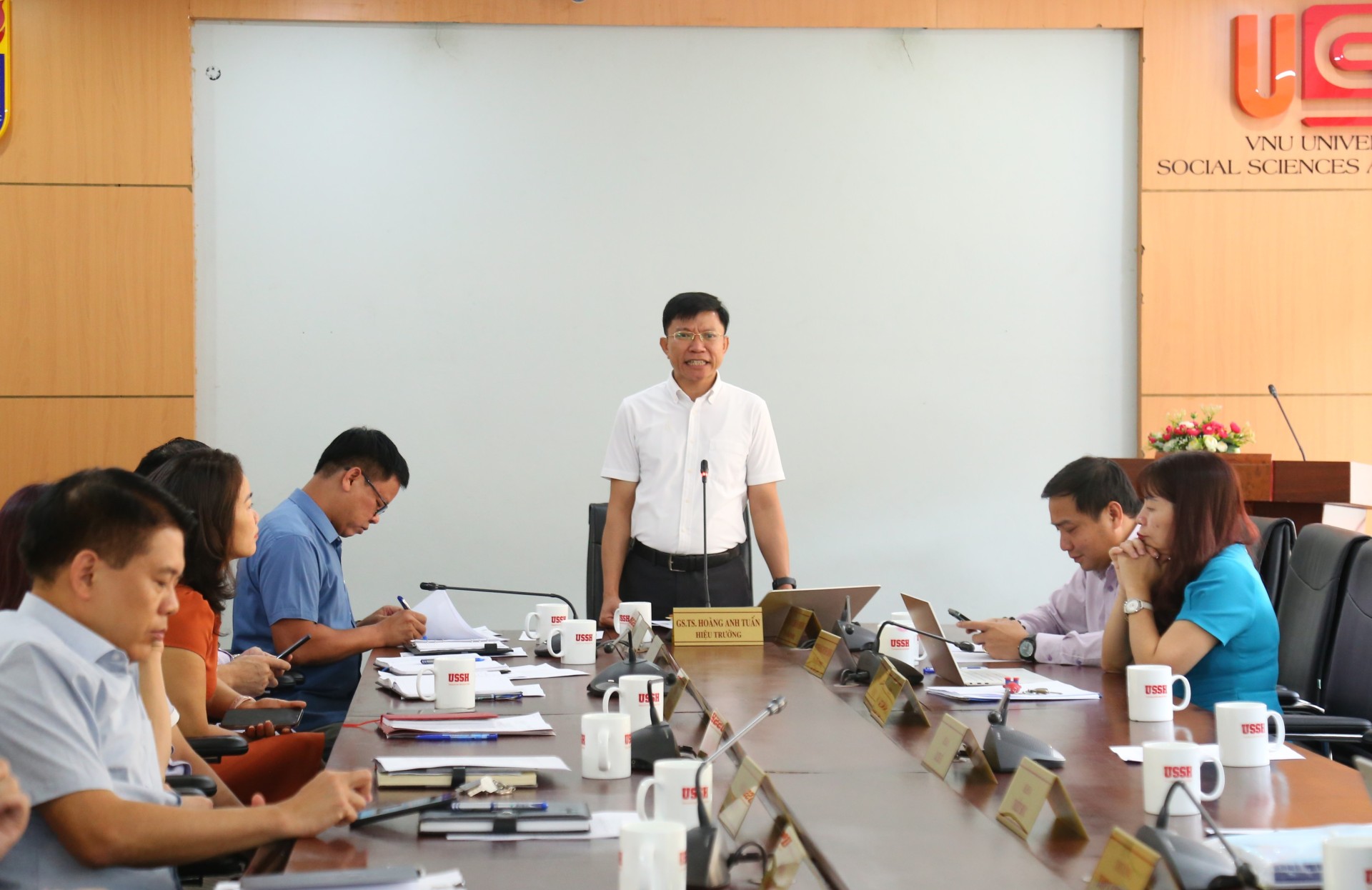
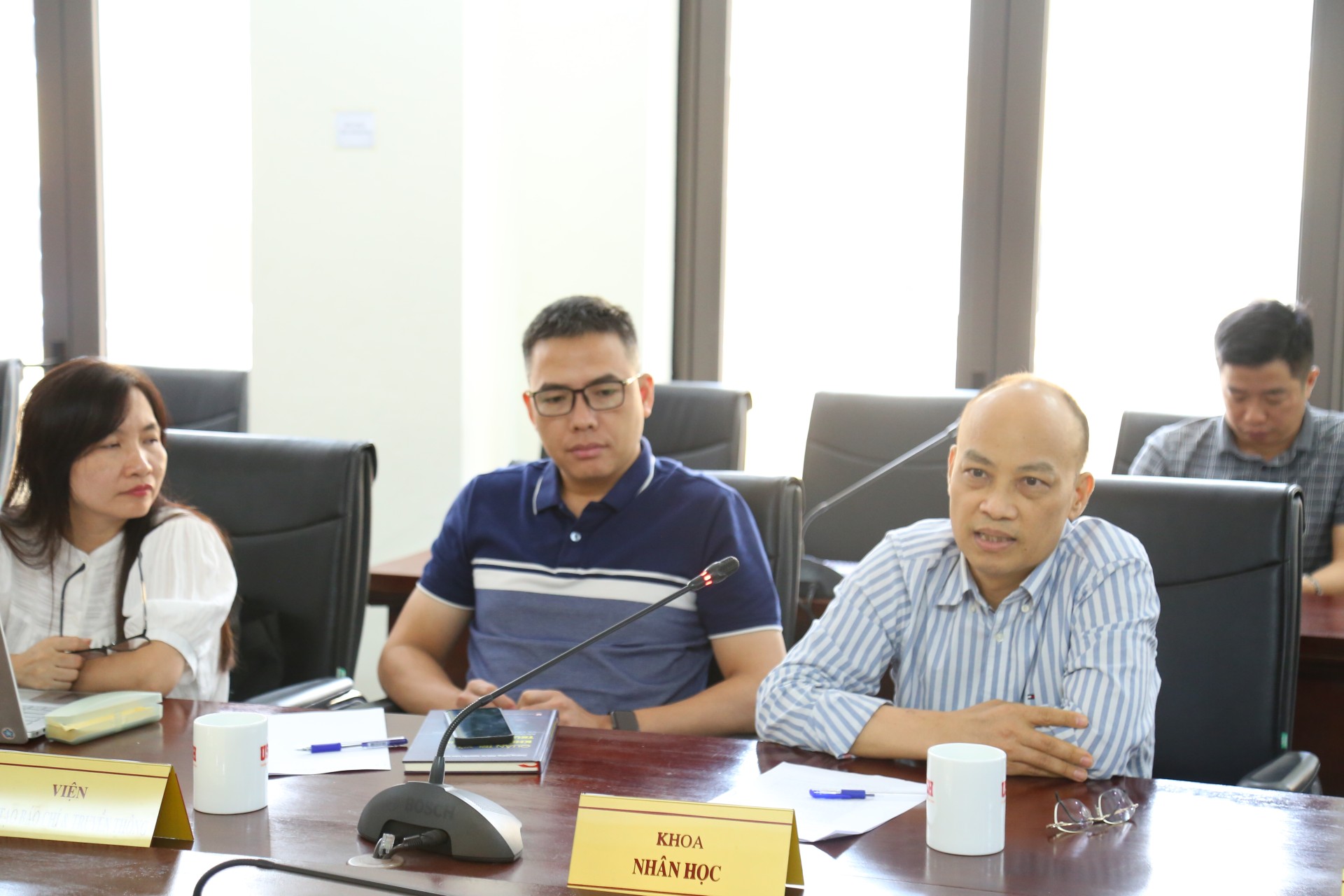
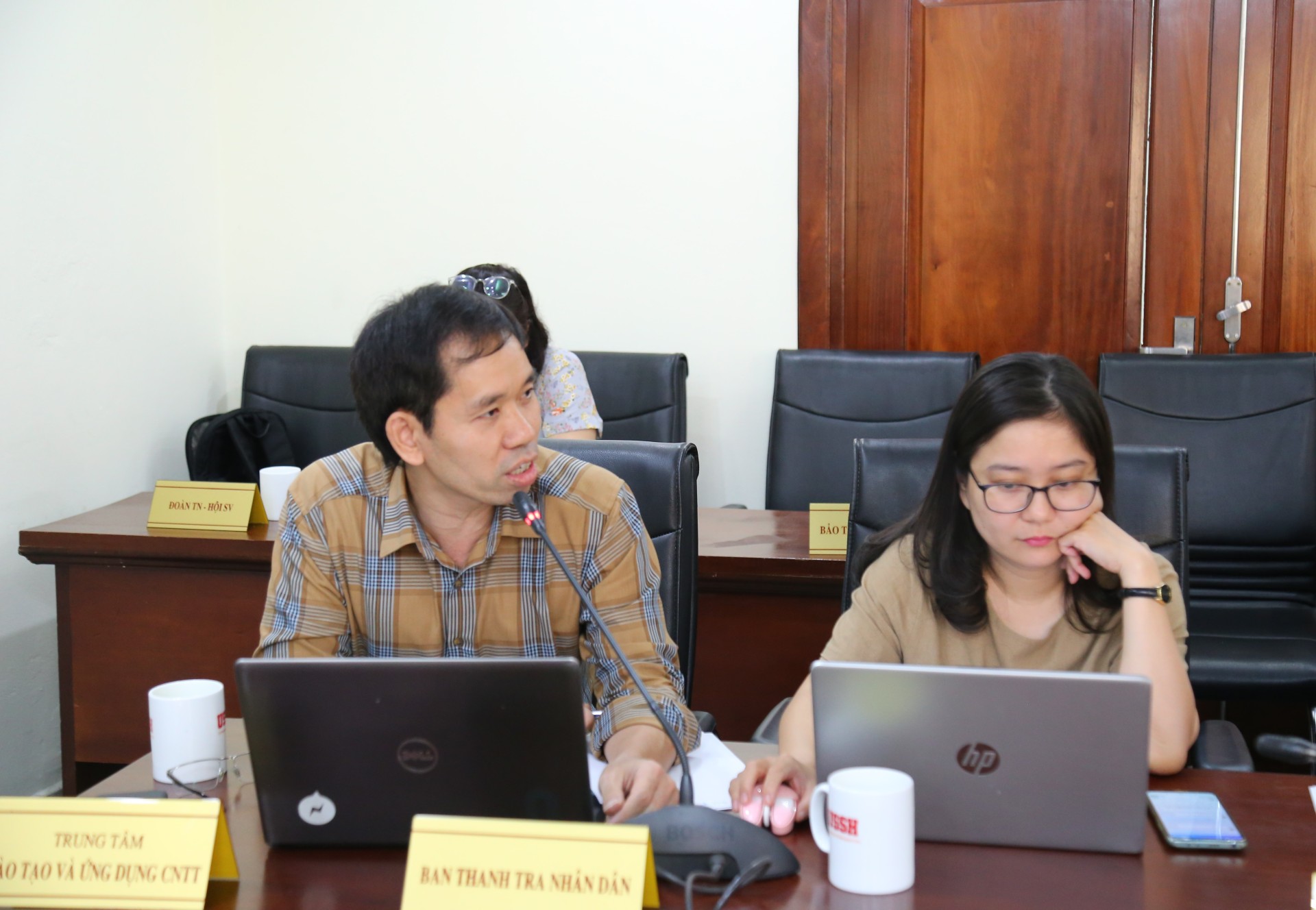
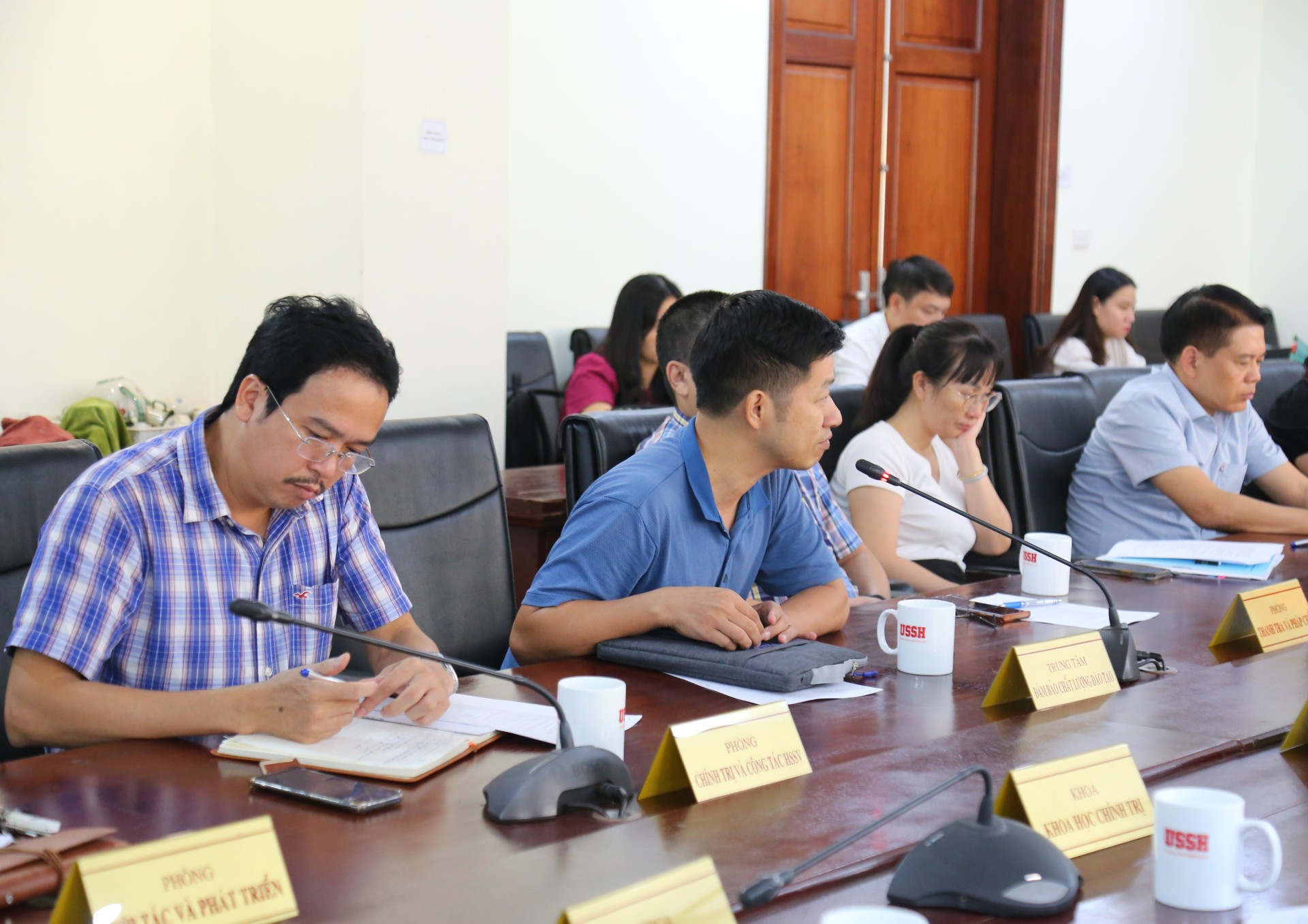
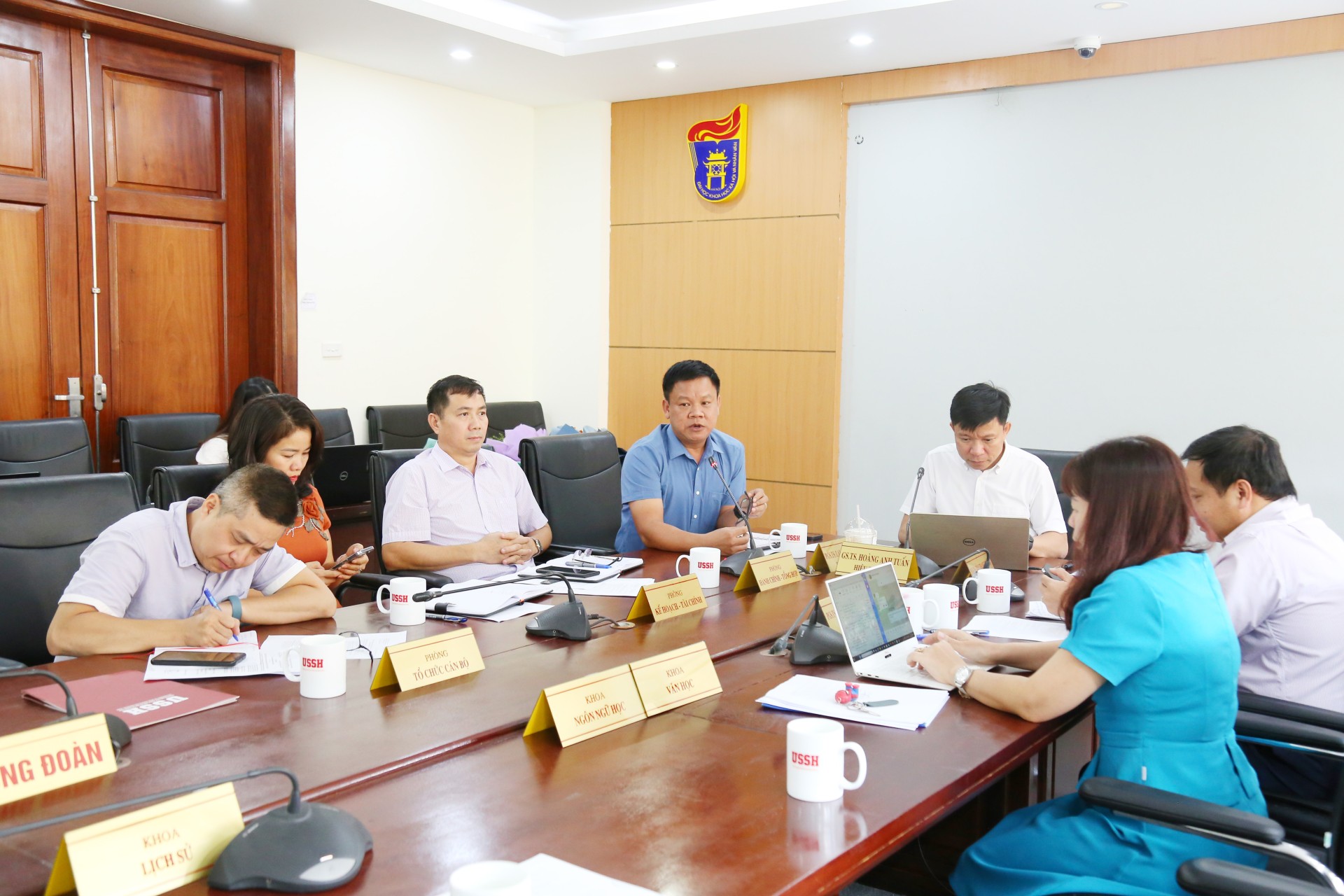
Mr. Nguyen Van Thuy, Head of the Administration and General Affairs Department, presented a report on the September work performance of the University of Social Sciences and Humanities, highlighting several achievements in Party work, organization, and associations; training; quality assurance; scientific research and cooperation; finance, infrastructure, and communication. The report also emphasized several key areas to focus on in October: implementing the next steps in the process of establishing the University Council; completing the second round of postgraduate and part-time student admissions; developing a proposal to open a second degree program for all training majors; reviewing scholarship applications for students; finalizing the comprehensive reform plan for student support and care; successfully organizing events such as the Taiwan Education Exhibition and the Northern preliminary round of the Vietnamese Public Speaking Competition for international students; and completing several software programs to support student activities.
The Head of the Training Department, Assoc. Prof. Dr. Bui Thanh Nam, shared: currently, based on the actual needs of society and the training capacity of the units, the Training Department boldly proposes to the Board of Directors a plan to open additional second-degree programs for other training programs besides those currently being implemented at the University of Social Sciences and Humanities.
Associate Professor Bui Thanh Nam further shared: Currently, the Training Department, in coordination with the Faculty of Political Science, is finalizing the cooperation agreement with Pondicherry University of India on an international joint training program in Public Administration following the 2+2 model, with both sides jointly training and awarding degrees.
Associate Professor Dr. Nguyen Van Suu (Head of the Anthropology Department) provided further information about the highly successful cooperation program between the University of Social Sciences and Humanities and the University of Queensland (Australia), in which both sides recognize each other's credits and jointly award degrees to students.
Regarding student affairs, Dr. Dinh Tien Hieu (Deputy Head of the Student Affairs and Student Support Department) noted the progress of the survey on the current situation.doFor students after graduation: The implementation period has now ended.but in many training institutionsGiven the low number of student responses, we request that heads of units pay close attention and provide decisive guidance, urging staff to quickly complete the data so that the General Department can compile and send the report to the Ministry of Education and Training. This will also serve as an important basis for developing the enrollment plan for the next academic year.
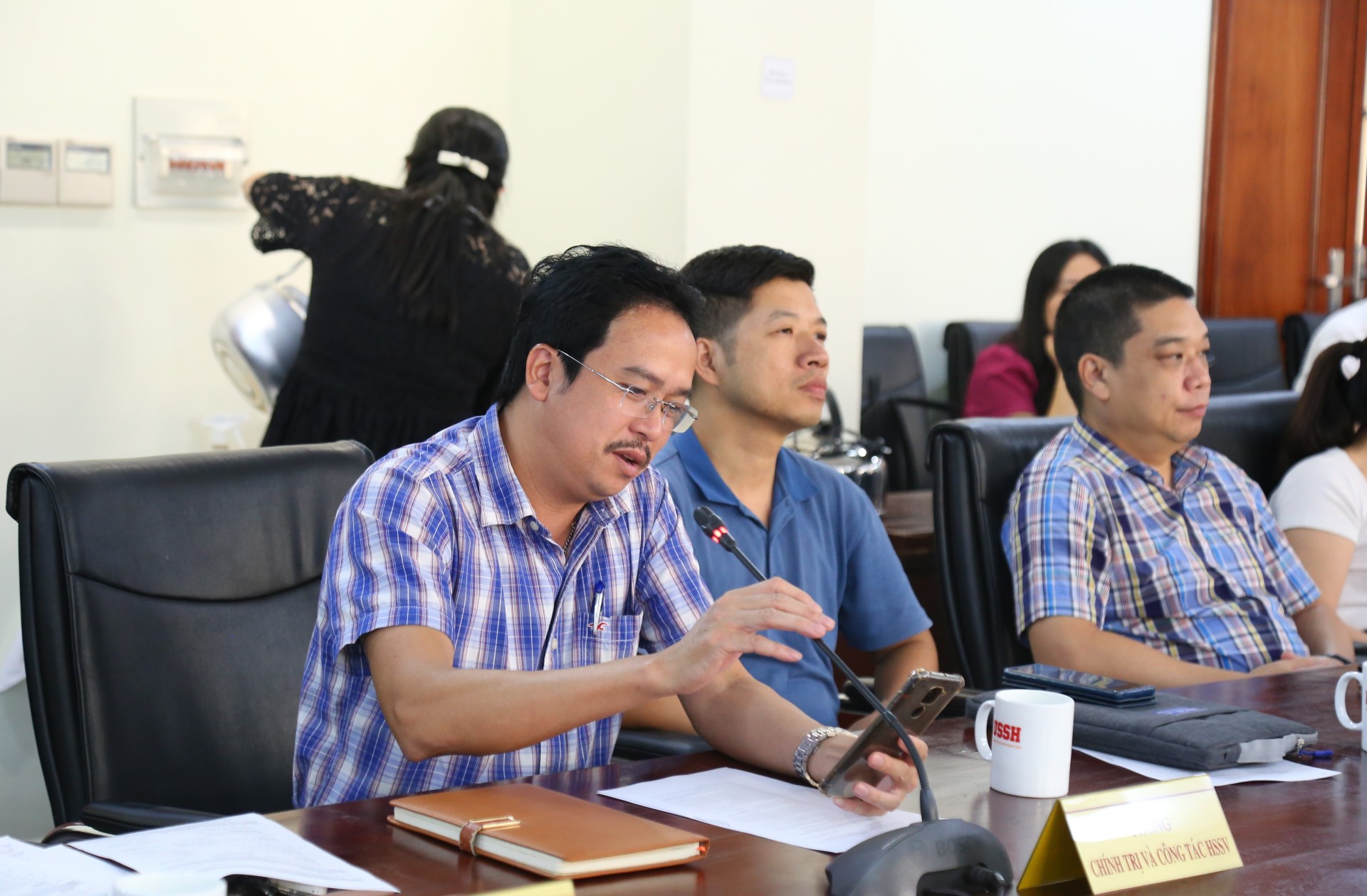
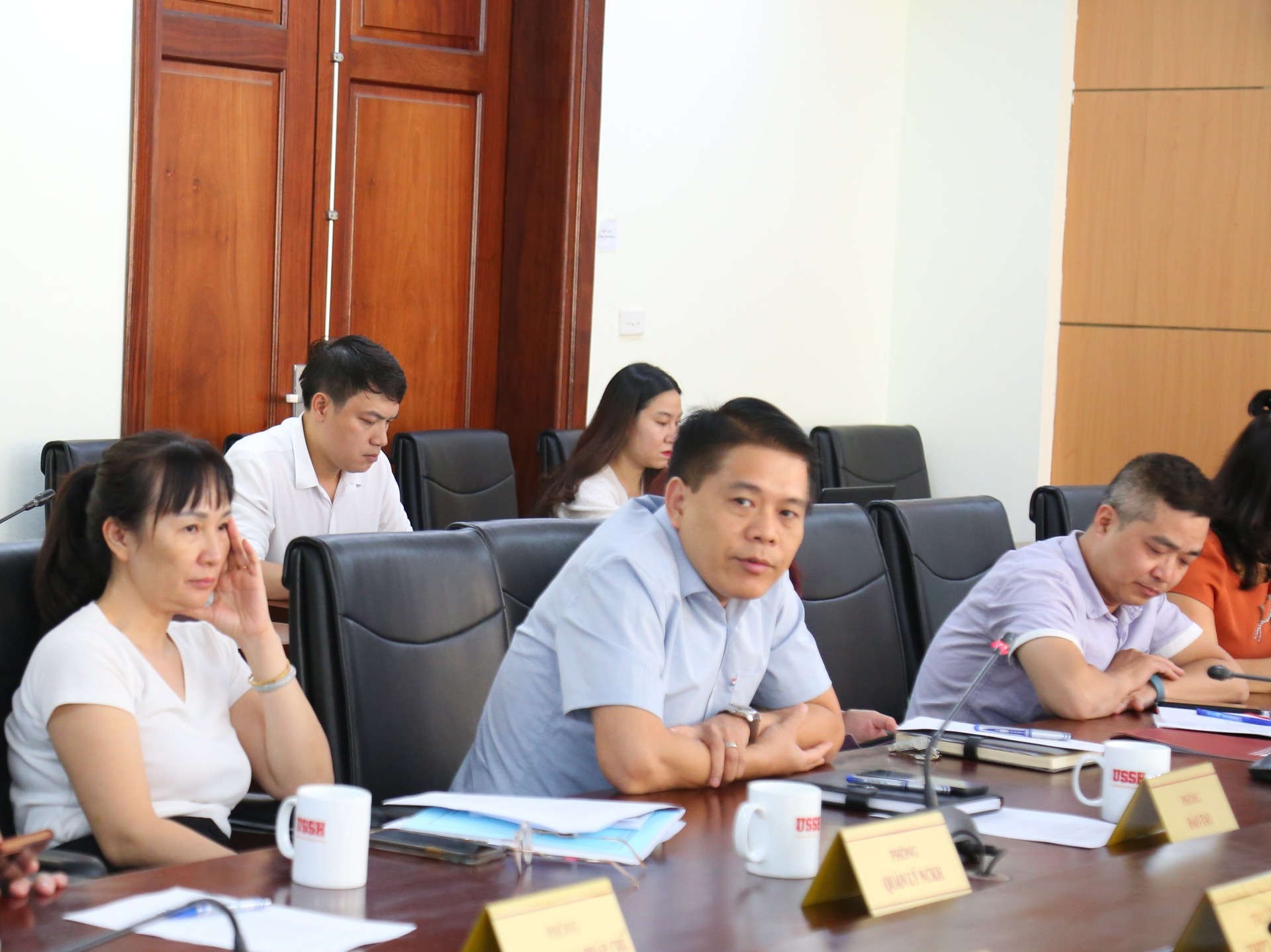
Representatives from the Faculty of Oriental Studies explained that conducting surveys of graduating students also faced some difficulties because alumni may change their email addresses or phone numbers after graduation, making contact difficult. Additionally, although the Faculty of Oriental Studies' website has officially switched to the common domain ussh.vnu.edu.vn, a Google search doesn't yield any results for articles or the website.
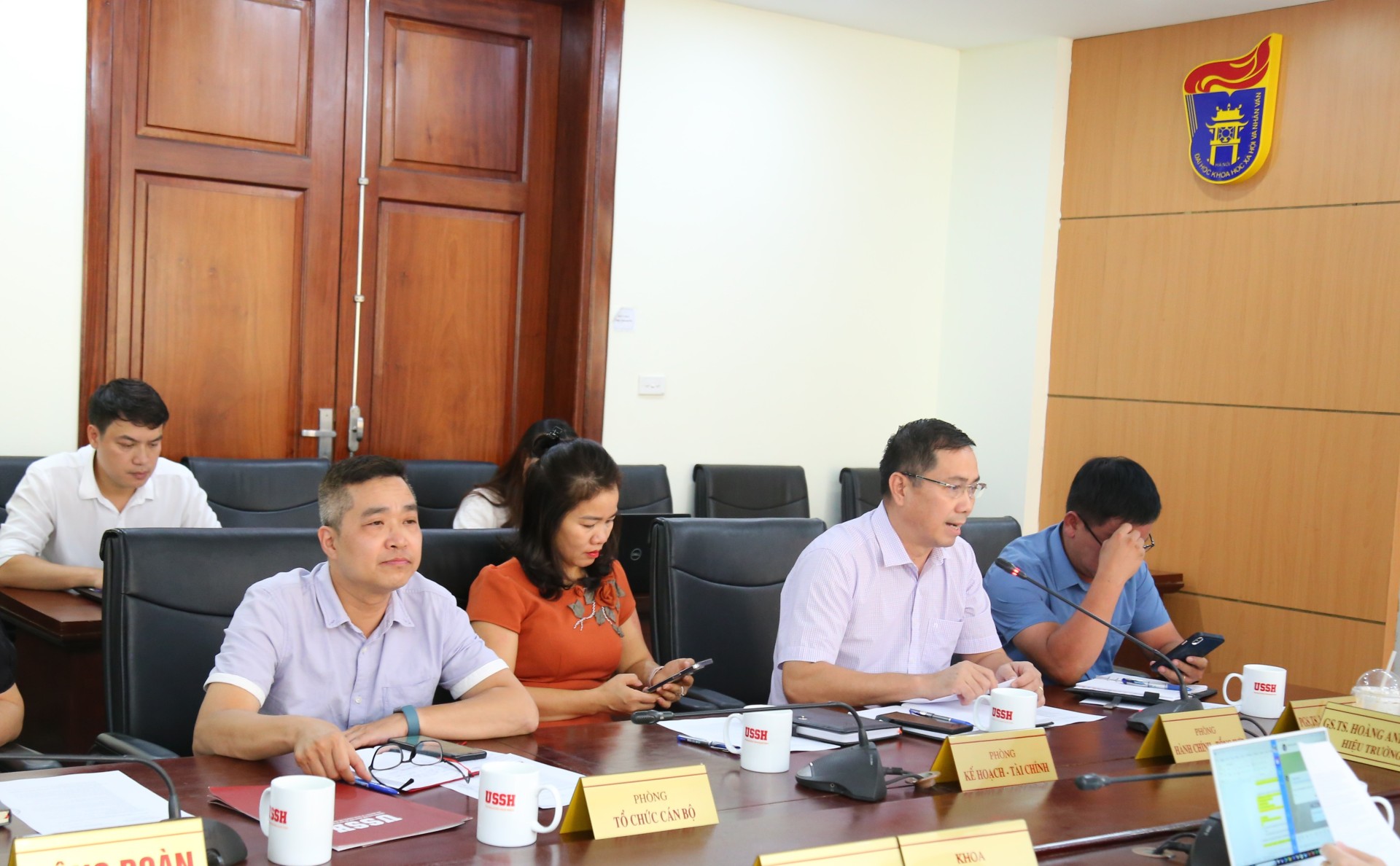
Dr. Nguyen Thi Thu Huong (Deputy Head of the Department of Oriental Studies) speaks at the briefing conference.
Responding to the Department of Oriental Studies' concerns regarding the website and communication activities, Dr. Dao Minh Quan (Director of the Center for Communication and Information Technology) shared: The fact that search engines cannot recognize articles on the Department of Oriental Studies' website is not related to domain name standardization but depends on how SEO standards are applied when writing articles on the website. In the near future, the Center for Communication and Information Technology will implement a training course on communication writing skills and how to apply SEO standards for communication staff of various units.
Dr. Pham Huy Cuong (Director of the Center for Training Quality Assurance) further emphasized the role and significance of surveying the employment situation of graduates after graduation in quality assurance work. Feedback from stakeholders (especially alumni) is one of the points that the external evaluation team will pay close attention to and is an important criterion for determining quality assurance conditions. At the same time, based on that feedback, the university gains information to help adjust the curriculum accordingly and better support students.
Dr. Pham Huy Cuong emphasized several key tasks that need to be completed in October in the work of quality assurance and post-assessment improvement.
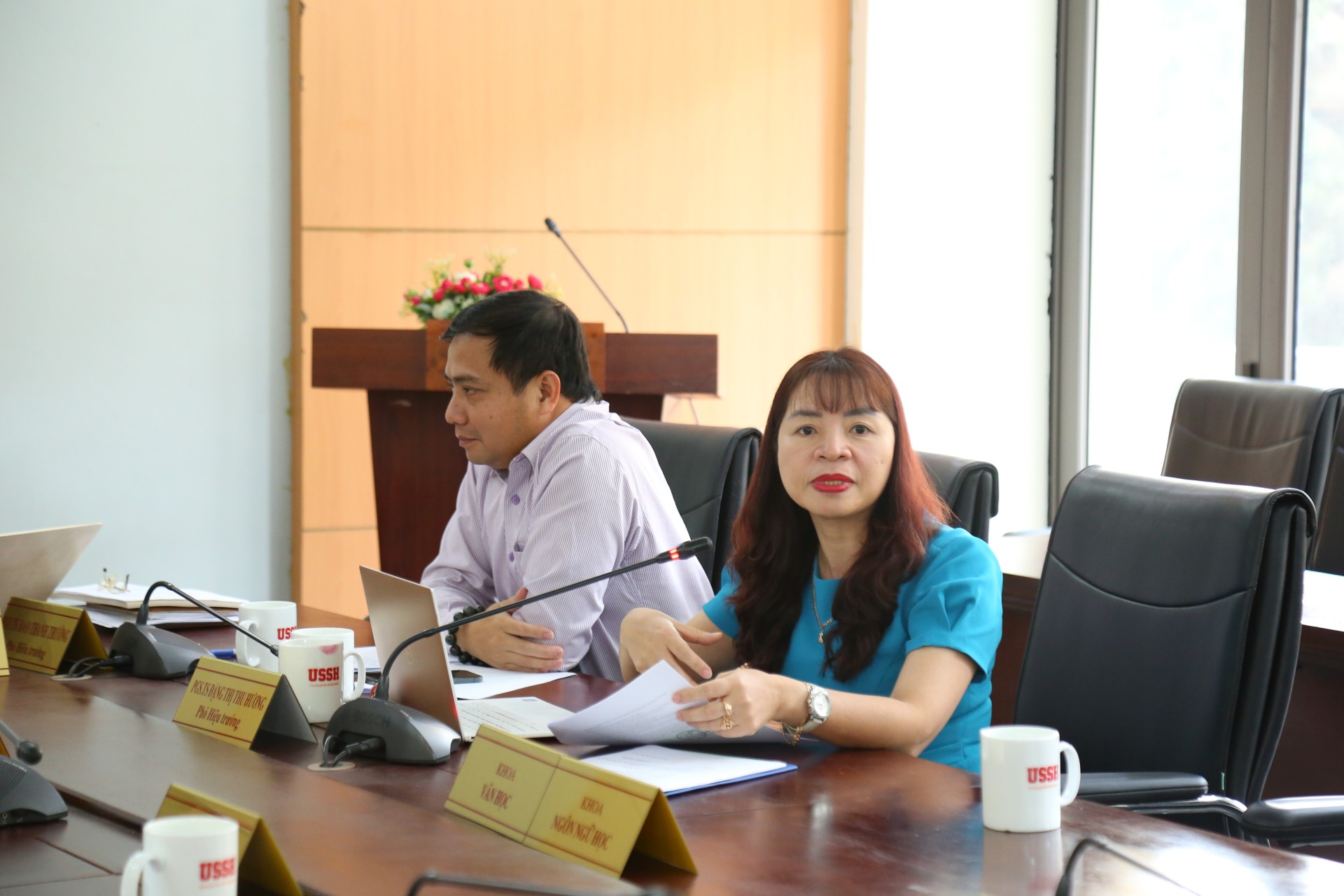
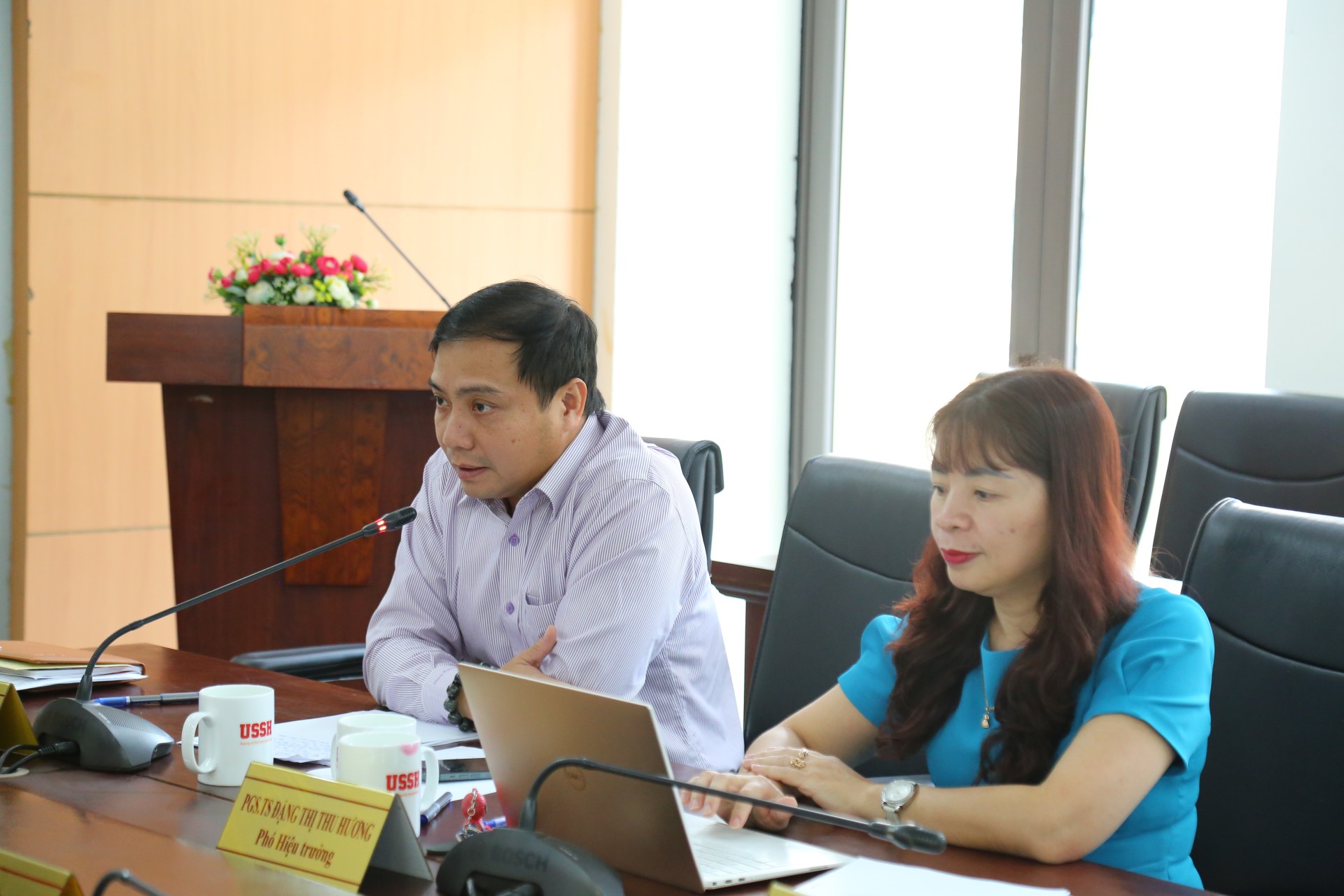
Associate Professor Dr. Dang Thi Thu Huong (Vice Rector) provided further information and emphasized some key points in training and quality accreditation: In October, three training programs will undergo accreditation according to AUN-QA standards. This time, the University of Social Sciences and Humanities will be the host institution, representing the Vietnam National University, Hanoi, to welcome the accreditation evaluation team. Therefore, relevant departments and faculties need to prepare well and thoroughly.
October will be the peak month for postgraduate admissions, so units need to focus on communication to raise awareness and encourage applications, especially for master's programs. Some newly opened programs need to urgently complete the basic-level acceptance procedures to submit to VNU for approval, in order to be ready for admissions in 2024.
Vice Principal Dang Thi Thu Huong delivered a speech at the conference.
Vice Rector Dang Thi Thu Huong also noted: International cooperation programs following the 1+3 or 2+2 model, spearheaded by the Faculties, also need to prepare a detailed set of documents (regarding training content, responsibilities of both parties, training schedule, and learning outcomes) for the University to submit to VNU for approval before being put into enrollment and training.
Regarding cooperation, development, and scientific research, Vice Rector Dao Thanh Truong stated: Currently, the university has issued regulations on organizing seminars and conferences, and requests that heads of departments disseminate them to all staff in their units to ensure compliance. In early 2024, the university will continue to organize the 2nd International Scientific Conference for postgraduate students, doctoral candidates, and young staff members. For the conference to be successful, we hope that all faculties will widely disseminate information so that postgraduate students and doctoral candidates are aware and proactively submit papers. In the future, the university will conduct a survey to understand the training needs for international journal writing skills among young staff, postgraduate students, and doctoral candidates in order to provide timely support: inviting experts for training, and assigning lecturers with experience in international publications to provide guidance.
Vice Rector Dao Thanh Truong delivered a speech at the briefing conference.
Vice Rector Lai Quoc Khanh noted that heads of units need to instruct their staff on the use of the E-office software to promptly access documents issued by the school, ensuring the efficiency of assigned tasks.
Vice Rector Lai Quoc Khanh delivered a speech at the conference.
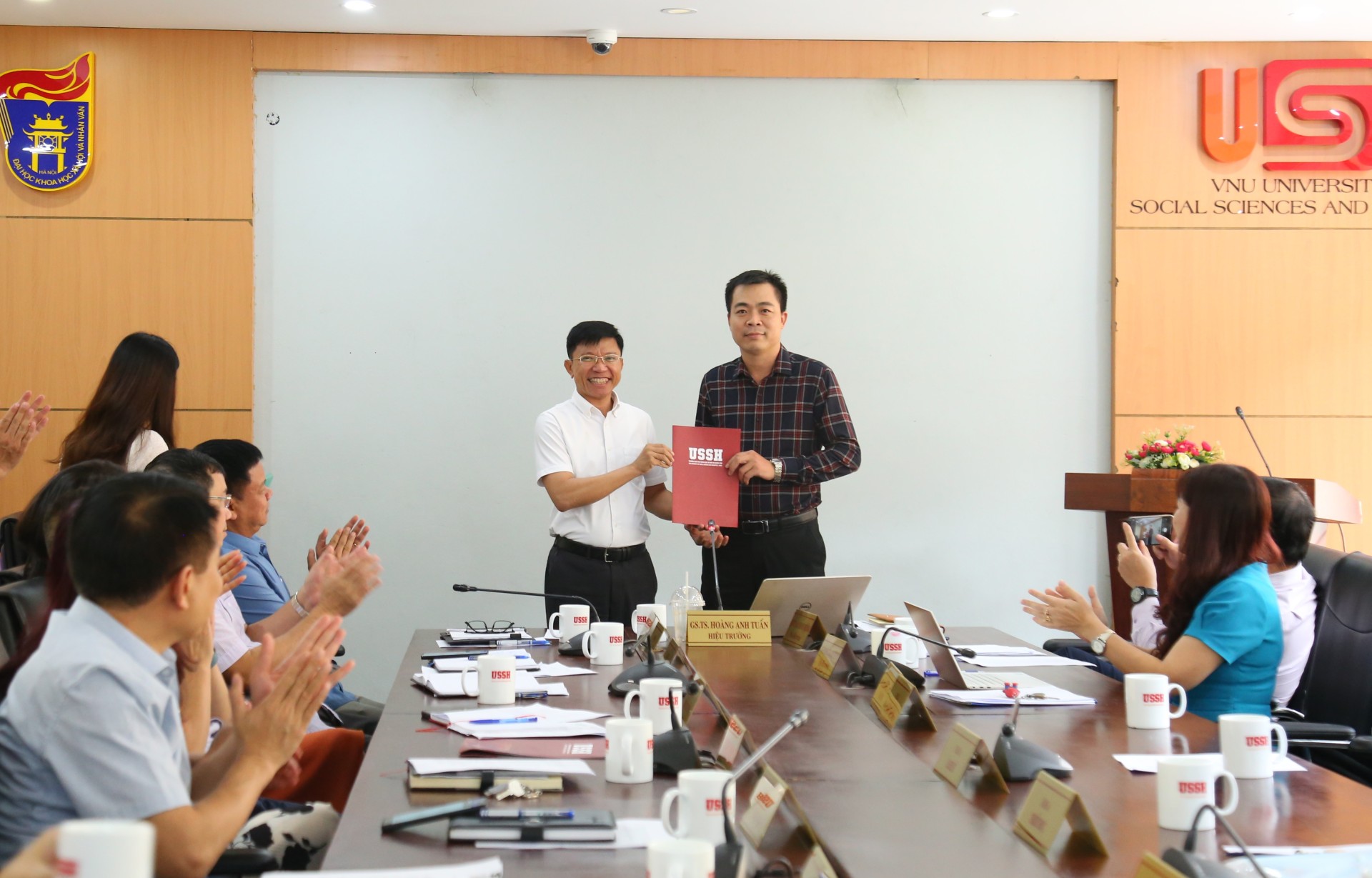
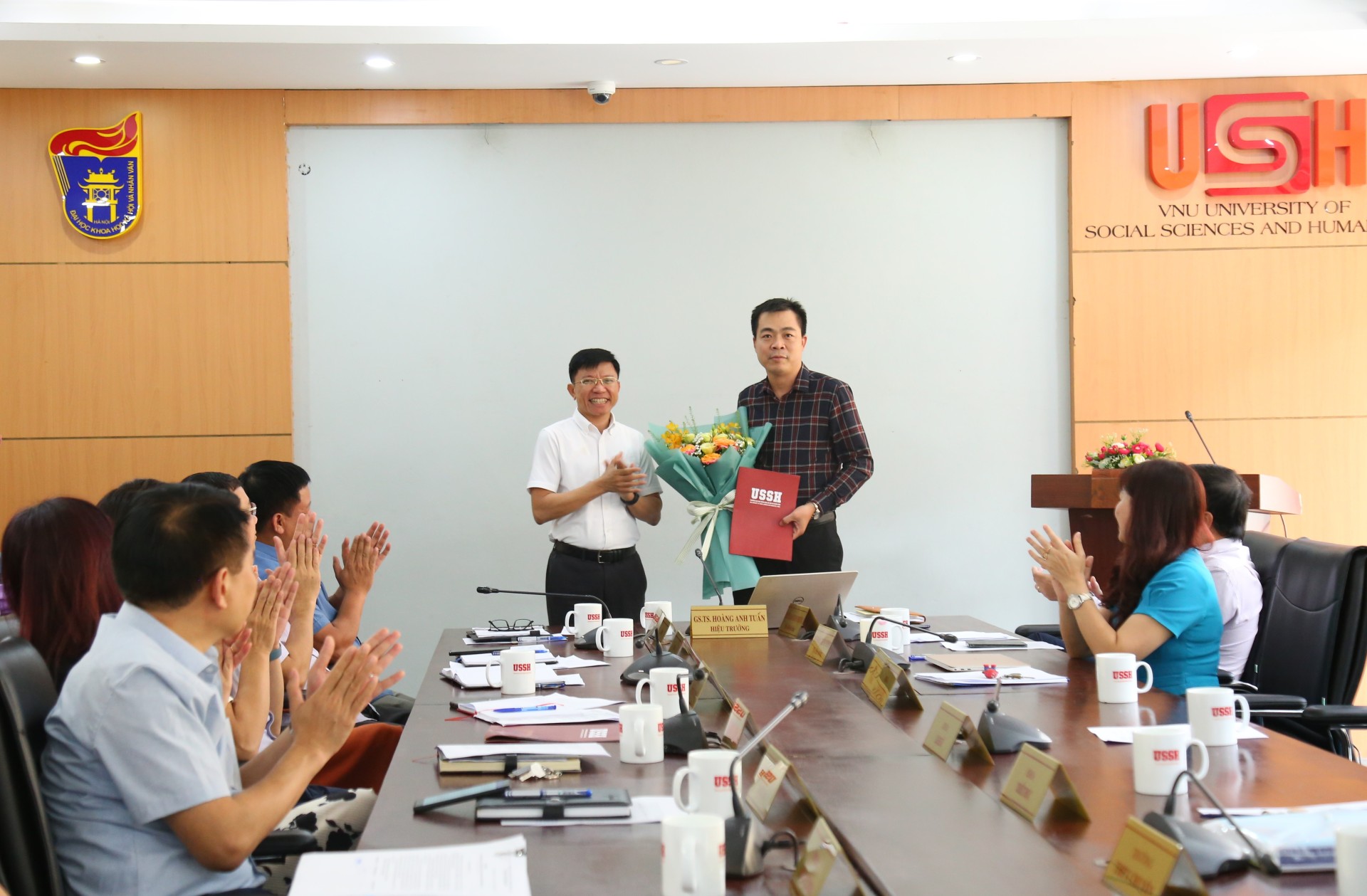
At the October monthly meeting, Rector Hoang Anh Tuan, on behalf of the Board of Directors, presented the appointment decision and flowers to congratulate Associate Professor Dr. Nguyen Van Chieu on his appointment as Head of the Department of Political Science.
After listening to the discussions at the briefing meeting on the following topics: Report on the implementation of work in September 2023 and the work plan for October 2023; discussions from units and functional departments; and opinions from the Vice-Rectors, the Rector concluded:
- Be proactive and innovative in developing e-learning materials and diversifying training methods to meet the requirements of online teaching.
- Continue to accelerate the planning of specific fields/specializations; continue restructuring some training programs, especially postgraduate programs; finalize the proposals for developing training programs such as Bachelor of Film and Popular Arts, Doctor of Cultural Management to be ready for enrollment in 2024, while also accelerating the development of Bachelor of Religious Affairs, Bachelor of Philosophy and Management; Doctor of Vietnamese Language and Culture…
- Develop a second degree program based on the new curriculum for all training programs at the University of Social Sciences and Humanities and some training units within Vietnam National University, Hanoi.
- Research and develop regulations for credit recognition with other educational institutions, especially foreign universities, to facilitate students' learning and training process.
- The Student Affairs and Student Support Department will act as the focal point, and other units will coordinate to propose plans and submit them to the Board of Directors for approval, in order to vigorously and thoroughly implement the survey of graduating students to serve the quality assurance work, while also strengthening connections with the University's alumni.
- Continue reviewing, adjusting, and developing restructuring plans for training programs at all levels, especially postgraduate programs, to focus resources and keep pace with the rapid changes in education in the coming period.
- Assign the Training Department to propose a plan for converting course credits, awarding training points, and rewarding students for participating in lectures by visiting professors and foreign experts, in order to both encourage students to participate in a meaningful and effective way, and to maximize resource utilization.
- Departments and centers are instructed to coordinate closely and make thorough preparations for the Taiwan Education Exhibition, which will be held at the School in mid-October. Heads of units should widely disseminate this information to staff, faculty, students, and trainees to ensure large and effective participation.