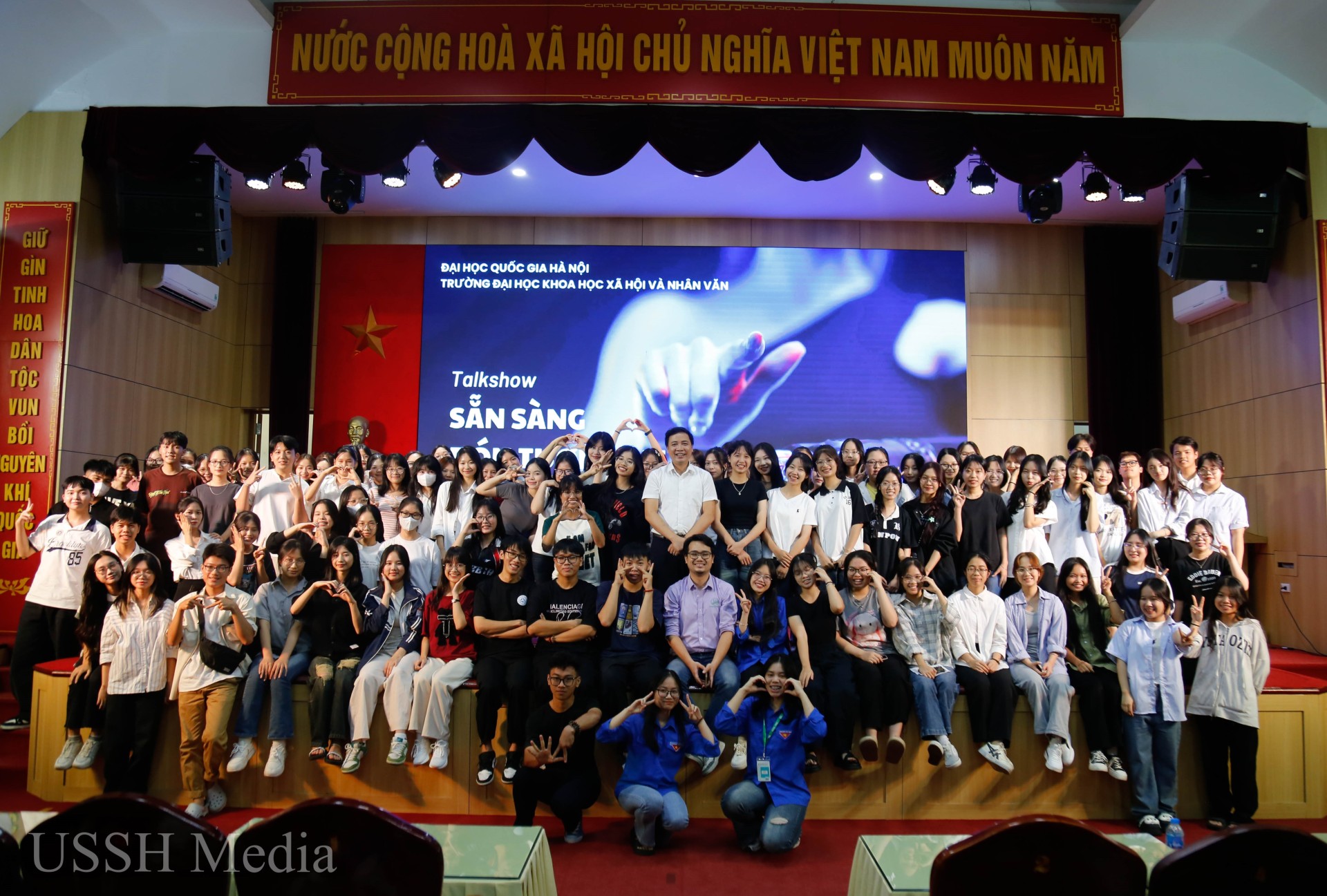
The "Popular Digital Education" course: Equipping the younger generation with digital skills.
According to Assoc. Prof. Dr. Do Van Hung - Head of the Department of Information and Library Science, University of Social Sciences and Humanities, the course
Popular Education Program No.This framework is built upon the Digital Competency Framework for Learners issued by the Ministry of Education and Training (Circular No. 02/2025/TT-BGDĐT, dated January 24, 2025). This is the first set of standards that specifically defines the digital skills groups that students need to achieve to study and work effectively in the digital age.
The competency framework comprises 6 competency domains with 24 component competencies, including:
- Data and information extraction
- Communication and collaboration in the digital environment
- Digital content creation
- Safety in the digital environment
- Problem solving
- Application of artificial intelligence
This course provides students with the knowledge and skills to use information and communication technology to search for and evaluate information, create content, work in online teams, and solve complex problems, helping them to confidently study, research, and integrate into modern academic and professional environments.
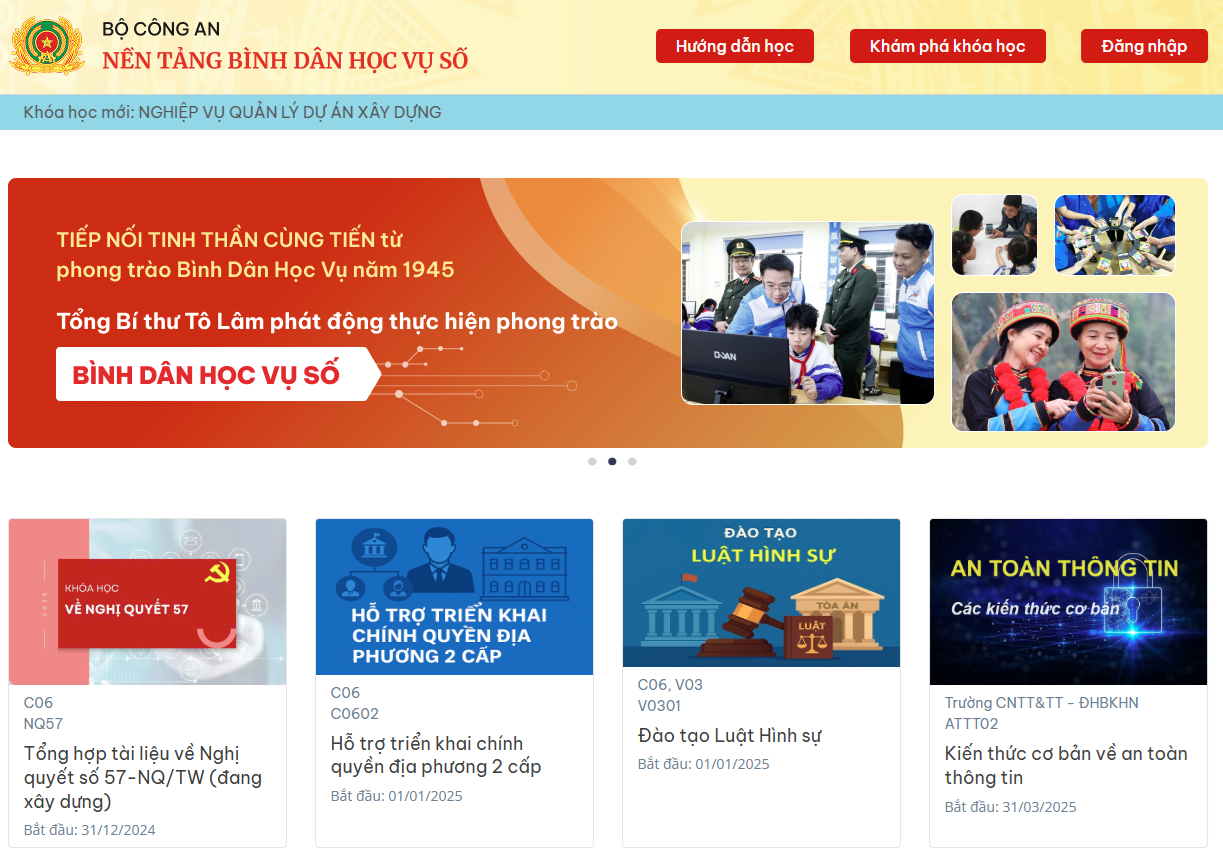
The "Digital Literacy for the People" course has now been widely implemented on the national online platform, allowing students nationwide to access it to learn and hone their digital skills, preparing them for future careers in the digital age.
VNU-USSH participates in developing the "Digital Popular Education" course.
Within the framework of the course, the University of Social Sciences and Humanities is responsible for Module 2: Communication and Collaboration in the Digital Environment. Assoc. Prof. Dr. Do Van Hung stated that this module equips learners with the ability to interact, share information, collaborate online, and fulfill their digital citizenship responsibilities. The learning materials include:
- Select and use appropriate digital communication tools.
- Manage and share information securely on digital platforms.
- Using digital technology to fulfill civic responsibilities.
- Collaboration through digital technology.
- Practice civil and respectful communication online.
- Manage your digital identity to protect your personal information and online reputation.
Associate Professor Dr. Do Van Hung introduced an innovative model for applying AI in teaching at the 2nd Regional DS2S Conference in Leipzig, Germany.
In particular, the content of this module is not only provided directly on the Digital Literacy Platform but is also flexibly integrated into the school's training program, such as: being incorporated into soft skills courses, university learning methods, and new courses such as Introduction to Digital Technology and AI Applications, AI Applications in Learning and Careers, etc., helping students practice from their first year. It is also applied in practice in group learning activities, interdisciplinary projects, and student scientific research, where students frequently use digital tools to exchange, store, and present their learning products.
This content is also implemented through extracurricular training courses and on the University of Social Sciences and Humanities' LMS system, creating opportunities for students to proactively practice communication and collaboration skills in a digital environment.
As a result, students not only master knowledge but also develop habits of professional communication, collaboration, and behavior, preparing them to meet the demands of digital learning, research, and the labor market.
A talk show about AI for students of the University of Social Sciences and Humanities.
Pioneering digital transformation in the Social Sciences and Humanities
Notably, the University of Social Sciences and Humanities is not only the first university in Vietnam to issue a Digital Competency Framework for students, but also plays a key policy advisory role for the Ministry of Education and Training in the process.
Draft and promulgate Circular No. 02/2025/TT-BGDĐT- The first legal document stipulating a Digital Competency Framework for learners nationwide.

According to Associate Professor Dr. Do Van Hung, many people used to think that universities in the social sciences and humanities would be slower in applying technology compared to natural sciences or engineering. However, in reality, the very nature of the field, placing people, knowledge, and innovation at the center, has created a strong impetus for the university to lead in digital transformation.
The issuance of the Digital Competency Framework not only affirms the strategic vision of a leading research university, but also demonstrates the institution's commitment to equipping students with essential skills for the Industry 4.0 era.
Furthermore, the University of Social Sciences and Humanities affirms its strong commitment to innovating teaching methods through the implementation of MOOCs (Mini-Open Courses). This is an important step in providing learners with new knowledge through digitized learning methods, meeting the requirements for high-quality human resources in the 4.0 era.
MOOCs are designed with a learner-centered philosophy, based on four principles: Personalized learning, Problem solving, Microlearning, and Active learning. Specifically, the university has incorporated MOOCs for the Applied Informatics course, featuring 11 advanced, up-to-date, and practical modules.
The University of Social Sciences and Humanities has had numerous collaborative projects with META Corporation on the application of AI in teaching, learning, and research.
Digital transformation in education is not just about applying technology, but also about innovating thinking, teaching methods, and university governance – areas where the Social Sciences and Humanities have a strong advantage in leading the way.
By participating in the development of learning materials and the implementation of the "Digital Literacy for the People" course, the University of Social Sciences and Humanities continues to affirm its core values of "Pioneering - Innovation - High Quality - High Proficiency," making a positive contribution to enhancing the digital capabilities of Vietnamese students, while also asserting its pioneering position in the digital transformation of higher education.
Related articles:
USSH collaborated with the Ministry of Education and Training to develop and guide the implementation of Circular 02 on the Digital Competency Framework for Learners.
VNU-USSH is the first university to issue a Digital Competency Framework for students.
Launching a digital competency framework for students.